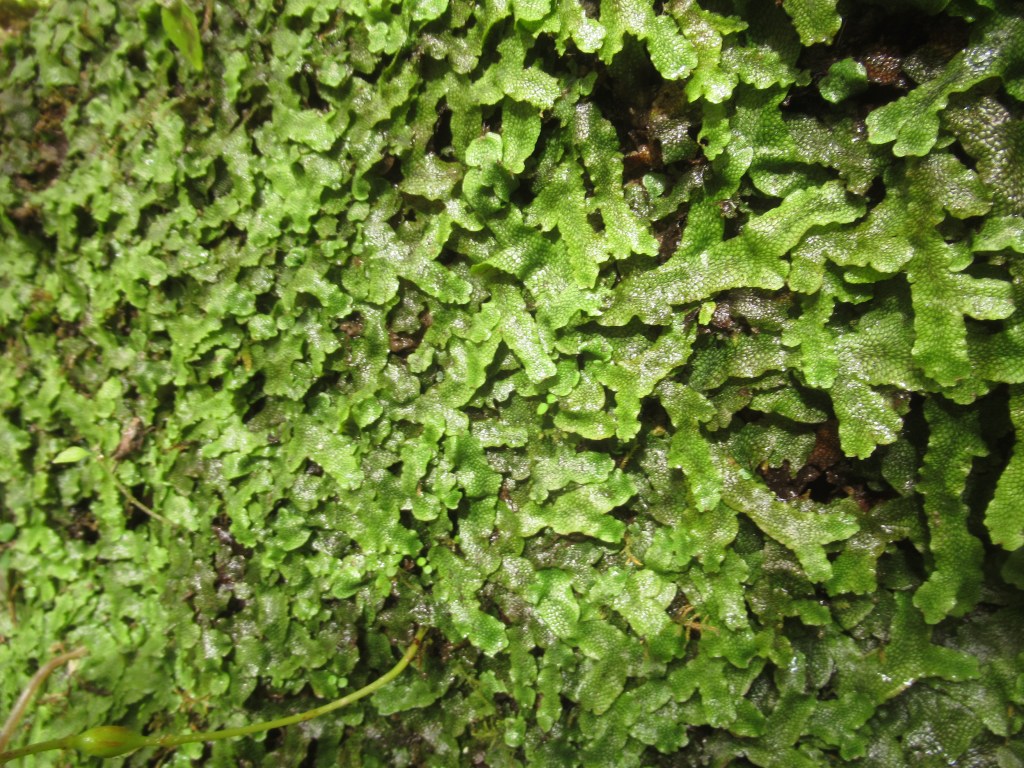
This robust, thalloid liverwort goes by a few common names such as the Great Scented Liverwort and Snakeskin Liverwort. Both are quite appropriate due to its potential aromatic scent one may smell when crushed, and its appearance.
This is the largest thalloid liverwort one may find in Missouri, and it is found across North America and on other continents. While in Missouri we tend to use the epithet salebrosum, there is taxonomic debate about whether we should be using conicum. Additionally, there is evidence that we may be dealing with cryptic species in North America. Until this is sorted out, I will stick with salebrosum for simplicity.
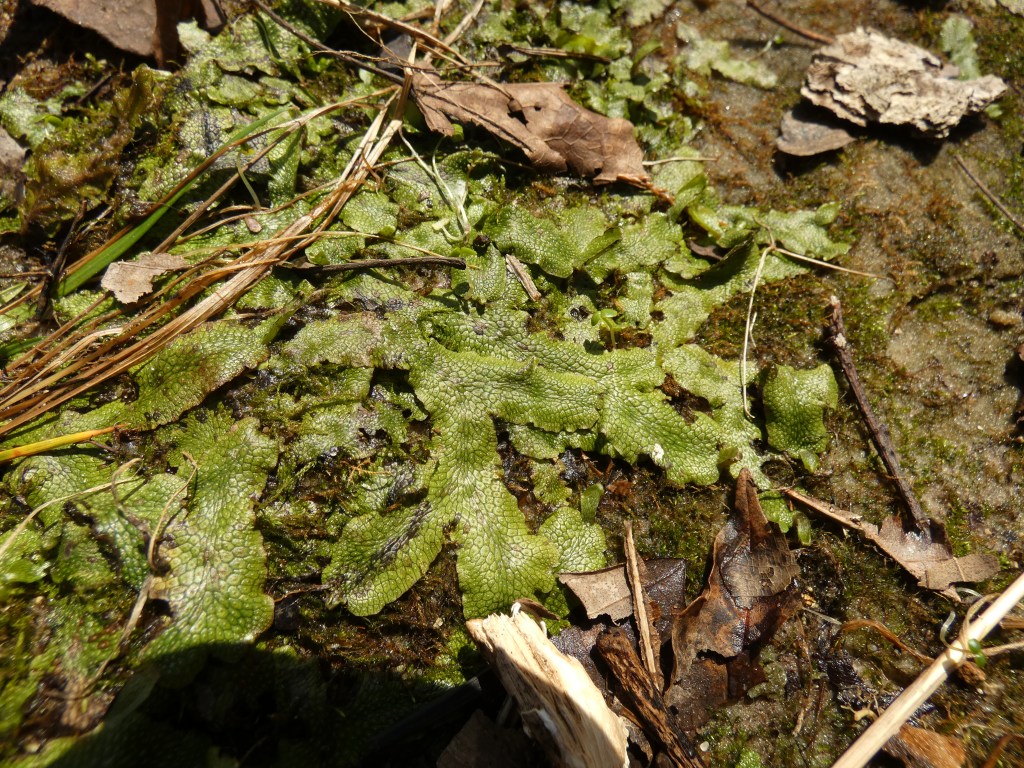
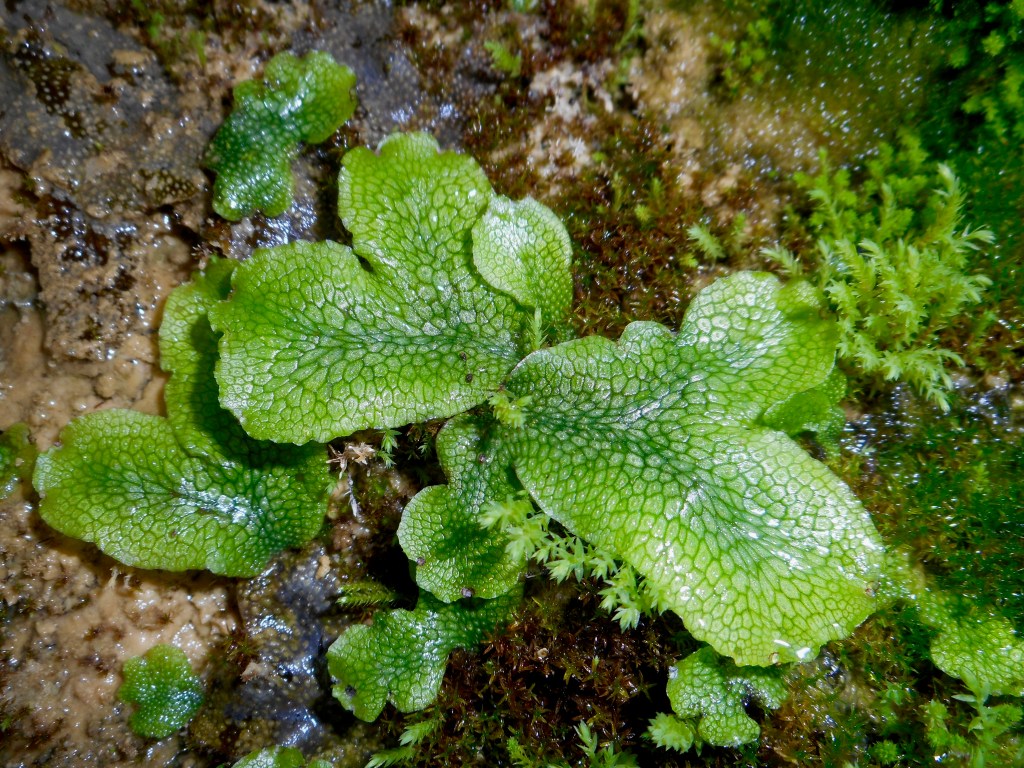
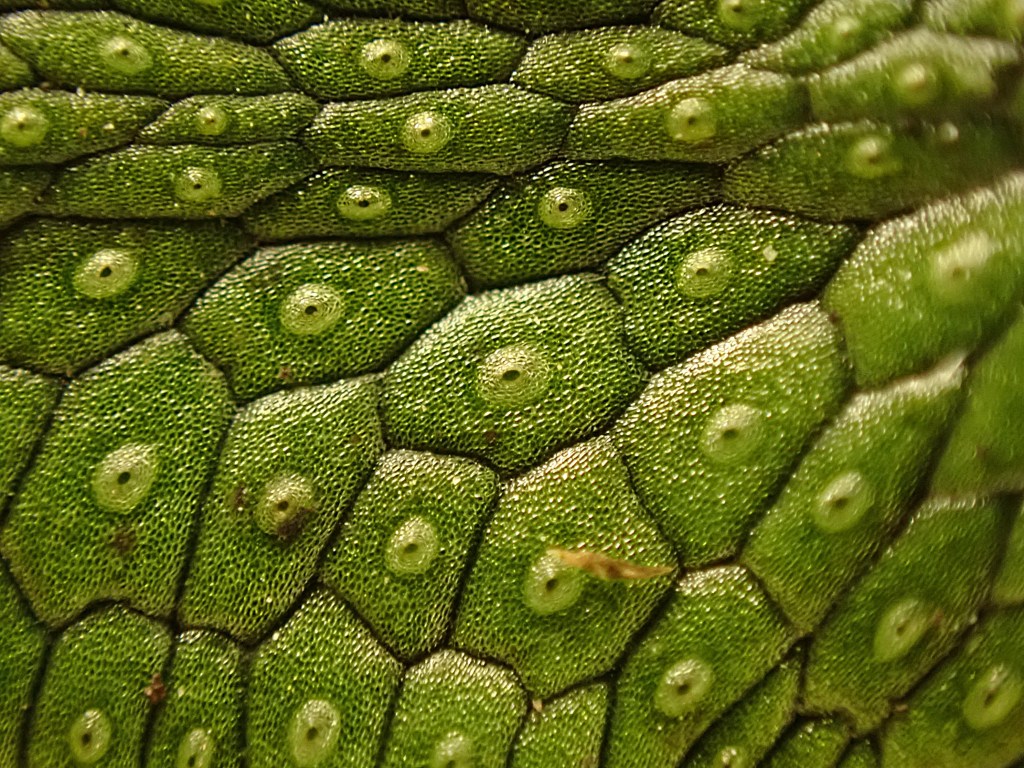
You can find this liverwort sprawling across rock faces, soil, or even logs; in streams and in wet environments. The segments may be up to 1.5 cm wide and up to 10 cm or more in length. Its surface has a distinct areolate pattern which prompts the common name of Snakeskin liverwort. Each areola has a large air pore in the center. The branching is usually in a dichotomous fashion, with the older parts dying off while the newer sections continue to sprawl across its substrate.
If you were to take a small, fresh segment and crush it up in your fingertips, you might catch a fragrant smell, hence the common name of Great Scented Liverwort. Some folks report smelling citrus, perhaps a sweet smell such as anise, or even something peppery. I myself am only able to smell earth, and I’m unable to detect any of these other aromatic smells. I am curious as to what everyone may smell when handling this wonderful liverwort, and as such, it has prompted me to conduct the following survey.
Happy mossing!


Leave a Reply