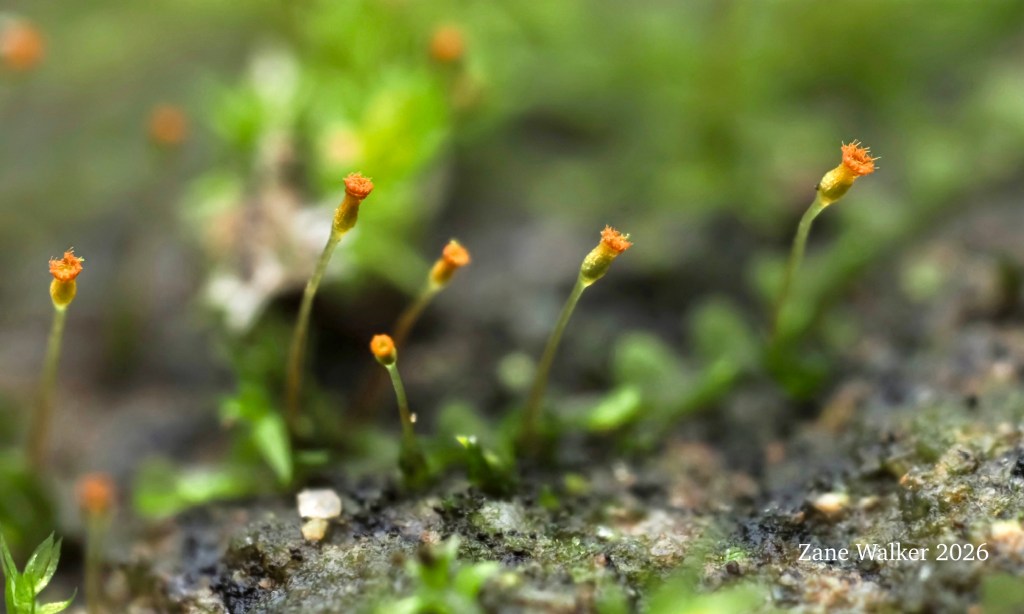
The last scheduled bryophyte crawl for the year 2026 went down with a bang! Aside from having a beautiful fall day where moisture in the air made for lush bryophyte observation mixed with lovely sun, we had an exciting discovery.
My first goal was to get the group down to the ravine to show the thalloid liverwort, Blasia pusilla that I found there a few years ago. This is a new to Missouri species. It was looking quite happy and displaying both of its forms of gemmae production.
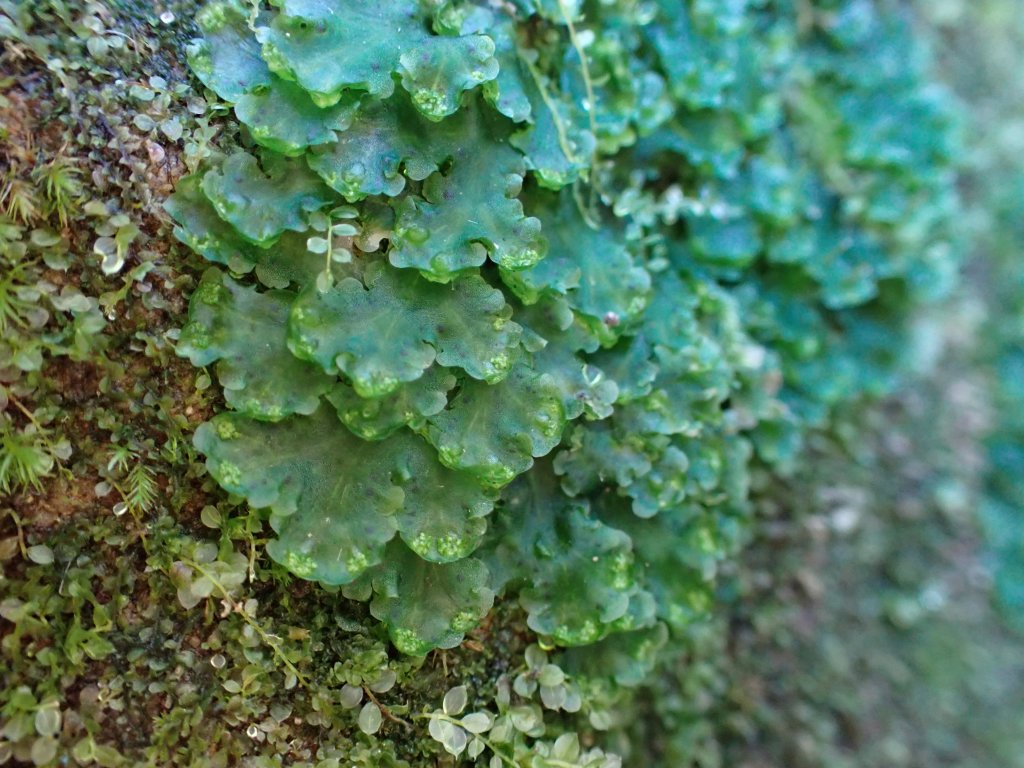
At the tips of the thallus, it will produce stellate shaped gemmae. The tube-like structures arising from the thallus produce disk-like gemma. For more information about this species, see my paper on its finding here.
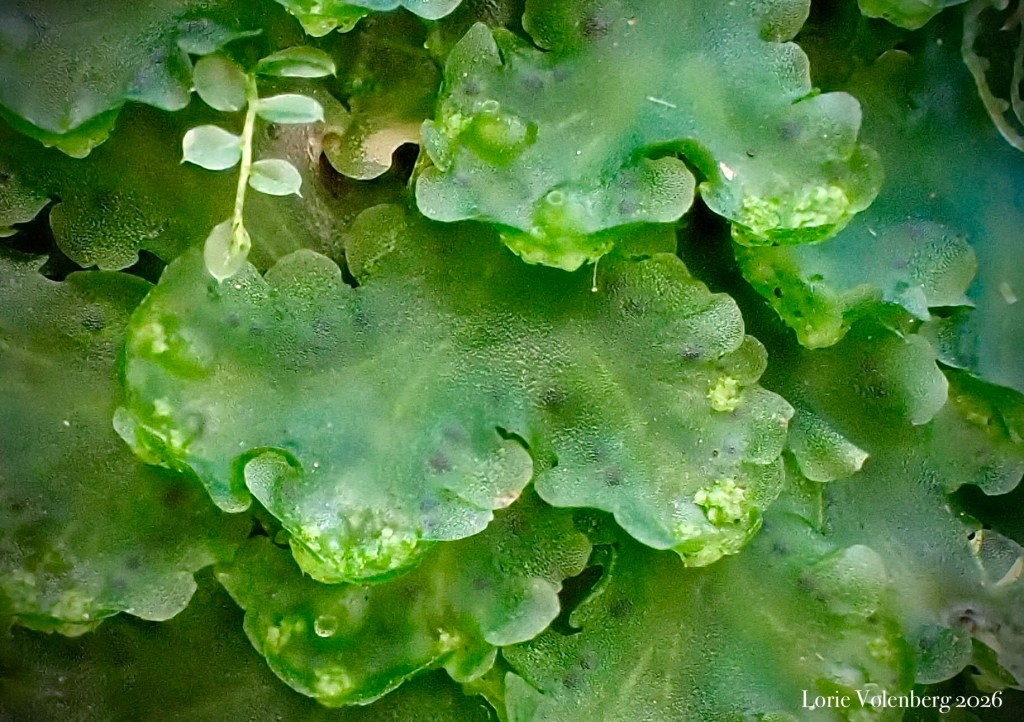
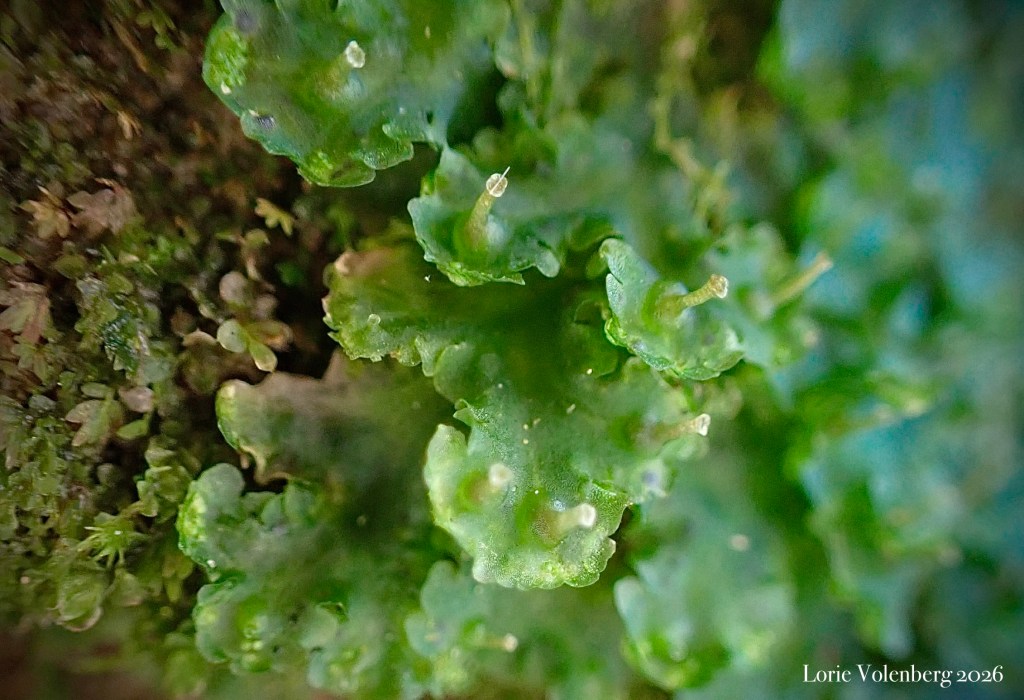
When the gemmae are not present, this species may be confused with another translucent-like thalloid liverwort, Pellia epiphylla. However, Blasia hosts colonies of cyanobacteria which can be seen as dark circles in the thallus, whereas Pellia does not.
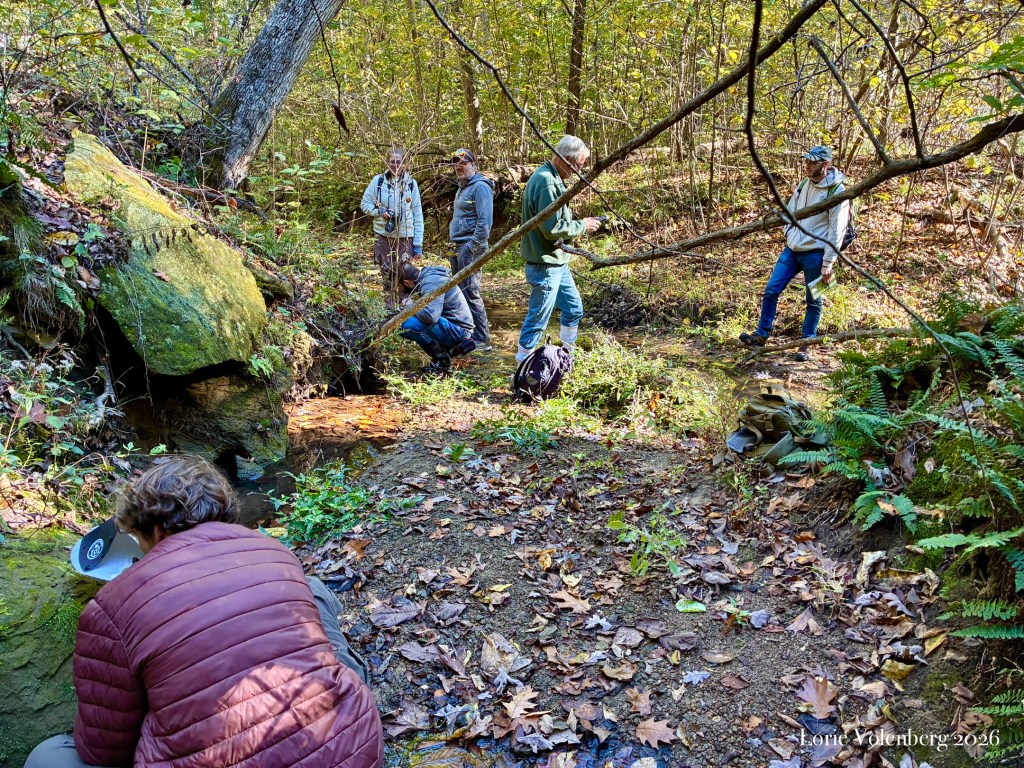
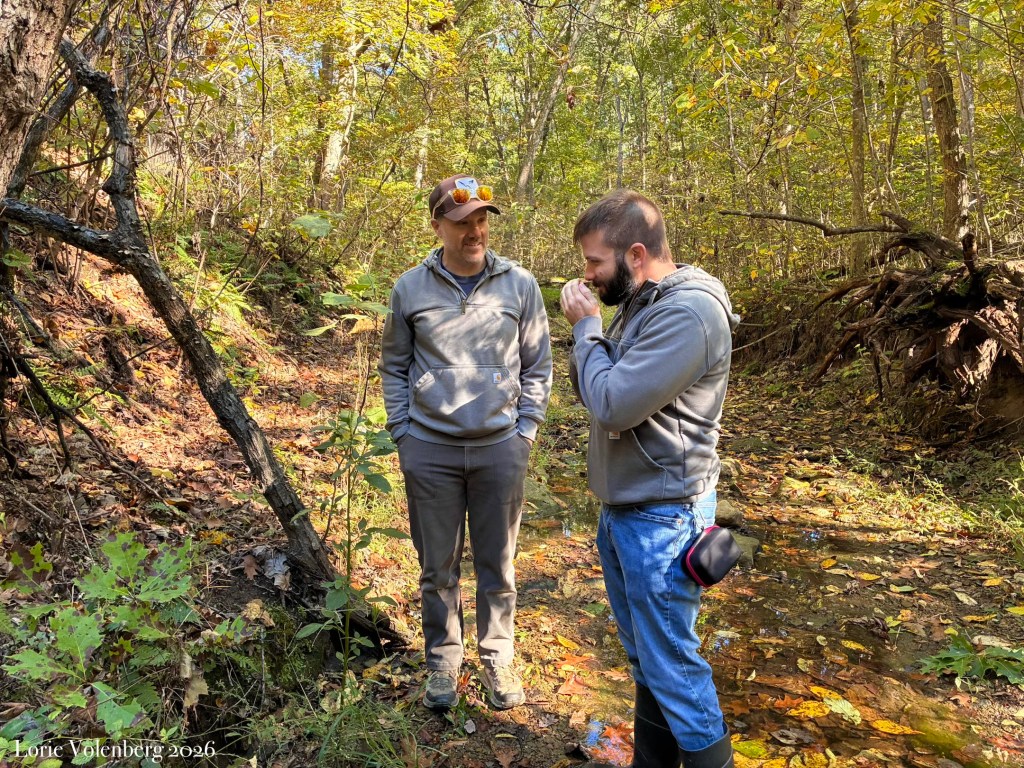
Near this same location I had found Pogonatum pensilvanicum, but it was not to be seen this year. In the meantime, we did a sniff test of Conicum salebrosum, the snakeskin liverwort. Several were able to smell an anise or sweet like smell. I still only smell the earth and fish. I have started to ask those smelling the crushed-up liverwort if they like cilantro. I am finding that those who smell something besides earth like citrus or anise or peppery, also like cilantro. Those that smell nothing or the earth (like me) do not like cilantro (I despise cilantro). Blake has been the only person so far to not smell something and likes cilantro. I’ll have to do an on-line survey sometime.
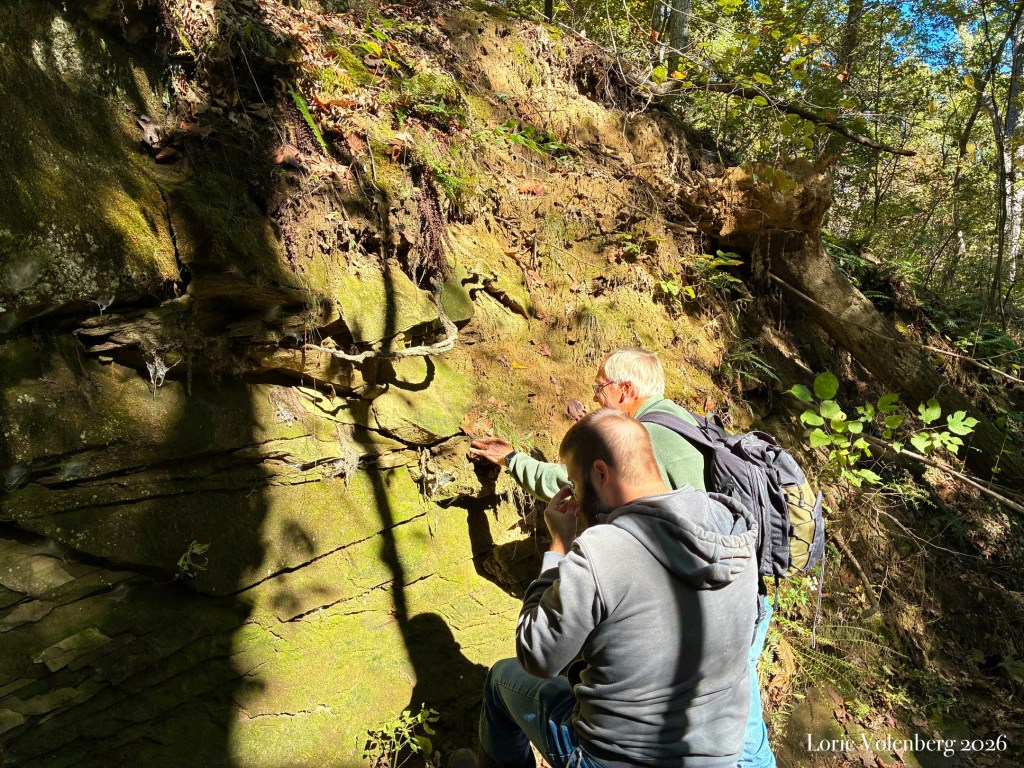
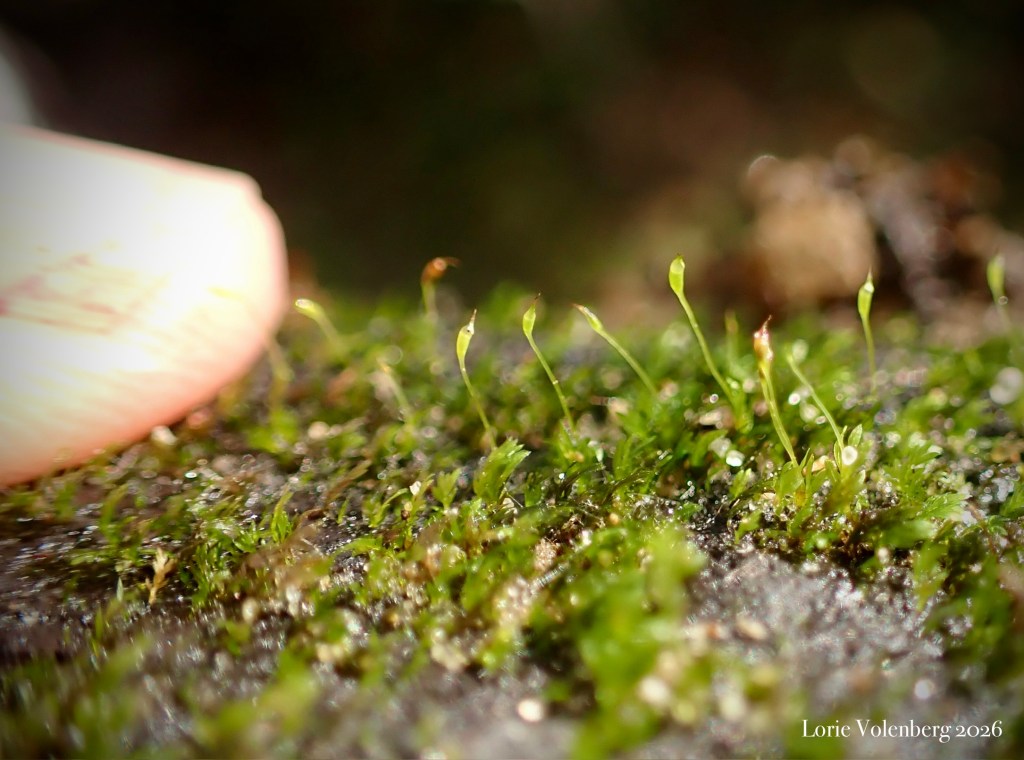
At some point, Brad found a tiny sandstone rock about 3-4 feet above the base of the creek, and began exploring with his hand lens. He asked me to look at the tiny moss that was growing on there. To my ecstatic surprise, it was Fissidens closteri. This moss is so small, that even the sporophytes do not catch your attention with your naked eye. Only by scouring the rock with a hand lens will you pick up on this tiny moss, and only if the sporophytes are present.
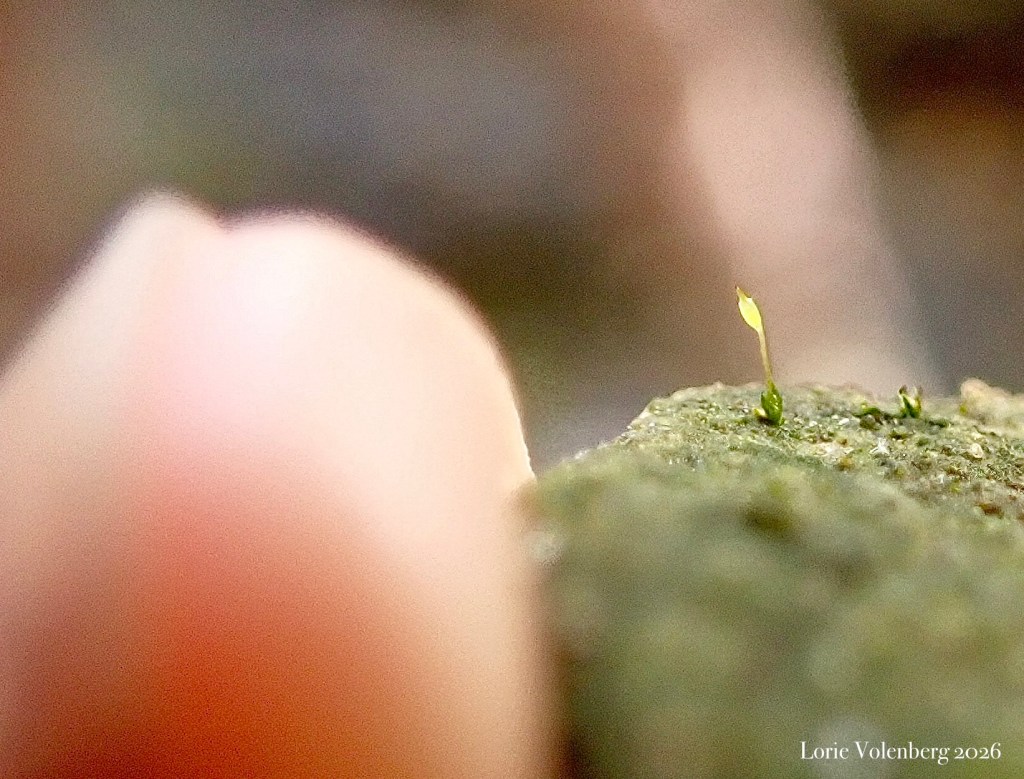
This moss with sporophyte included, stands around 2.0 mm tall. The 2-4 sets of leaves average 0.2-0.5 mm in length.
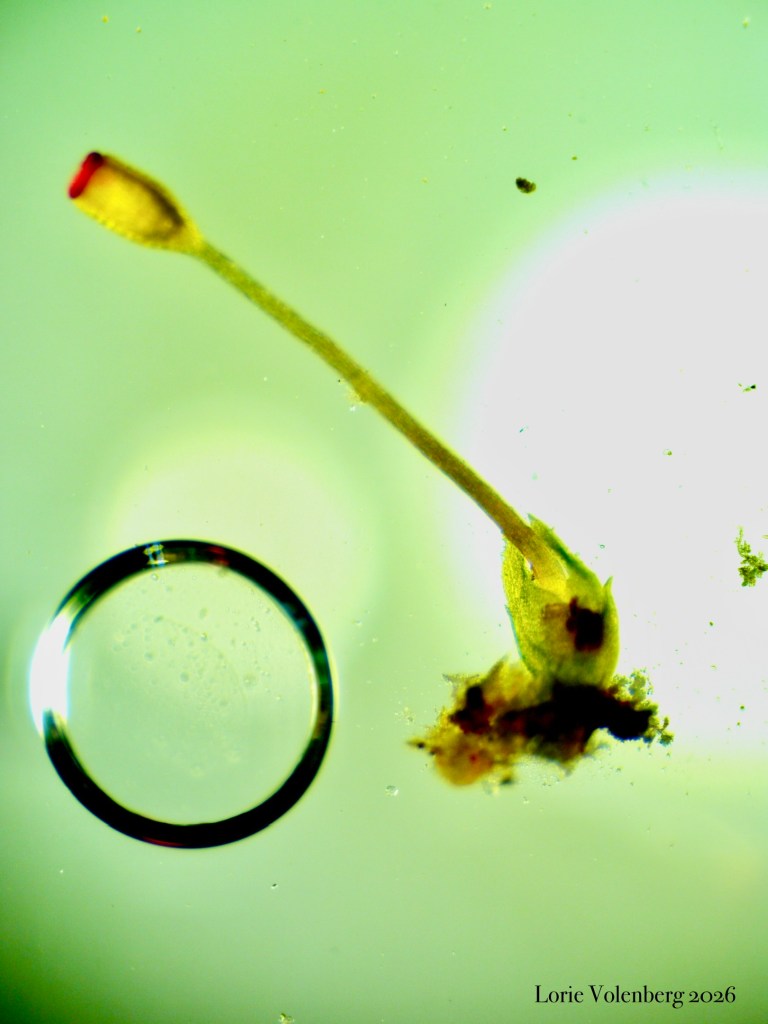
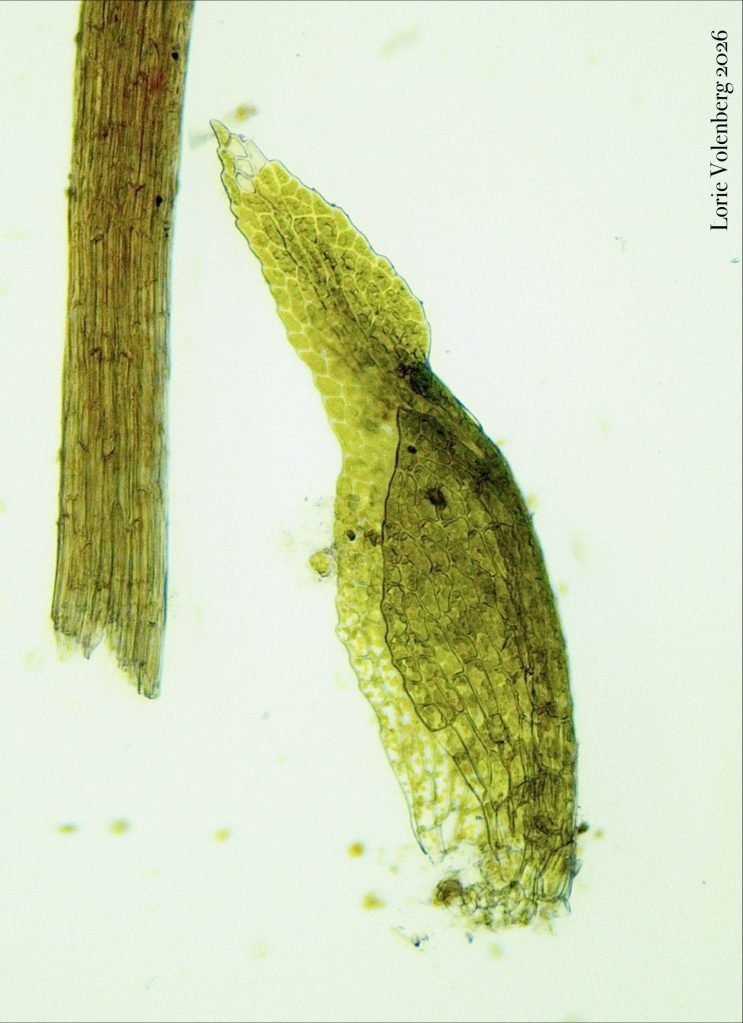
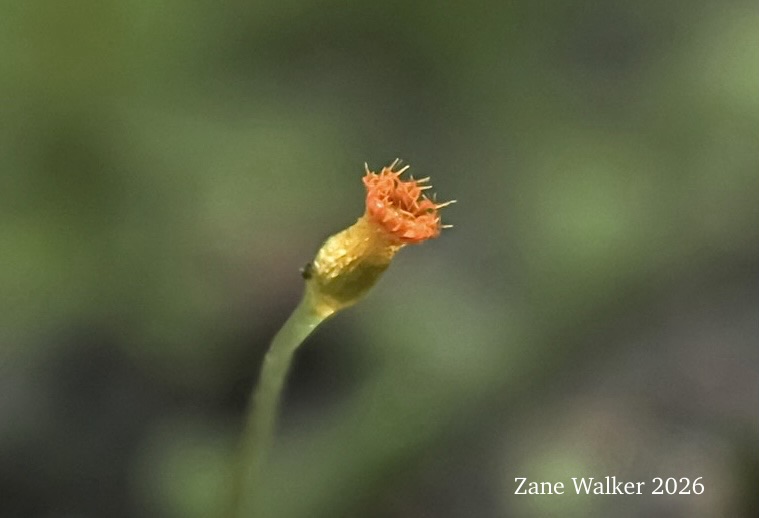
This species was first reported in New Jersey in the later 1800’s by C.F. Austin, and has since been found in limited locations in Rhode Island, North Carolina, West Virginia, Ohio, Indiana, and in Missouri in 2019. This is now a second known location in Missouri. This species seems to prefer acidic rock substrates in creeks that are subject to slight flooding or fluctuations in water levels.
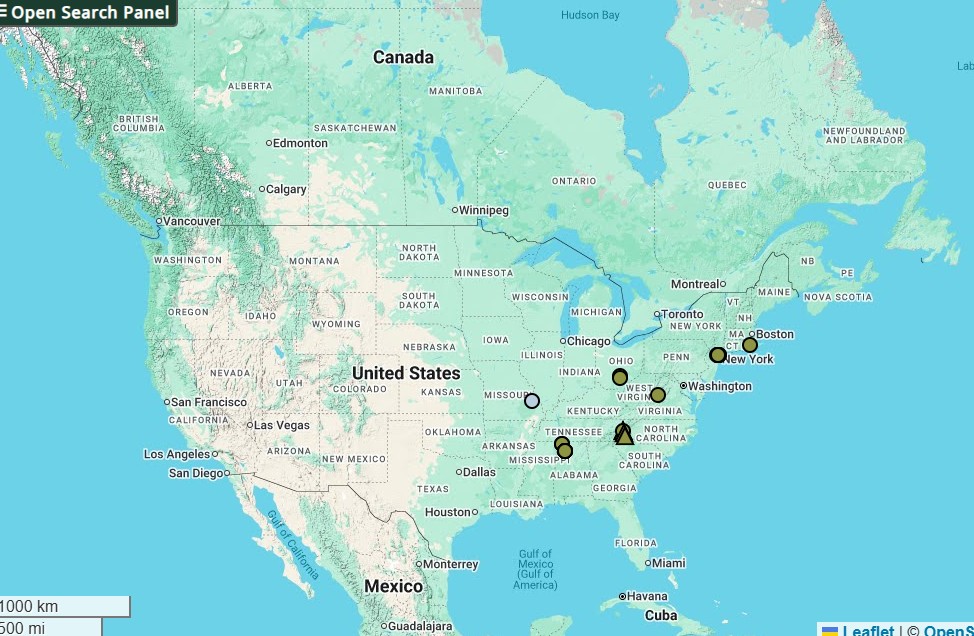
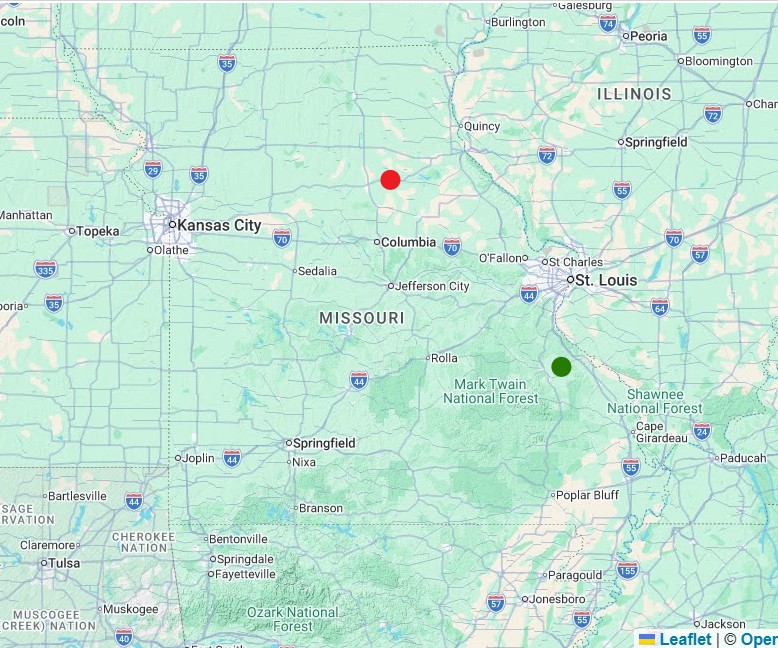
The above maps are taken from bryophyteportal.com, though I did edit the Missouri specific one to add the new location and changed the colors to be more evident.
It is likely that this species is out there more than we realize, but due to its minute and inconspicuous size, it is easily overlooked. Searching for it requires a direct initiative!
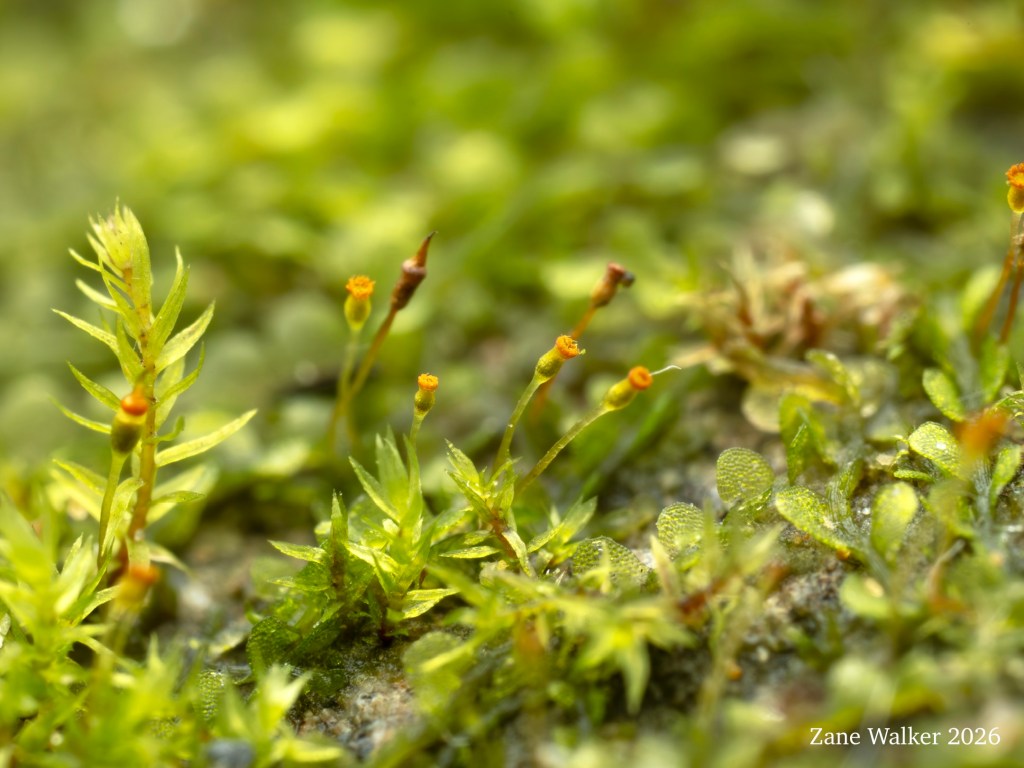
The only other species that it may be confused with is Fissidens bryoides which is found in similar systems and can grow side by side. Considered in itself a small moss, it is larger than F. closteri. It typically measures 2.0-7.0 mm tall with leaves that are 1.0-2.0 mm long. This species you can see with your naked eye.
Top left: Fissidens bryoides, Top right: Fissidens closteri
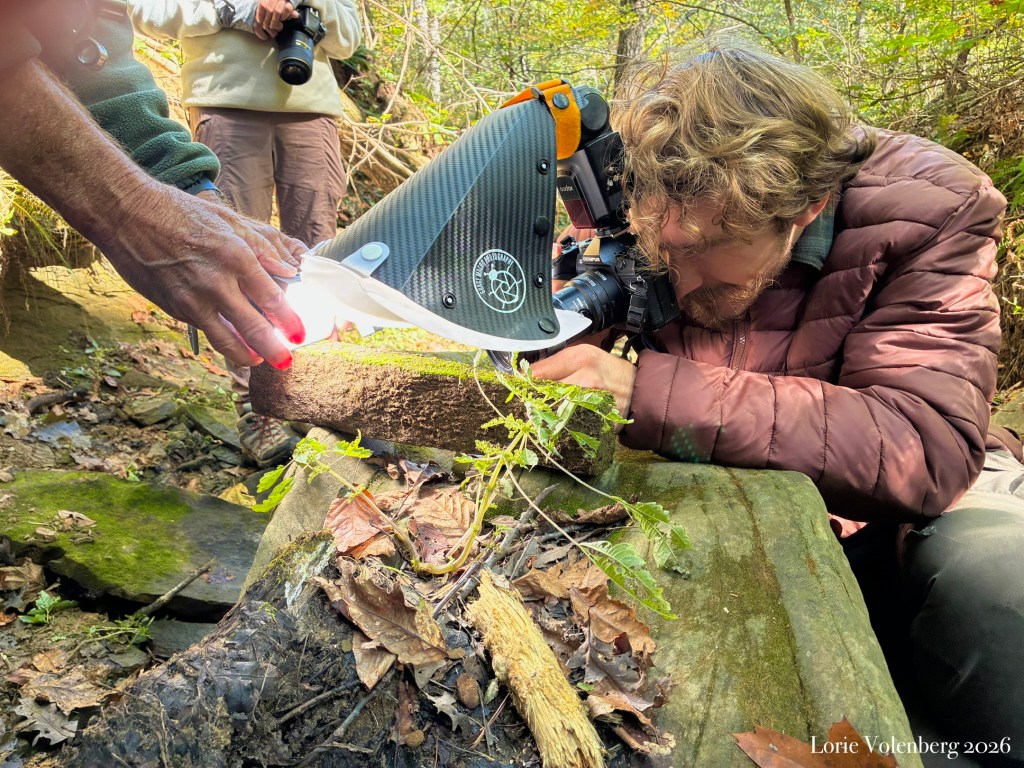
What a fantastic way to end the bryophyte crawl season for 2026. If you are interested in joining the bryophyte crawl club, click here for more information. If you are in need of a field guide to the mosses of Missouri that is also applicable to surrounding states, order a copy of my Mosses of Missouri Through a Hand Lens field guide here.
Happy mossing!


Leave a Reply