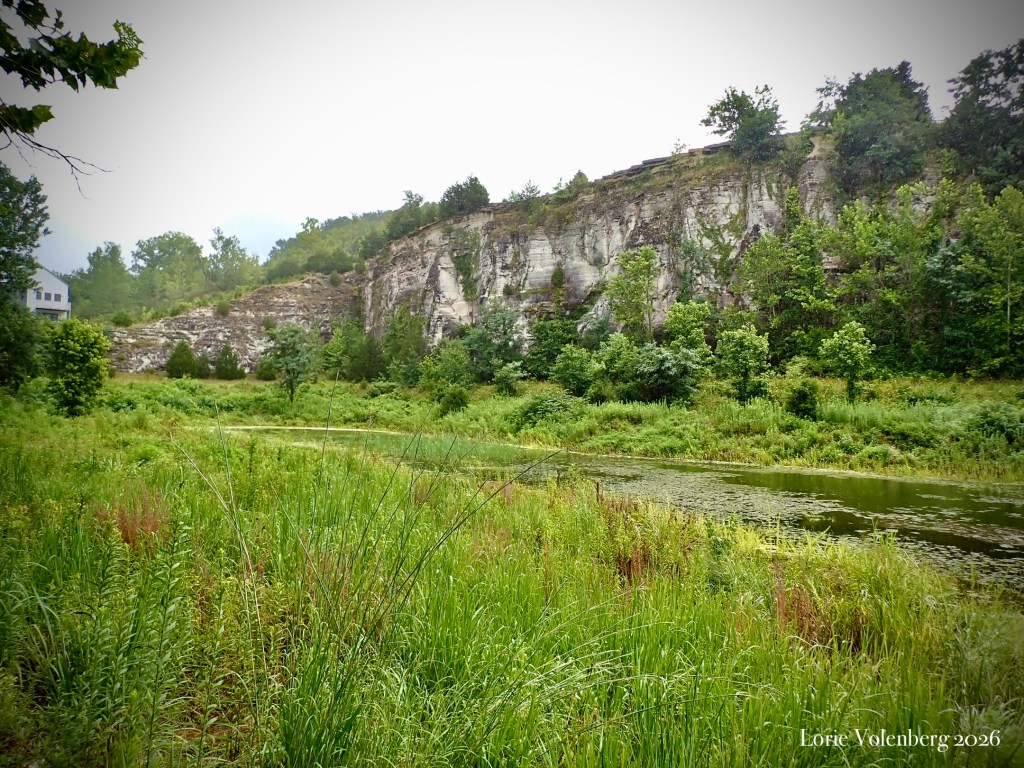
Klondike Park in St. Charles County, Missouri, was once the Klondike Sandstone Quary which opened in 1898 and produced silica sand for glass works. The Joachim dolomite formation had to be blown away to expose the St. Peter Sandstone formation below, from which they produced the silica sand. The quarry closed in 1983, and St. Charles Parks acquired the land in 1999 turning it into a multiuse area. It is interesting to see what bryophyte species have found their way to the “newly created” sandstone ecosystem that is only 45+ yrs old. We hiked the short loop around Herpetology Pond. The day brought clouds that provided cooler temperatures with intermittent light rain showers, and we enjoyed the freshly wetted plump and colorful bryophytes.
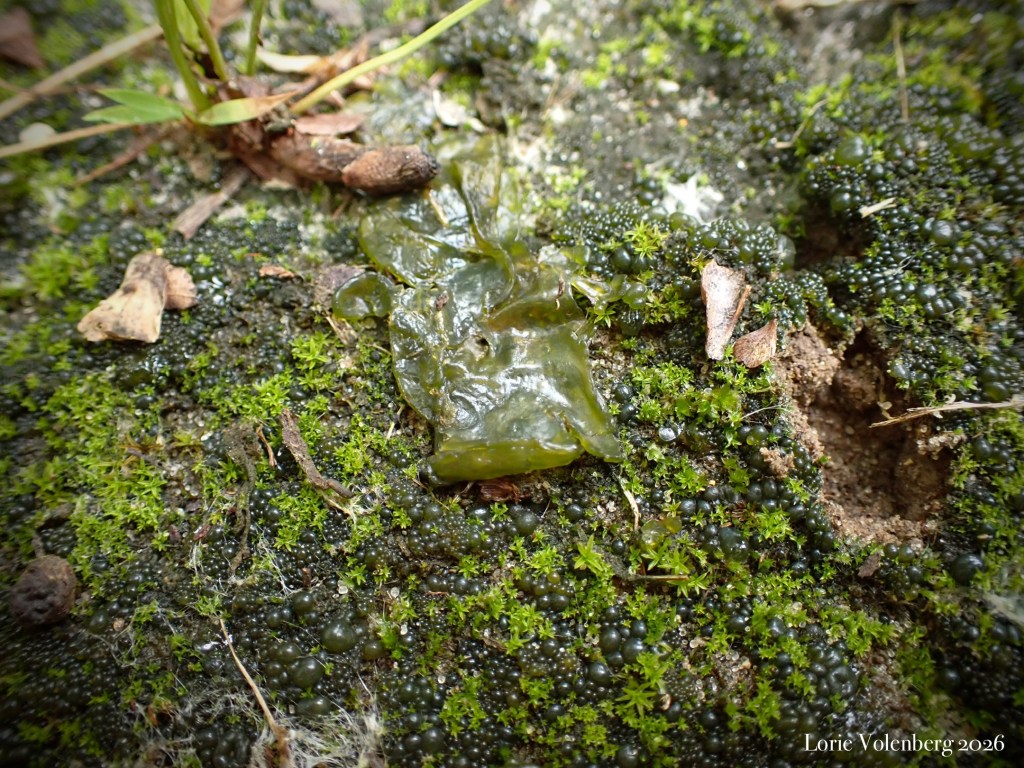
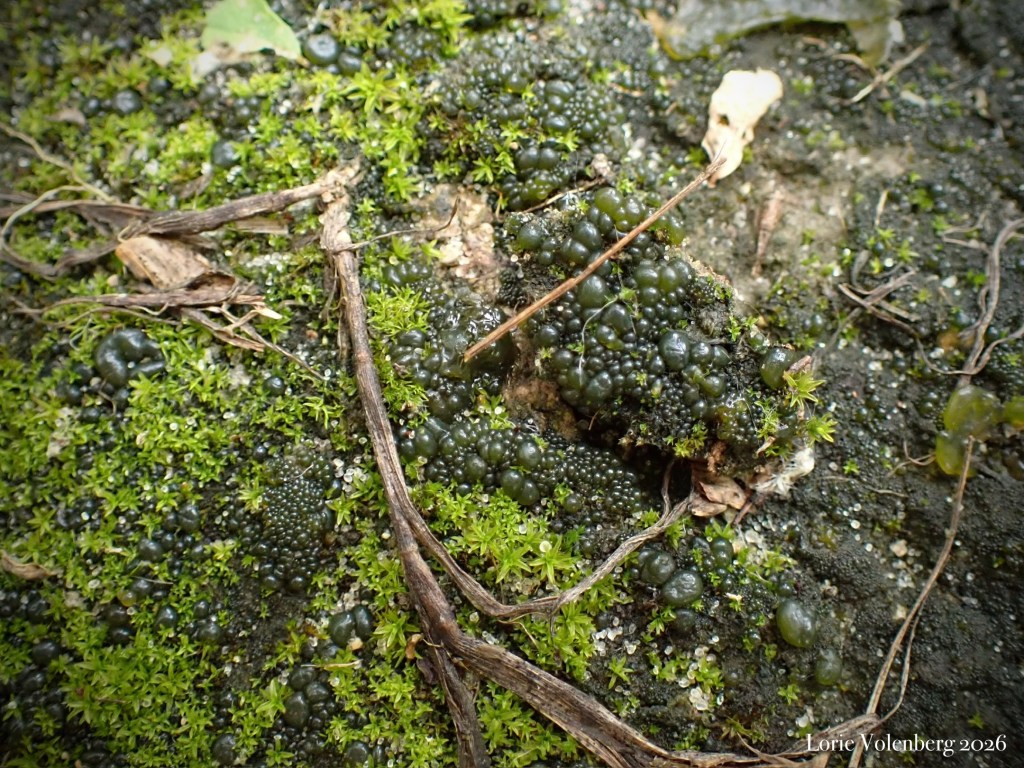
Before we even made it down to the loop, we found soil crusts alongside the paved path that consisted of Barbula unguiculata, the cyanobacteria Nostoc commune, and another entity that I am kicking myself for not having collected to verify its identity. The pearl shaped jelly bellies are either another type of Nostoc, or a jelly lichen such as Collema tenax.
Once we got to the actual trail, there were several of the usual weedy moss suspects one may find on the soil in partial shade offered by trees: Entodon seductrix, Brachythecium laetum, Plagiomnium cuspidatum, and Hypnum lindbergii.
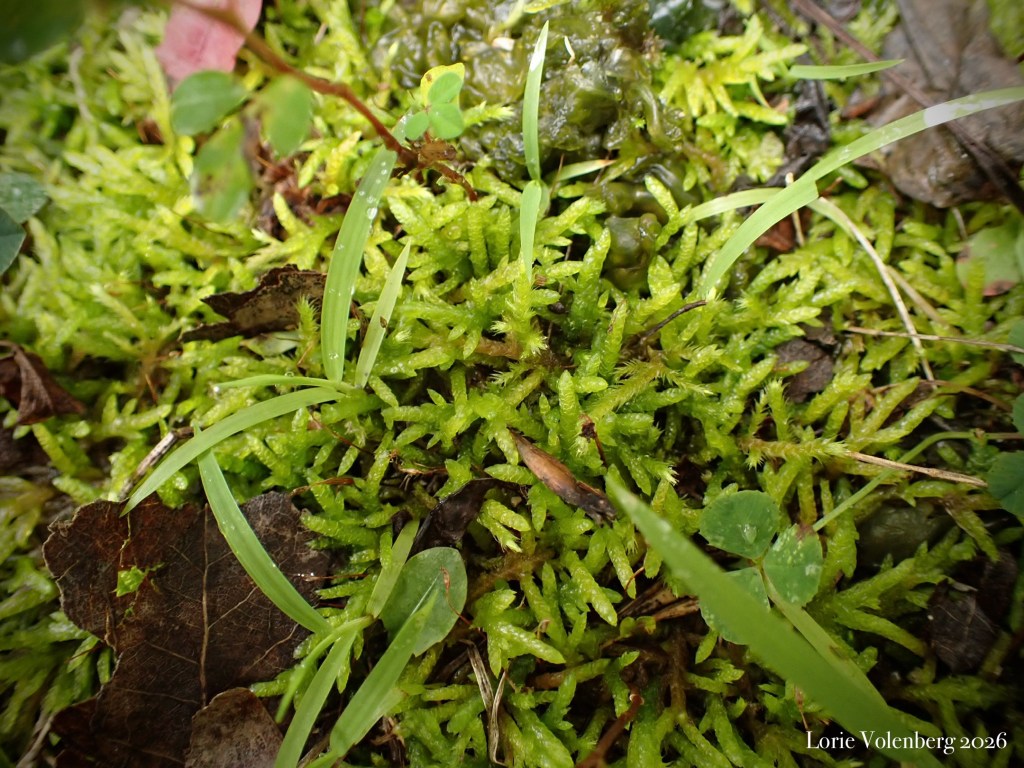
Entodon seductrix has imbricate and julaceous leaves that are ecostate and slightly cupped. It is often called smooth silk moss, but I just call her sexy;)
Brachythecium laetum is one of the many “feather mosses”. This moss has plicate leaves. When viewing with a hand lens, the leaves will look wrinkled with the wrinkle running down the length of the leaf. This is our most common Brachythecium species in Missouri.
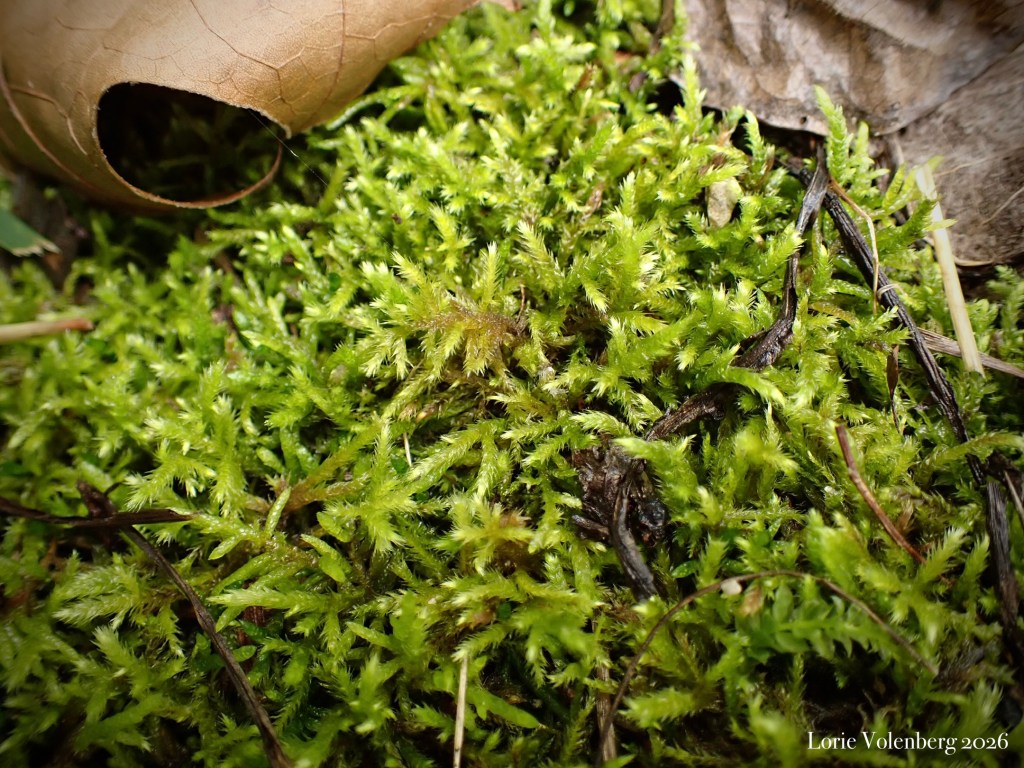
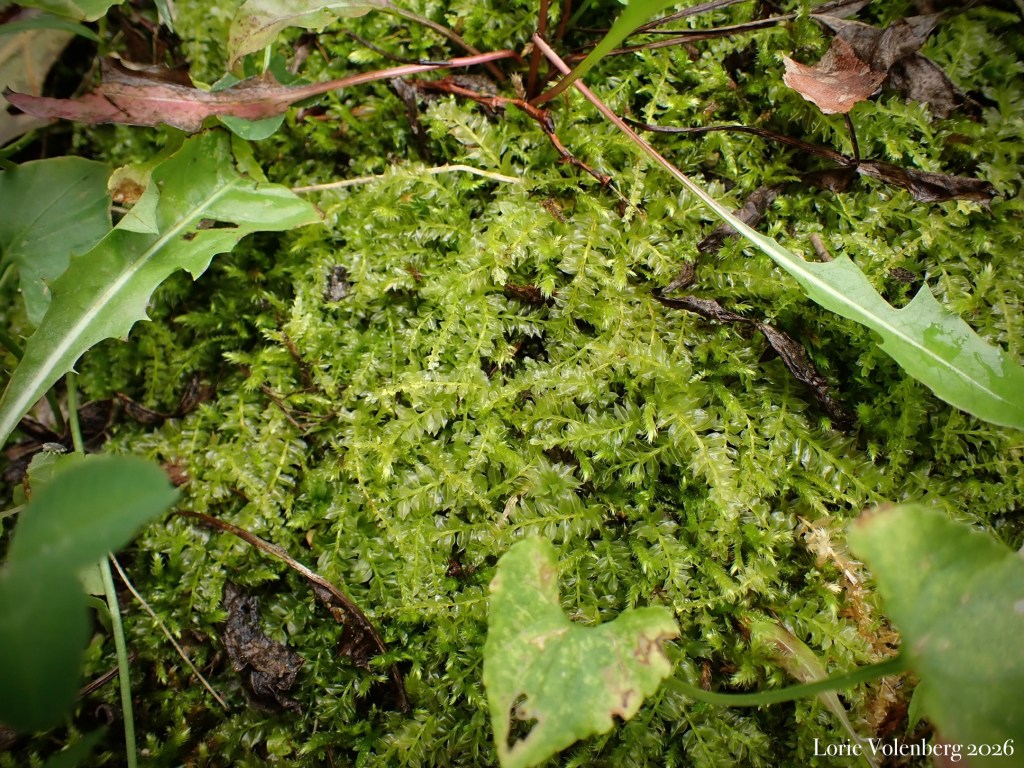
Plagiomnium cuspidatum is one of the “thyme mosses”. Plagiomnium species have two distinct stem types: an upright sexual stem, and a prostrate, vining, vegetative stem predominantly seen here. P. cuspidatum will have teeth in the distal half of the often diamond shaped leaves.
Hypnum lindbergii is one of the “brocade mosses” as the leaves are curved and wrap around on either side of the stem, yielding a brocade look from above. Hypnum species usually need microscopic details for correct species identification.
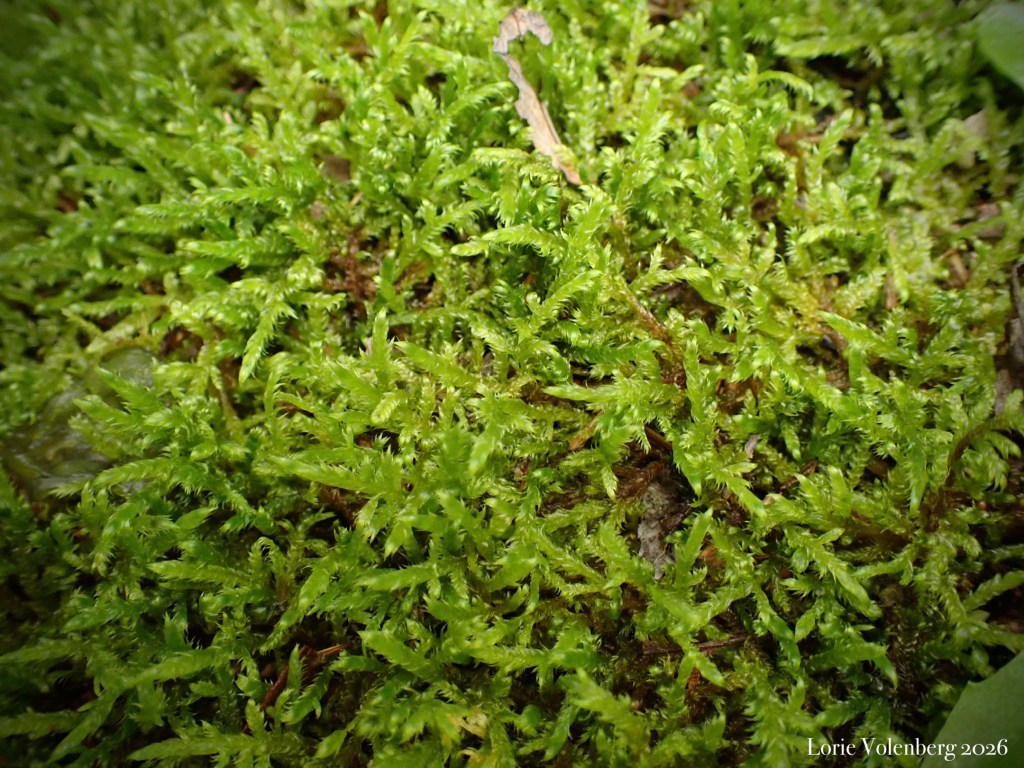
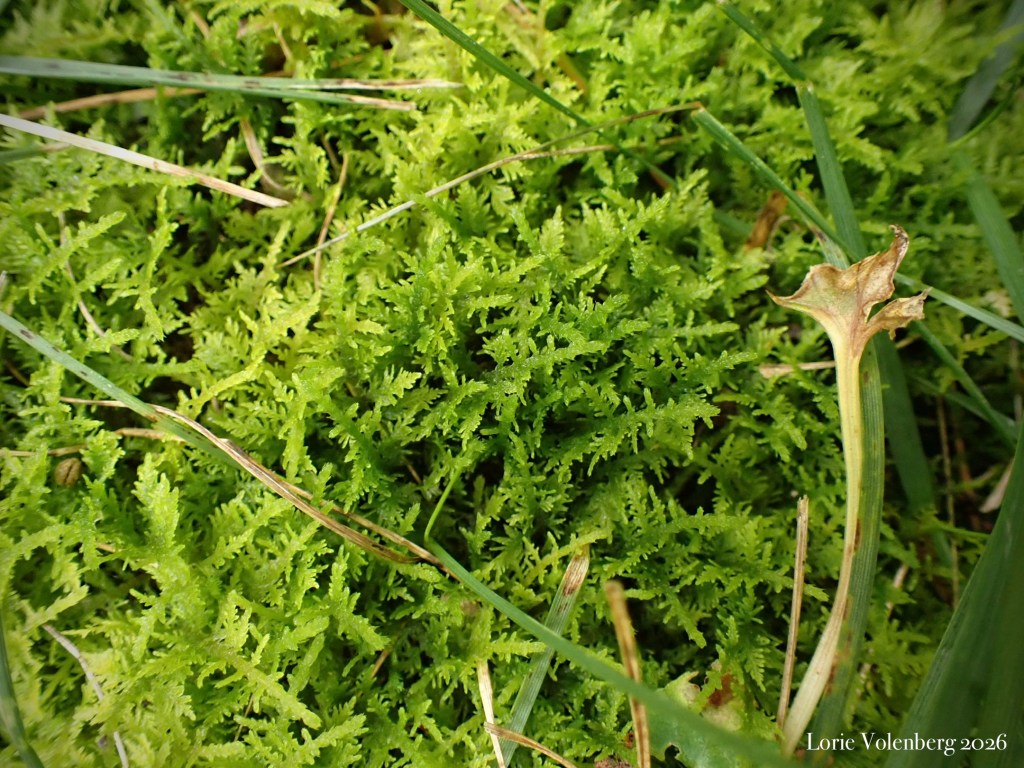
Thuidium delicatulum also graced our presence throughout the hike. This is an acidic loving (and alkaline tolerant) species as compared to its counterpart, T. recognitum, who can only be found in more alkaline settings such as limestone/dolomite. This is called the delicate fern moss and sports 2-3 pinnate branches.
We then headed to the sandstone wall the first chance we had. Two liverwort species were found: the thalloid liverwort Reboulia hemisphaerica, and the S1 ranked leafy liverwort Chiloscyphus minor.

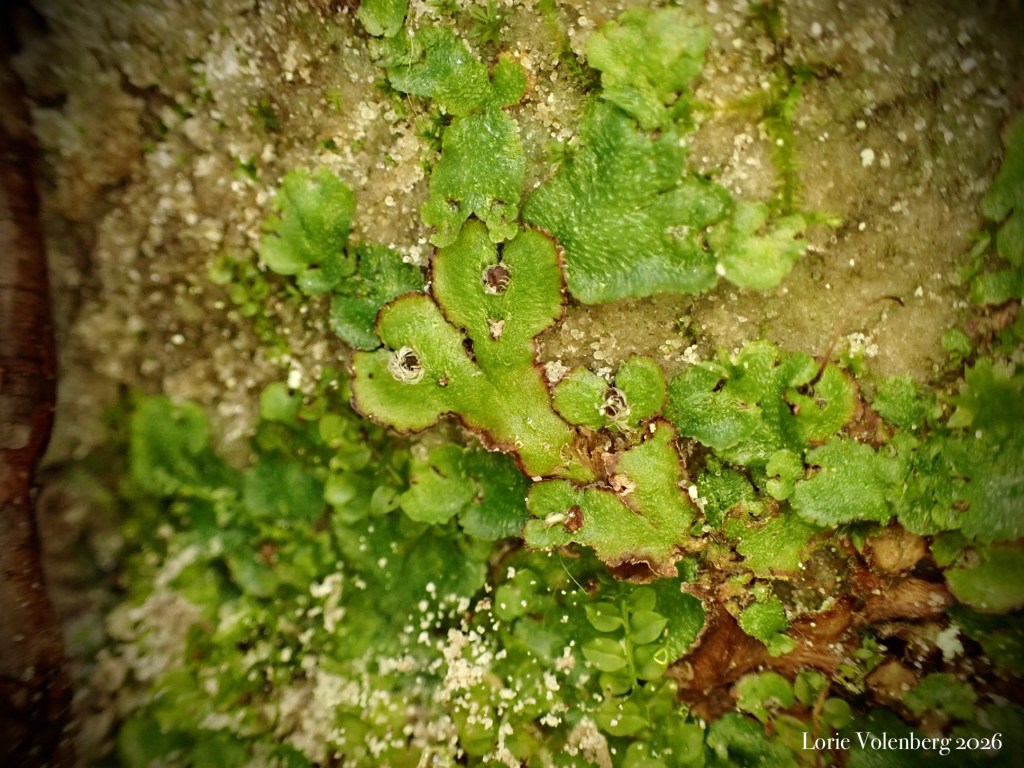
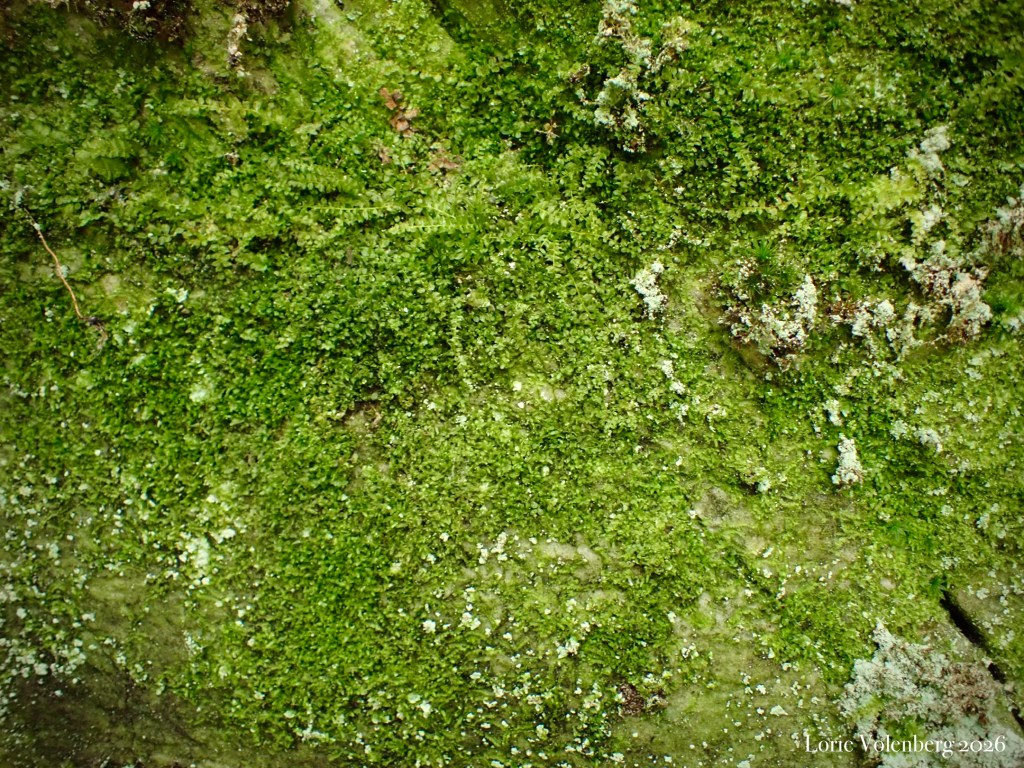

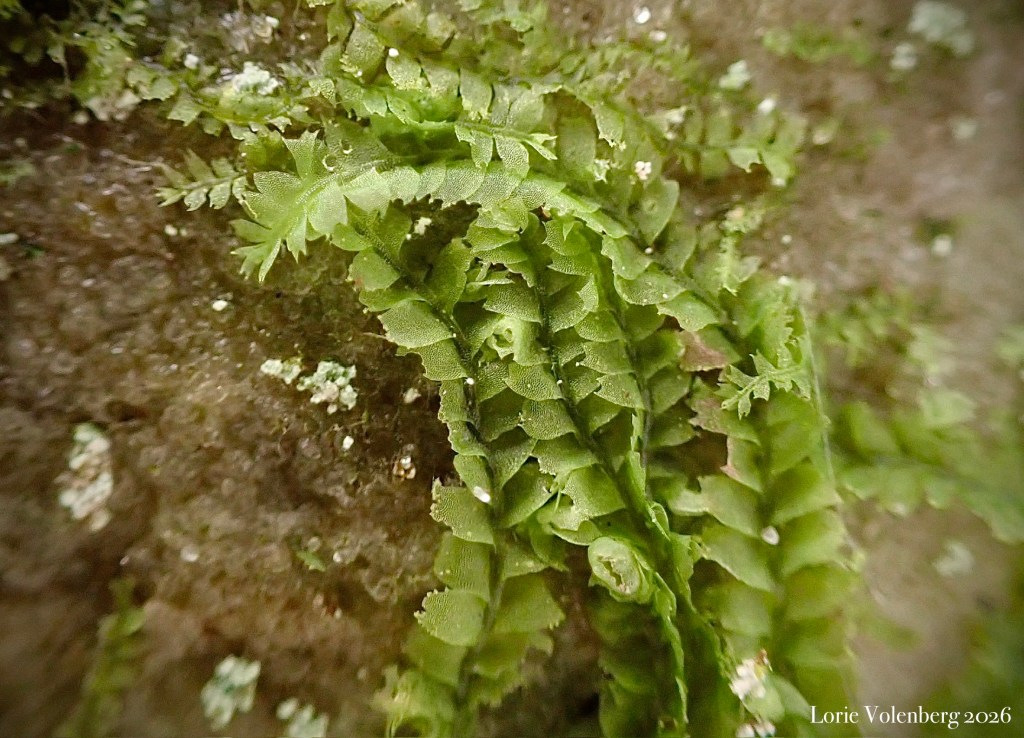
Above left: The leafy liverwort Chiloscyphus minor looks like mottled green stuff on the rock from the distance; Above middle: Up close, perianths are visible everywhere, along with the spherical, one-celled gemma that are produced at the ends of many of the leaves; Above right: Close up of a few stems.
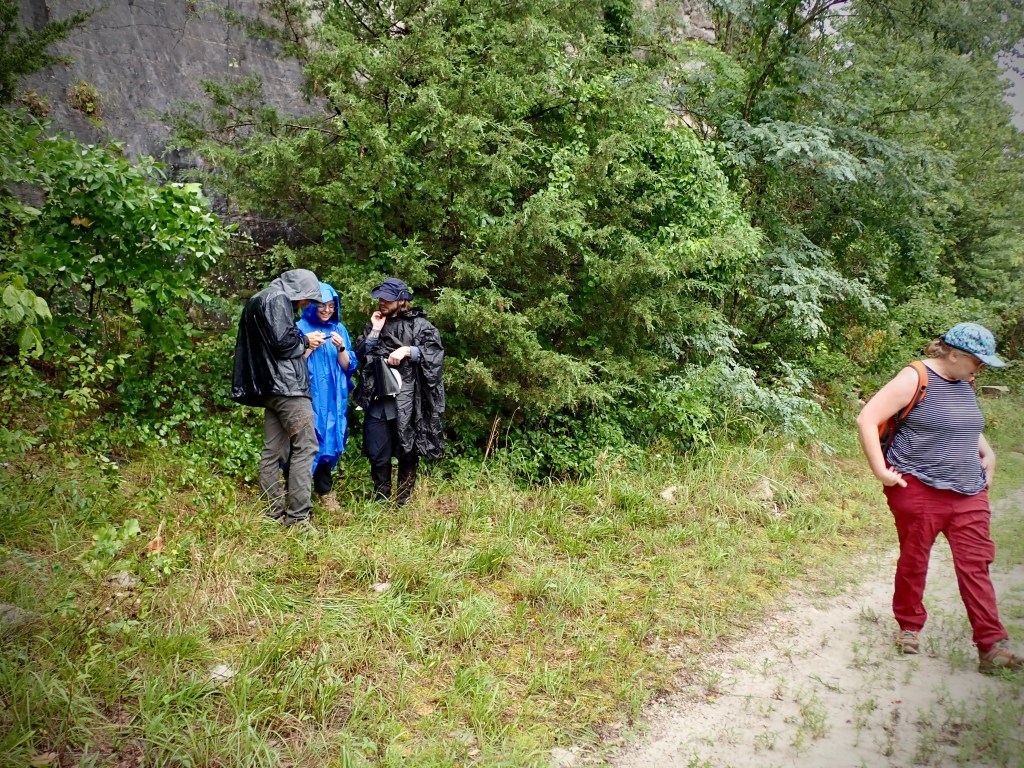
Rain…..
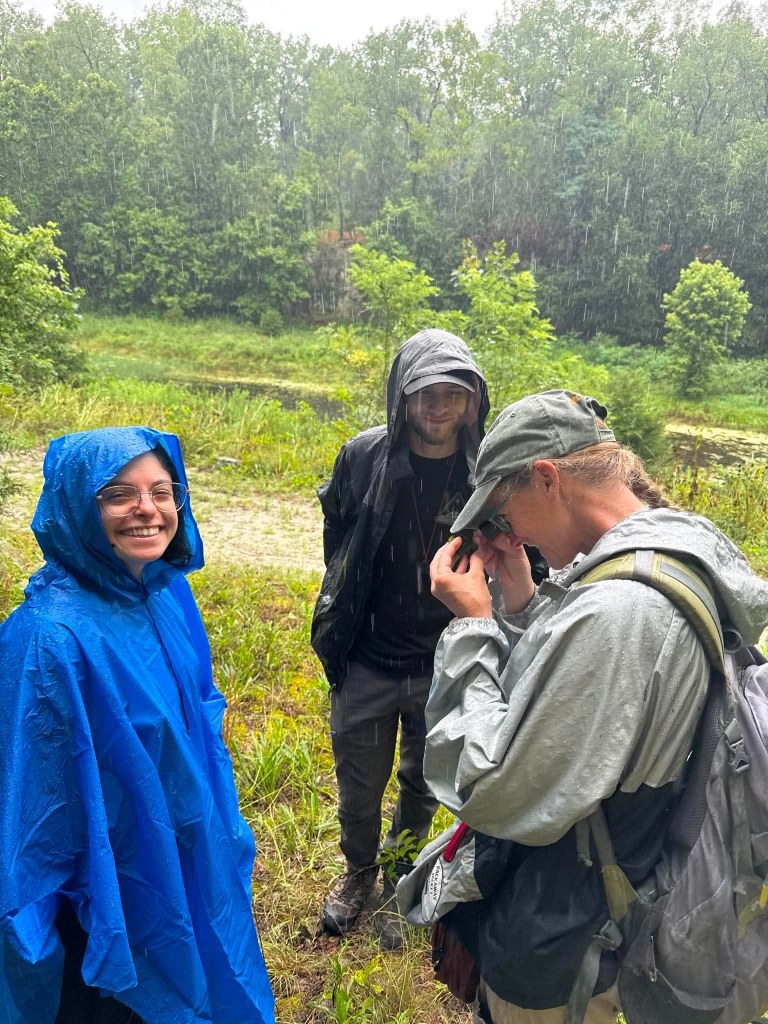
The rain didn’t slow us down, and it actually was quite refreshing. Hillary was embracing it to the fullest while the rest of us used droplet deterrents;) Photo to the right courtesy of Hillary.
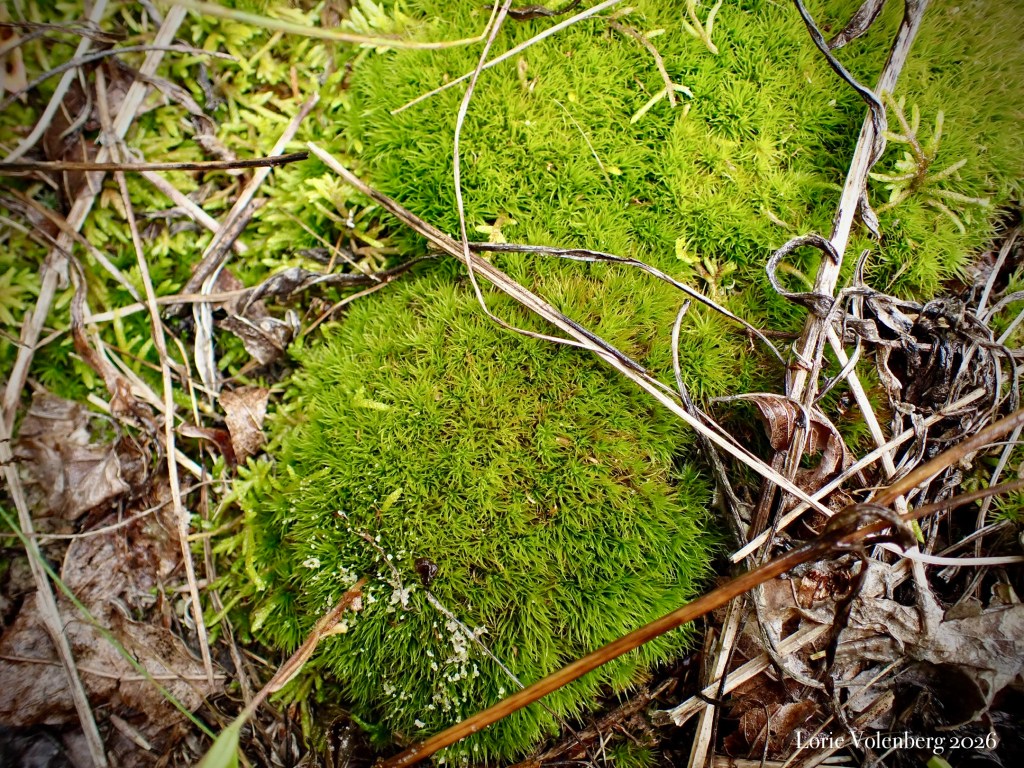
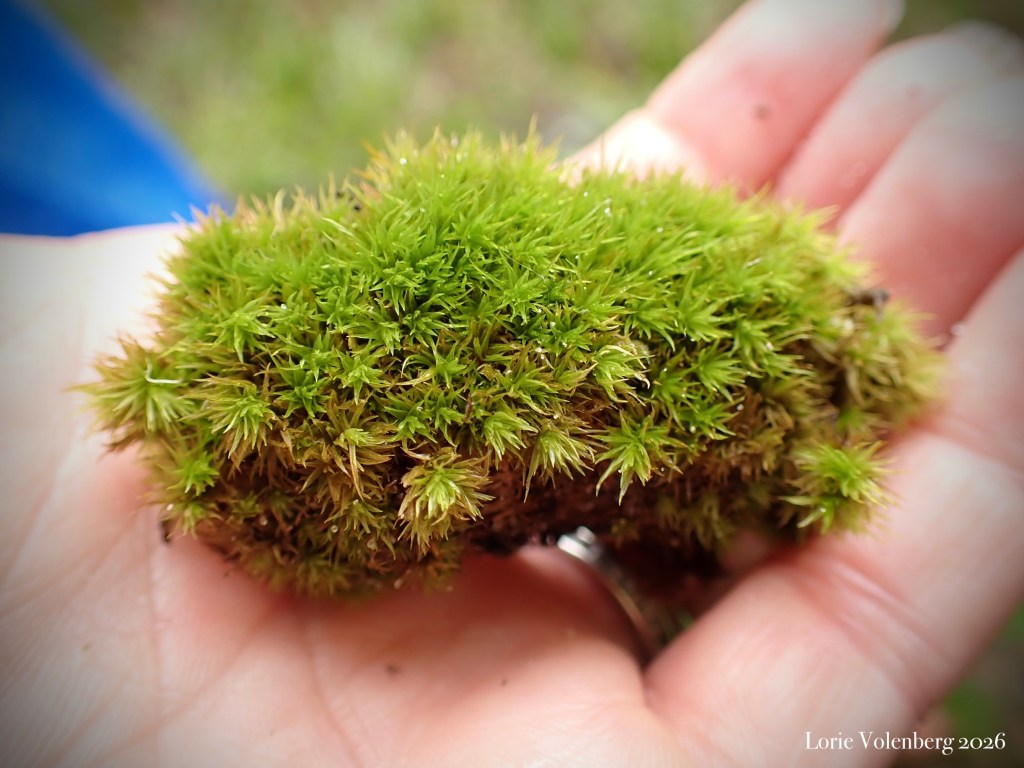
There was a species growing on the sandy soil that was making me scratch my head. It certainly looked like a Dicranum, but I wasn’t convinced that it was D. condensatum. It seemed to form “rosette” patterns in the mounds, and the stem clearly showed tufts of growth at different stages. That is a trait that belongs to D. spurium, but it wasn’t necessarily screaming D. spurium to me either. Only the microscope at home helped to convince me that it was in fact, D. spurium. While this is not an SOCC species, it is not very common either. Finding it here will make a new county record!
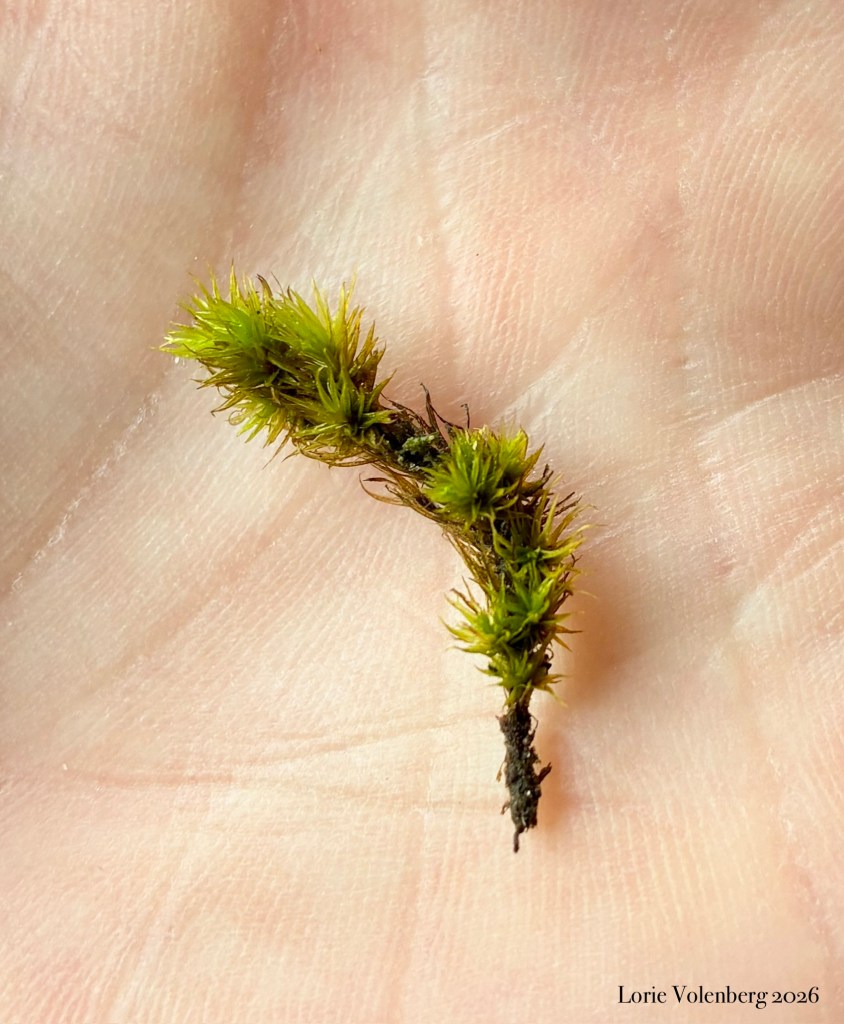
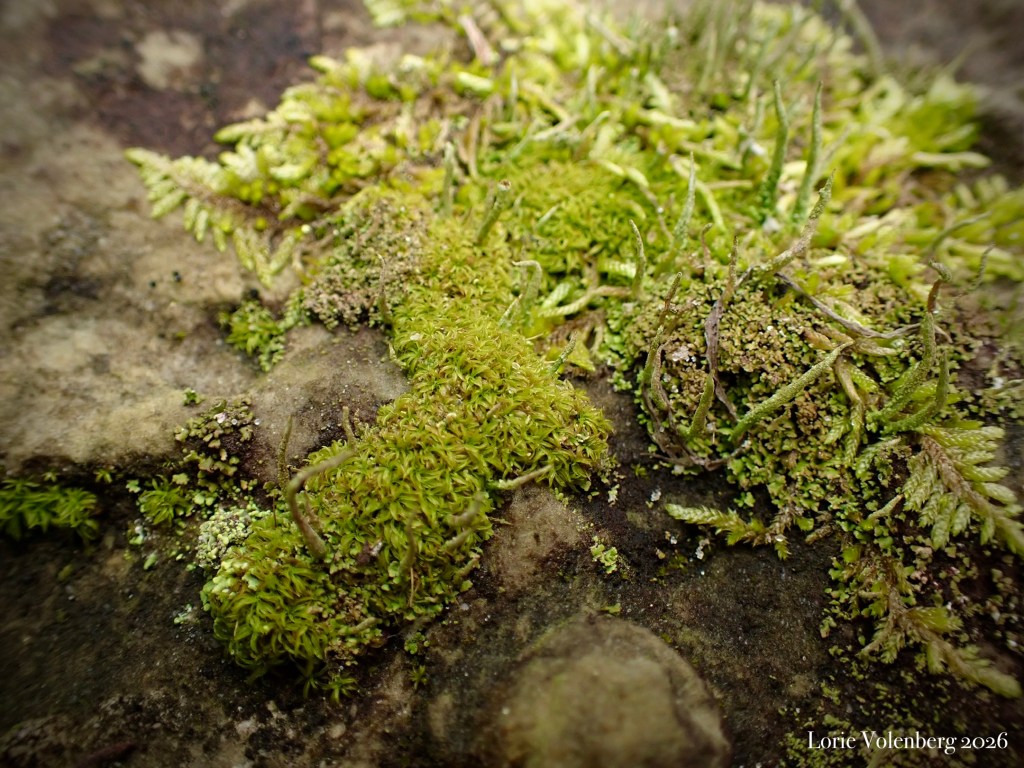
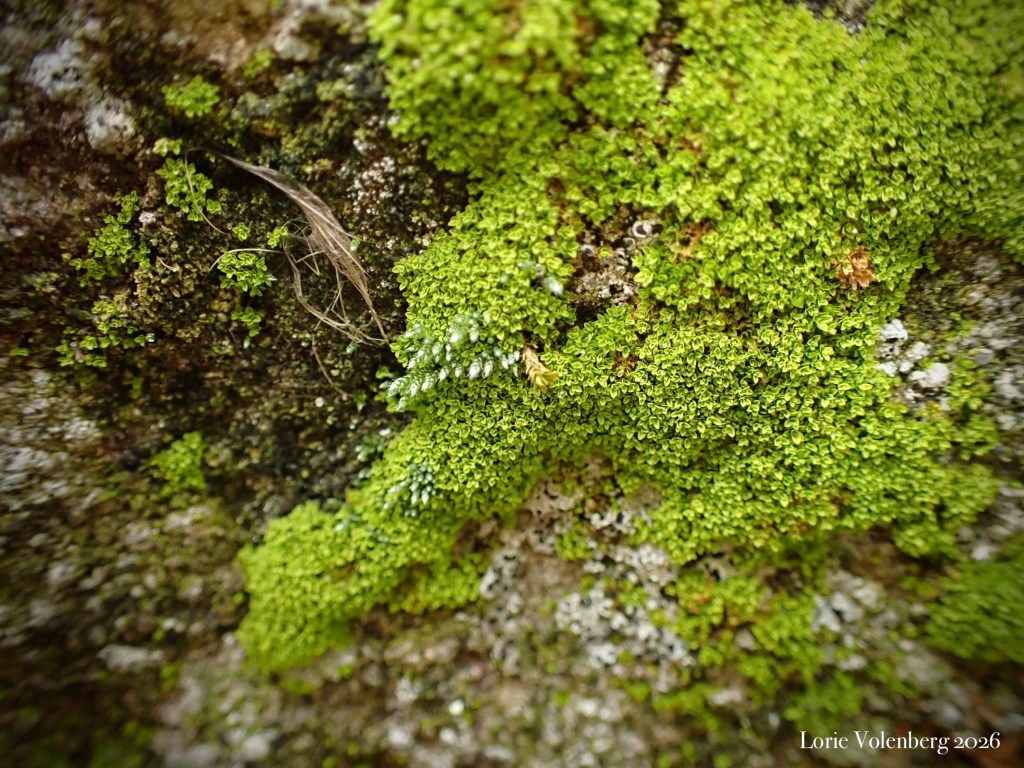
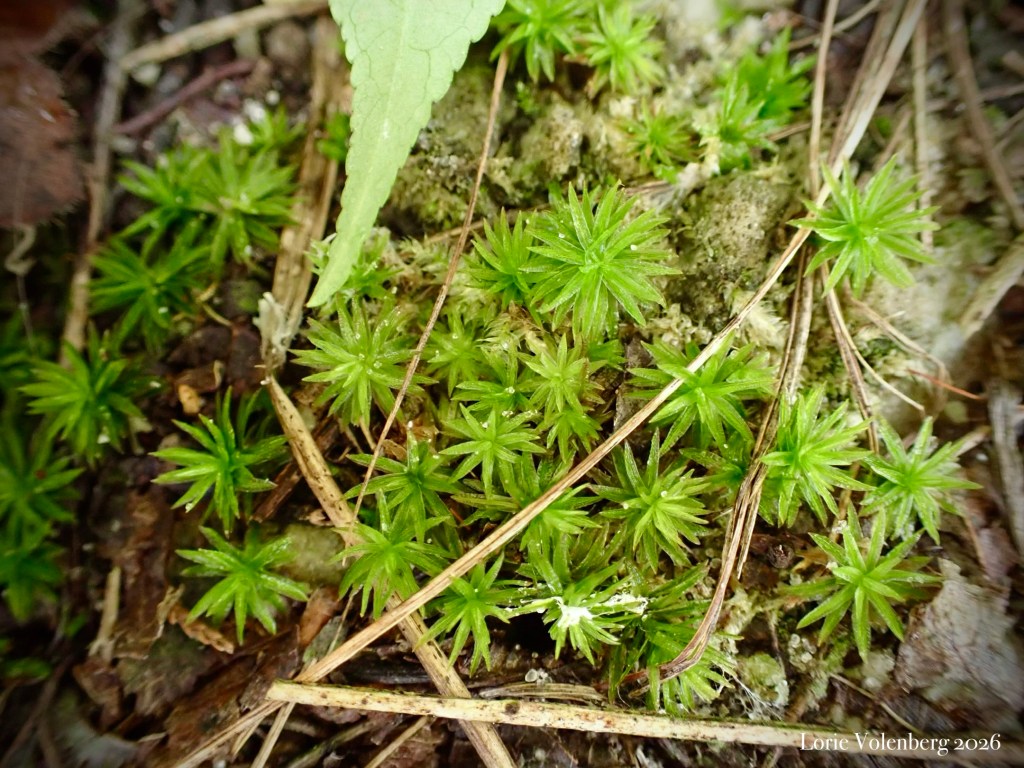
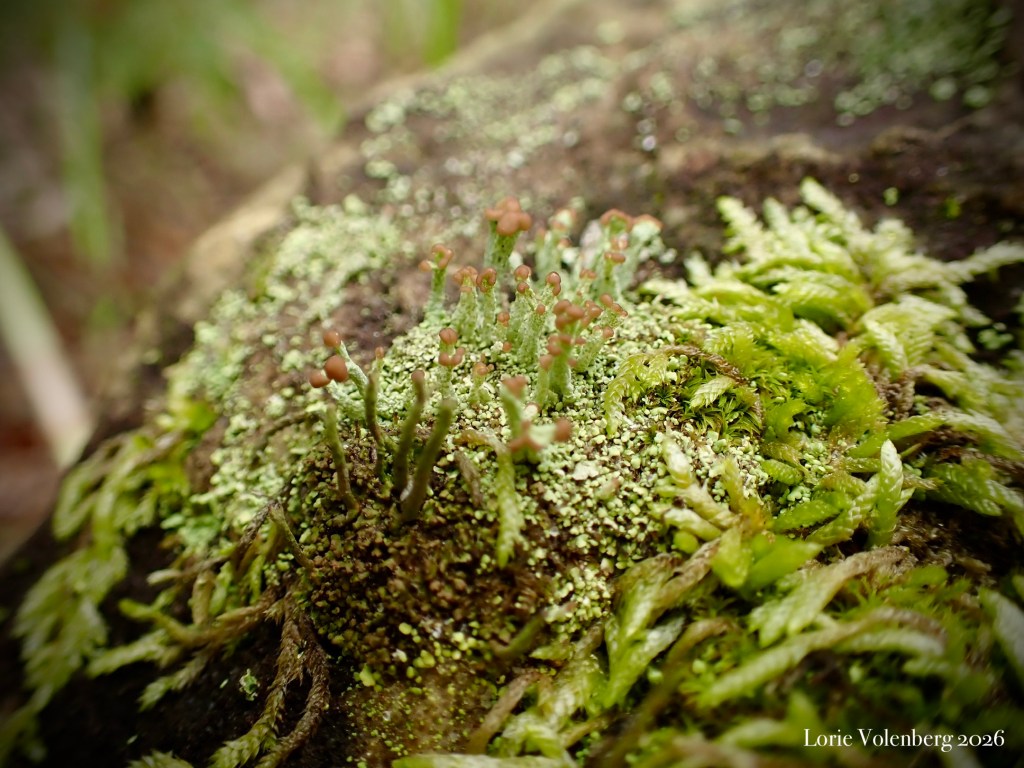
Many other moss species were found all around:


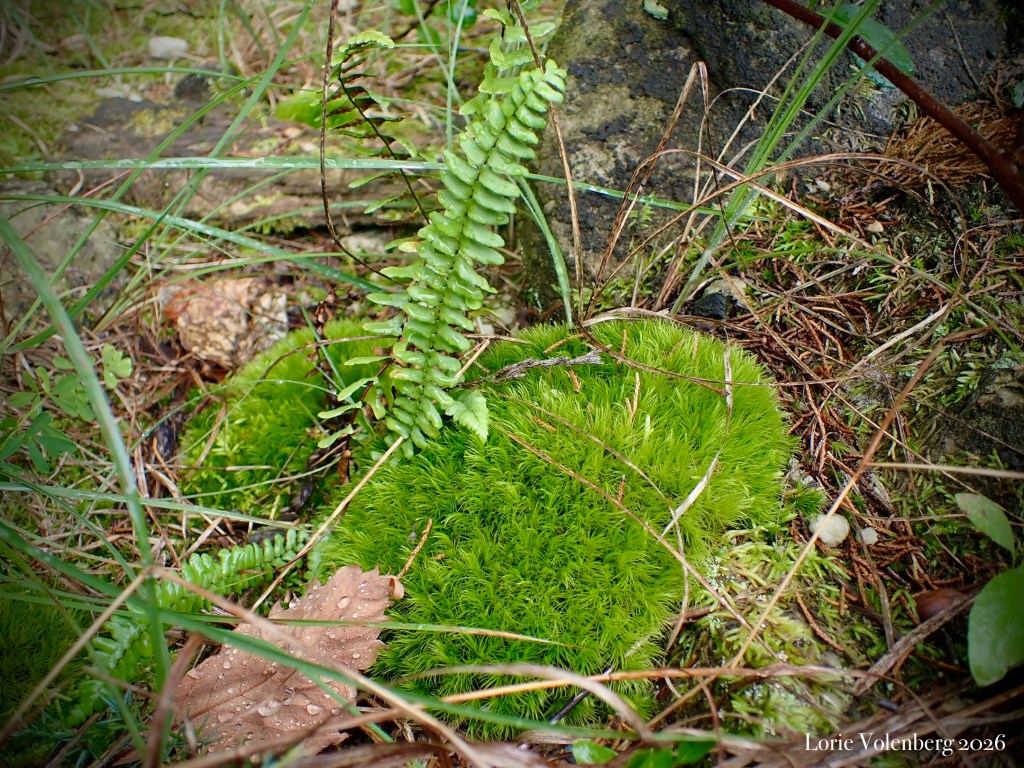
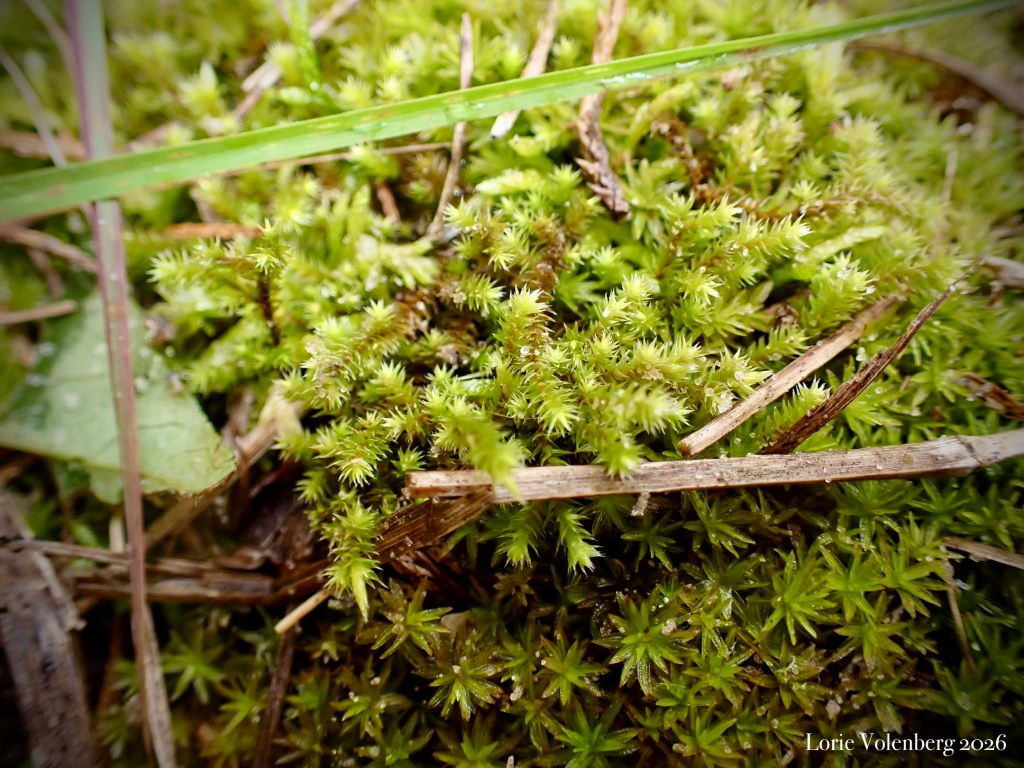
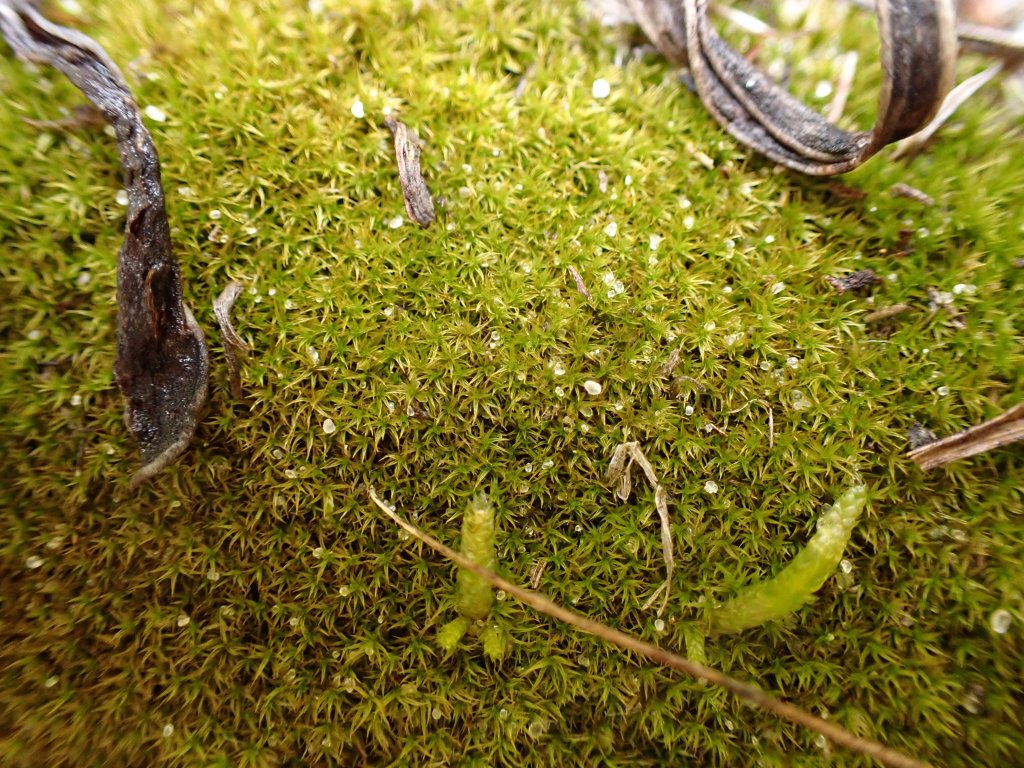
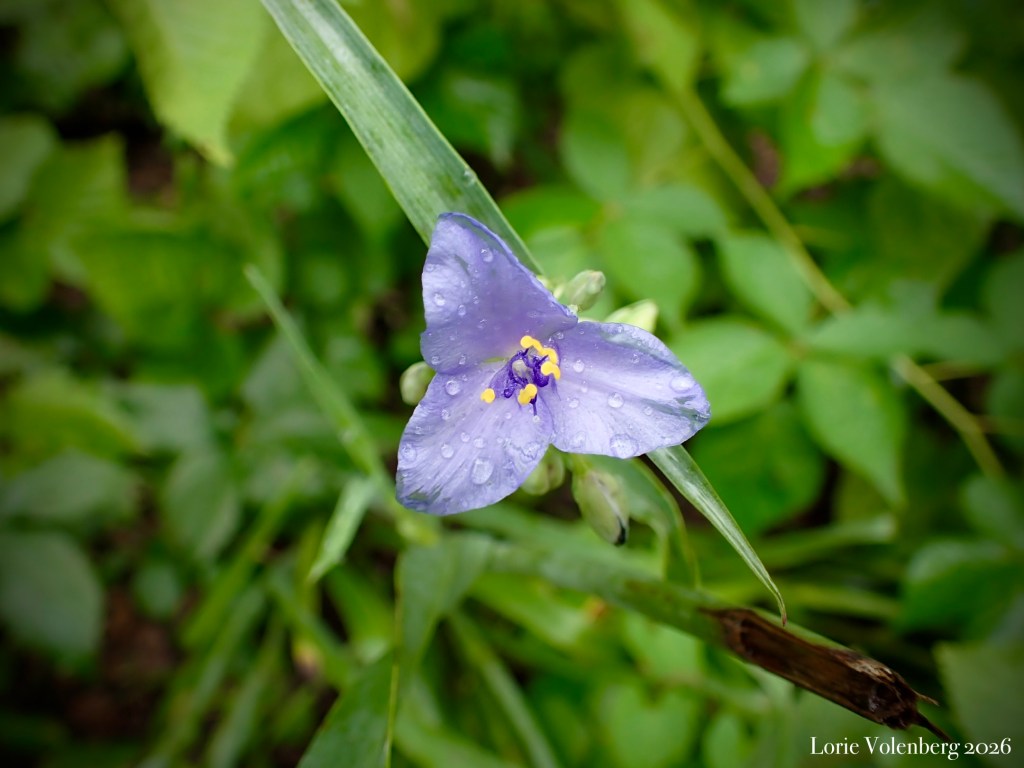
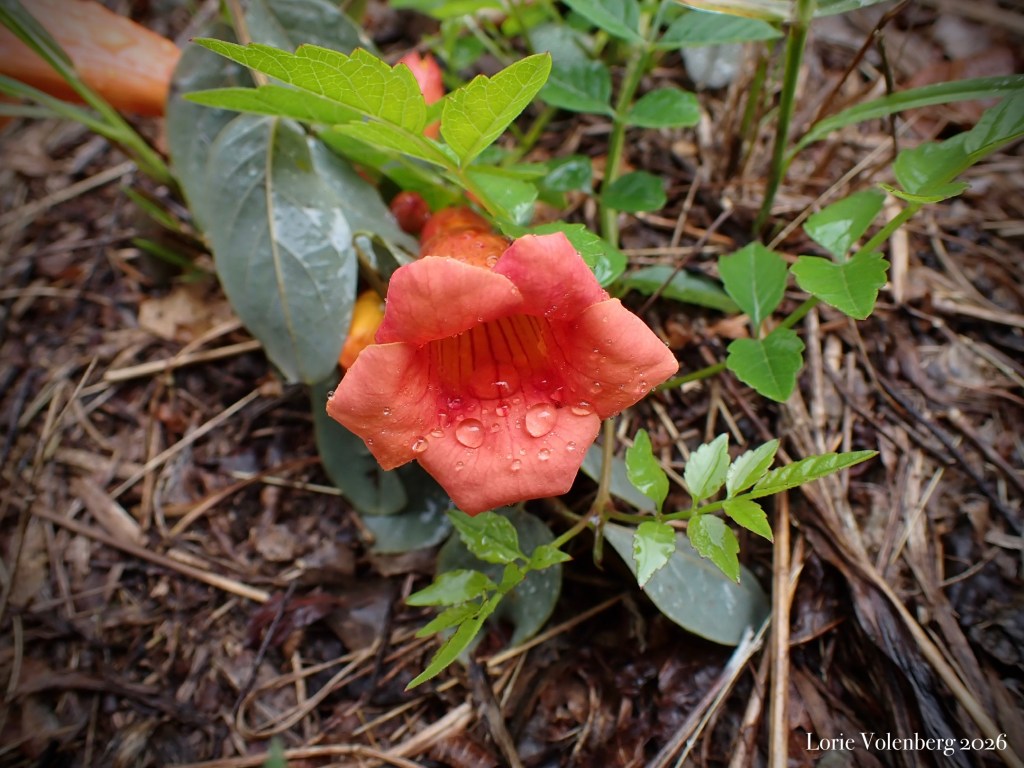
A few flowers:
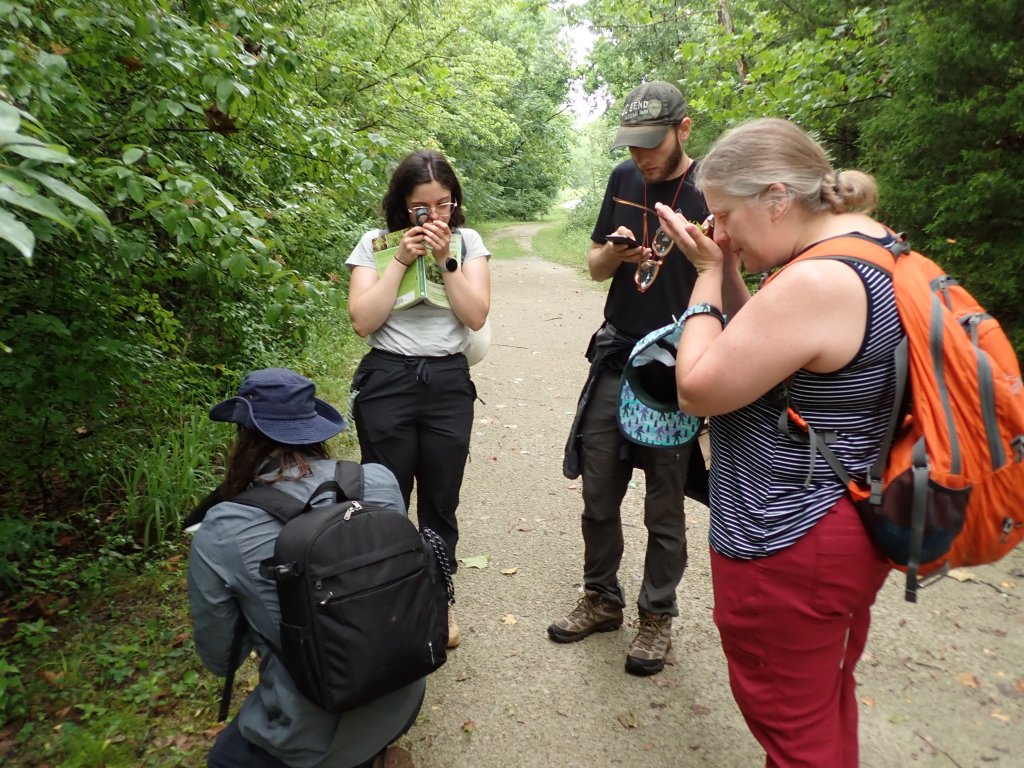
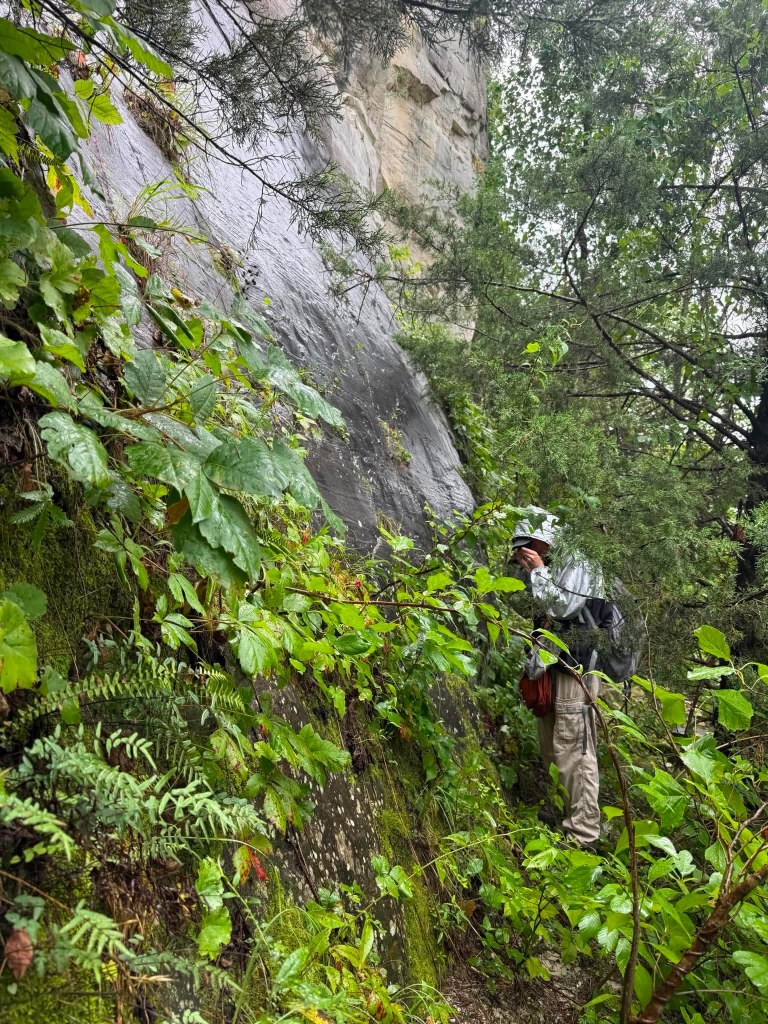
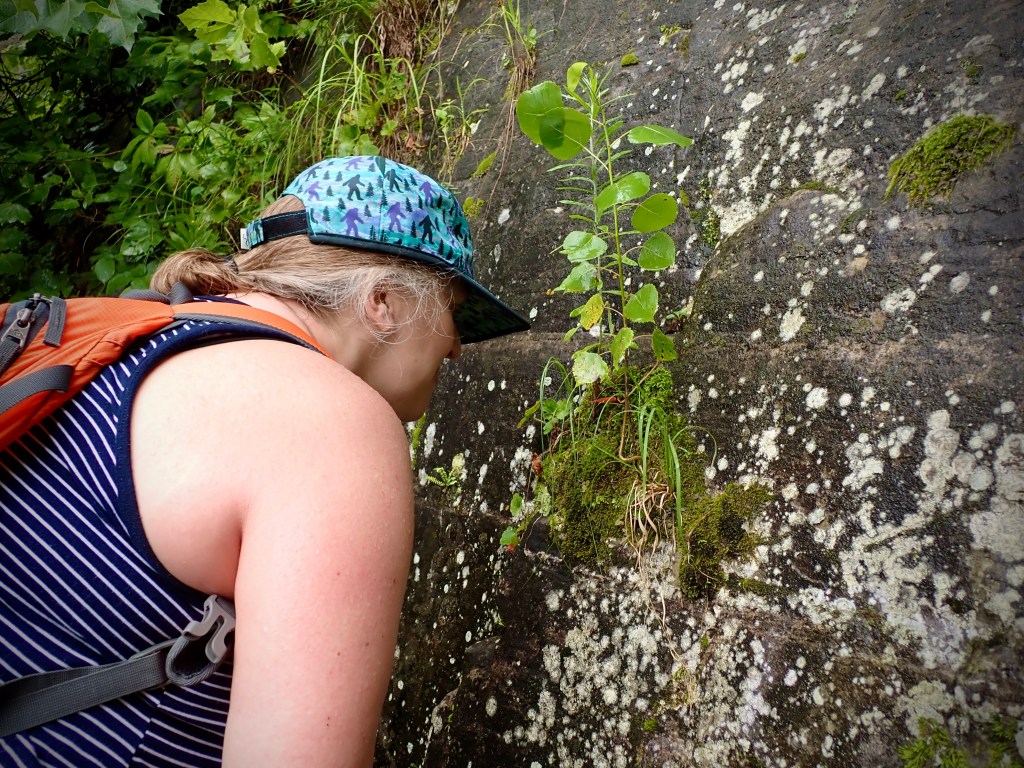
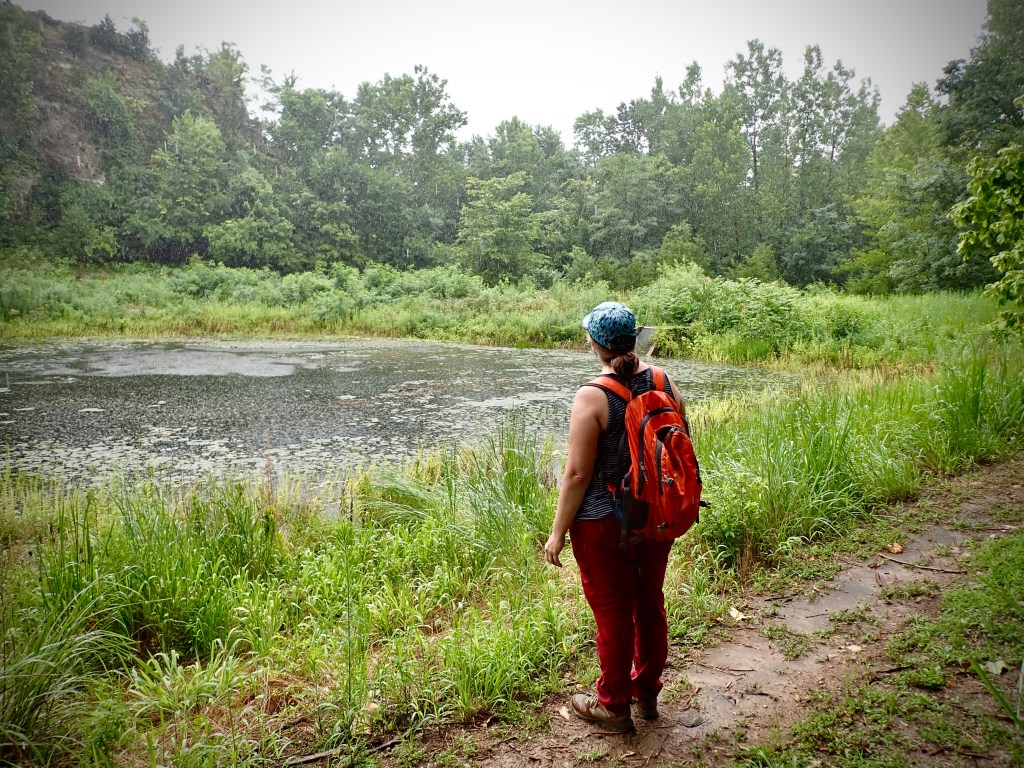
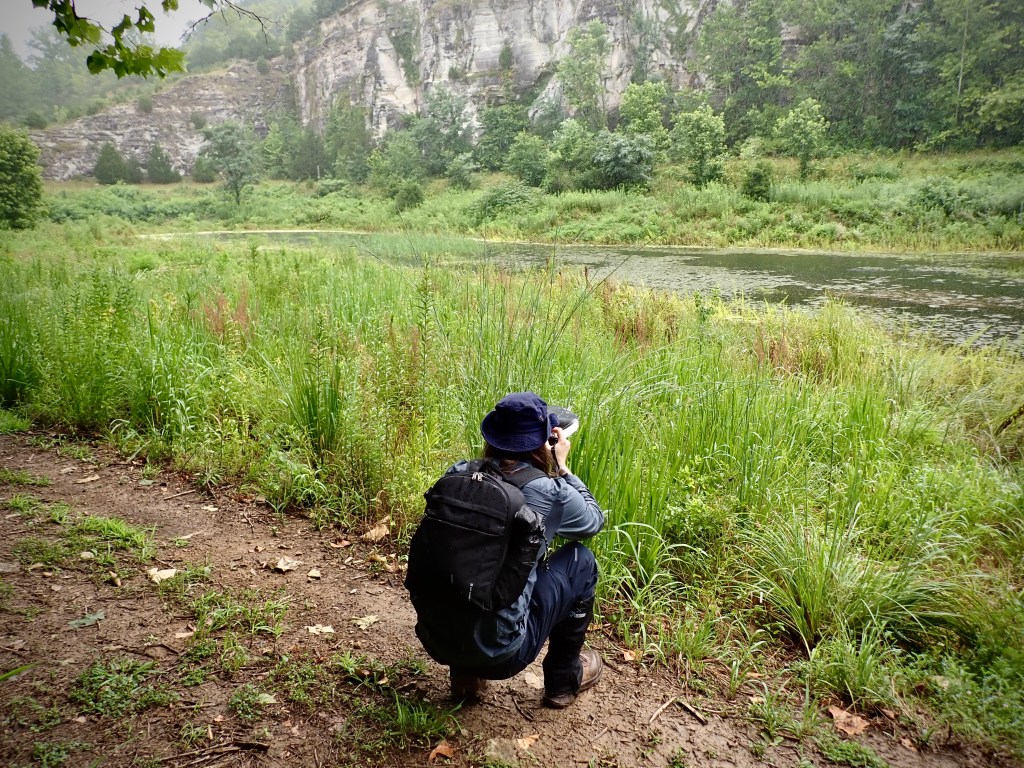
Some odds and ends people photos:
We documented 22 bryophyte species:
- Barbula unquiculata
- Weissia controversa
- Plagiomnium cuspidatum
- Brachythecium laetum
- Leskea cf. graciliscens
- Hypnum cf. lindbergii
- Entodon seductrix
- Entodon sp: one of the “flat” ones
- Thuidium delicatulum
- Haplocladium cf. microphyllum
- Tortella humilis
- Atrichum cf. angustatum
- Tortula obtusifolia
- Bryum argentium
- Polytrichum juniperinum
- Dicranum scoparium
- Dicranum spurium
- Hedwigia ciliata
- Ceratodon purpureus
- Didymodon sp.
- Reboulia hemisphaerica
- Chiloscyphus minor
If you would like to learn more about my bryophyte crawls and how to join, click here.
Until next time, happy mossing!!


Leave a comment