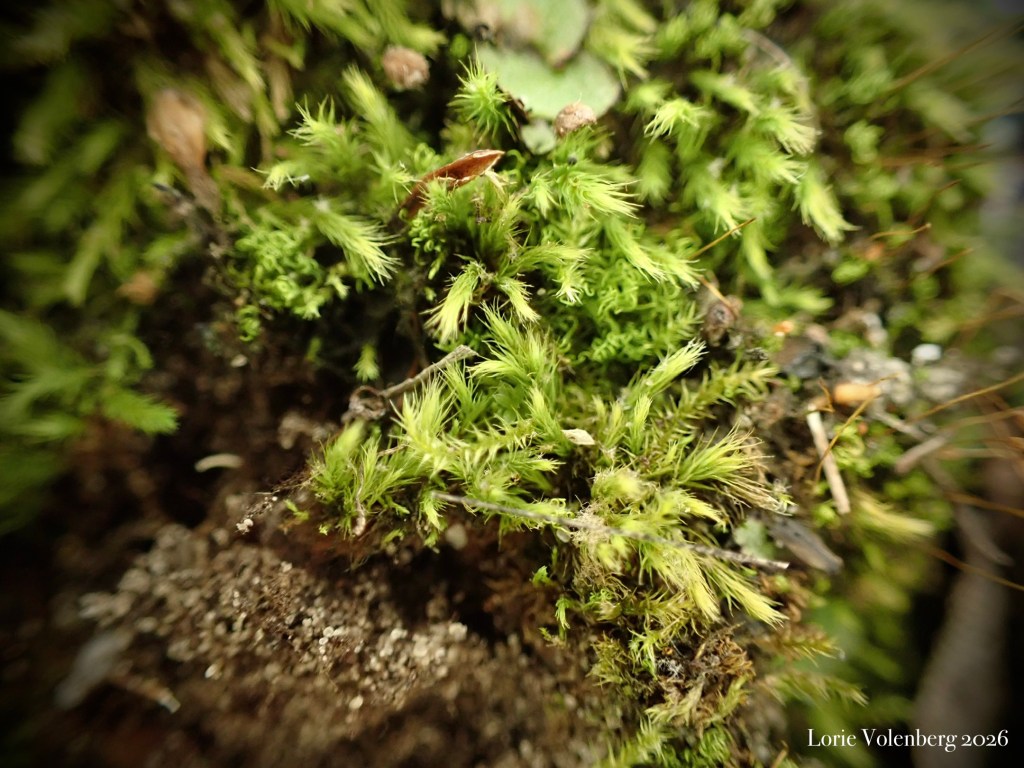
There are 4 (5) known Philonotis species in Missouri, P. fontana, P. marchica (P. muhlenbergii is considered synonymous with P. marchica), P. hastata (seen as P. gracillima in Flora of North America), and P. longiseta. The first two are the most common species to be seen in Missouri, and both are found at Graham Cave SP. P. hastata is an S1 ranked species. I saw it for the first time in 2025, and I have located it in two new locations.
P. longiseta was the last species for me to come across in Missouri, and I finally found it yesterday! I found it nicely tucked away in the overhanging cracks on the side of an exposed chunk of St. Peter Sandstone situated in a savanna. It was protected from the harsh rays of the sun by being nestled in low to the ground where the soil was starting to reach, and the leaves from the brushy trees and foliage arching above offered the coveted shade. Upon closer inspection with the hand lens, the long, slender leaves threw me for a loop, and then I saw the bulbils! I knew this would be likely a Pohlia or Philonotis species, but only the microscope would let me know.
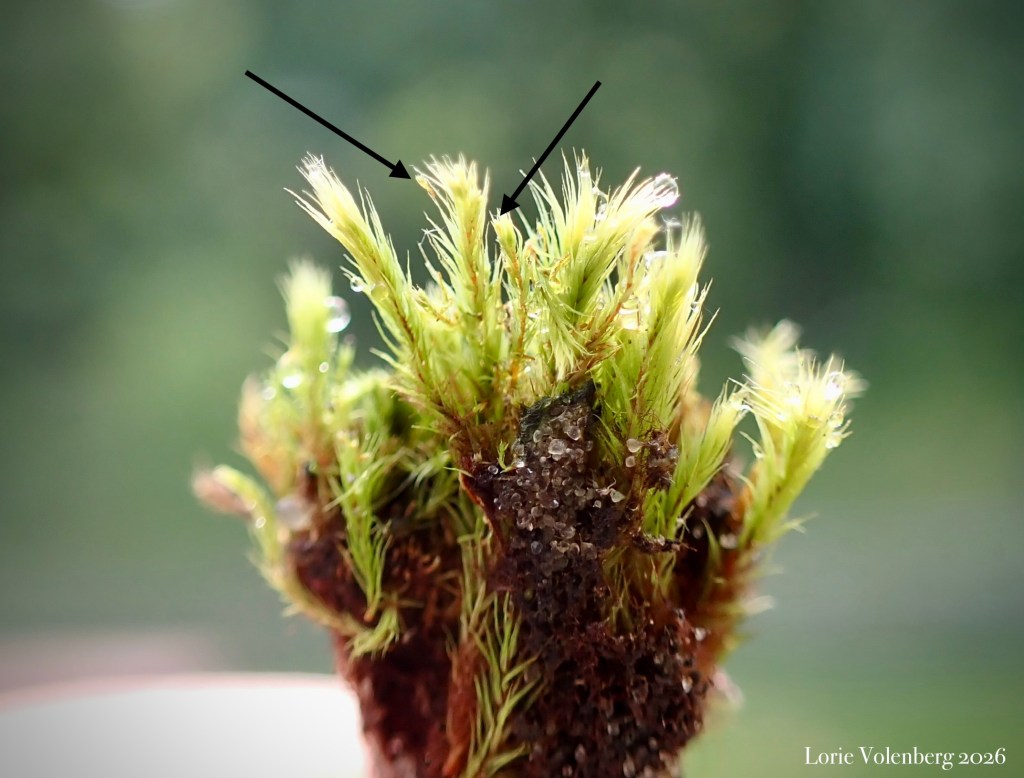
Once home and under the microscope, I immediately saw the strong prorulae at the distal ends of all the cells, thus letting me know that this was a Philonotis species. The long, triangular, and slender leaves were none that I had seen before on a Philonotis species. I followed the keys in FoNA and was slightly stumped. The keys led me to Philonotis longiseta, but the description said that this species did not reproduce vegetatively. I did some research for revisions of the Philonotis species and came across William Milton Zales dissertation from 1973: A Taxonomic Revision of the Genus Philonotis for North America, North of Mexico. In there, he mentions P. longiseta “…often producing deciduous propaguliferous shoots.”
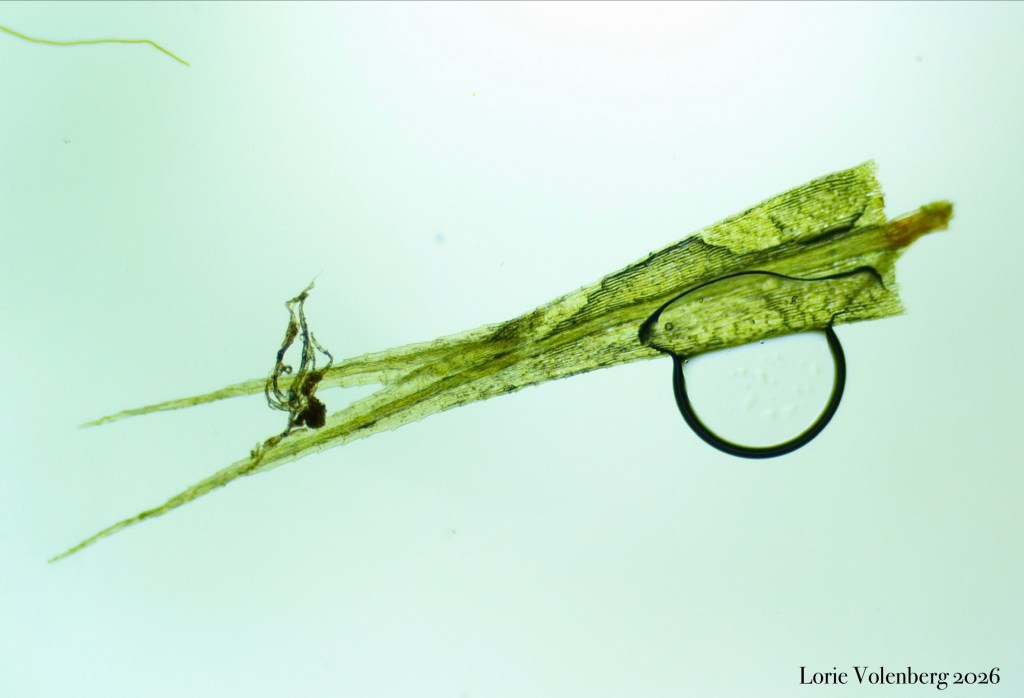
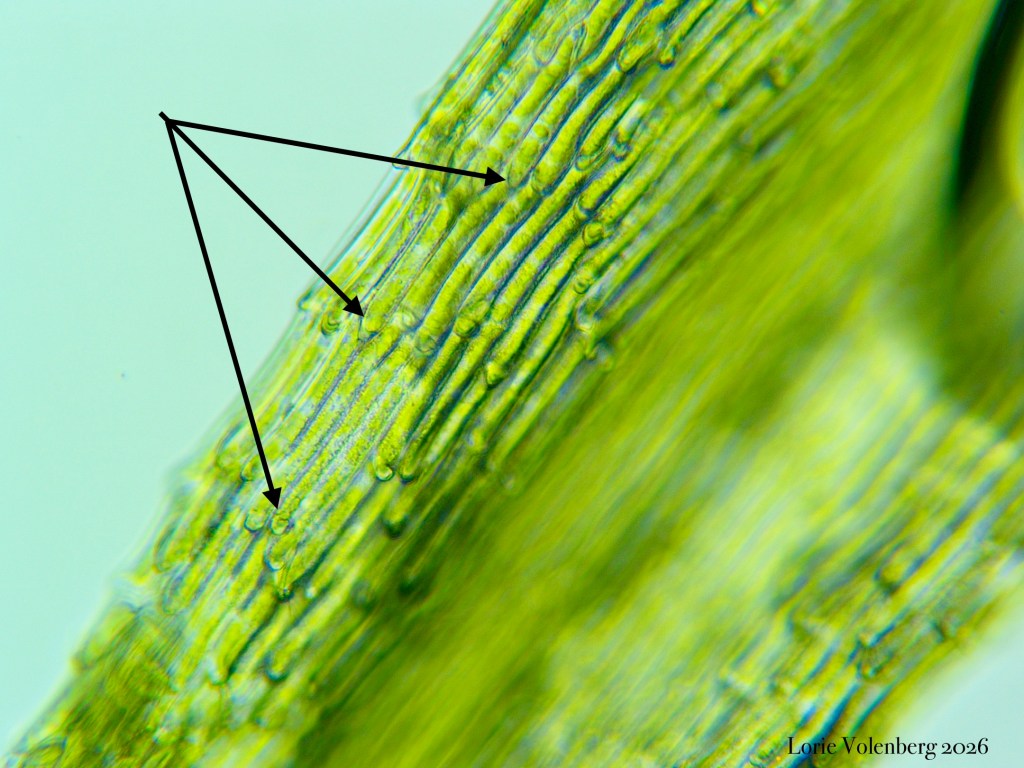
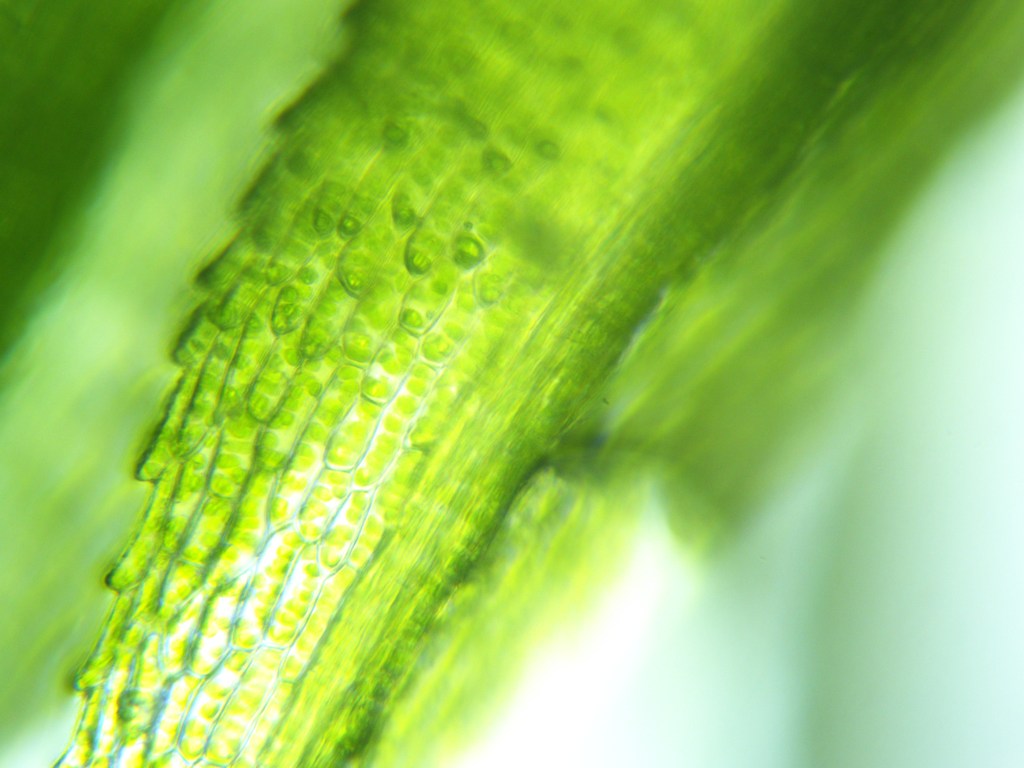
Comparison photo of Philonotis marchica which also has distally placed prorulae on the cells, but not nearly as extreme as P. longiseta. You can usually see the distal end of the cell wall on this species. Additionally, the cells are not nearly as long and narrow.
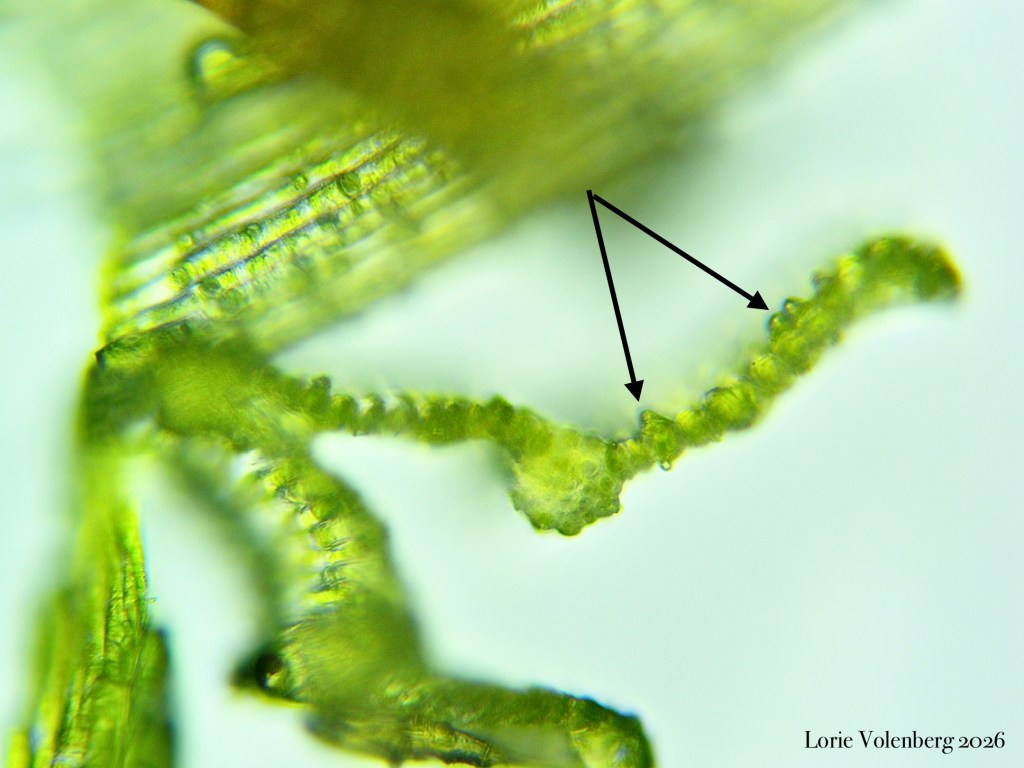
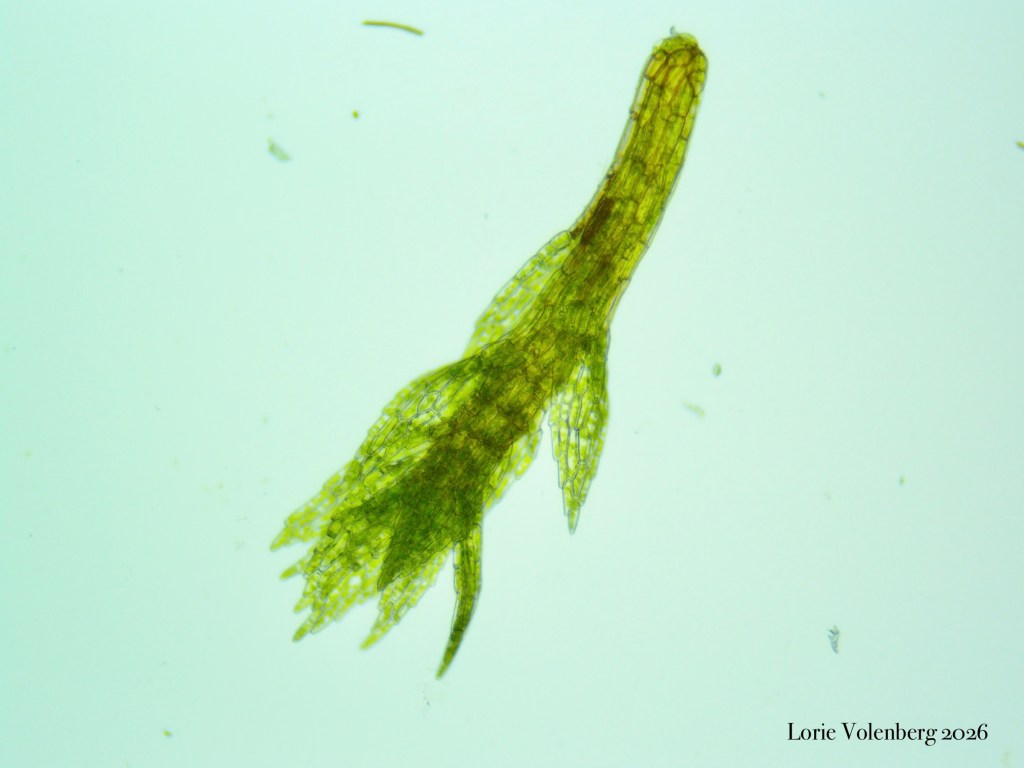
Philonotis longiseta is known from 6 counties in Missouri with around 20+ some vouchered specimens, and the last vouchered specimen was recorded from 1963. I’m surprised that it is not on the SOCC list, but yesterday’s find adds a new location and county to the list!
Happy mossing!!

 Mosses of Missouri and Beyond
Leave a comment