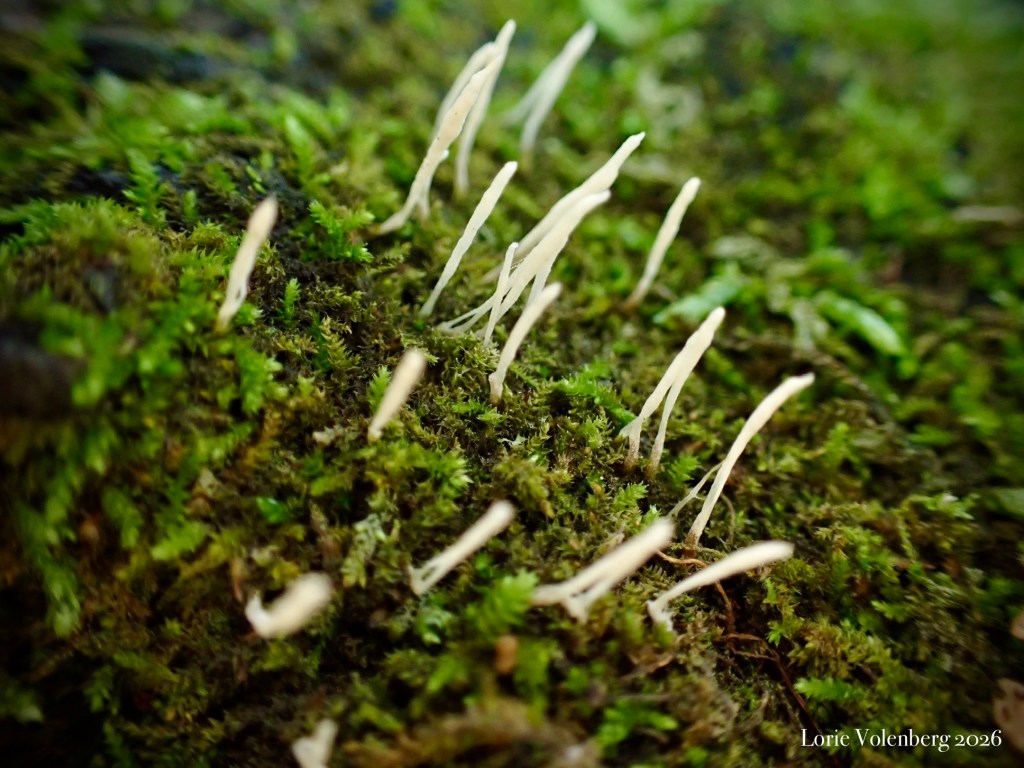
A friend sent some pictures a few weeks ago of a white fungus arising out of a moss-covered log. It looked as though the fungus was growing from the moss itself, but without seeing it in person, it was hard to say. I have been actively keeping an eye out hoping to come across some myself. Considering the warm and wet weather we have been having, I thought I stood a pretty good chance of finding some, and today I finally did!
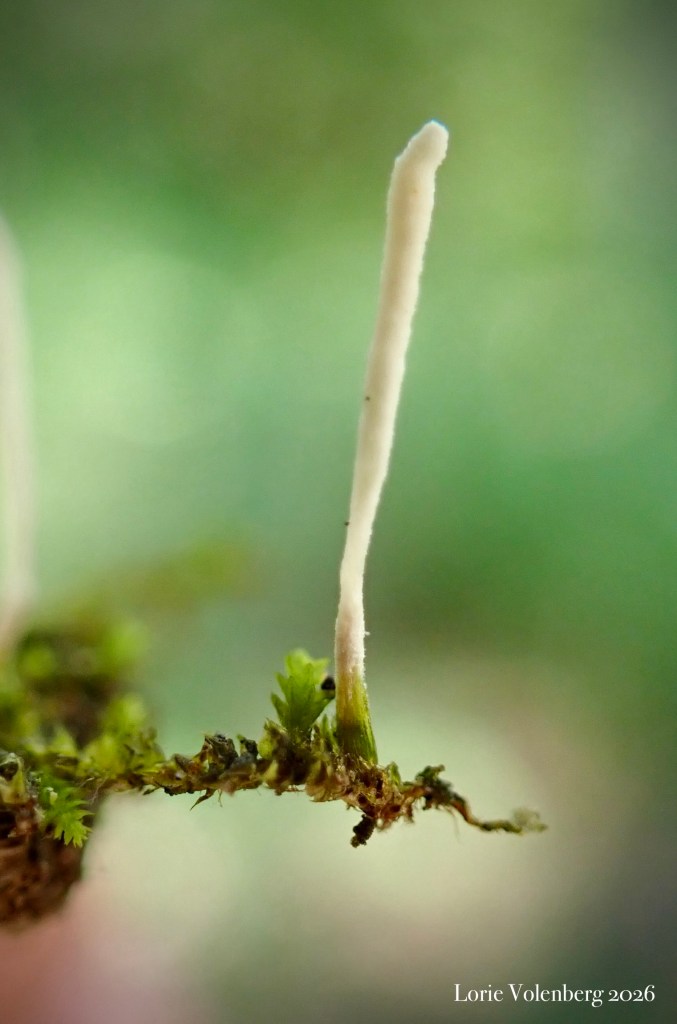
This interesting fungus is Eocronartium muscicola, a basidiomycetes fungus, and I found it growing from Leskea gracilescens that was coating a rotten log. Looking closer at the sample at home, it looked as though the fungus was growing where the sporophyte should be. After some research, I discovered that this is in fact, correct!
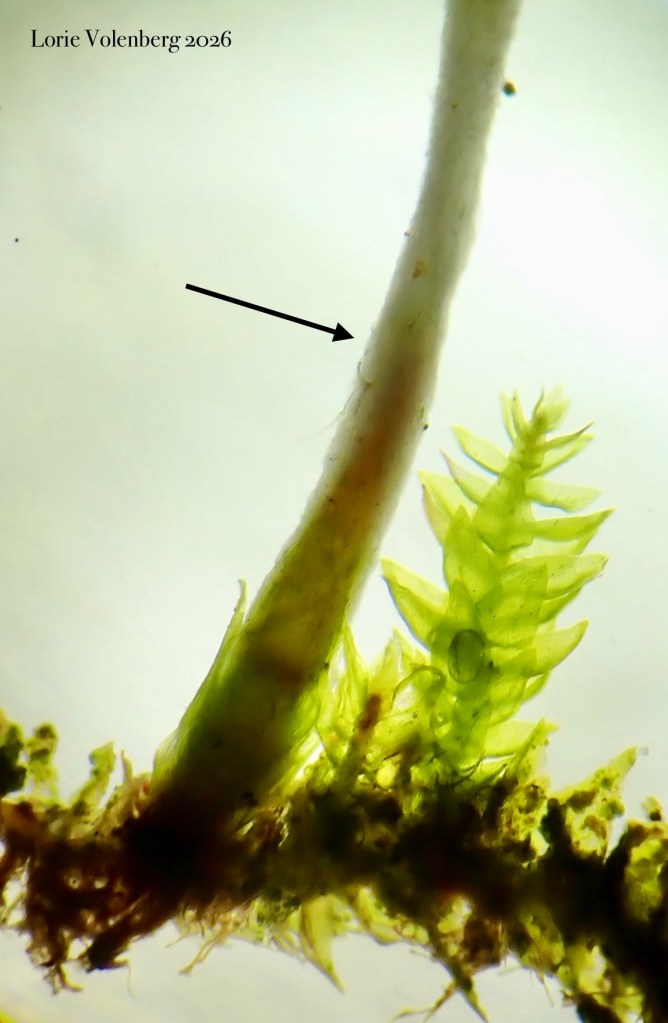
This fungus parasitizes a developing sporophyte by exploiting the gametophyte transfer cells. These transfer cells, found at the base of the sporophyte (called the foot) are where nutrients are moved from the gametophyte (parent) to the developing embryo. Eventually the sporophyte can no longer develop as the fungus takes over. Depending on the species, the sporophyte will develop to different stages before it stops growing. In this case, the sporophyte formed past the perichaetial leaves; the arrow is pointing to the tip of the now parasitized sporophyte.
A cross section of the fruiting part of the fungus shows where it is covering the non-mature, now defunct sporophyte (red center).
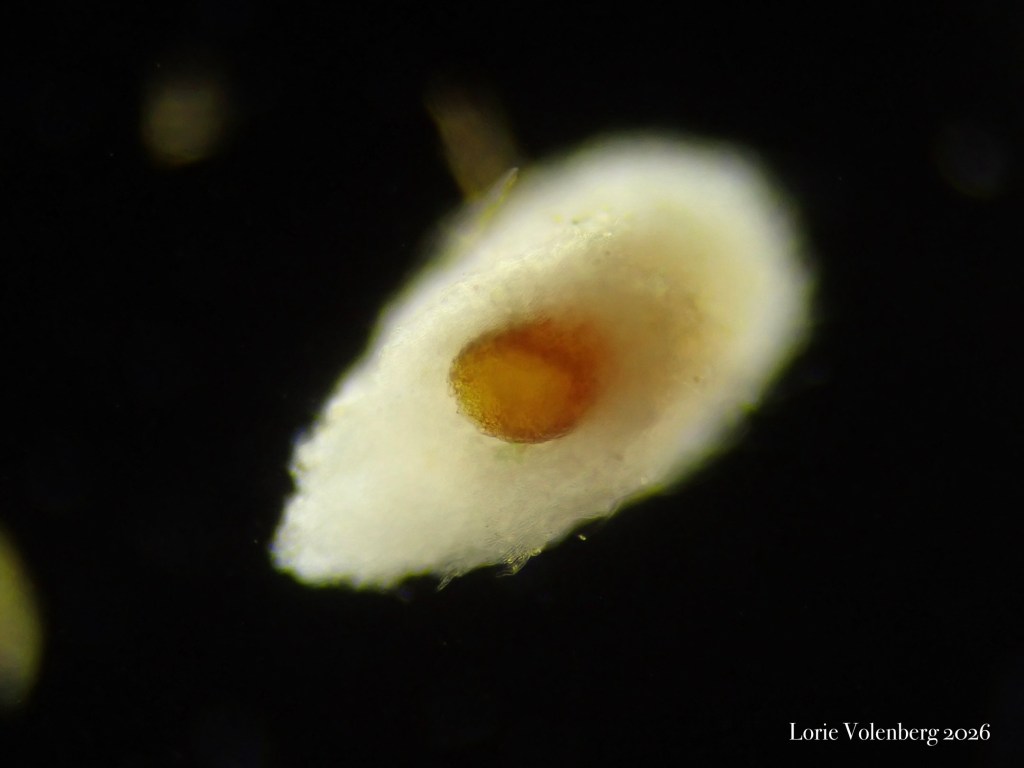
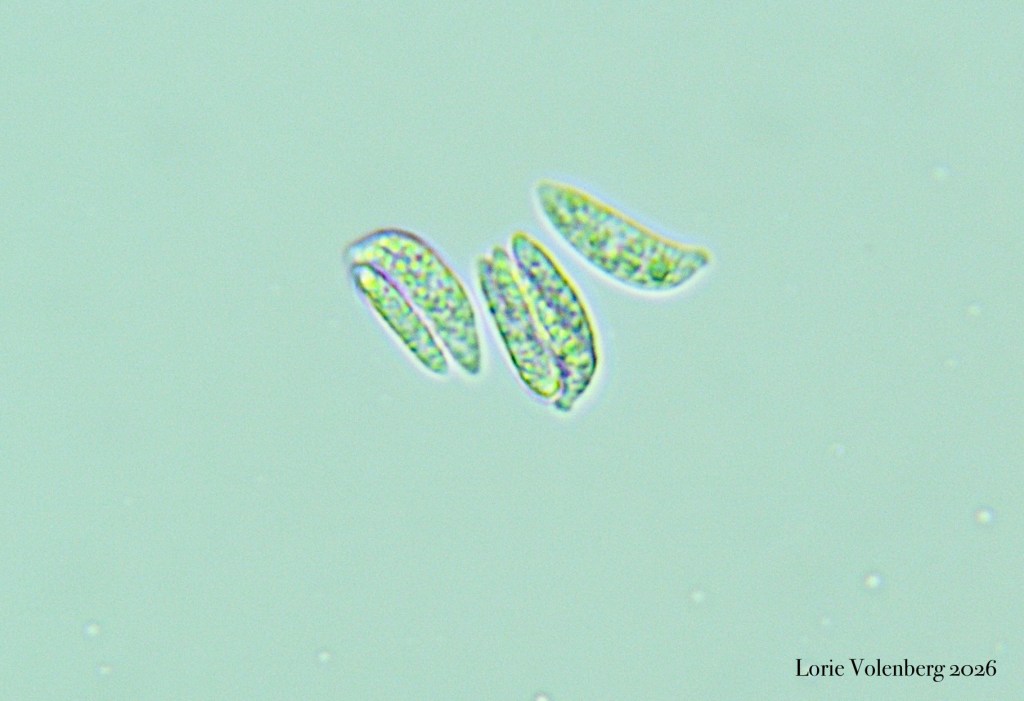
The spores are roughly 20um in length.
There are 21 reported moss hosts for this fungus species (Boehm & McLaughlin 1987) and finding this on Leskea gracilescens will make 22. The following is a list of the other known hosts from that paper (with somewhat update names):
- Fissidens taxifolius
- Fissidens viridulus
- Weissia controversa
- Leskea obscura
- Anomodon rostratus
- Climacium americanum
- Climacium dendroides
- Haplocladium microphyllum
- Thuidium delicatulum
- Cyrto-hypnum minutulm
- Hygroamblystegium varium
- Leptodictyum riparium
- Campylium chrysophyllum
- Drepanocladus uncinatus
- Brachythecium laetum
- Oxyrrhynchium hians
- Entodon seductrix
- Isopterygiopsis muelleriana
- Pylaisiella polyantha
- Rhytidiadelphus triquetrus
Now is a perfect time to go out looking for this fungus, so let me know if you find any! Most of these moss species are found here in Missouri.
Happy mossing!


 Mosses of Missouri and Beyond
Leave a comment