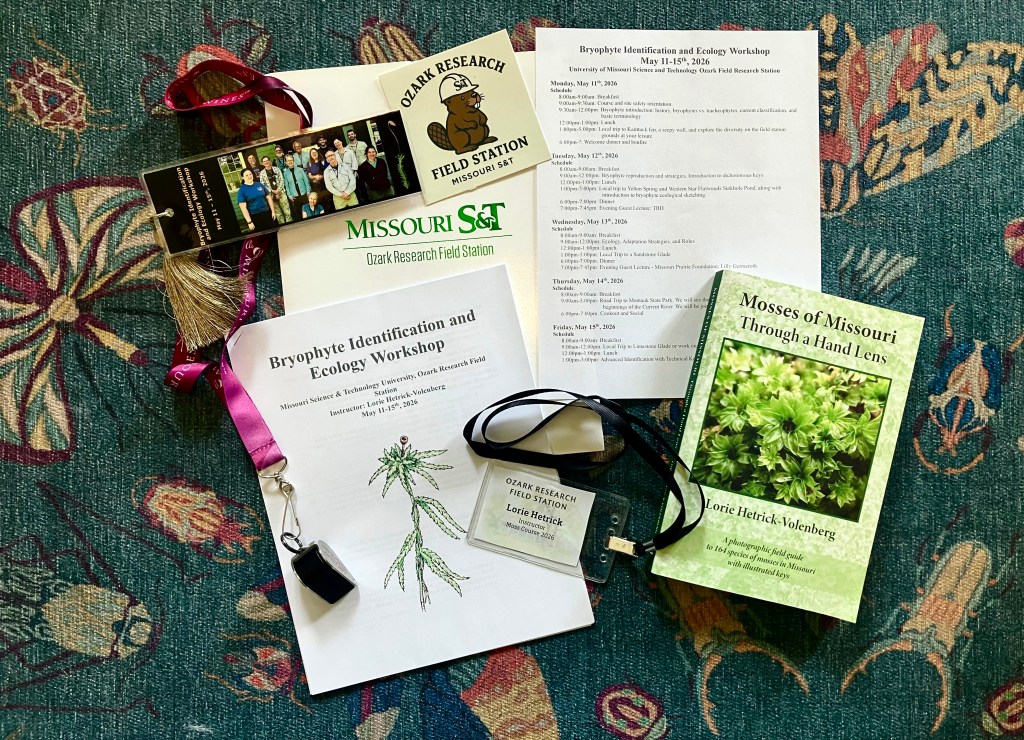
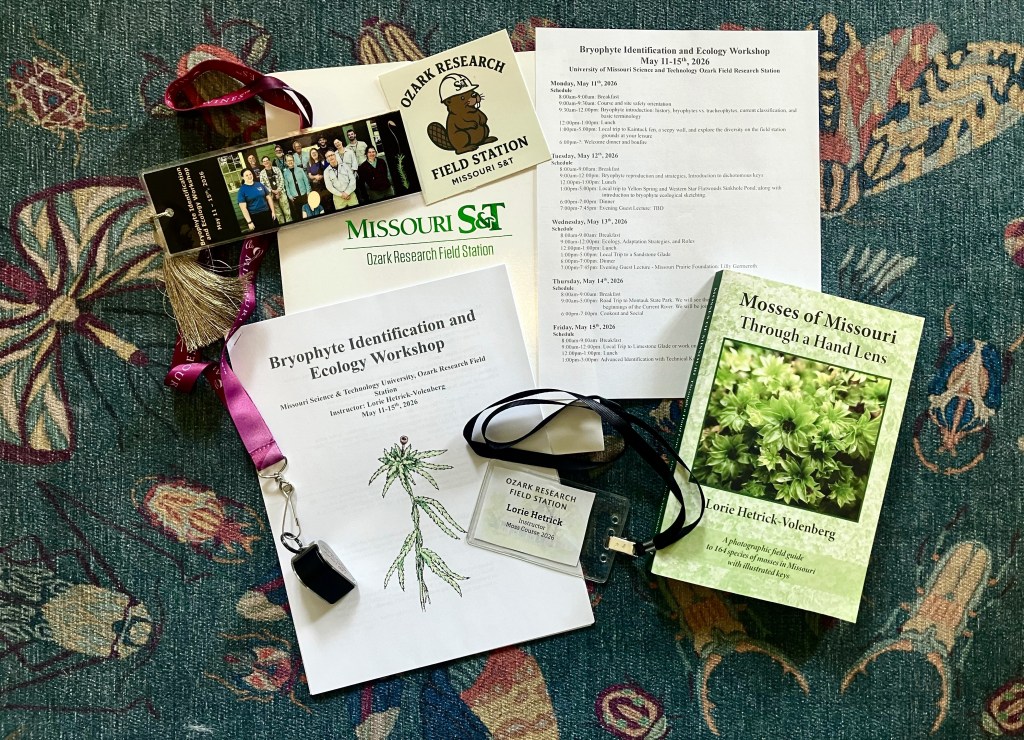
Over a year ago, Dr. Robin Verble, Director of the Environmental Science program at Missouri University of Science and Technology, and Co-Director of the Ozark Research Field Station, contacted me about putting on a bryophyte workshop at the field station. Giving workshops is something I had been wanting to start to do, and I felt comfortable putting on a 2-day workshop at the time. Robin being Robin, who is very much an enthusiastic, positive vibing, reach for the stars go-getter, suggested, “How about a 5-day workshop instead?”
Gulp.
After many debates in my head, major persuasiveness and support from my husband, and deep-diving into what other workshops have done in the past, I agreed to give the 5-day workshop. You are your own worst enemy, and self-doubt was a major issue for me. But one thing I have learned throughout my life is that by taking chances and pushing yourself, you can experience amazing things and get to new levels you once thought were not possible… or at least way off in the future.
“Oh, you’re going to sleep away moss camp!”
The participants of my first ever, 5-day Bryophyte Identification and Ecology Workshop blew me away, and I can say without a doubt that I am one proud moss momma! The “mosslings” were inquisitive, hardworking, friendly, and came from all walks of life with plenty of stories to share. Hilary shared with us the story of an acquaintance asking her what she was doing this week, and after explaining, this person said “Oh, you’re going to sleep away moss camp!” That became our new title for the workshop.
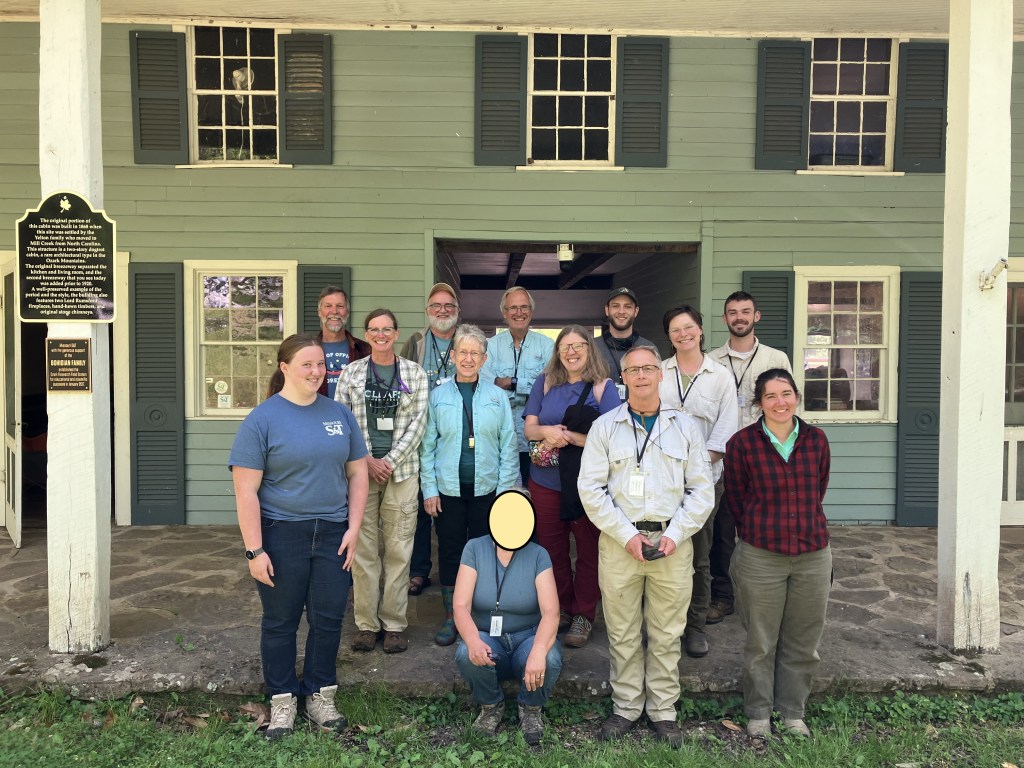
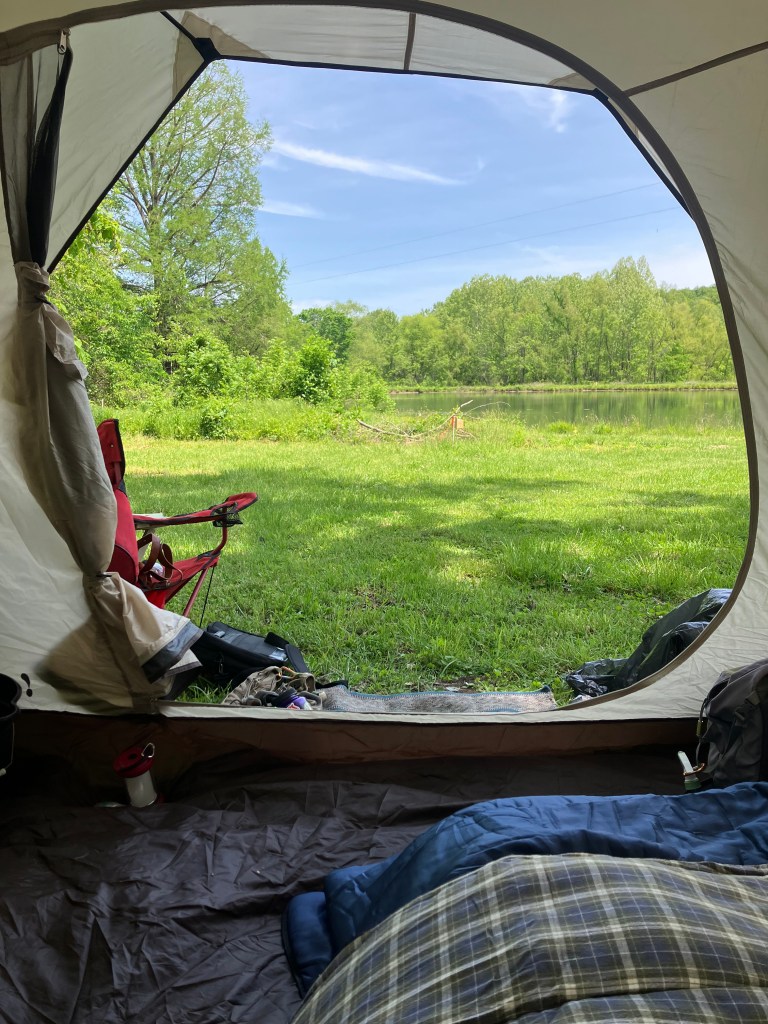
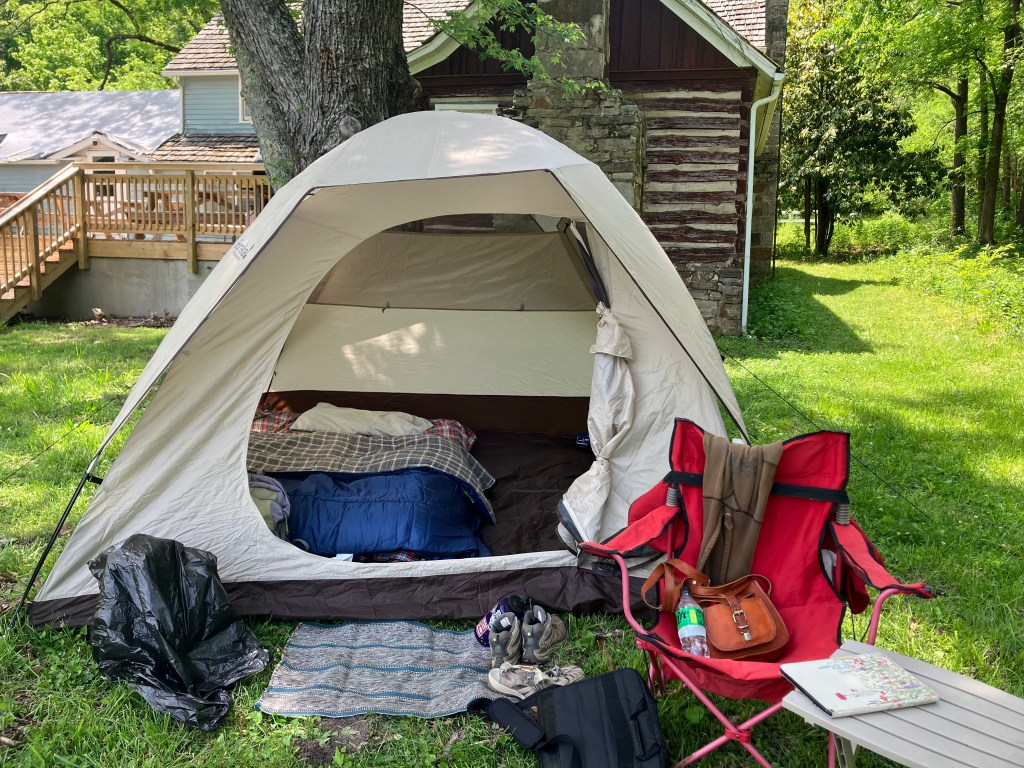
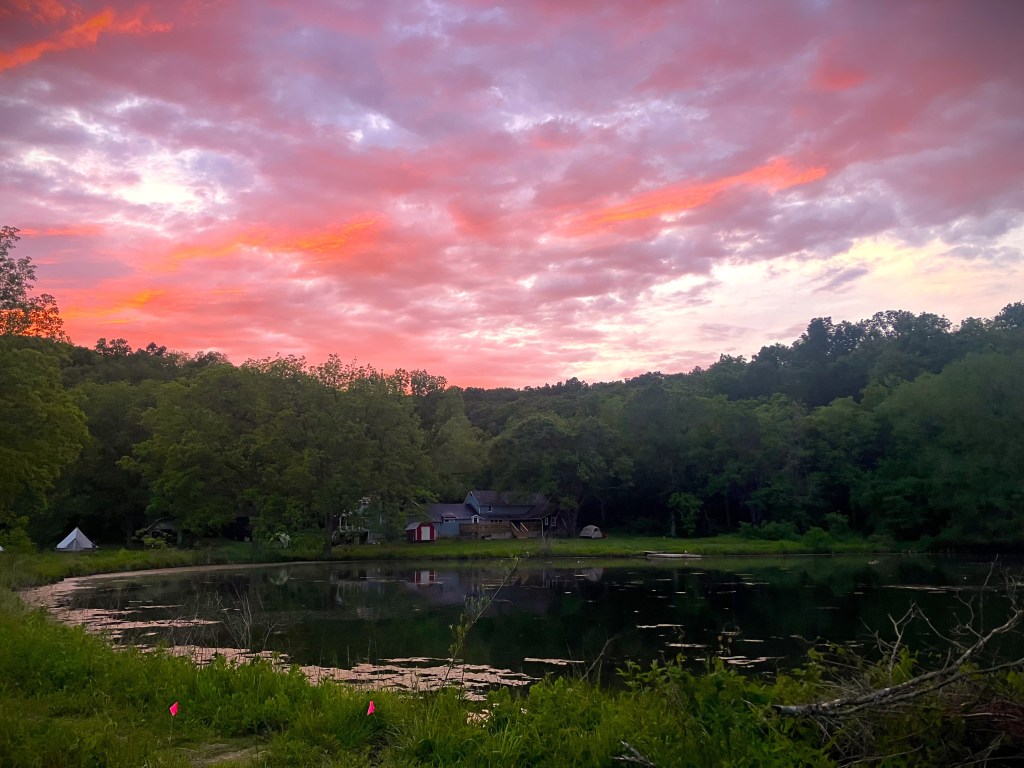
We lucked out with beautiful weather all week long, including a gorgeous sunset Sunday evening. I spent that day organizing the rooms and equipment with the help of the amazing, Theo Sumnicht. I then got my tent set up and enjoyed the remainder of the evening with the early arrival mosslings.
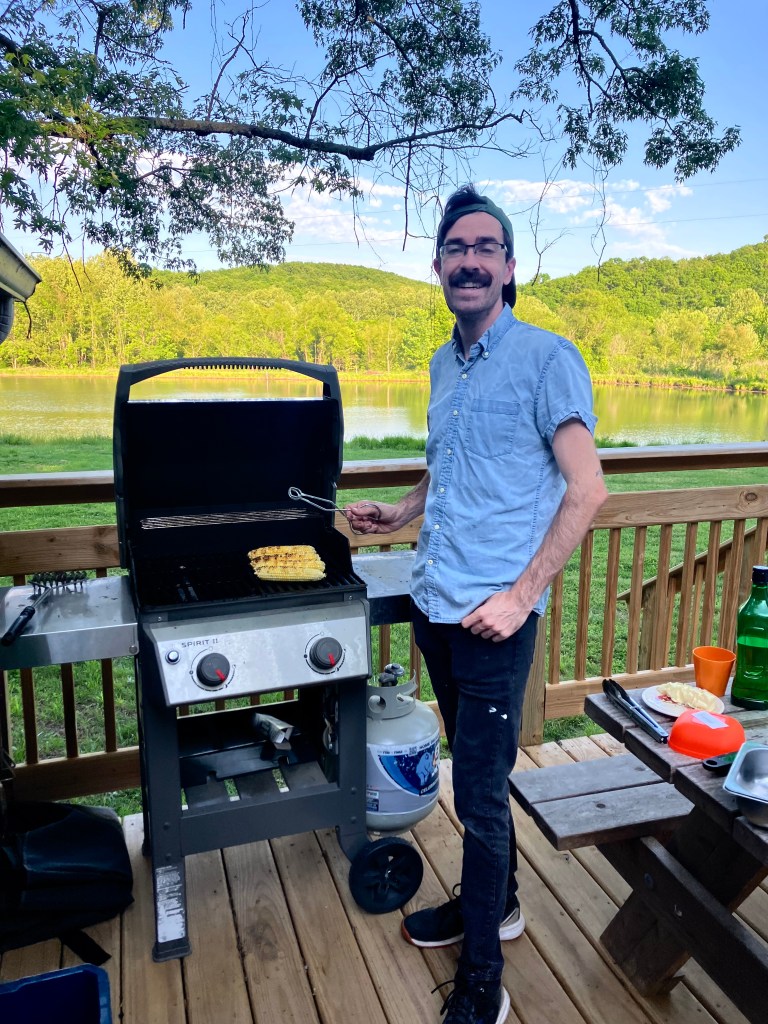
Theo is a multi-talented individual whose skill sets range from (but not at all limited to); Assistant Biology Professor at Missouri S&T, has an ant named after him (Syscia sumnichti), and often runs hospitality at the field station along with being one, fantastically amazing cook!
Monday
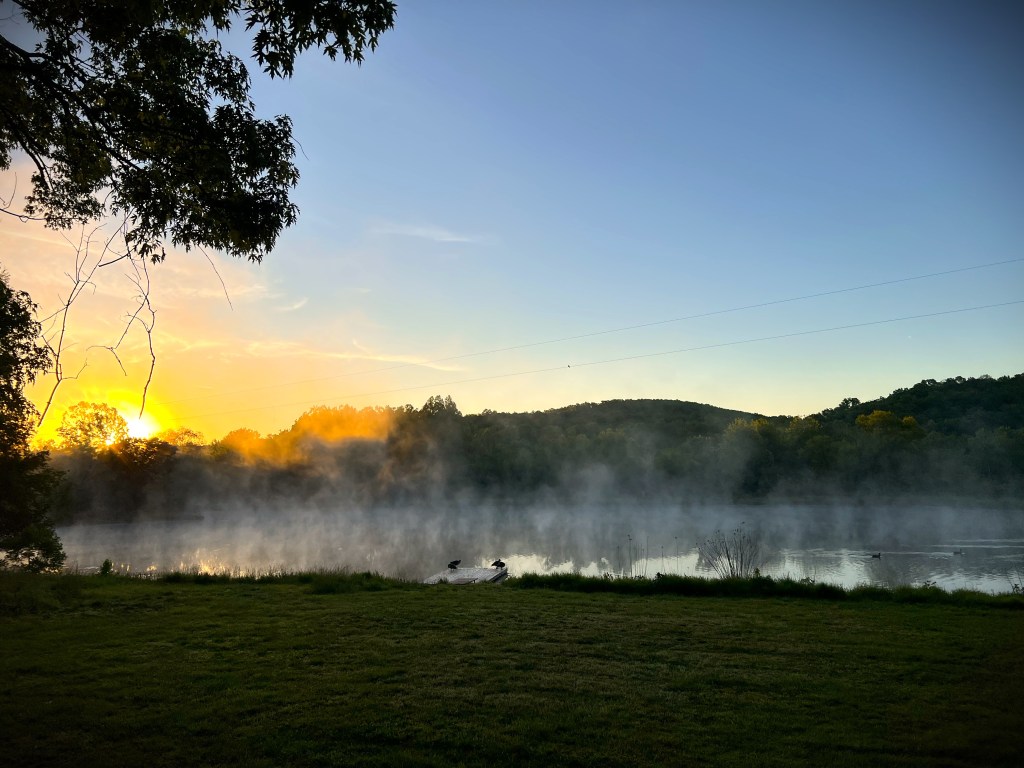
Sunday evening was the coldest of all the nights we were there, and we were quite thankful for warm coffee in the morning! The mist rose beautifully over the ponds as the sun was coming up.
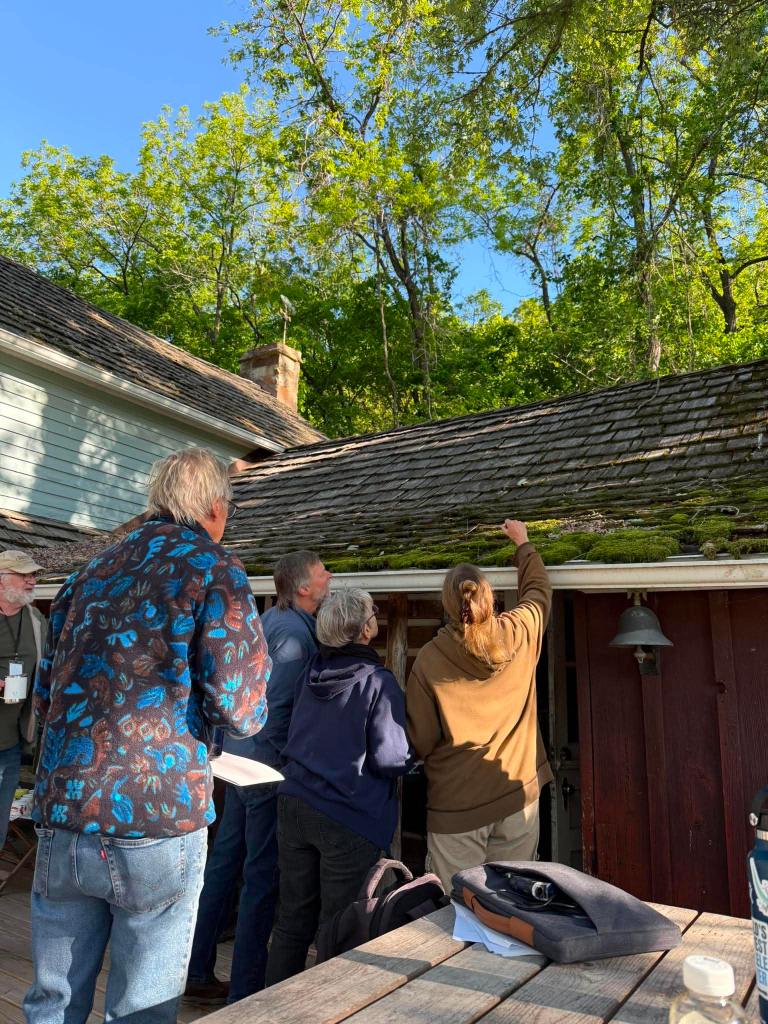
While trying to absorb the warmth from the morning sun, I was asked to point out the new to Missouri moss I found on the cedar shake roof in 2024, Leptodontium flexifolium. Photo courtesy of Hilary.
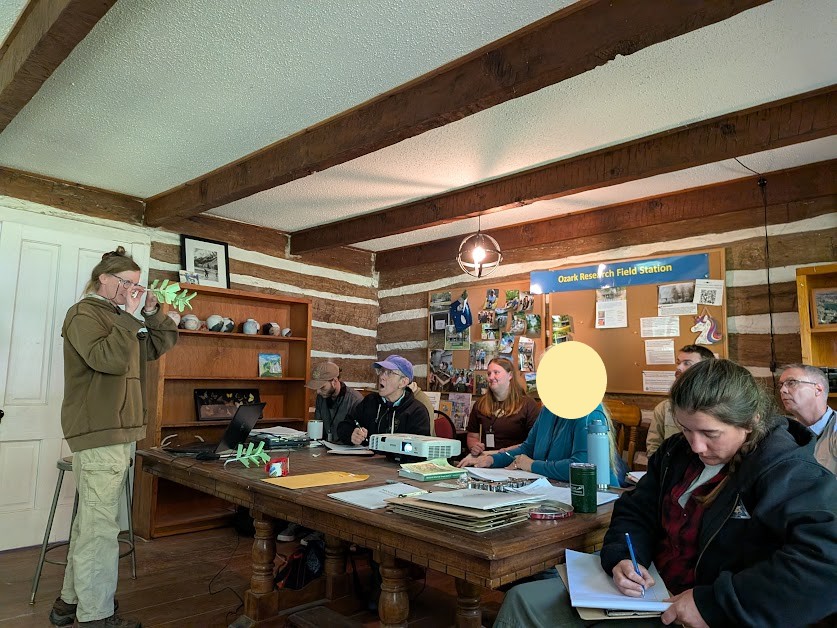
The talks that morning were on bryophyte history, major bryophyte groups and how to differentiate between them, along with basic terminology.
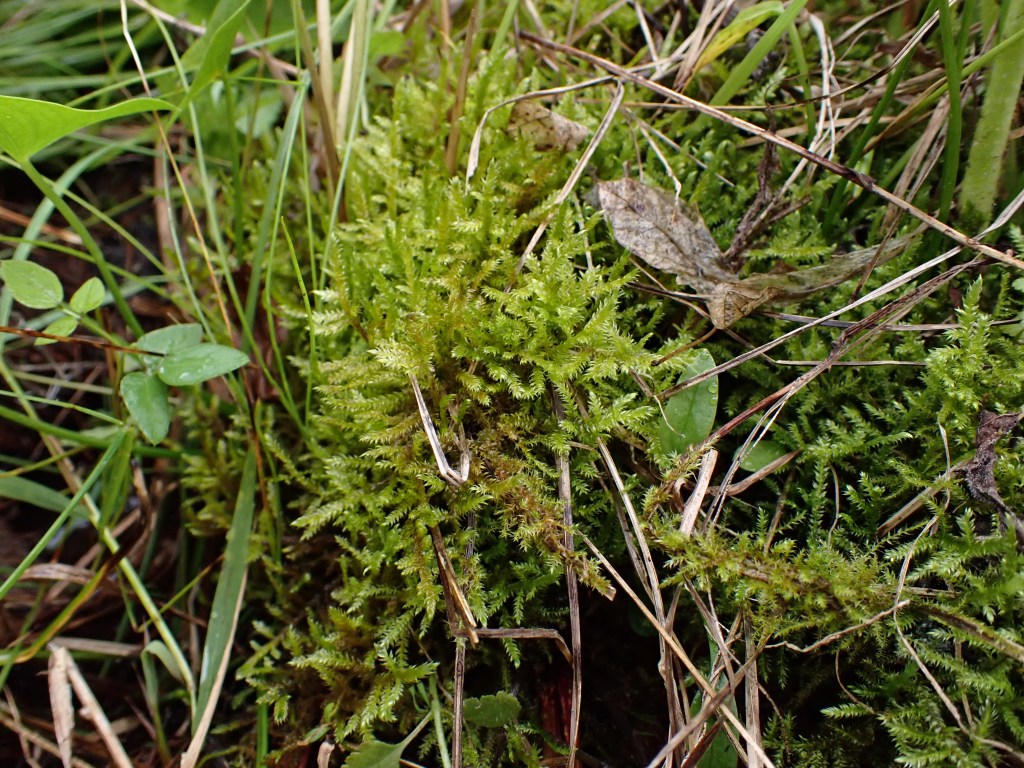
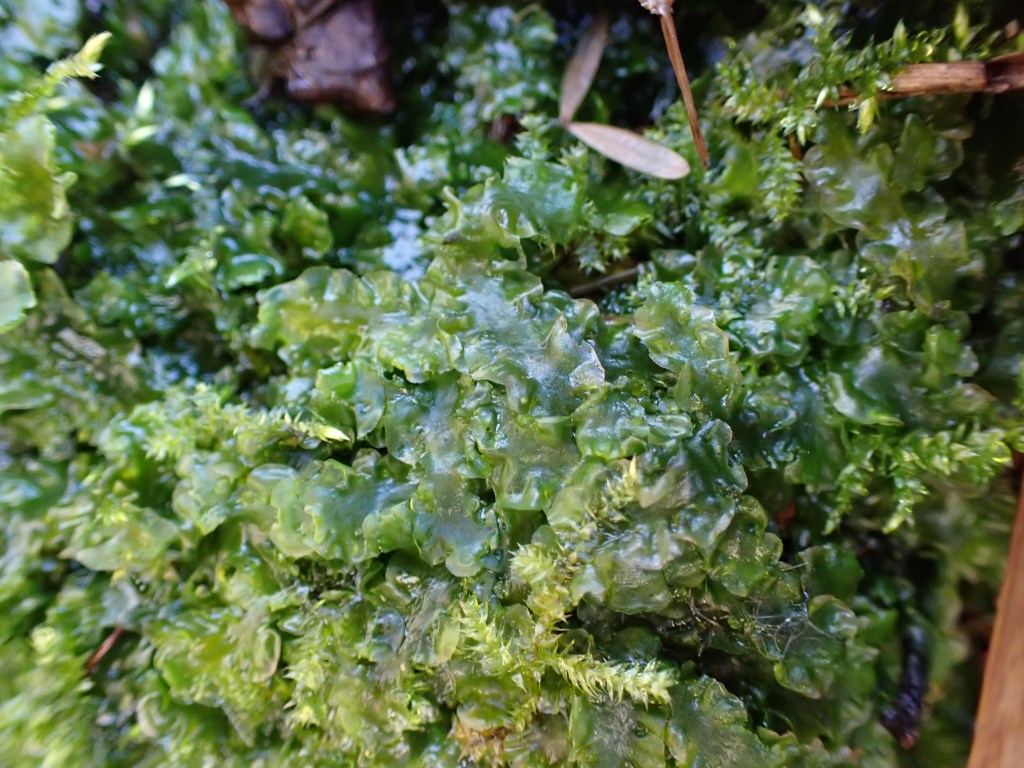
After lunch, we headed out to a local fen where we worked through the keys for the first time. The major bryophyte players at Kaintuck Fen were Drepanocladus aduncus, Hypnum lindbergii, and the thalloid liverwort Anuerus pinguis. We also saw bits of Ptychostomum pseudotriquetrum, Campylium chrysophyllum, and Physcomitrium pyriform.
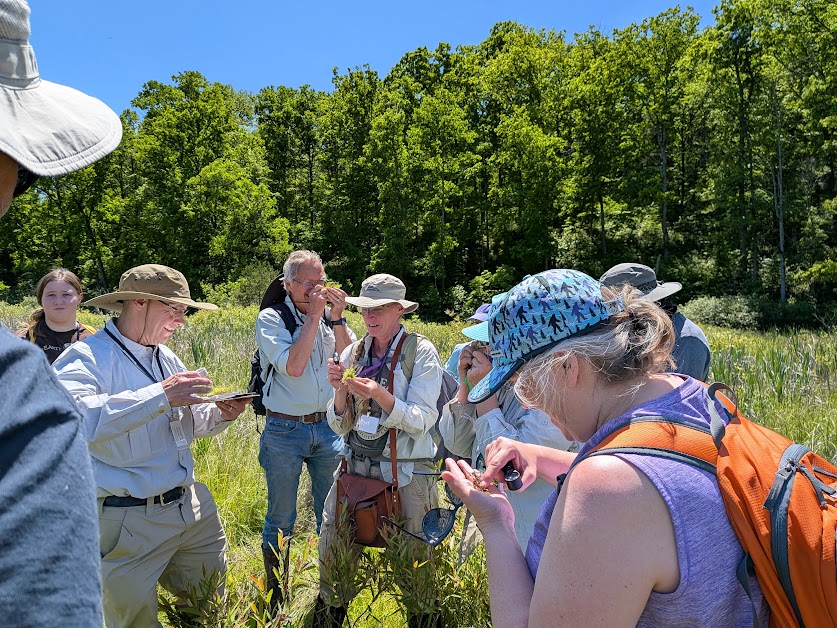
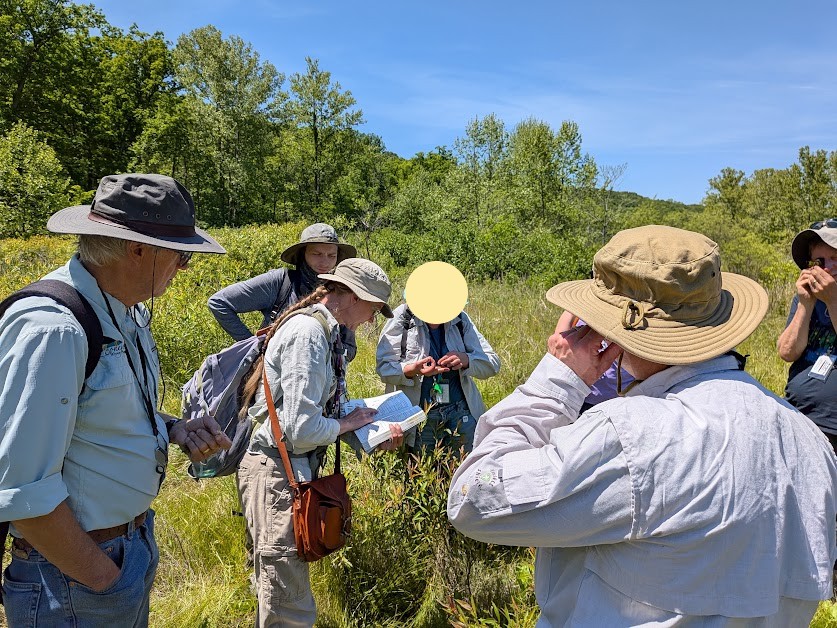
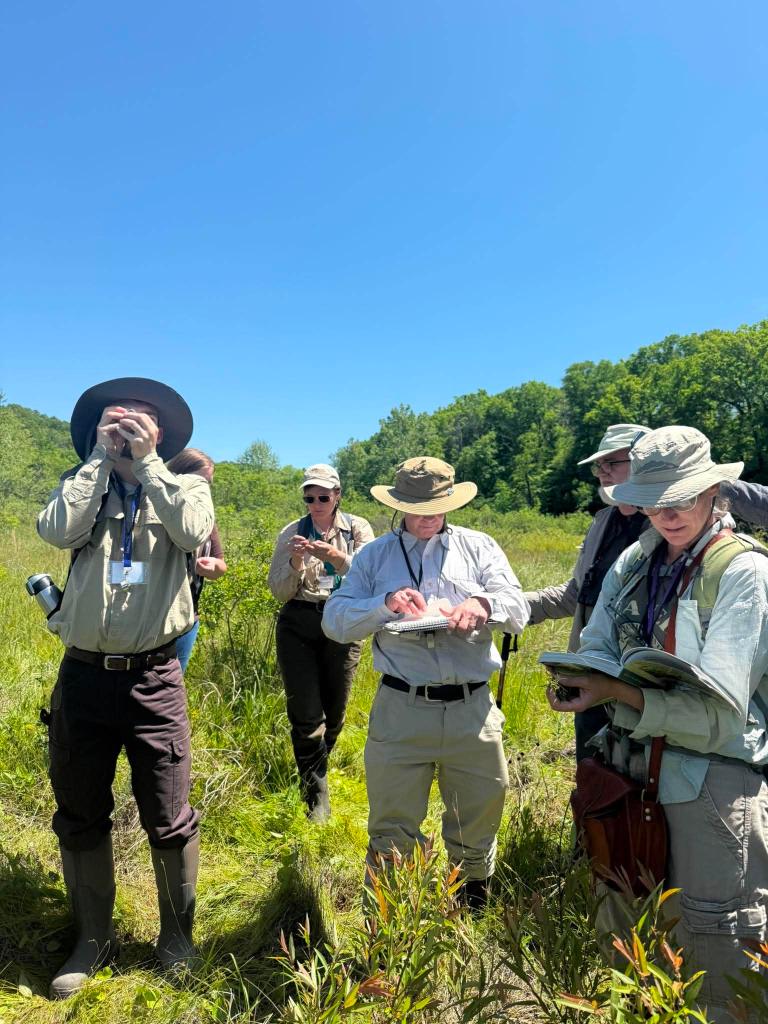
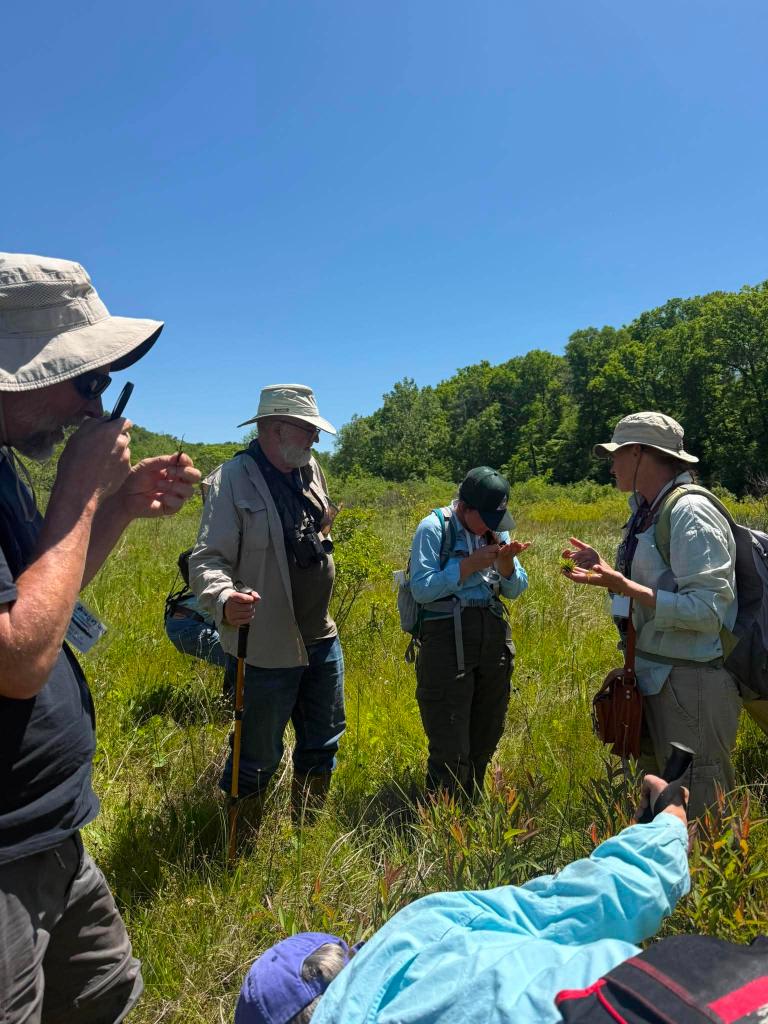
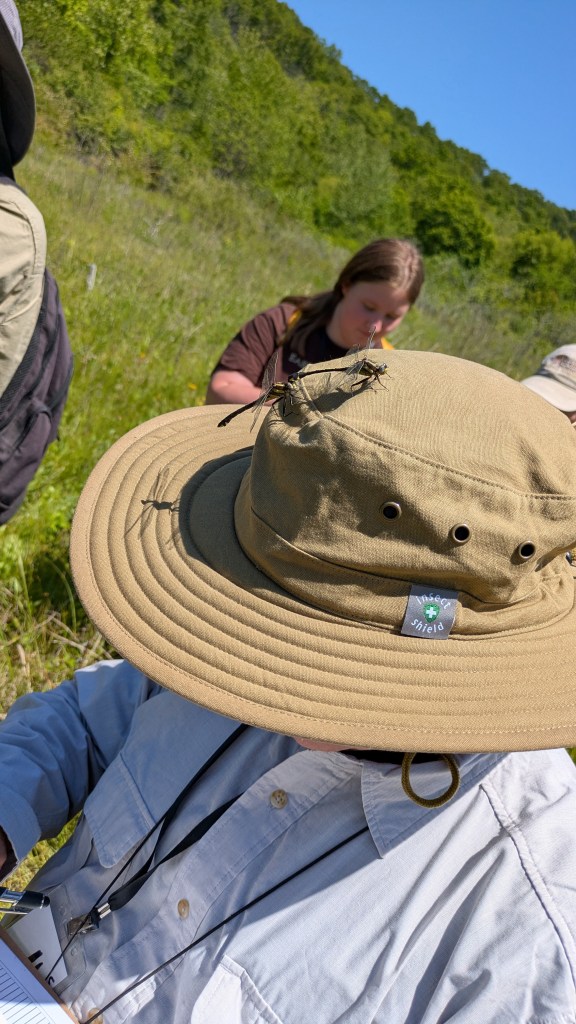
Top row: photos courtesy of Lilly, Bottom row left and middle: photos courtesy of Hilary, Bottom row right: some dragonflies visited Dan’s hat, photo courtesy of Paul.
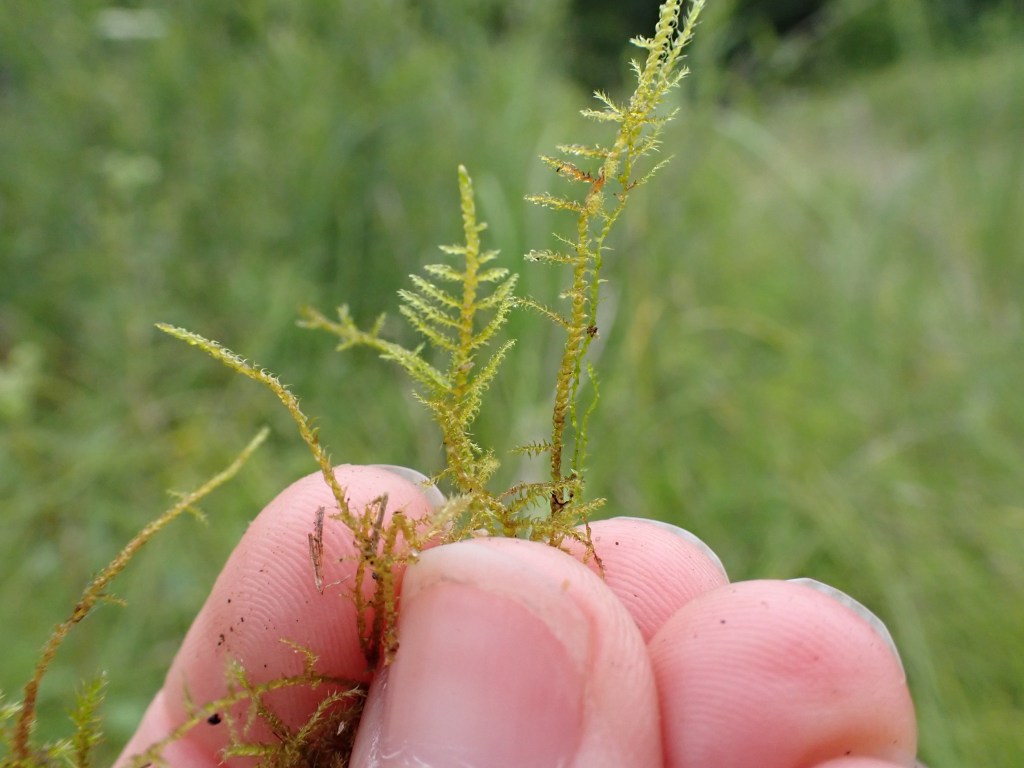
Drepanocladus aduncus will have a costa.
Hypnum lindbergii will lack a costa.
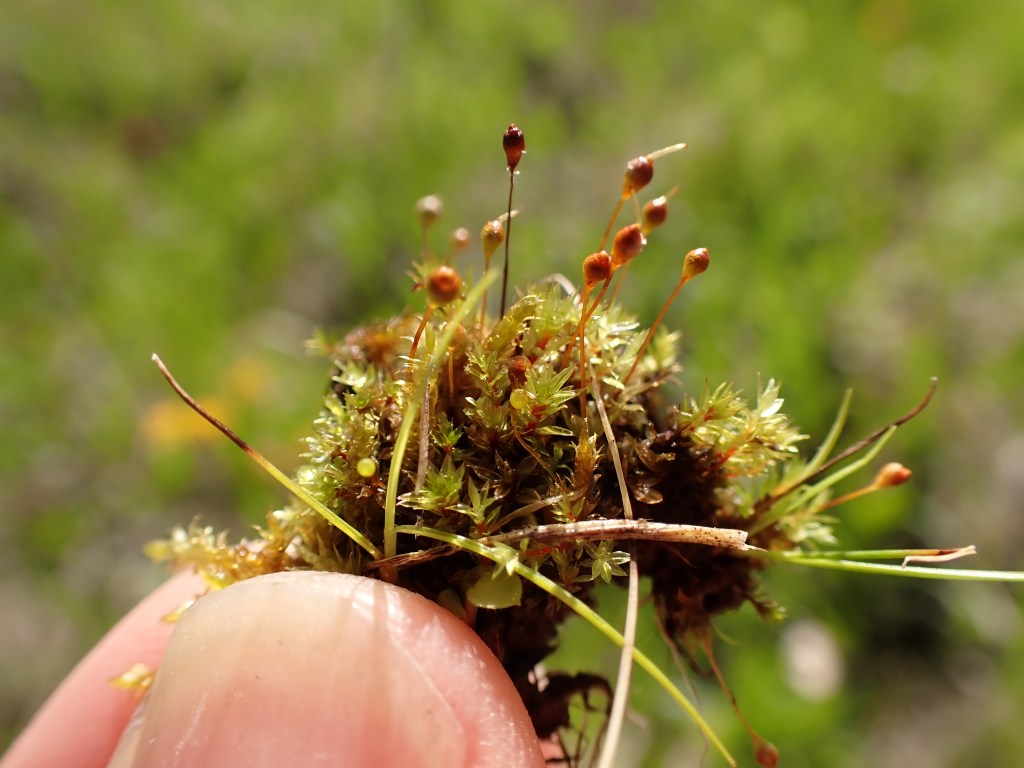
Both Physcomitrium pyriform (with the sporophytes) and Ptychostomum pseudotriquetrum (with the red stems) are seen in this photo.
Aneruis pinguis belongs to the Metzgeriales (Simple Thalloid Liverworts) group in the Jungermanniopsida class.
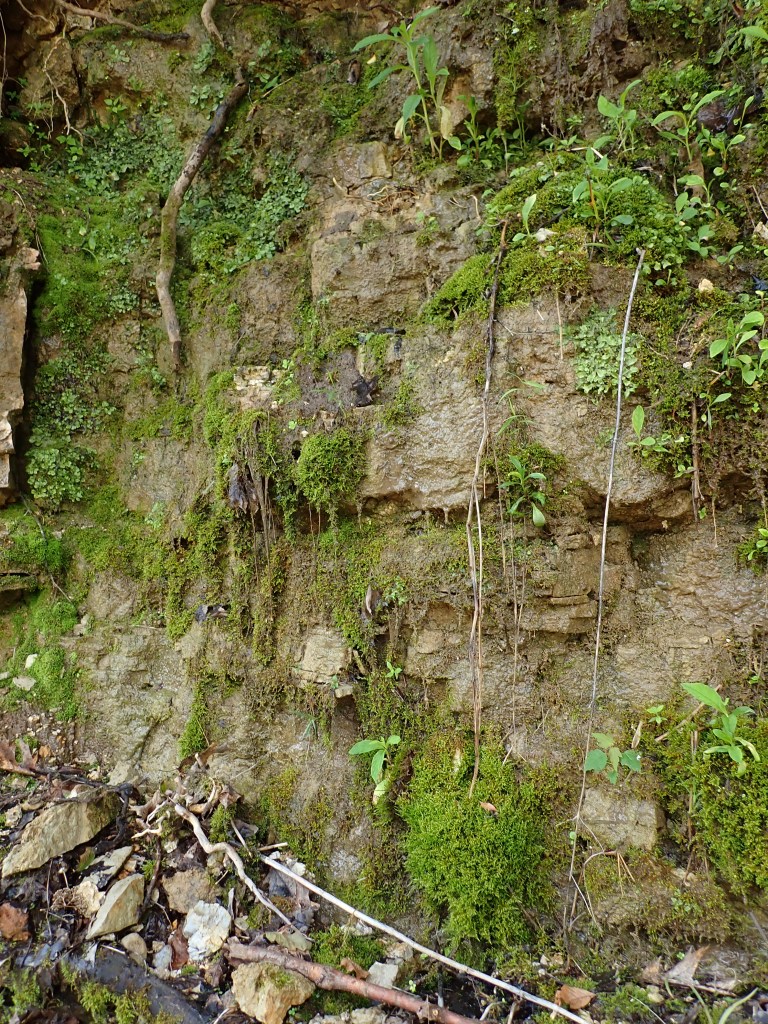
We then drove to see a seepy limestone/dolomite wall that hosted a few unique moss species that are not commonly found in Missouri.
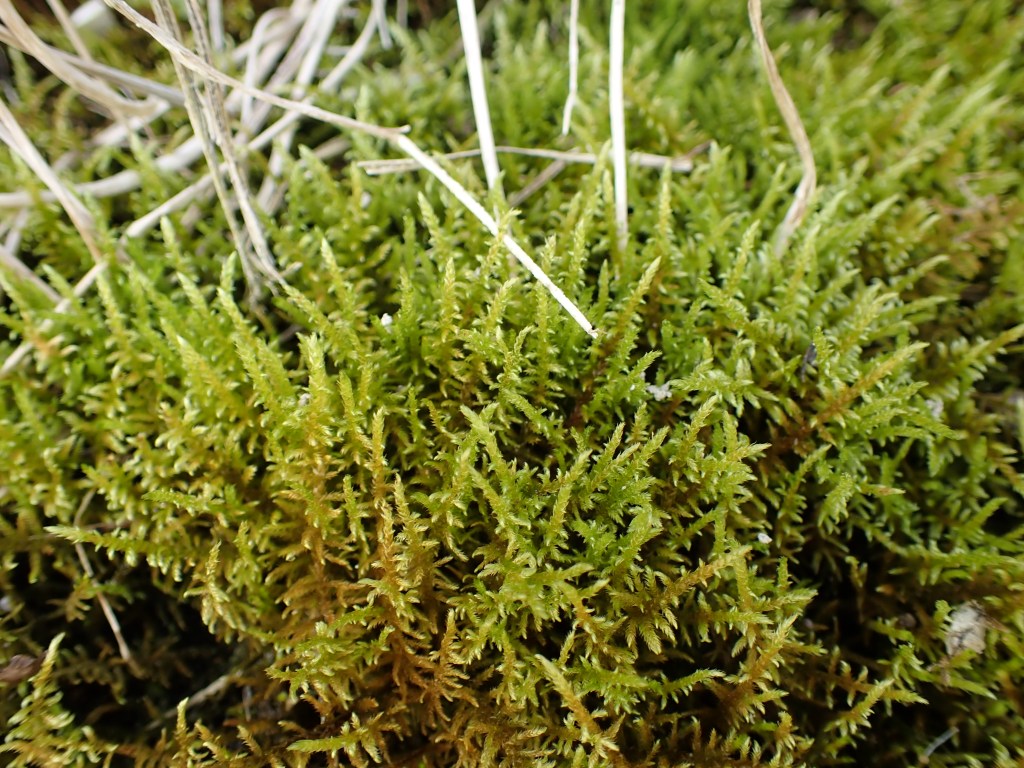
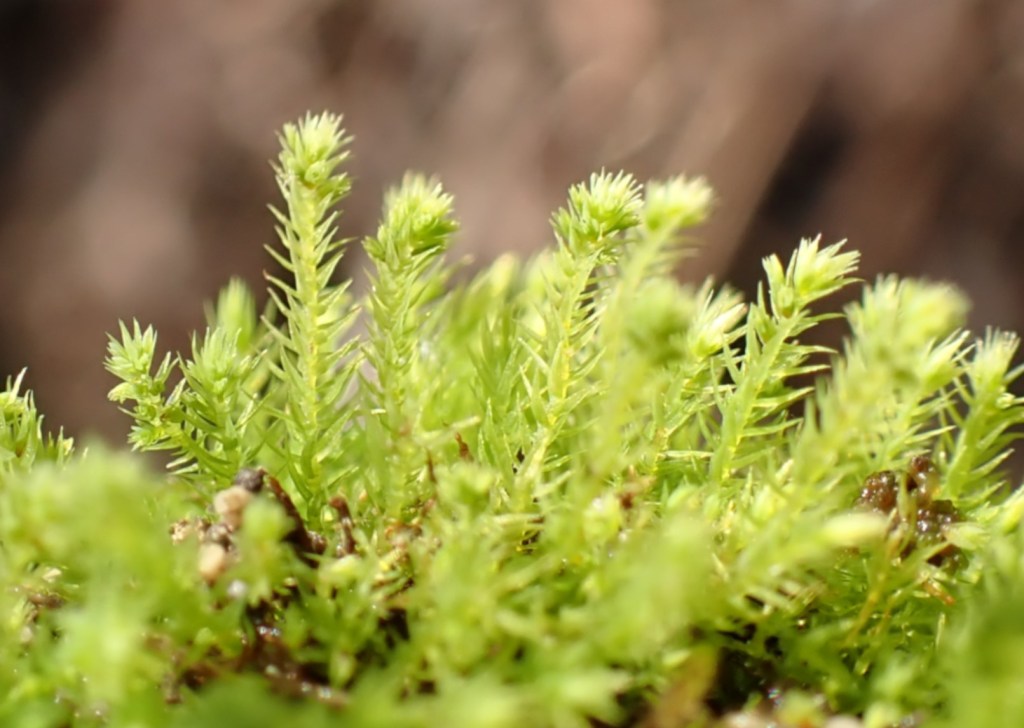
Bottom left: Cratoneuron filicinum is found in roughly 22 counties in Missouri, and I’m guessing has roughly 100 unique collections. This species likes calcium based, wet locations; Bottom right: Philonotis hastata is an S1 ranked species. This species reproduces vegetatively via bulbils in the upper leaf axils. Unfortunately, they were not producing these structures for the group to see, and this photo was taken from when I first found this population in June of 2025.
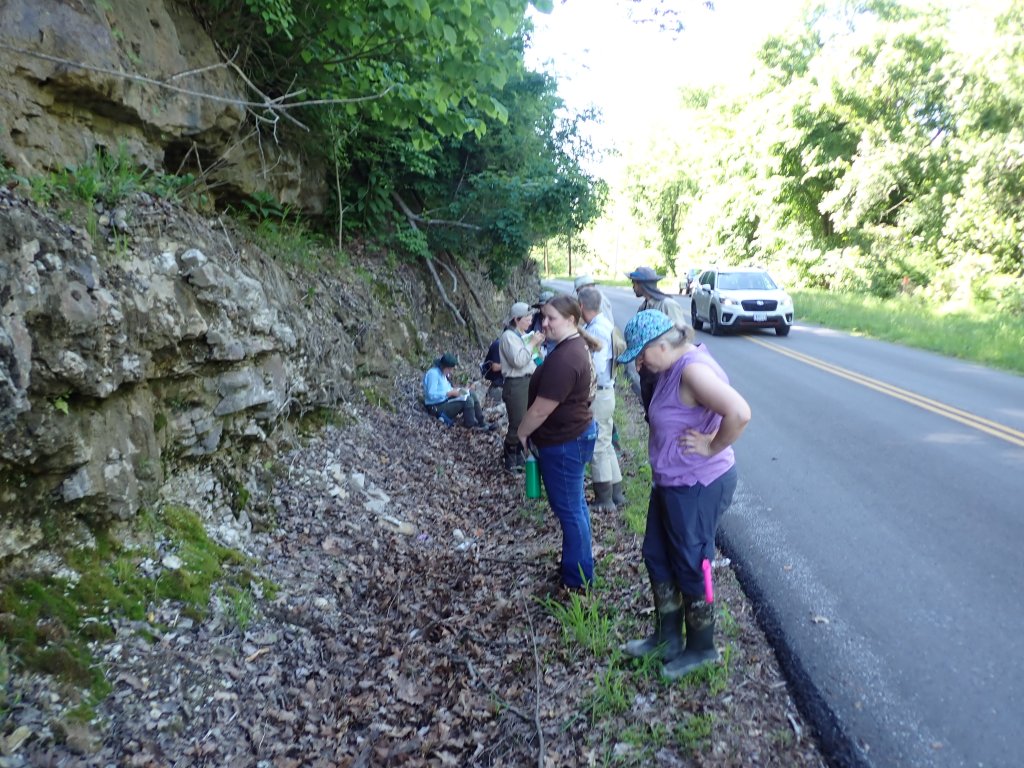
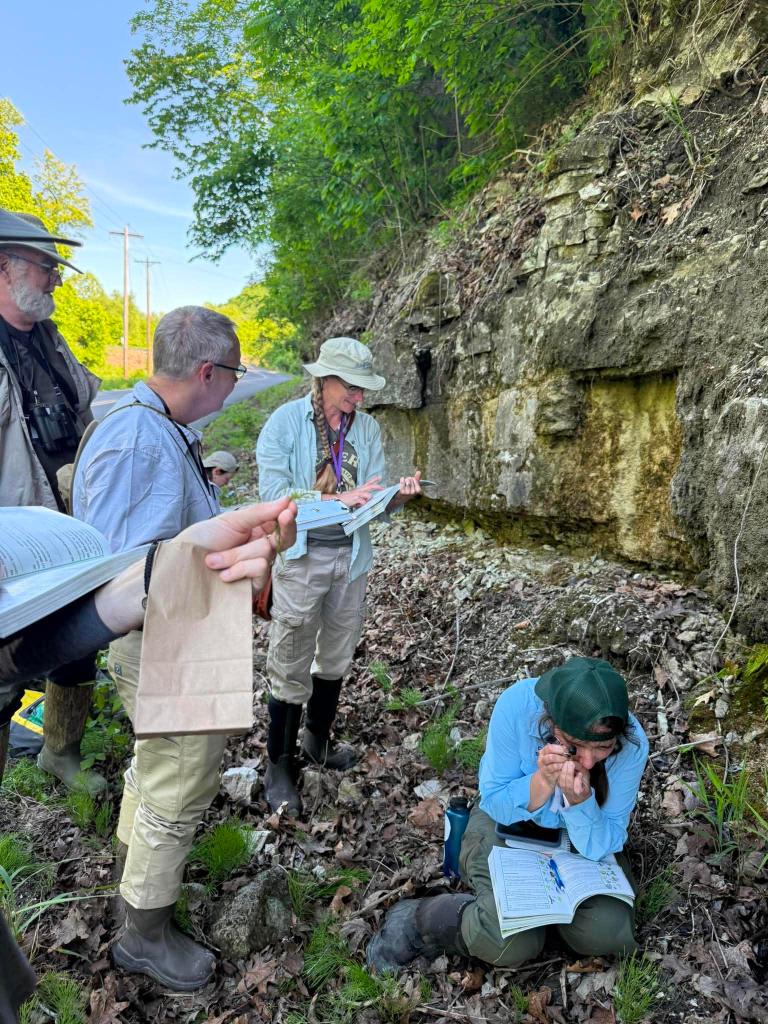
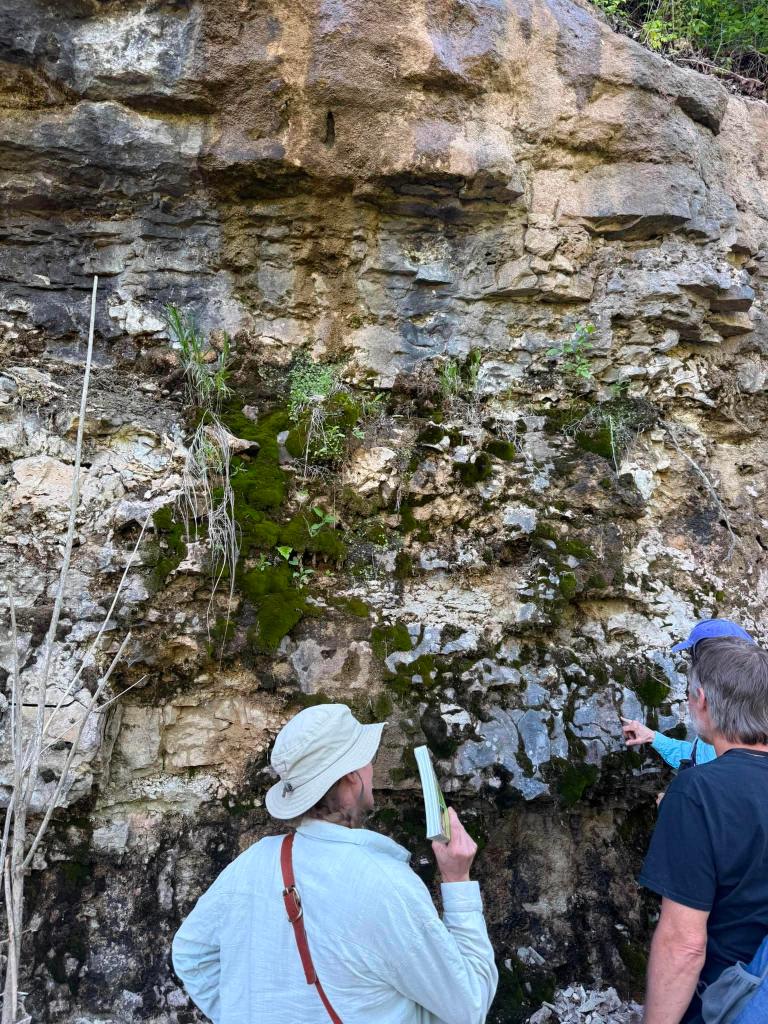
Above: two right photos courtesy of Hilary. A few curious passerby-ers would stop to ask what we were doing;)
A small, calcium loving species that is often involved in the formation of tufa, was sporting sporophytes on the wall. I did not collect it to find out which species it was. When I was here in 2025, I collected both Gymnostomum aeruginosum and Hymenostylium recurvisrostrum.
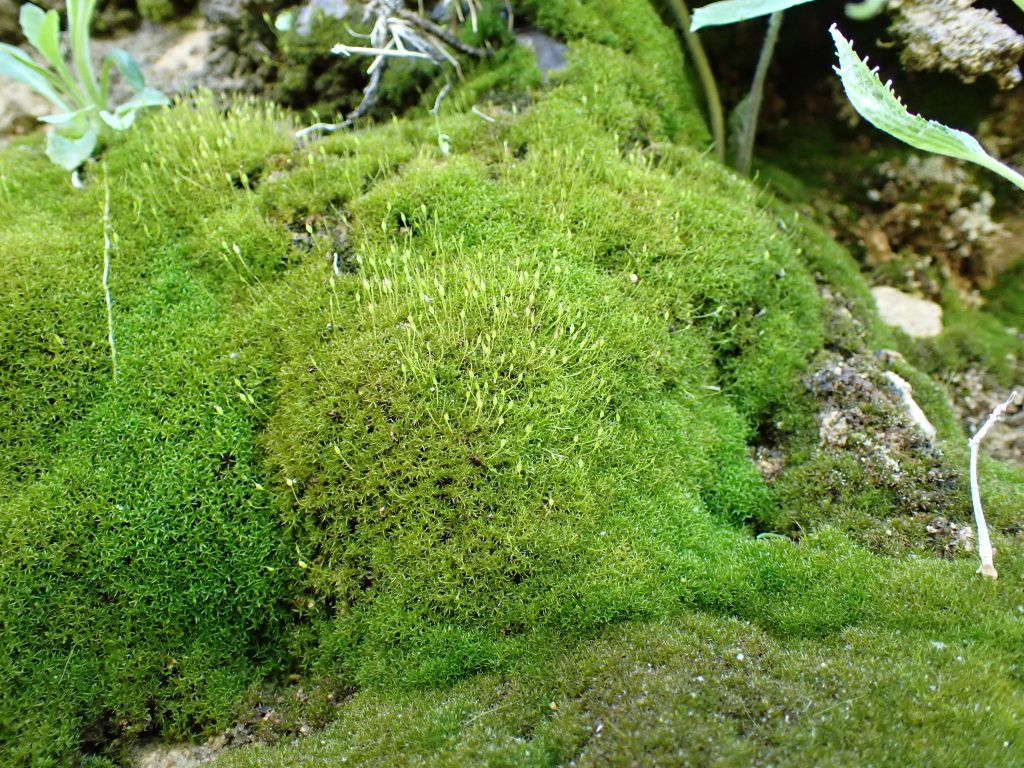
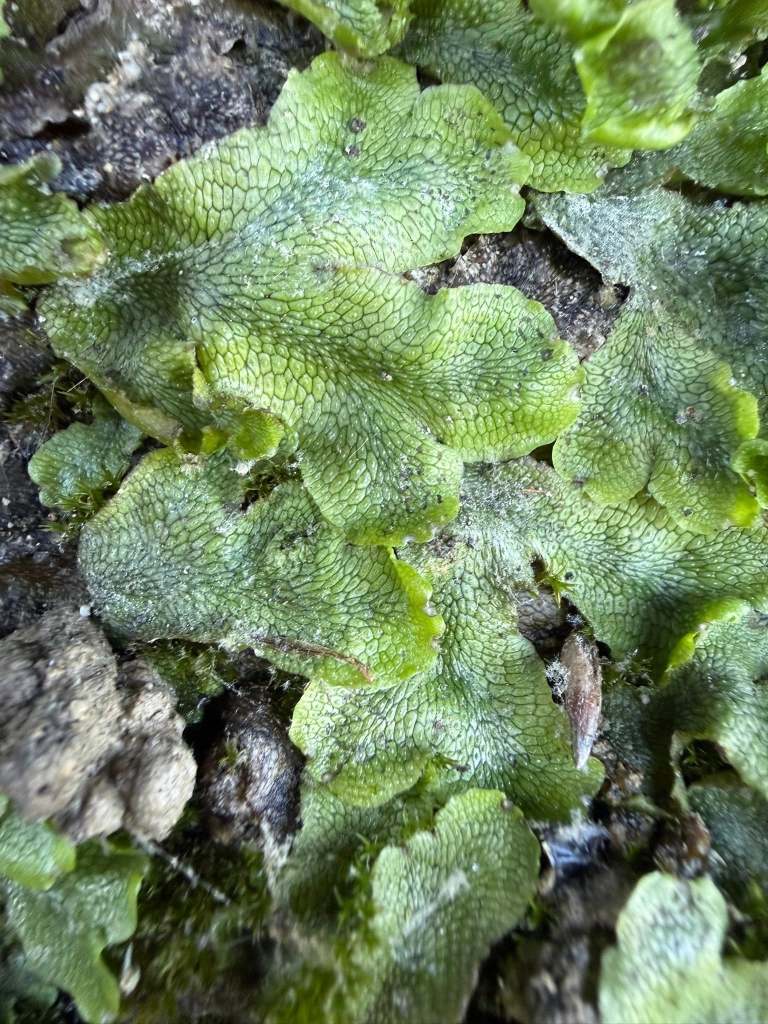
The thalloid liverwort Conocephalum salebrosum, or great scented liverwort, was abundant along this wall which yielded the perfect opportunity for everyone to test their sniffer. We crushed some up and let everyone smell it. About half of the group smelled a citrus or slightly sweet smell, while the rest of us (myself included) smelled only earth. Photo courtesy of Hilary.
Tuesday
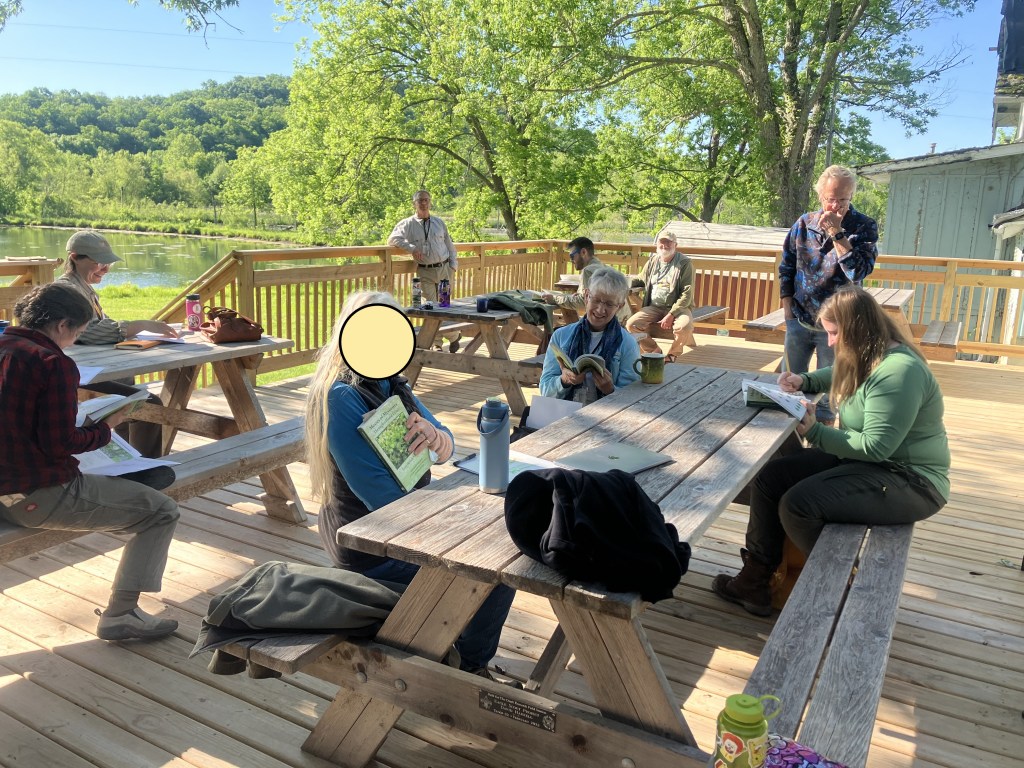
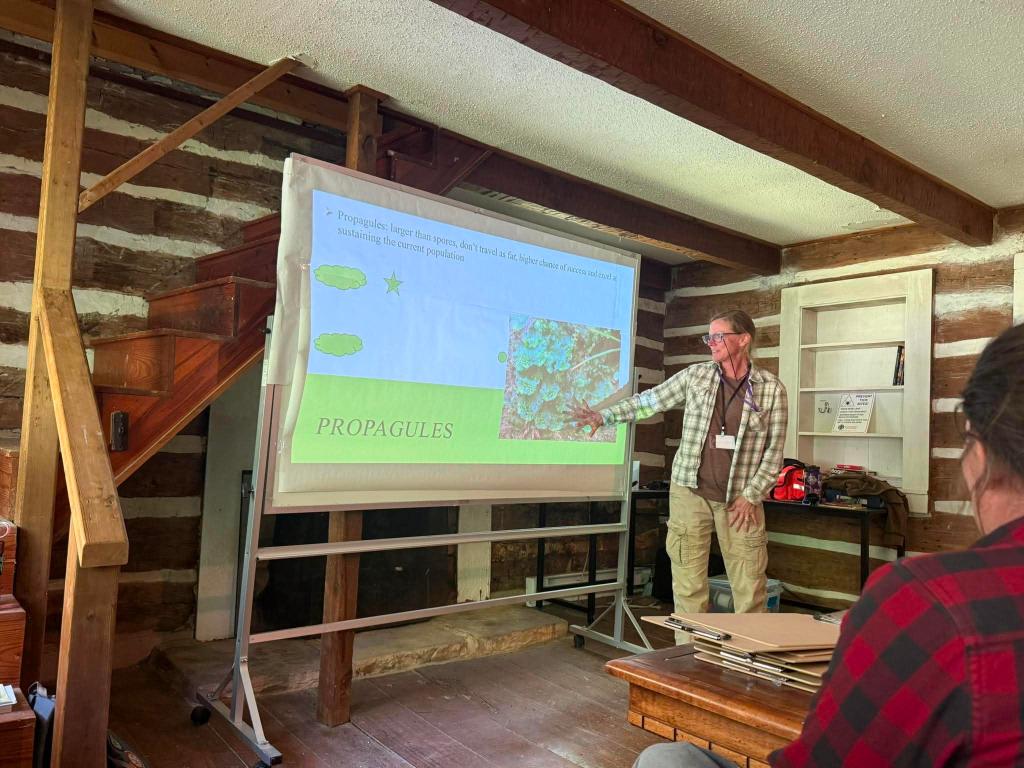
We started off Tuesday morning with talks about the various forms of bryophyte reproduction and reproduction strategies.
After lunch, we visited two local sites: Yelton Spring, and Western Star Flatwoods sink hole pond.
First stop: Yelton Spring
The spring was up significantly from when I had been there in November of 2025, and in fact, there was barely a trickle of water flowing down the stream at that time. I had hoped to show the group Porella pinnata, but alas, it was buried under the fast-flowing water which now reached over my boots in places!
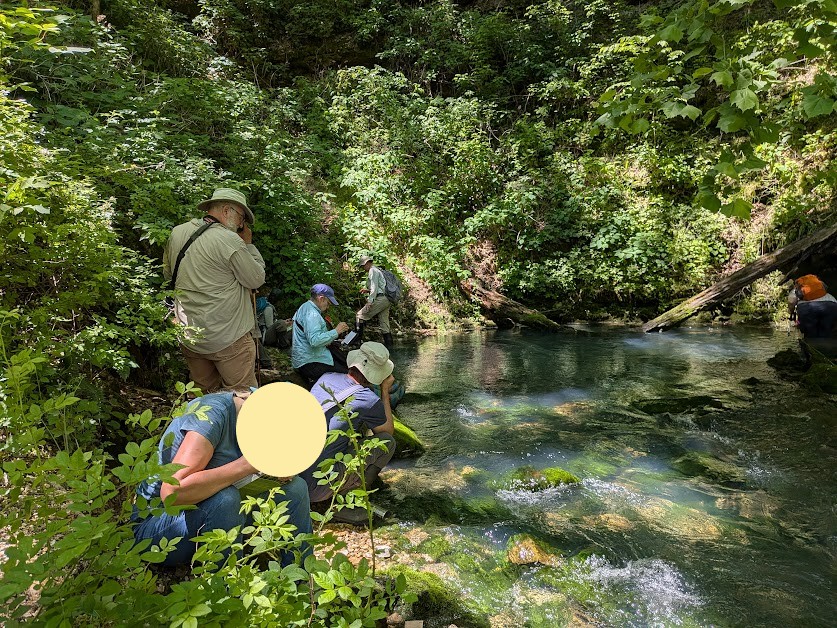
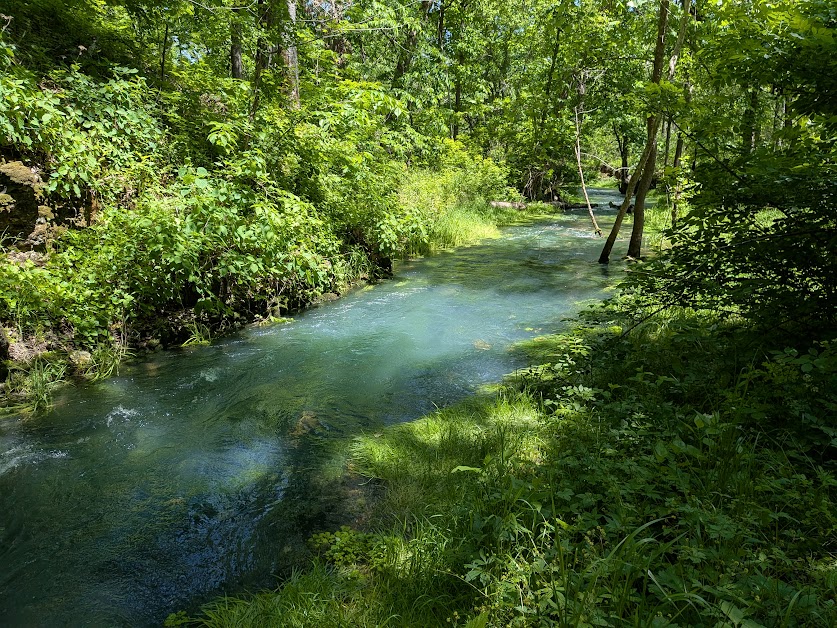
Above: Yelton Spring, photos courtesy of Lilly.
Hilary was the first to cross the outlet to the other side, hoping to find the Porella. Eventually I joined her, but no liverwort was to be found. Hygroamblystegium varium coated the rocks in the cool spring water, and Fissidens fontanus could be found intermingled at lower levels.
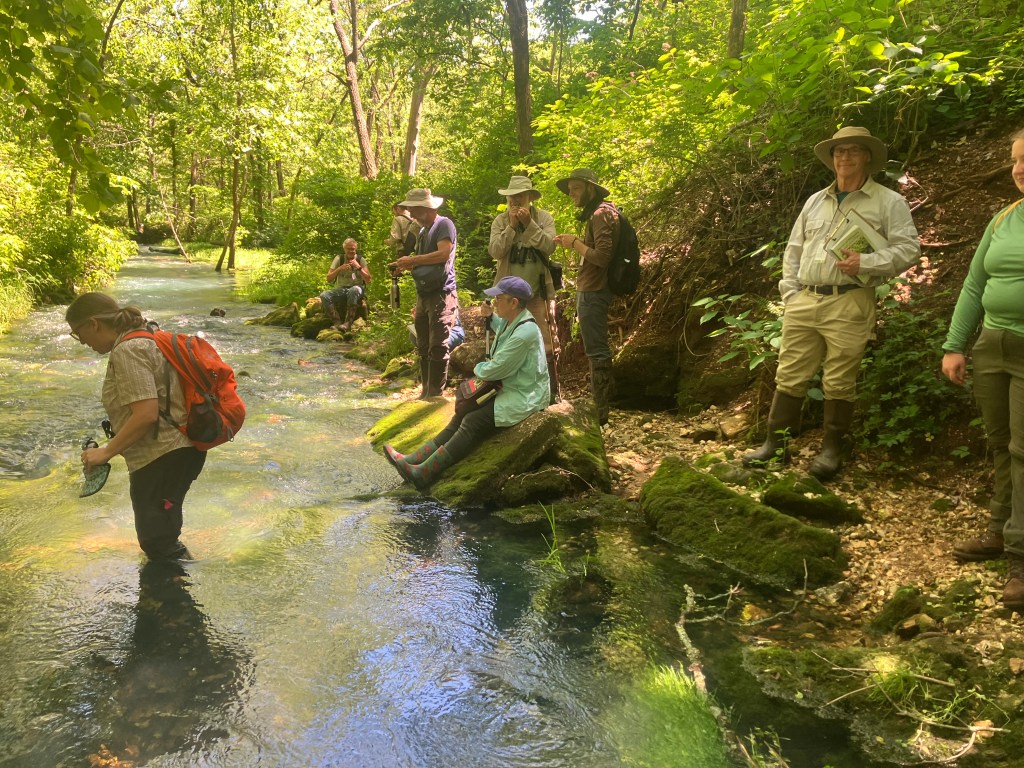
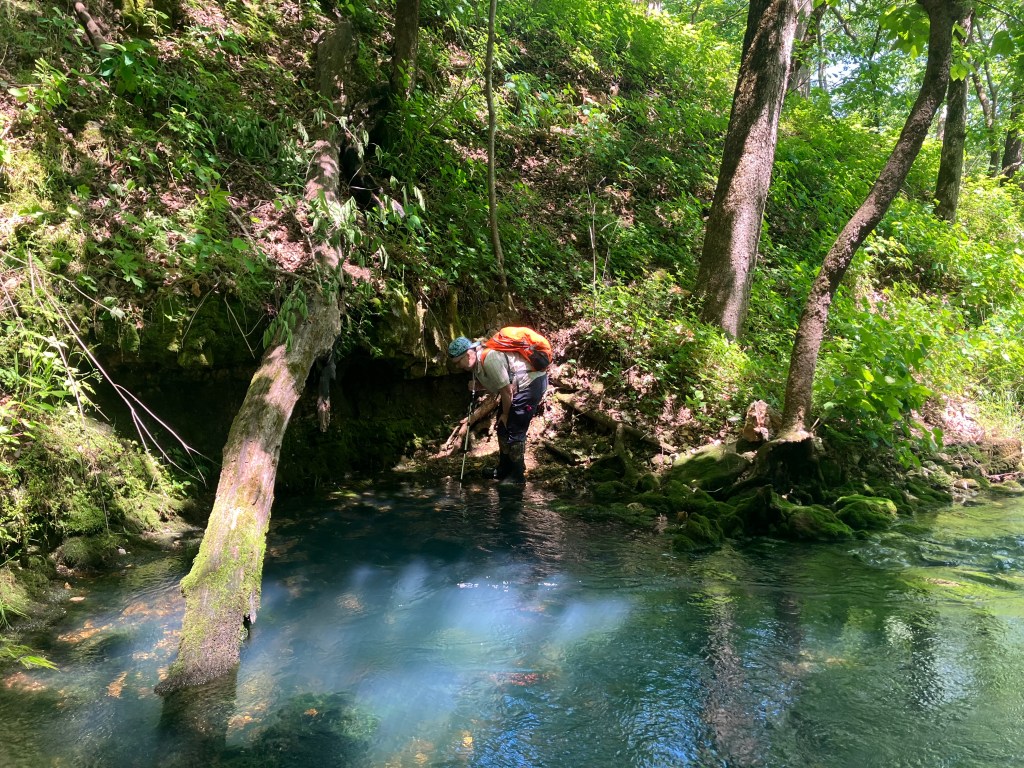
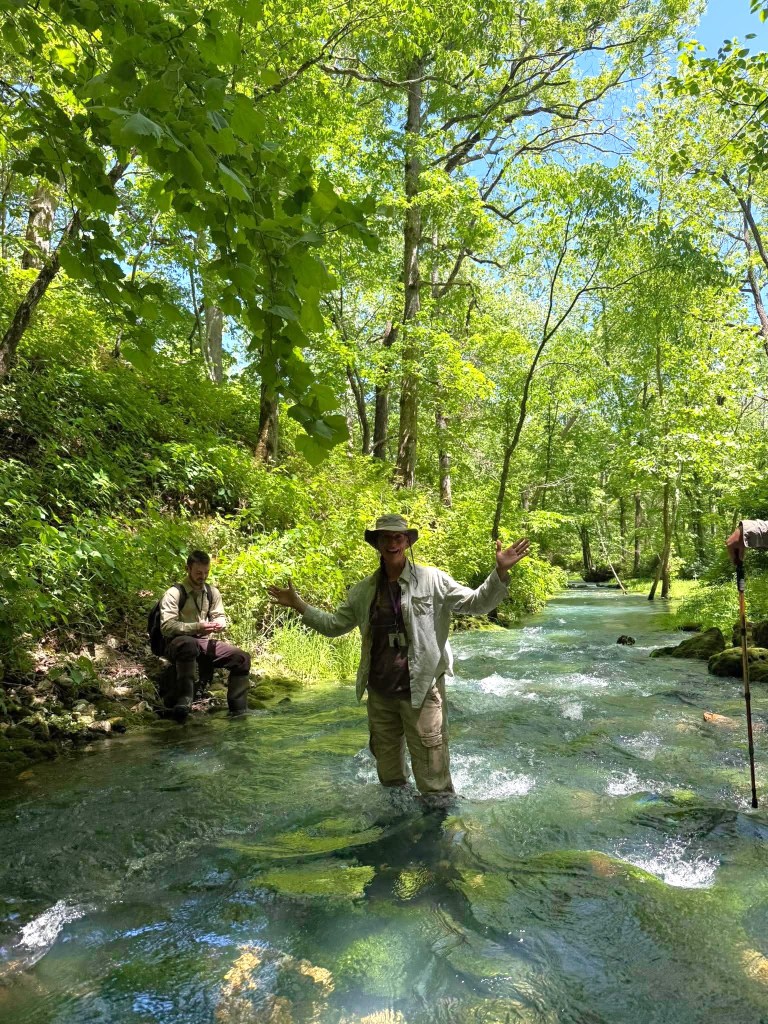
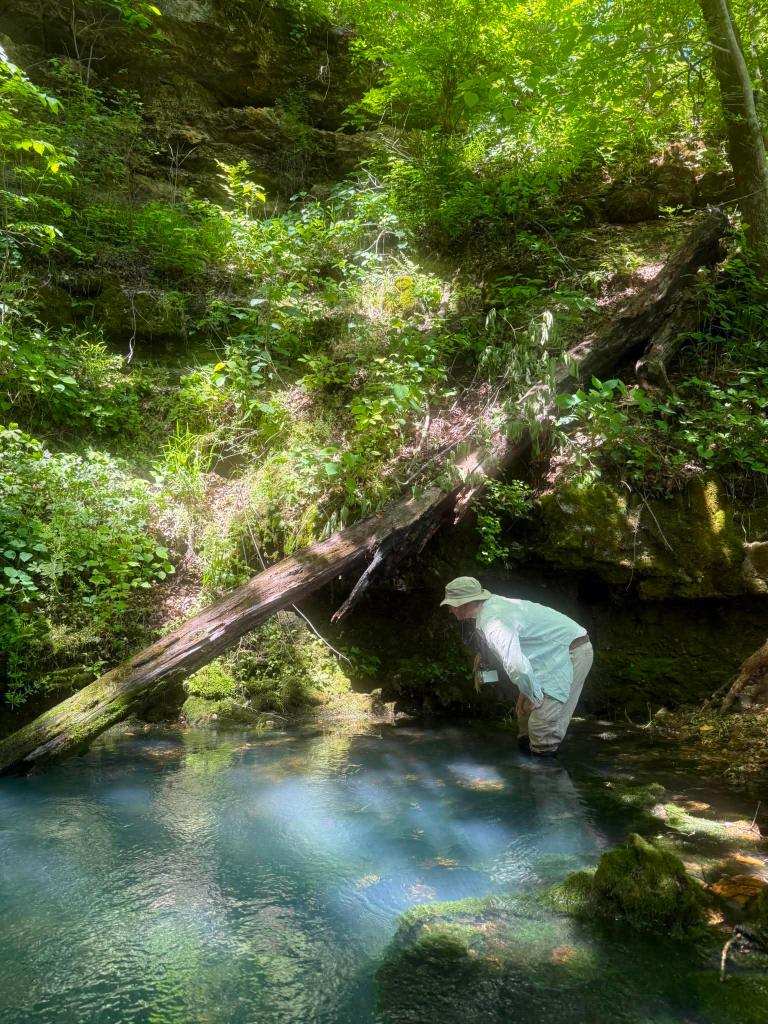
Top Row: Hilary crossing the outlet, water over boots); Bottom row: Me giving it a whirl and quickly discovering that my water boots weren’t tall enough;) photos courtesy of Hilary.
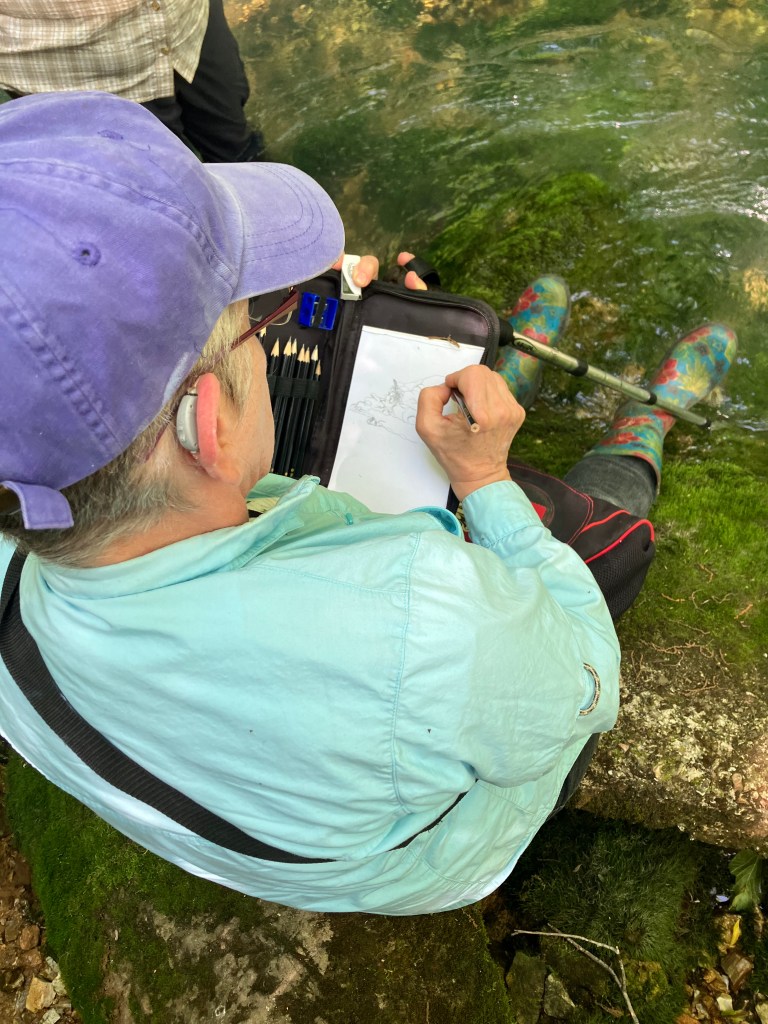
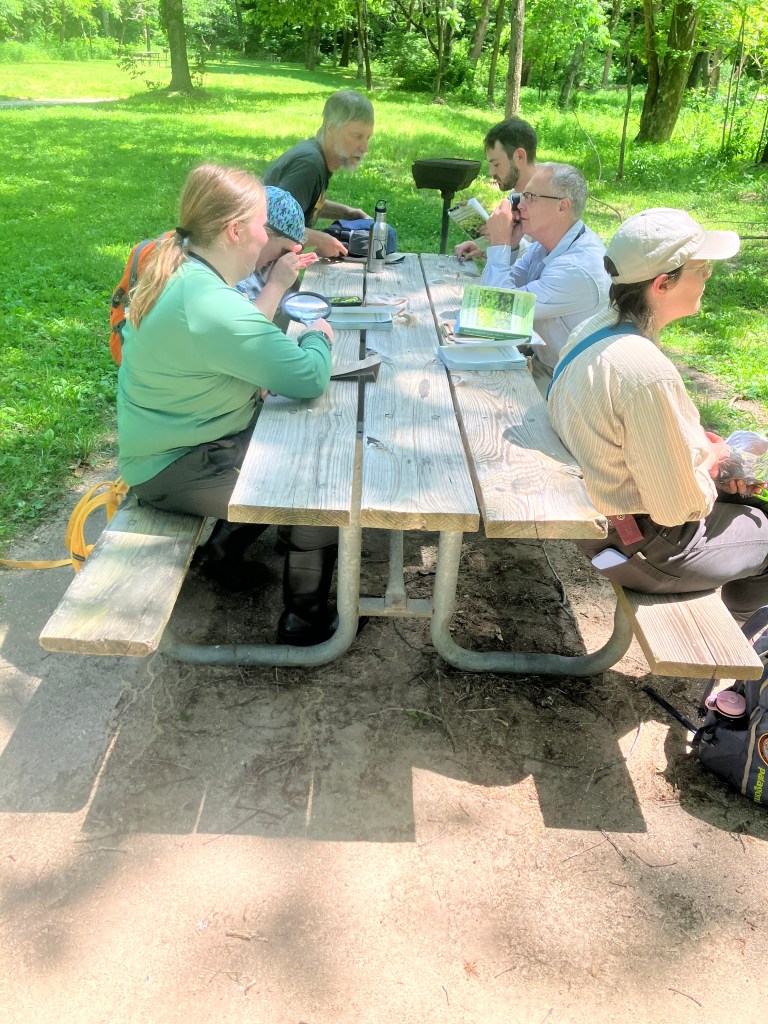
We also did an intro to bryophyte ecological sketching. This was meant to focus your attention on the minute space that bryophytes occupy; and then start to ask questions about what you see and the relationships around the moss with other species and its surroundings.
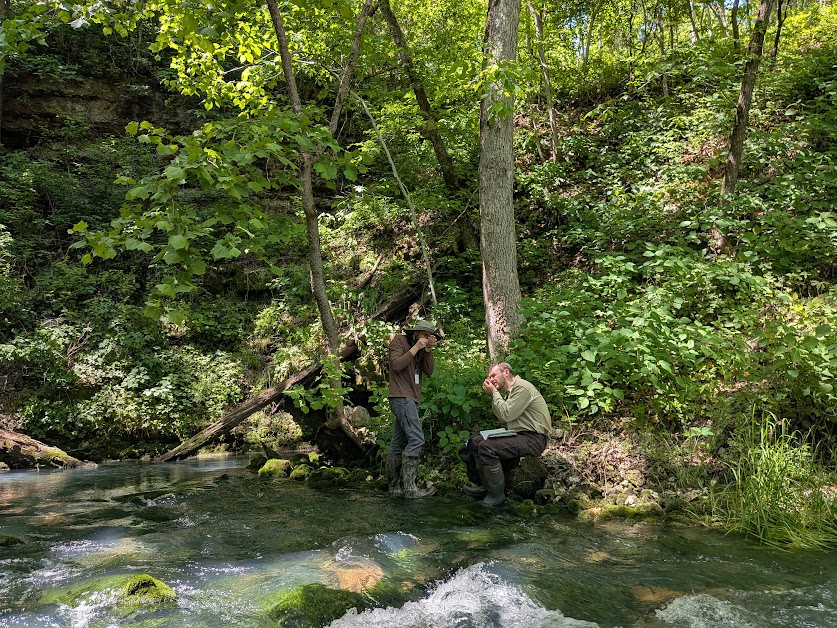
Paul and Zack managed to cross the stream without getting soaked, and did some serious ID’ing.
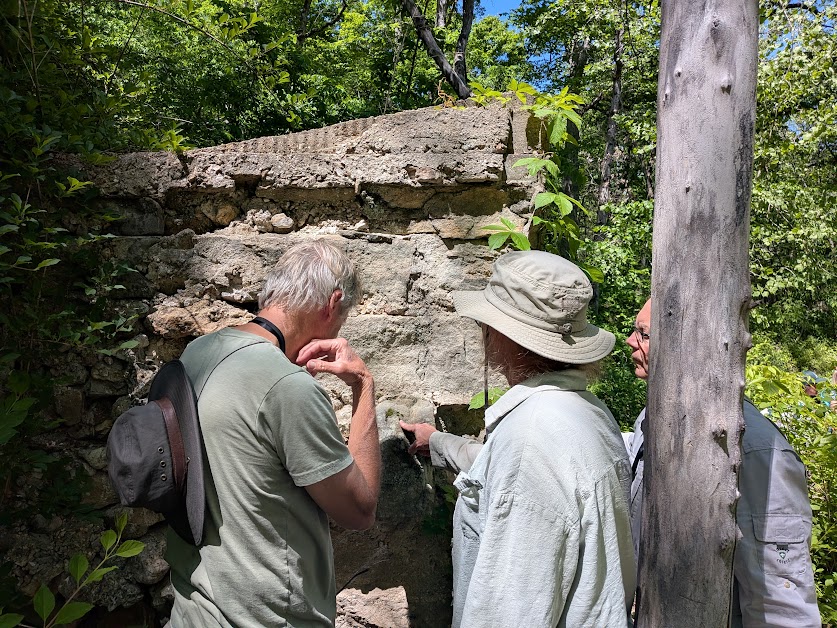
When I visited this site last year, I had found a curly, dried-up moss on the rubble of an old stone building. I did not have my spray bottle with me to investigate it further at that time, so I made a mental note to check it out during the workshop.
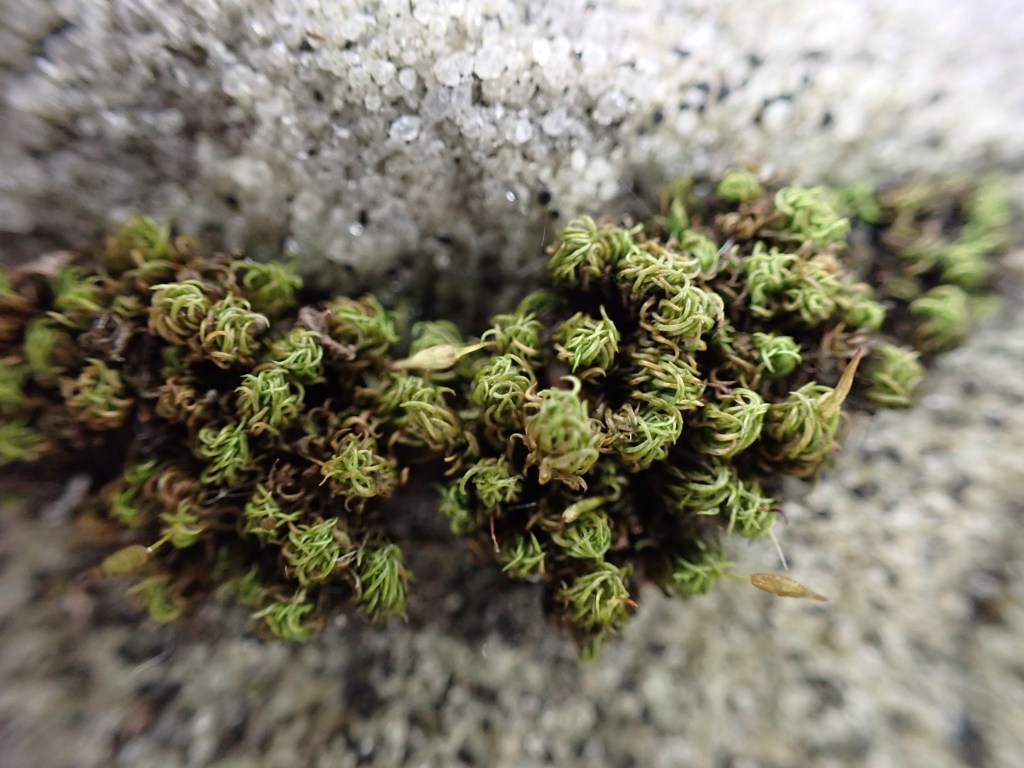
Once I sprayed the moss, the leaves unfurled and revealed that their distal half was distinctly toothed. There are not many acrocarps with this leaf shape that have such toothed edges, so I collected a few stems to take back to the research station.
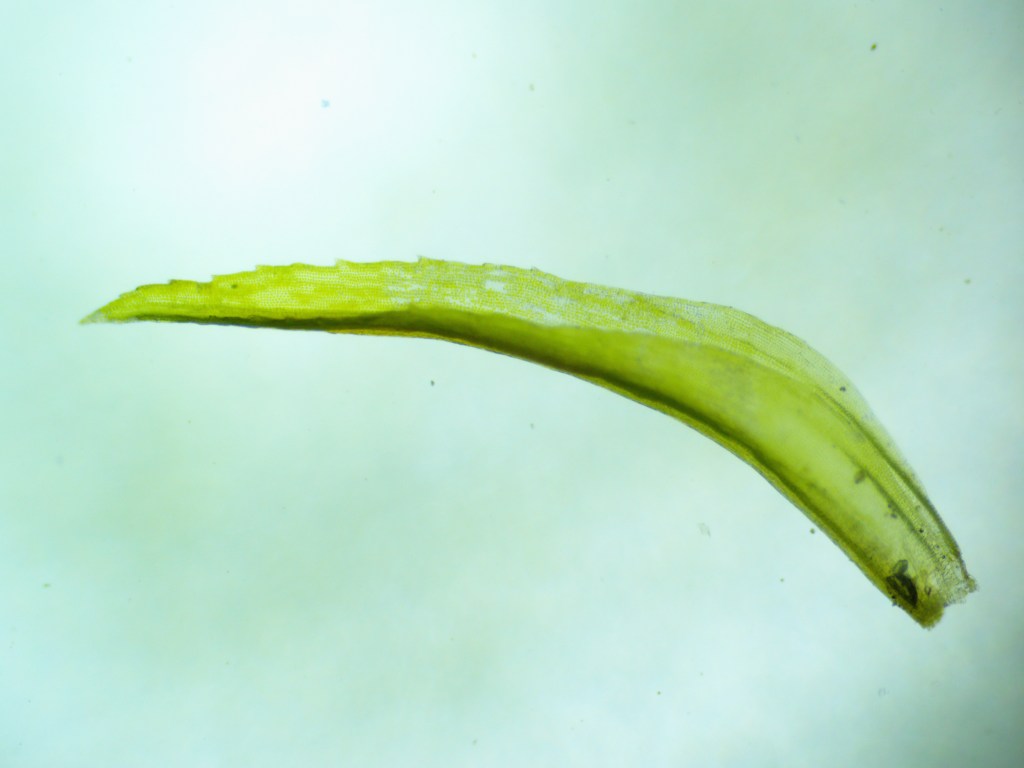
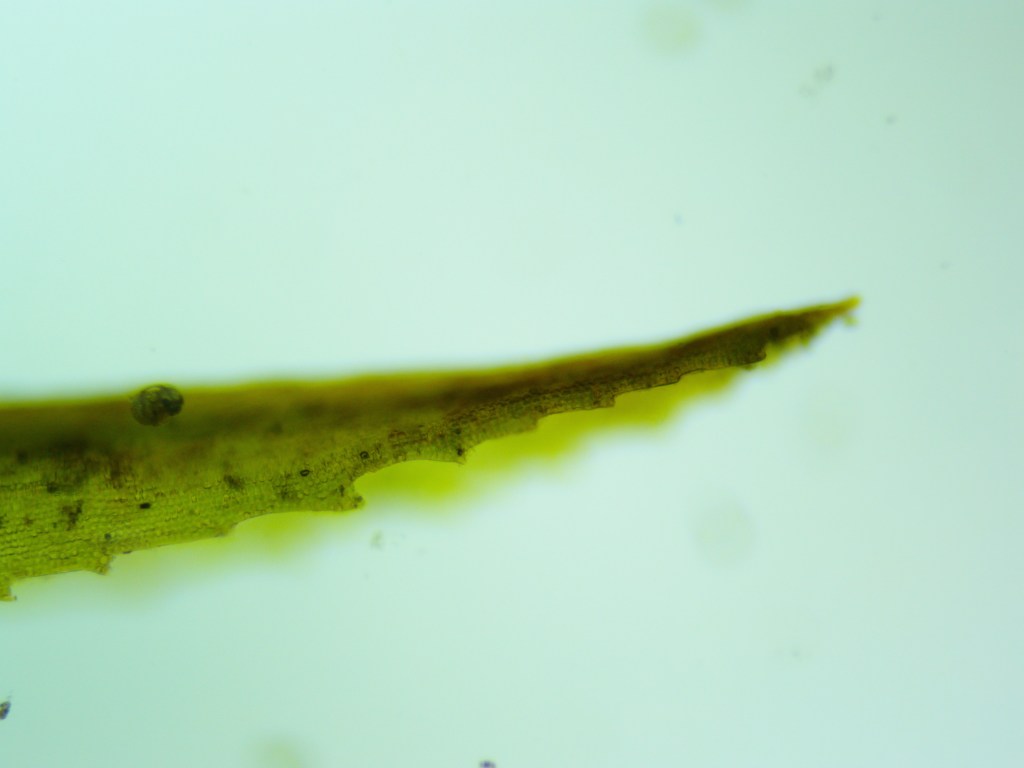
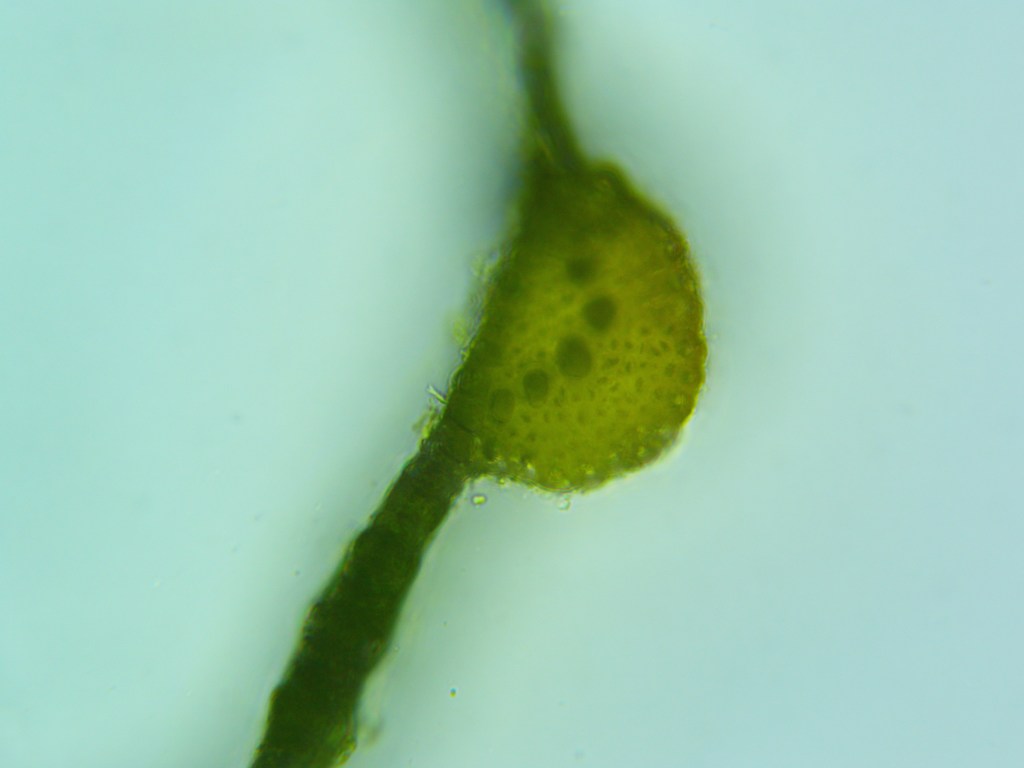
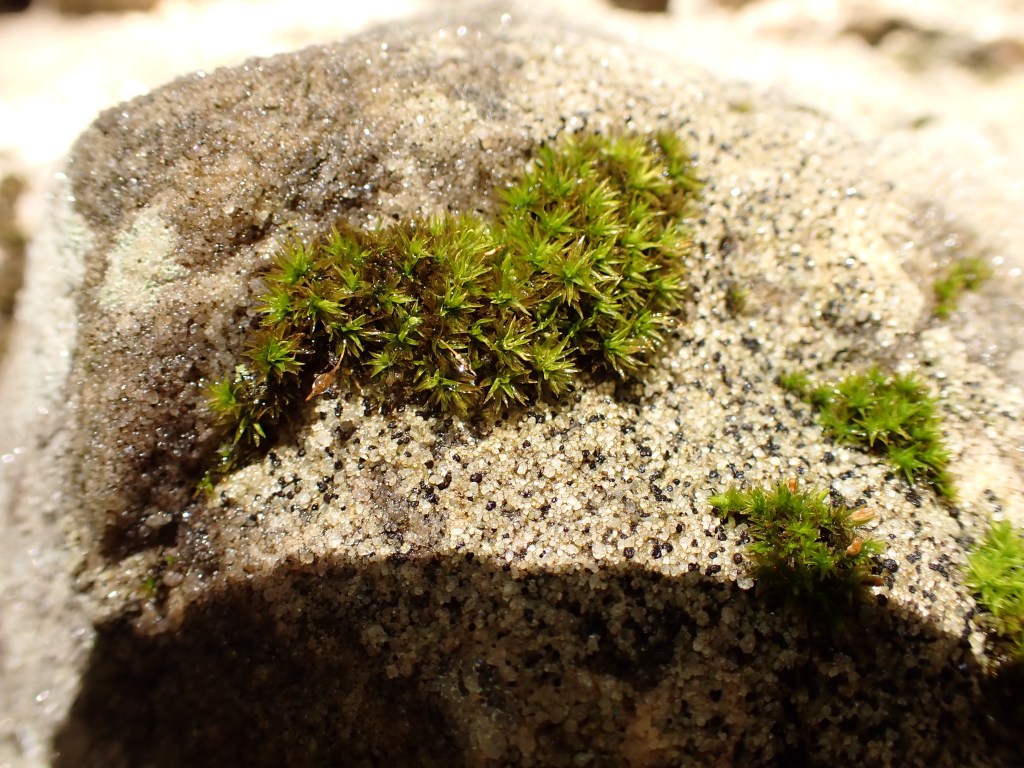
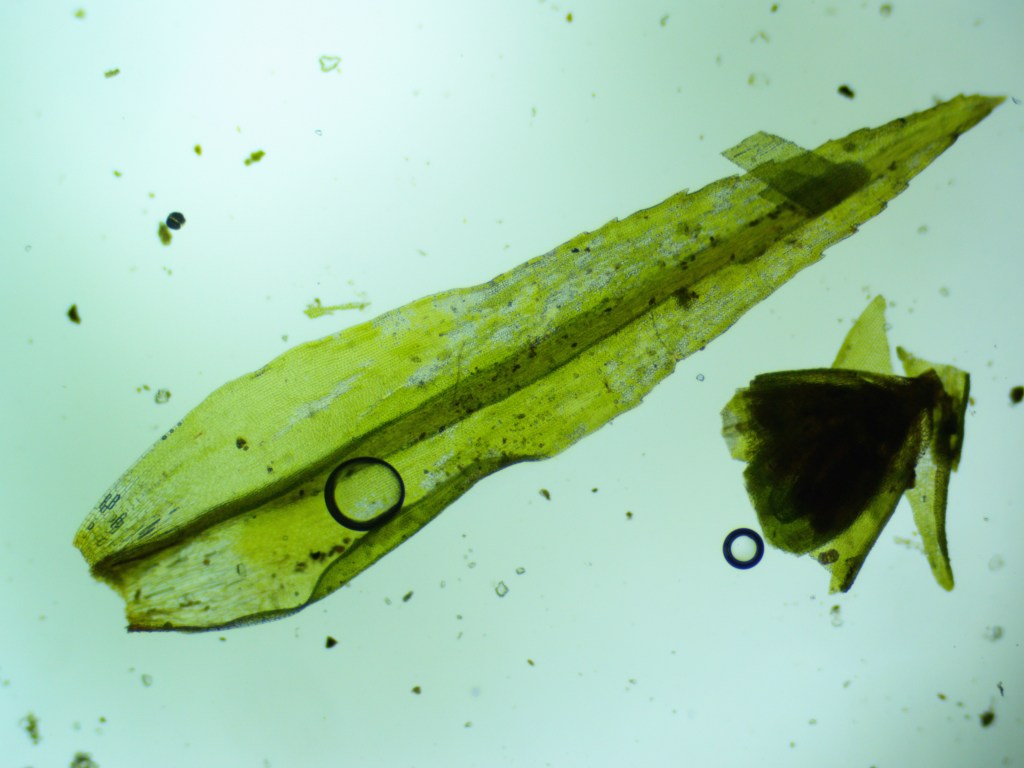
Though I spent several days working through the keys, it wasn’t until I got home that I finally was able to figure out who this moss is. It is Ptychomitrium serratum, an S1 ranked species with only 2 other collections in Missouri!
Second stop: Western Star Flatwoods Sink Hole Pond
I suppose this is where I should introduce Brad’s story about hornworts. Brad is from Kansas, and hornworts are limited there. He has seen them here in Missouri, but never with their sporophytes. Prior to the workshop, I had found a fruiting hornwort on the research station grounds, and Brad was very excited to be able to see it. Upon arrival, search as we might, both Sunday and Monday turned up empty handed for finding this elusive hornwort. It became a running joke that perhaps I had been playing a trick on Brad all this time and that there really was no hornwort….
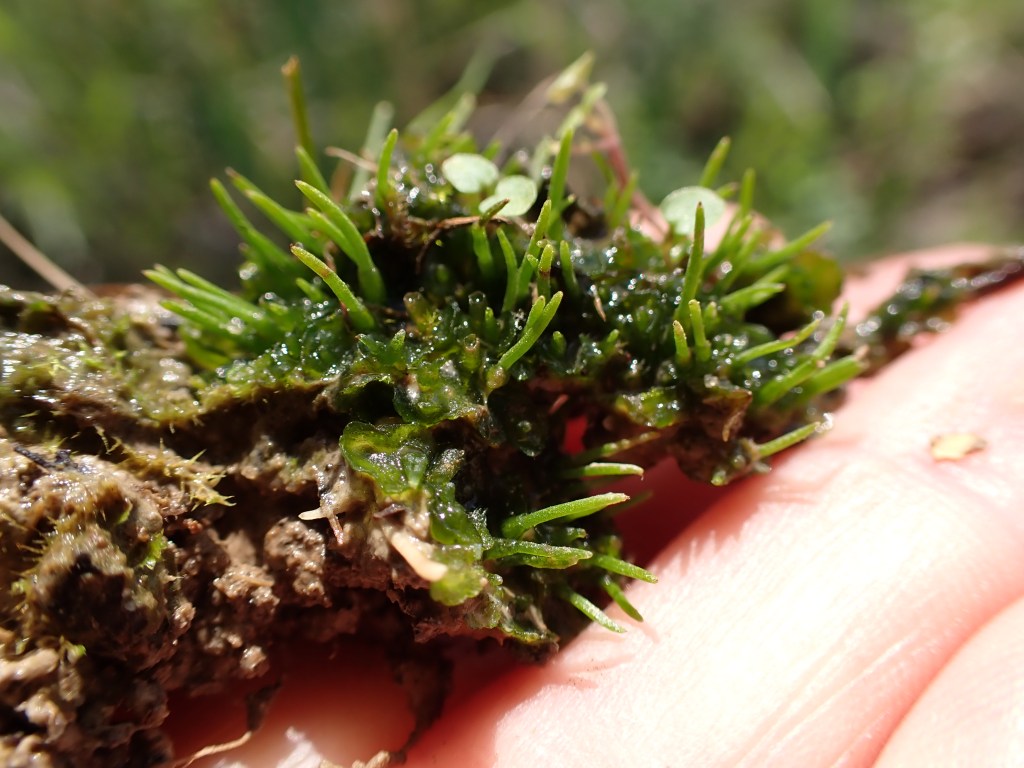
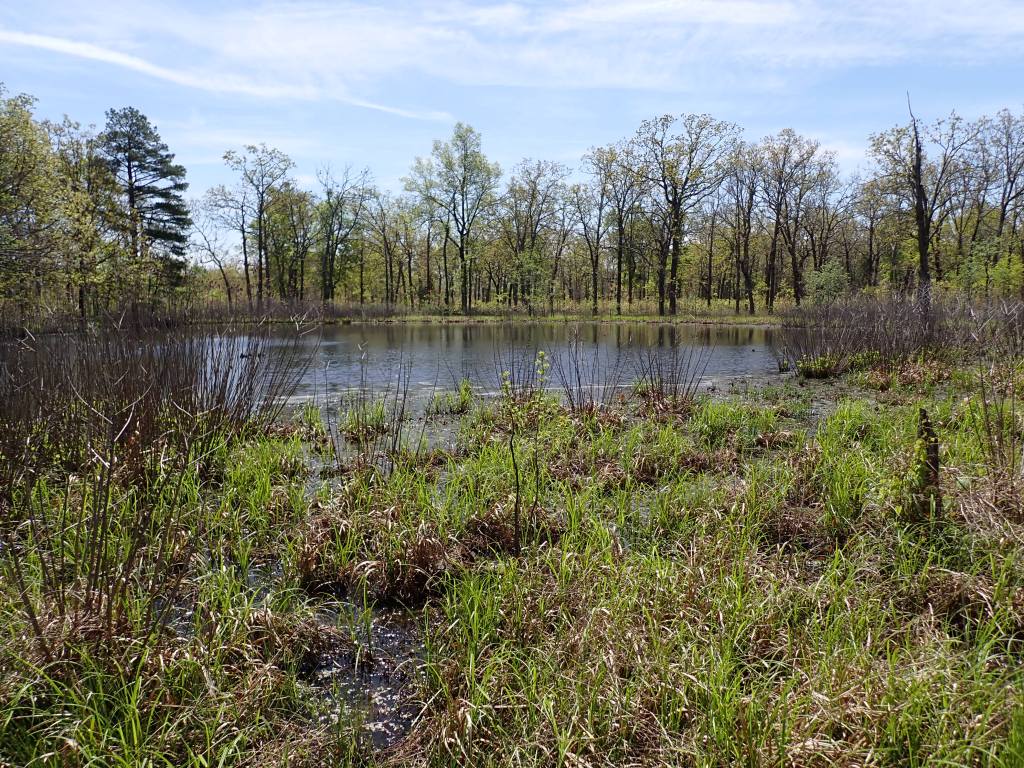
The sink hole had several fun species to see. Climacium americanum can take on slightly different habits when inundated with water, and this site allowed us to see some variances. Other fun moss species were Aulacomnium palustre with vegetative propagules, and Elodium paludosum.
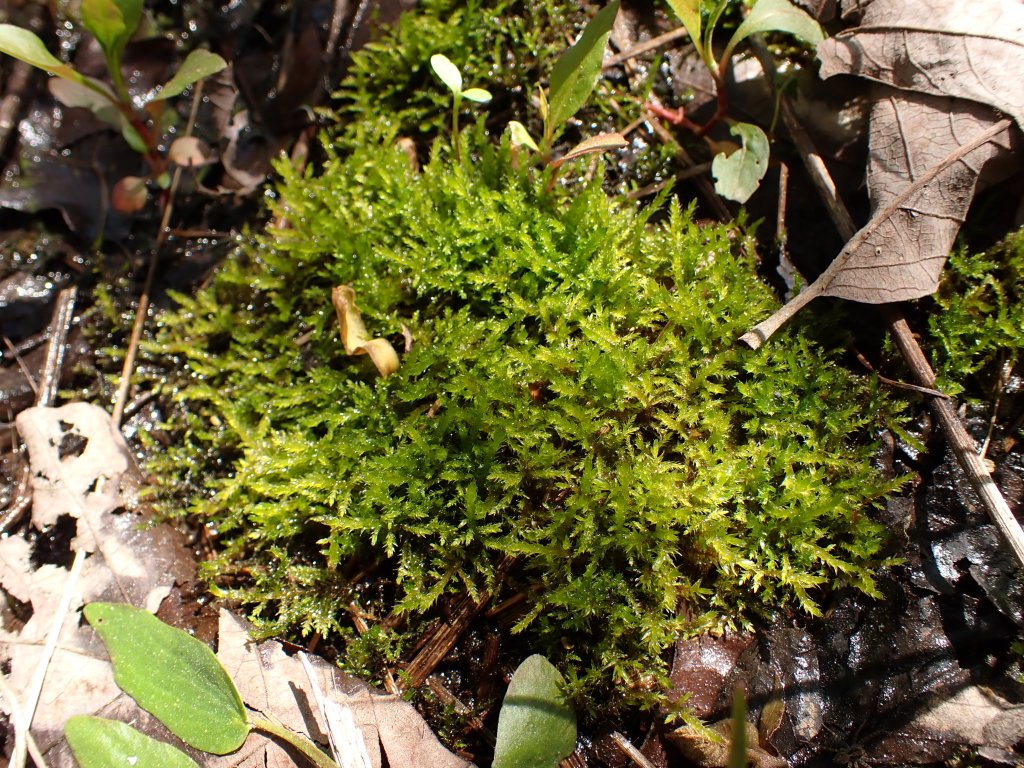
Elodium paludosum has distinct paraphyllia on the stems.
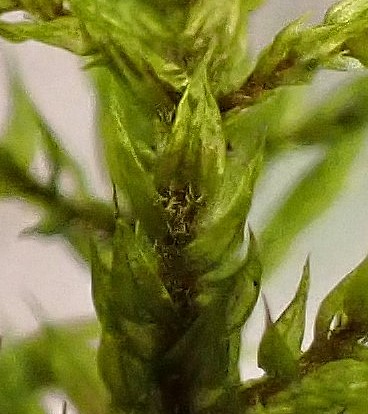
Aulacomnium palustre is most notable when it has its vegetative stalk with propagules at the tip.
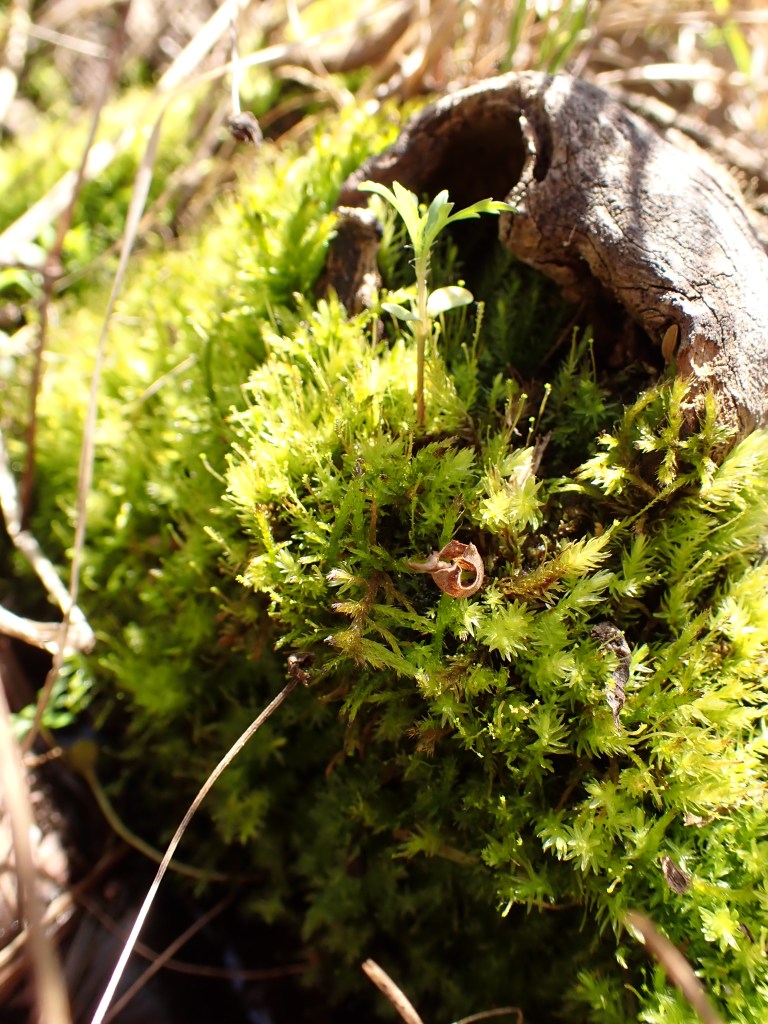
An additional exciting thing to see was a small population of Aulacomnium palustre that was expressing male gametangia, and a few female gametophytes had sporophytes! This is extremely uncommon to come across, and a treat to find.
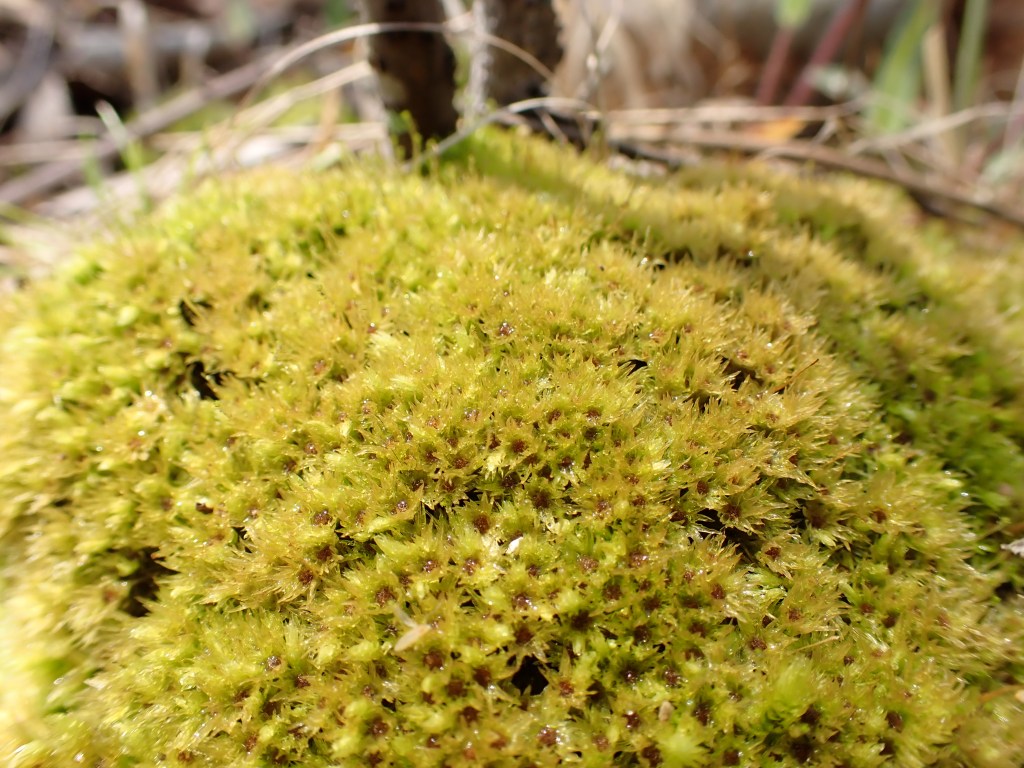
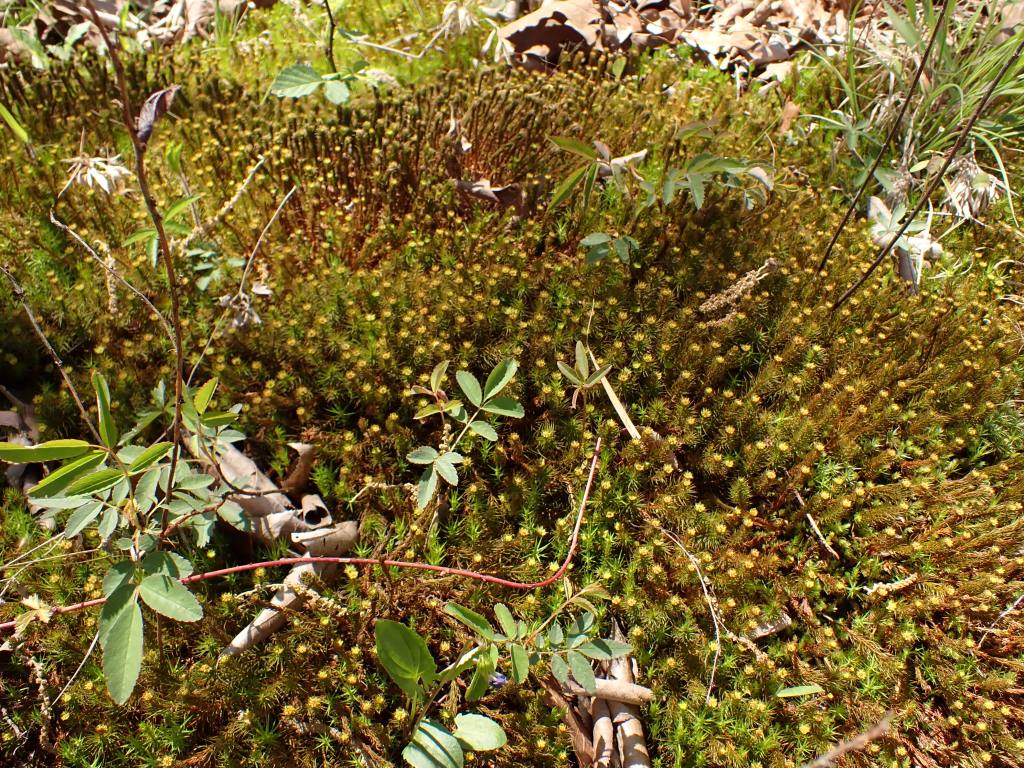
I had expected to find quite a bit more of Polytrichum commune than what we ultimately found, but at least we found one nice sized population.
As we were slowly hiking away from the pond, Brad hung back taking photos of the Aulacomnium. In order to give him some time, I decided to show the group Ditrichum pallidum which was growing in some old tire track ruts. As I bent down to get a closer look, I noticed the horns…….
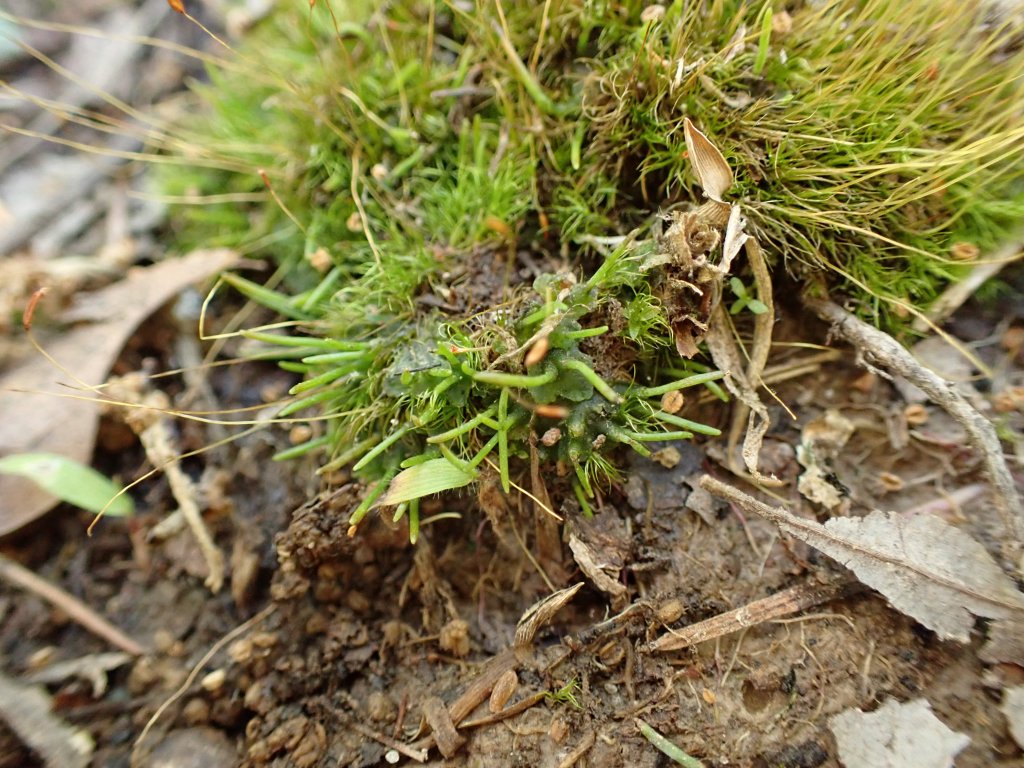
“Brad! I found your hornwort!!!”
I was so happy that I could finally yell, “Brad! I found your hornwort!” Just about every population of Ditrichum pallidum in that area had the hornwort growing with it. Needless to say, Brad was extremely happy, and I had my redemption. The hornwort was Phaeoceros carolineanus, which is Missouri’s most common hornwort of our 4 species.
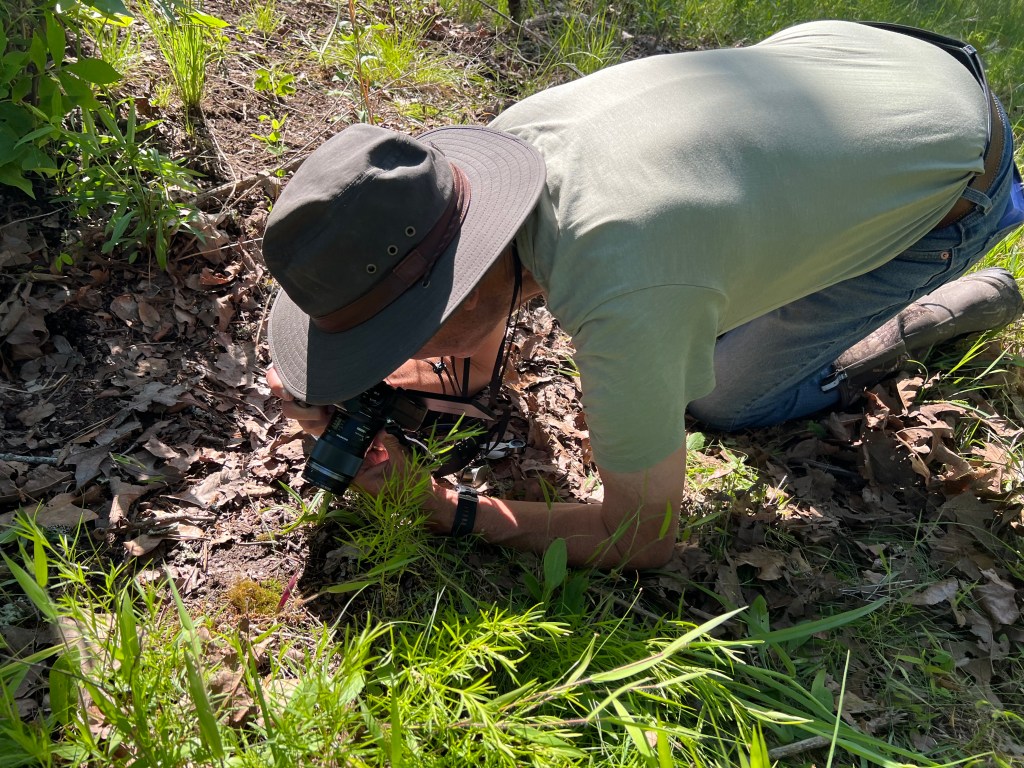
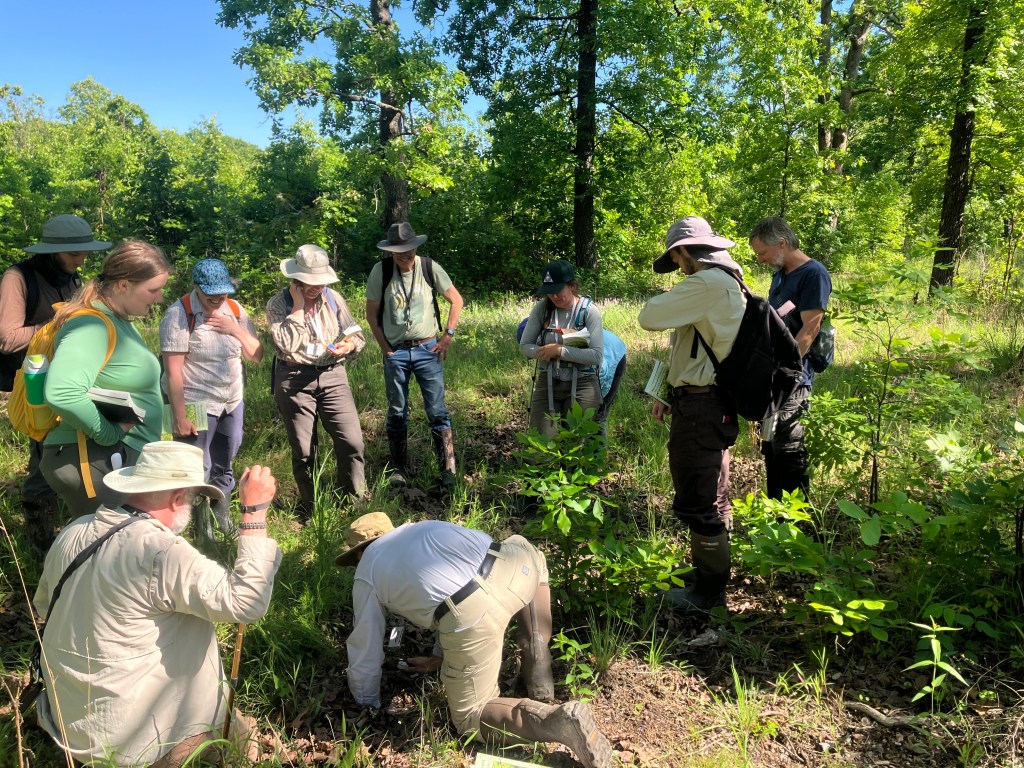
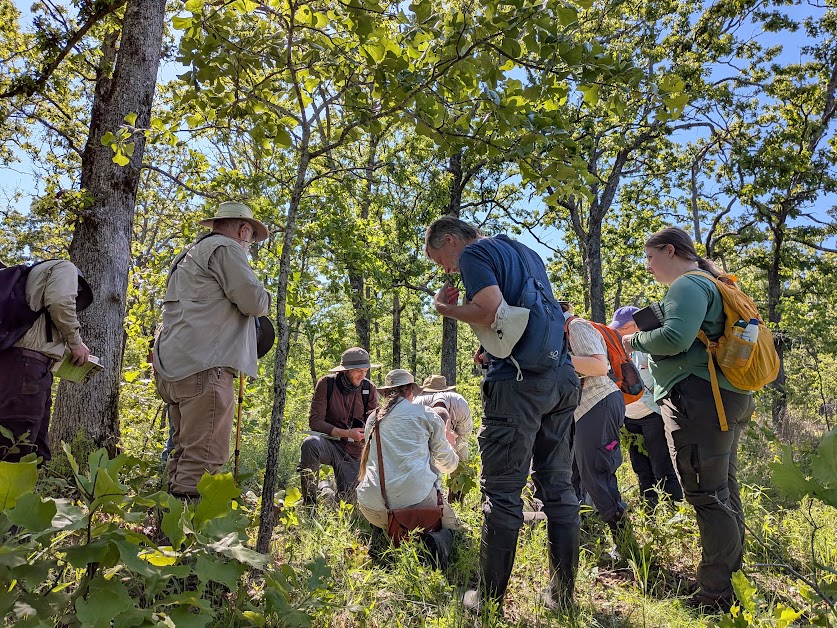
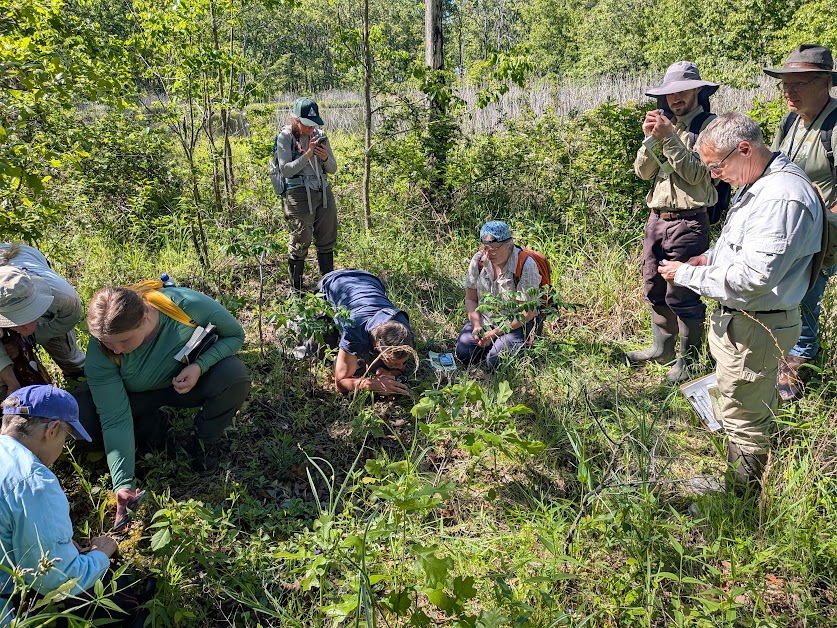
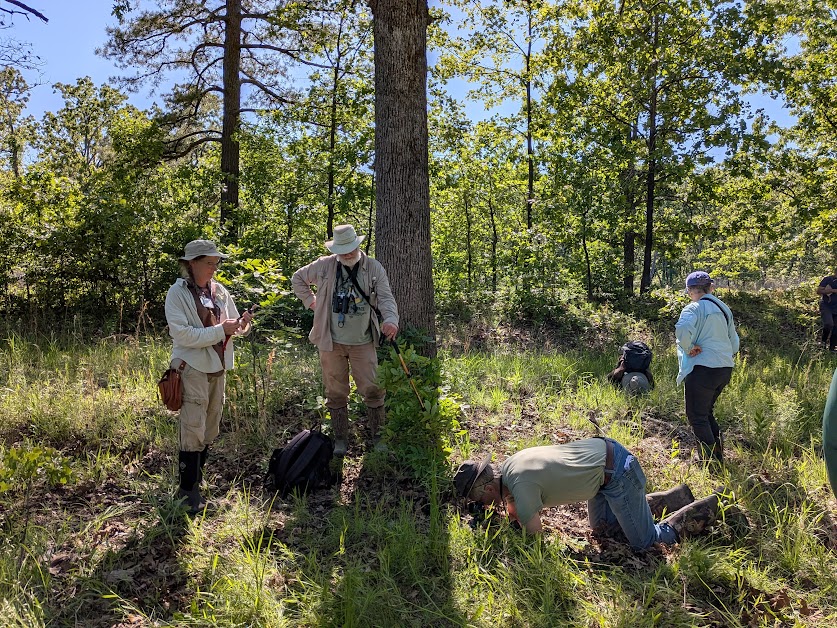
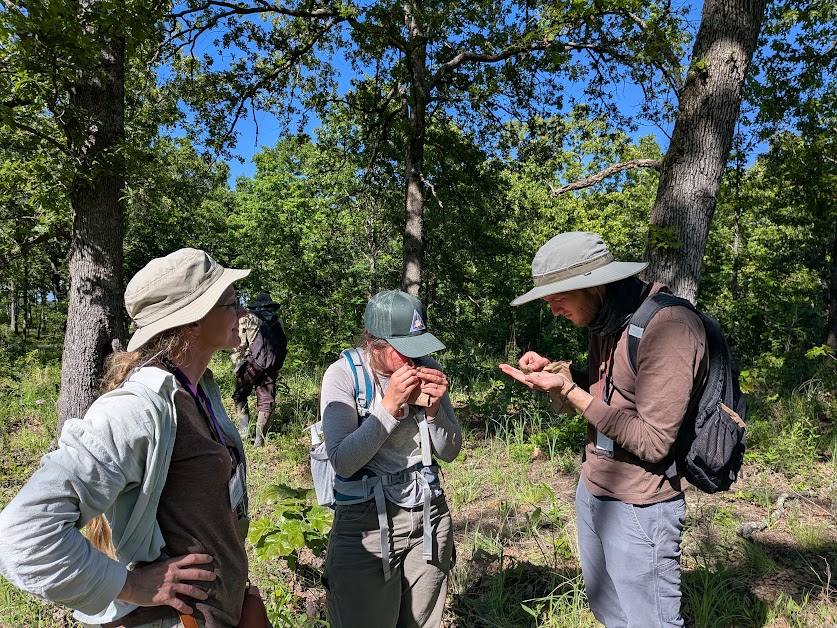
Above: a compilation of group photos from the sink hole pond. Photos are a mixture from myself, Lilly, and Hilary.
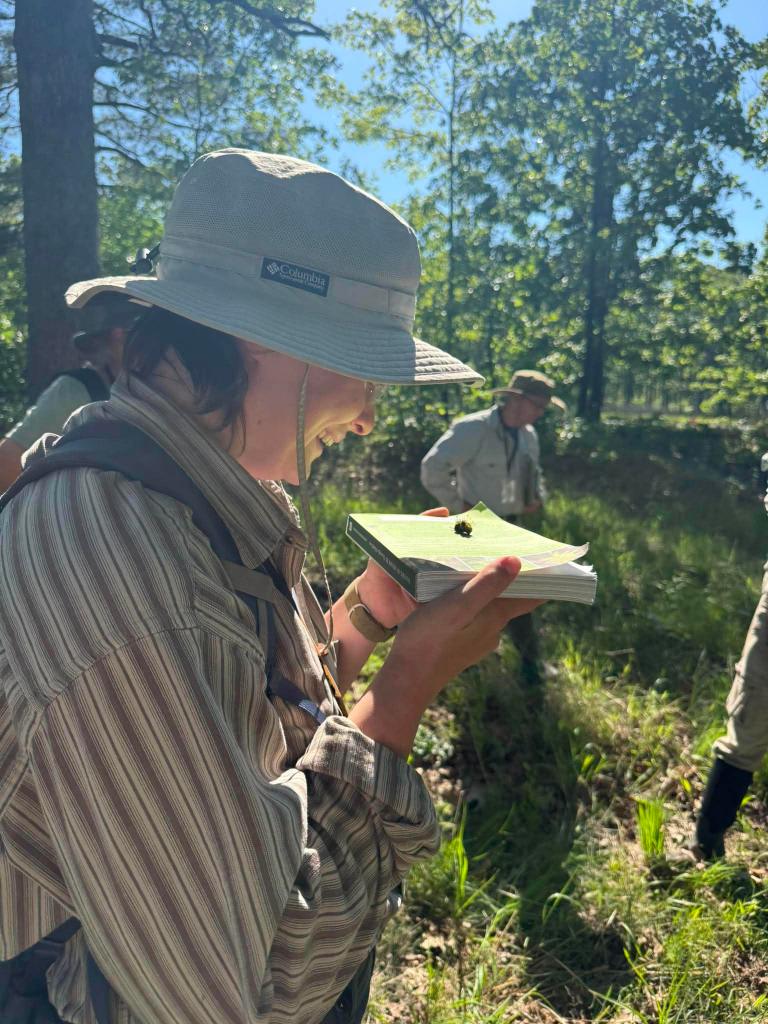
The amazing Lilly enjoying a moss. There is no other way to describe Lilly other than a smiling, loving bundle of happiness and joy. Warmth just radiates from her. She is the caretaker of the research station, she helped with the logistics during the workshop, was the van driver extraordinaire, and works for the Missouri Prairie Foundation.
Wednesday
Wednesday morning, Brad, Lee, and Don enjoyed some bird watching before breakfast. A few other mosslings made their way into the scope room to study some mosses. I brought several moss boxes which contained 17 common species of moss that can be keyed out in the book. I also had additional moss boxes that are a current work in progress, with the idea to have a traveling herbarium. For example, I have 4 of the 5 Anomodon species allowing one to be able to compare the differences side by side. Paul blew me away by having gone through every moss box I brought by the end of the workshop!
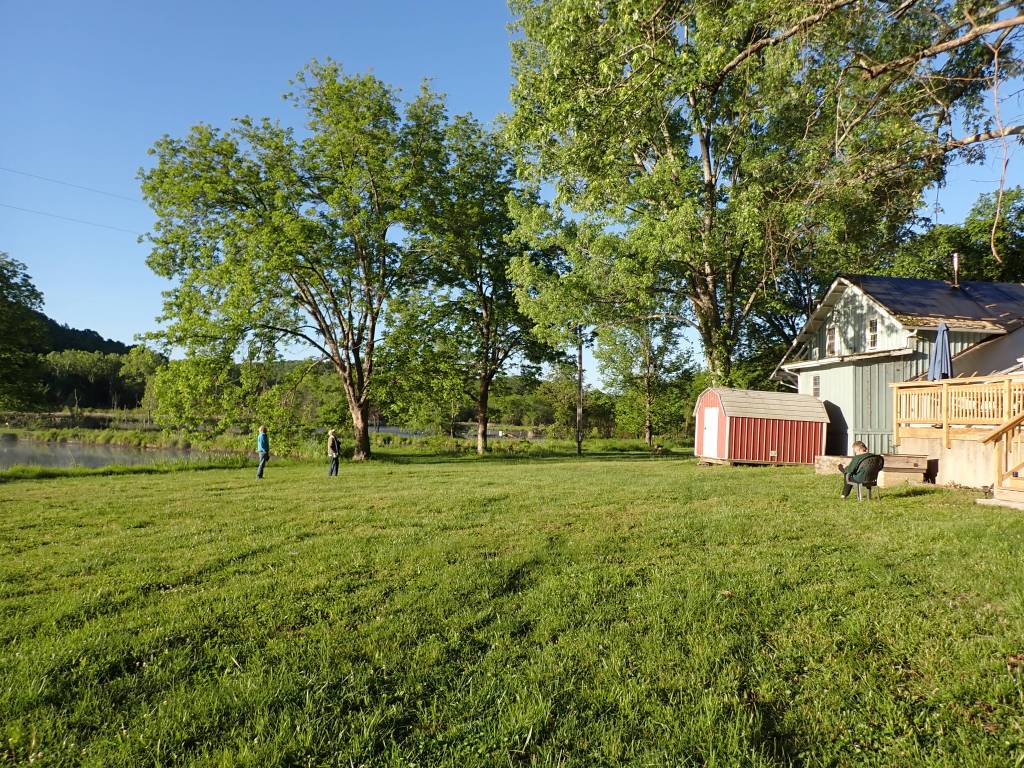
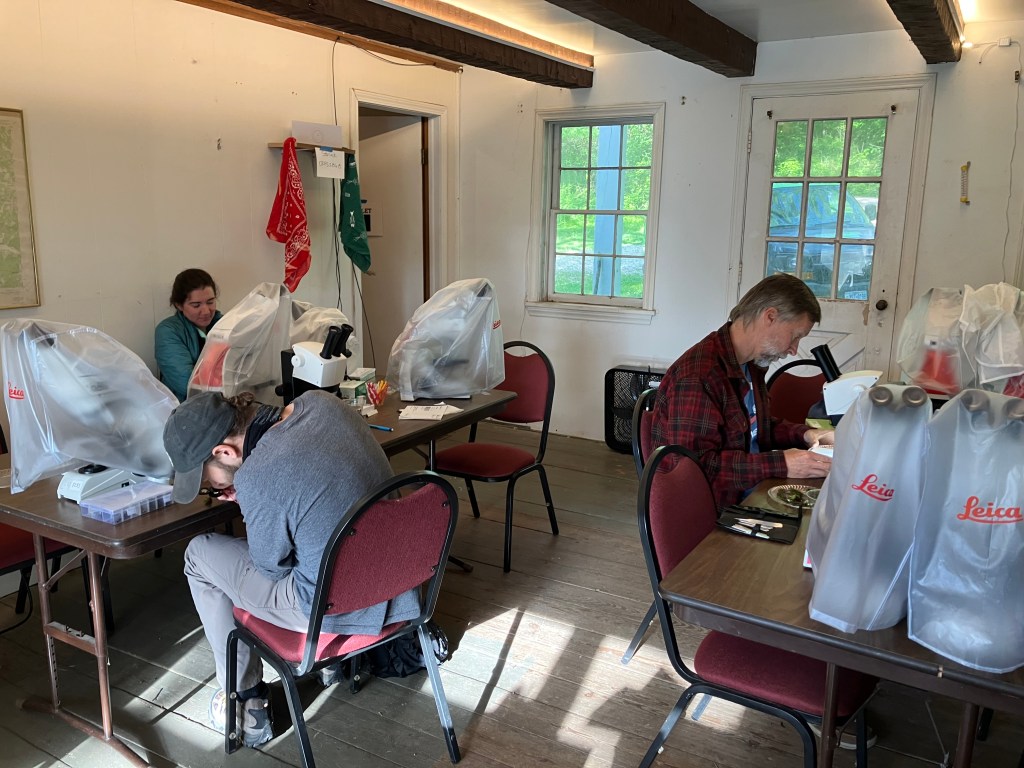
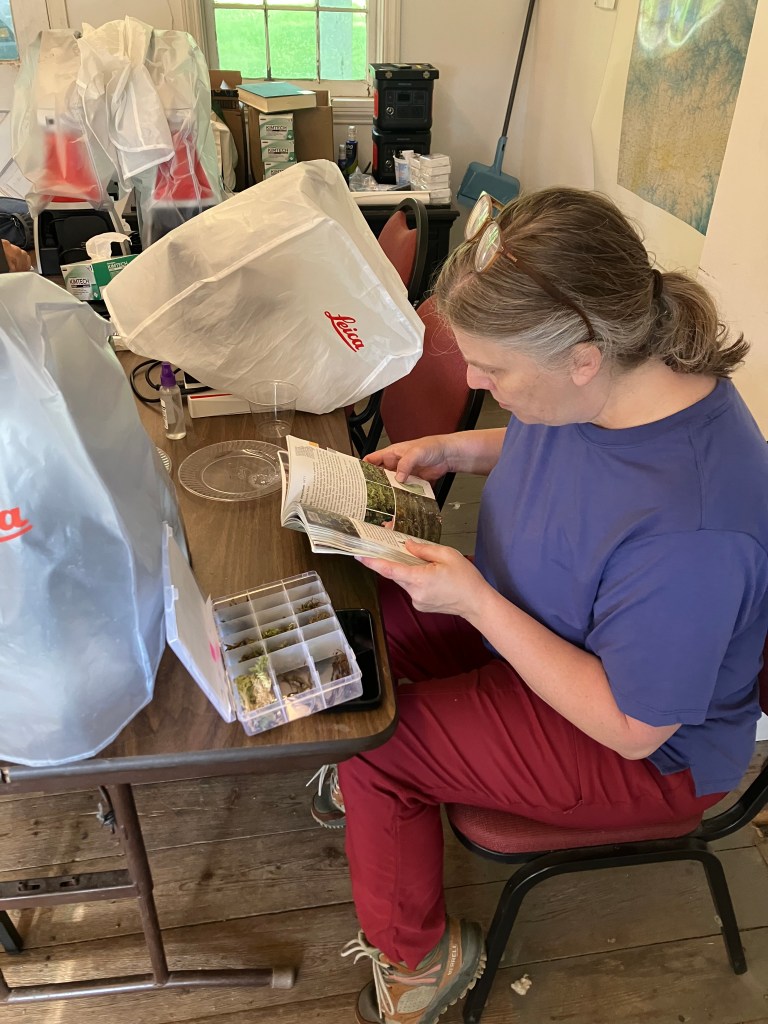
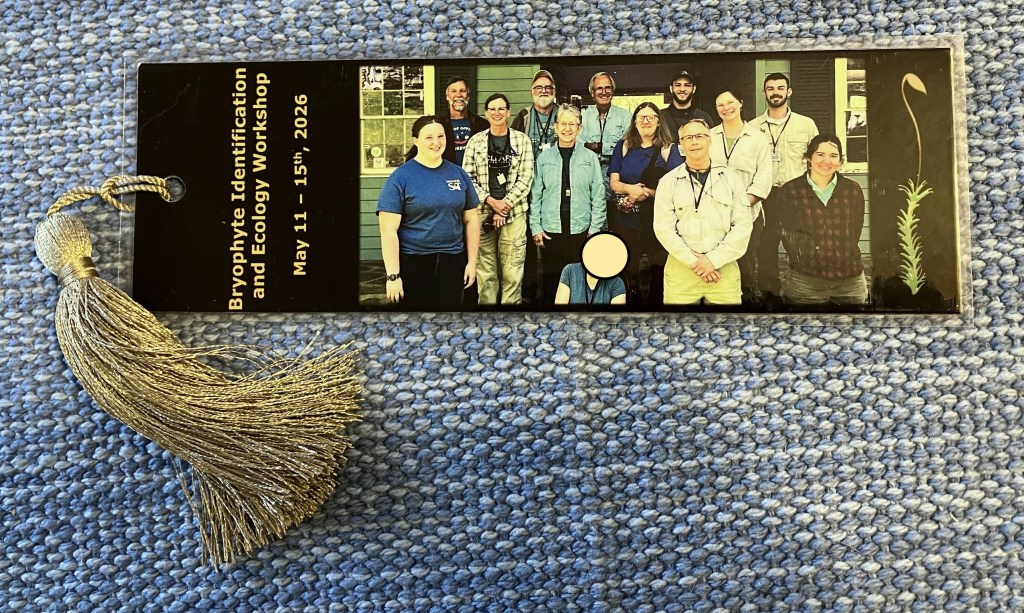
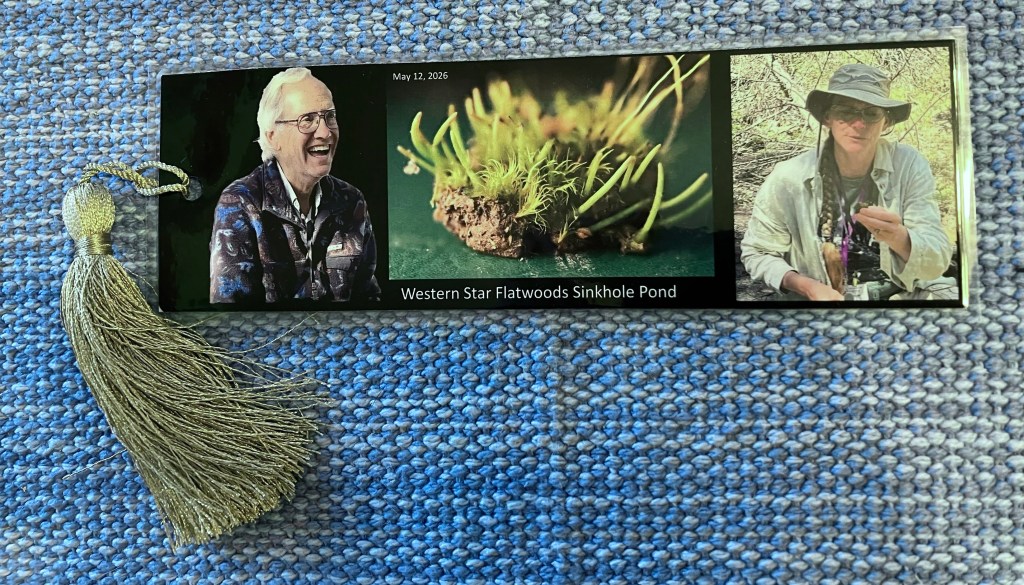
An additional surprise that morning were these wonderful bookmarks that Dan secretly made the evening before and brought them to us all. What a fantastic gift to remember this week by!
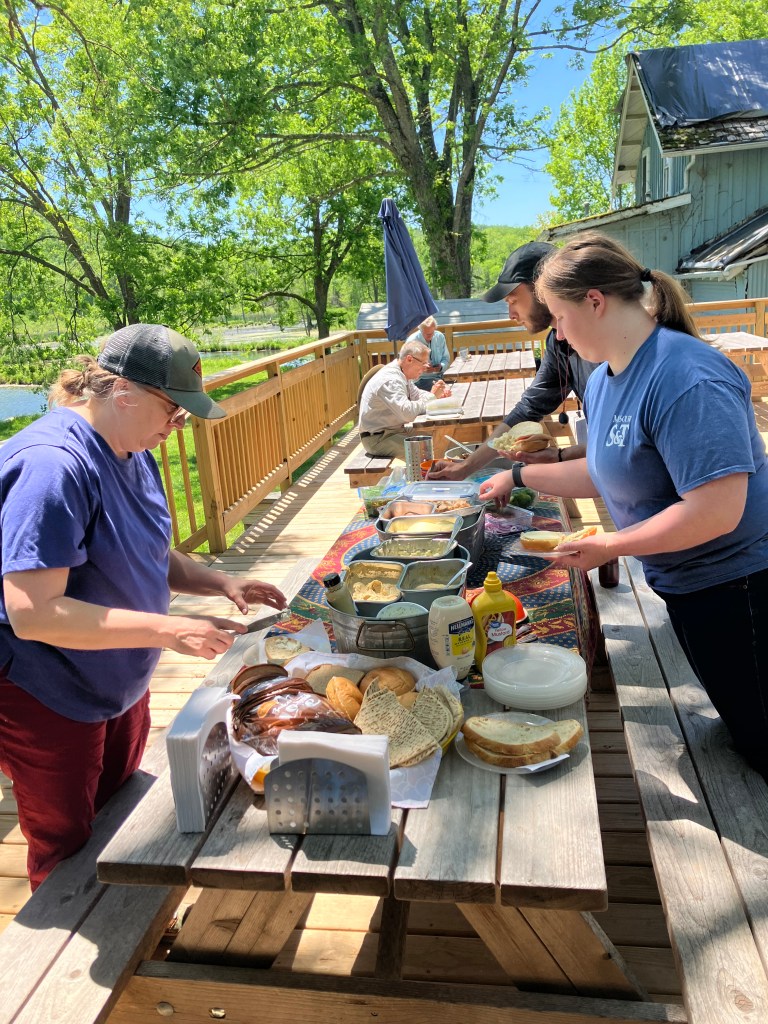
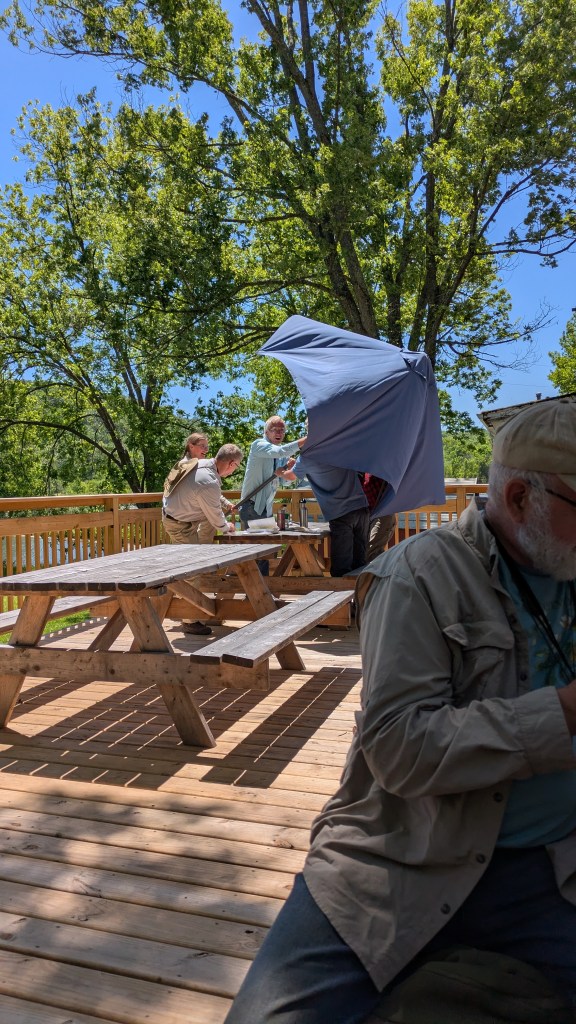
This was the last morning of seminars, and we covered morphological characteristics that helped bryophytes survive in their environments, along with ecology within basic communities. Lunch was delicious as always, and we had a bit of excitement with wrestling a table umbrella when a gust of wind surprised us.
Of all of our fieldtrips, this one was my personal favorite. We spent the afternoon at a local sandstone glade which sits in a mixed woodland. However, before we headed out on the trail, Nancy and the gang had a surprise for me. For the first three days, transportation was provided by a 10-passenger van, along with myself taking 3 people in my car. This afforded private time in the van for concocting all sorts of nefarious ideas. When we arrived at the trailhead and gathered for our brief site talk, Nancy asked me to say Anomodon. Now, it’s important to say it correctly to get the gist. a-Na-ma-Don, with the emphasis on the capital letters. So…with some trepidation, having sensed a bit of mischievousness about to ensue, I said it, and everyone started dancing and singing a tune. All I can say is, watch this video, and you will never be able to say Anomodon again without thinking of this song!
“Anomodon…doo dooooo dododo dooooo….Anomodon… do dodo dooooo!”
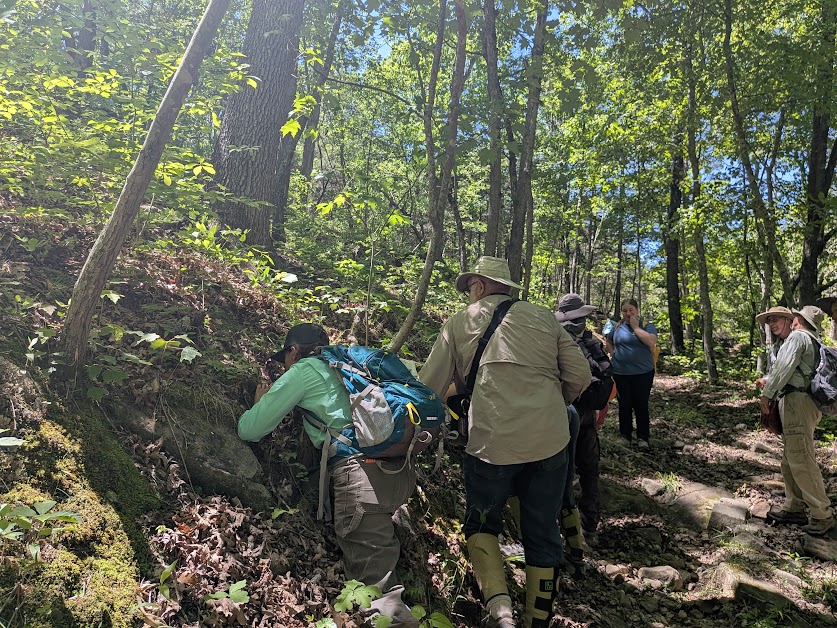
Those that have never been on a bryophyte crawl (hike), it is not uncommon that we barely make it 50ft without stopping. My goal for this workshop, was to ignore everything I saw along the way to make sure we made it to our destination. I don’t think most folks know how truly difficult that was for me, but we succeeded minus one stop. Along the side of the trail was a cut that had several common, acidic woodland species such as Thuidium delicatulum, Arrhenopterum heterostichum, and Bartramia pomiformis. I often call the latter two the lovers, as they are more commonly found together than not.
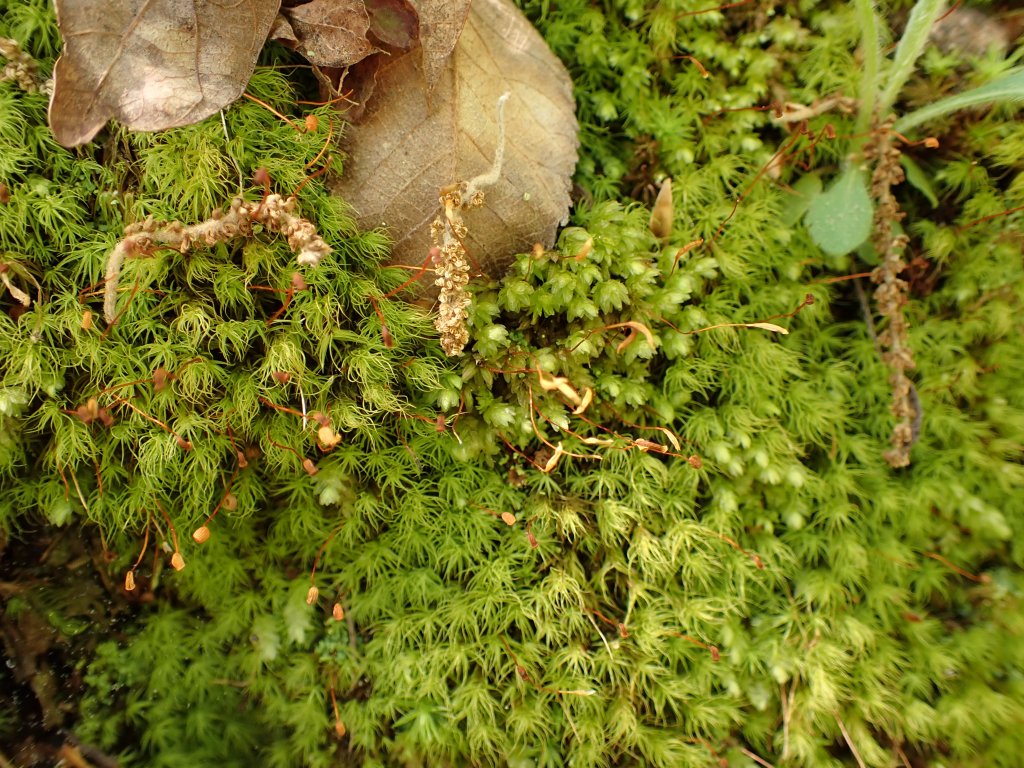
The Lovers: Arrhenopterum heterostichum (the one that looks like mittens or cat paws) and Bartramia pomiformis (the one with the longer, hair-like leaves)
At the glade, I enjoyed listening to the winds flow through the pine trees as the peaceful sound always reminds me of my time spent out in the mountains of Montana. But alas! There was little time to reminisce as questions were asked, explorations were afoot, and identification was in progress!
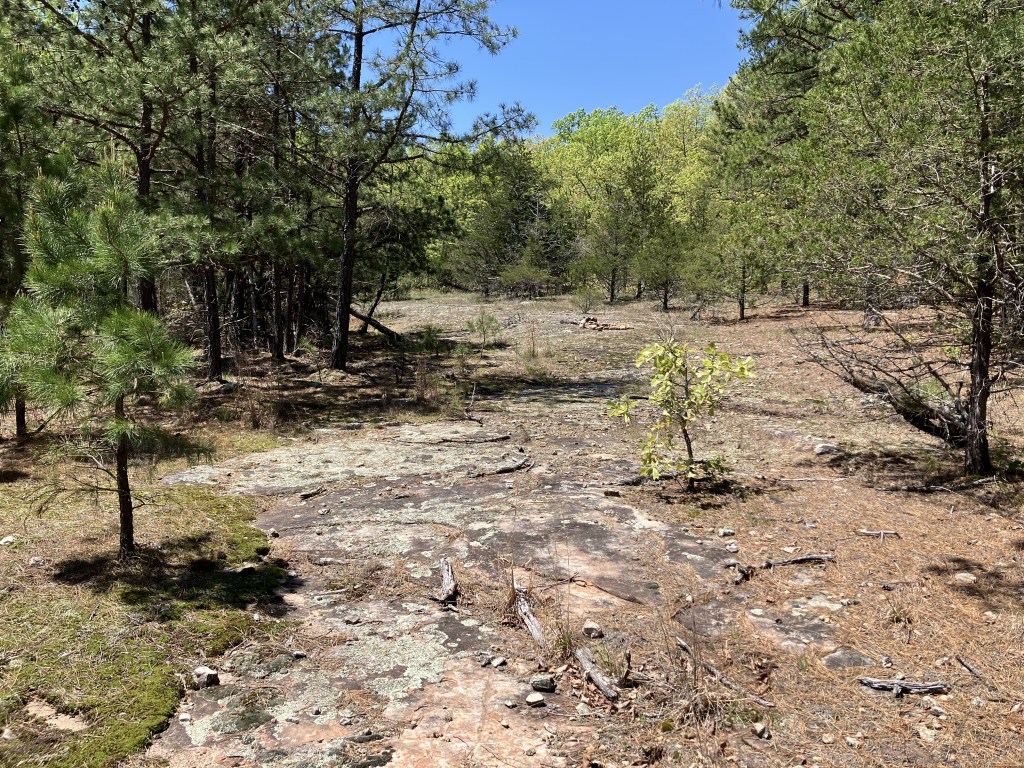
Everyone picked a spot to settle down in….mostly in the shade as it was a bit warm in the afternoon. Quite the diversity of mosses (and a few liverworts) was identified by everyone. Polytrichum commune and P. juniperinum, a wonky looking population of Climacium americanum because it was growing in the stream, Grimmia laevigata, Hedwigia ciliata, both Anomodon tristis and Leucodon julaceus were in the cedar trees, Ditrichum pallidum, Dicaranum scoparium and D. condensatum, and Leucobryum glaucum just to name a few. The liverwort commonly found everywhere here was Scapania nemorosa.
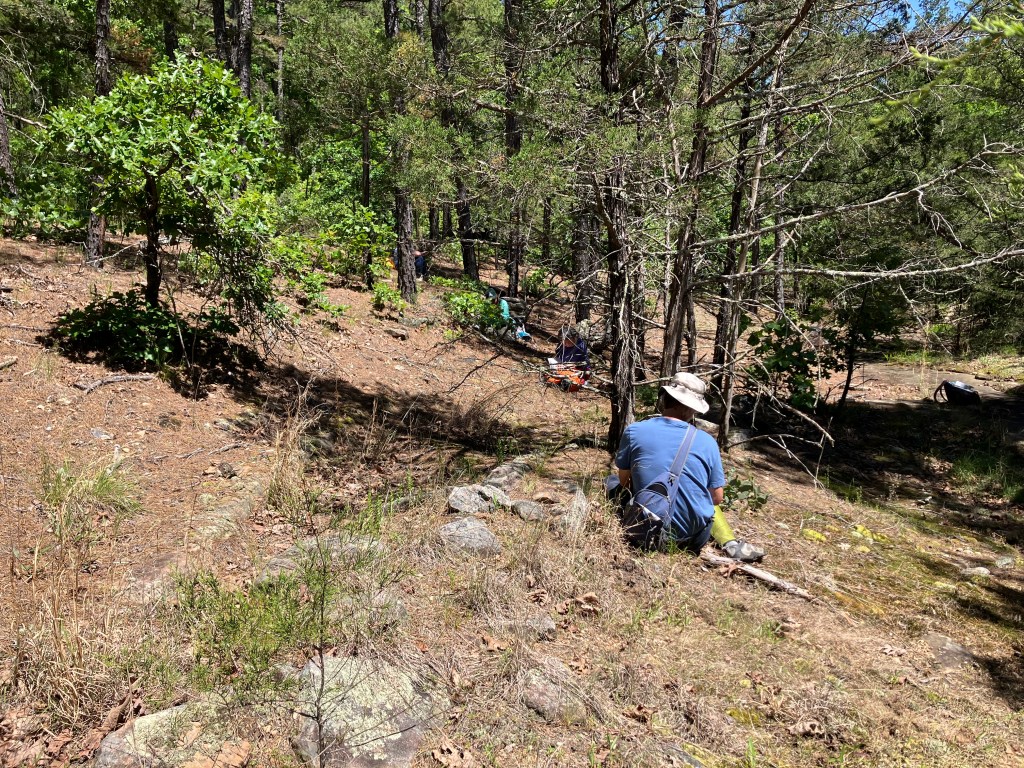
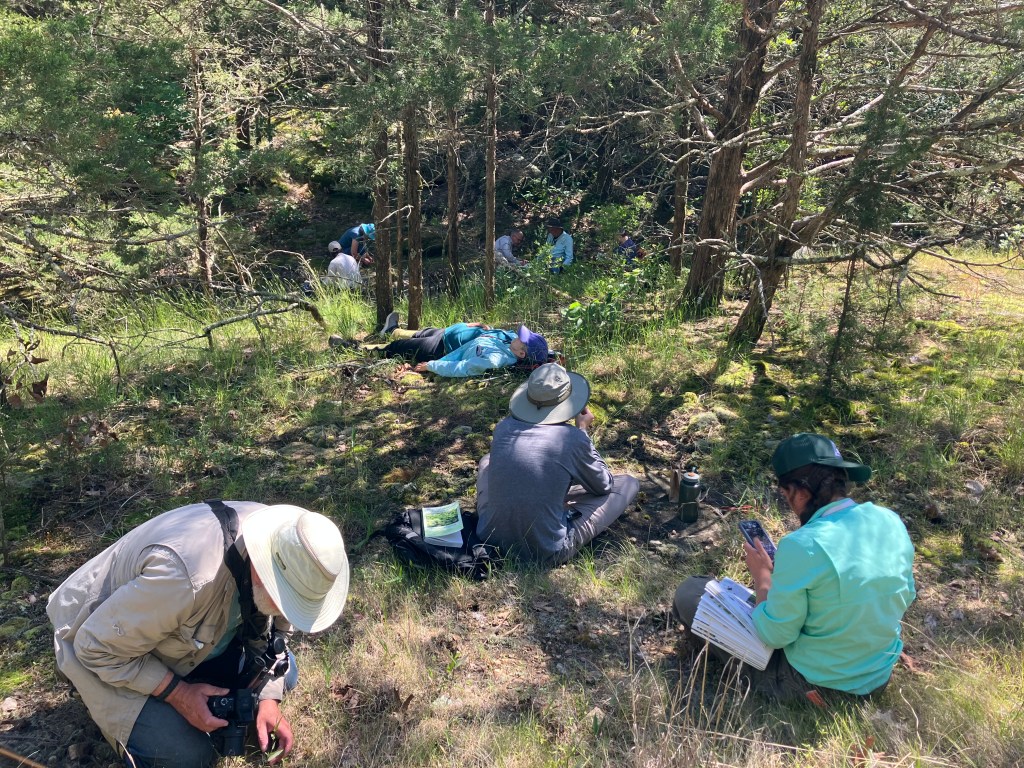
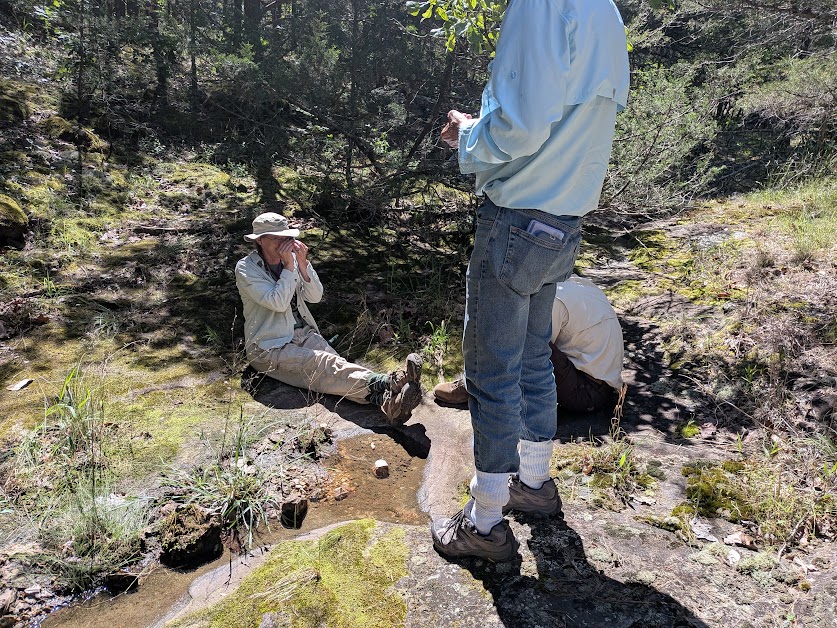
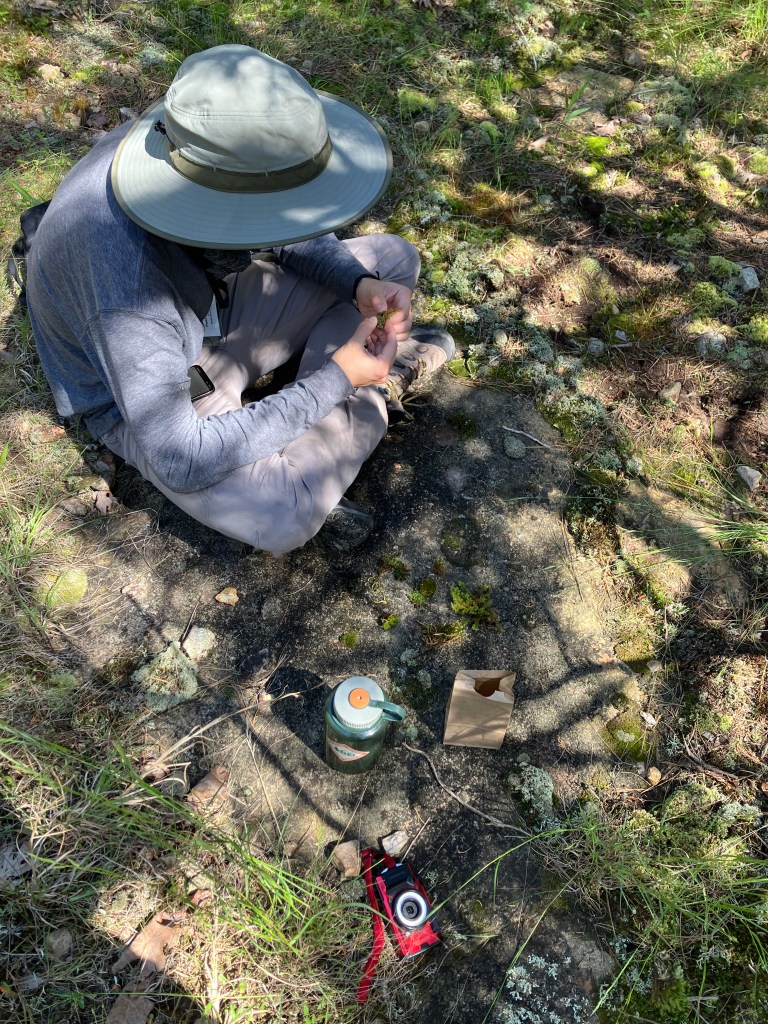
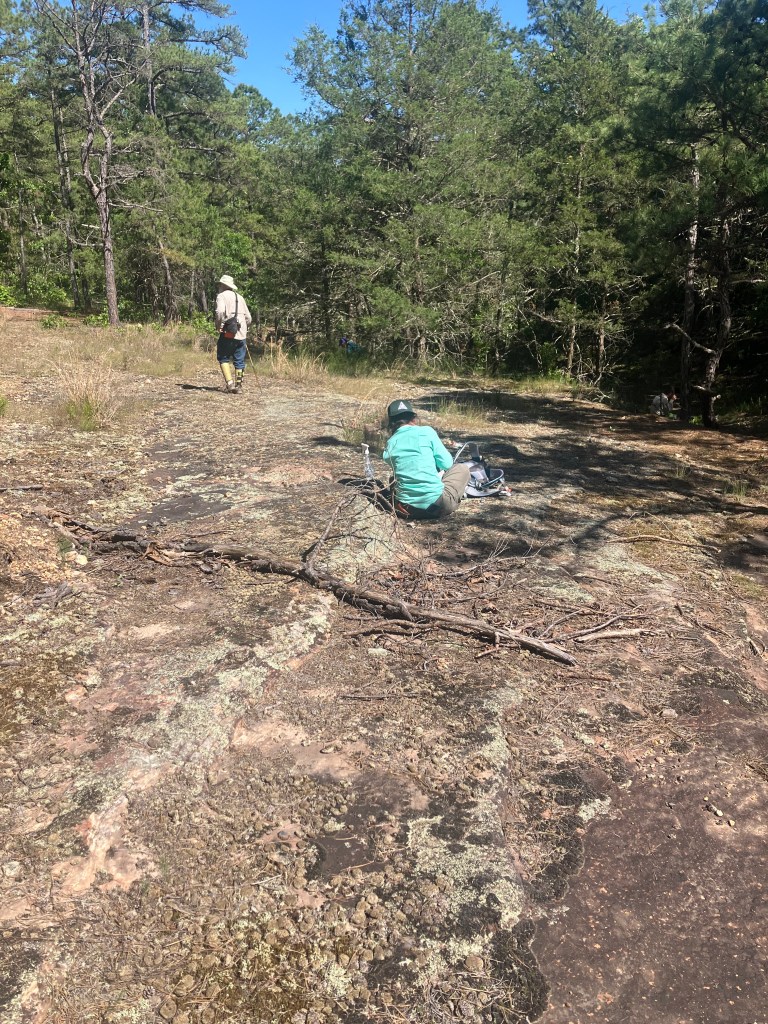
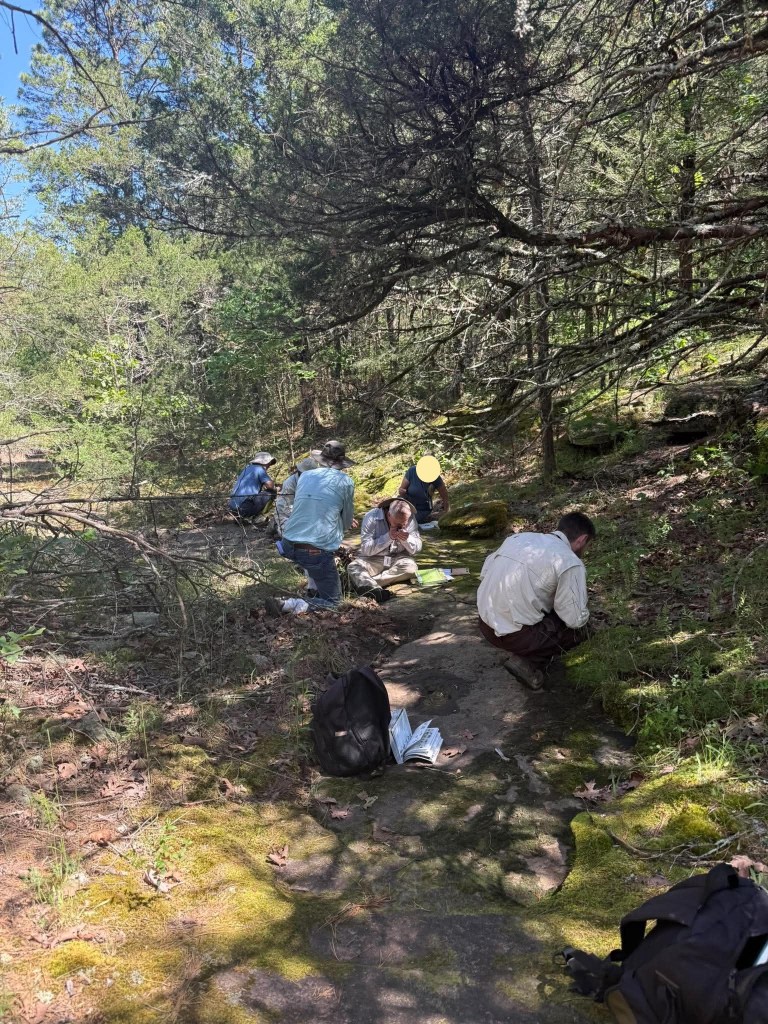
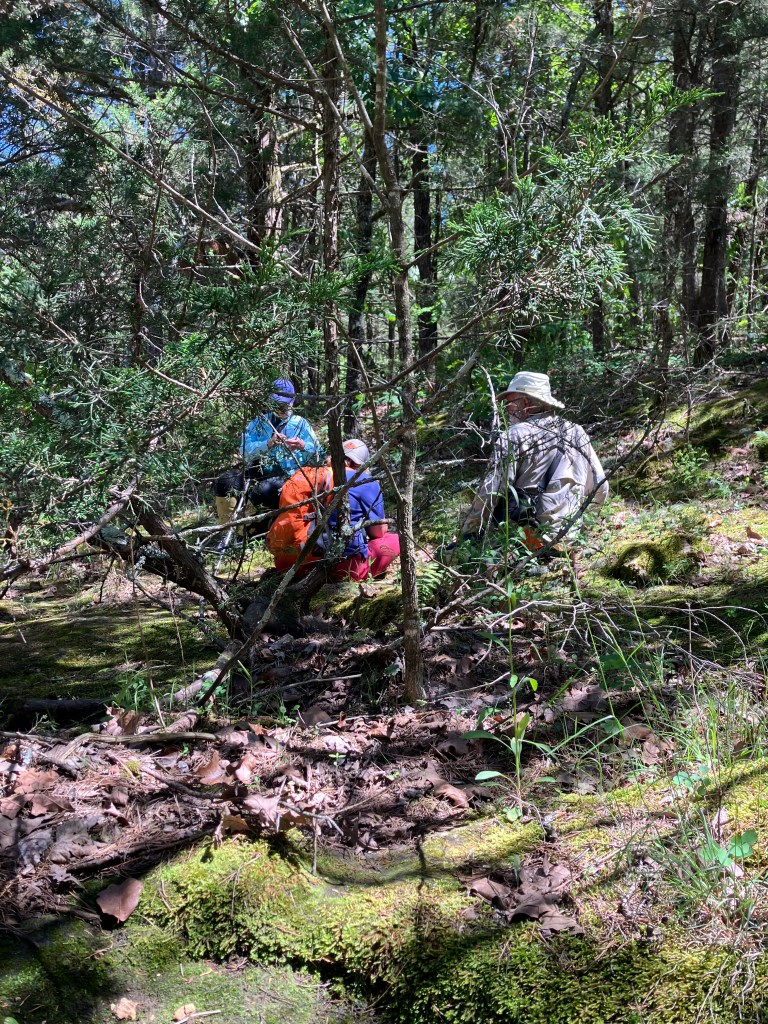
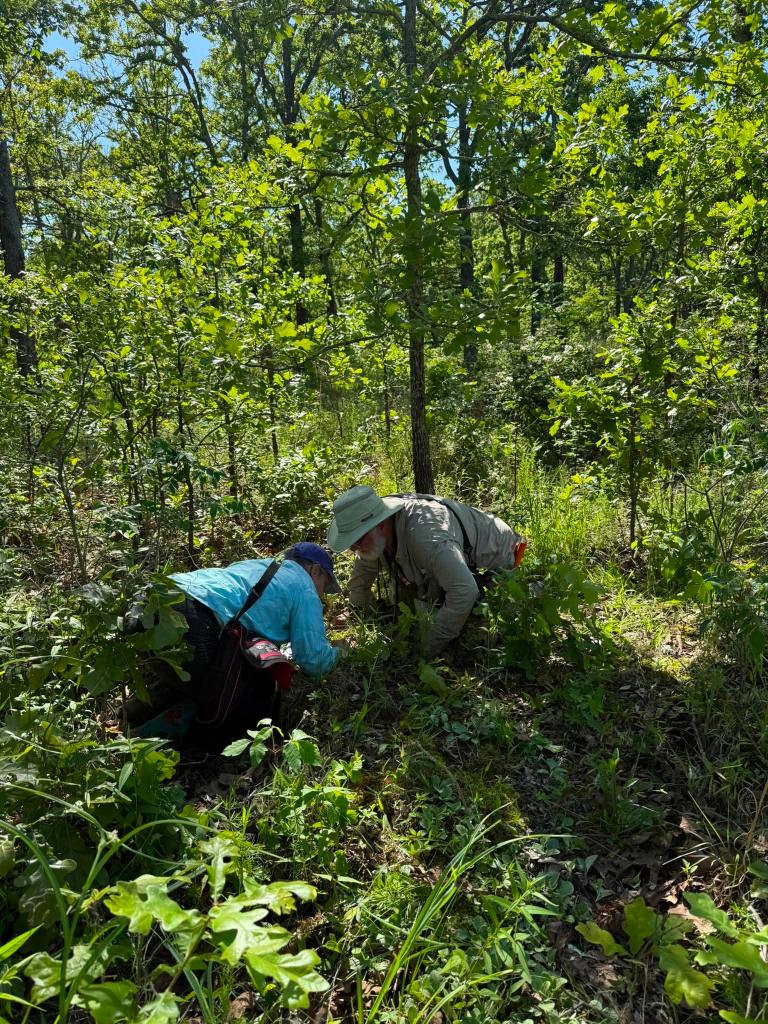
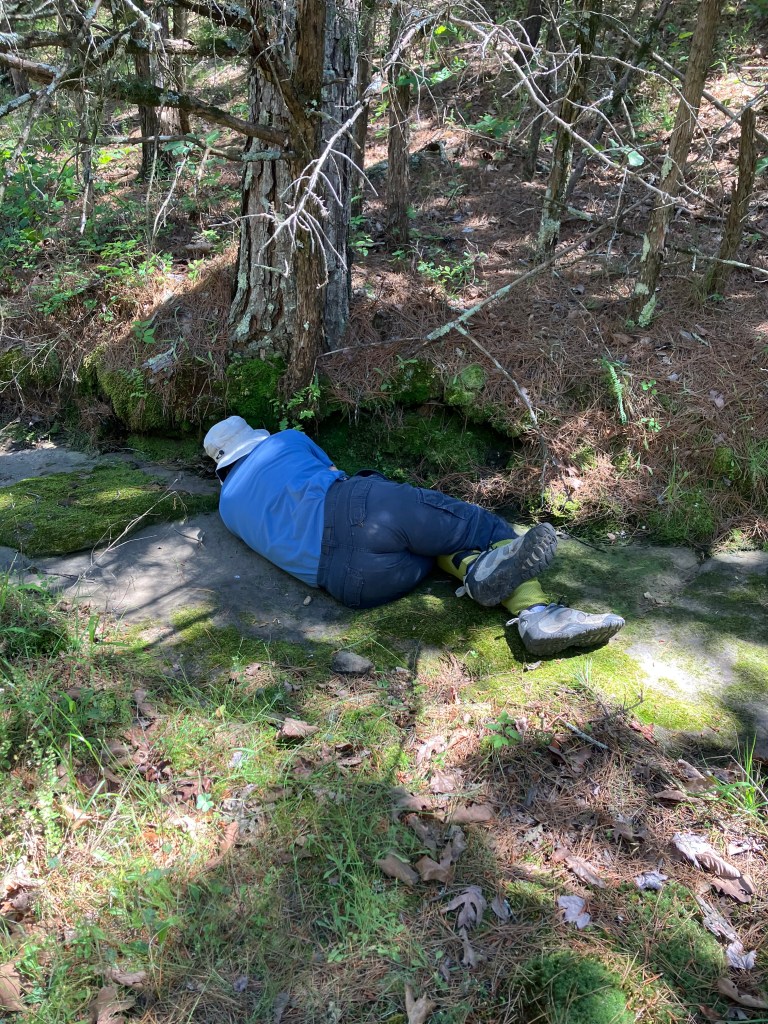
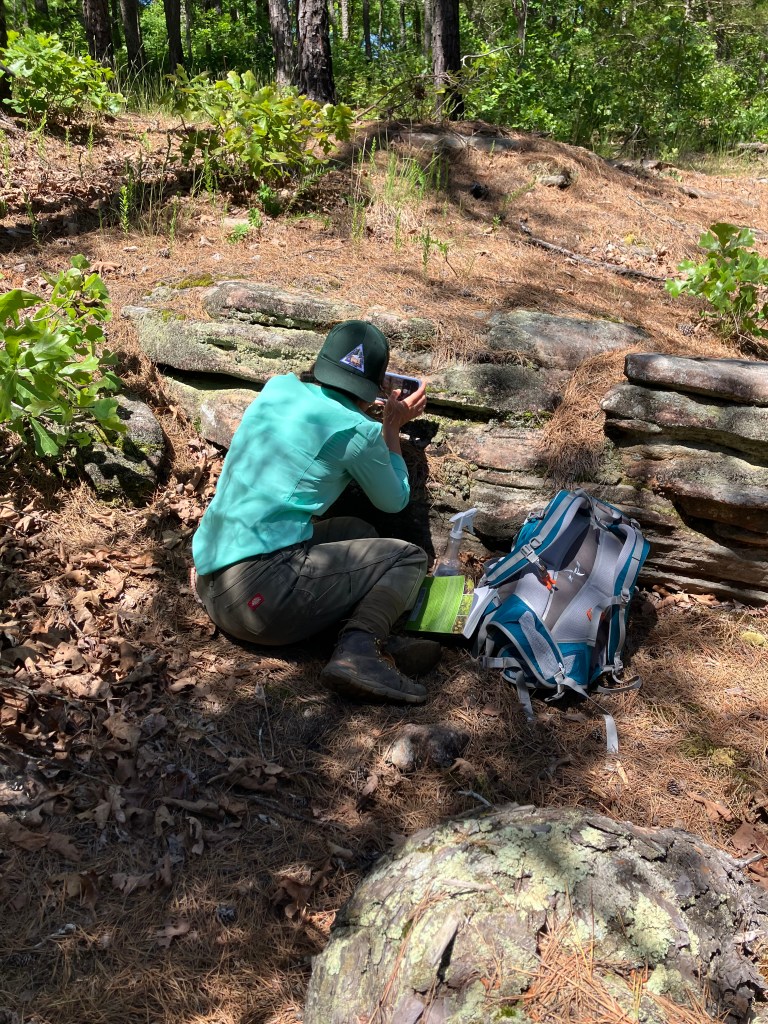
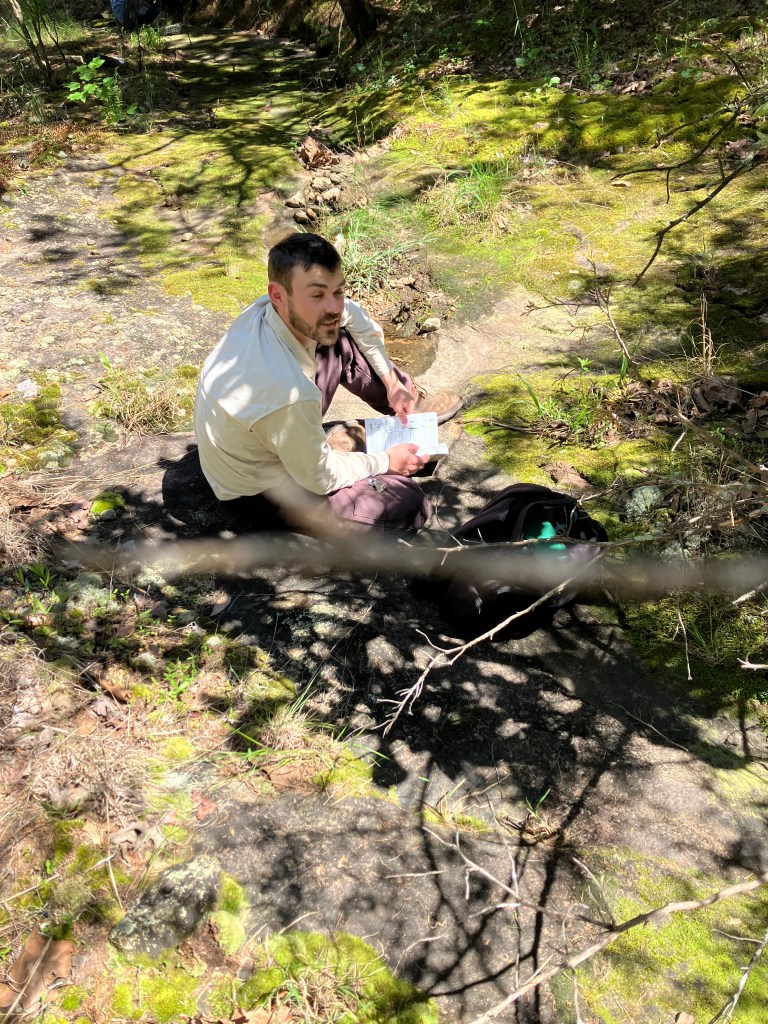
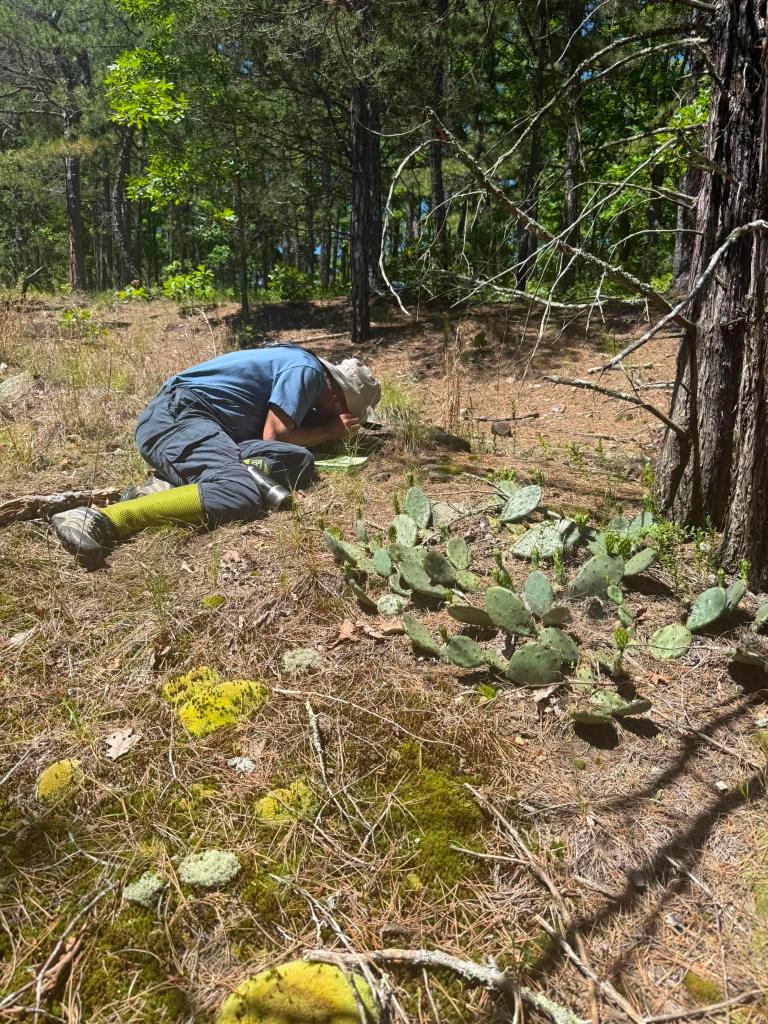
Above all: a mix of photos from myself, Hilary, and Lilly
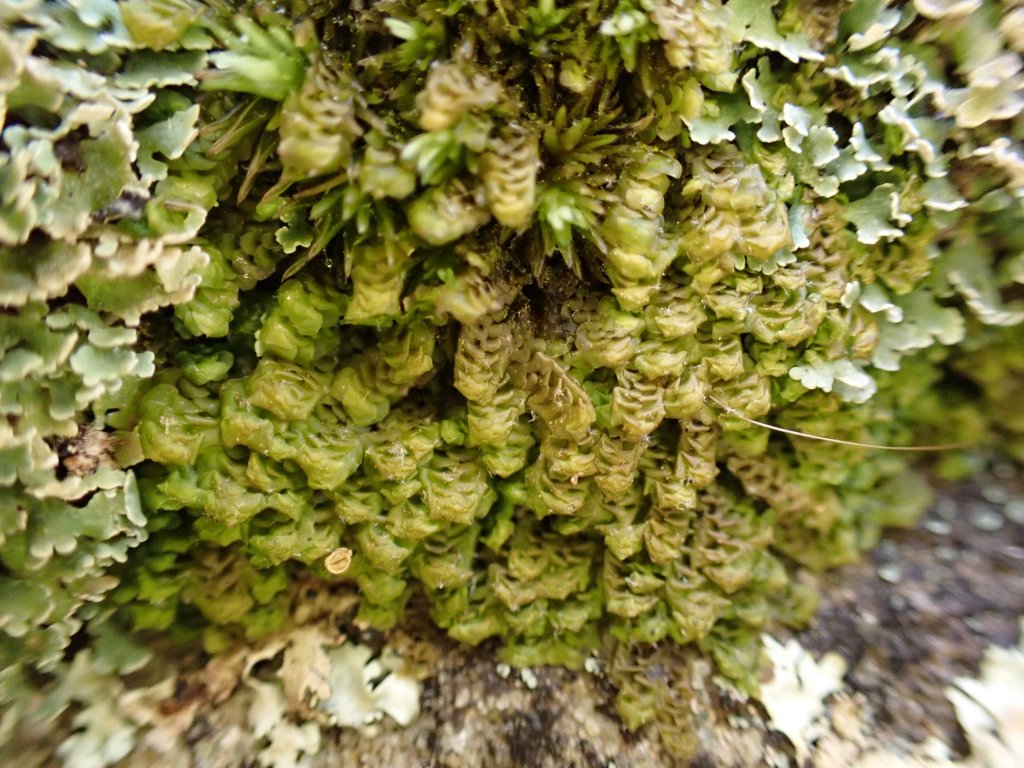
The leafy liverwort, Scapania nemorosa.
Grimmia laevigata, a common sandstone species.
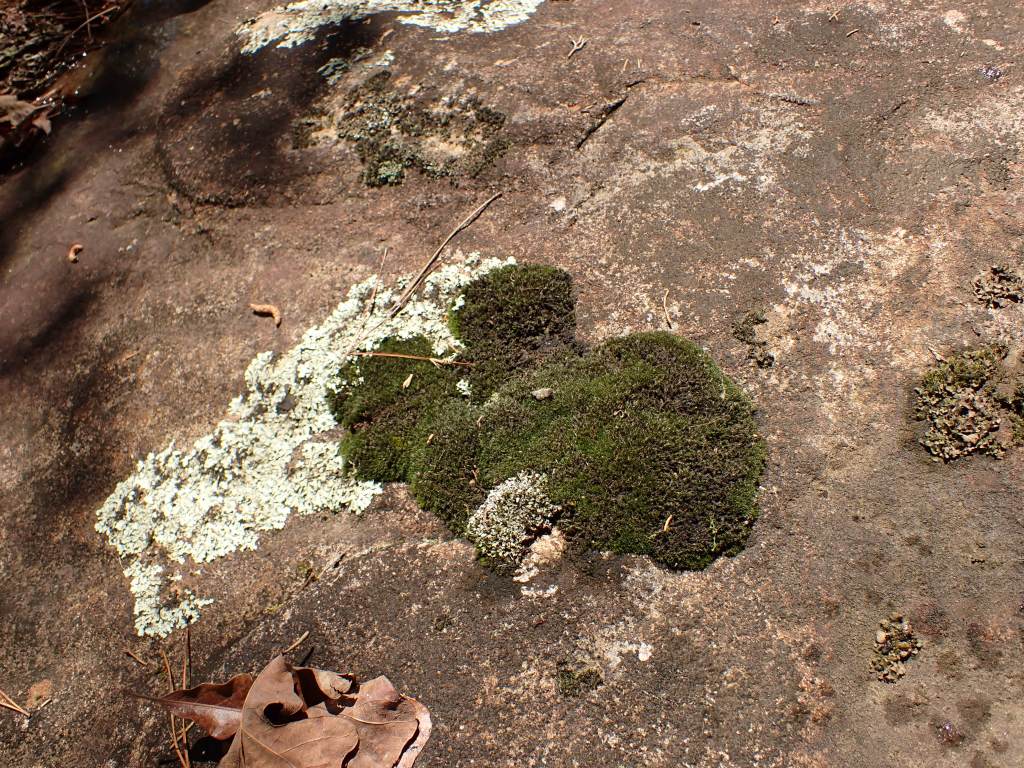
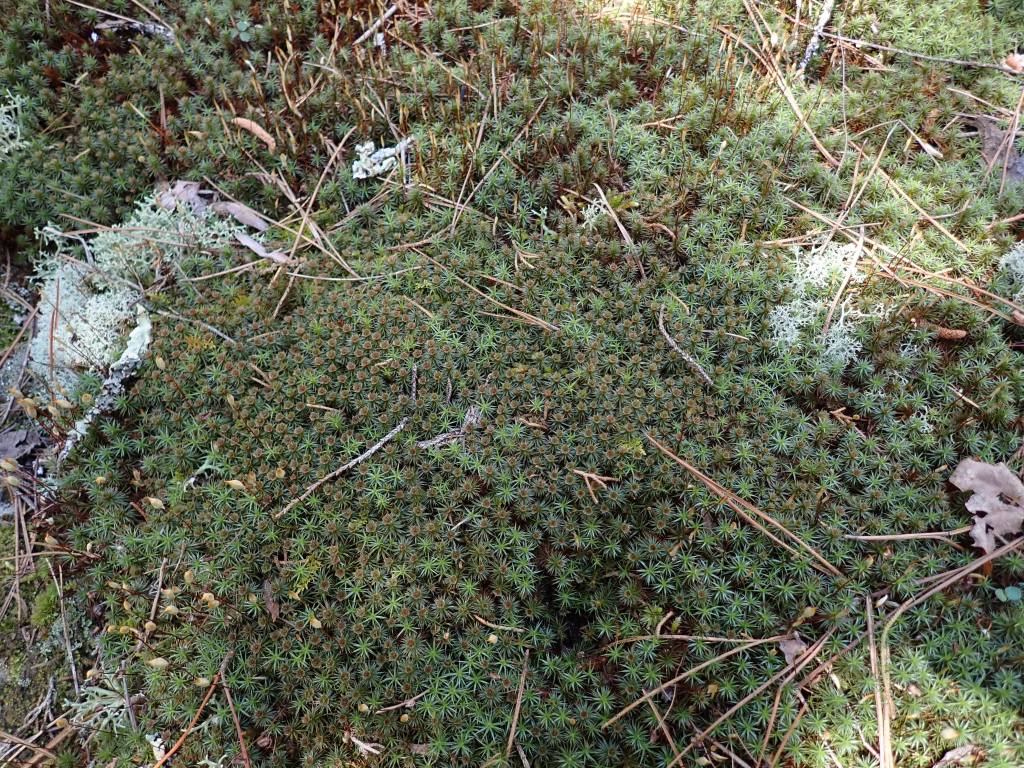
Polytrichum juniperinum was common along the glades edge and the waterway.
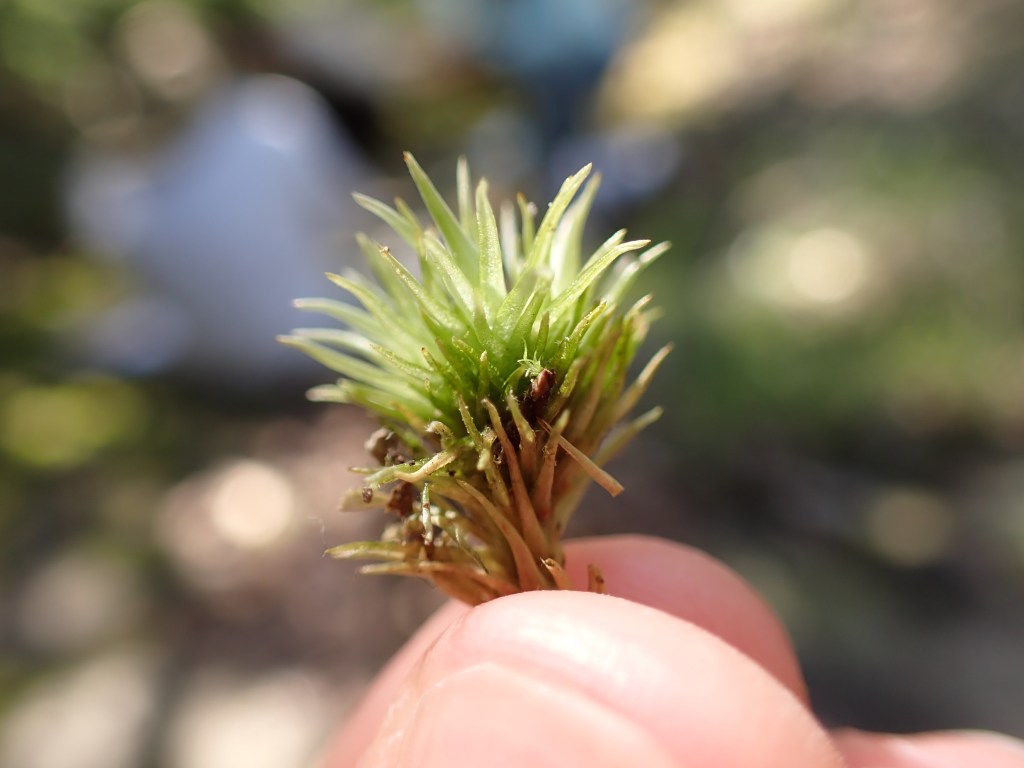
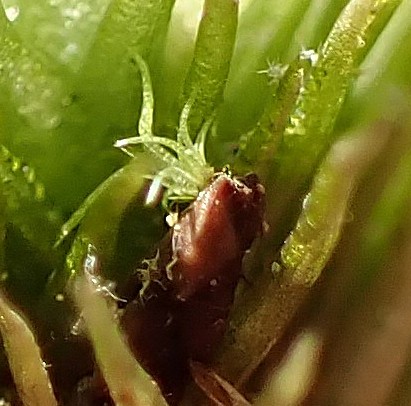
A tiny Leucobryum glaucum growing on a cedar pine needle that was nestled in an “adult” stem of Leucobryum glaucum was brought to my attention. How cute is that?
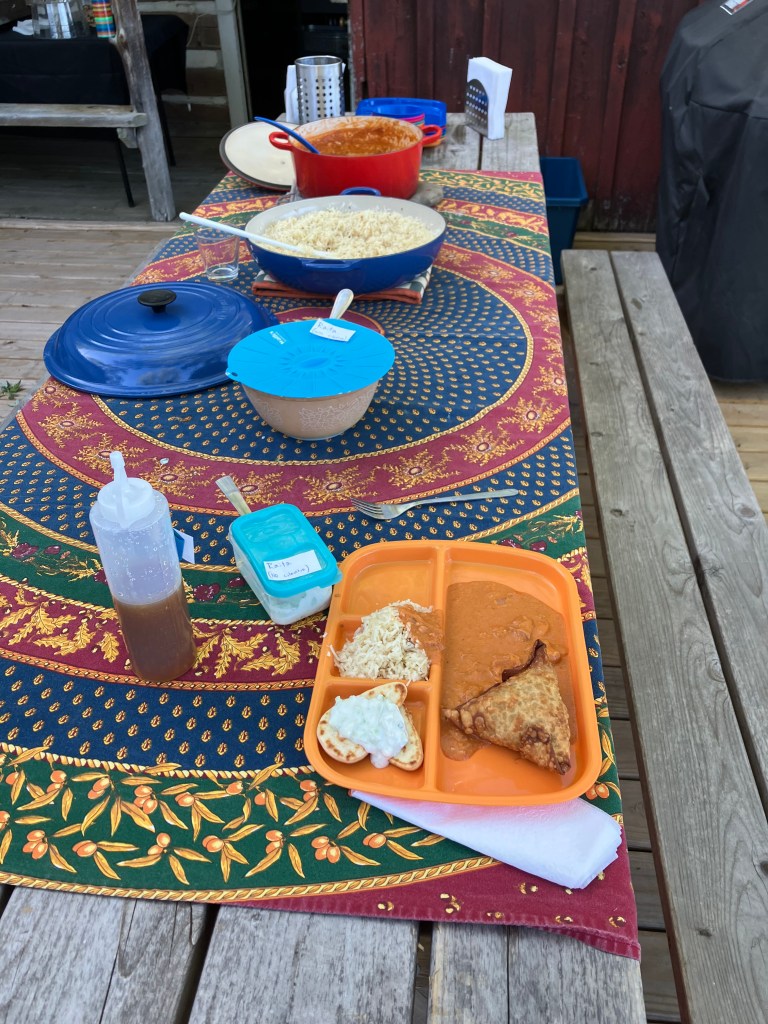
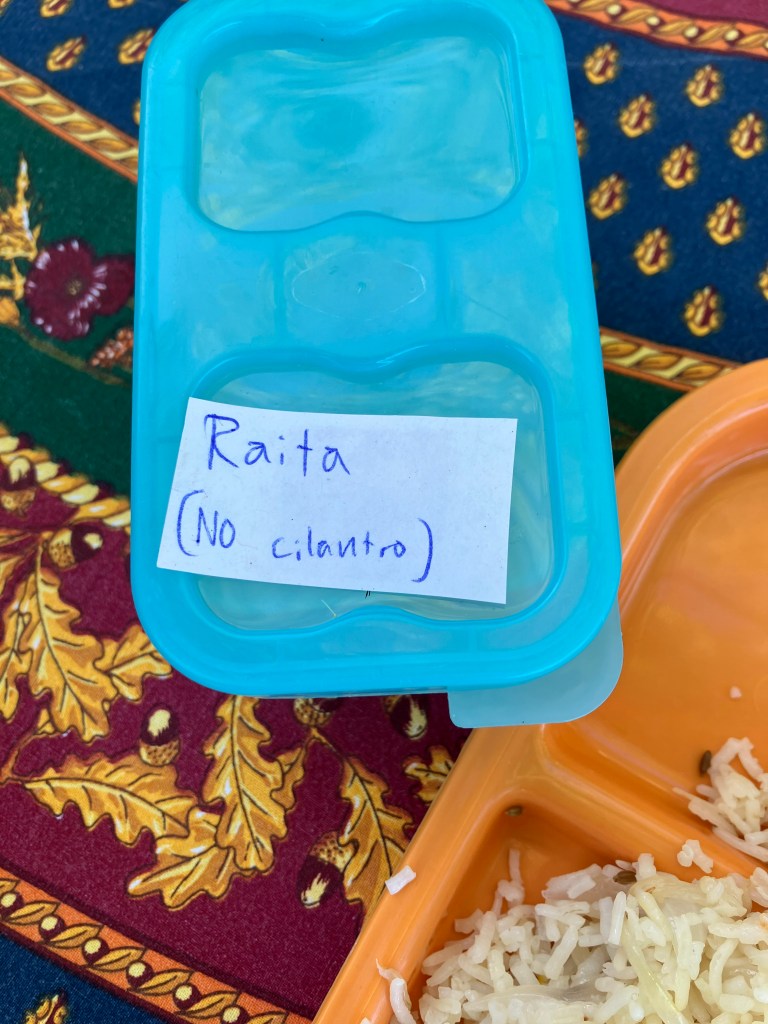
I think everyone enjoyed the glade and could have probably spent a few more hours there, if not in the vicinity. But the dinner bell was ringing. Back at the research station, my favorite dinner was served, a middle eastern Indian dish. Theo even made one of the relishes without cilantro just for me:) Another wonderful day at sleep away moss camp!
Thursday
We did an all-day field trip to Montauk State Park. Kristie Nelson is the naturalist there who greeted us at the main spring. She gave us a history of the park and the surrounding area and joined us on bryophyte explorations as we waded in the head waters of the Current River.
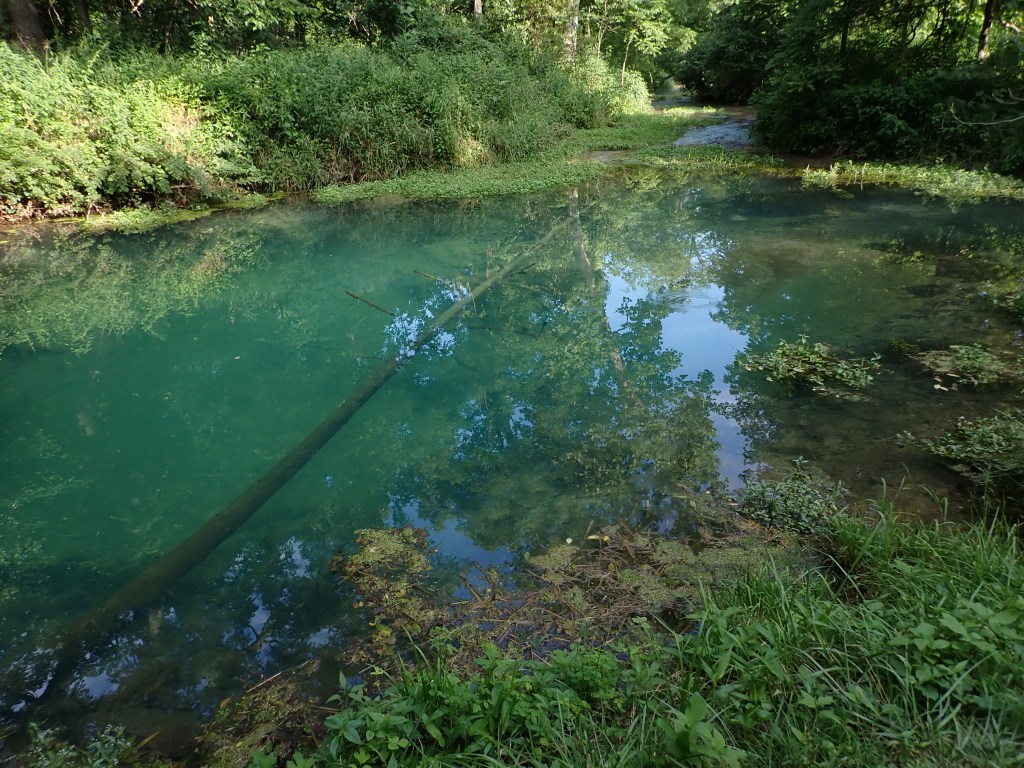
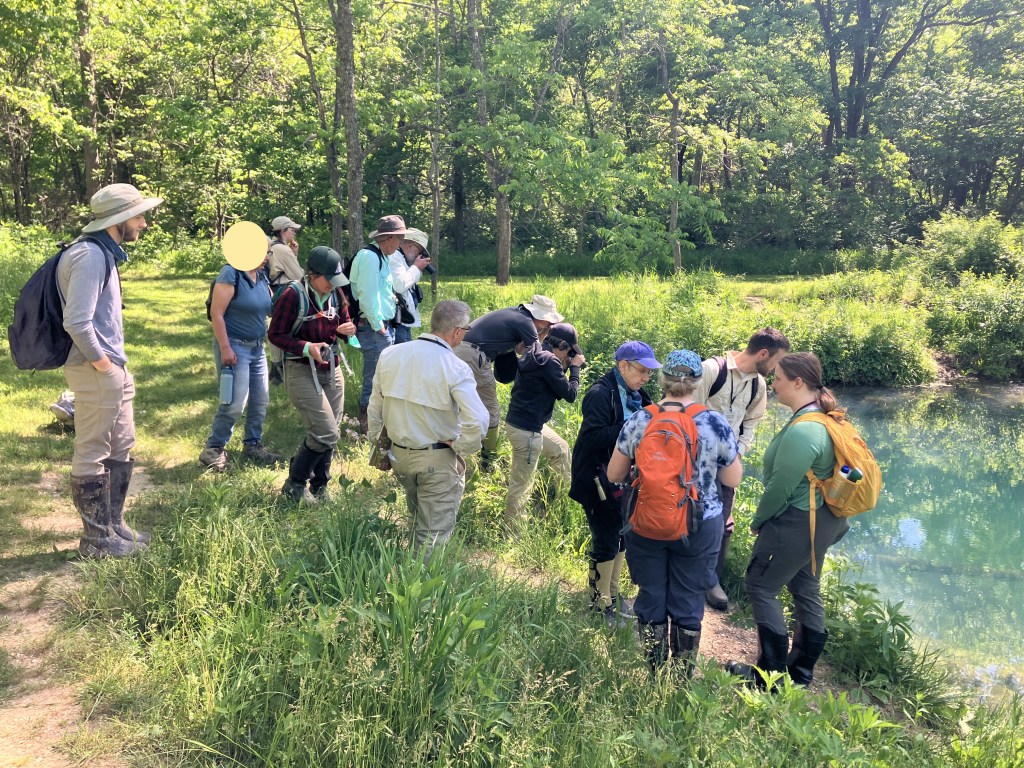
One species I knew we would find in the spring was the water liverwort, Riccia fluitans. Carrie also found the moss Fissidens fontinalis.
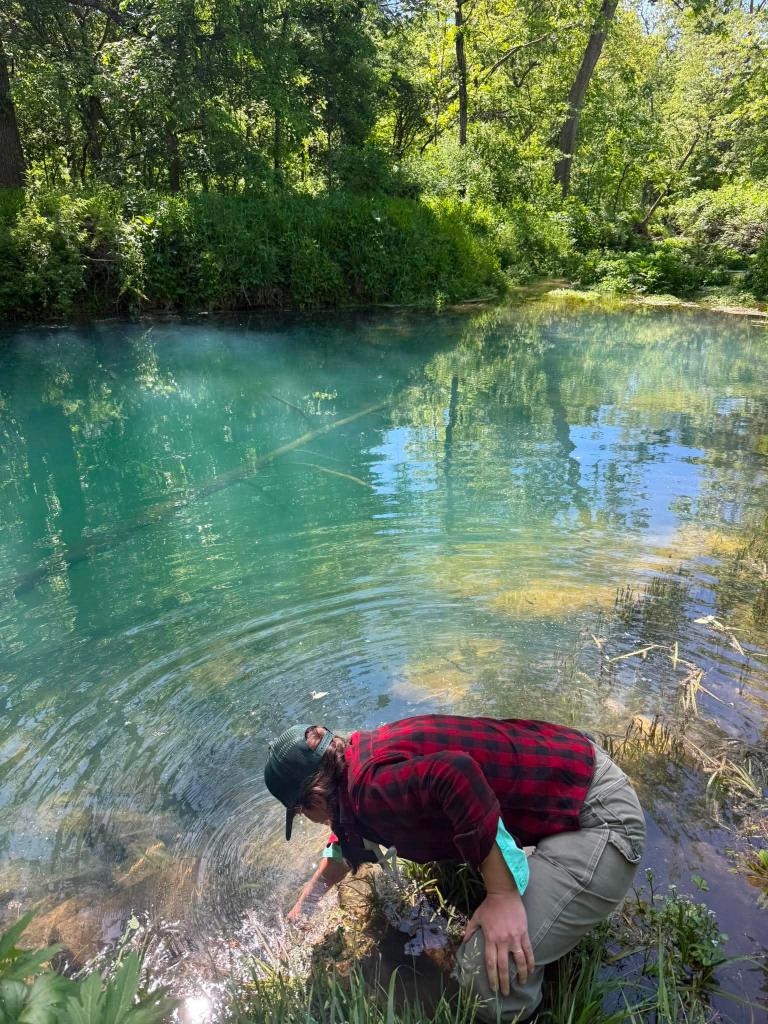
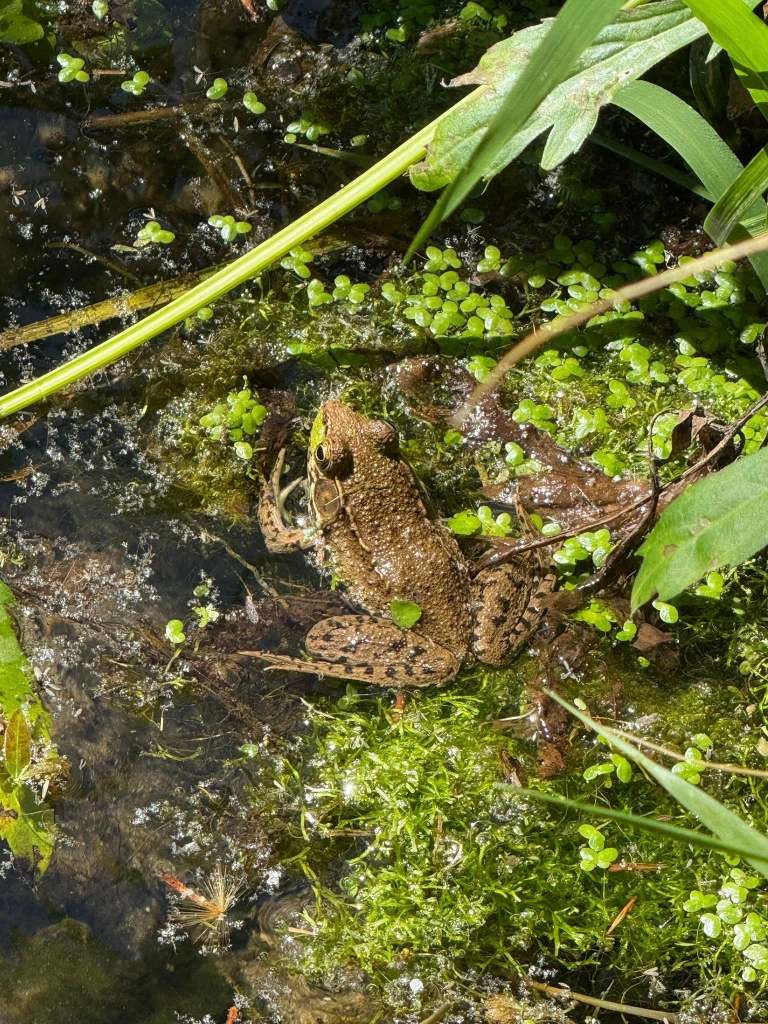
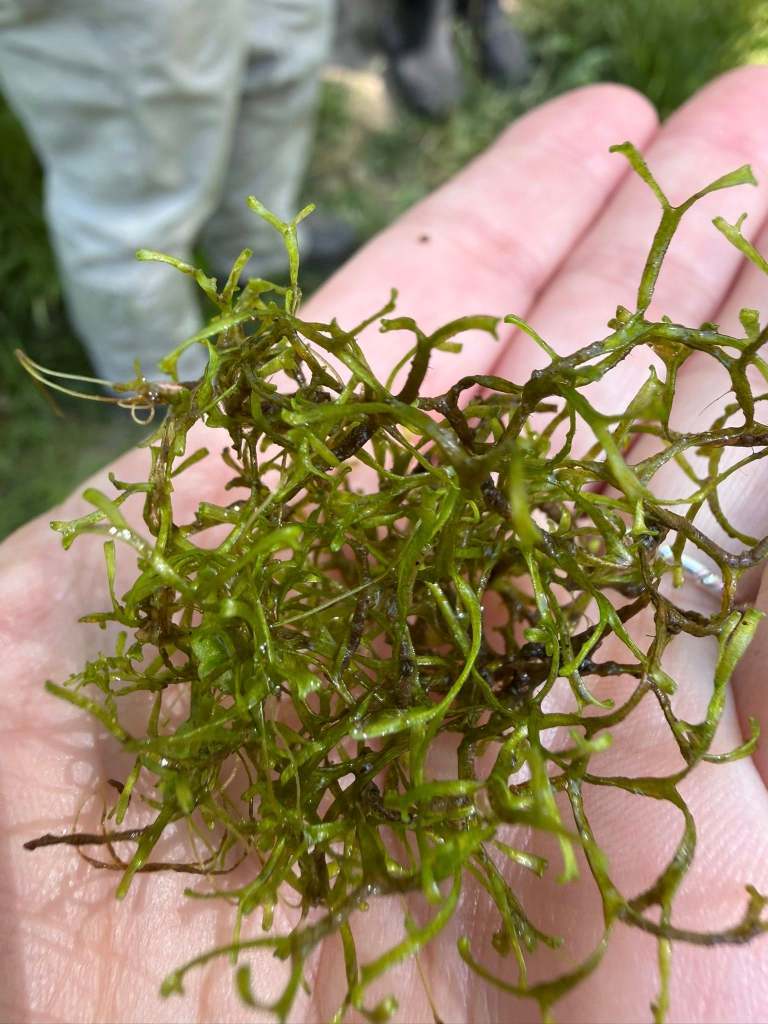
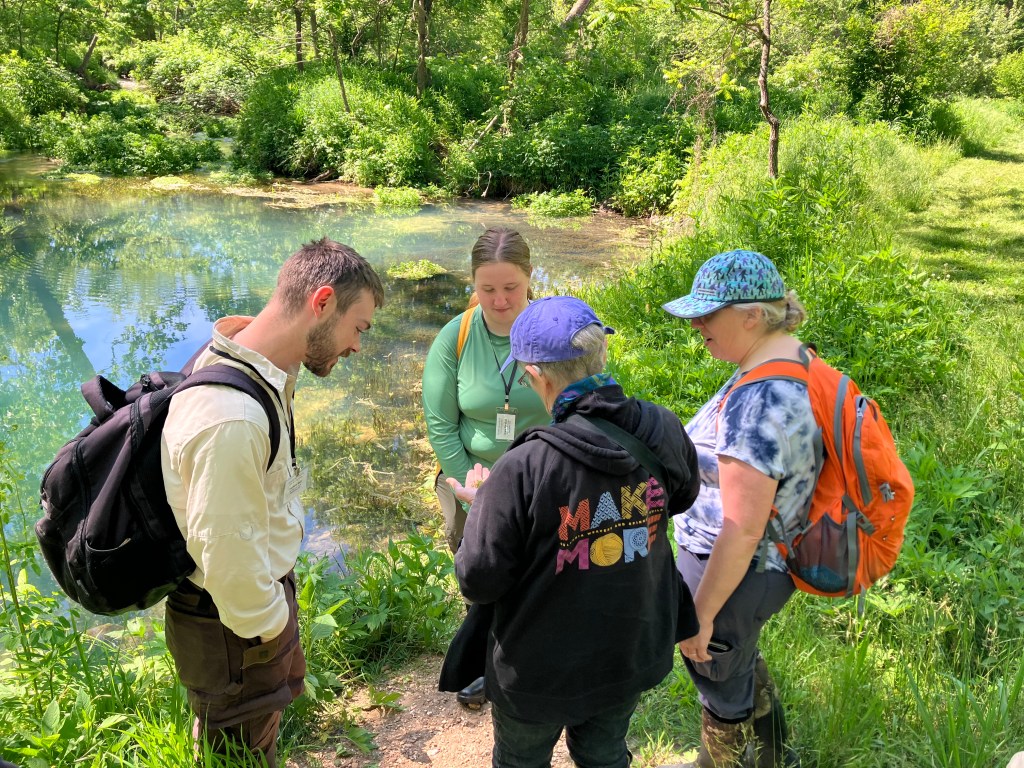
Top left: Carrie fishing out the Fissidens; Top middle: A frog hanging with Riccia fluitans; Top right: Riccia fluitans; Bottom: Zach, Grace, Hilary, and Nancy looking at the Riccia. All top photos courtesy of Hilary.
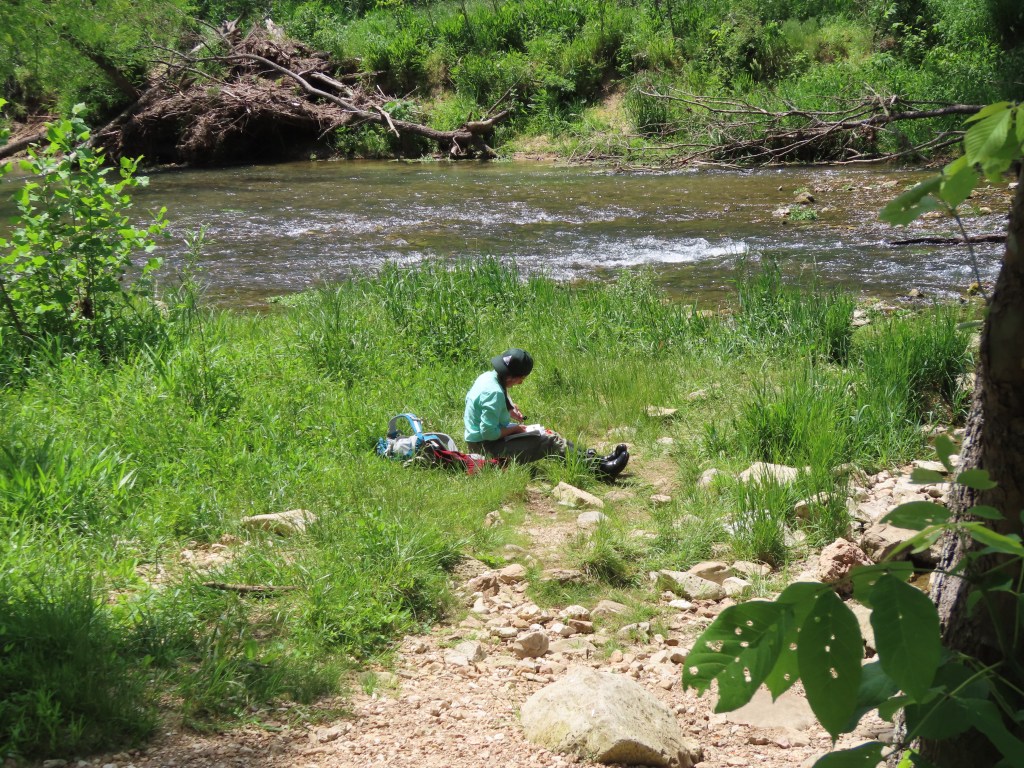
We then moved to the headwaters of the Current River where we could wade in the creek and along the banks.
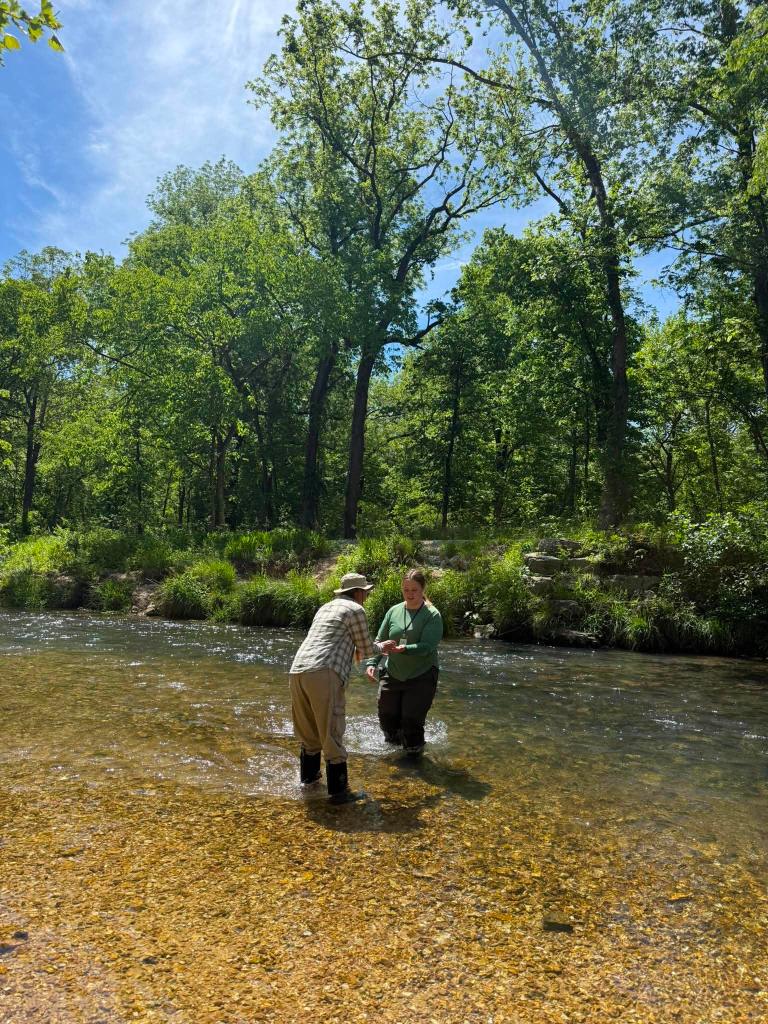
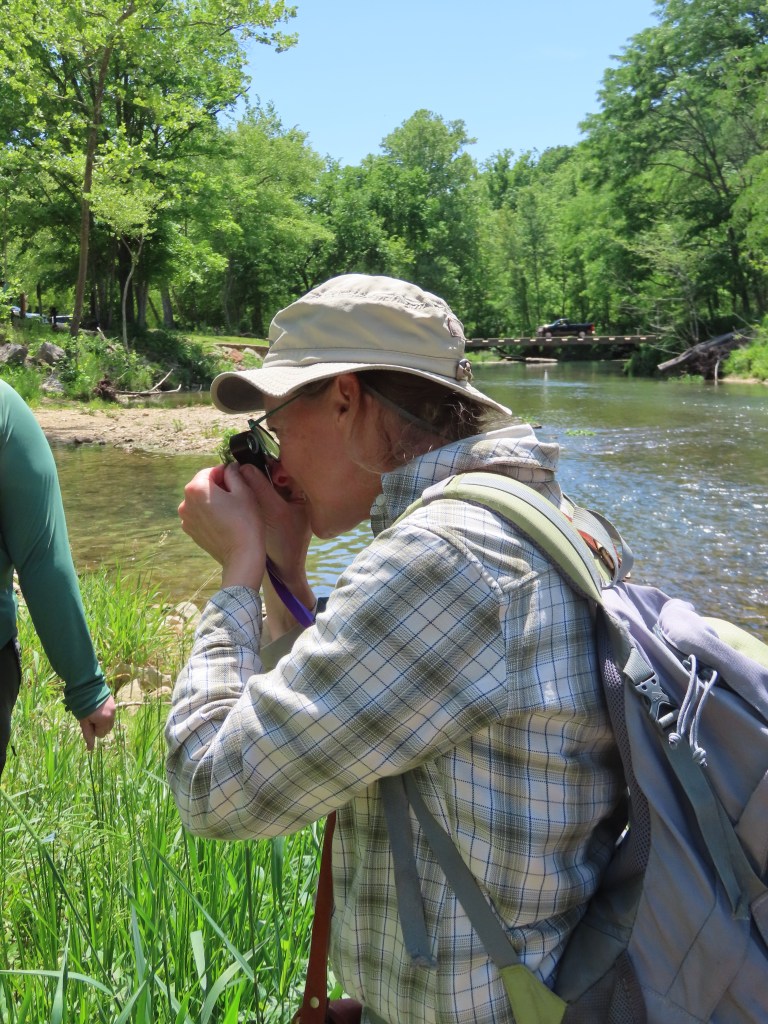
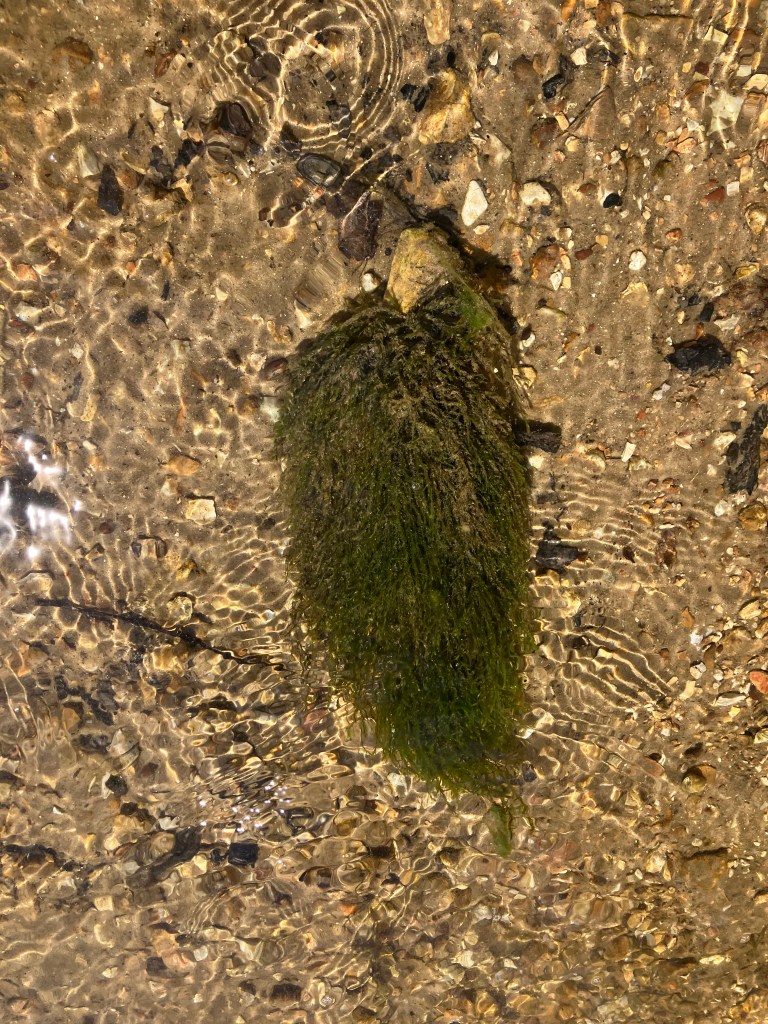
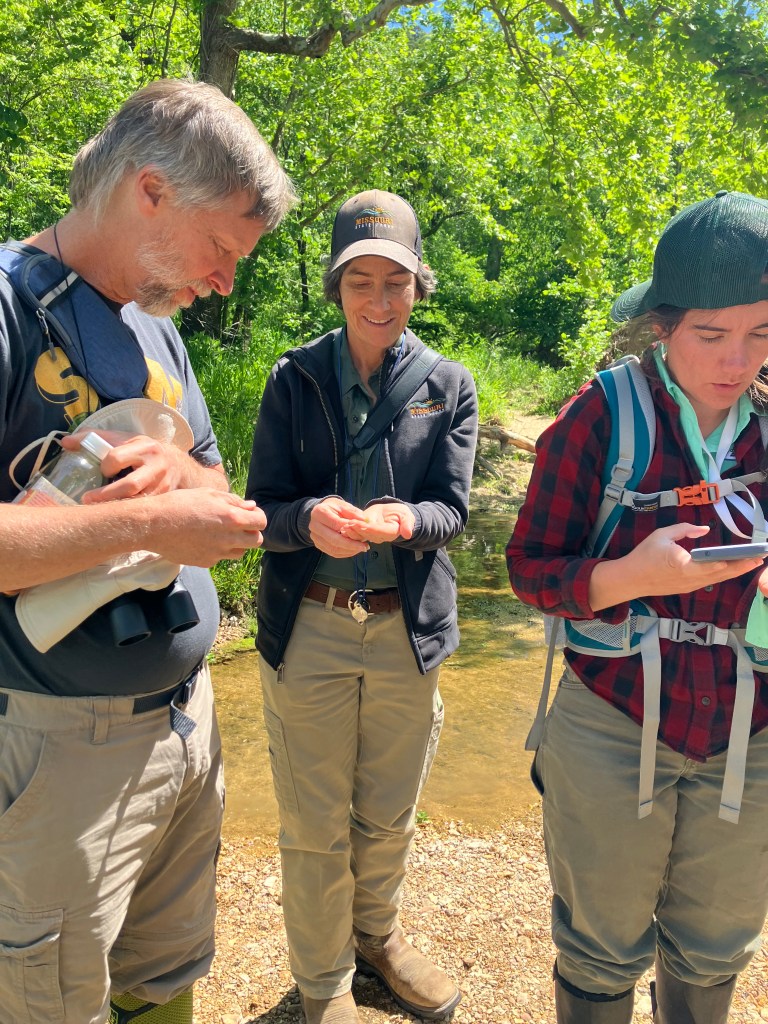
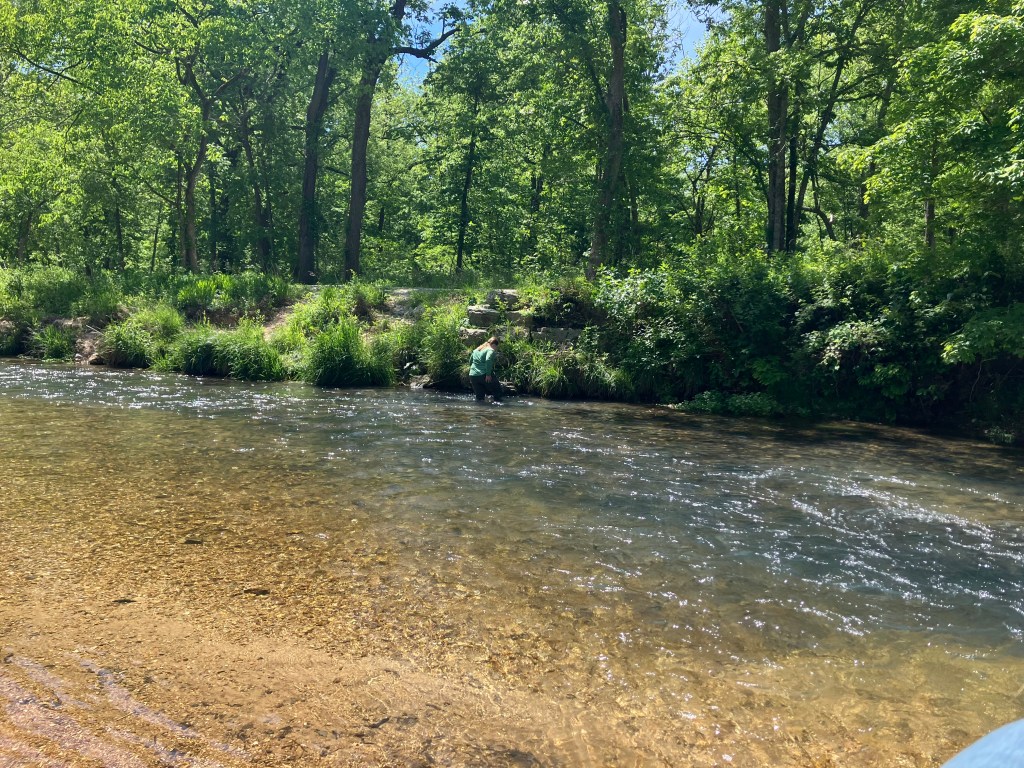
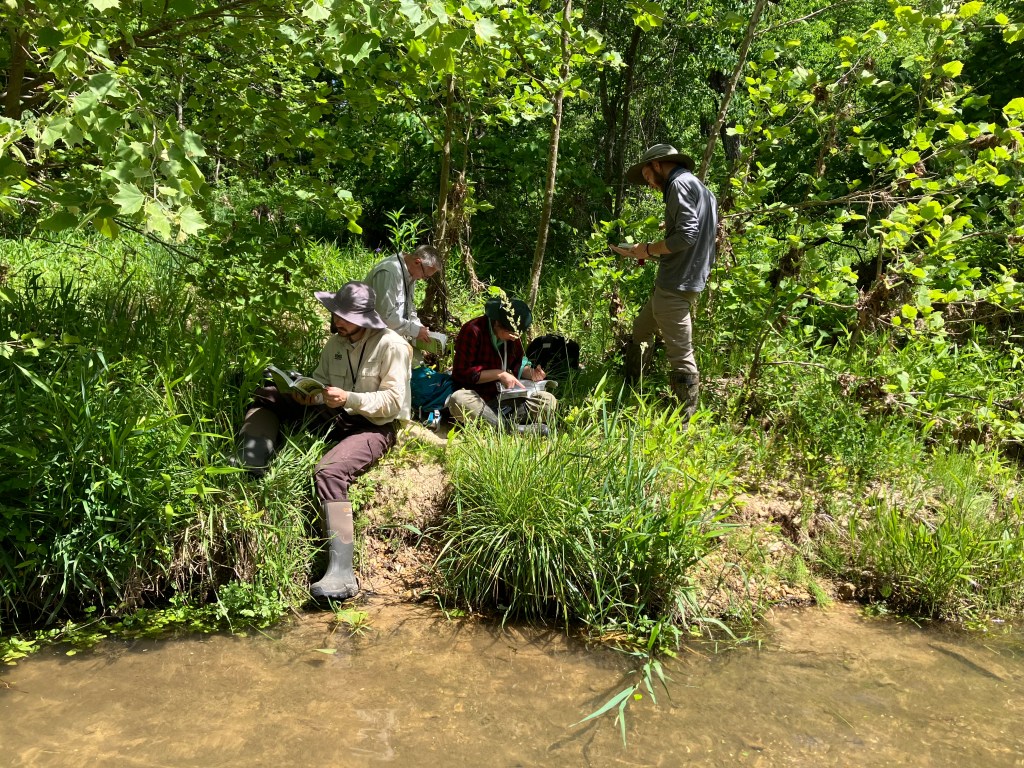
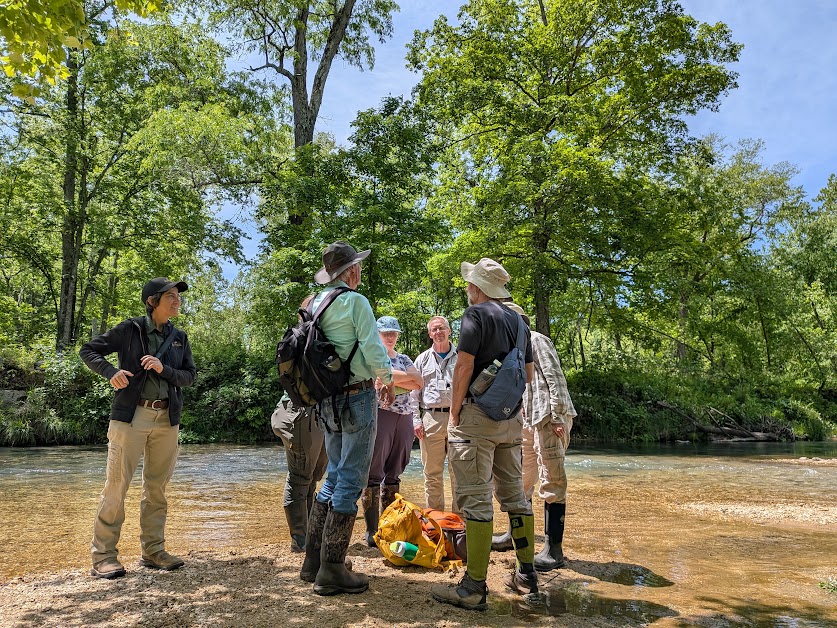
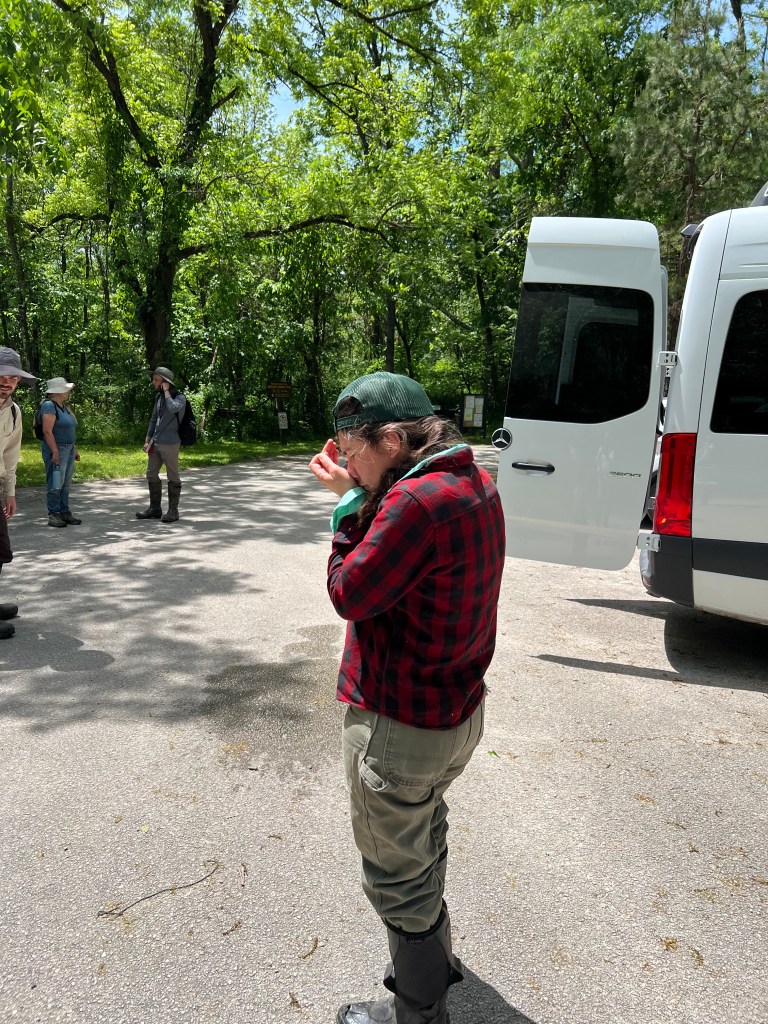
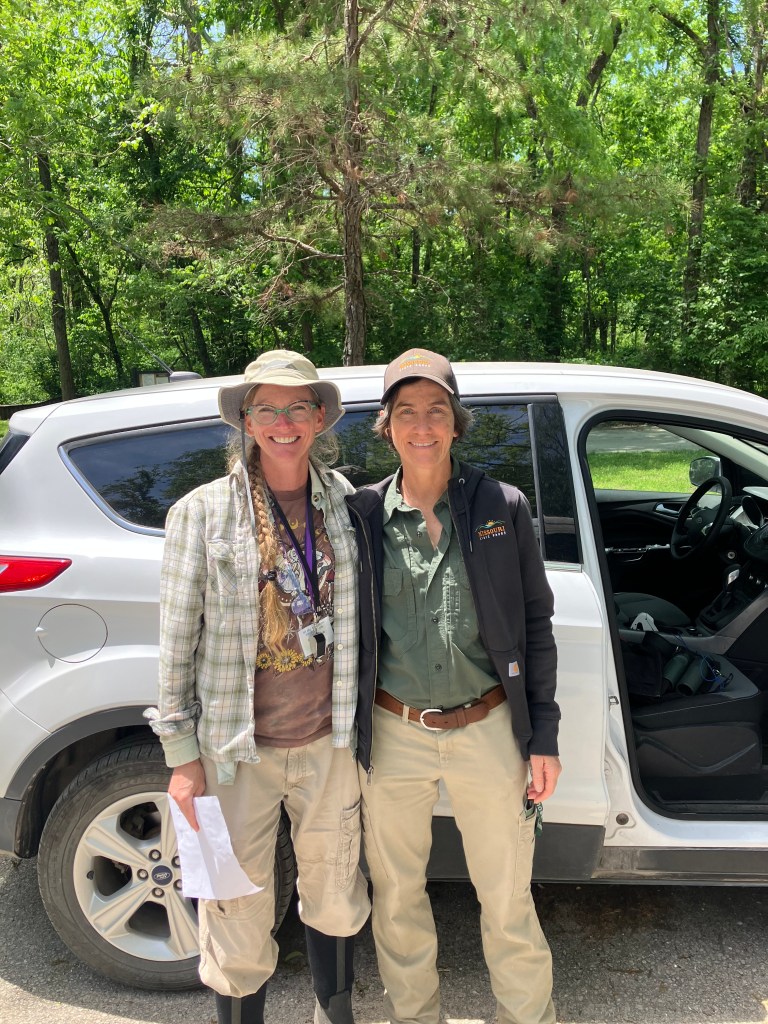
Above: a compilation of photos from myself, Hilary, and Lilly
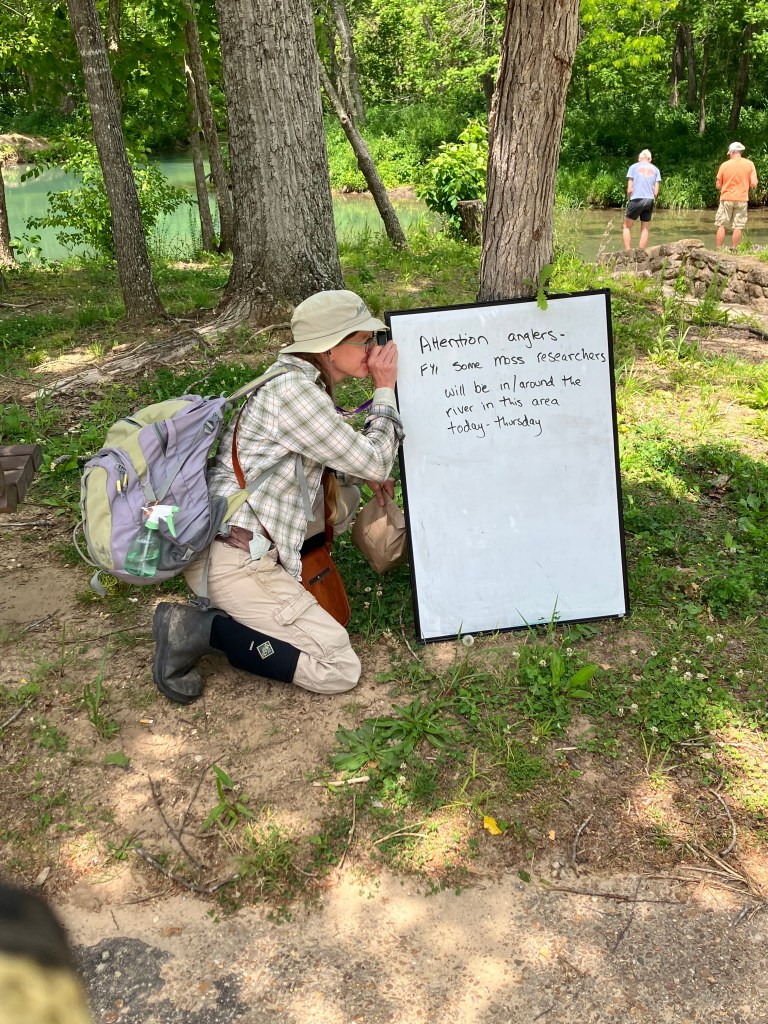
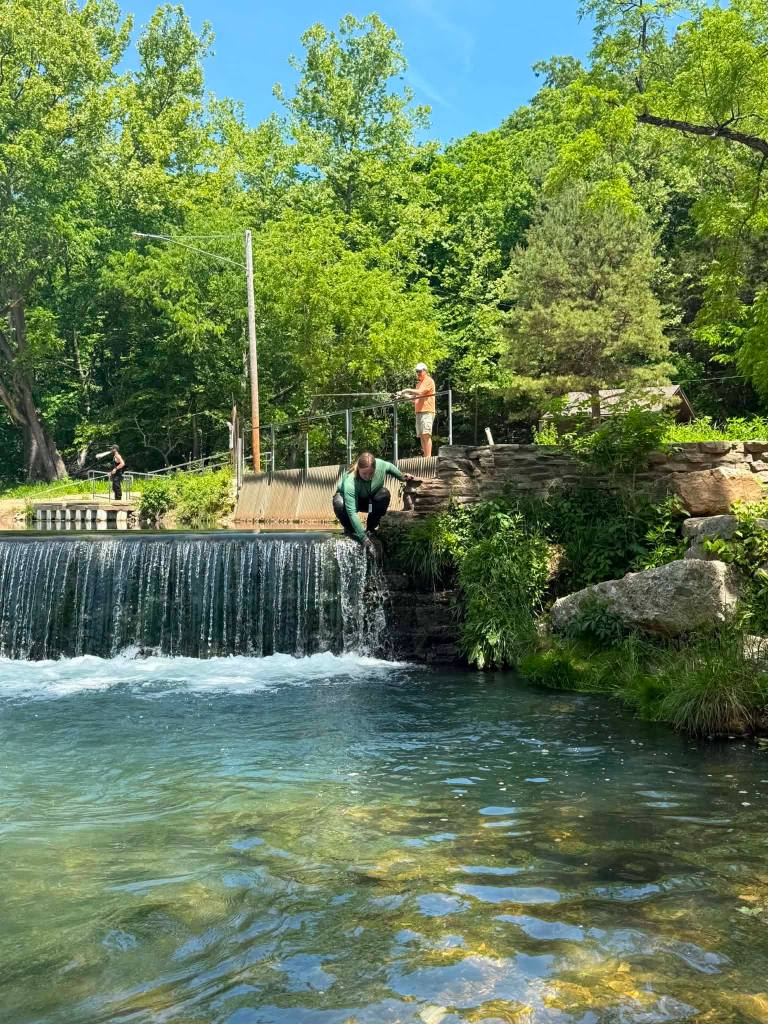
We then drove over to another section of the Current River just below the dam where we had lunch. Kristie had to leave us for the afternoon but was kind enough to put a sign up along the river’s edge to let the anglers know that some crazy moss researchers would be exploring the area.
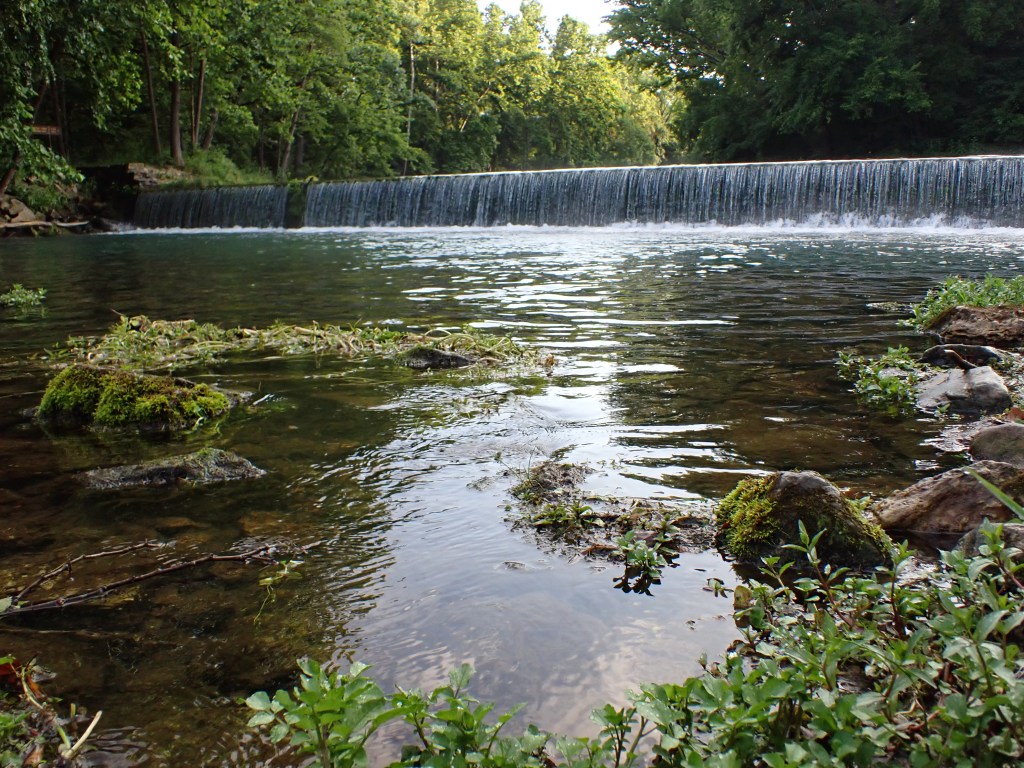
The common water-way mosses that we found were Fissidens fontanus, a Fontinalis species, Rhynchostegium riparioides, and Brachythecium rivulare.
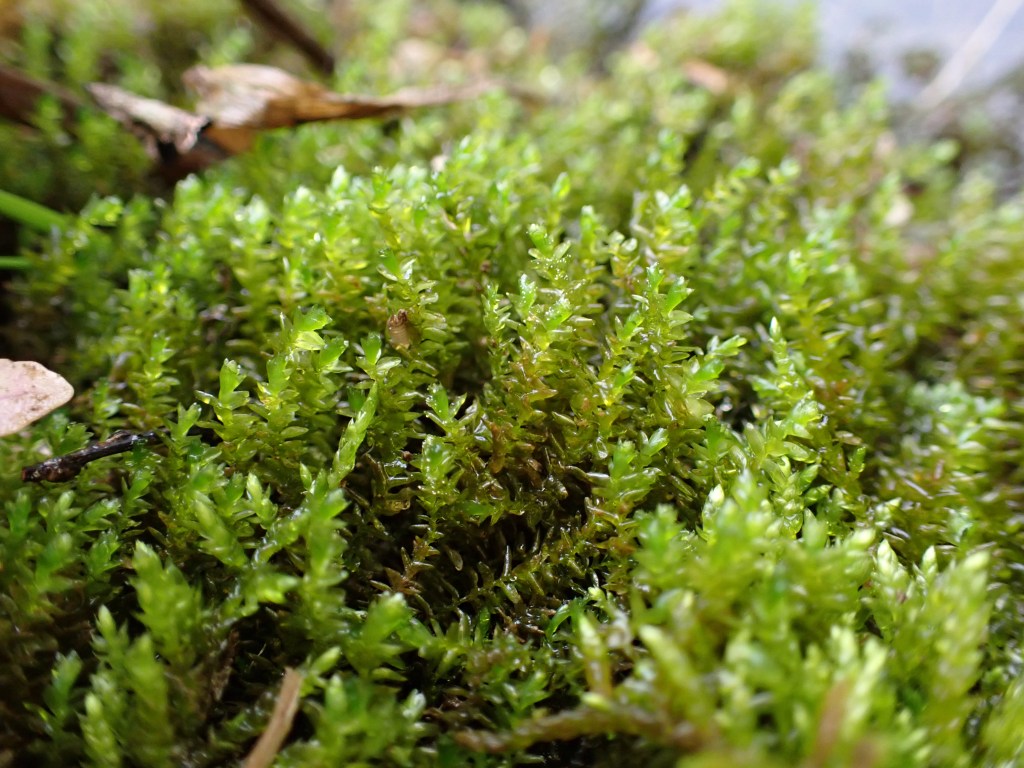
Rhynchostegium ripariodes
Brachythecium rivulare
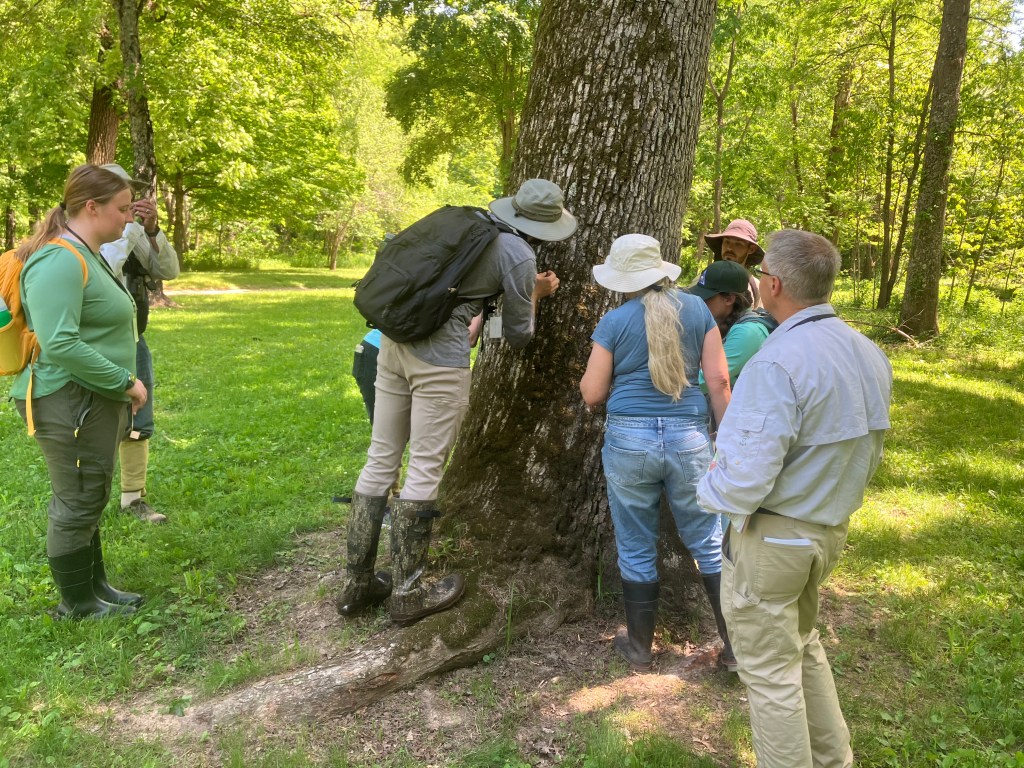
“Your goal is to find out how many species of moss are on this tree.”
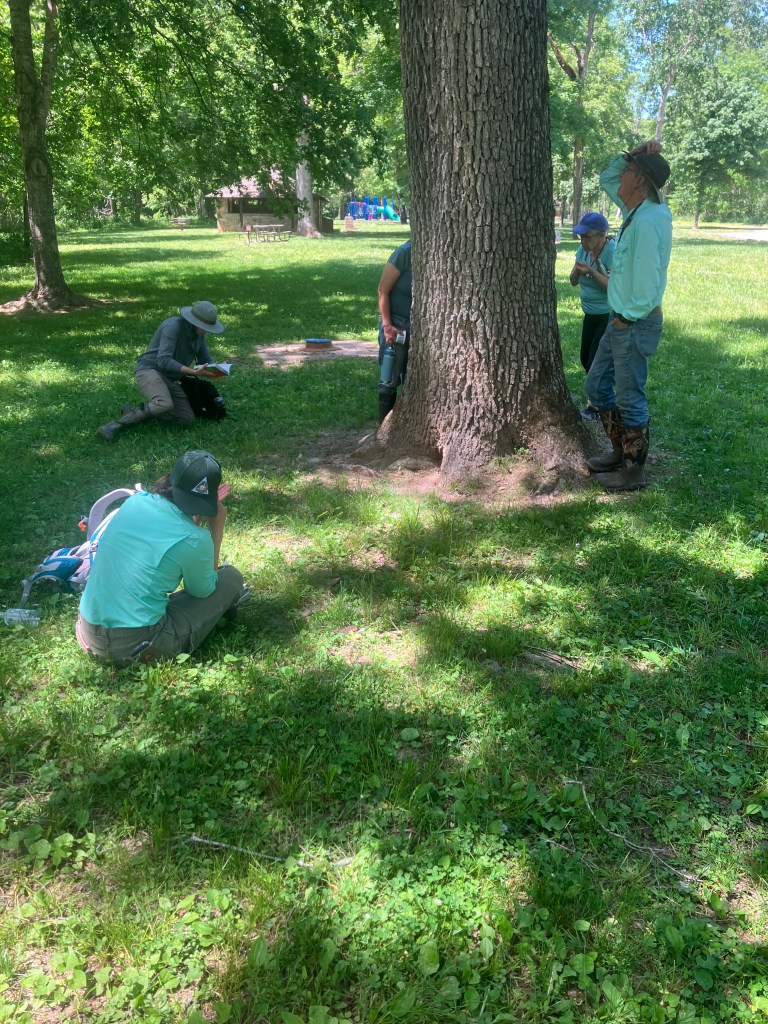
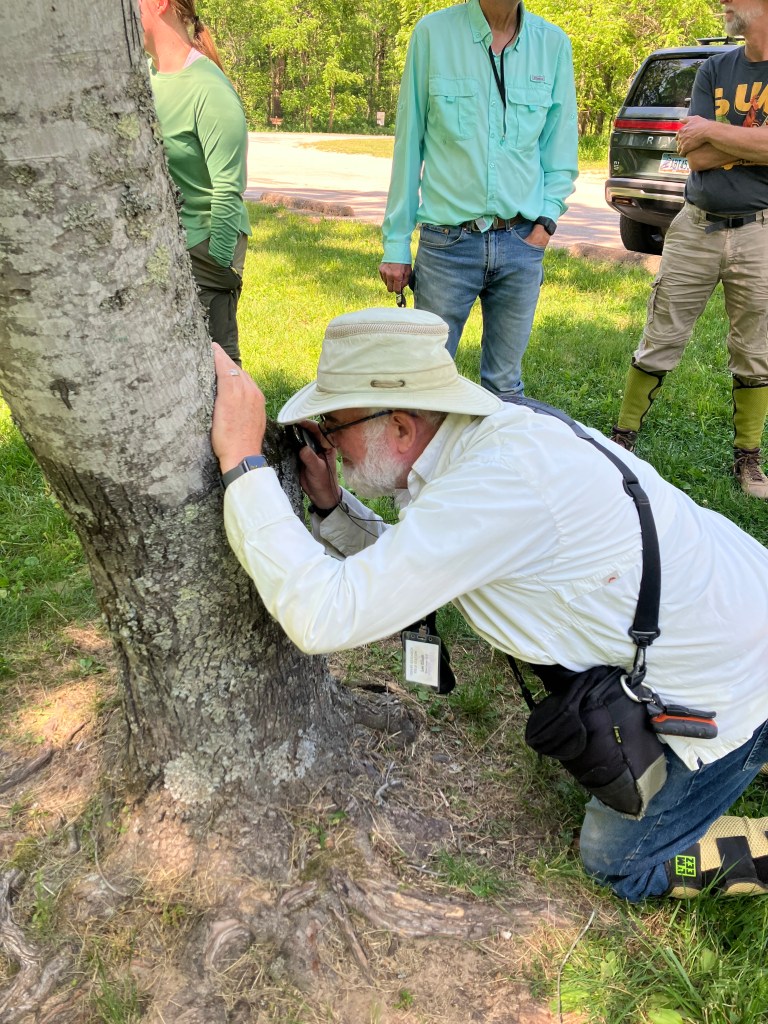
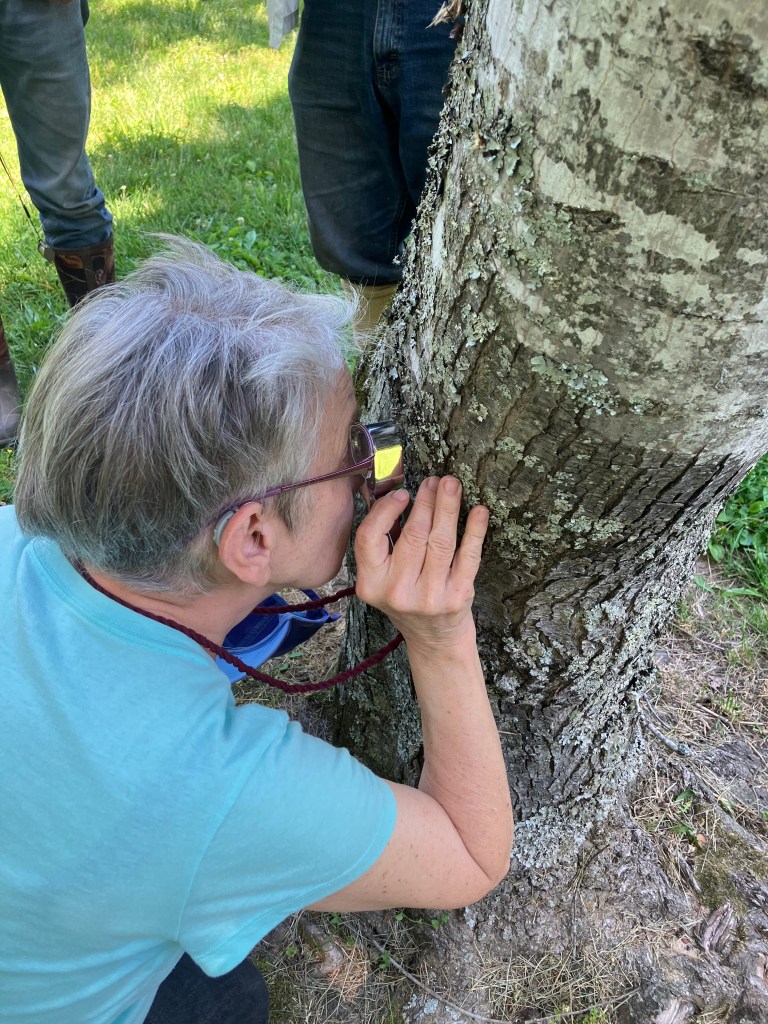
After we were done playing in the river, we drove around the corner with the intent to check out a hollow. In typical bryophyte hiking fashion of not getting very far, we didn’t even make it out of the maintained picnic area when we all spotted a large, moss-covered tree. I said, “Your goal is to find out how many species of moss are on this tree.” And the game was on!!
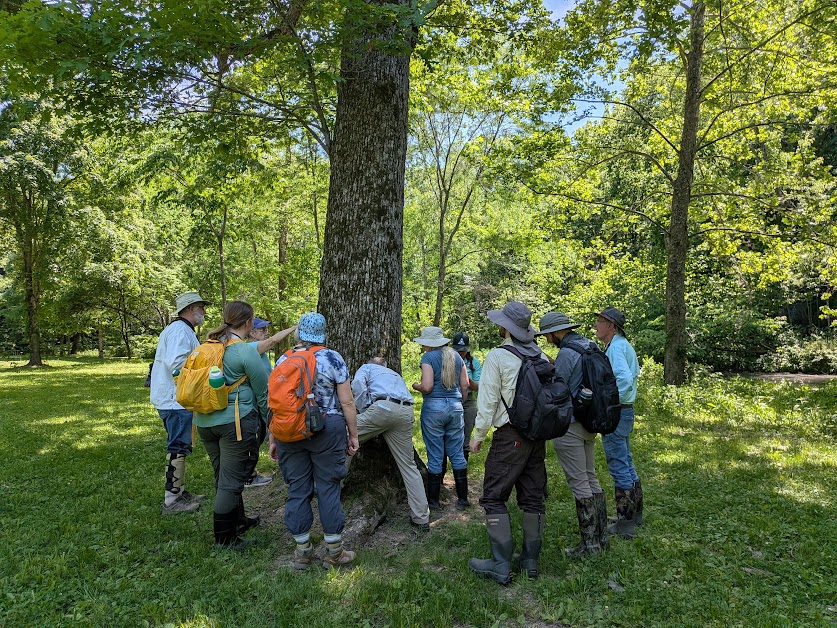
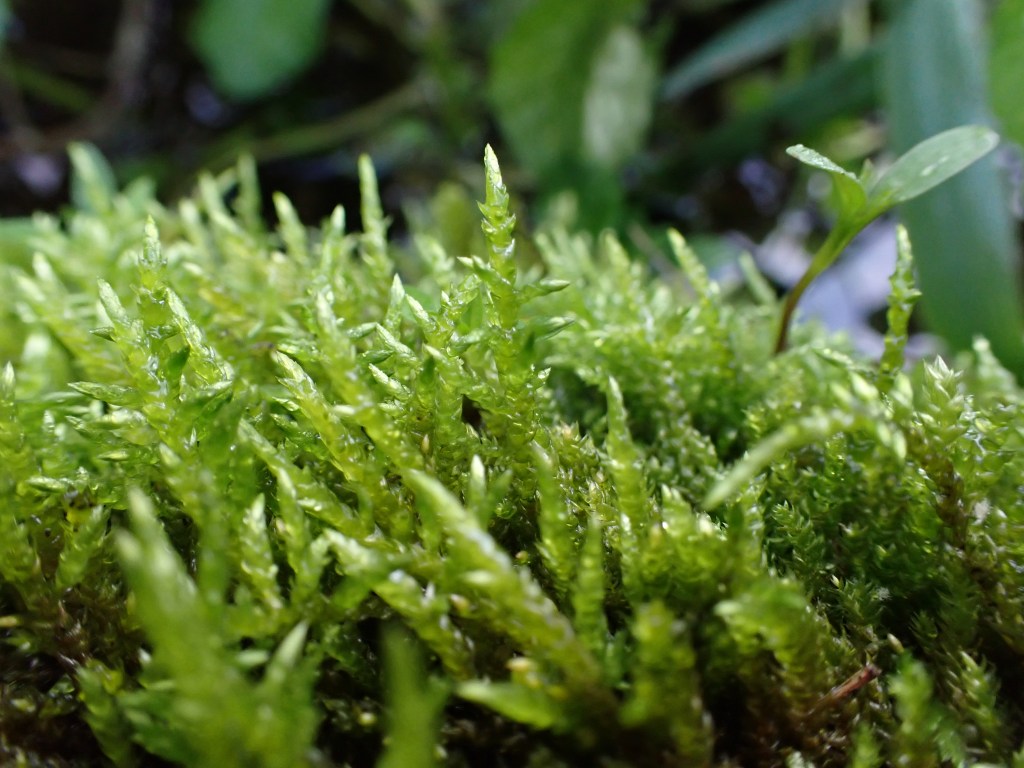
They would scour the tree, then take a sample back to the picnic table to study or chillax by the tree on the ground. The problem species ended up being Leucodon julaceus as it was difficult to see that it was lacking a costa. We discussed some tricks to try to decipher this better in the field. Altogether, they found 6 moss species; Anomodon minor, A. tristis, and A. attenuatus, Leucodon julaceus, Leskea gracilicens, and Pylaisia selwynii, along with 2 liverwort species; one being a Frullania species (if not both). Someone asked why we didn’t see any acrocarps on this tree, and if in fact they do grow on trees. They do grow on trees, and that prompted me to go check out a nearby smooth barked tree, Acer Rubrum. That tree presented some great acrocarp species to see such as Orthotrichum stellatum, and a tiny species found by Nancy, Syntrichia pagorum. Drummondia prorepens was also present and is a fun one to see with its cross-stitched, paintbrush tip like erect branches. A Frullania species liverwort was also present and had dehisced capsules.
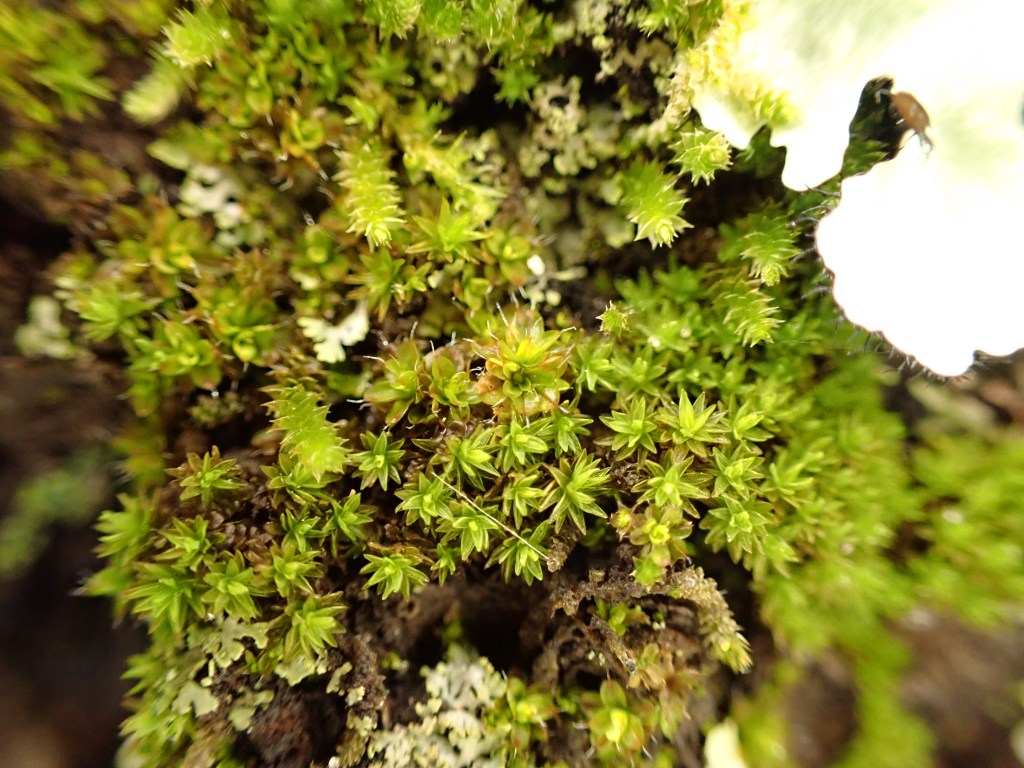
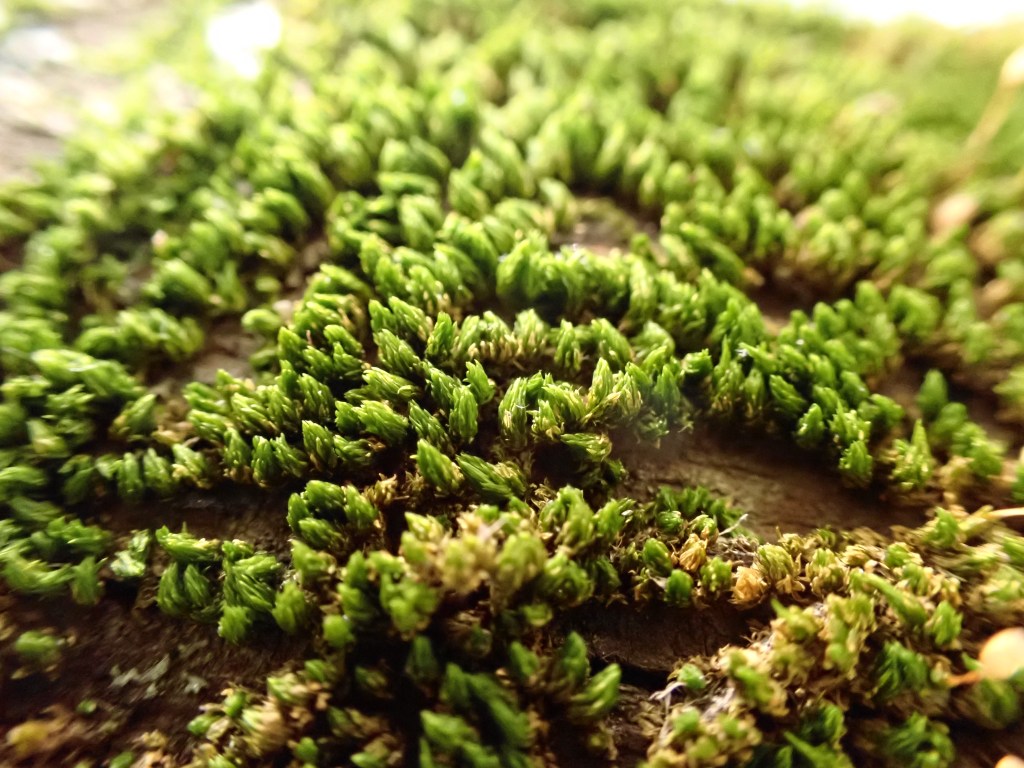
Drummondia prorepens. The main stem creeps along the substrate, sending up short, erect branches that alternate along the main stem.
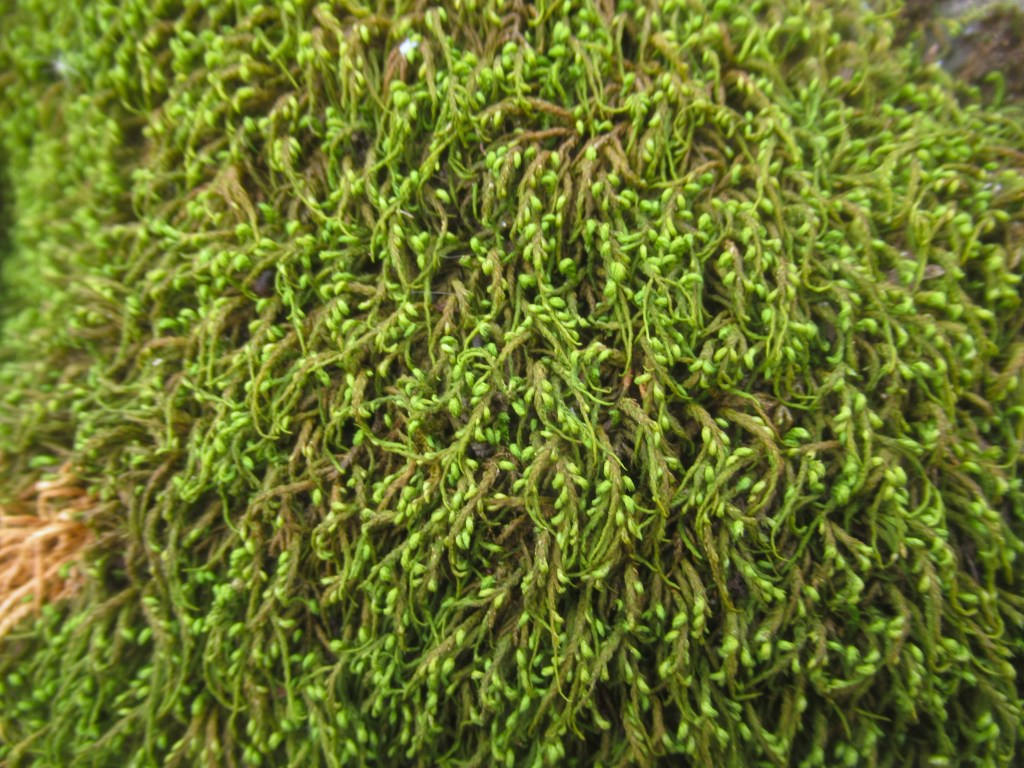
Anomodon attenuatus created a little bit of a problem, and I explained that I found it easiest to ID when it was dry. This habit is very distinctive to this species and the attenuate vs. capitate branches are very distinctive.
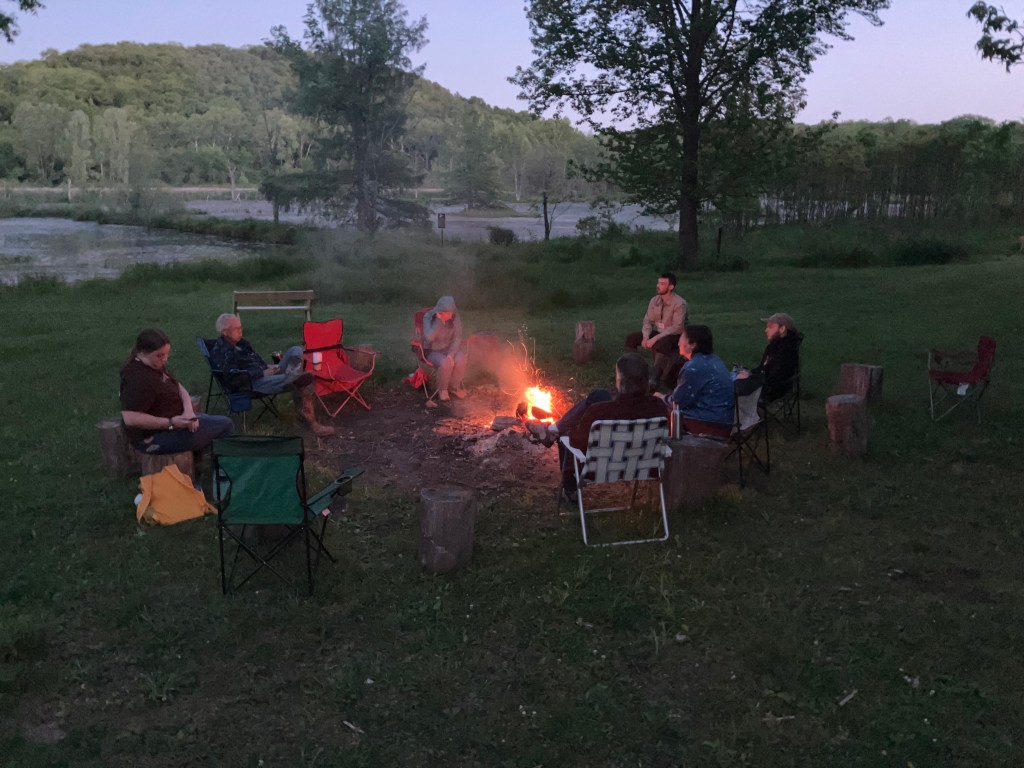
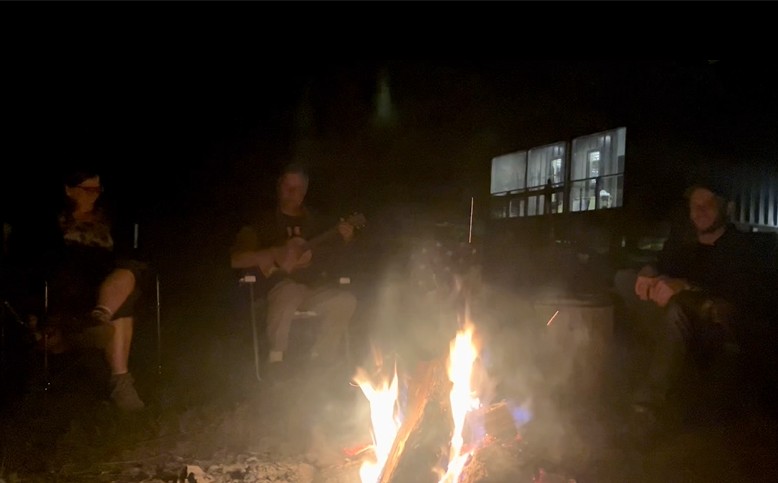
After spending around 1.5hrs looking at bryophytes on 2 trees, it was time to head back to the research station. After dinner, we enjoyed our last evening by the fire, and Don entertained us by singing and playing his ukelele.
Friday
The last morning was spent doing advanced identification with microscopes. The university supplied both dissecting and compound microscopes to work with all week long.
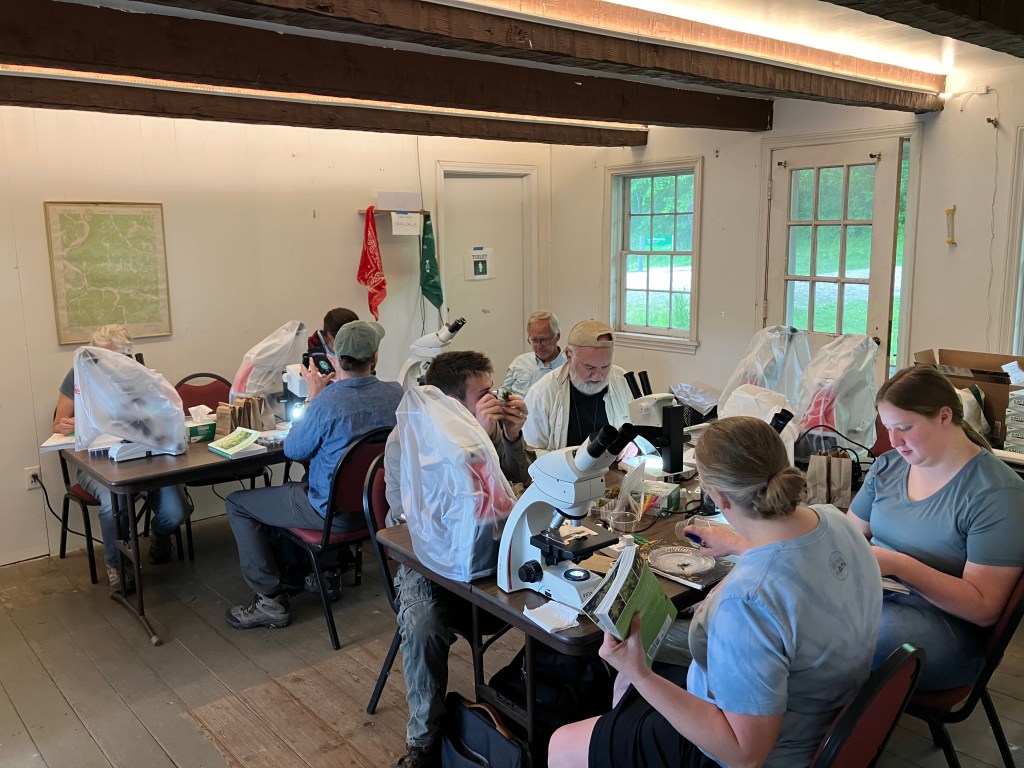
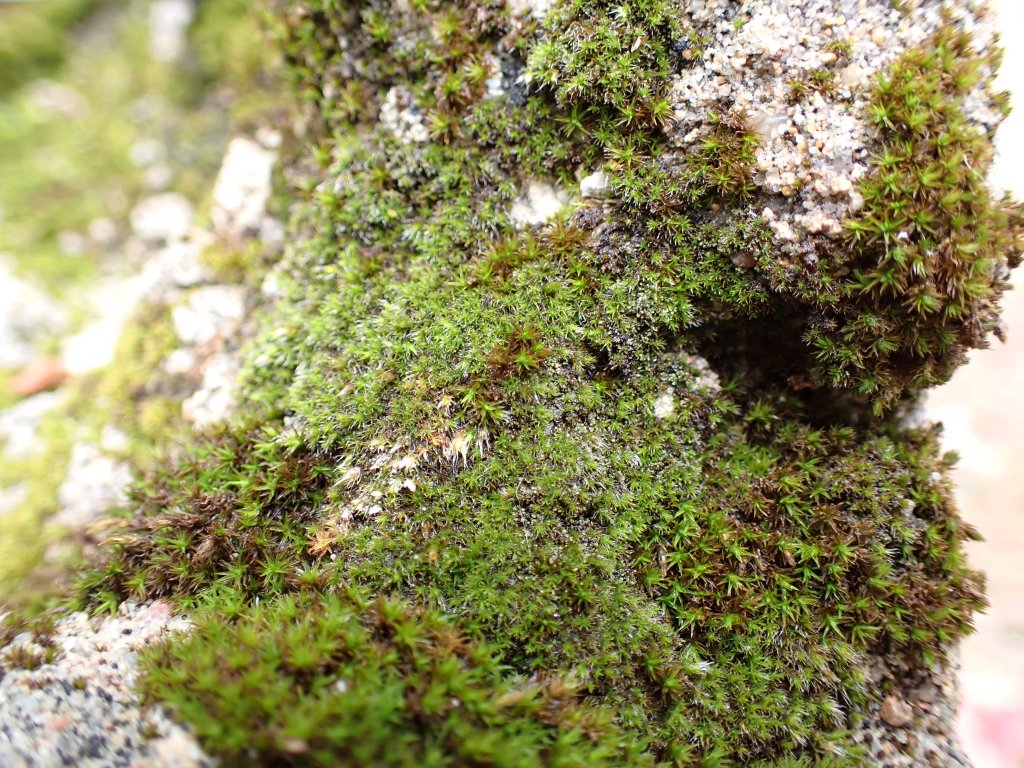
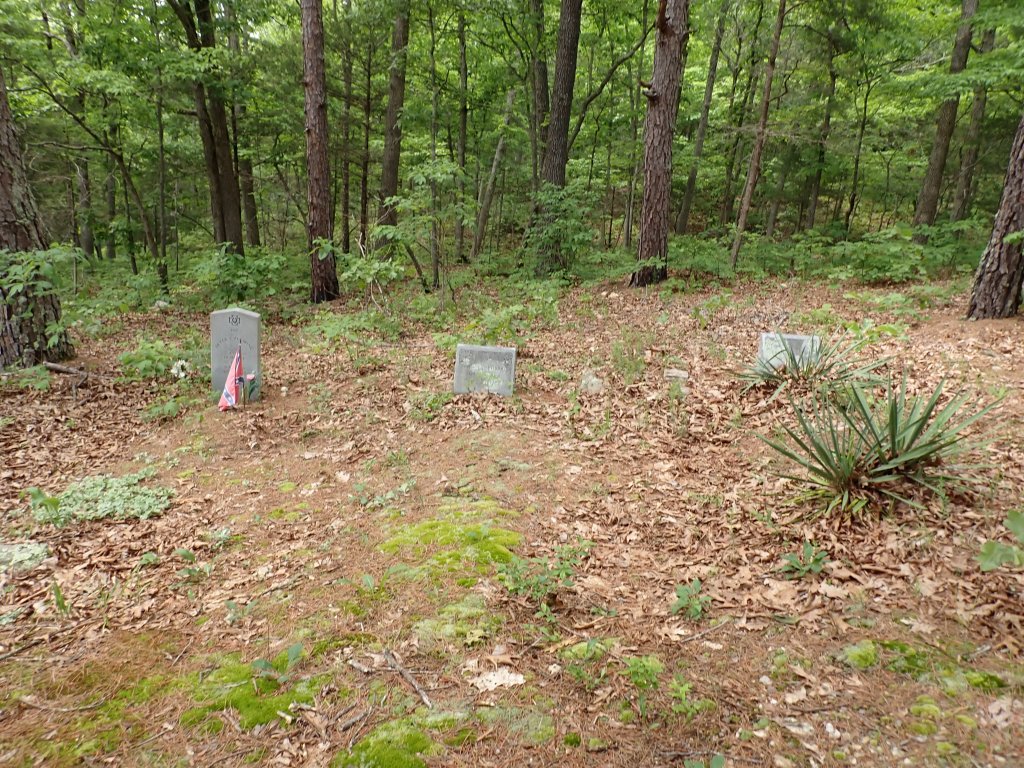
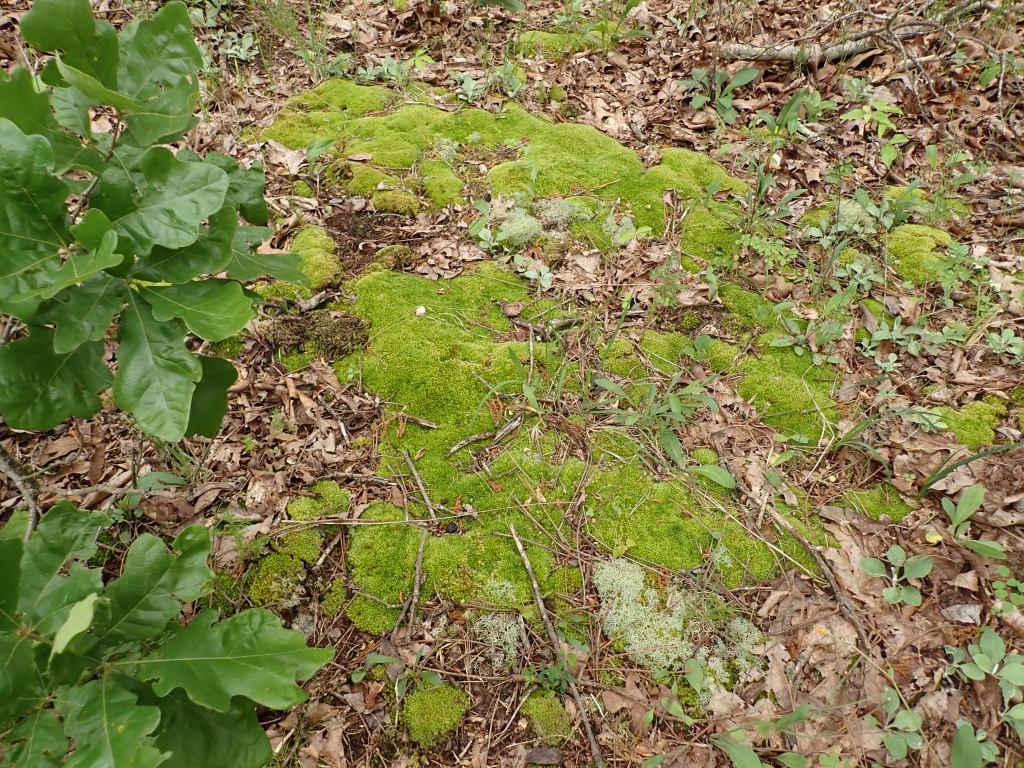
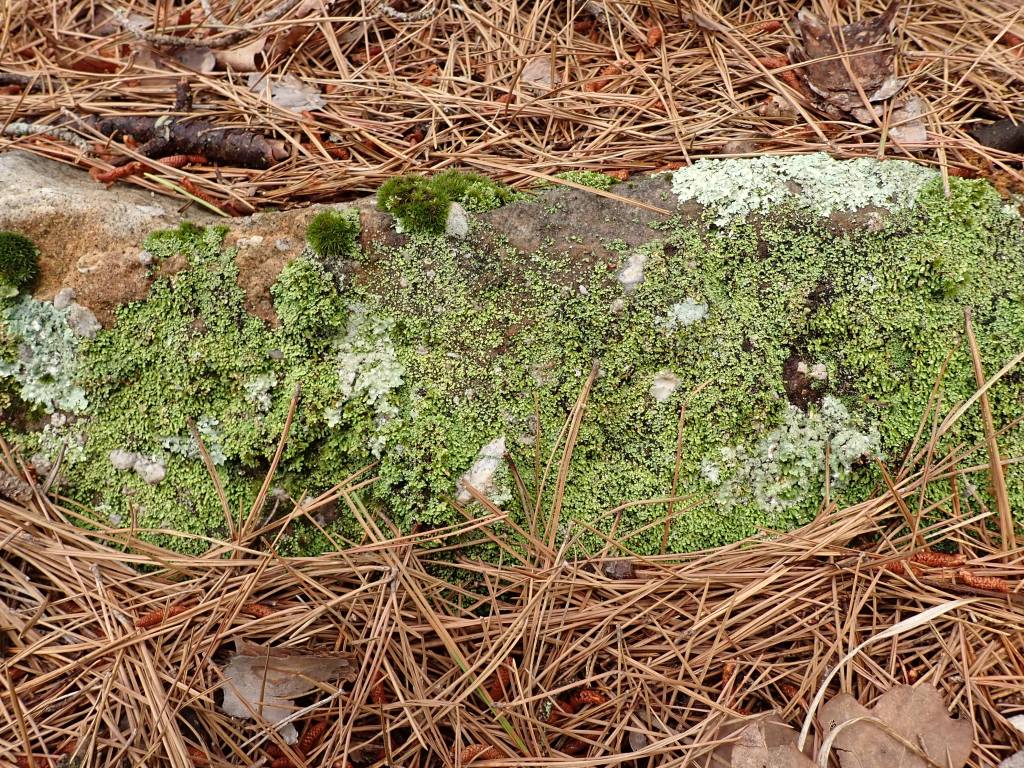
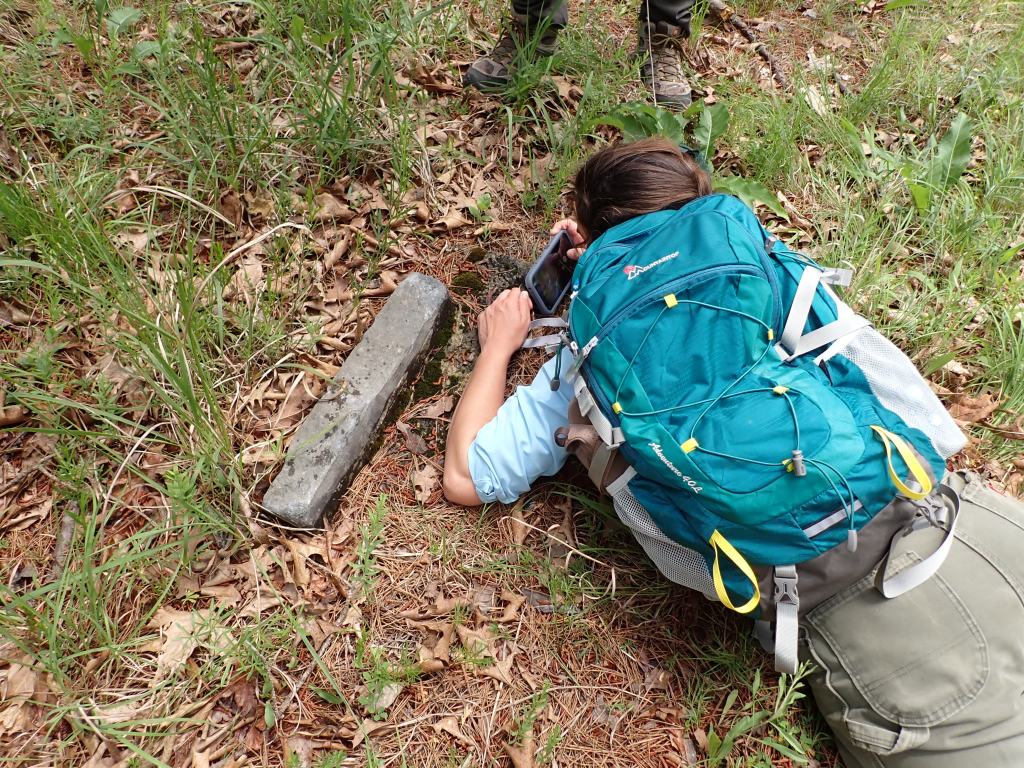
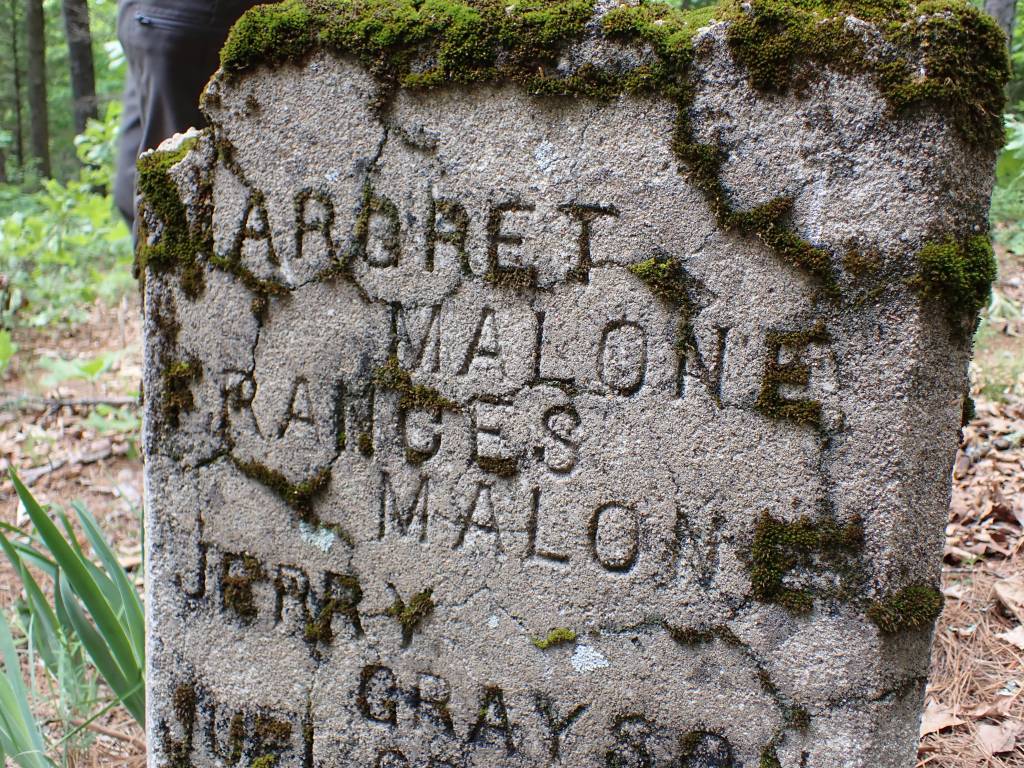
Afterwards, we all packed up our things, had lunch one last time, and then drove to a local cemetery to look for an S2 ranked moss species as our last field outing. It took some time, but we eventually did find it: Jaffueliobryum raui. Other moss species found on the headstones or sandstone rock pieces were Ptychomitrium incurvum, Grimmia pilifera, Schistidium viride, Orthotrichum strangulatum complex, and Syntrichia pagorum which had a few propagules to see. Some notable soil species were Thuidium delicatulum, Thelia lescurii, and Leucobryum glaucum.
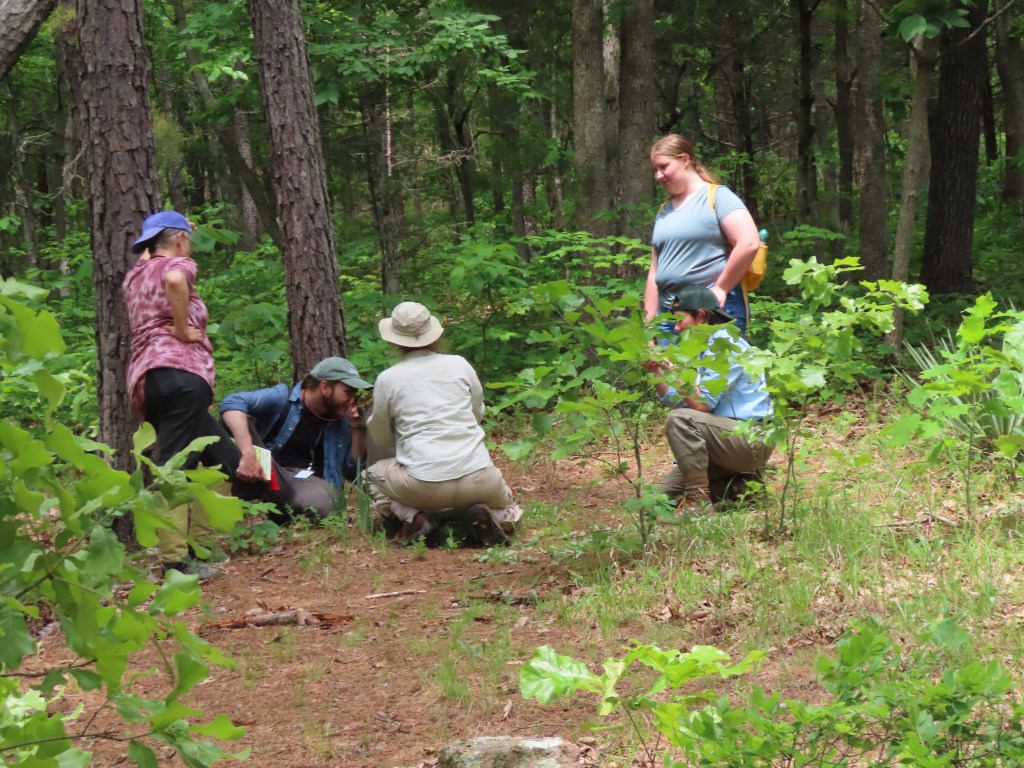
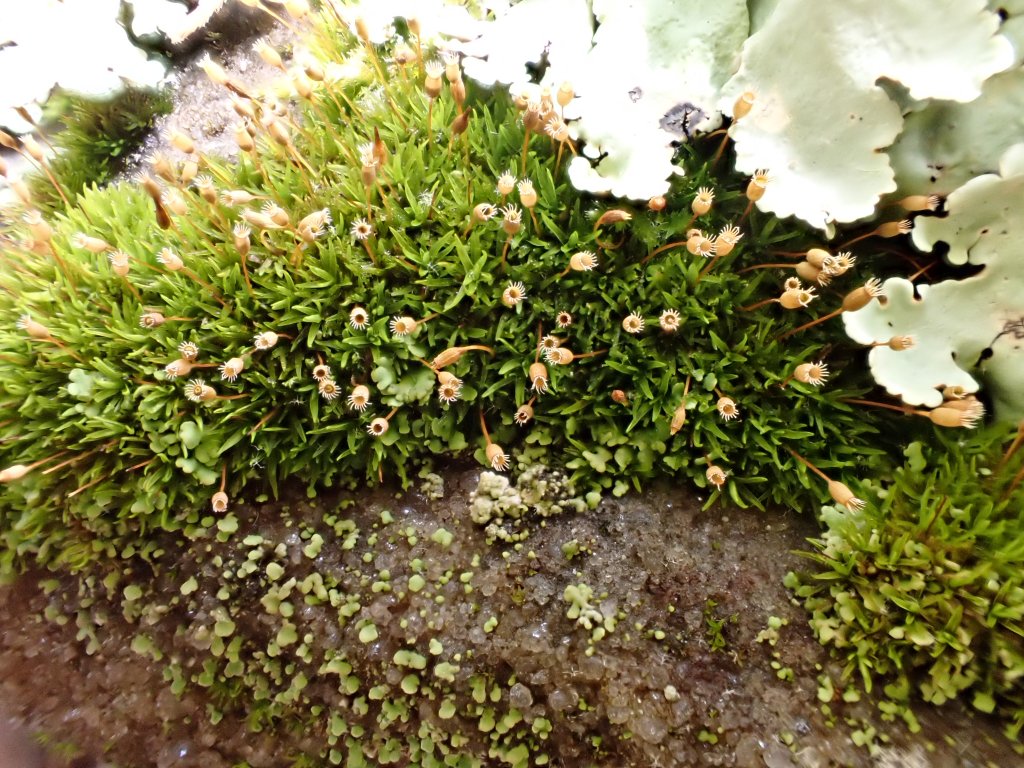
I really can’t express how awesome this week was. I enjoyed teaching and working with everyone, and to see the wheels turn and their knowledge grow. The first time through is always the toughest, and I couldn’t have asked for any better mosslings to help me through. You quickly learn what works and what doesn’t, what time constraints you have, along with topic interests or changes on what to focus on more. I was given great feed-back to help make those changes even better for the next workshop.
Additionally, I really appreciate the opportunity given to me by Missouri University S&T and Robin Verble, to share my bryophyte love. They do great things at the Ozark Research Field Station, so check out their site for other awesome courses and workshops they offer.
Until next time, happy mossing!

 Mosses of Missouri and Beyond
Leave a comment