In early April 2026, 5 brave souls joined me on the bryophyte crawl at Little Lost Creek CA near Pendleton, MO. It had rained that week and the day before, so Little Lost Creek had quite a bit of water in it. The plan was to hike to the creek and to explore the creek’s edges, along with the hollows and ravines around it.
We didn’t get far into the hike when we came across some common, “open floor” woodland bryophytes to explore. These are mosses that grow on the soil that haven’t been covered up by leaf litter for various reasons. It was a great start for those that hadn’t yet tried to work through the keys in the book to arrive to ID’s.
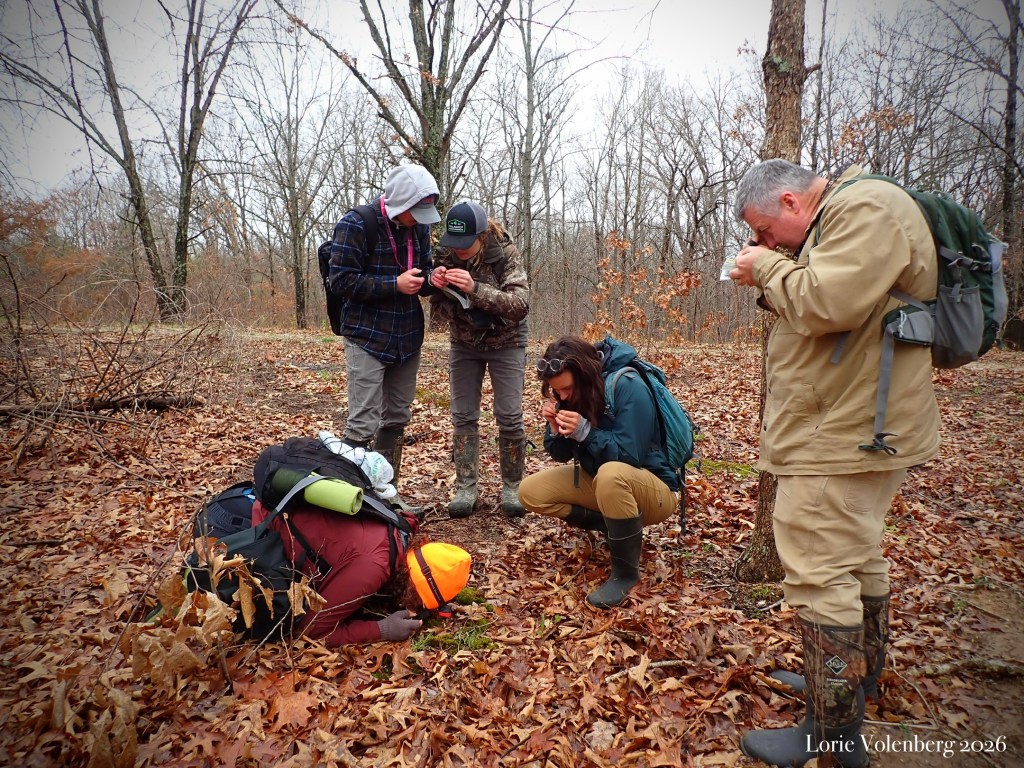
Mosses such as Dicranum scoparium, Atrichum species, and Thuidium delicatulum may be found in such areas.
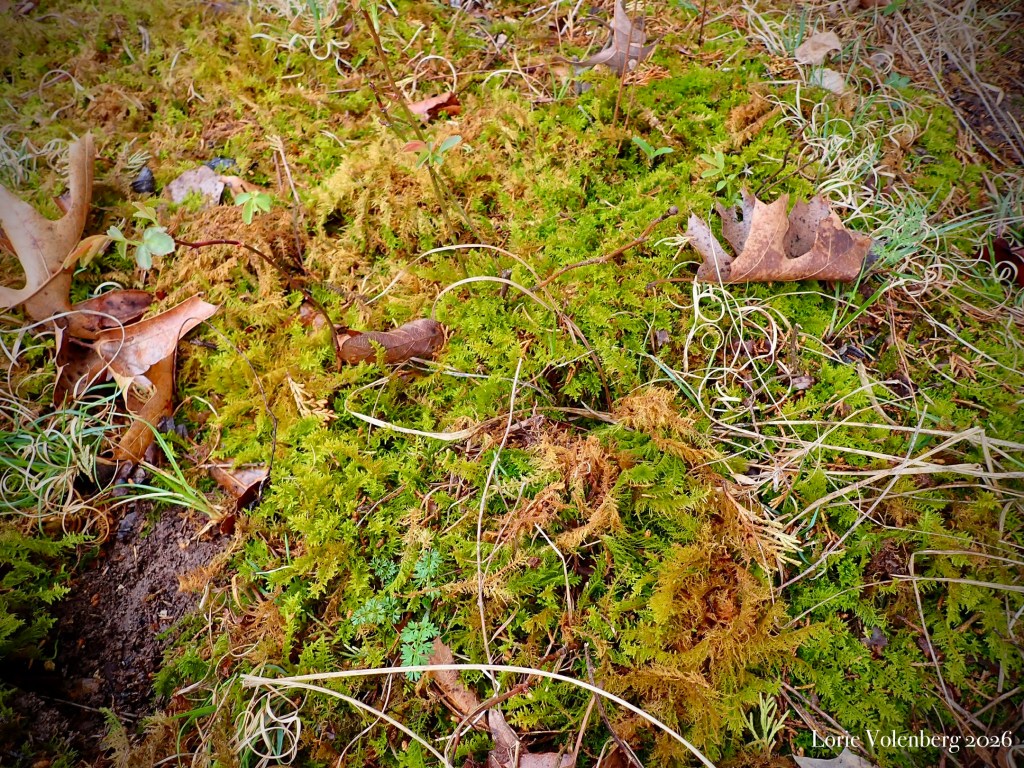
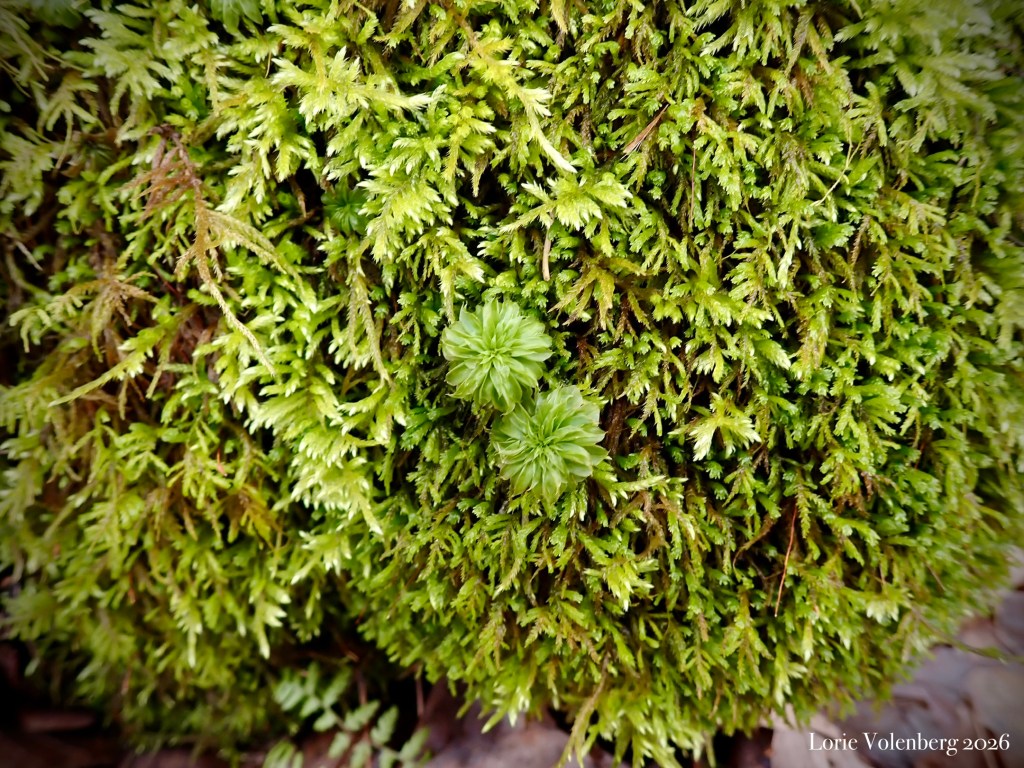
Thuidium delicatulum, delicate fern moss. This moss is 2-3 pinnate and may really only be confused with Thuidium recognitum. There are subtle differences to be able to distinguish between them in the field.
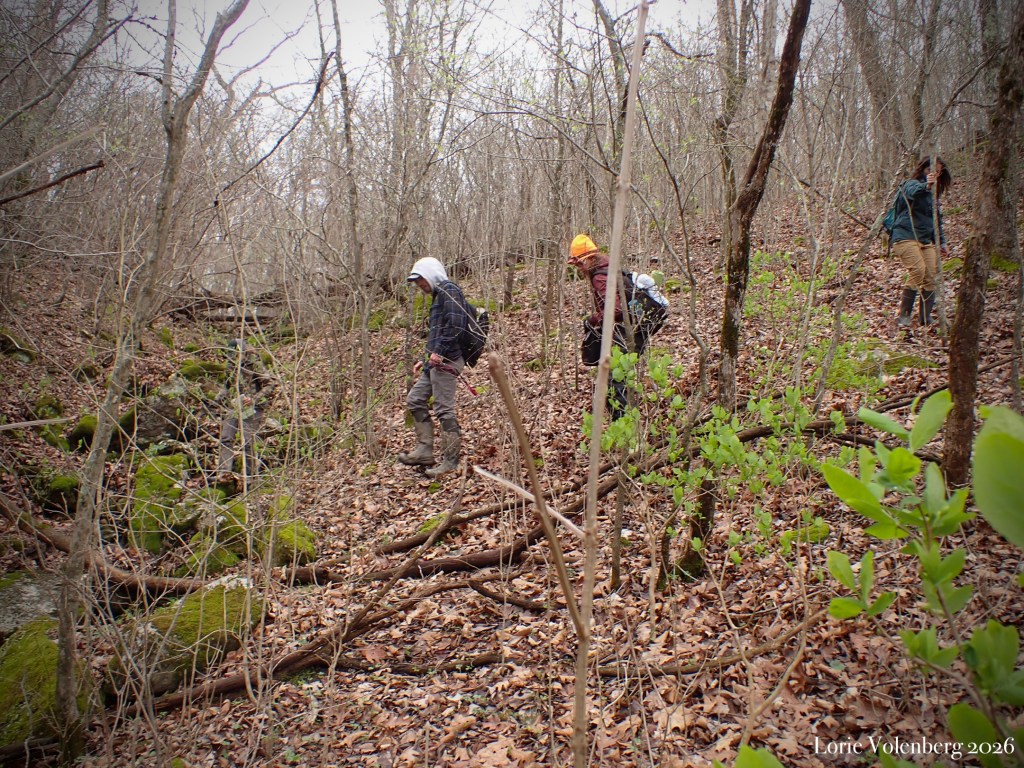
We decided to follow a ravine down to the stream and had to do a bit of careful hiking. We did come across a tree that had a nice population of Fissidens subbasilaris growing on its base, along with a few Anomodon species.
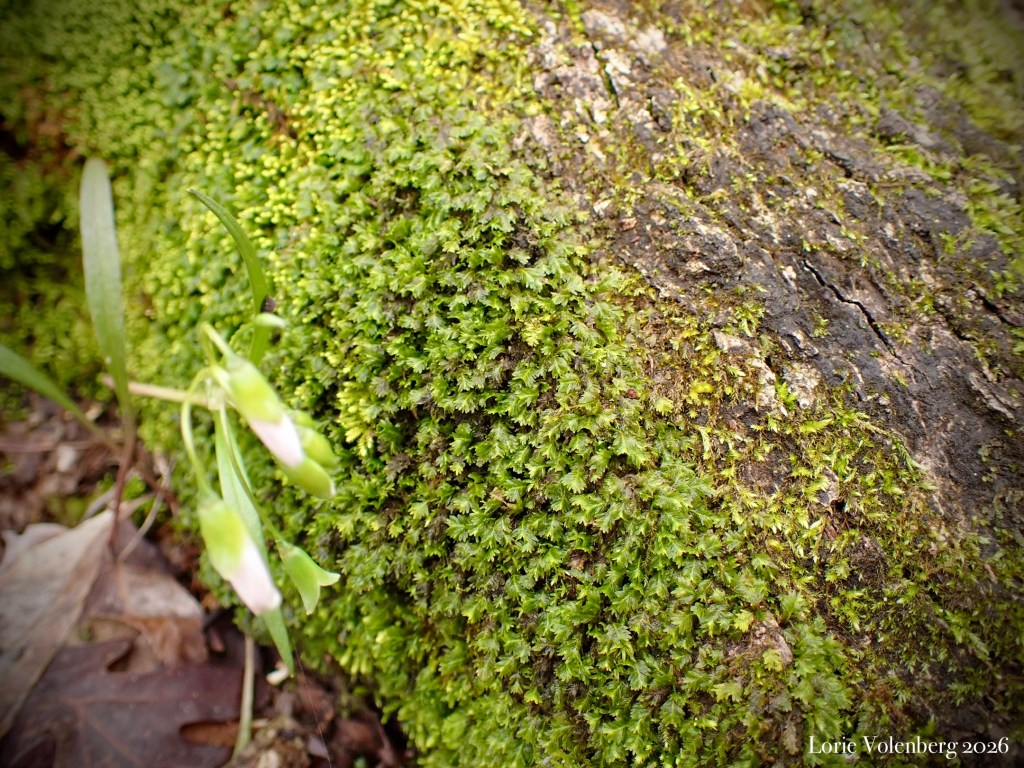
Fissidens subbasilaris on the base of a tree. This is a common Fissidens species found on trees in Missouri and will tend to have a darker costa that does not reach the apex of the leaf.
Once we reached the bottomland, we were amazed at how much of it was covered in the understory shrub, Dirca palustris, known as leatherwood tree. The branches are very bendable. At first, I thought we had missed the flowering window, but as we got closer to the creek, we came across flowers that were still in their prime.
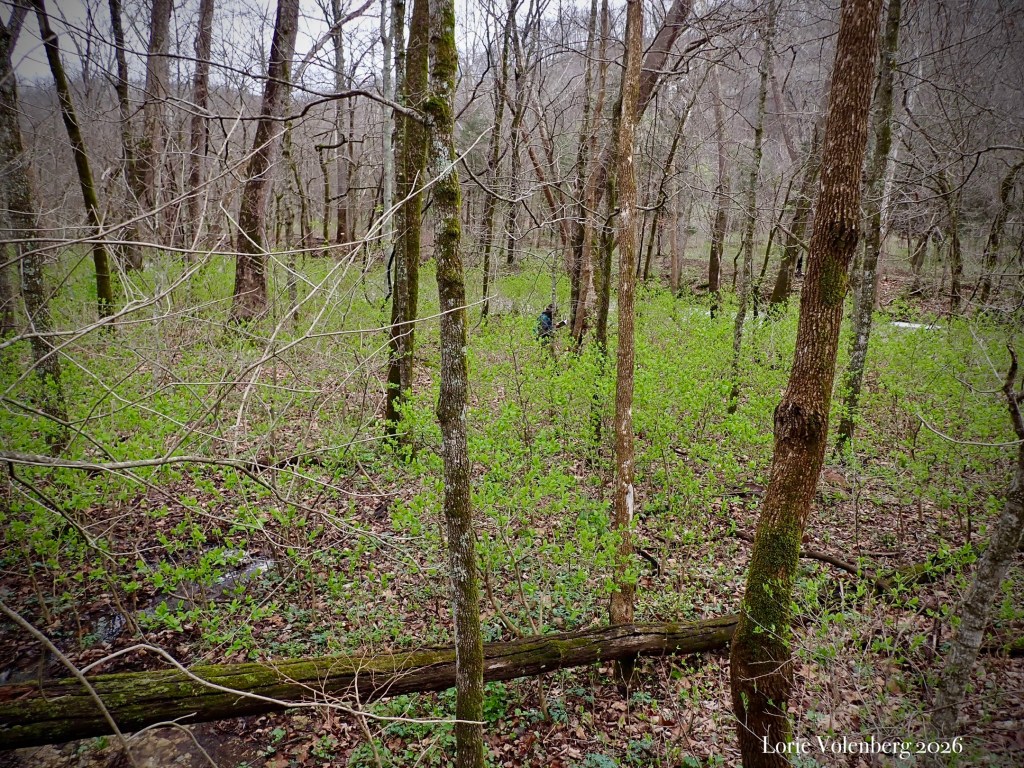
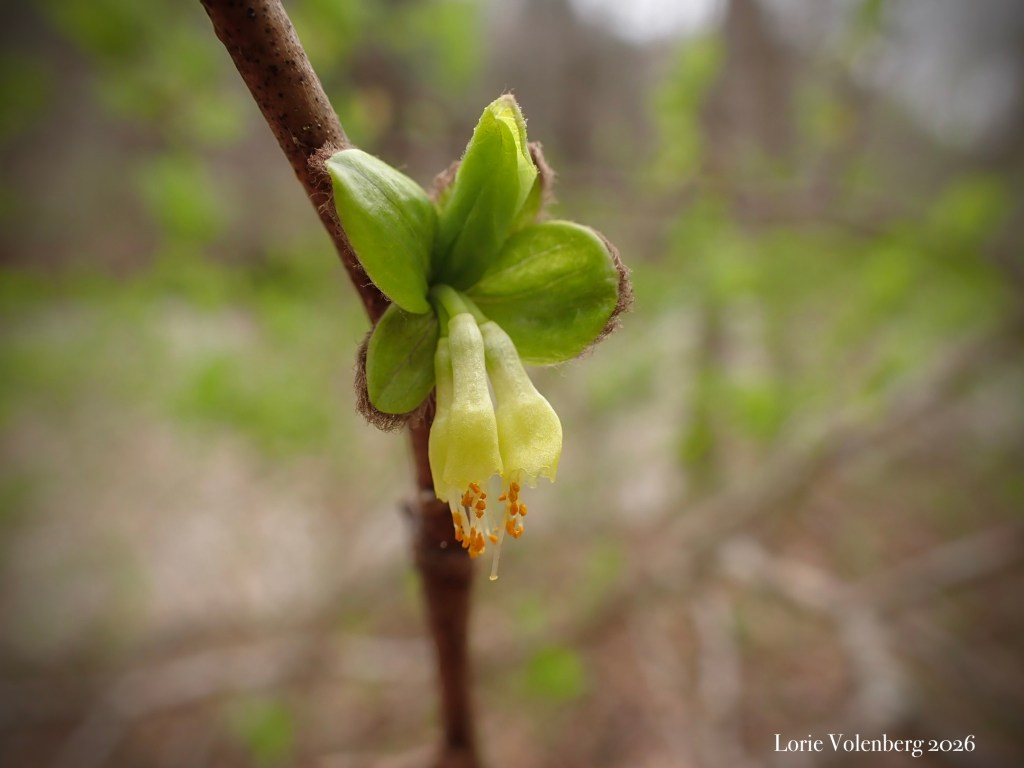
Above: Leatherwood was the only native shrub to have leaves on it, so it was easy to spot. The flowers are somewhat petite.
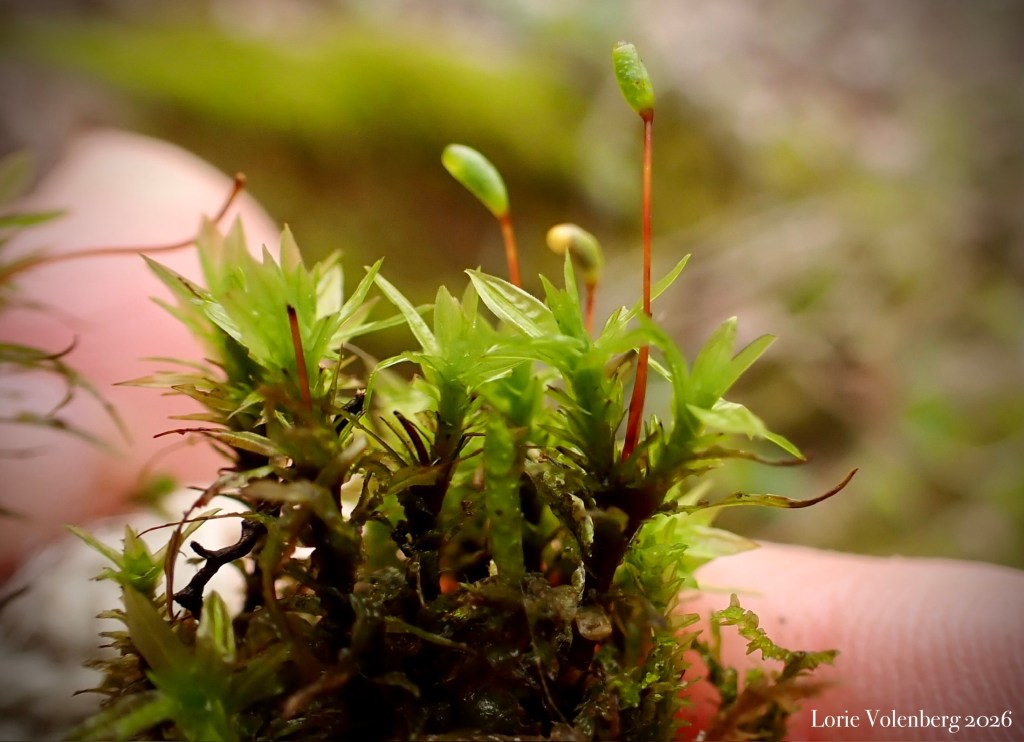
In the bottomland, a layer of St. Peter Sandstone was exposed in several places. In the small section we explored, we didn’t find anything unique to sandstone, but did see Amblystegium varium subs. varium with sporophytes, and the lovely as always thalloid liverwort, Reboulia hemisphaerica.
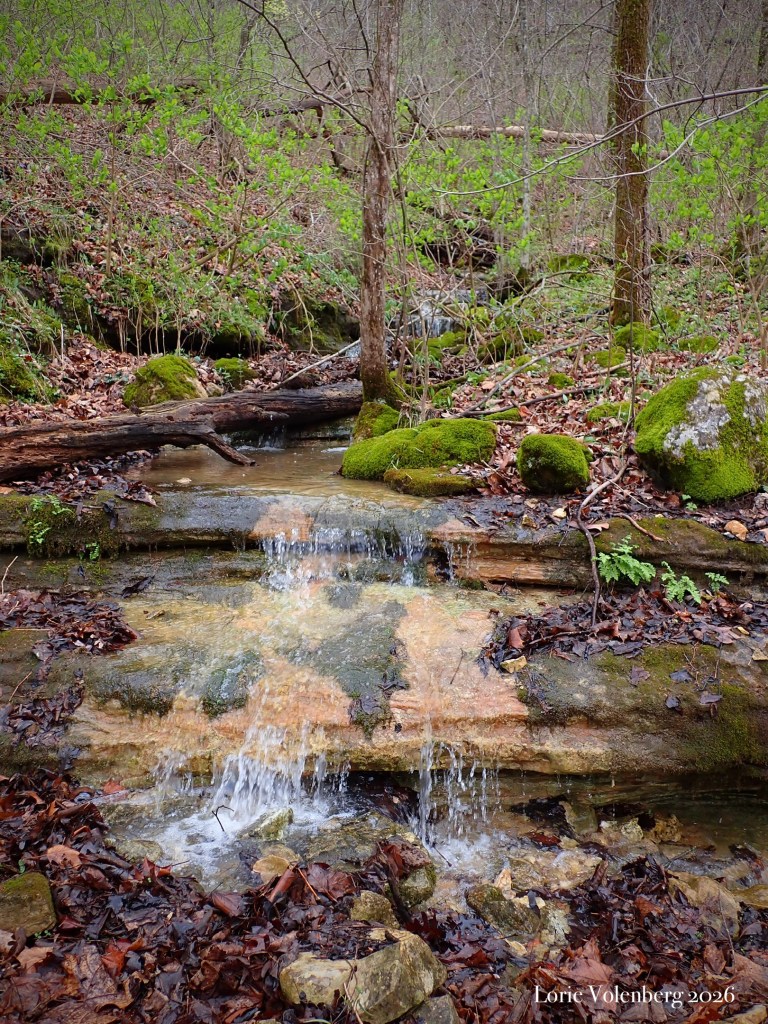
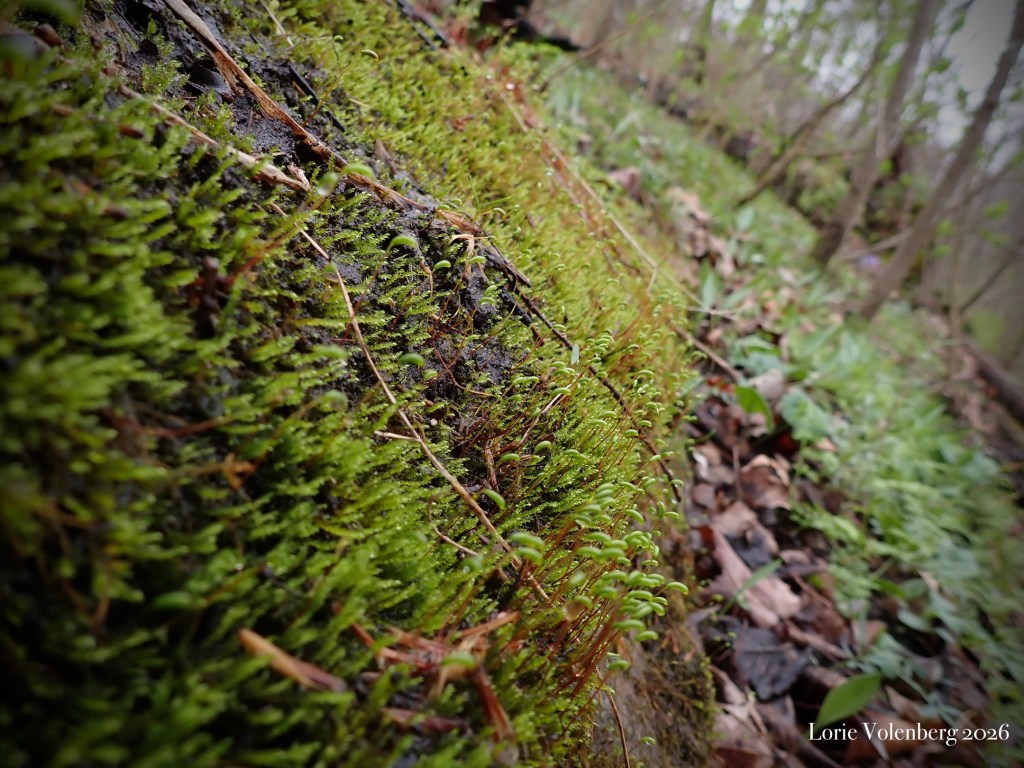
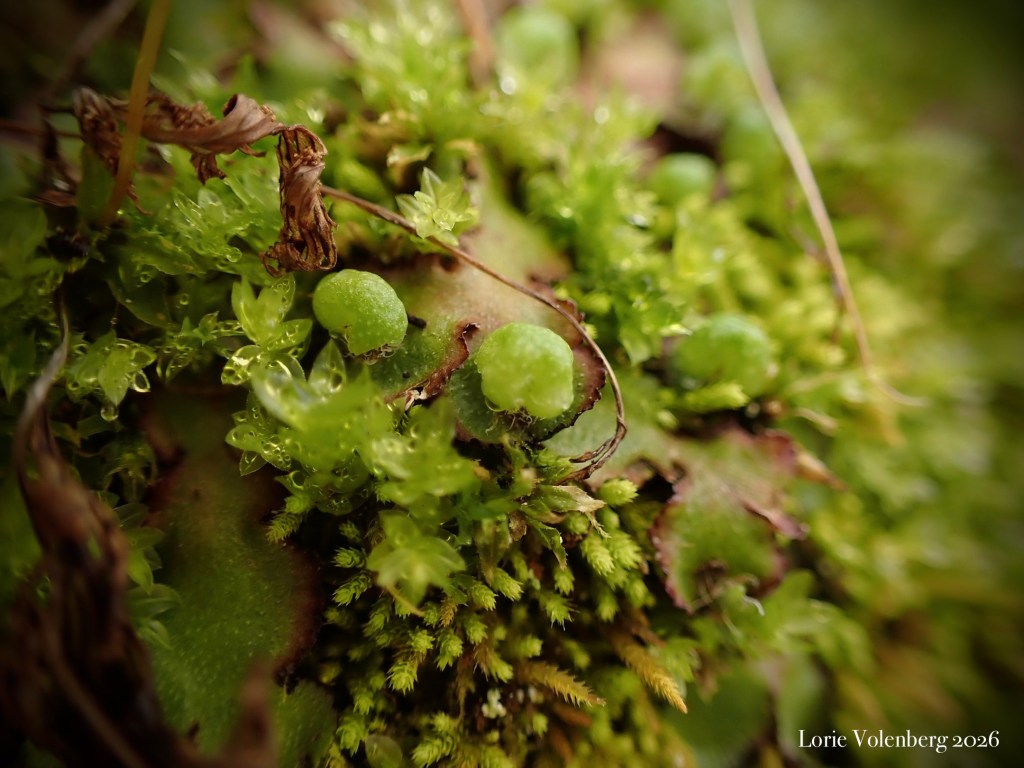
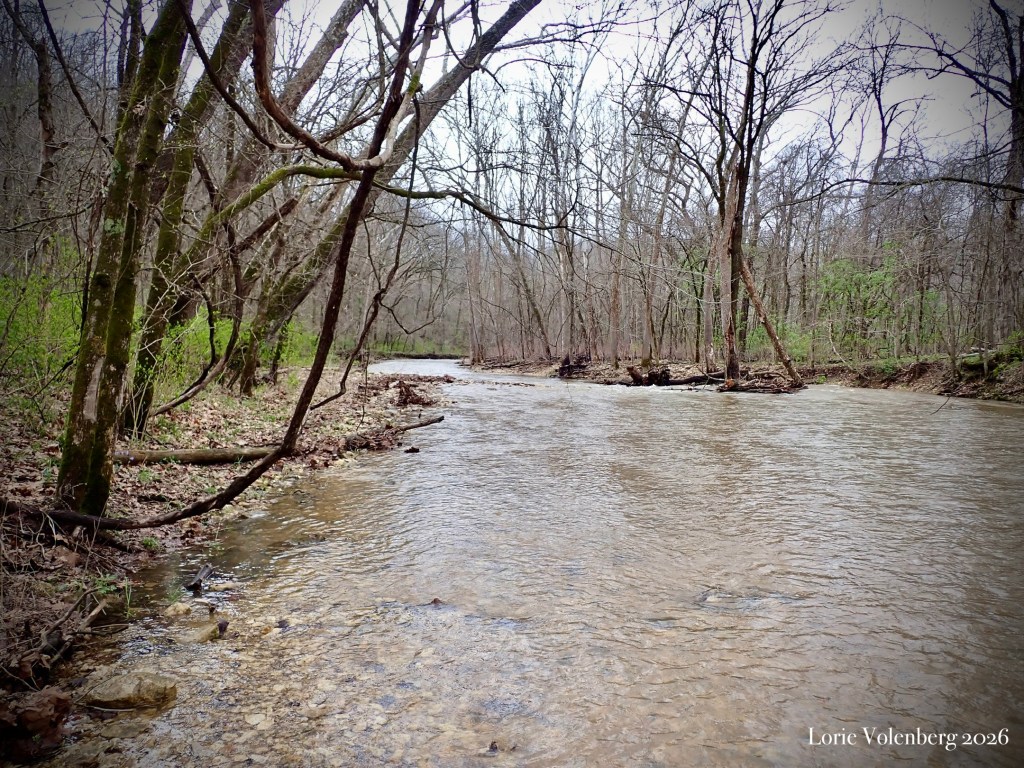
Above left: The ravine we followed down; Above middle: Amblystegium varium subs. varium sporting its sporophytes; Above right: The thalloid liverwort Reboulia hemisphaerica was just starting to push up its archegoniophores. The sporophytes are maturing underneath that cap-like structure that will continue to get higher as the stalk grows longer.
The creek was quite swollen with all the rain we had, so creek edge exploration was limited. We did billy goat up and over some cliffs to get to a hollow we wanted to explore.
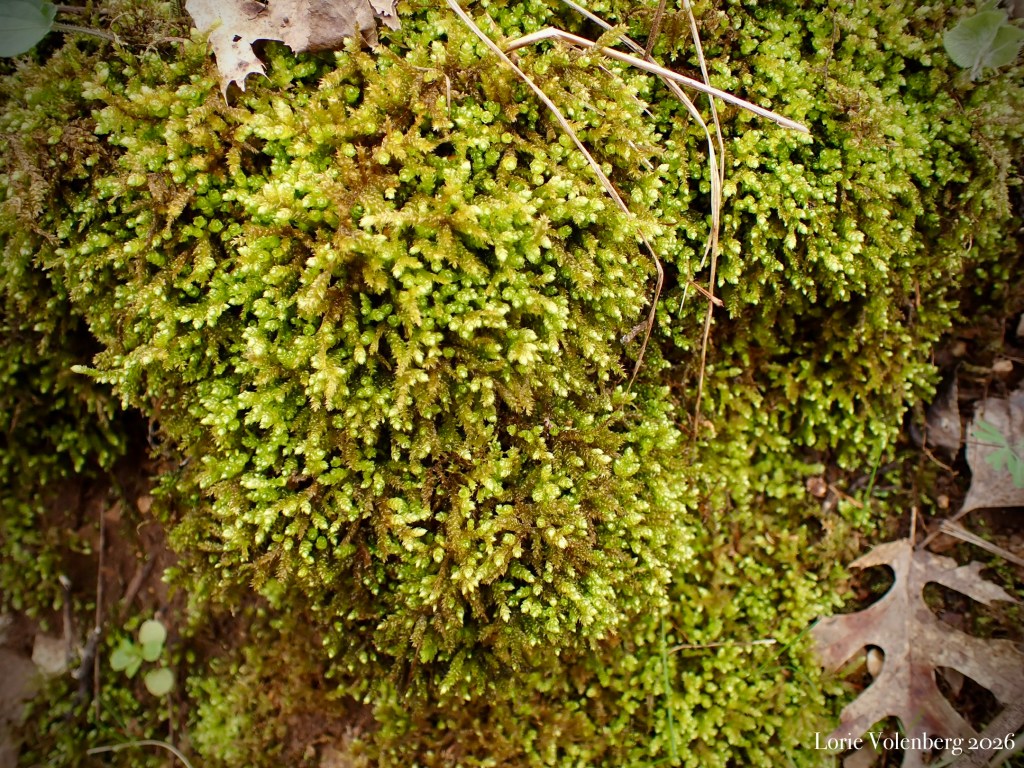
Once in the hollow, there were a myriad of typical species to find in woodlands. The first three photos show 3 species that may be confused by beginners. Entodon seductrix (bottom left) is an extremely common species that can grow on soil, rock, and wood. Its julacous habit will have leaves that lack a costa. Bryoandersonia illecebra (bottom middle) tends to be more robust than Entodon. Its julacous habit will have leaves that have a faint costa. Finally, Brachythecium laetum (bottom right), another common species that grows on soil and rock, will have leaves with a distinct costa and may have a corrugated look to them.
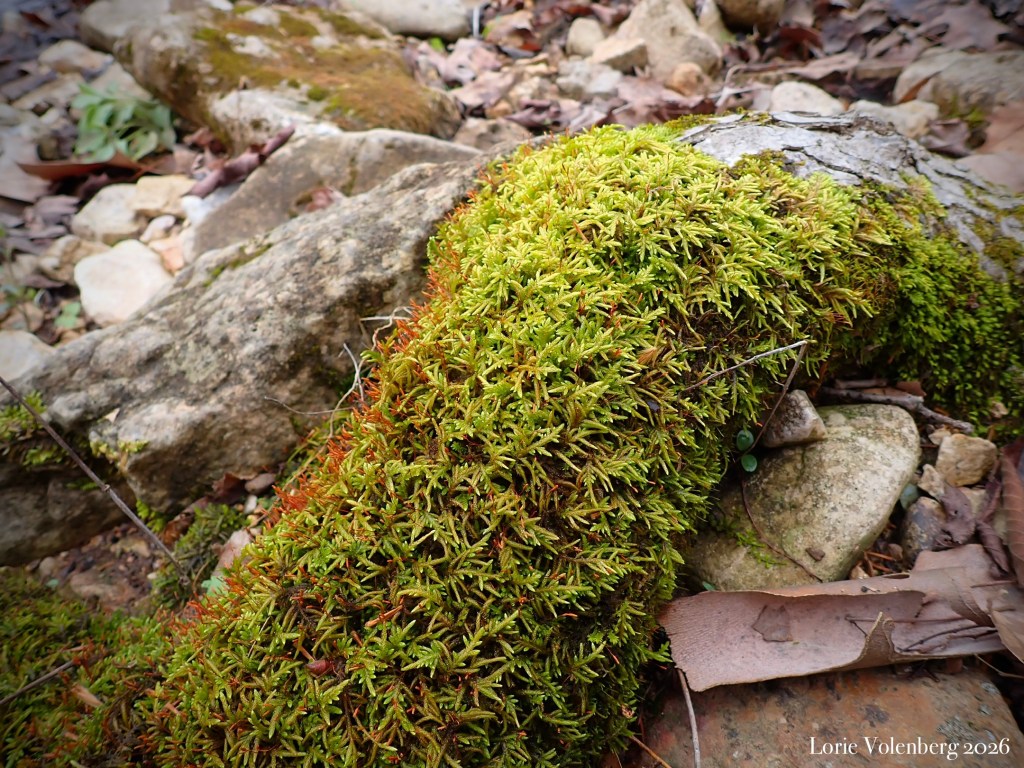
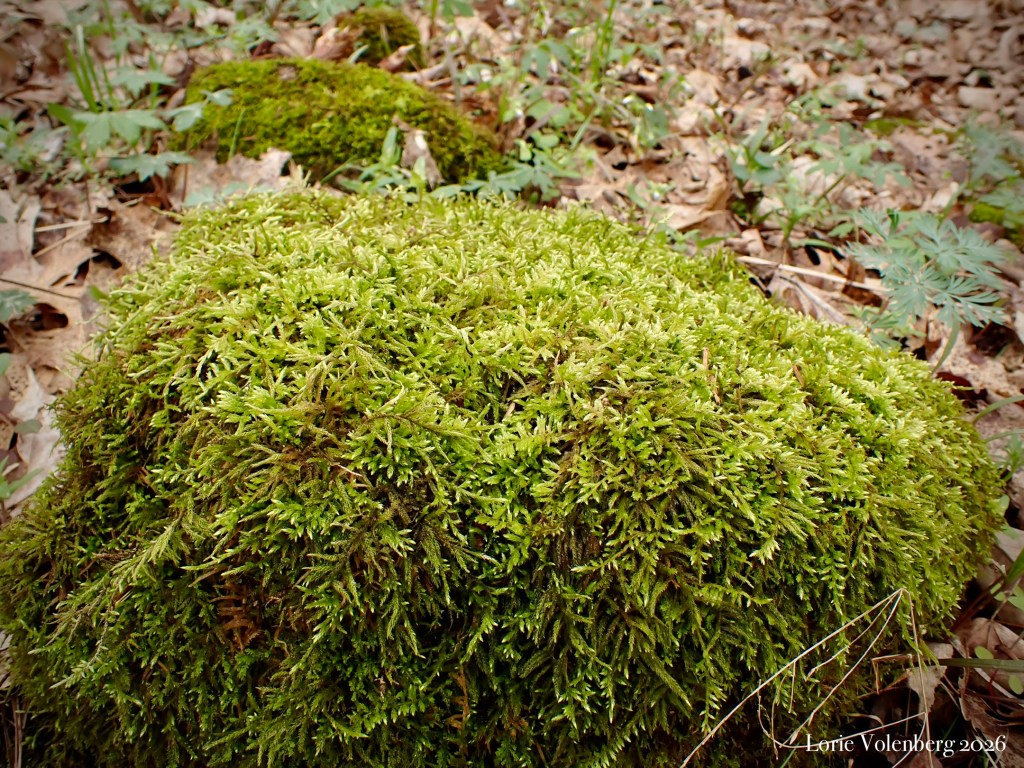
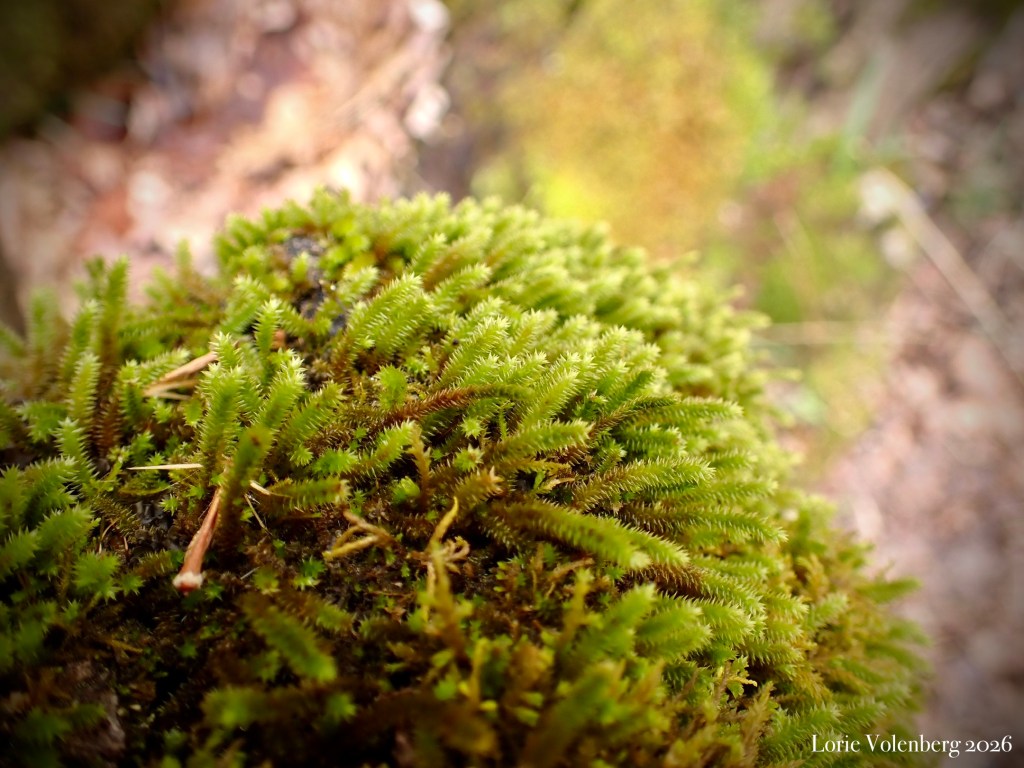
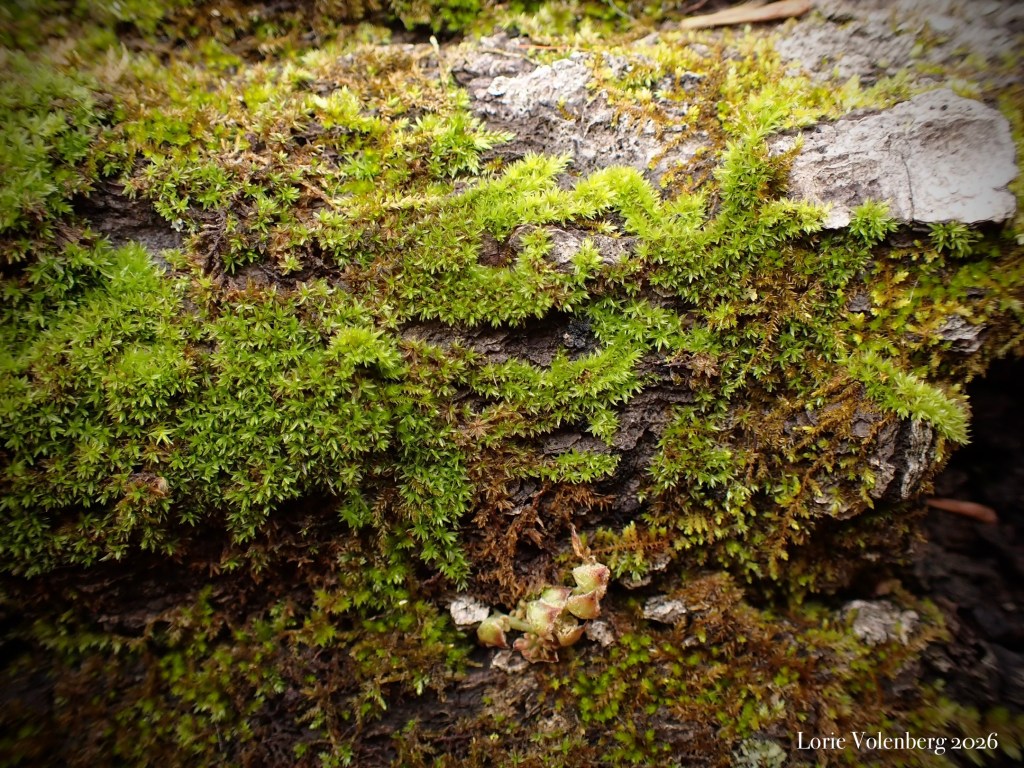
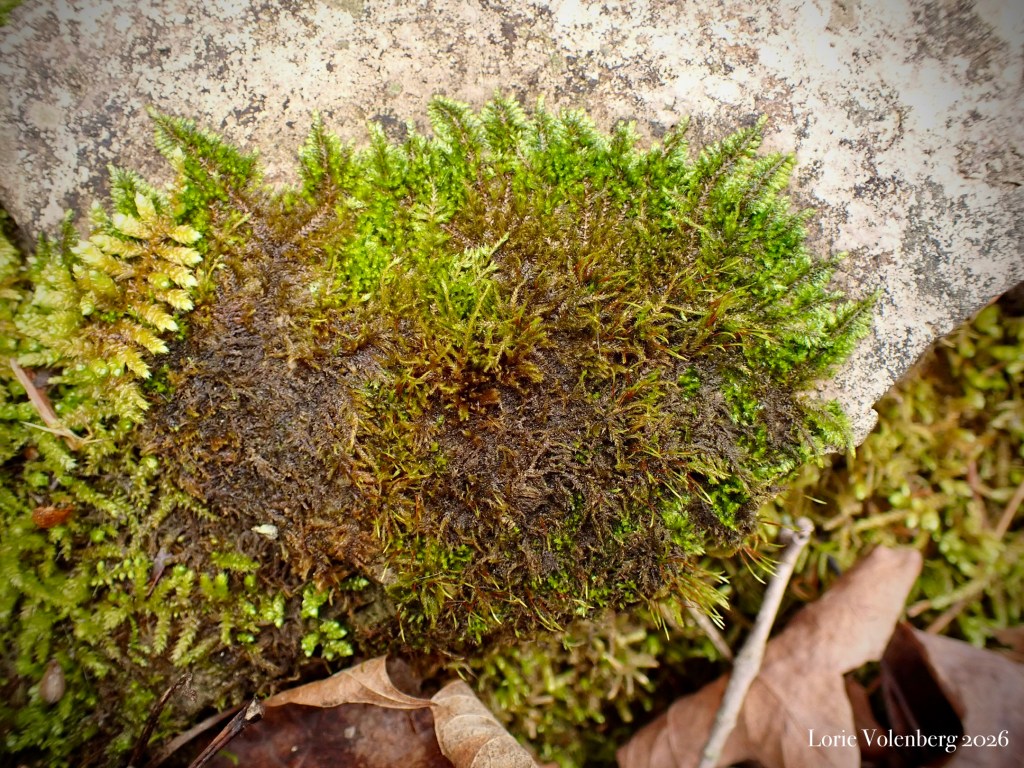
Other species found were Leucodon julacous, Drummondia prorepens, and Homomallium adnatum. Leucodon (bottom left) is primarily found on trees and will often look like a coat hook when dry. Drummondia (bottom middle) is fantastic in how the main stem crawls along the substrate and will send up upright shoots that alternate along the stem. Homomallium (bottom right), is the “oil spill” moss for rocks. It looks very similar to Platygyrium repens which is found commonly on decorticate wood.
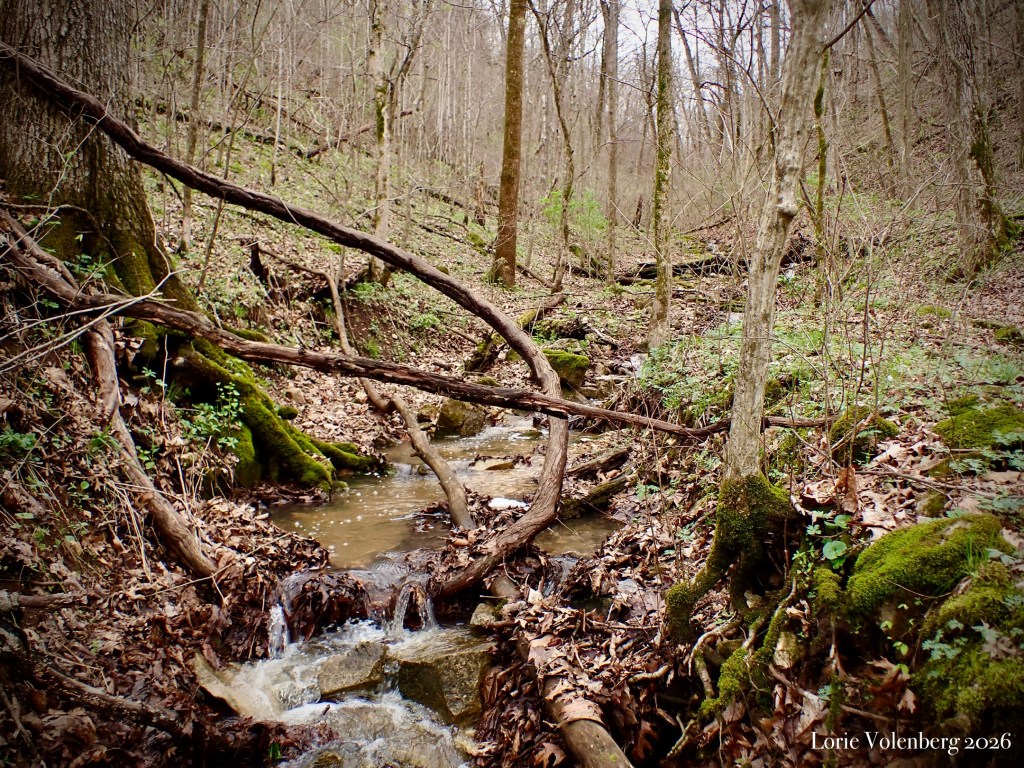
We eventually followed another ravine up and out. Limestone/dolomite rock lined this ravine with boulders and outcrops making exploration a lot of fun.
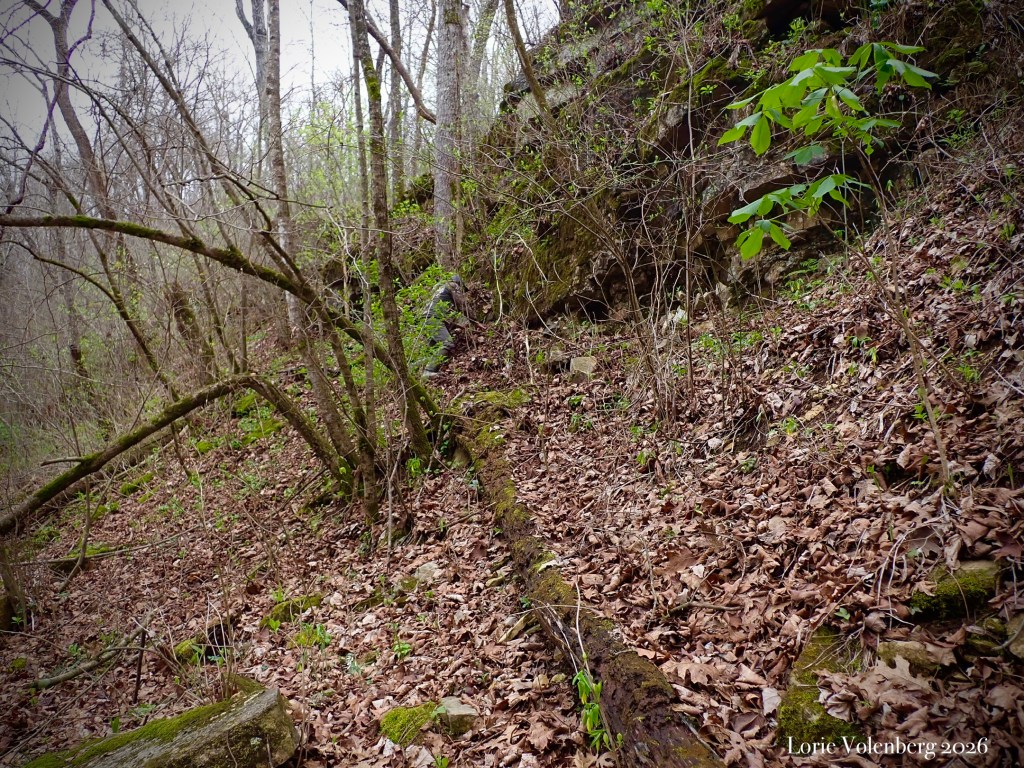
A lot of Anomodon species covered the rocks, but a few other neat species were spotted.
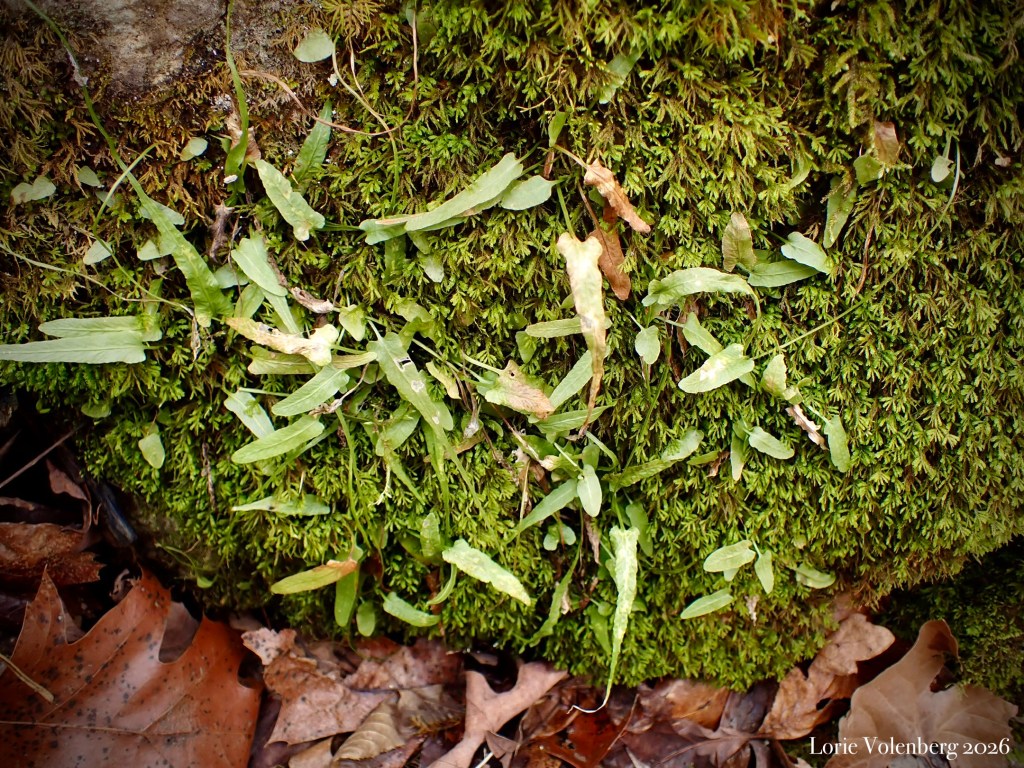
Walking Fern was walking all over Anomodon attenuatus.
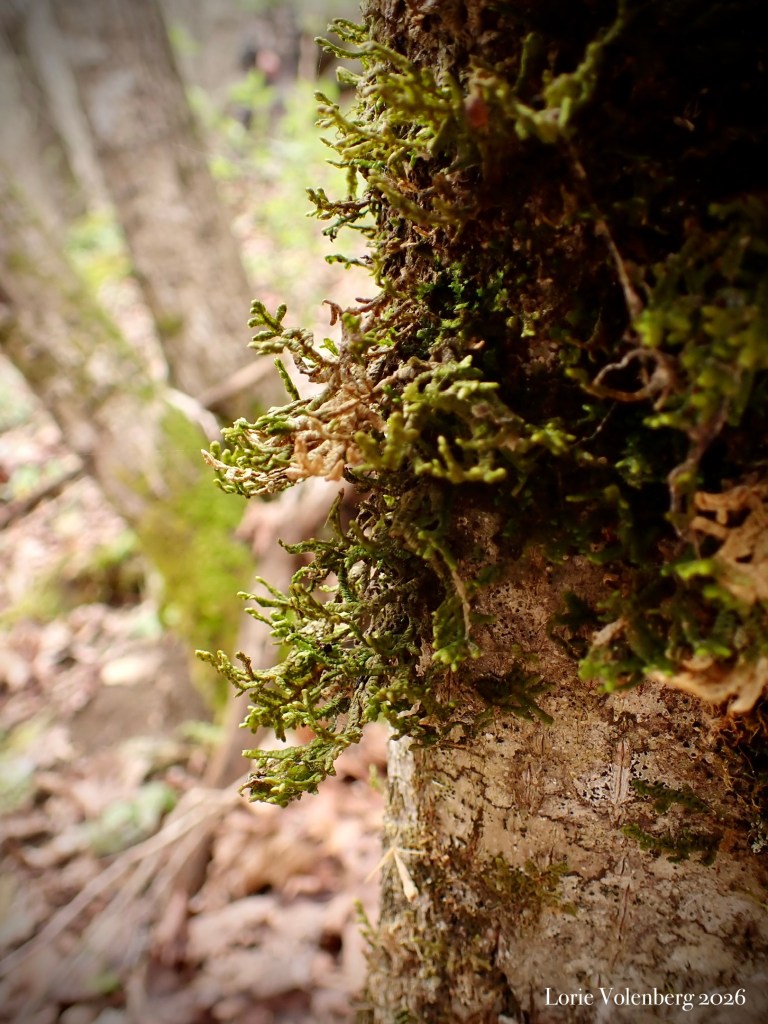
The lovely leafy liverwort Porella phylloidea on a tree.
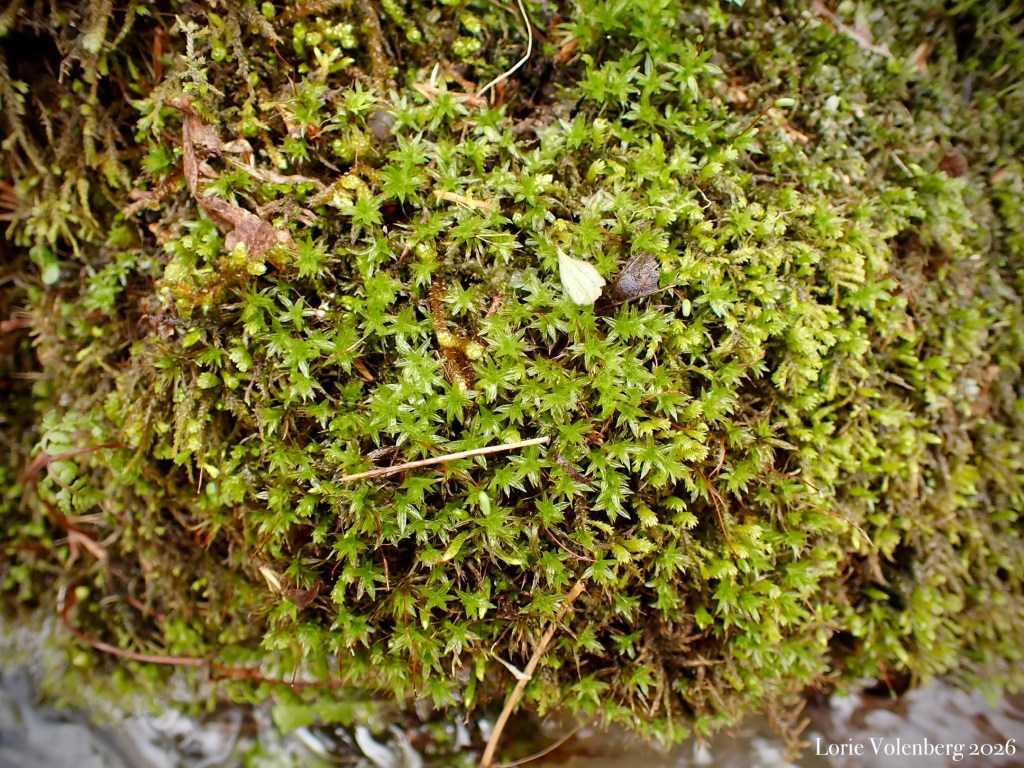
The last exciting species I came across was Timmia megapolitana. It is not an SOCC species, but it is also not very common. I’ve only seen it once in a very dry, woodland location. This was found right at creek level and struck me as an Atrichum species from a distance. After inspection with a hand lens, I could see that it was in fact, not an Atrichum species. Later at home, the keys led me to Timmia.
Little Lost Creek CA is definitely a place I would like to get back to and explore more. It certainly didn’t hurt to end the note on seeing one of my favorites, the Rose Moss. Check out my bryophyte crawl page if you would like to learn more about my upcoming crawls. Until then….happy mossing!

 Mosses of Missouri and Beyond
Leave a comment