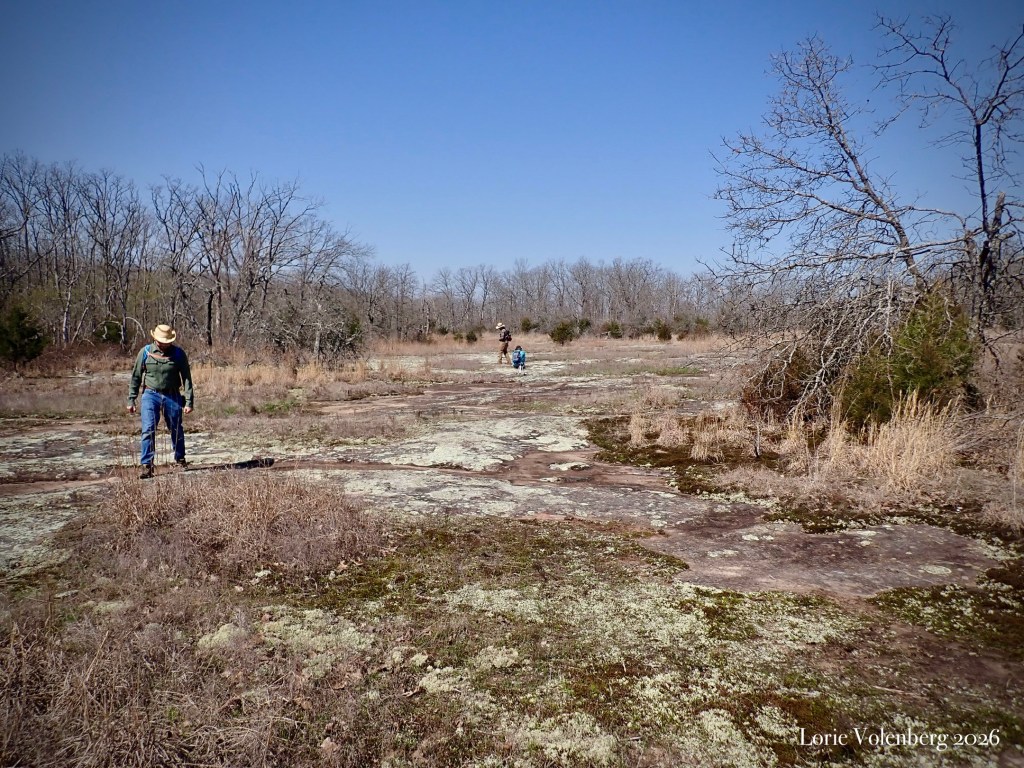
This was the first bryophyte crawl of the year 2026! And the mission, should you have chosen to accept it, was to find a multitude of spring ephemerals, including Sphaerocarpos texanus. How did we do?
We rocked it!!
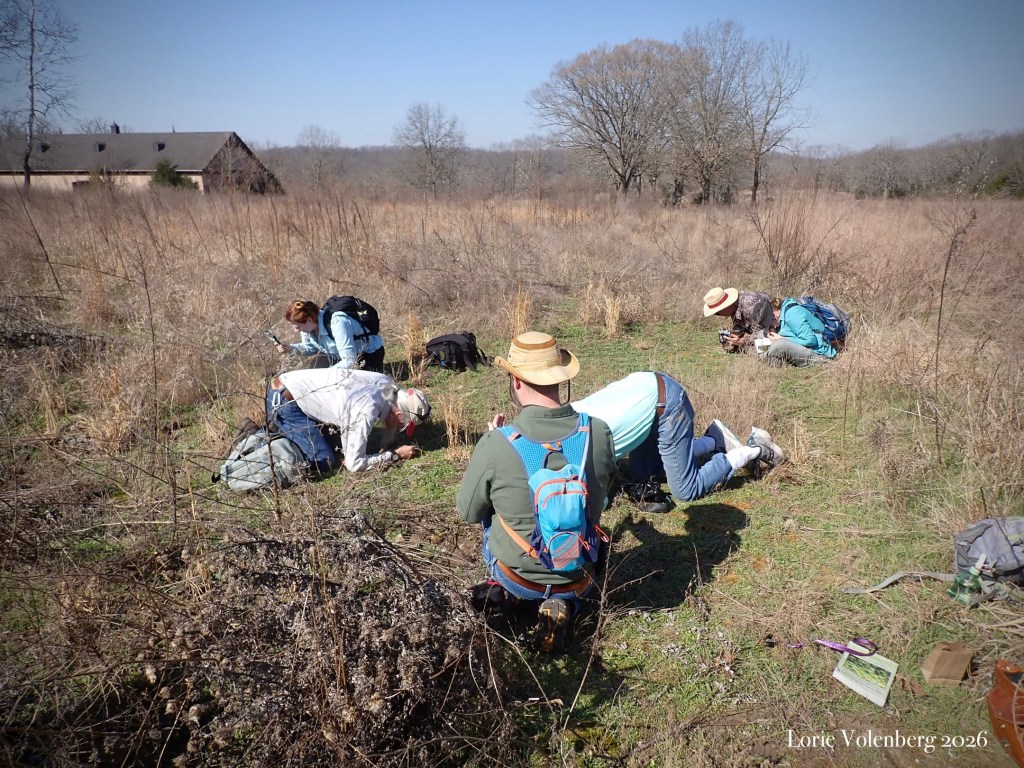
Corry Flatrocks CA is a sprawling complex of sandstone glades in southwestern Missouri. Thankfully, Blake spends quite some time here and knows the glade well and what secrets it holds. He was our guide on this beautiful, 90 degree day in March, leading us around so as to be sure not to miss the hotspots of activity.
Per usual, we didn’t get very far before we were guided into the old meadow. Ariel and I dropped to our knees immediately and began to push aside the dead thatch, scoping the soil for any signs of little green life. Within 1 minute, Ariel triumphantly yells, “I found it! I found the bottle liverwort!!”. Sure enough, she found the unusual looking Sphaerocarpos texanus. The spores at home confirmed its identity.
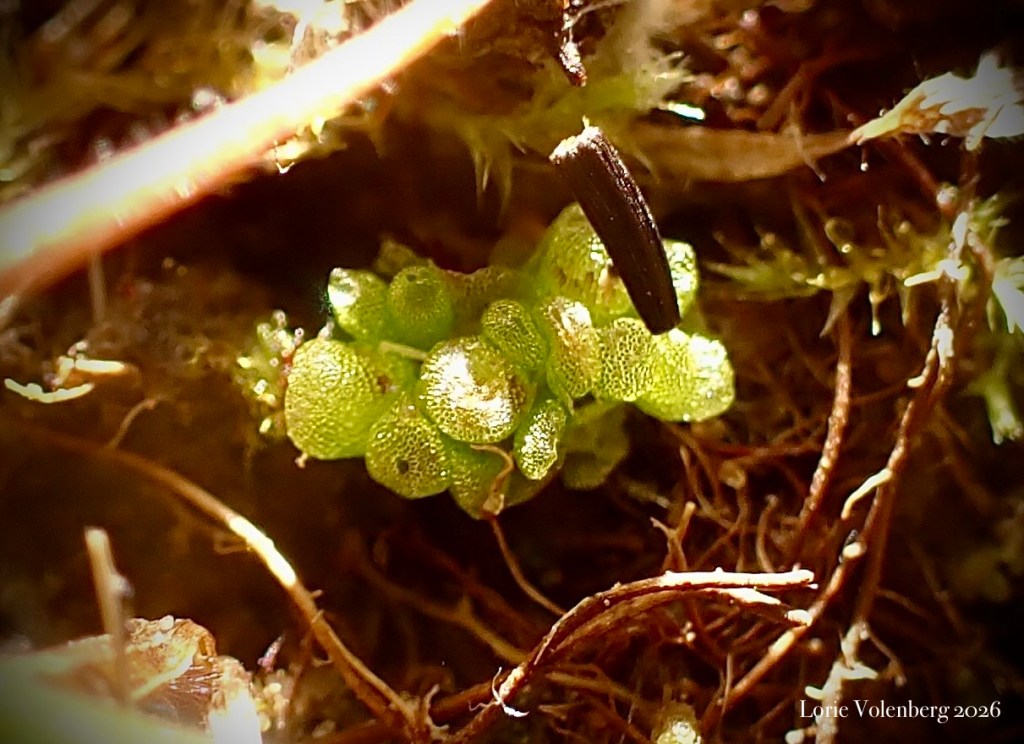
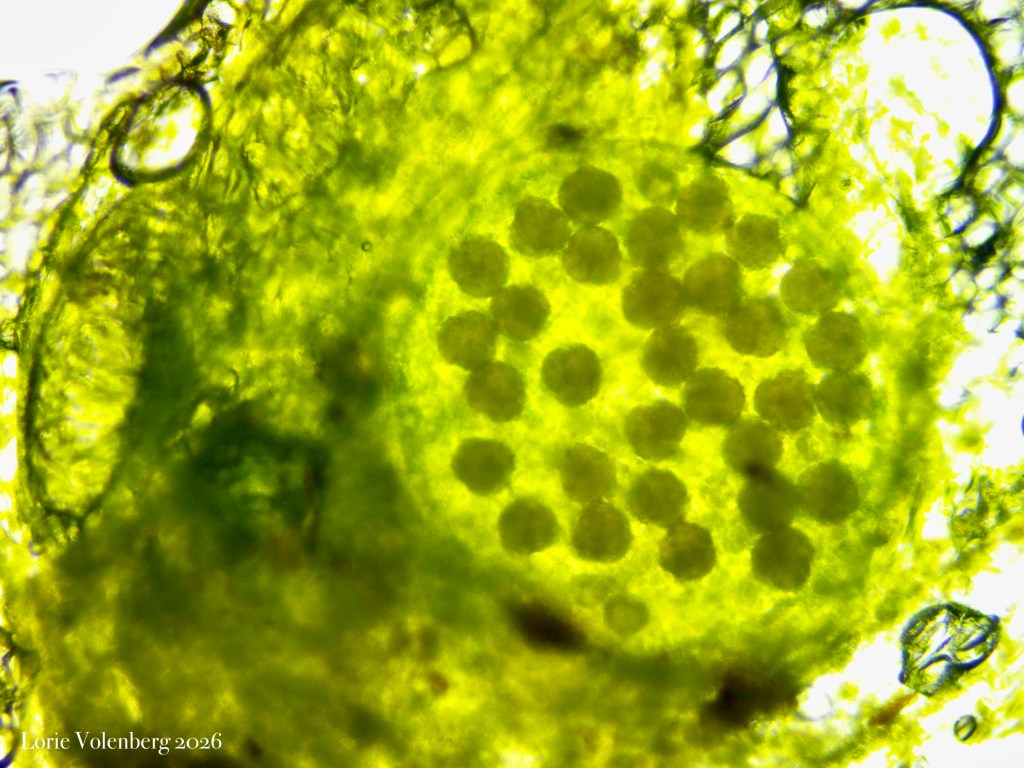
An involucre under the microscope at home shows a maturing sporophyte inside. At maturity, the involucre will decay, thus exposing the capsule to the elements which will then break open to release the spores.
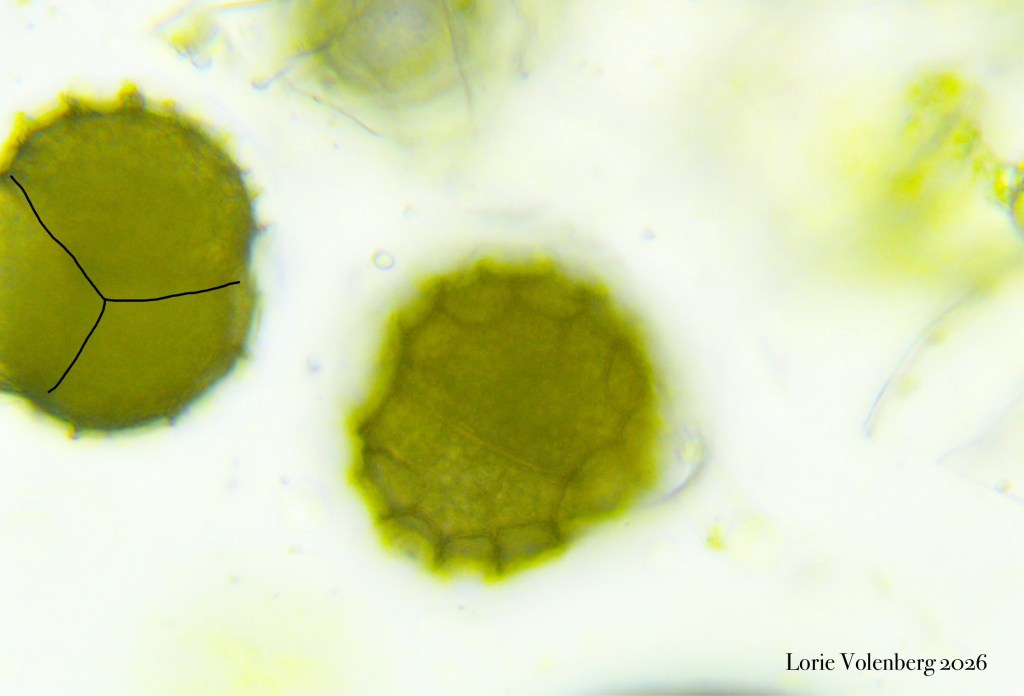
There are two species that can be found in Missouri, S. michelii and S. texanus, and they are only distinguishable by their spores. The size and number of the areolae across the surface determine the species. Additionally, both species have spores that remain together as tetrads.
S. texanus has 5-7 areolae that are 15-25 um in diameter. I attempted to help distinguish the tetrads by adding a black marker on the spore on the left to show the units. The fourth is hiding behind the three in front.
The rest of the group headed to a small area that had been sprayed for thistles last year, thus exposing ground that pioneer mosses took full advantage of. We found Funaria hygrometrica, Physcomitrium pyriforme, Tortula aucalon, Weissia controversa, and Bryum argenteum.
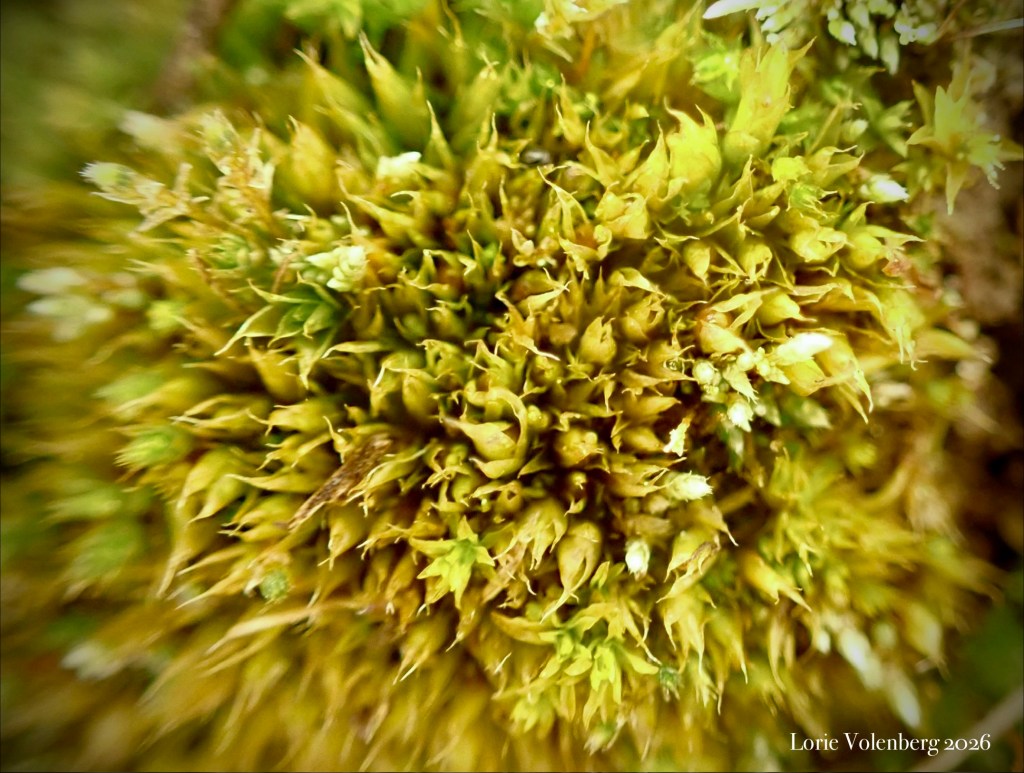
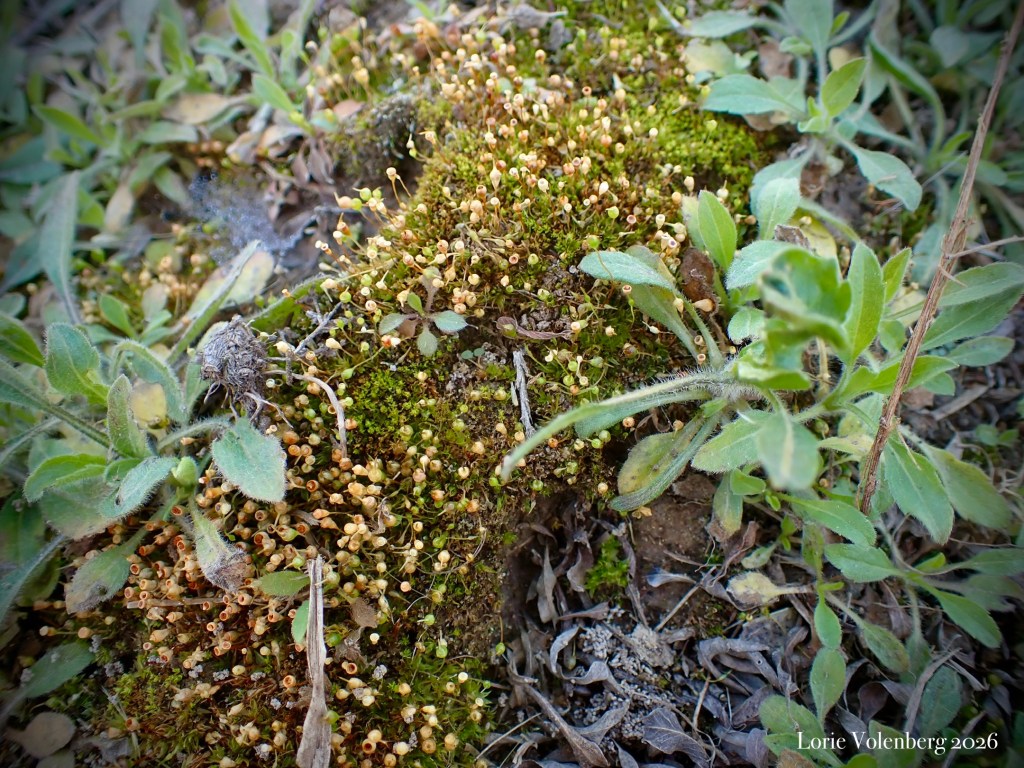
Top left: Tortula aucalon. If you look closely, you can see the tan capsules buried deeply within the leaves. Top right: Physcomitrium pyriforme with capsules at various stages; several are showing the “wine glass” look as a result of losing the top part of the capsule in order to release the spores.
After spending roughly 45 minutes in the meadow, we decided we should press on to the glades. We really did try hard not to stop too often on our way, but it was inevitable that we would, and we did. With good reason though as there were lots of cool mosses to see! Bruchia flexuosa has been on my list of species to see in person, and I finally got to say hello.
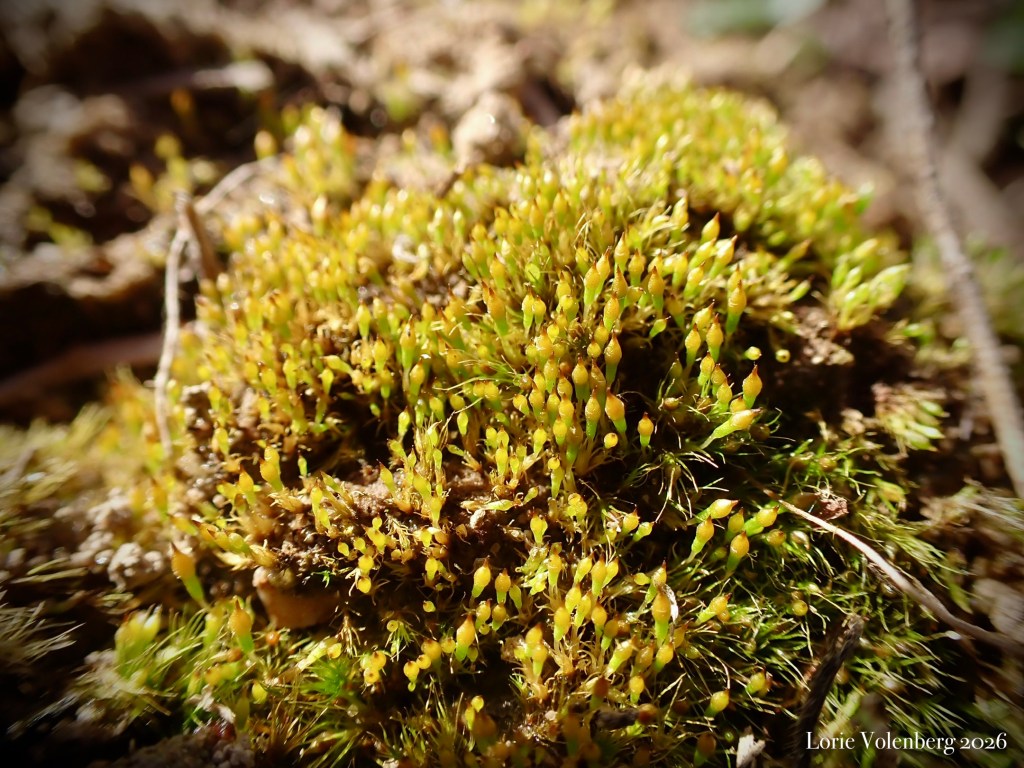
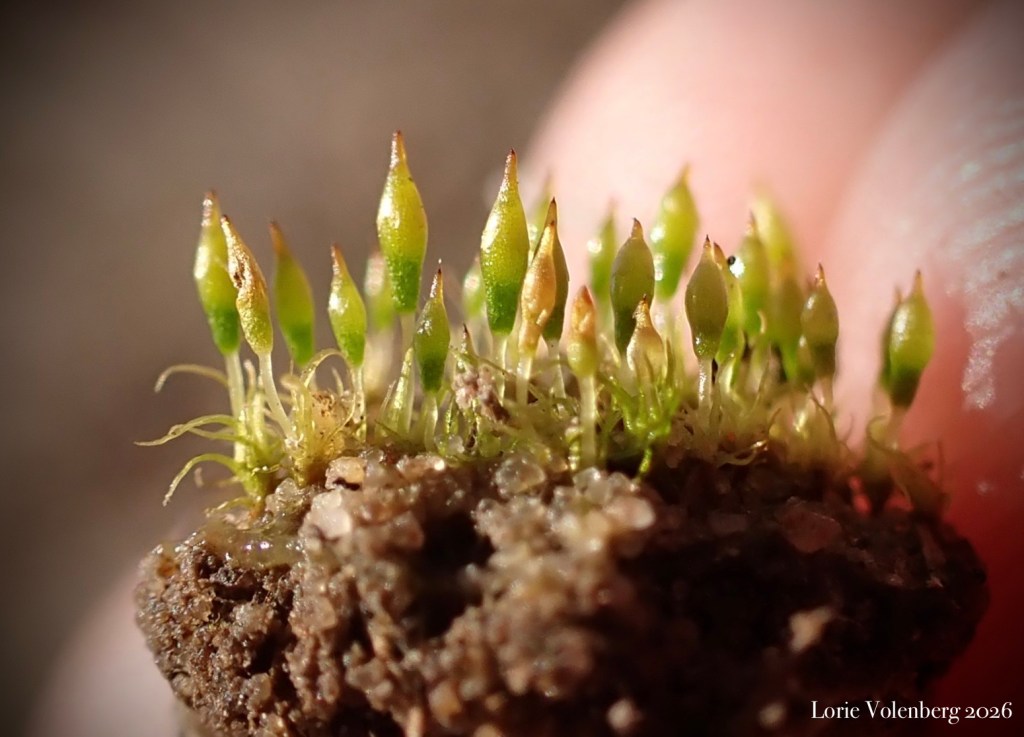
Though still maturing, you can start to make out the fun, bottle rocket shape of the capsules.
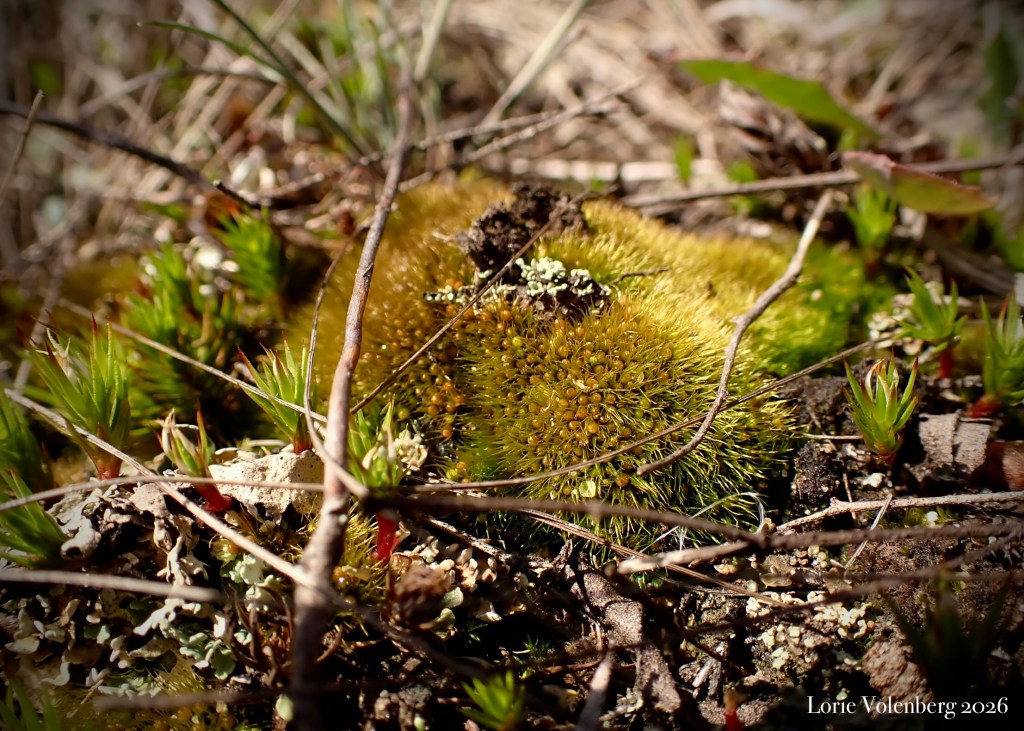
Plueridium subulatum could be found in dense populations such as seen below, or buried within grass litter with just a few gametophytes.
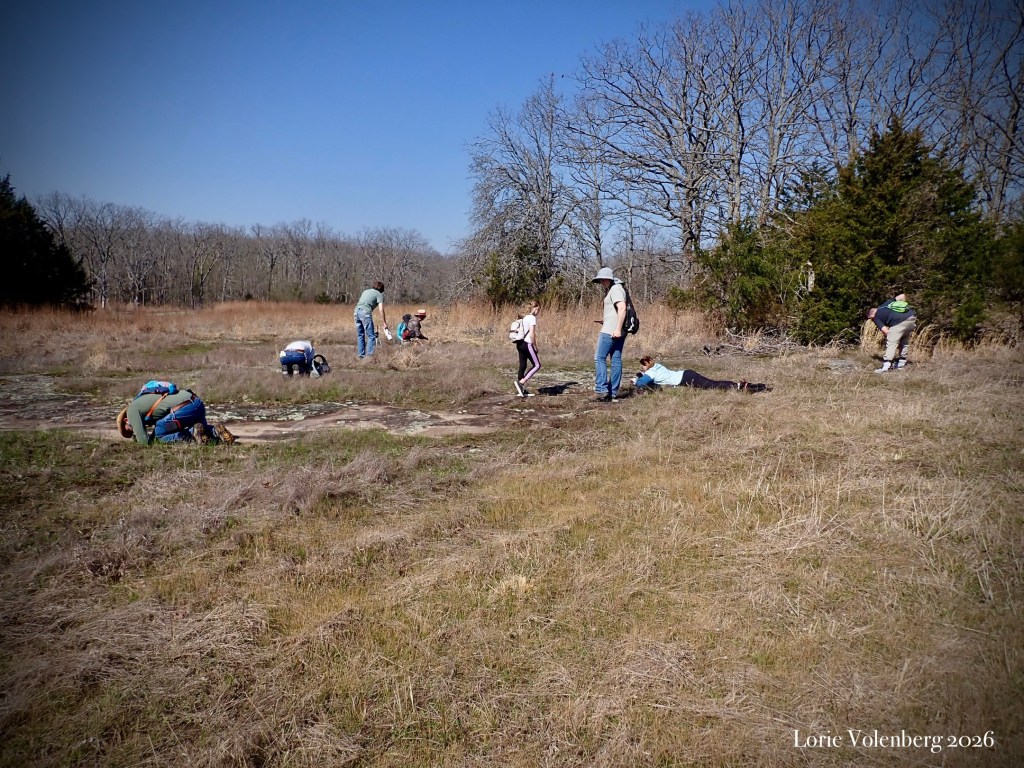
We finally made it to the first part of the glade, and I loved how everyone just dove right in! So many tiny things to find. Several liverwort species were found growing on the soil around the exposed sandstone bedrock of the glade. Riccia campbelliana and R. tenella were the first to be found.
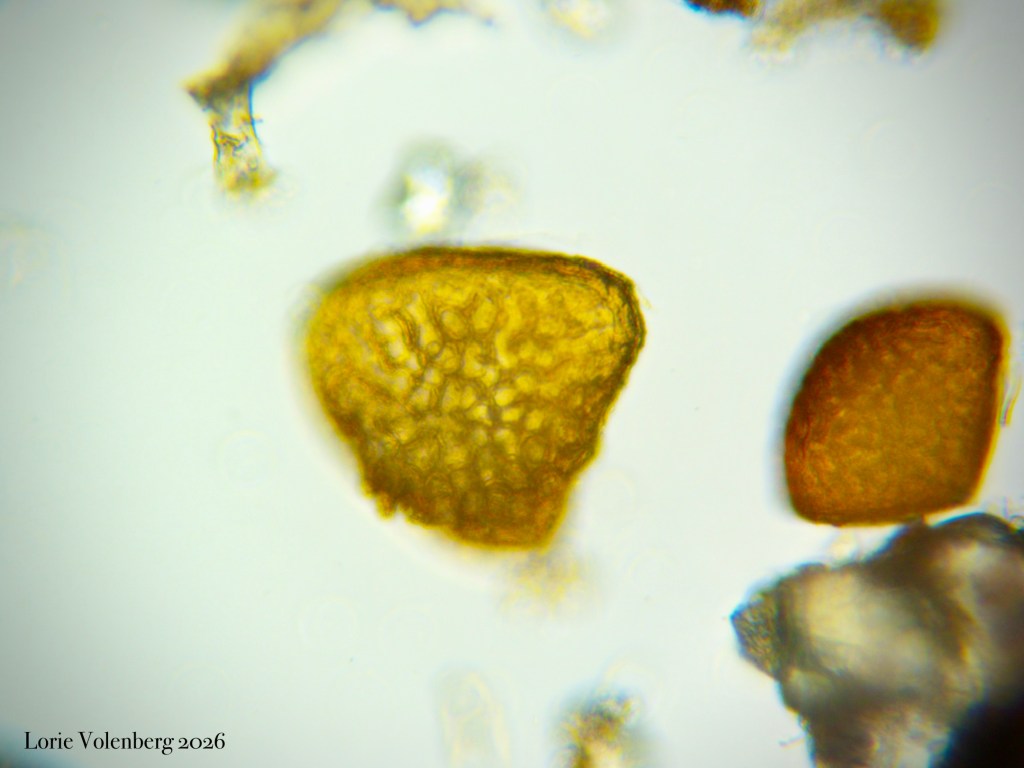
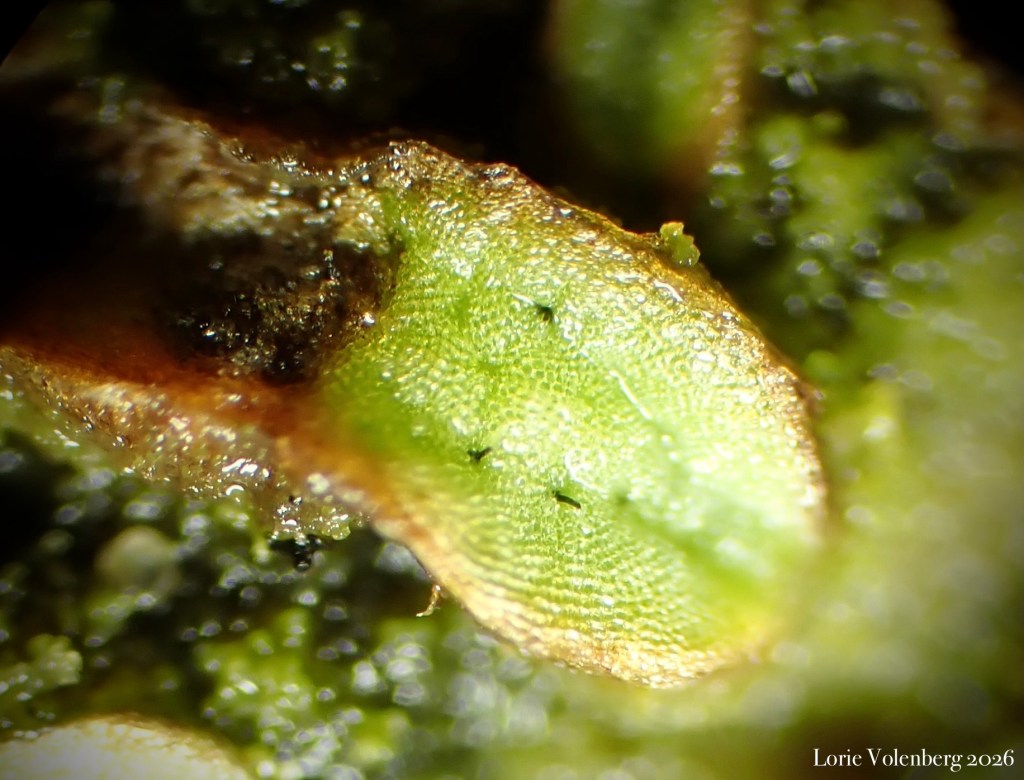
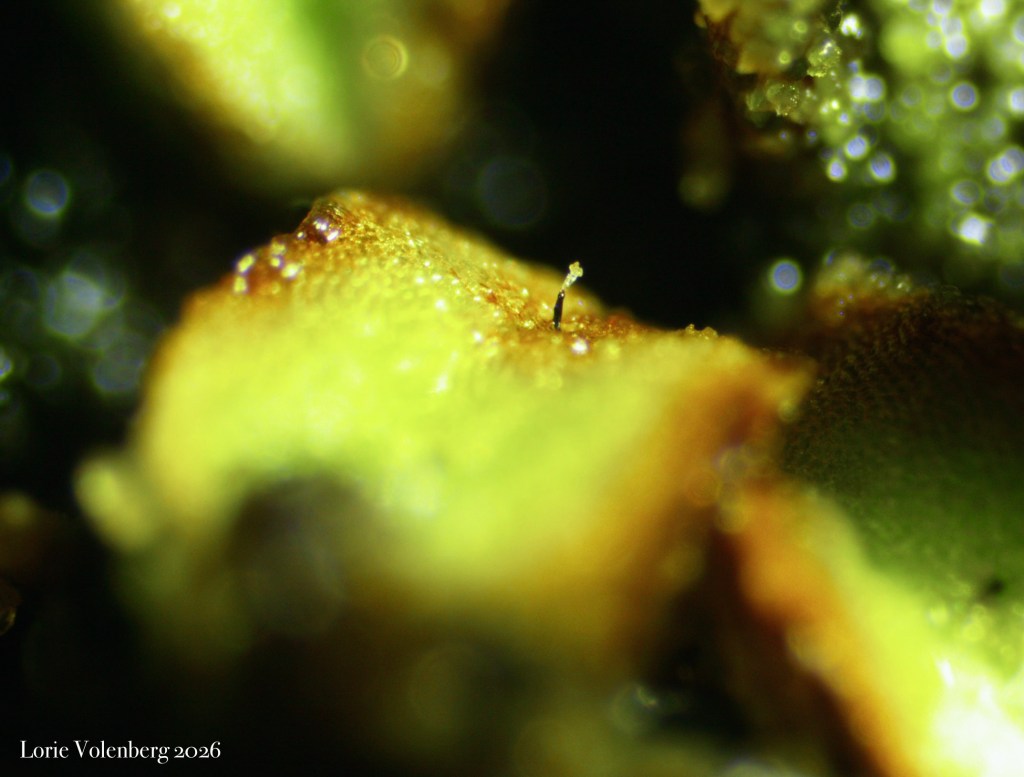
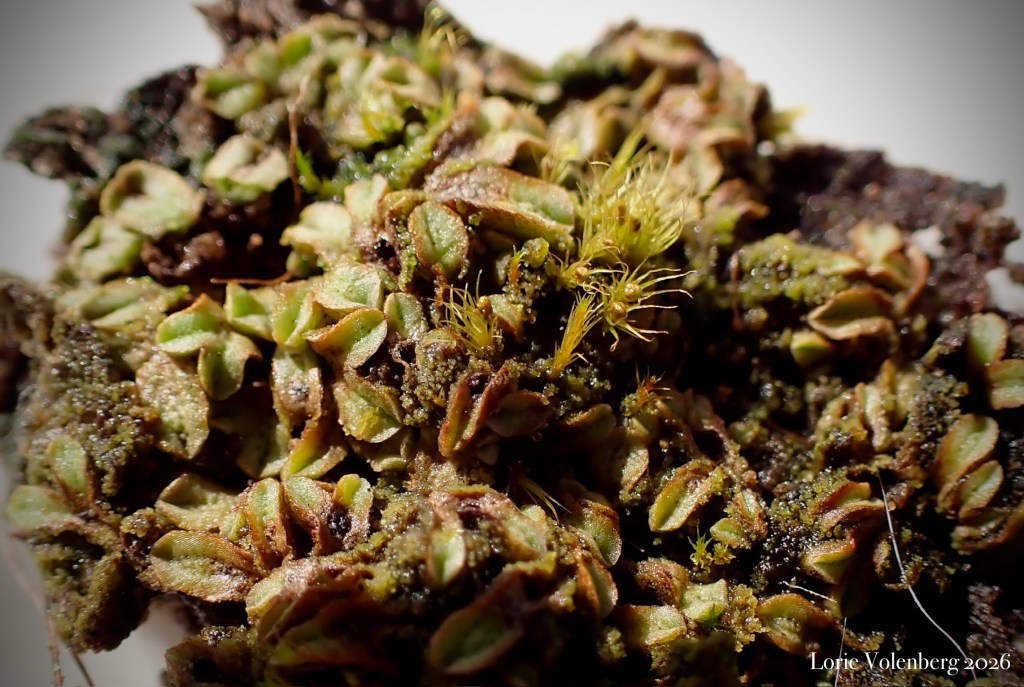
Above all: Riccia campbelliana. Top left: The spore showing its interesting reticulation pattern; Top middle: The black “hairs” are actually exposed necks of the archegonia, which is common to see in this species; Top right: A close-up of the exposed archegonial neck; Bottom: This species is large for a Riccia and has salmon-colored edges. The moss Pleuridium subulatum can be seen intermingled with this liverwort.
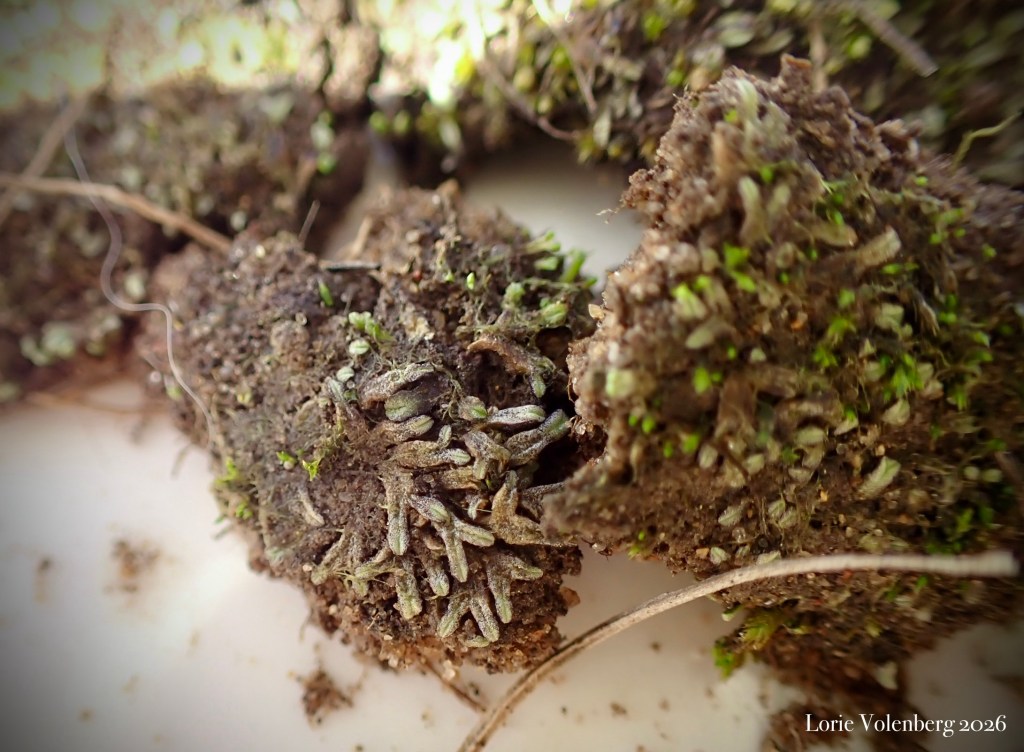
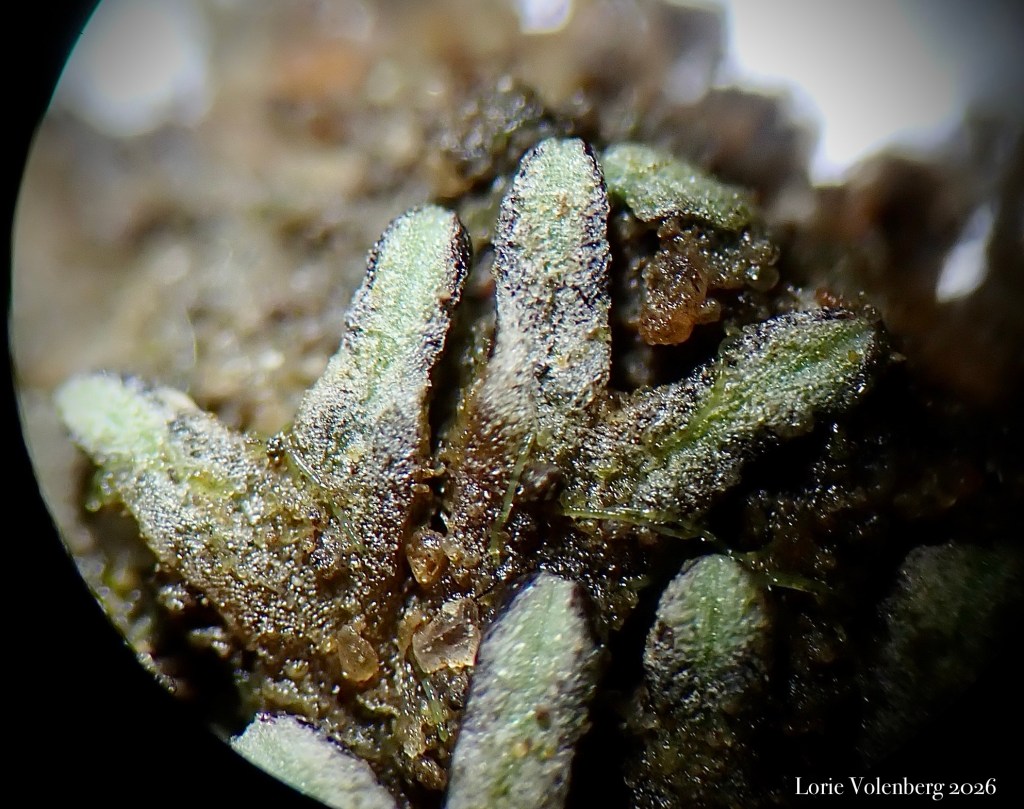
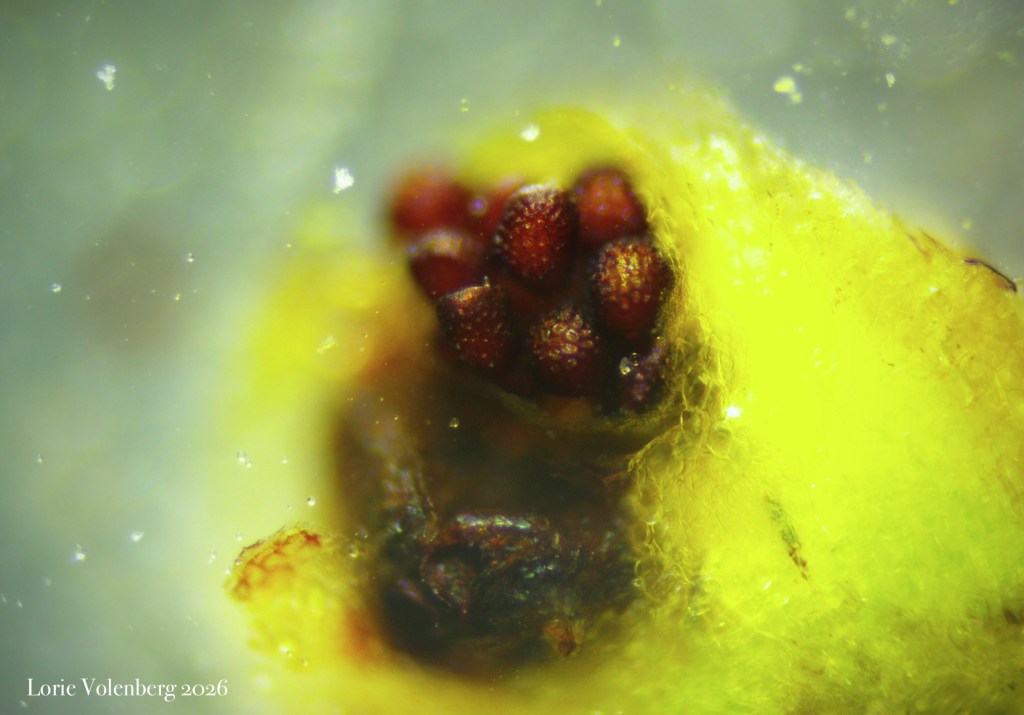
Above all: Riccia tenella. Above left: This species has light purple to almost black scales underneath that can be seen sometimes from the top as the epidermis starts to collapse; Above middle: The whiteness of the top epidermal layer as it dries out “may” be a helpful diagnostic feature; Above right: The archegonia are usually bulging ventrally, and indeed, the spores will be released on the ventral side when fully mature.
Other liverwort species found at the edge were Asterella tenella, Fossombronia porphyrorhiza (I’m assuming this ID as this has been the major species to be found in Missouri, and capsules are necessary for ID which these did not have), and Cephaloziella divaricata.
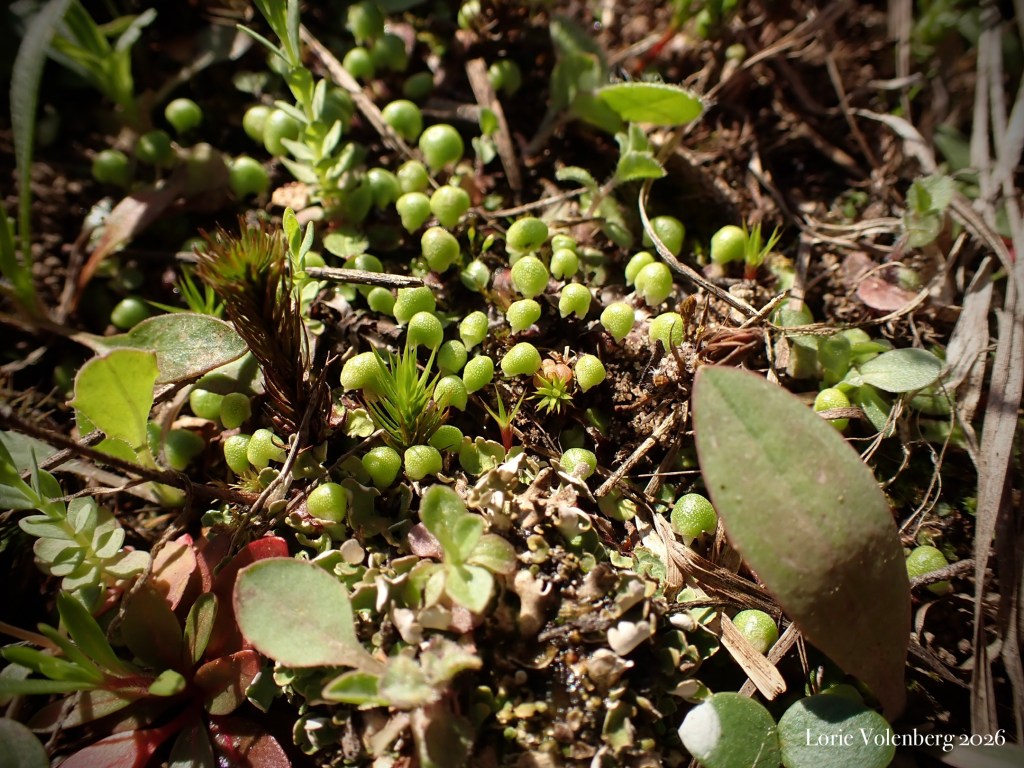
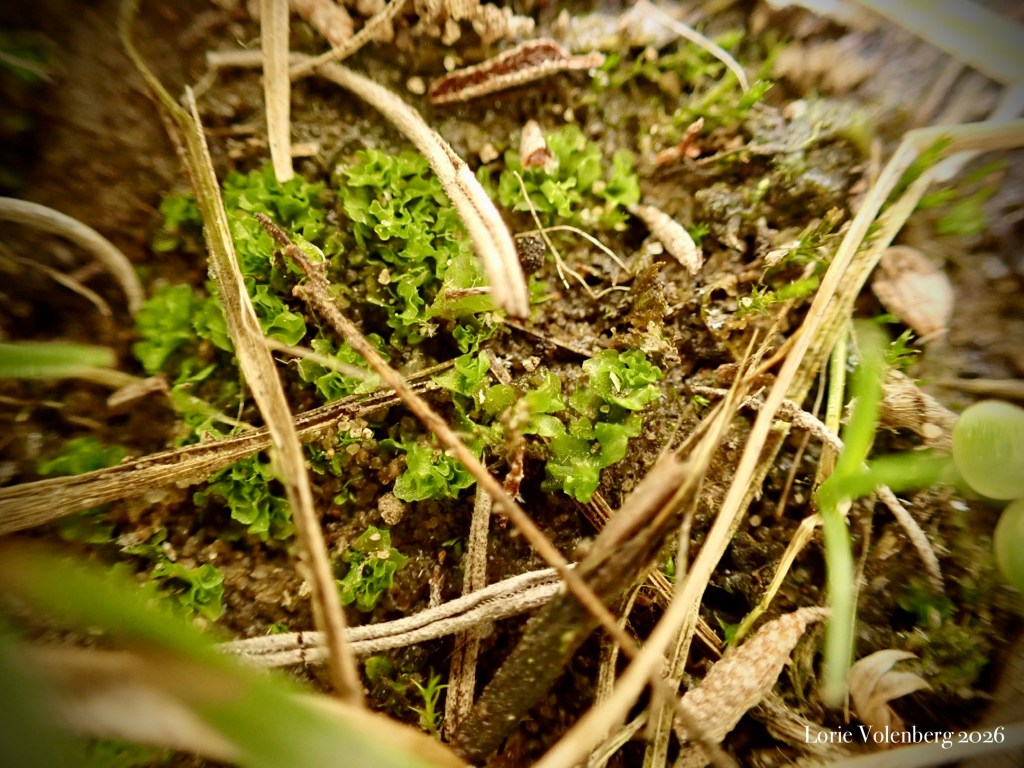
Top left: Asterella tenella with its archegoniophores; Top right: Fossombronia divaricata.
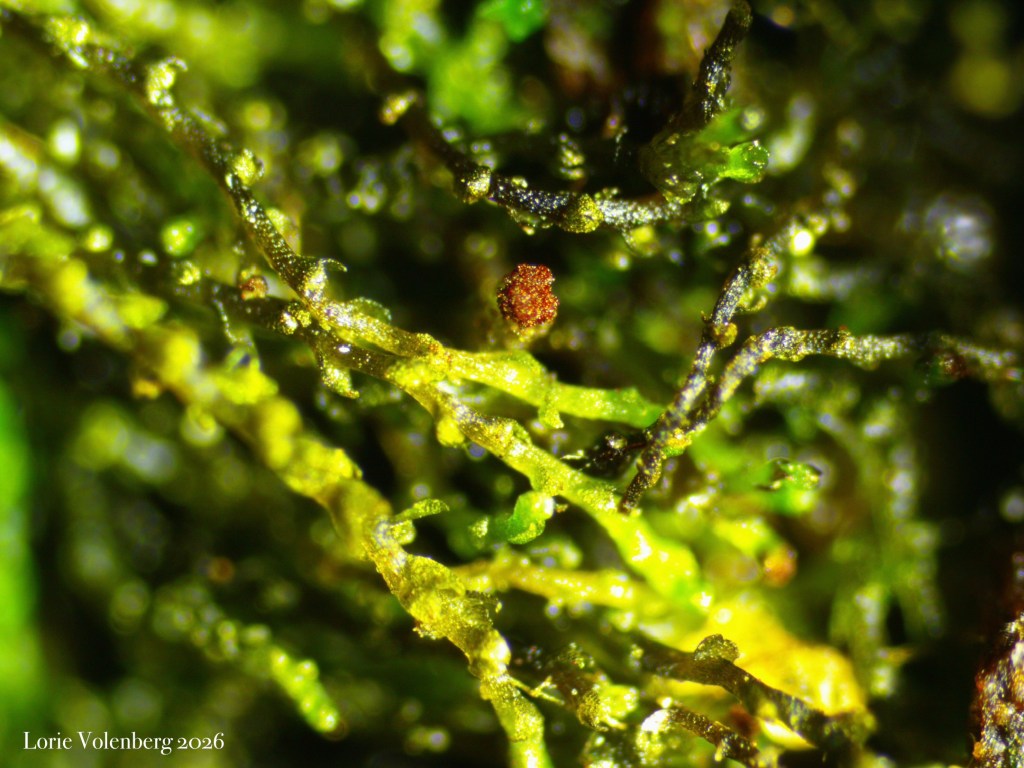
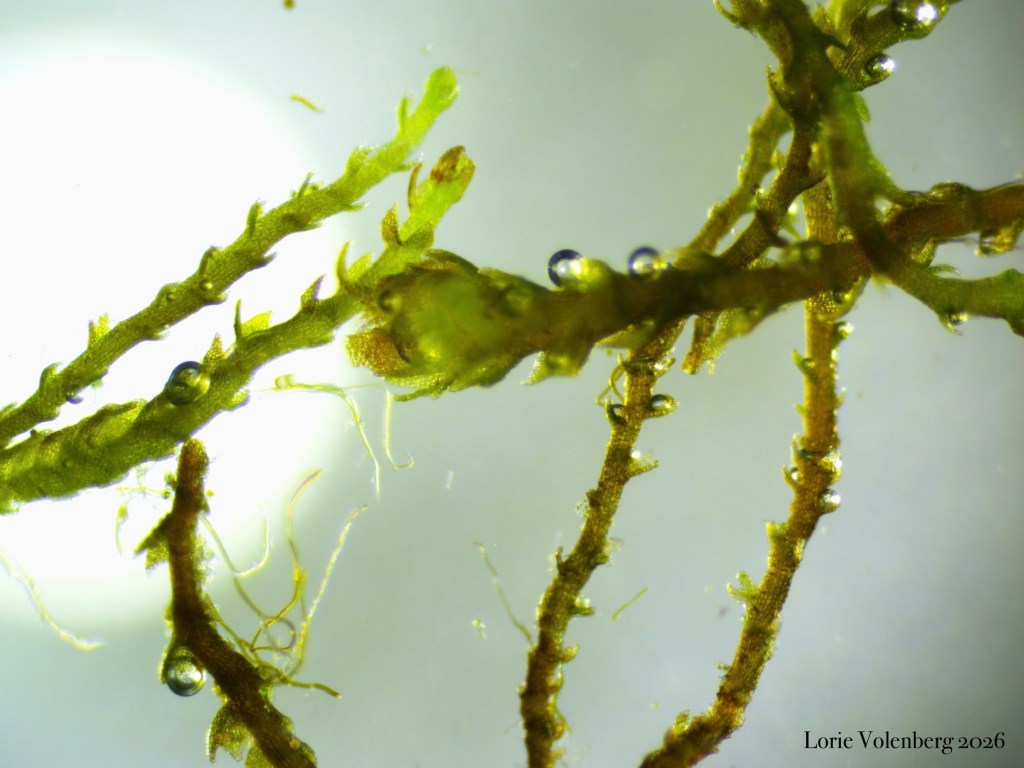
The leaves are extremely tiny, often under 0.2mm long. This population was producing gemma (the brownish tip you see) along with perianths.
A perianth forming at the end of a shoot (sexual reproduction).
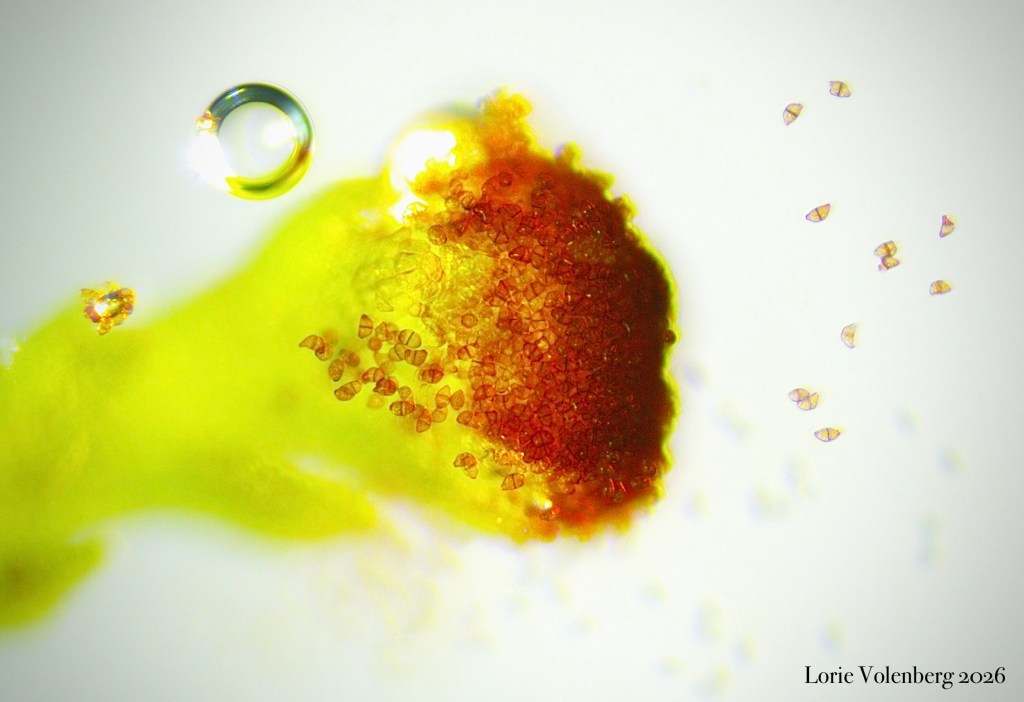
The cute gemma (asexual reproduction).
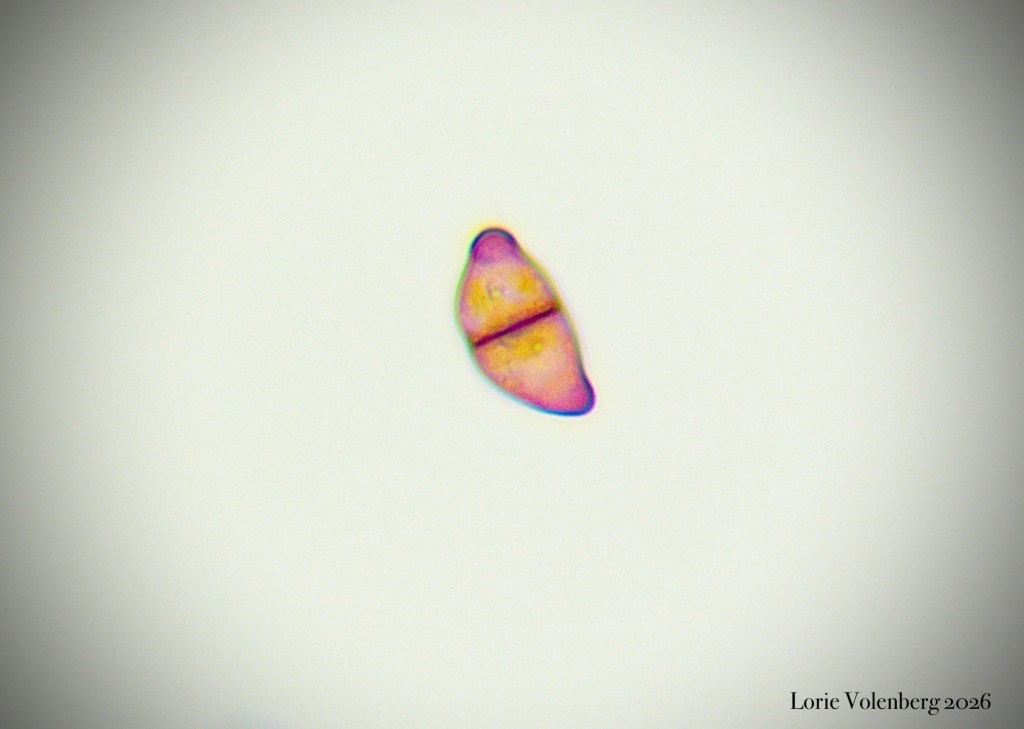
There were several mosses to see of course, and a few more “new to me to see”, such as Pleuridium sullivantii. There was another very interesting species that Blake had found, but that will be his very cool story to share! Just a bit of foreshadowing;)
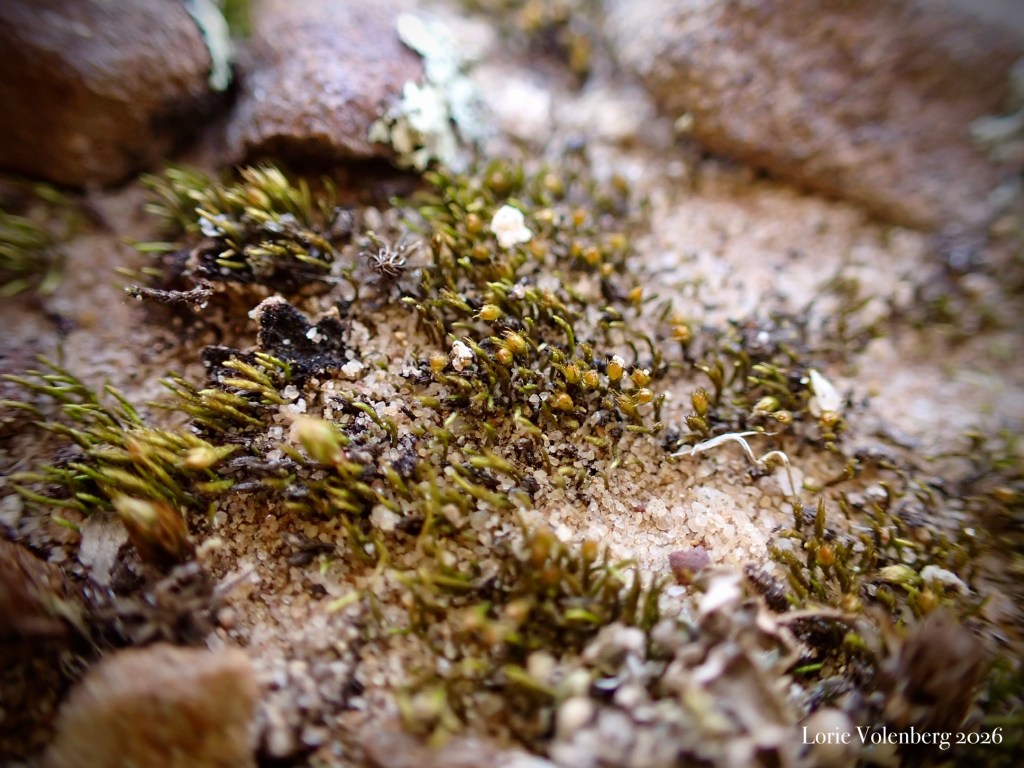
An uncommon species to come across in Missouri is Polytrichum piliferum, which is very distinguishable by its long, hyaline awns.
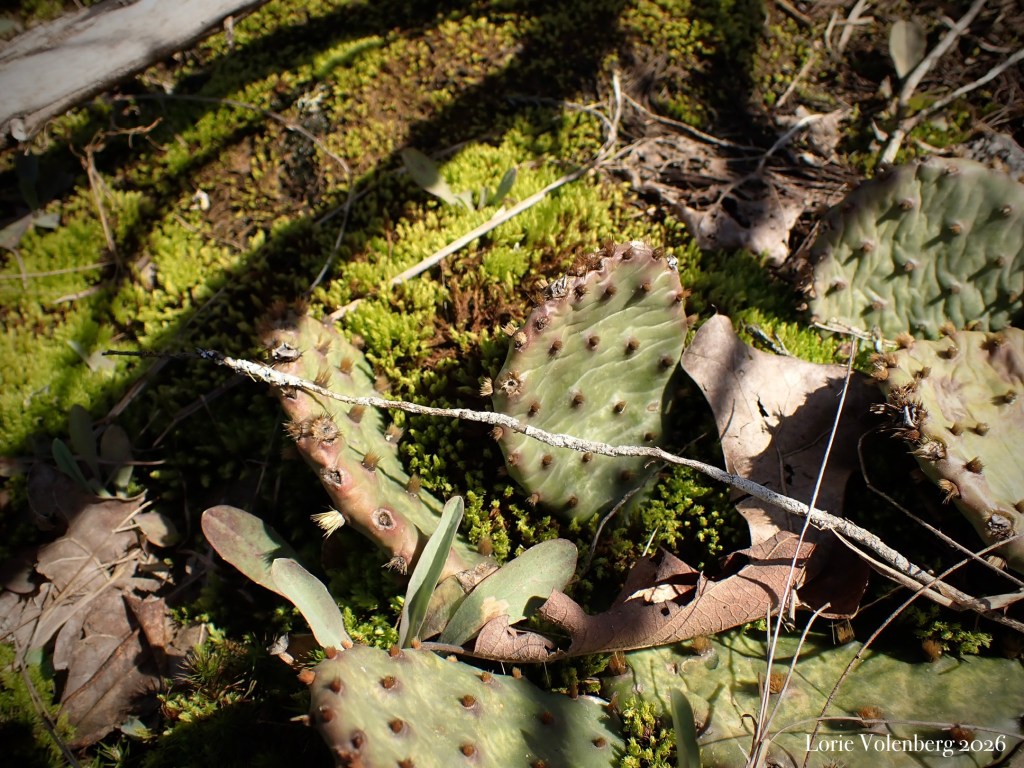
I took the photo below because of the irony: Missouri’s Prickly Pear Cactus surrounded by the moss Aulacomnium palustre. The cactus likes dry environments, while the moss likes moist environments. I think they are both living at the edge of their microenvironments within this glade.
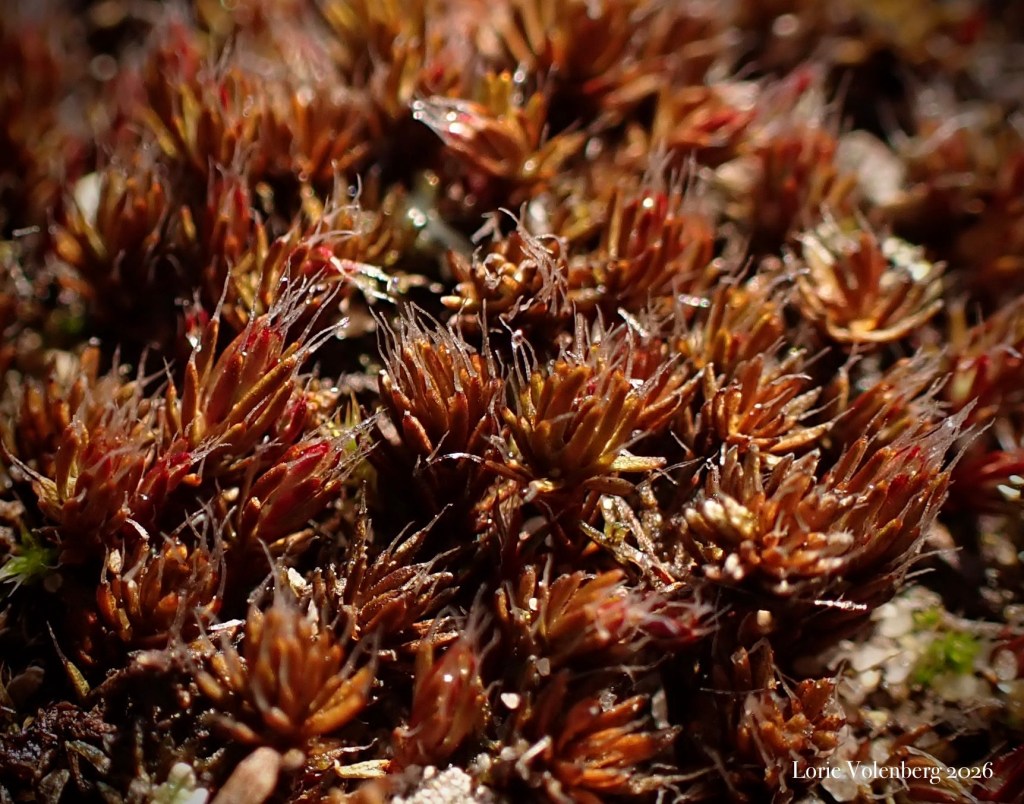
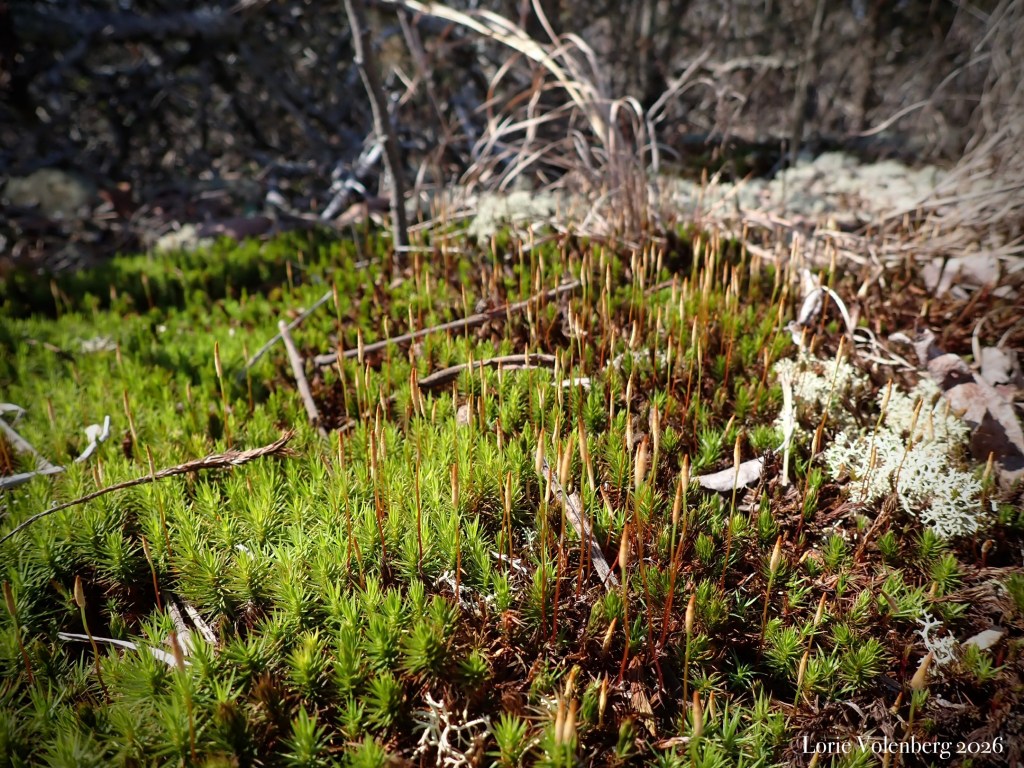
Polytrichum commune is a common component of sandstone glades.
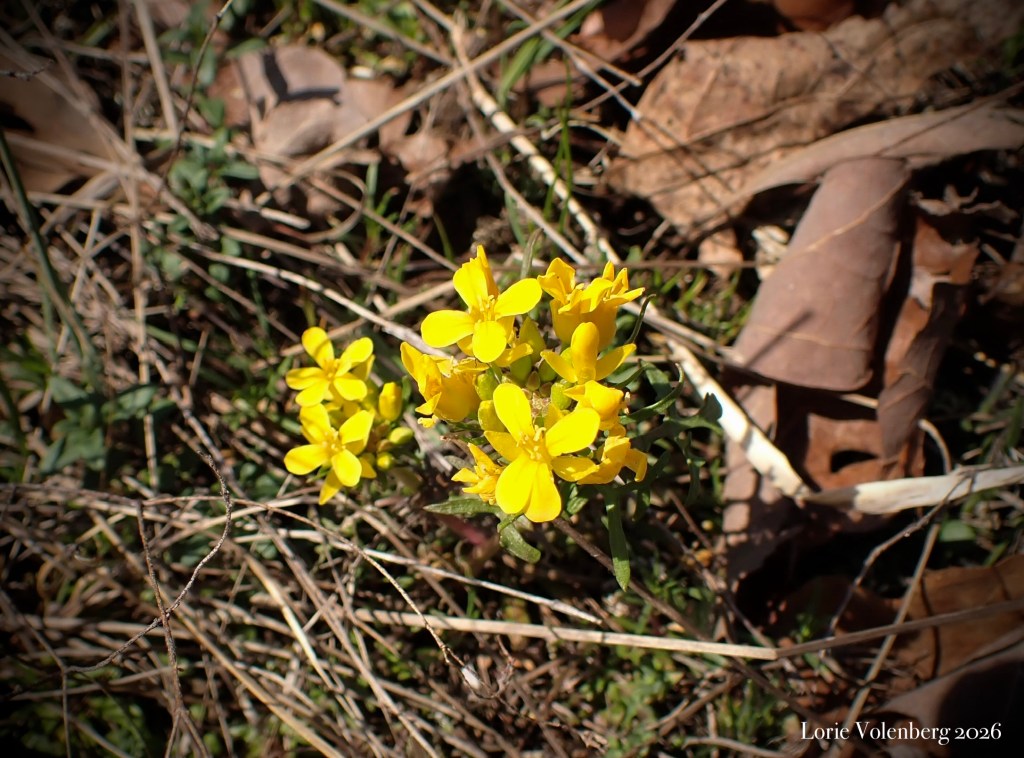
A few vascular plants to note: The very tiny Geocarpon minimum was blooming, and so was Selenia aurea. Both may be found in sandstone glade/rocky areas in southwestern Missouri.
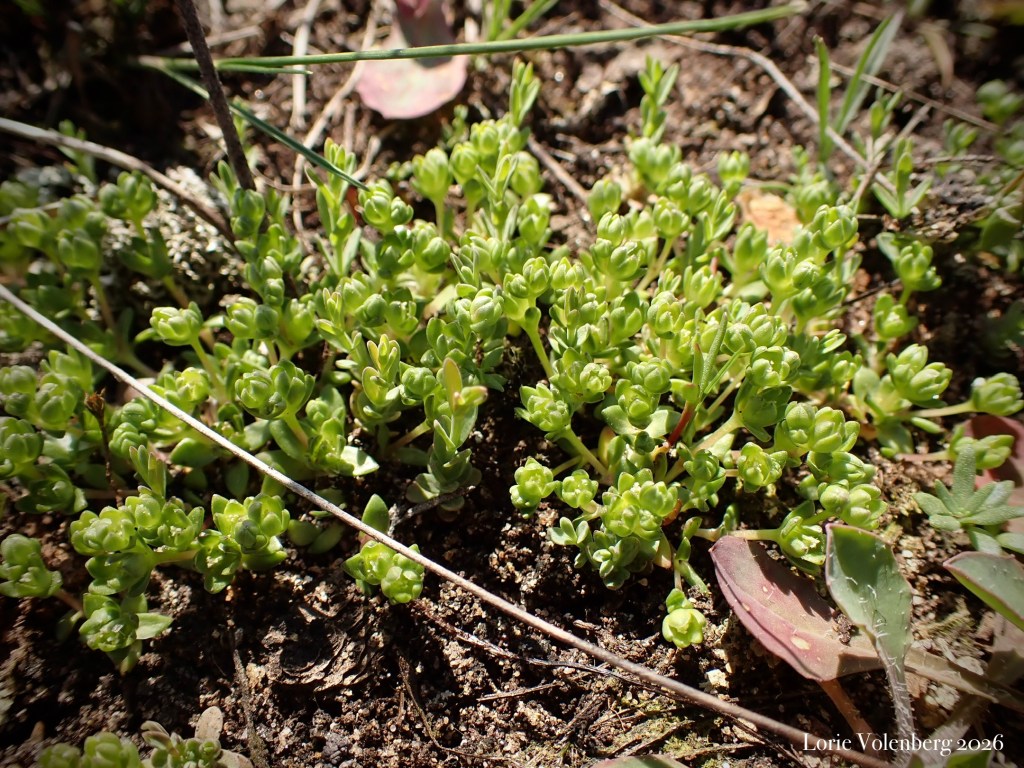
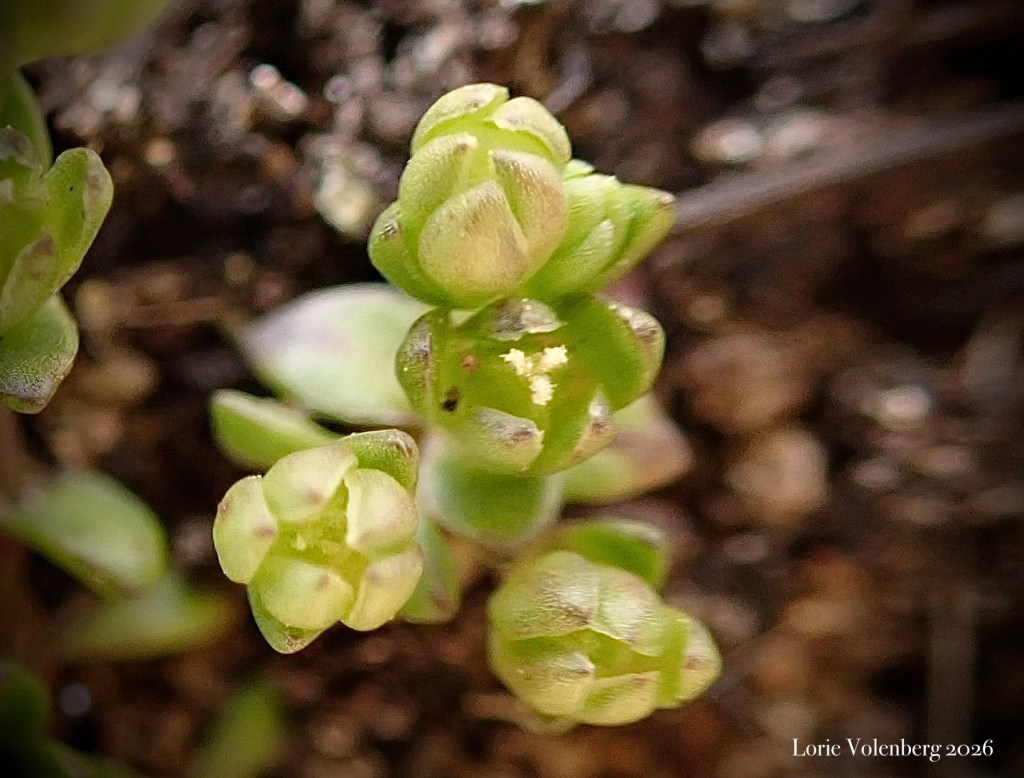
The flowers of Geocarpon minimum.
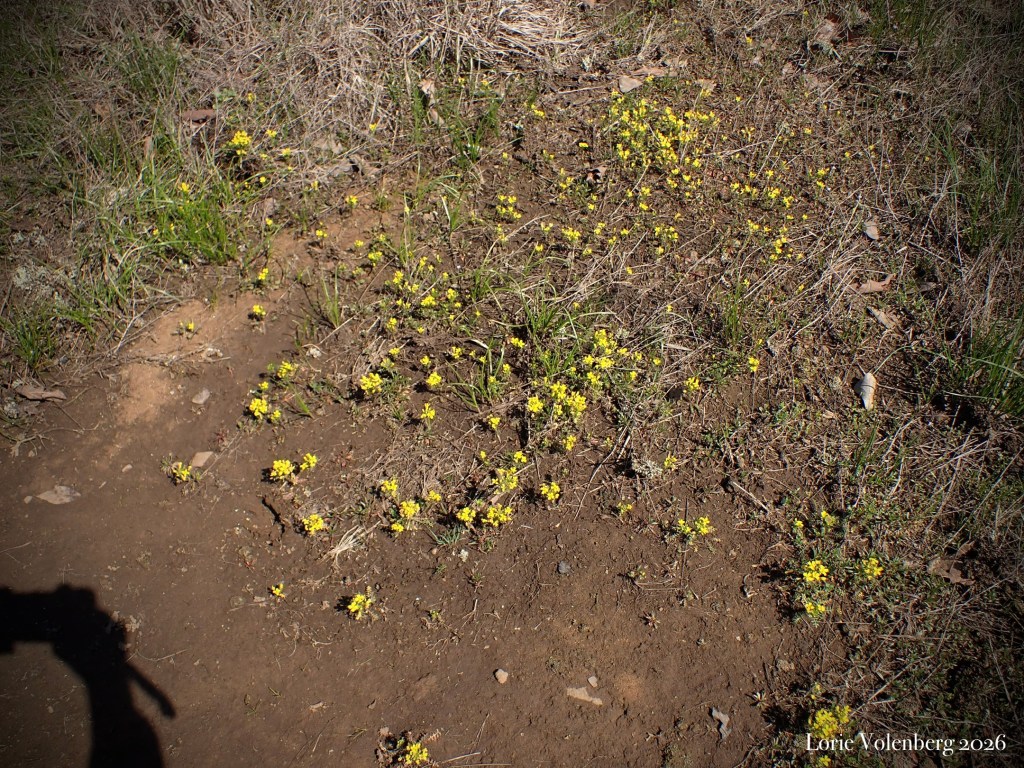
The flowers of Selenia aurea.
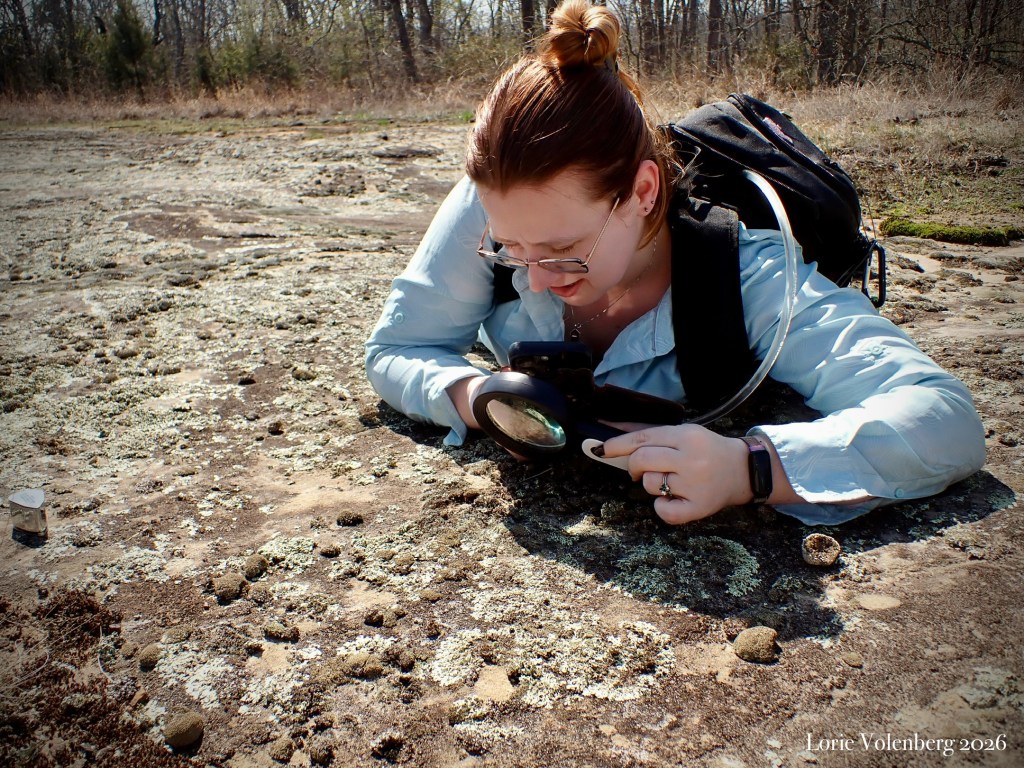
It really was a fantastic day, and I enjoyed seeing everyone get into the exploration of these tiny plants. We were able to add several more species to the official vouchered checklist of this CA, and as a reminder, I do have collecting permits with MDC to do so. There are more crawls scheduled for the year, so check out this page to learn how to join the Missouri Bryophyte Crawl Club.
Until next time, happy mossing!!

 Mosses of Missouri and Beyond
Leave a comment