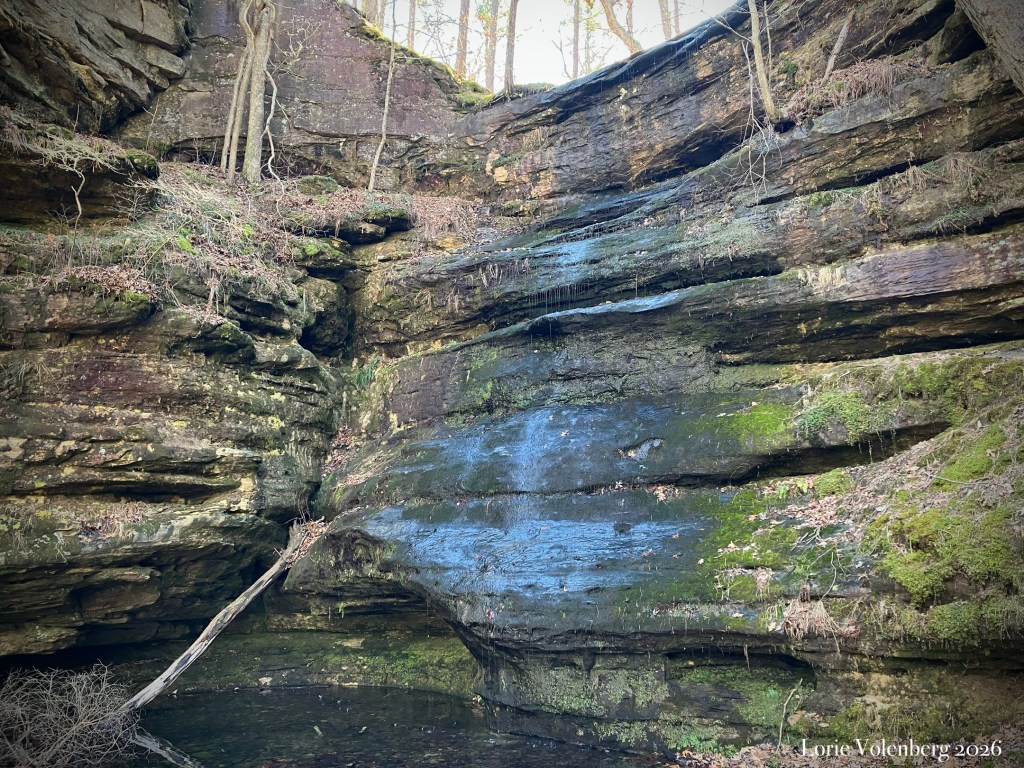
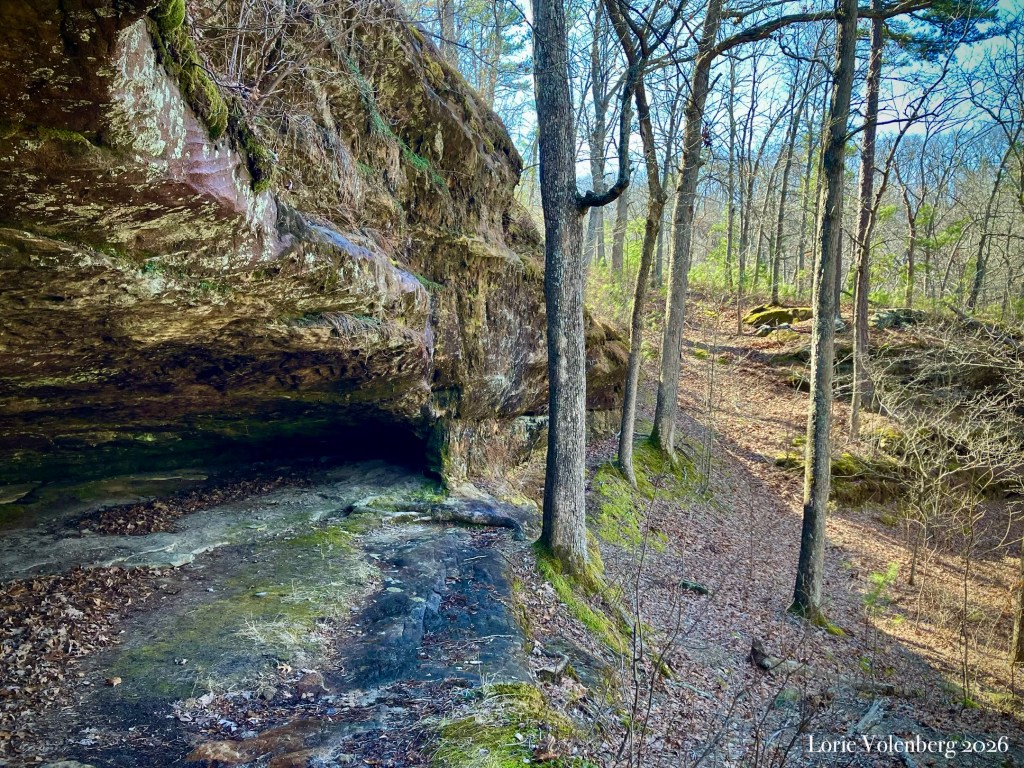
Sandstone canyons tend to offer rich, bryophyte diversity, and Hickory Canyons NA is no exception. Settle in with a cup of tea while I share just a thimbleful of what all can be found at this beautiful place. As is with Pickle Creek NA just down the road, these places are being loved to death, so please respect the leave no trace principles, and stay on the trails while visiting these special places. As a reminder, I do have collecting permits with the MDC.
Let’s begin…
Polytrichum commune is common throughout the woodlands, and the sporophytes are just beginning to shoot up. I always love this stage as they remind me of candlesticks.
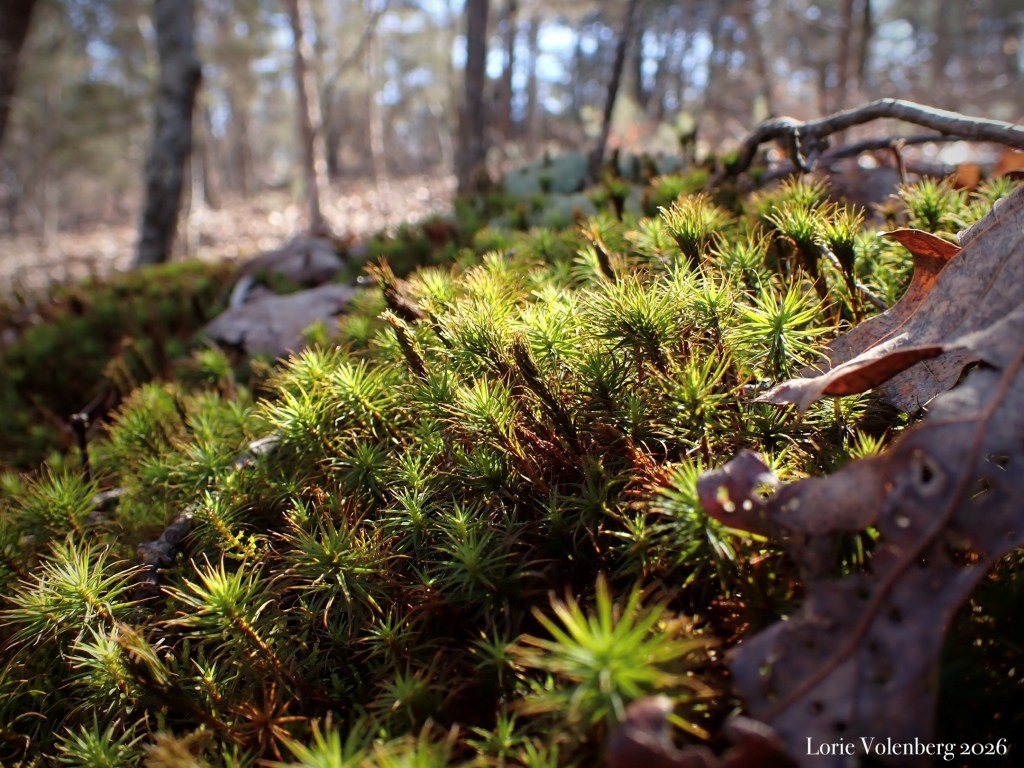
Polytrichum commune enjoying the morning sunshine.
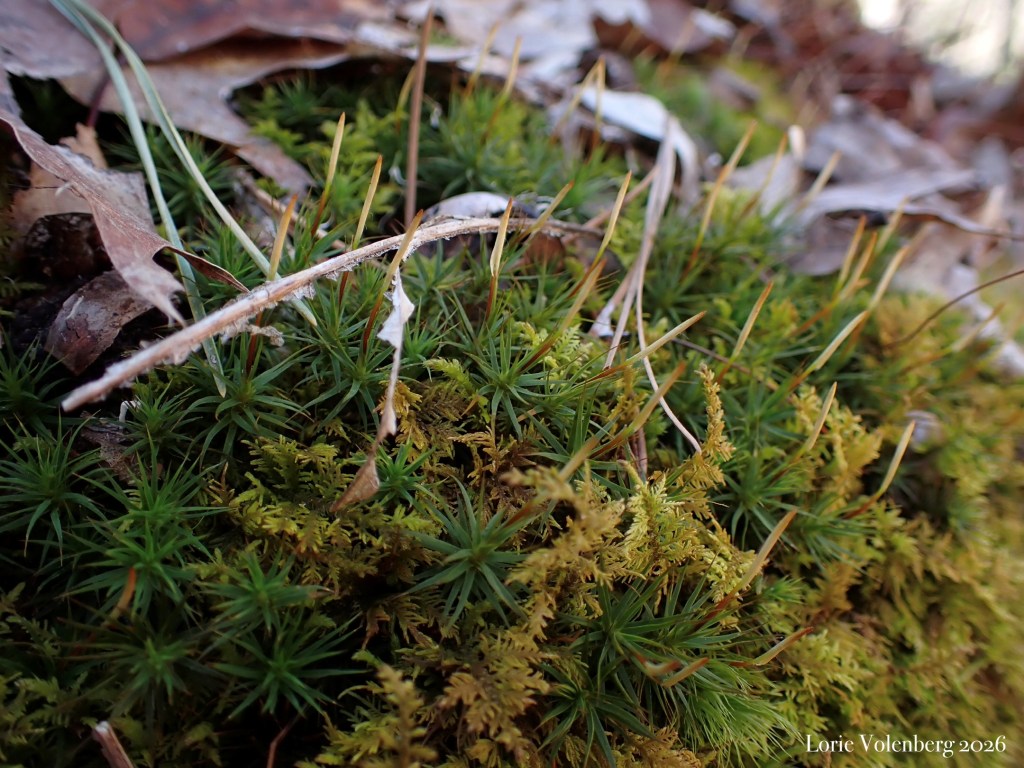
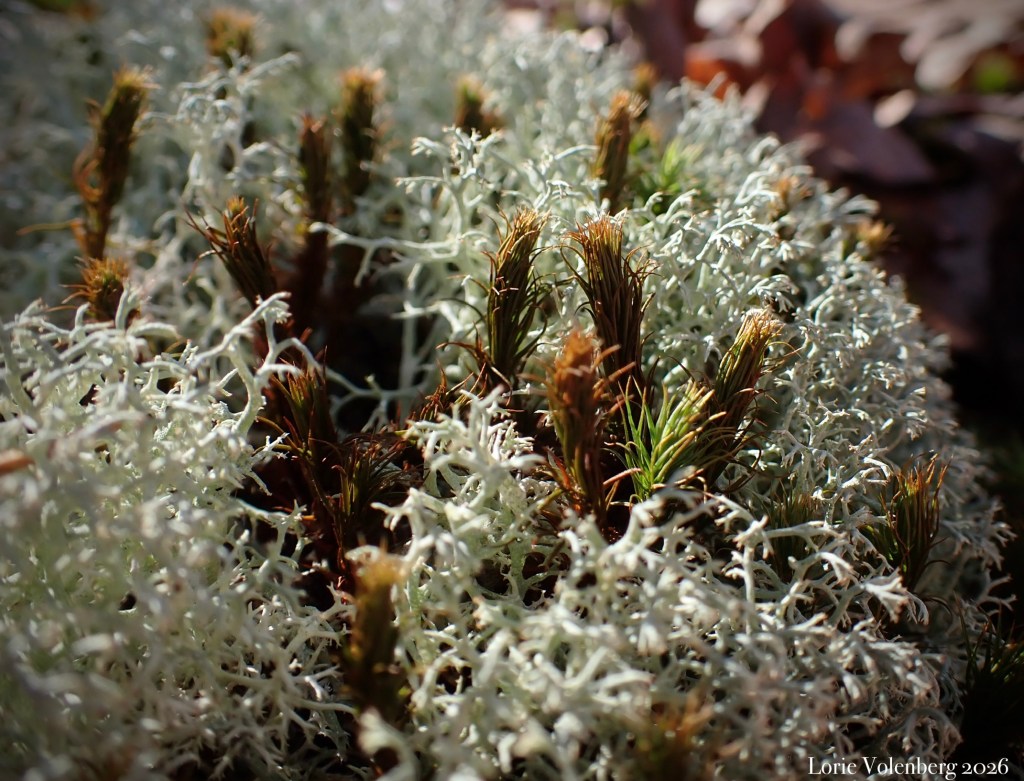
Several species of Dicranum are found here: Dicranum spurium, D. condensatum, and D. scoparium will be often found on soil, while D. montanum and D. fulvum can be seen growing on the rocks.
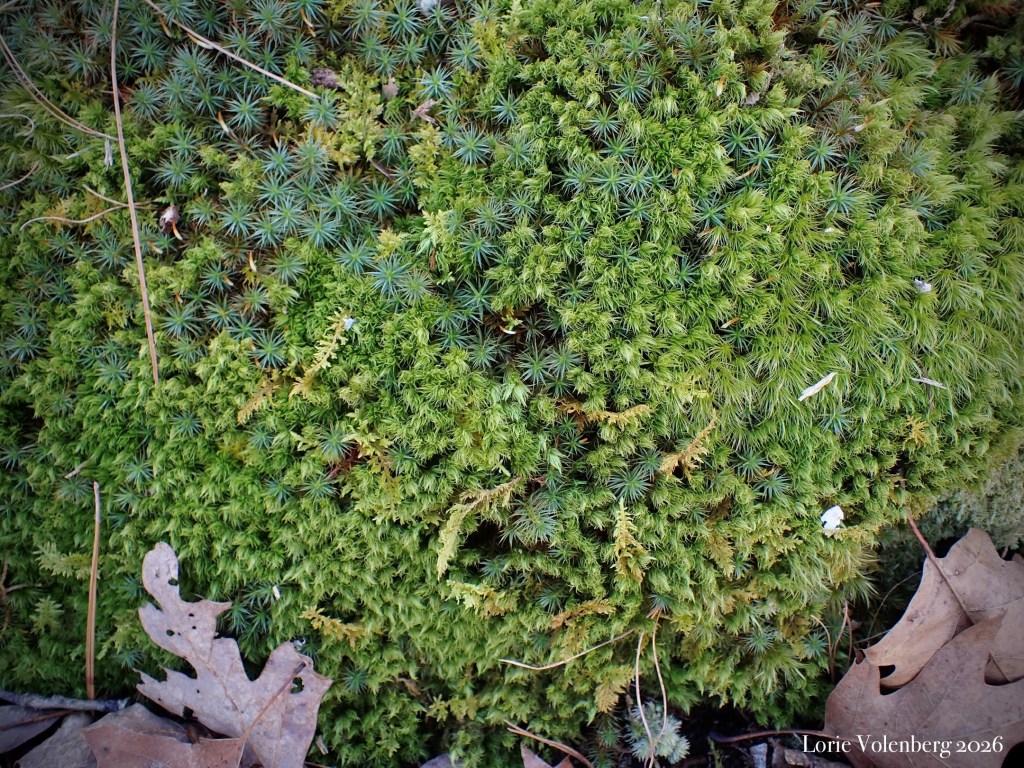
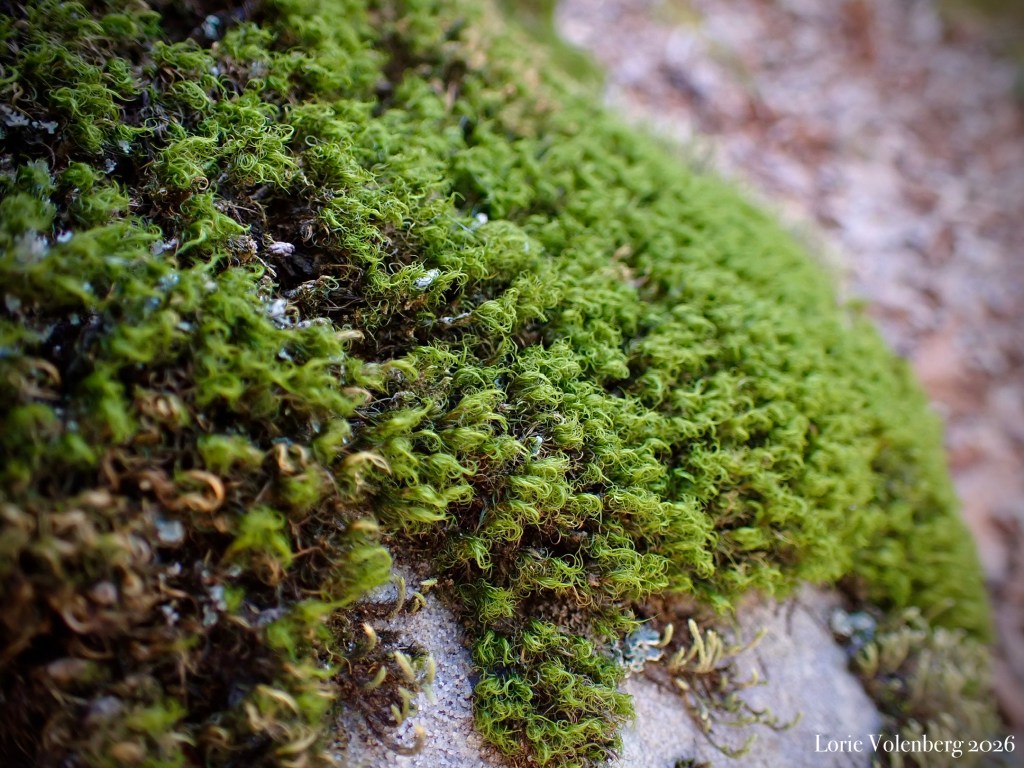
Above left: Dicranum spurium mixed with Polytrichum juniperinum and a bit of Thuidium delicatulum; Above right: Dicranum fulvum with its almost black base and bright green top.
When I find Dicranum scoparium with sporophytes, I always check to see if I can find dwarf males. If you would like to learn more about nannandry in mosses, check out my post here.
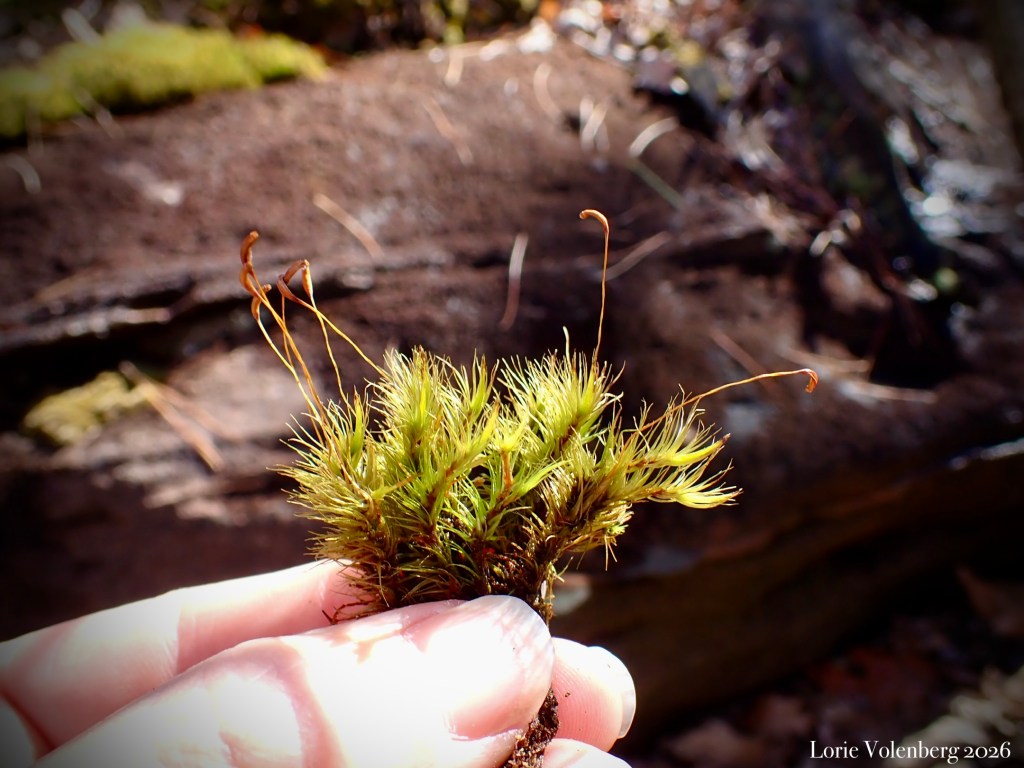
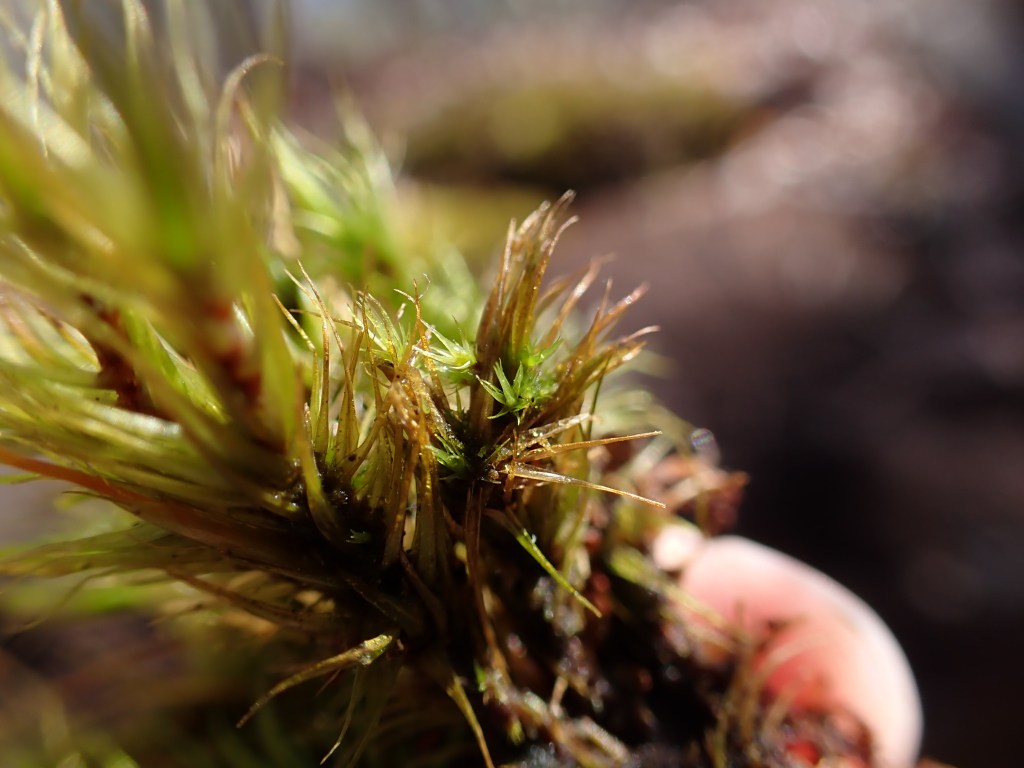
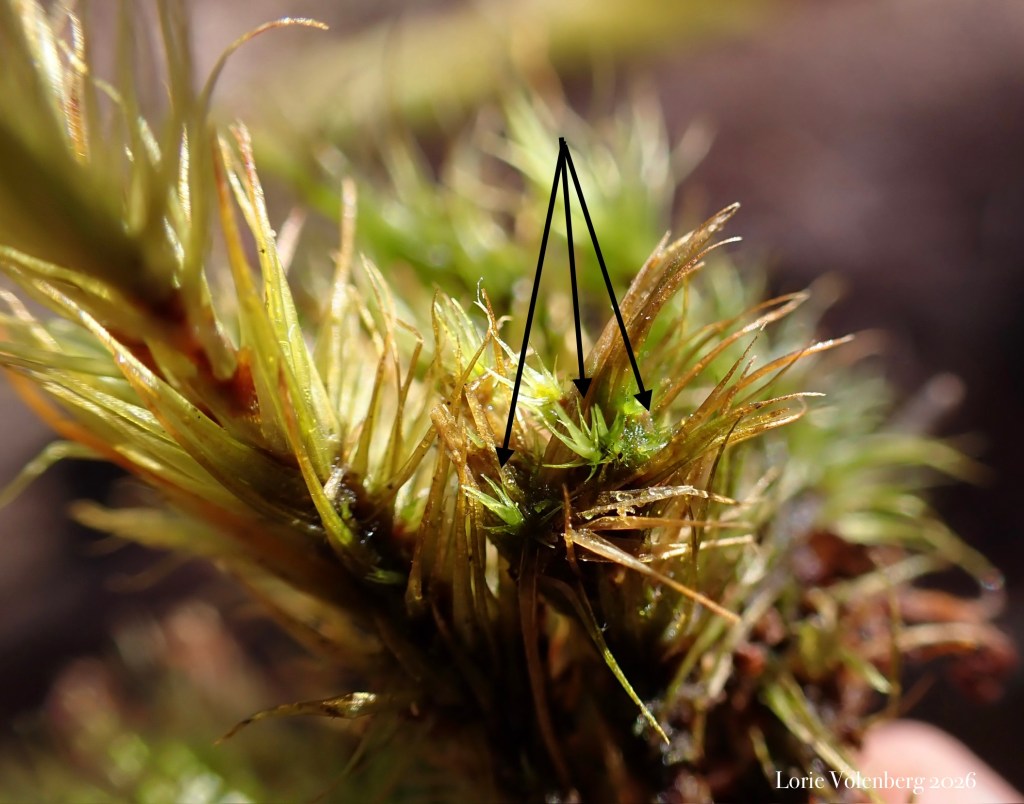
Above left: Dicranum scoparium with sporophytes, let’s see if there are little boys there; Above middle: Do you see them? Above right: How about now? The arrows are pointing to dwarf males.
Speaking of dwarf males, another species that may have dwarf males is Leucobryum glaucum. In Missouri, I find it uncommon to come across populations with sporophytes, and I saw sporophytes for the first time here a few years ago. While Dicranum females don’t seem to use any special enticements to attract male spores, thus allowing them to land anywhere to grow on them, Leucobryum females take it a bit more seriously by literally, laying out a welcome mat! The female gametophyte may deposit a layer of rhizoids within the archegonial head, thus offering a nice landing spot and place to grow for the male spore. What’s more, placement of this rhizoidal mat right above the archegonia makes fertilization then a cinch! She’s pretty smart;)
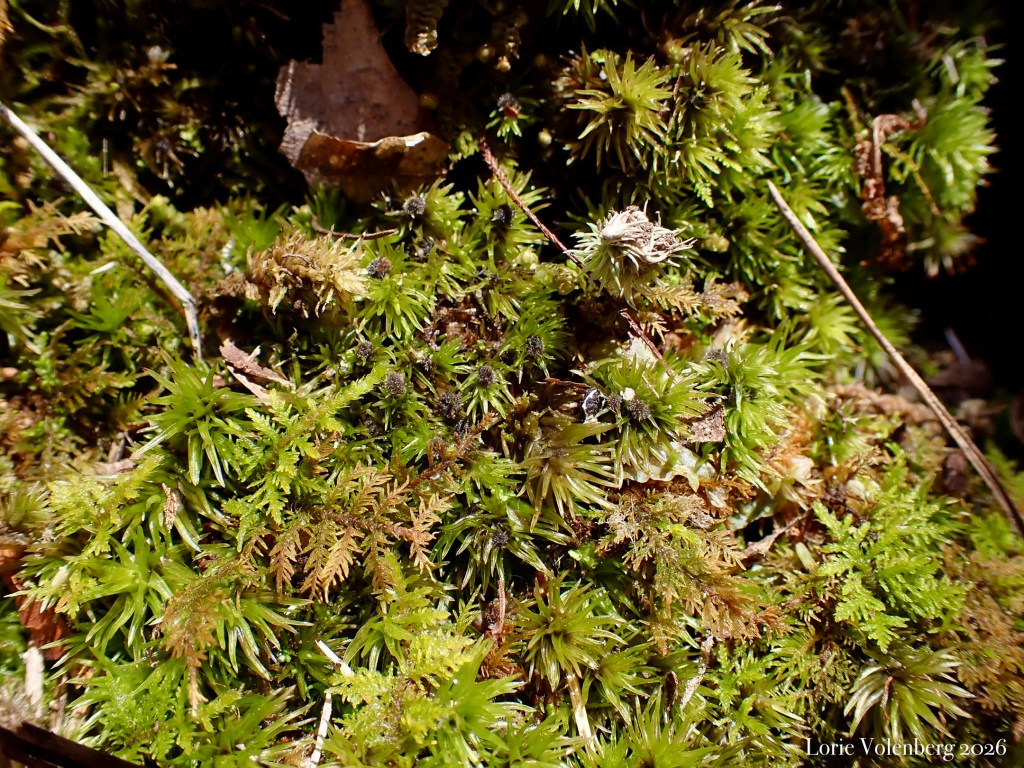
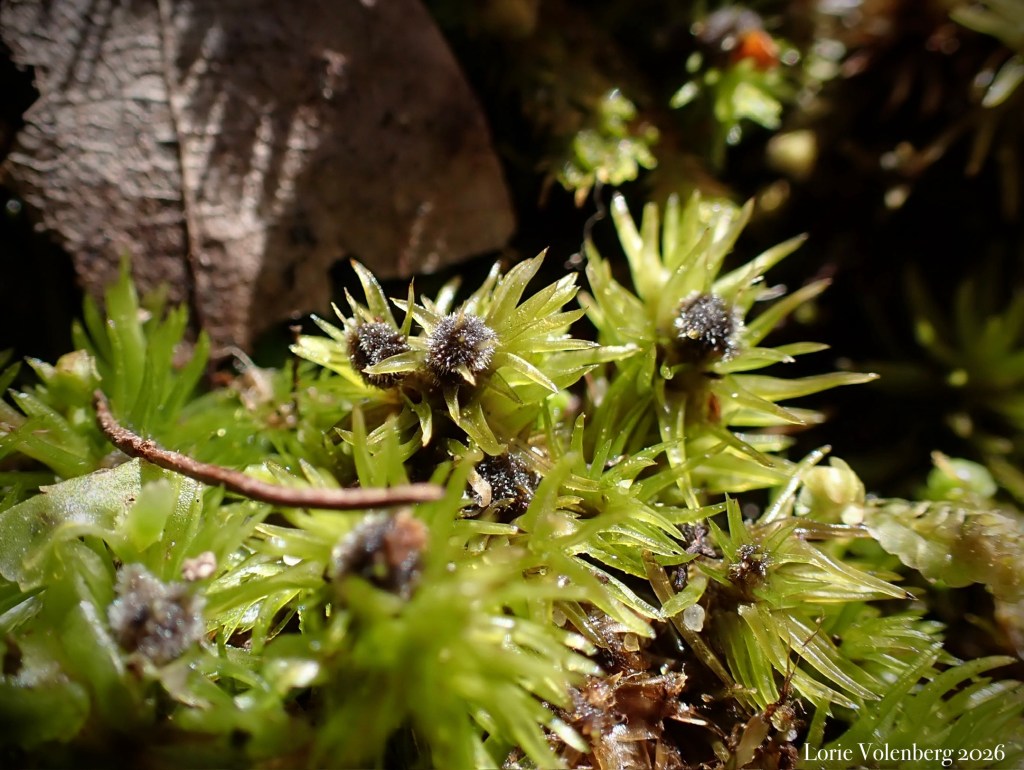
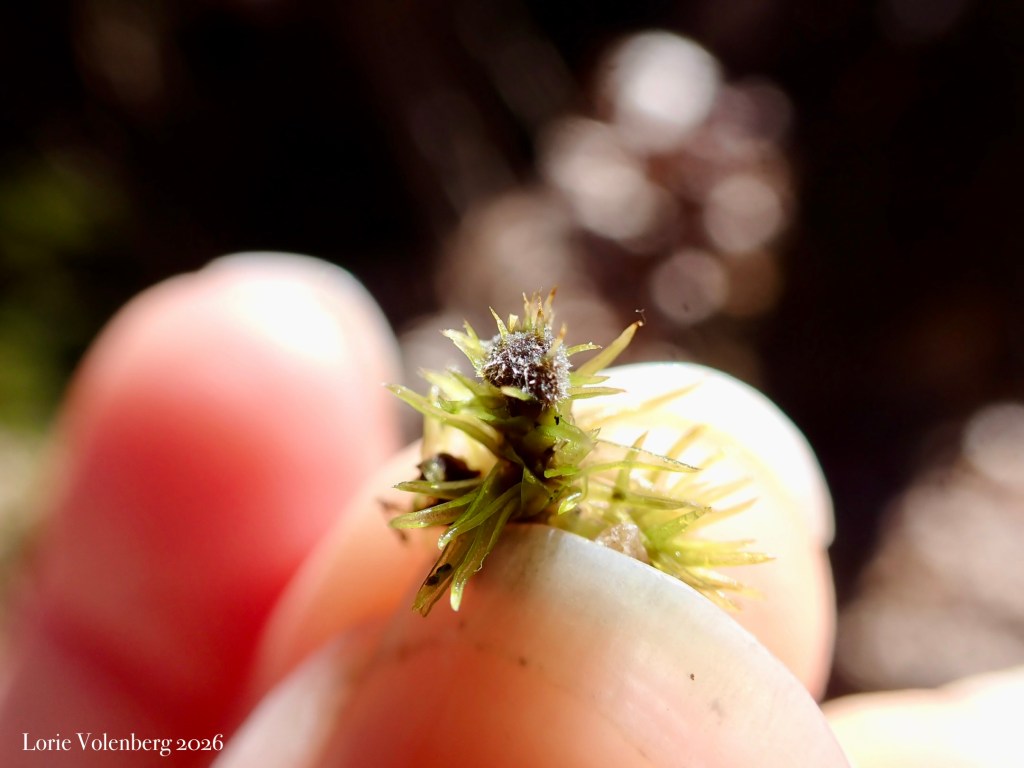
Above left: Leucobryum glaucum population with rhizoidal mats; Above middle: the grayish looking fuzzy fuzz balls are the rhizoidal mats; Above right: buried underneath the fuzzy head is the archegonium.
Underneath the microscope at home, I was unable to find any dwarf males or even spores yet, which made sense when looking at the populations with sporophytes. The capsules were not mature yet and so spores had not been released.
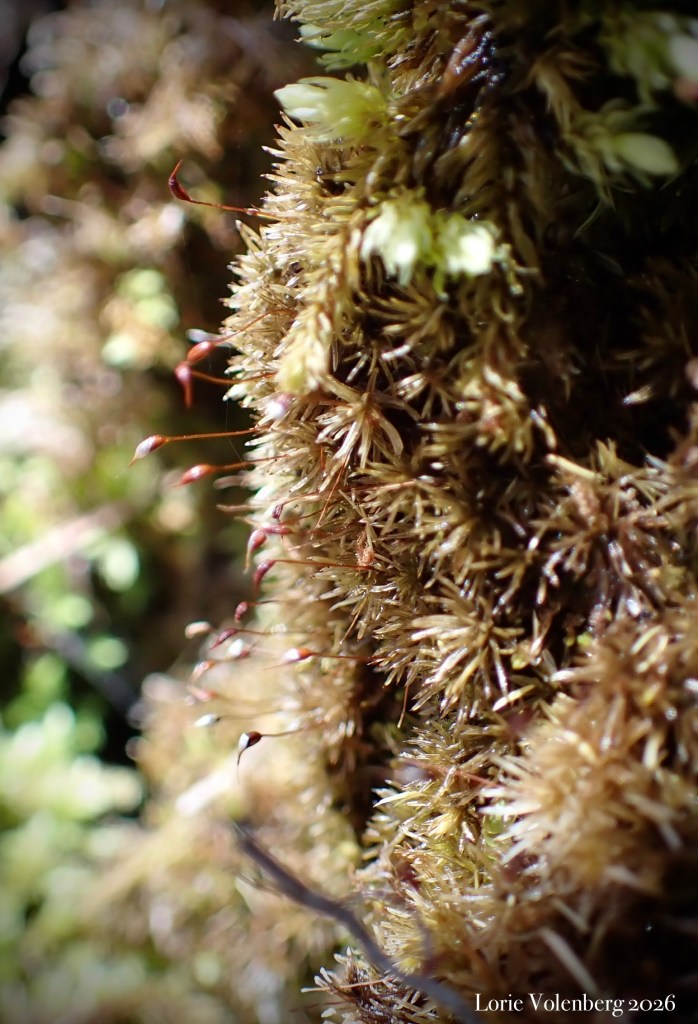
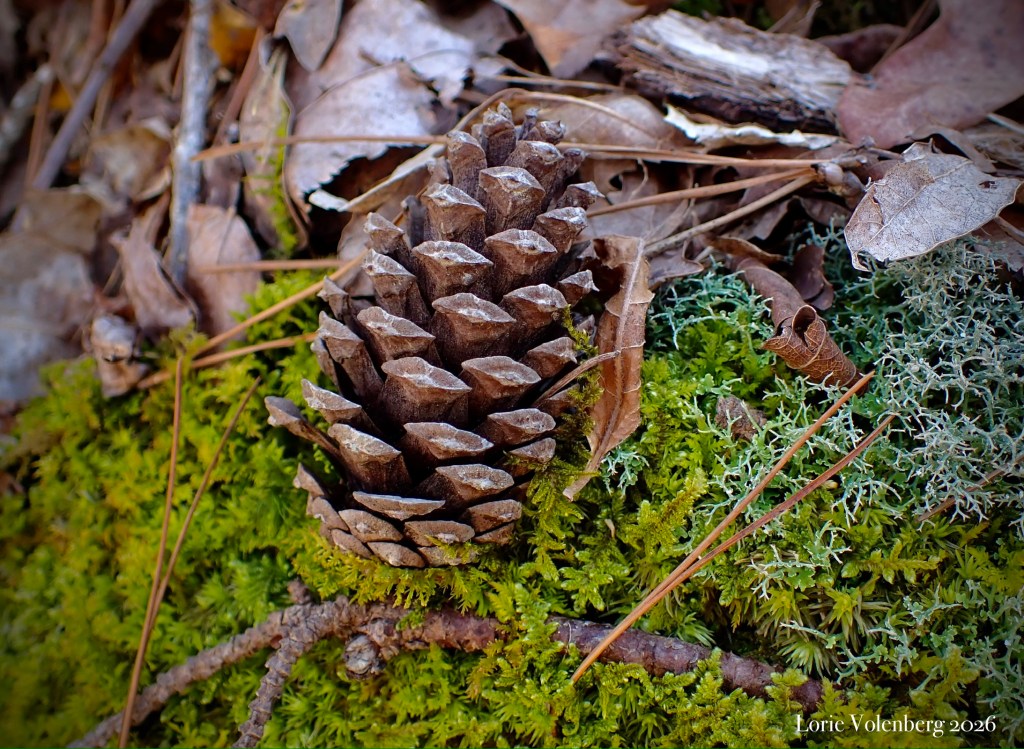
Other fun ground mosses were Pleurozium shcreberi, Hypnum (Calicladium) imponens, and Ctenidium subrectifolium.
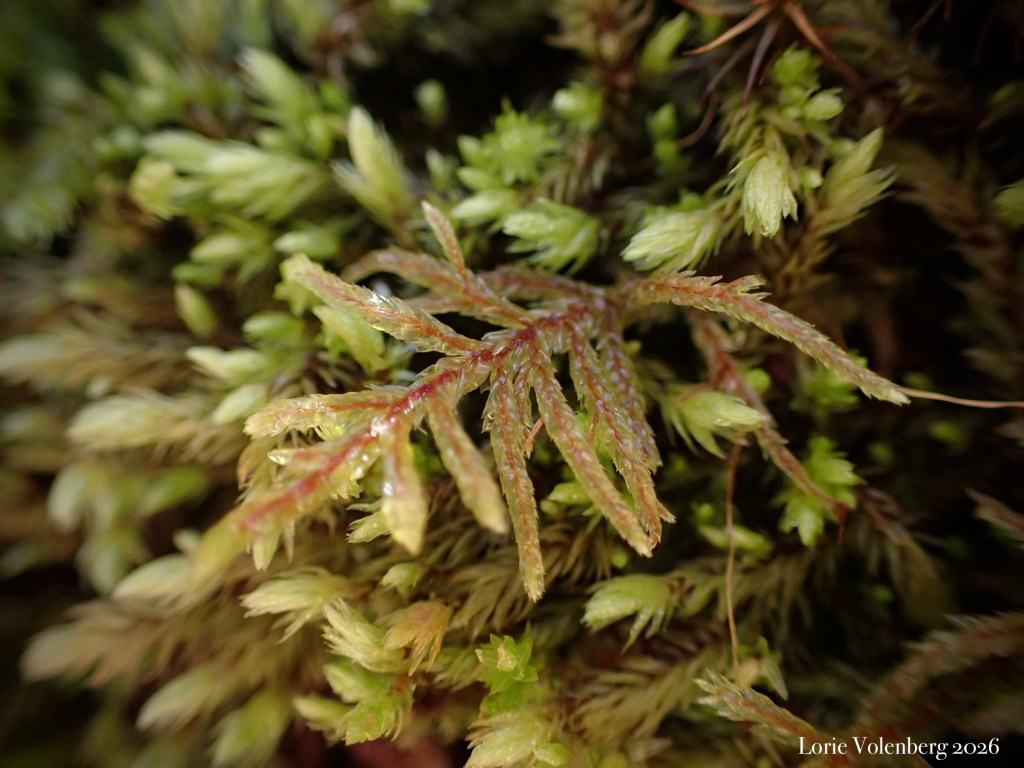
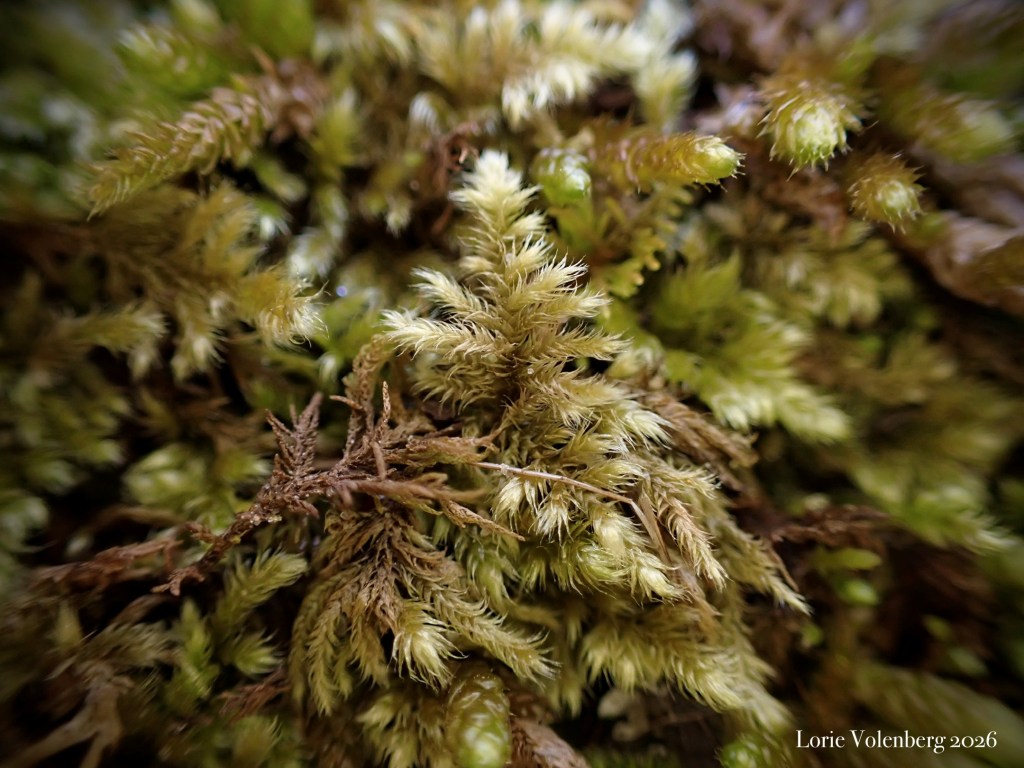
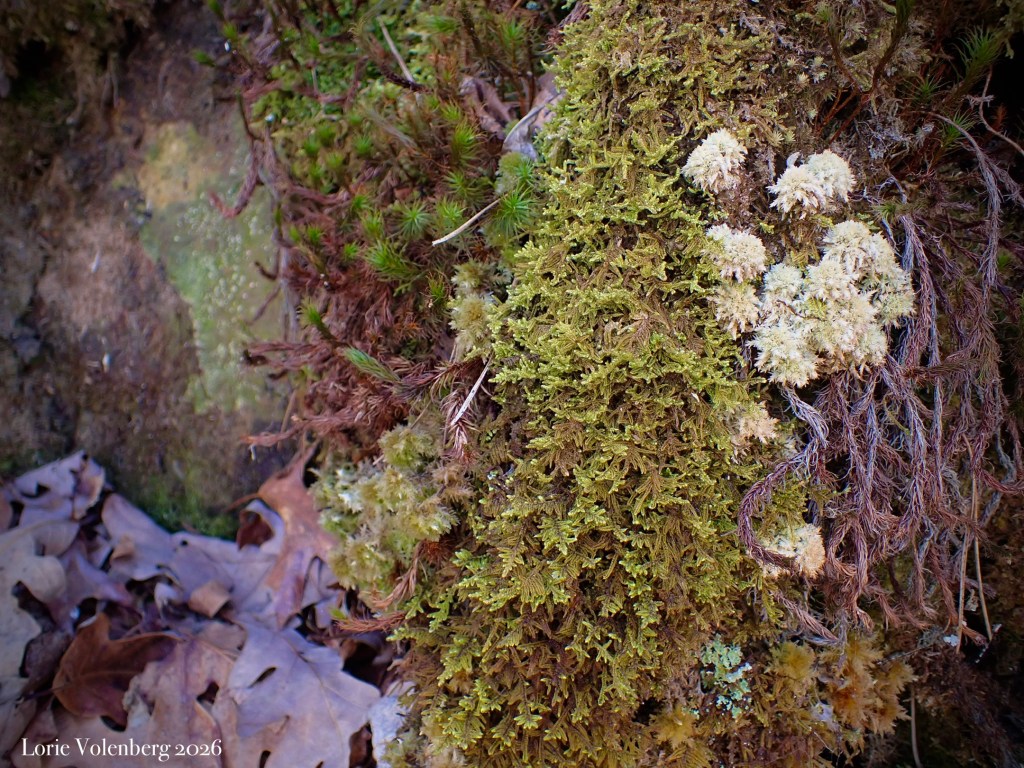
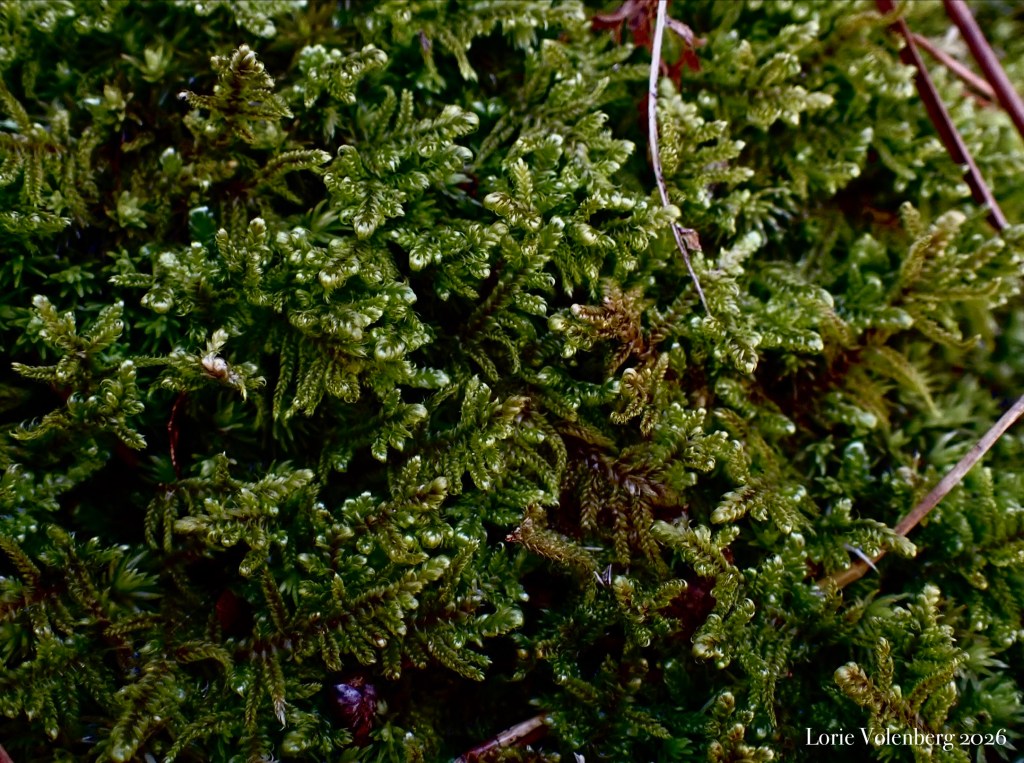
The Hypnum species are often said to have “Fairy Lights” due to how the leaves folding over the apex of the stems and branches catch the light. I altered the photo quite a bit to try and enhance the fairy lights on Hypnum imponens.
While Sphagnum may not be common to come across in Missouri, we do have 19 recorded species! Sphagnum species are acidophiles, generally thriving in PH’s below 5, though a few species can handle more Ca+ and PH’s up to 7. The most common species recorded in Missouri is Sphagnum lescurii.
Here, I commonly came across S. compactum, and less commonly C. capillifolium. At the time, I did not have water PH test strips or a soil PH meter, but I do now and I plan to start to take data on a lot of our bryophytes as I am out and about.
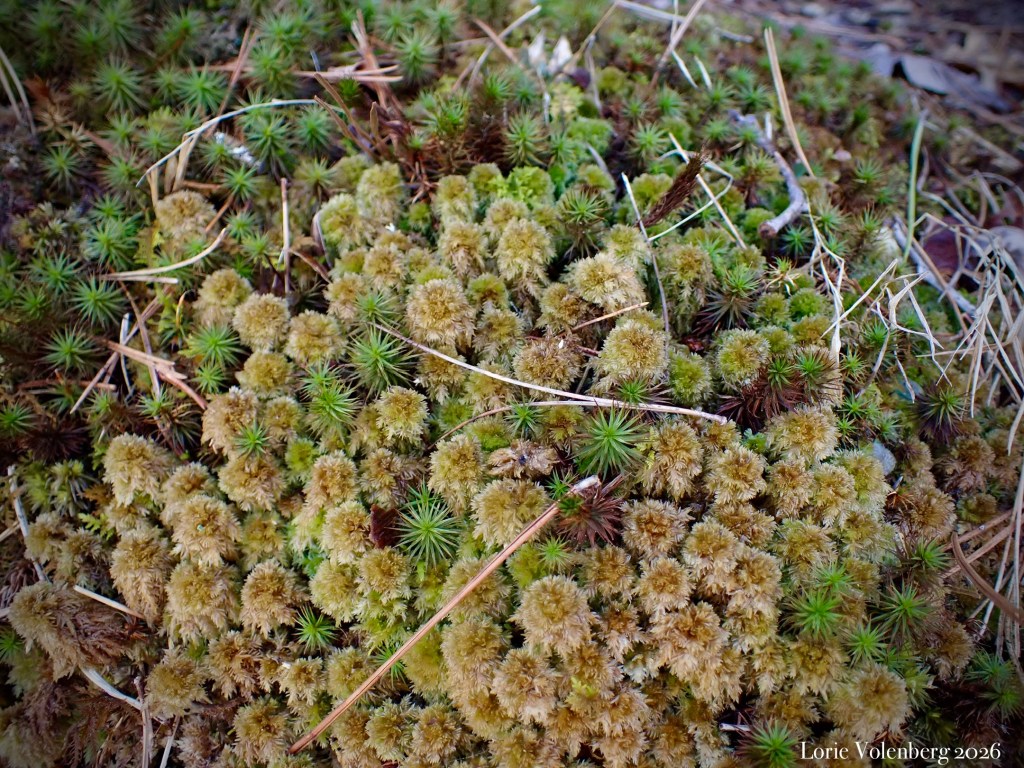
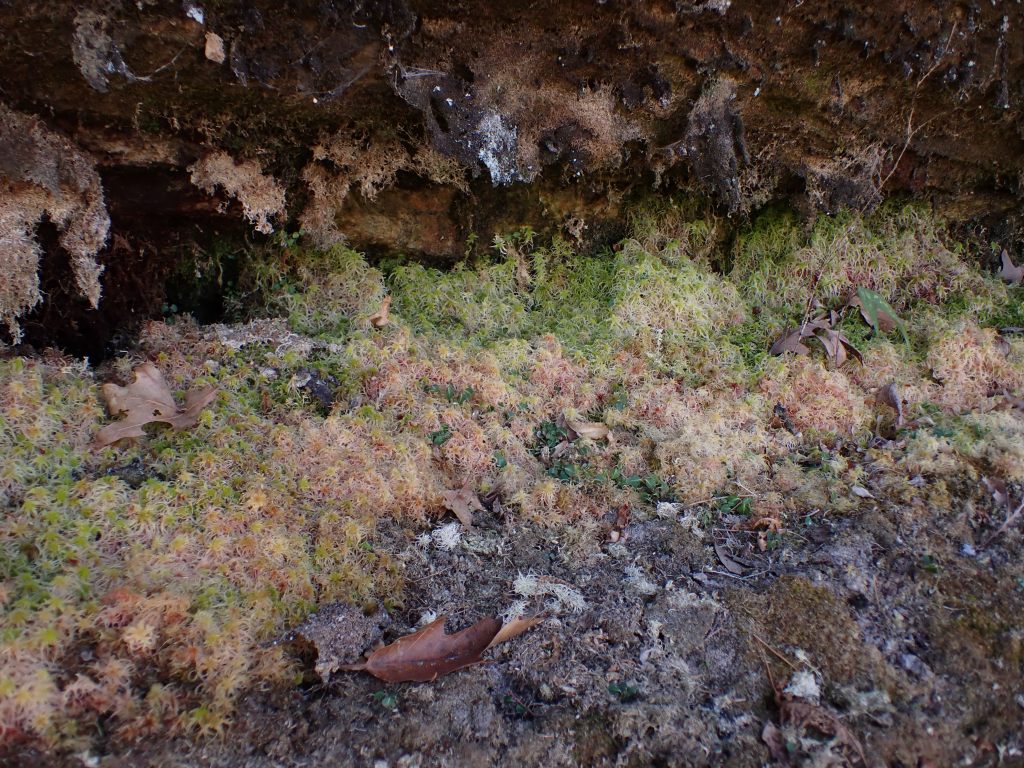
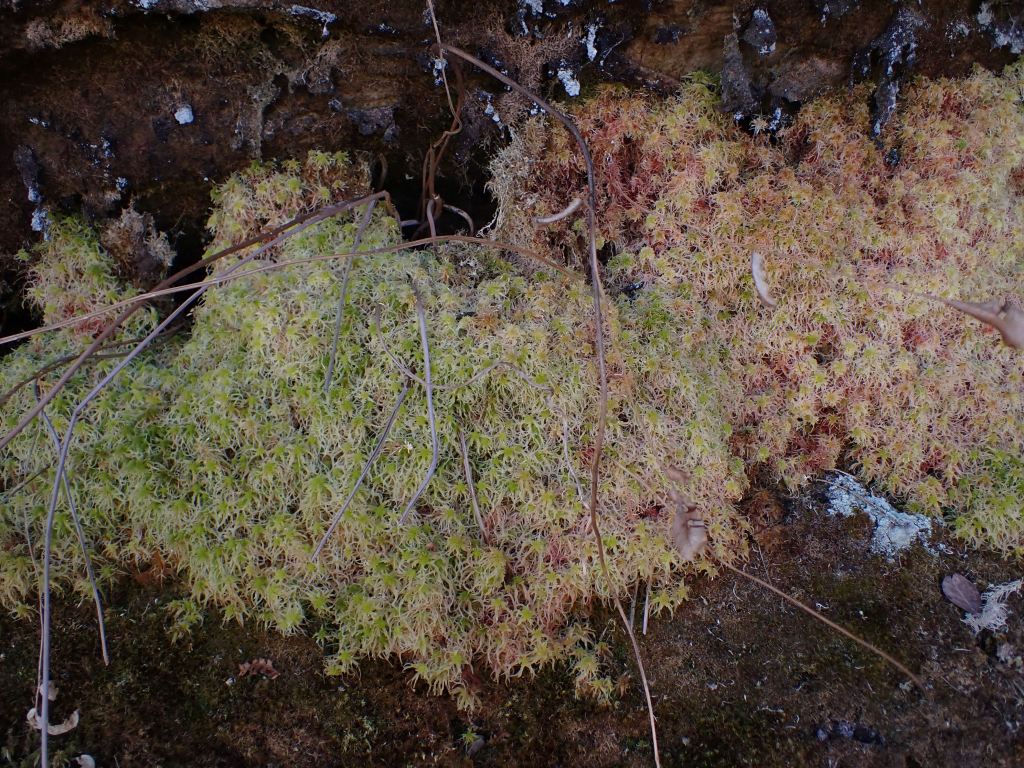
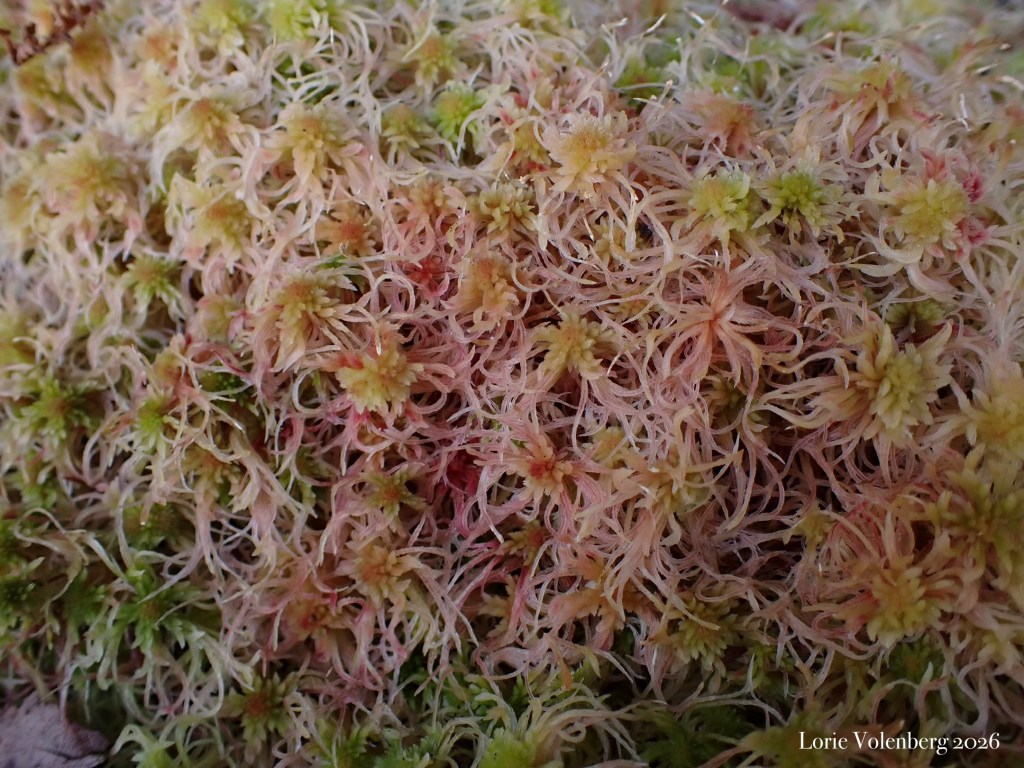
Above all: Sphagnum capillifolium was quite stringy and colorful!
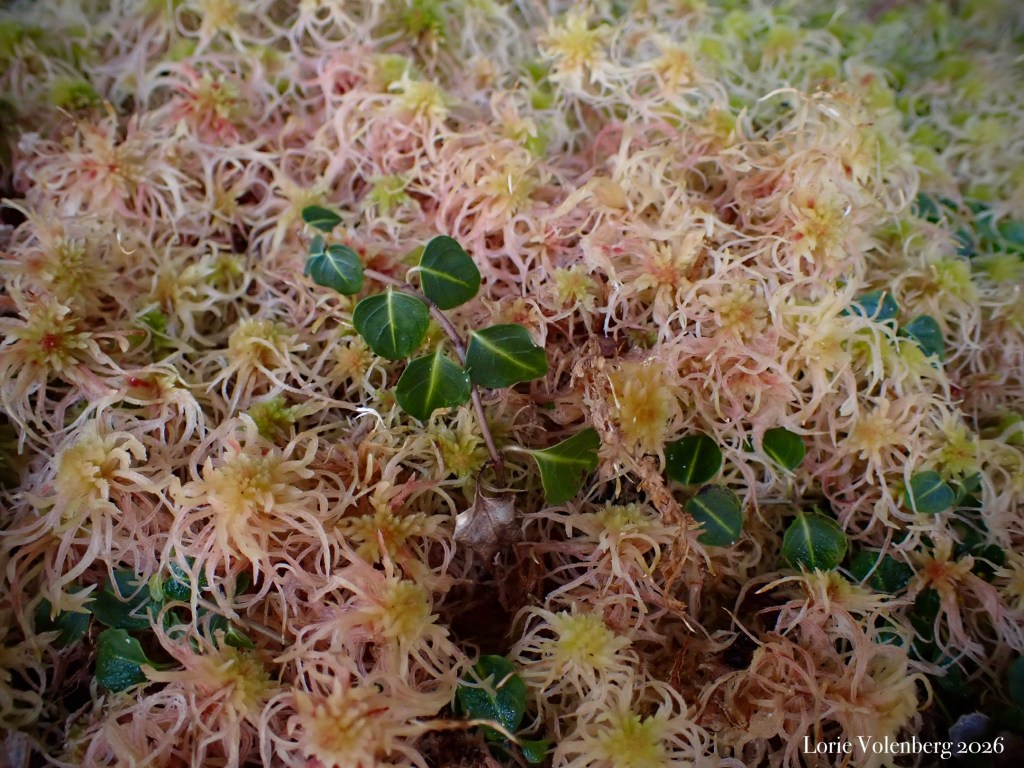
Closer to the creek, there were several liverwort species to be found: Pallavicinia lyellii, Trichocolea tomentella, and Scapania nemorea just to name a few.
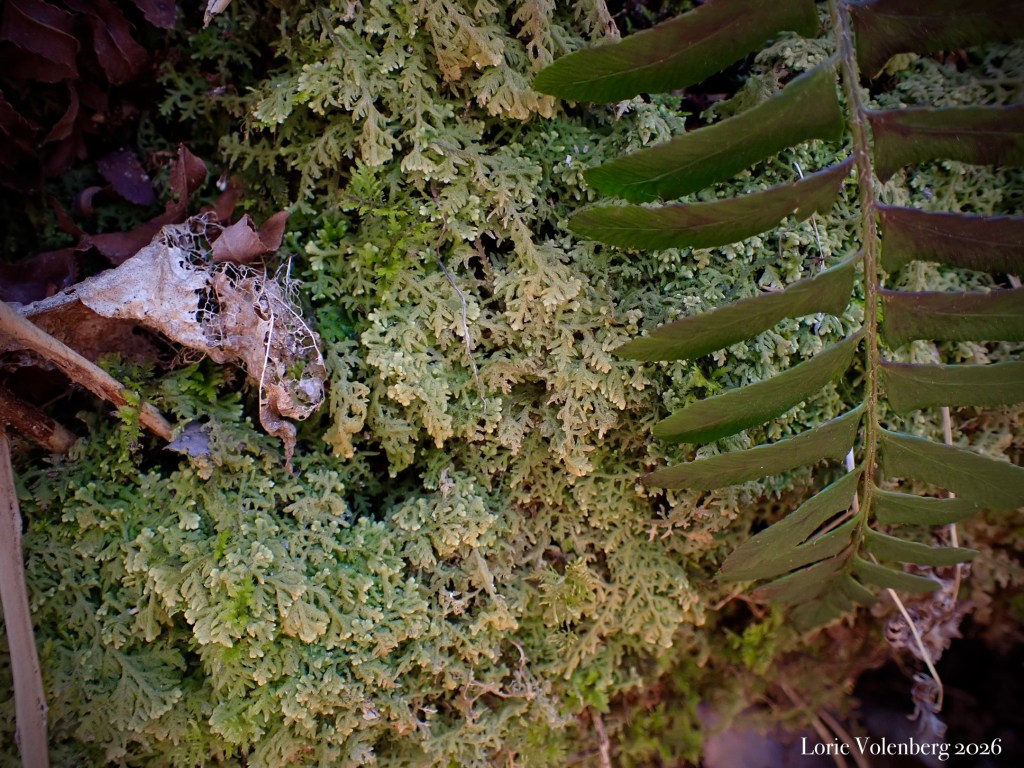
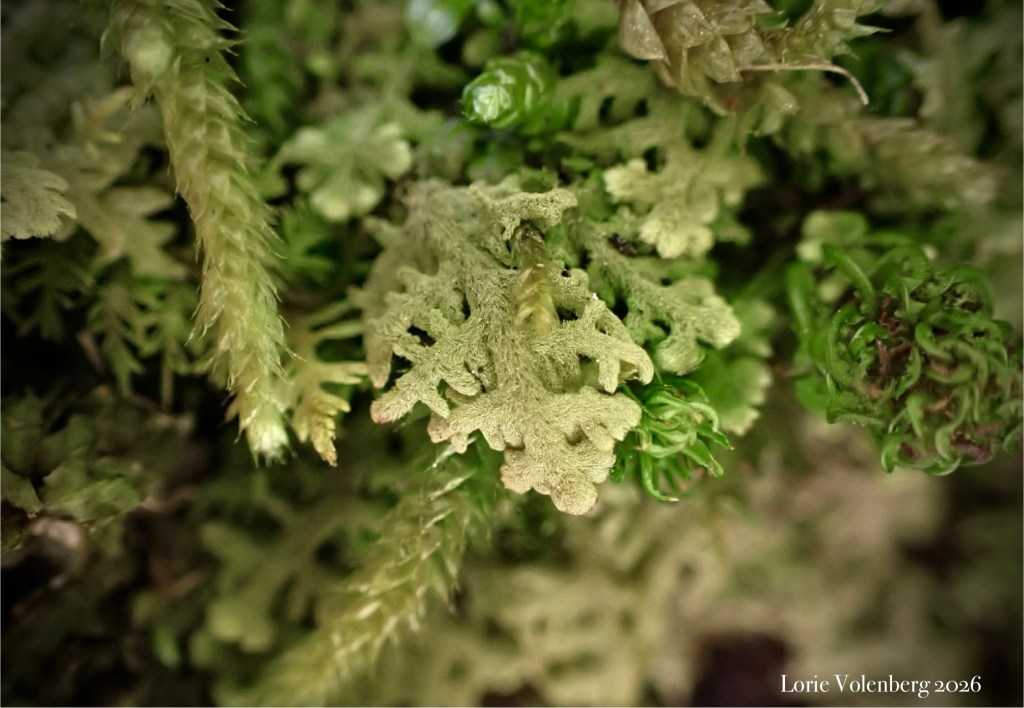
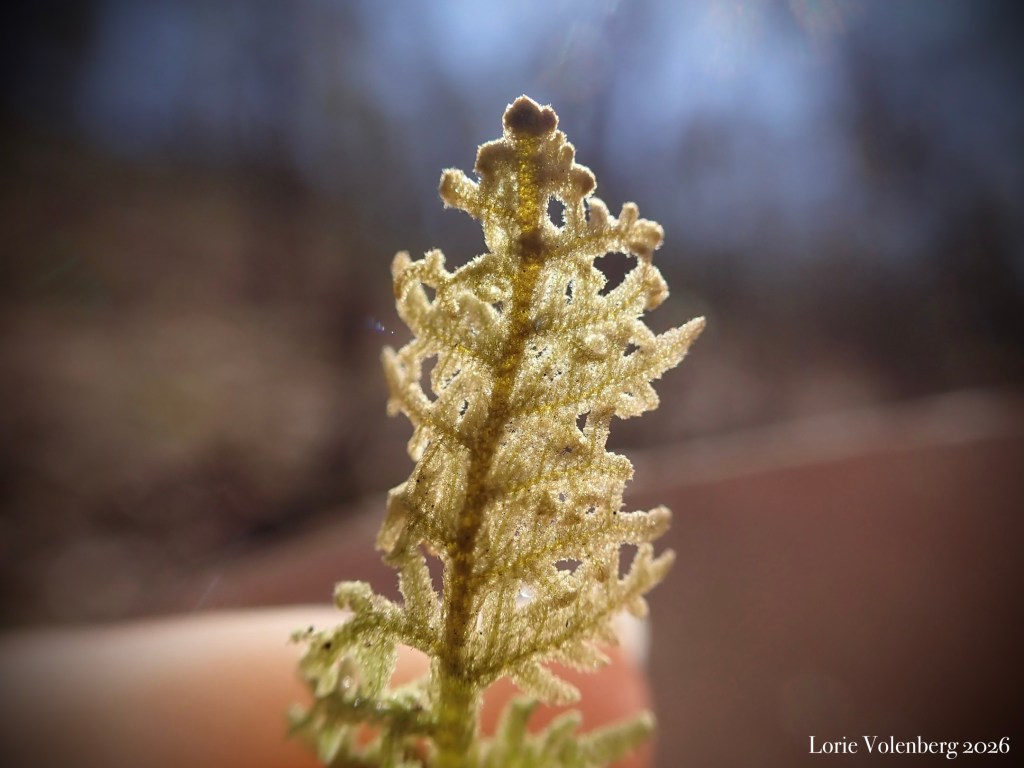
Above all: Trichocolea tomentella has very bisected, ciliate like leaves making it a fuzzy looking liverwort, which is especially noticeable when dry.
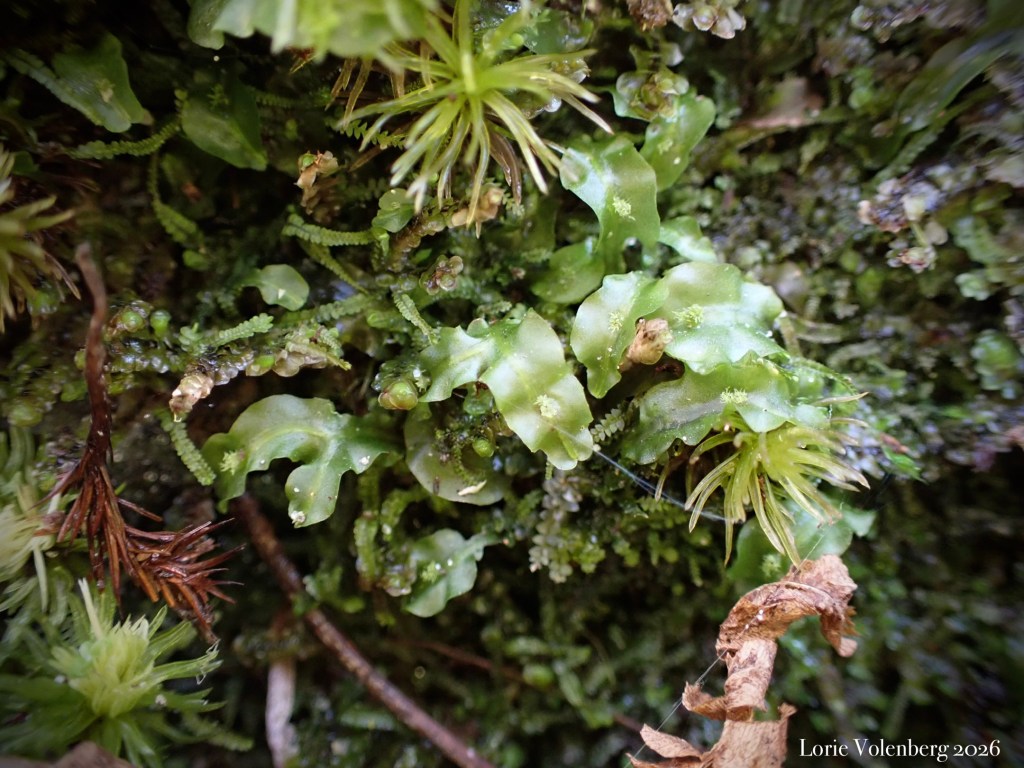
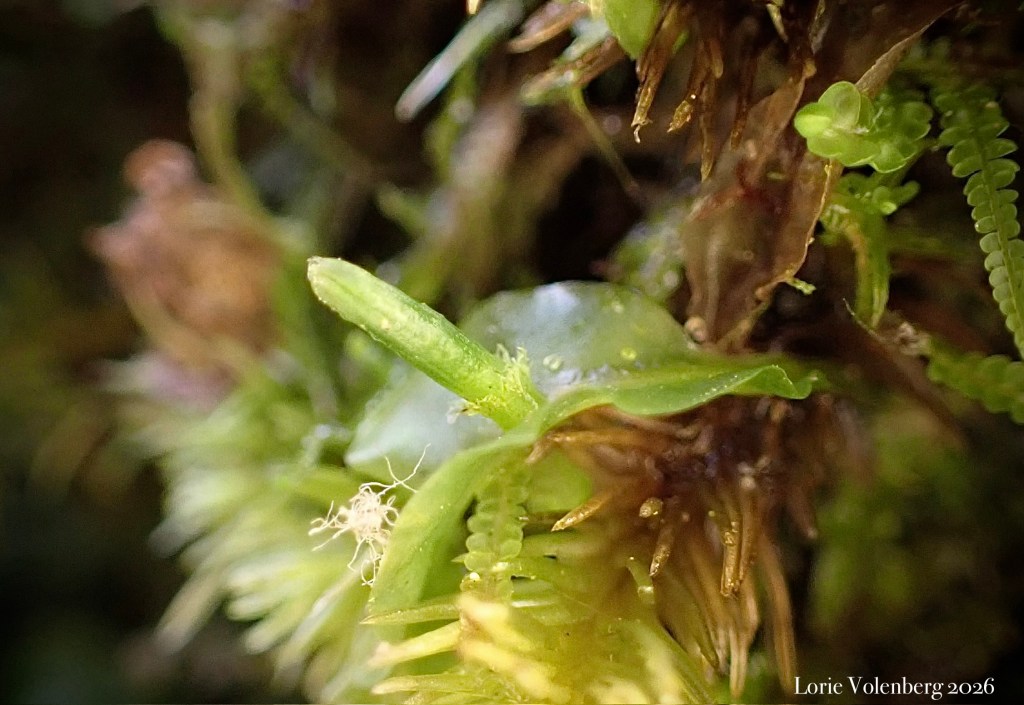
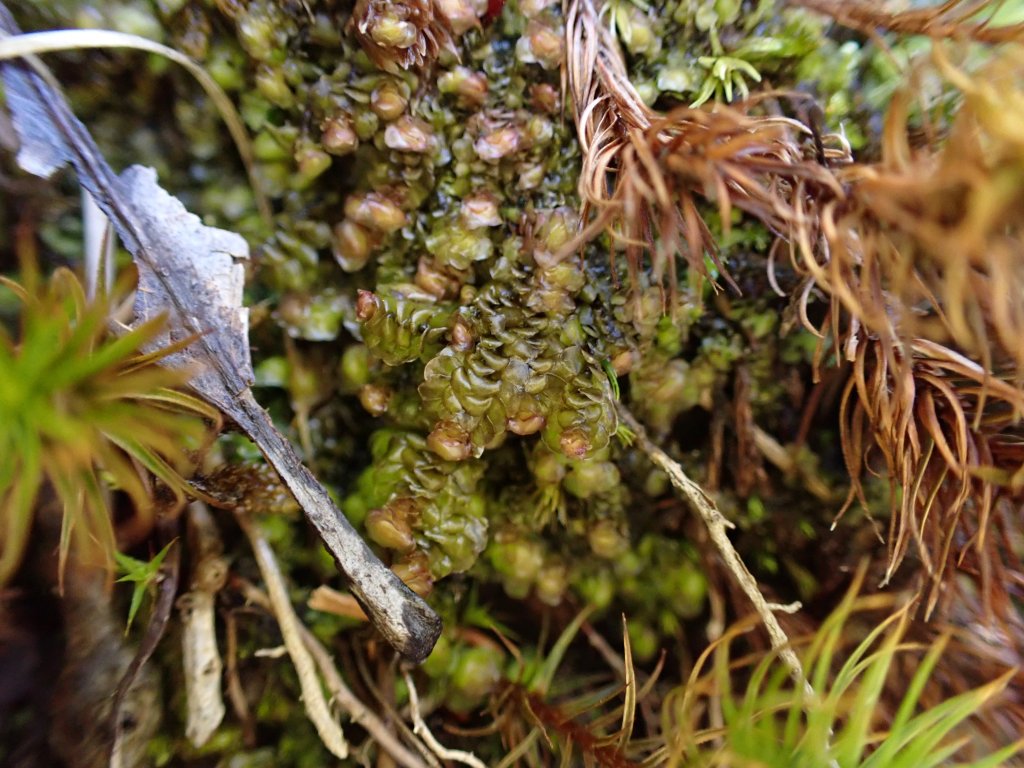
Above all: Pallavicinia lyellii is a dioicous liverwort that has a hint of a midrib/stem, and it is one of the few liverworts that has an archaic vascular system. It was just beginning to send up its sporophytes. I wish I lived closer so that I could go back and document it as it matures.
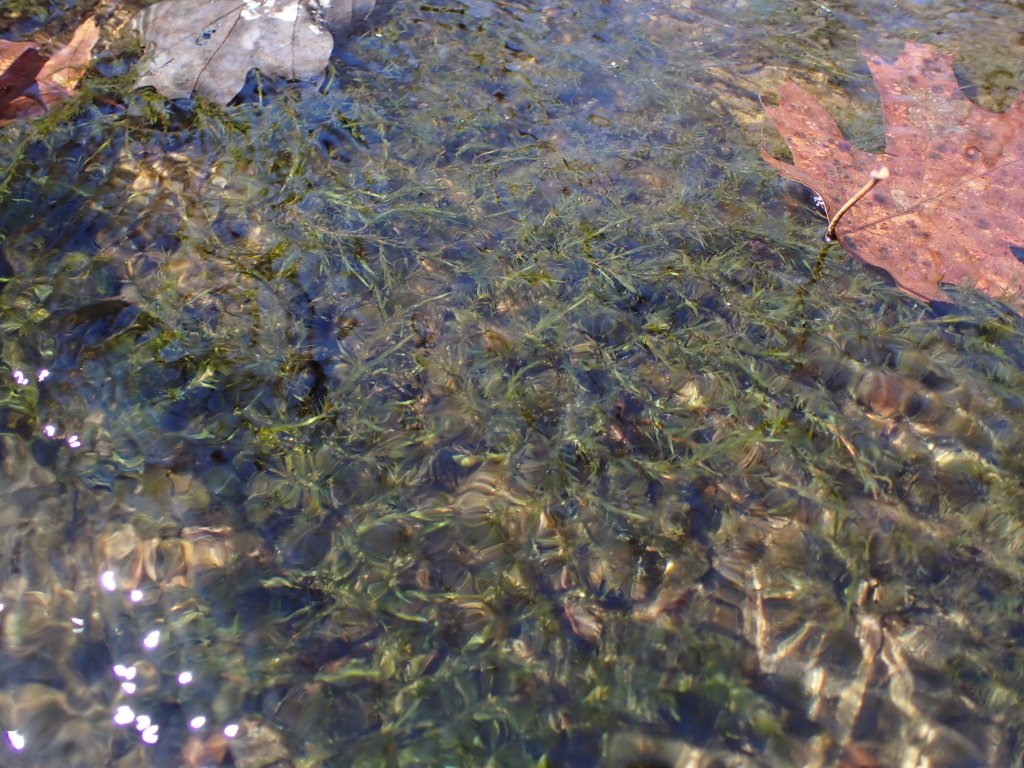
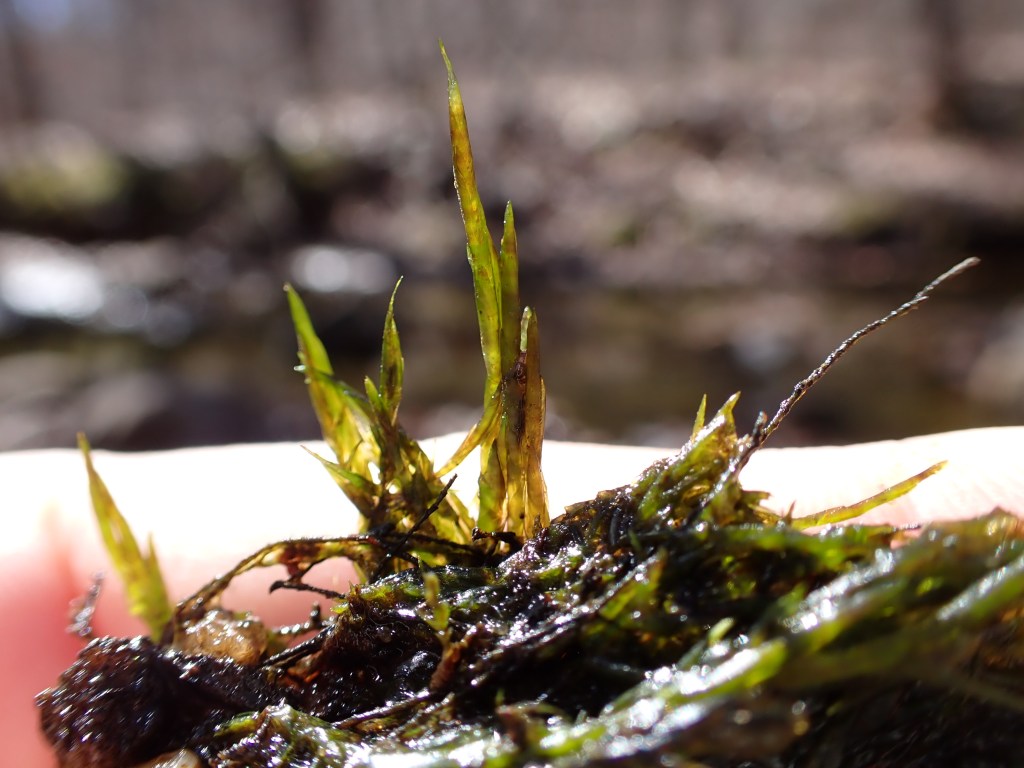
In the water I found the water loving moss, Fontinalis sphagnifolia.
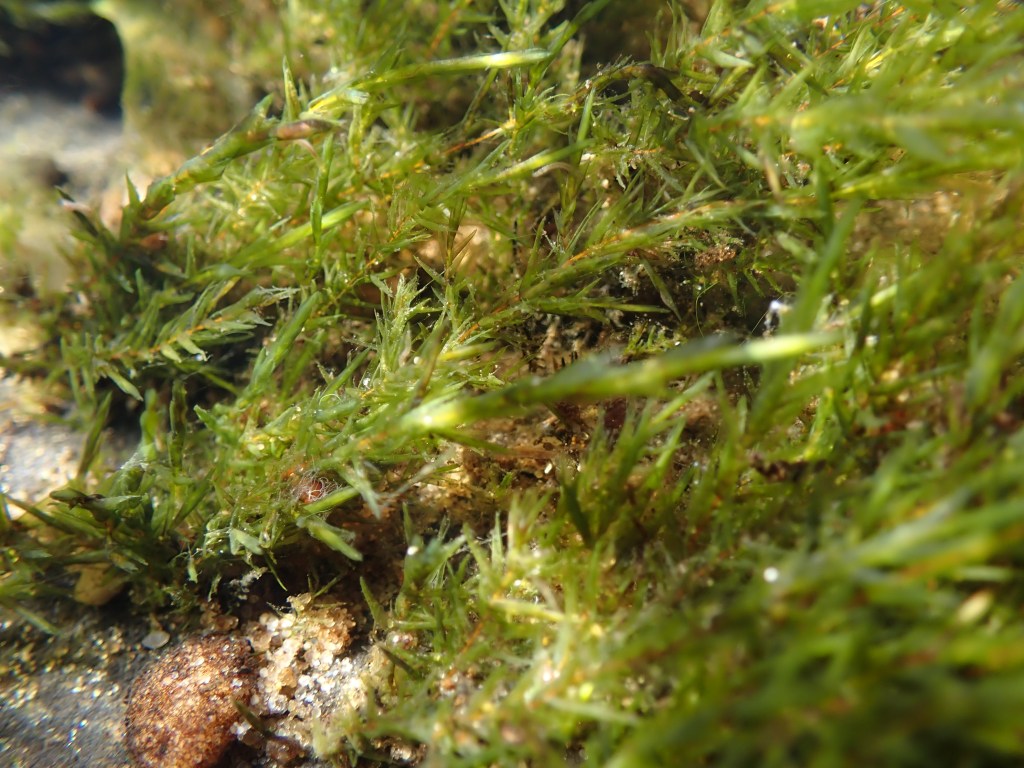
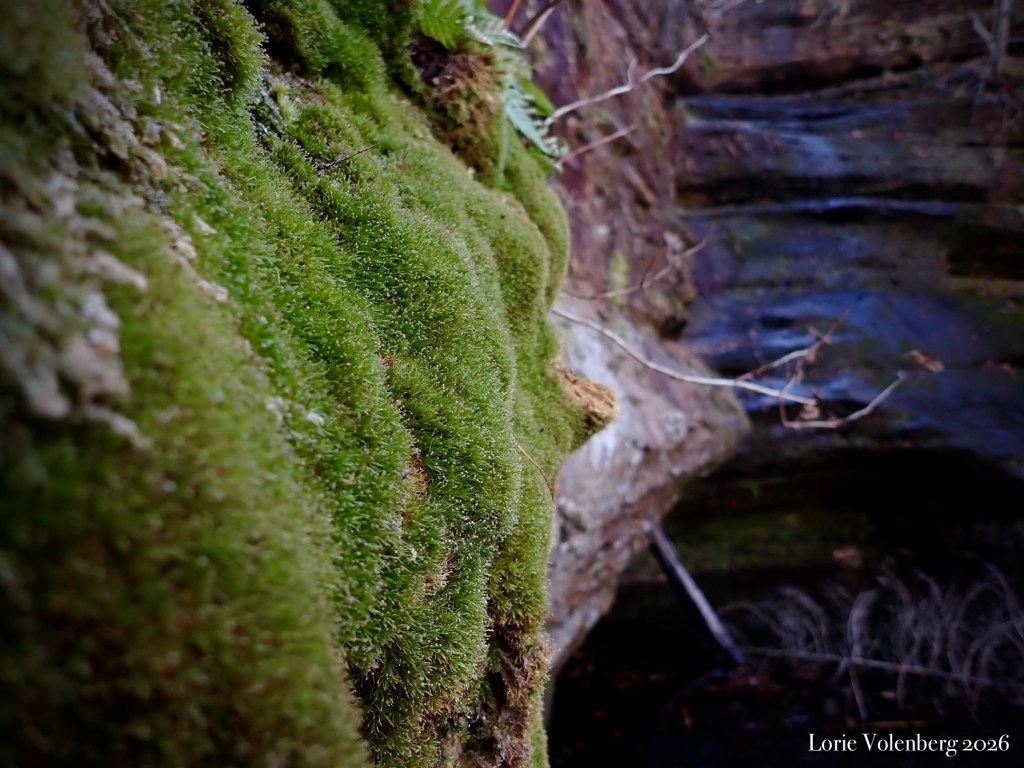
Last, but not at all the least, of what can be found in this magical place, is the moss, Syrrhopodon texanus. The sandy looking tips are the dried up gemma that it forms as a means of vegetative reproduction.
This will certainly not be my last post about Hickory Canyons, there simply is just too much to see and share.
As a side note, my Bryophyte Guided Crawls are starting up this month (March) and my first one is on the 21st. Be sure to check out my events page for upcoming scheduled crawls and events.
Happy mossing!

 Mosses of Missouri and Beyond
Leave a comment