Ramifications of climate change aside, it was a lovely day that was hard not to pass up for a jaunt outside. I tried not to judge too harshly the conditions that brought this day into existence, especially considering the 50 degree drop in temperature that would happen that afternoon. I needed to take photographs of biocrusts for an article I was writing. The overcast day coupled with the damp weather meant the bryophytes would be easy to photograph while in their full, hydrated splendor. So, I decided to pay a visit to my favorite little park, Graham Cave State Park.
Biocrust is short for Biological Soil Crust. These crusts are a combination of fungi, bryophytes, lichen, algae, and cyanobacteria, that stabilize an amount of soil in usually arid and exposed locations. Glades are a prime place to find them, so my first stop was to look in a limestone/dolomite glade.
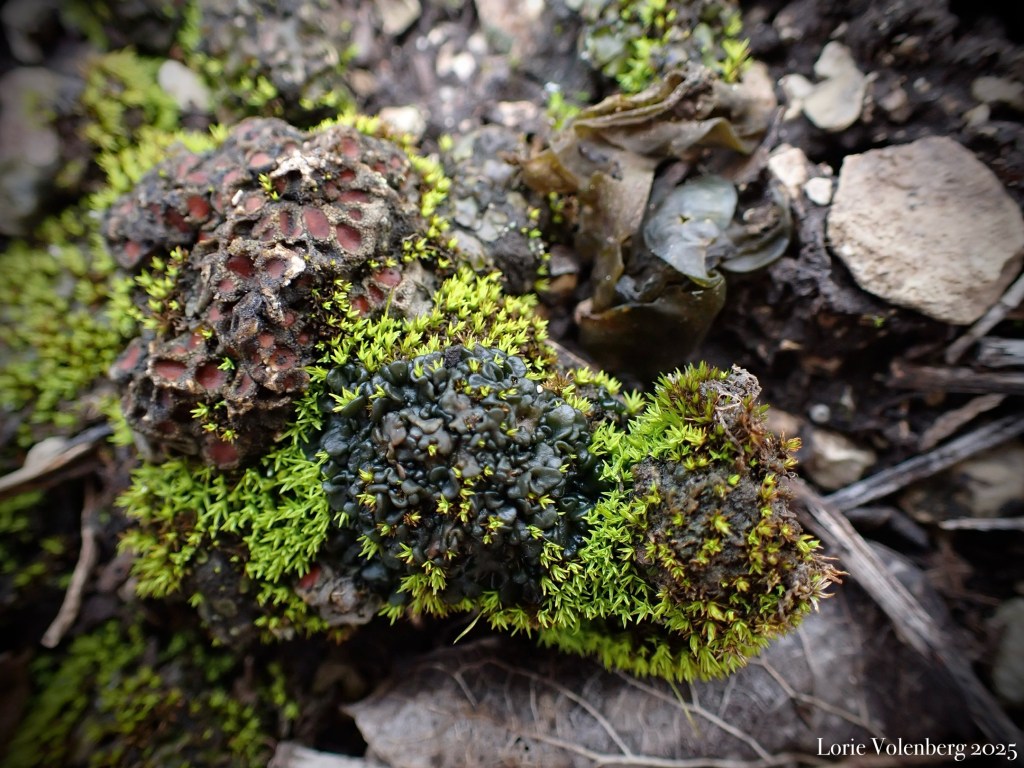
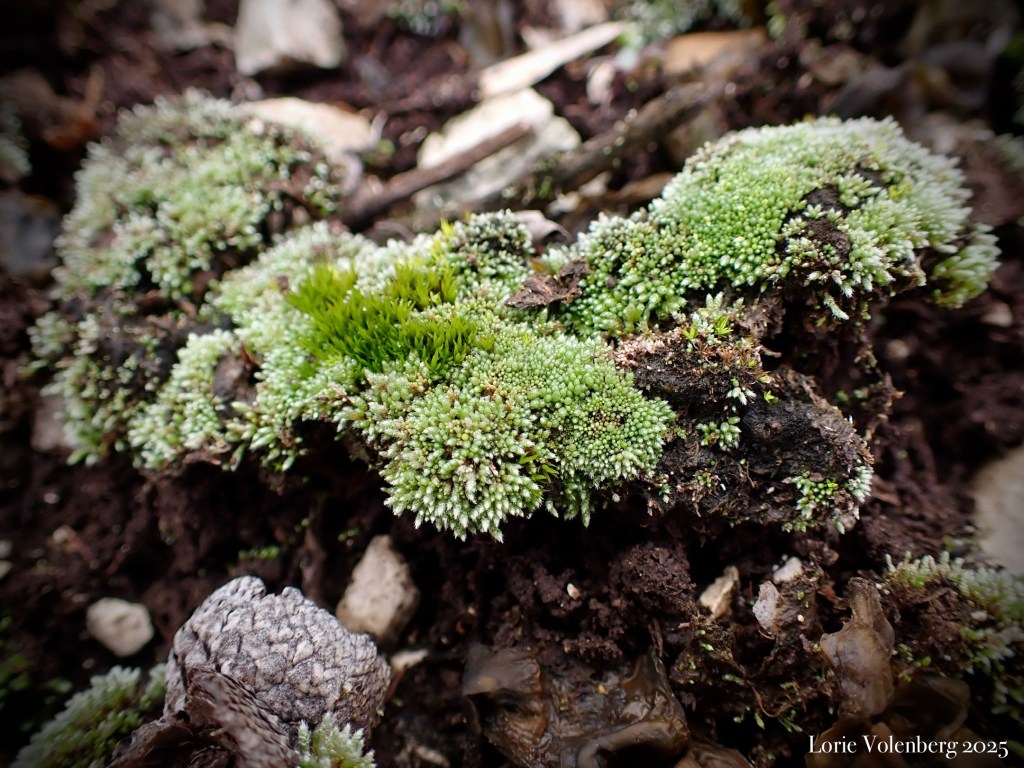
At the edges of, or in protected parts of the glade, usually near the shade of a tree, shrub, or the side of a rock ledge, I can find the lovely and colorful, Syntrichia ruralis, along with Tortella humilis.
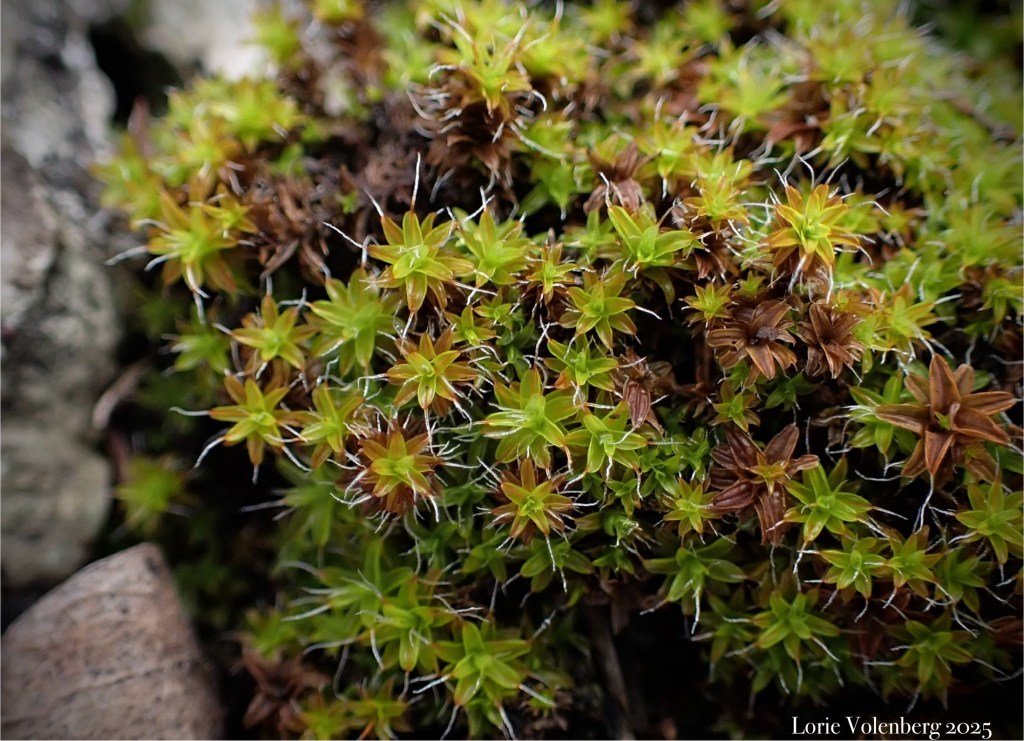
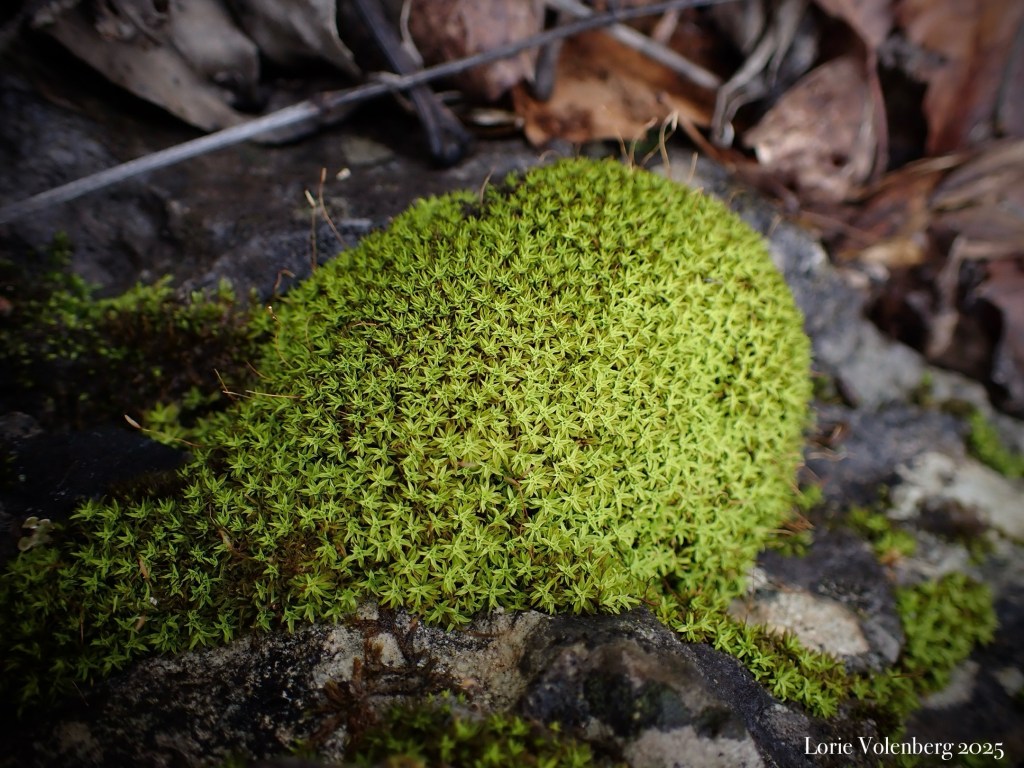
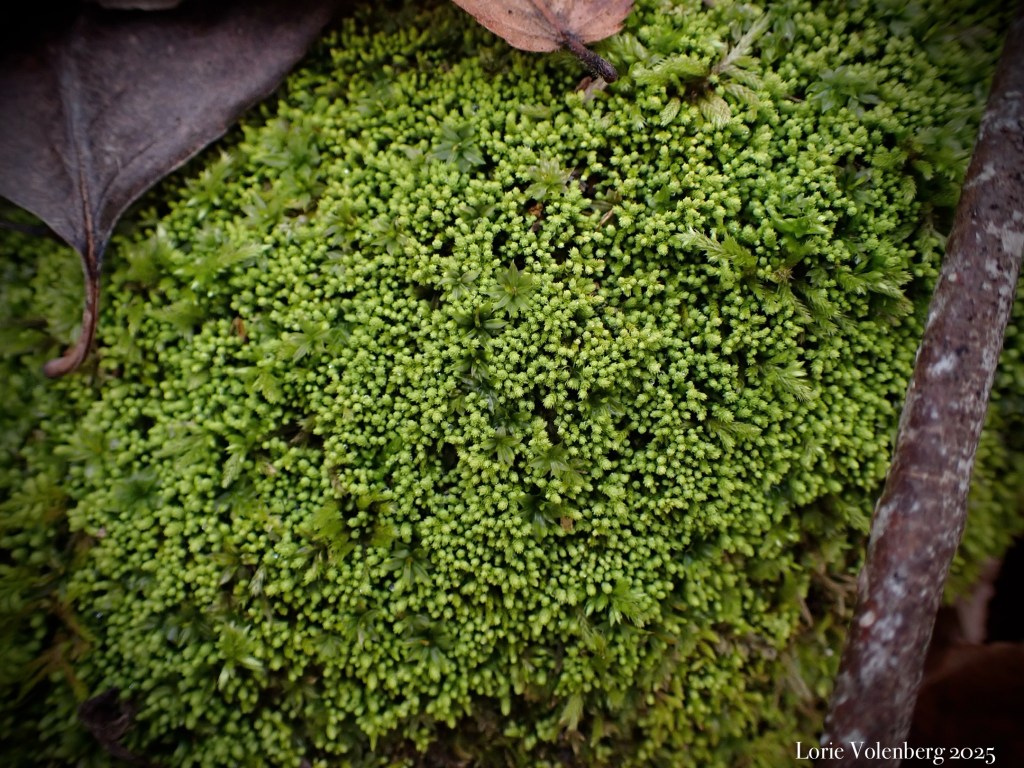
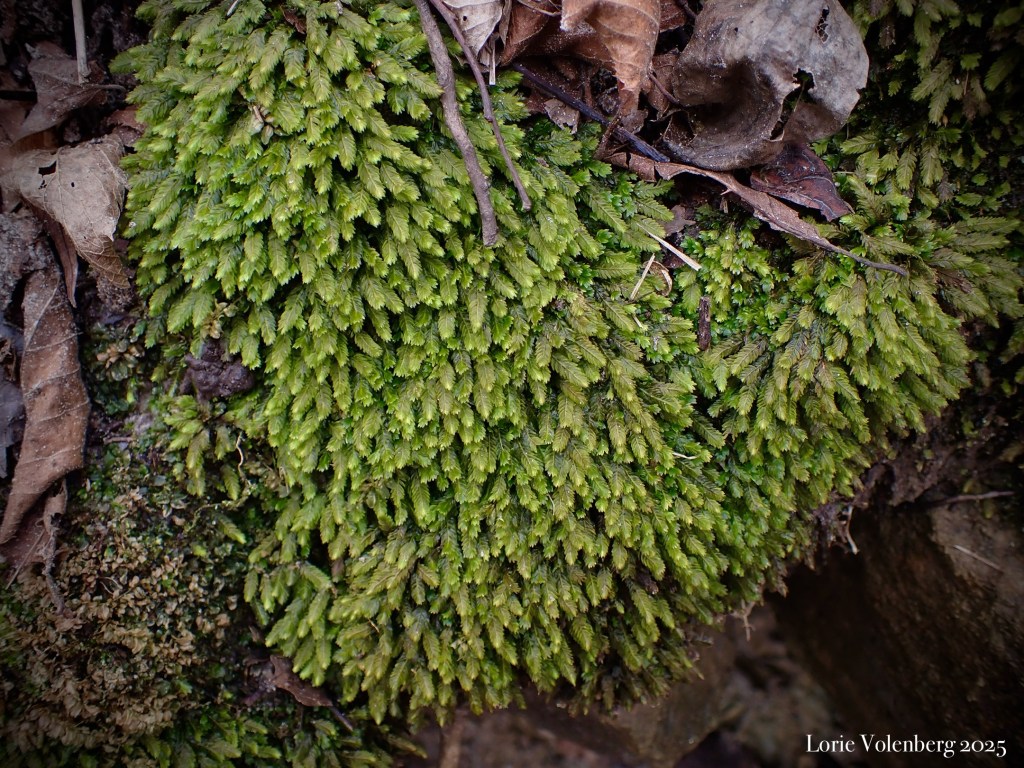
After getting the pictures I needed of biocrusts, I decided to hike over to a sandstone glade/savannah area in the park. I had to go through an oak/hickory woodland and over a seasonal creek to get there. Anomodon rostratus is very conspicuous this time of year with its brightly bursting stars illuminating the brown/gray, dormant surroundings.
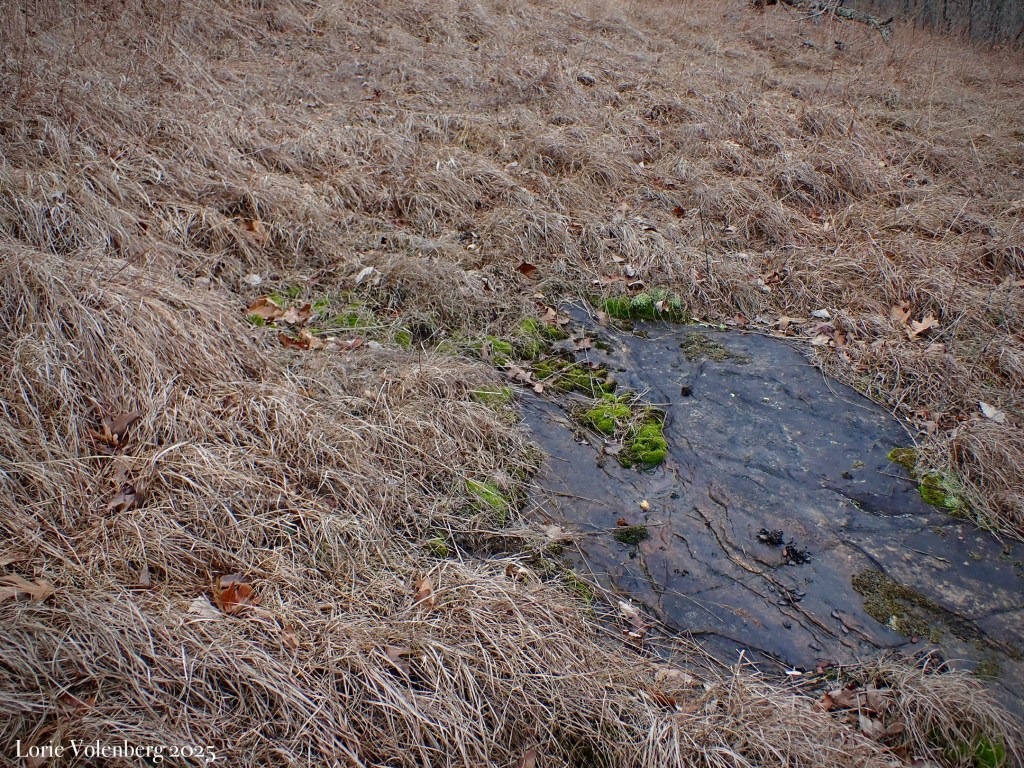
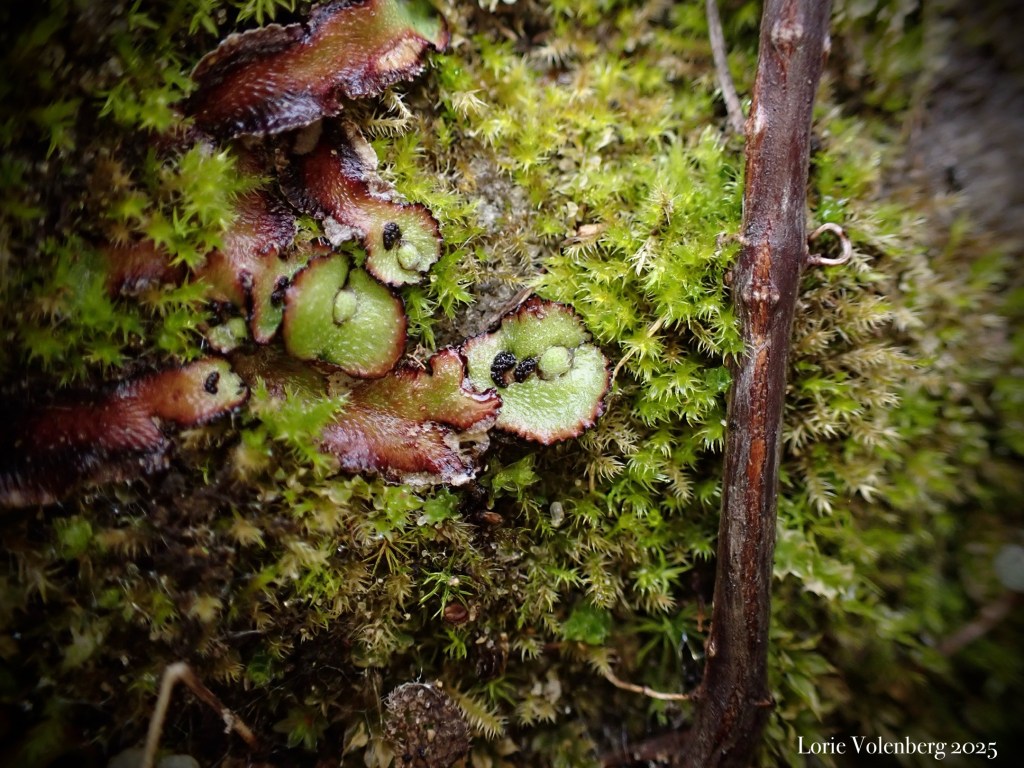
Once at the sandstone glade/savannah, I began to investigate patches of bare soil, along with the more protected edges of the sandstone ledges. Several liverwort species were present. Reboulia hemisphaerica clung to the shaded areas of sandstone, bringing some color to the tan stone with its purple edges. Three species of Riccia were found on the soil. One is fairly common: Riccia beyrichiana, one is less common: Riccia sorocarpa, and the last ended up being a new record for Missouri: Riccia trichocarpa. The last one was truly exciting to come across with all those long hairs!
The Three Riccia’s

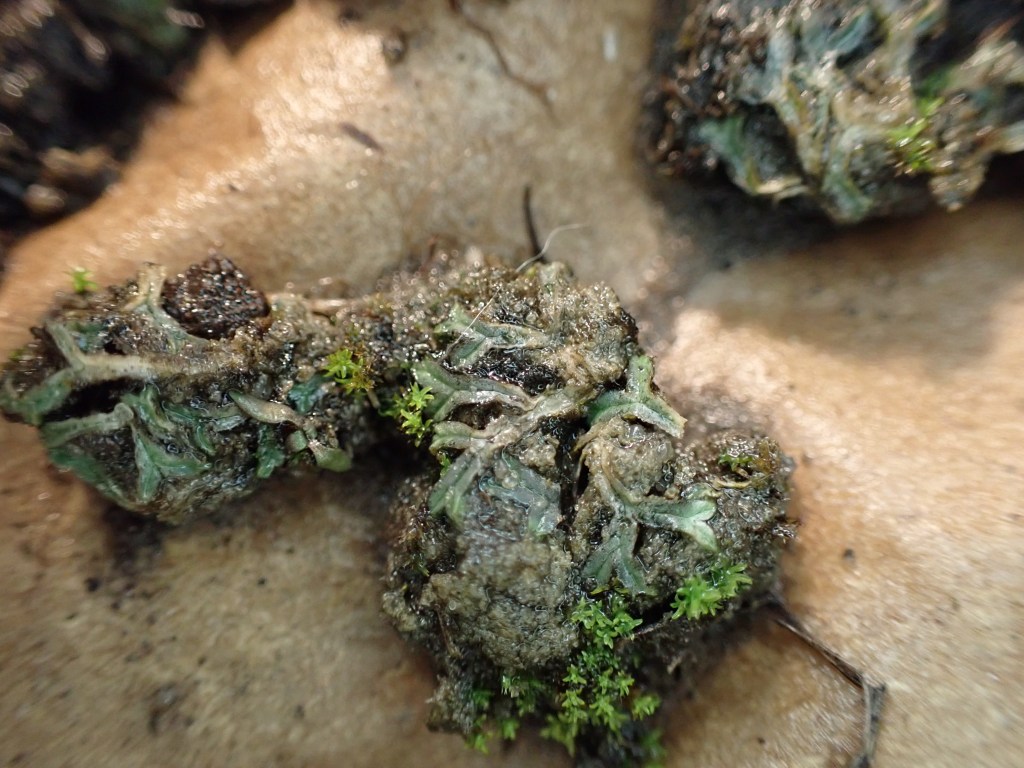
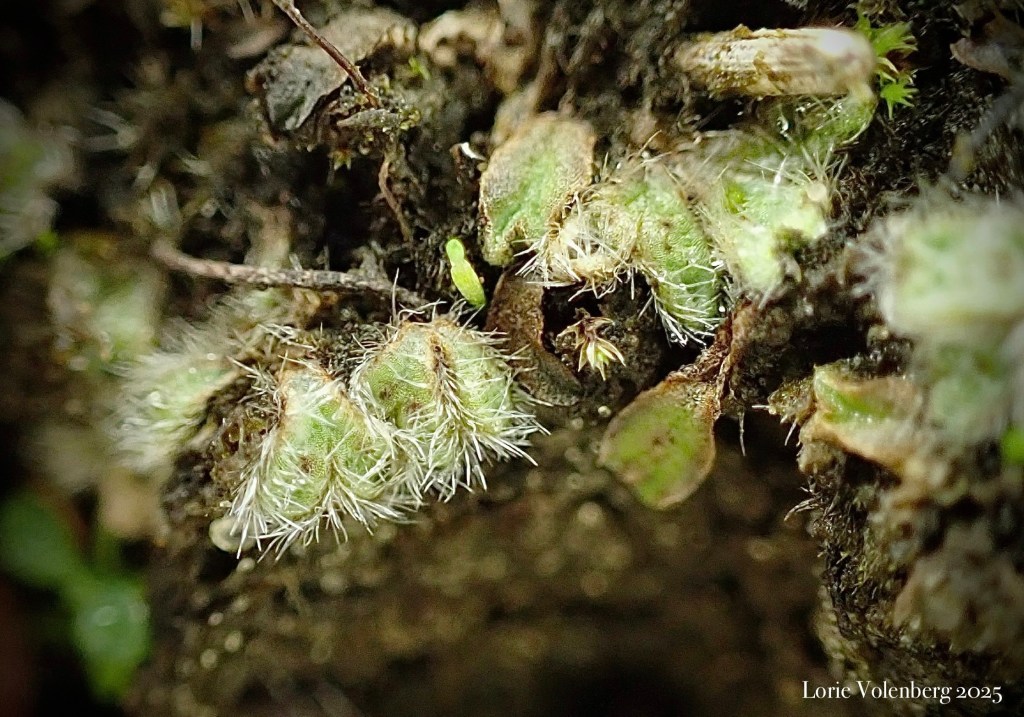
Above left: Riccia beyrichiana. Above middle: Riccia sorocarpa. Above right: New to Missouri, Riccia trichocarpa.
A few of the mosses found on the sandstone
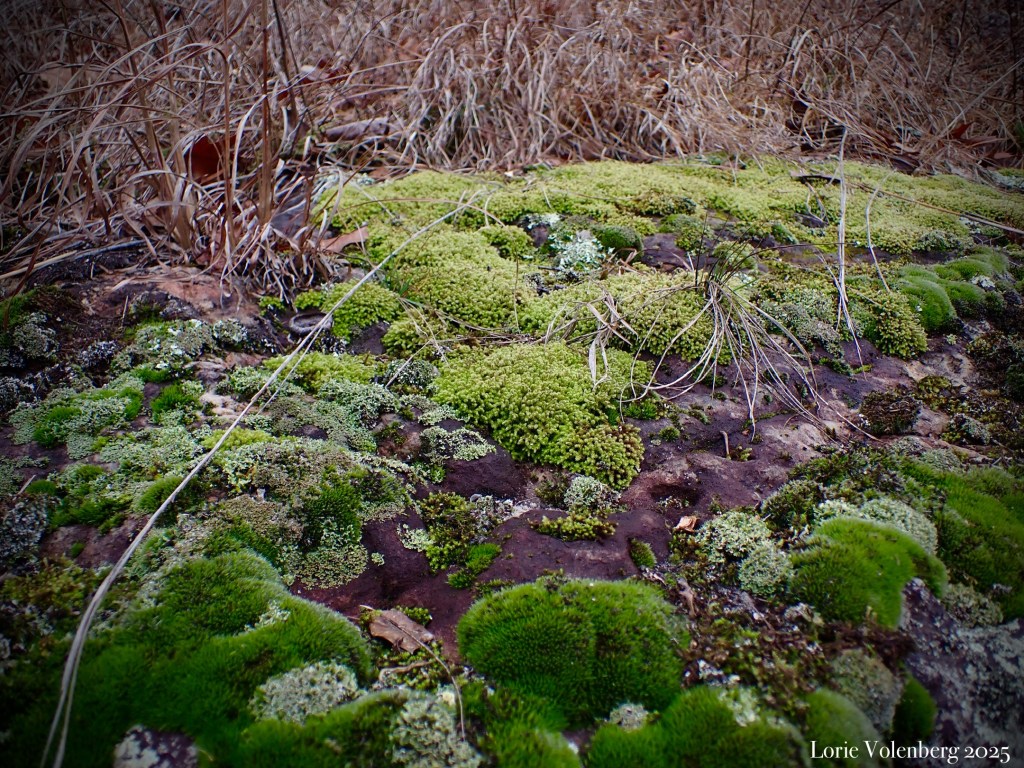
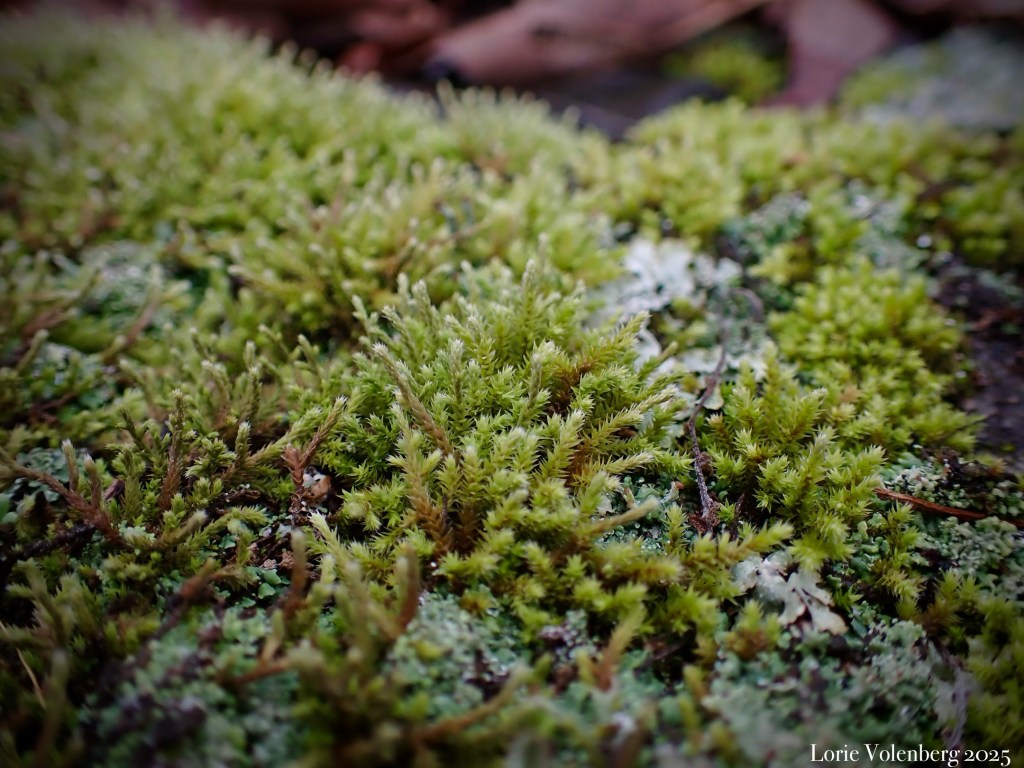
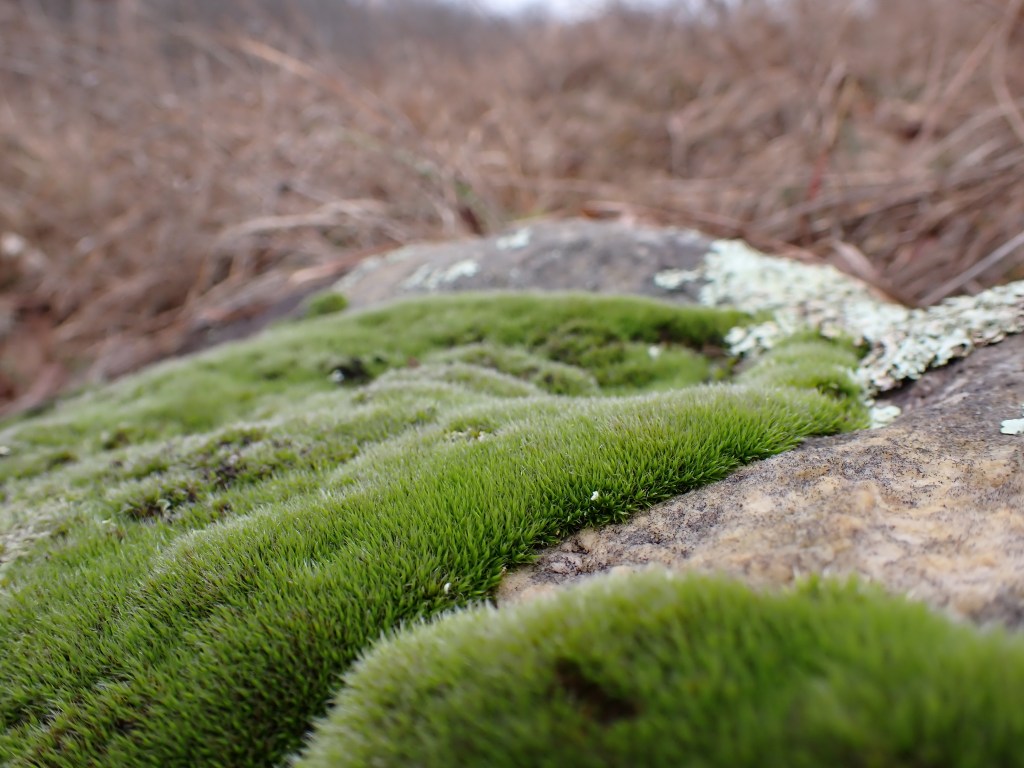
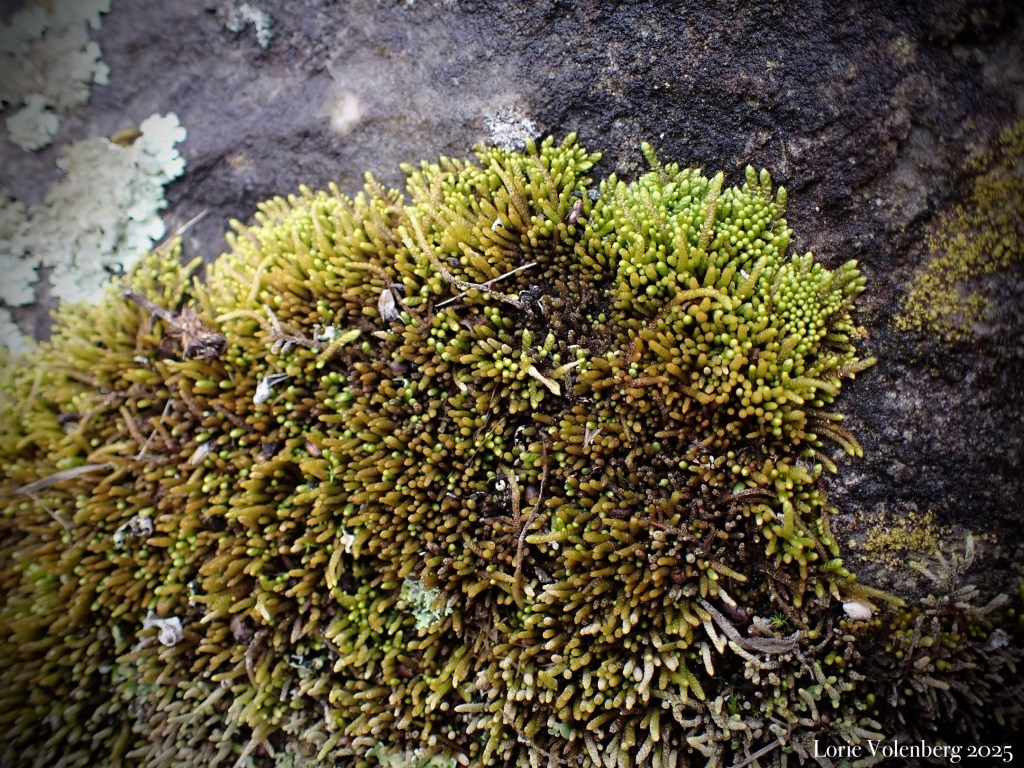
Above Left: Hedwigia ciliata. Above Middle: Grimmia laevigata. Above right: Thelia lescurii.
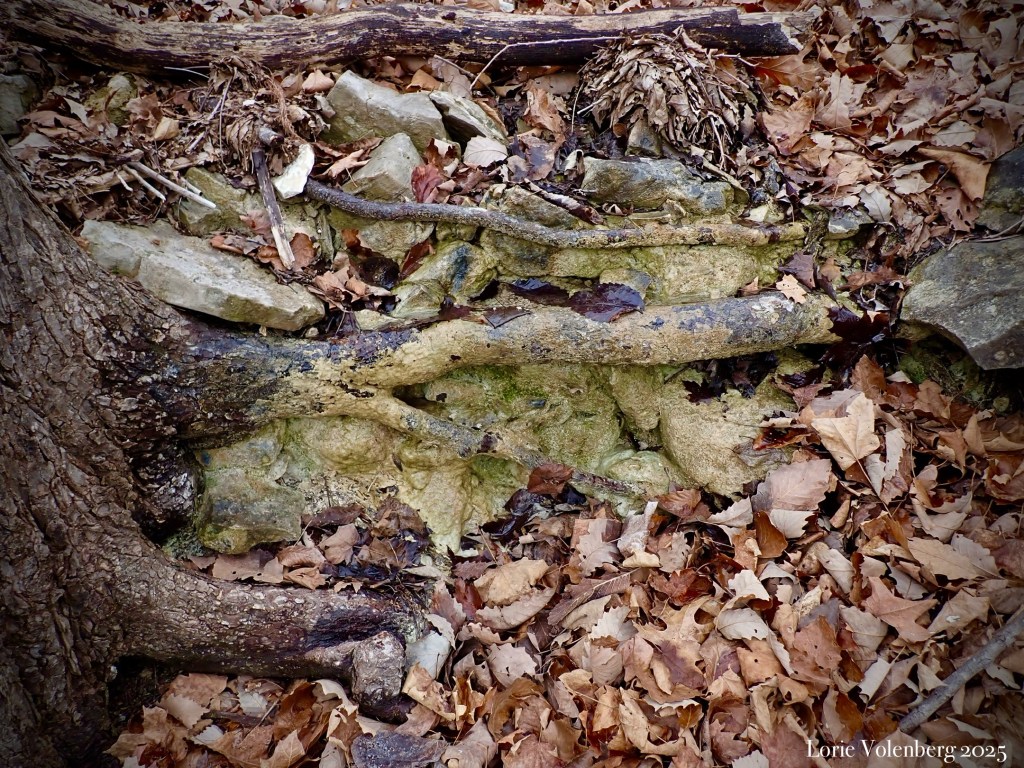
After I had my fill of crawling on the ground and searching the sandstone rocks, I headed back to the car by following the seasonal creek up to its one tributary that always has a little bit of water running from underground springs trickling through. A beautiful population of Fissidens adianthoides resides on the soil at the edge of a little waterfall. Further up, calcium buildup from calcite in the water being deposited as tufa, was forming over tree roots and rocks that created a little fall.
It is always a joy to visit my favorite little park. Until next time, Happy Mossing!!

 Mosses of Missouri and Beyond
Leave a comment