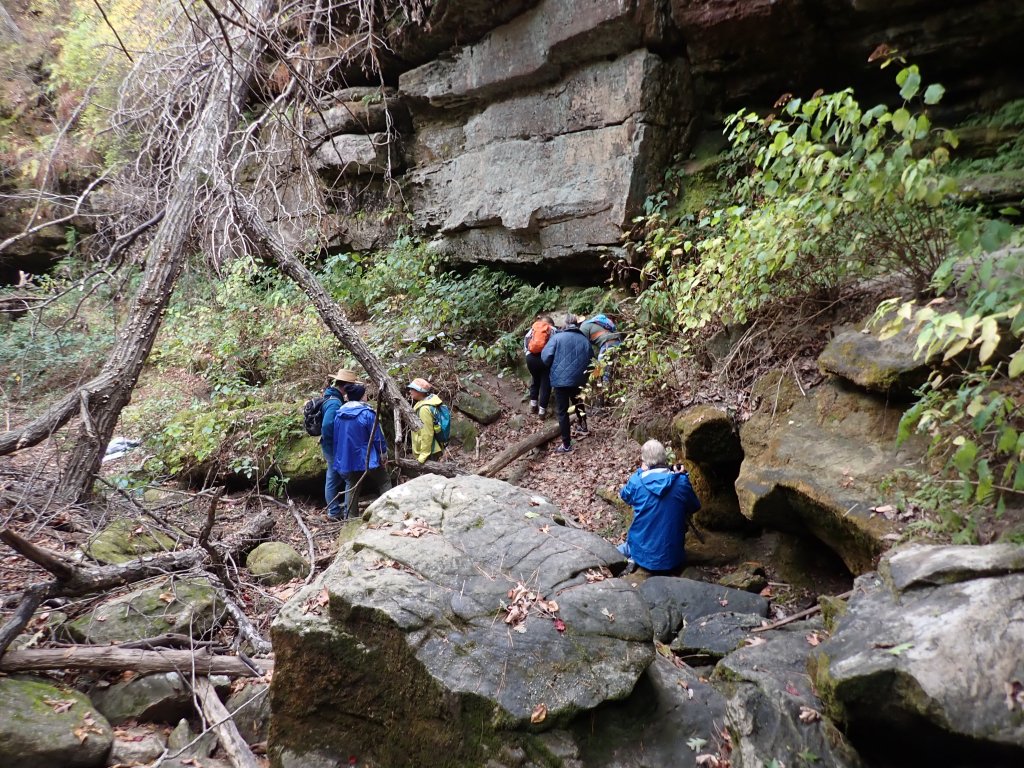
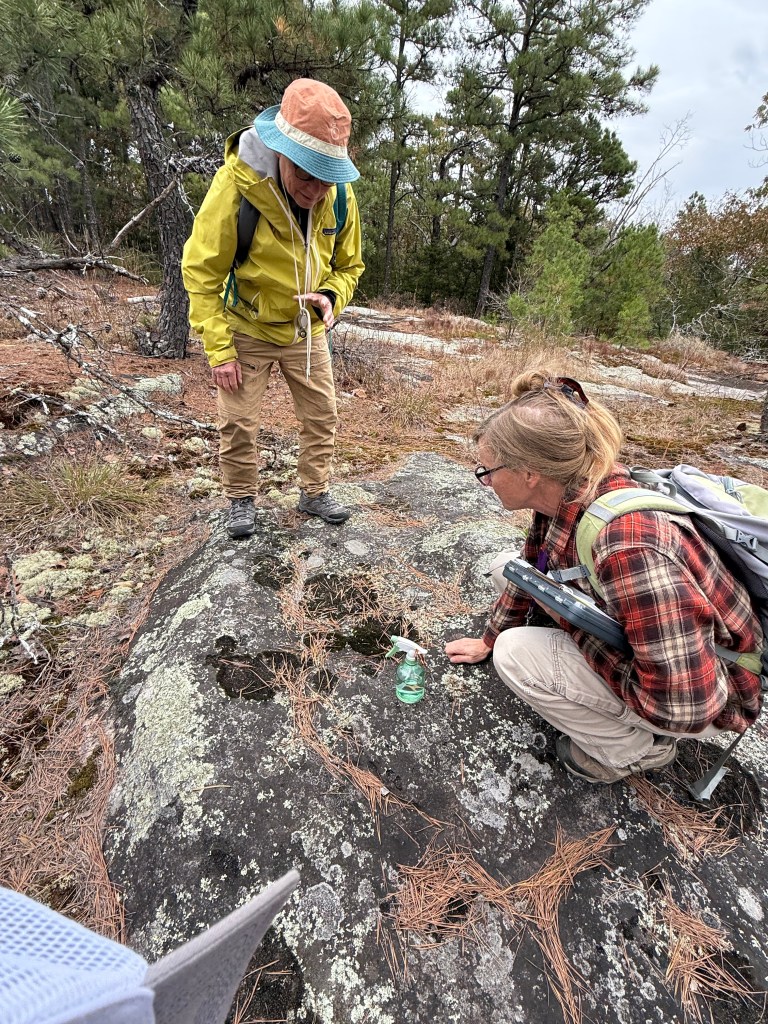
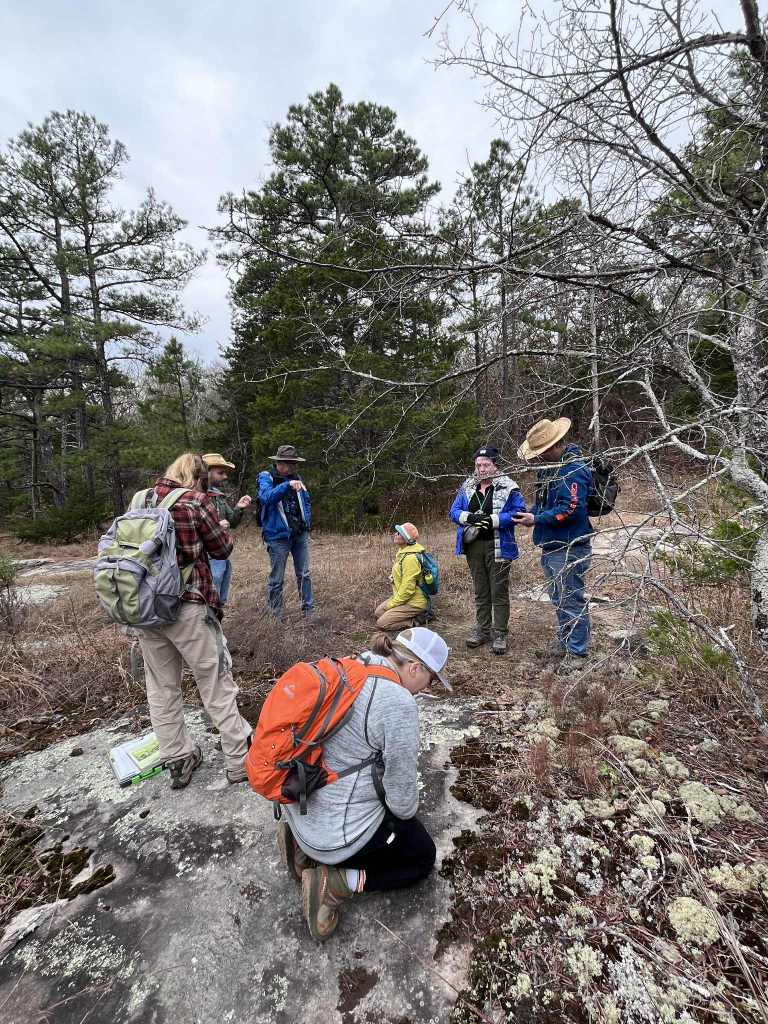
The last scheduled guided bryophyte hike for the 2025 season came to a close. It had to be moved up a day early due to the all-day rain that was forecast for the day of the hike. While some of that rain would have been nice to have had before the hike to freshen things up, I was thankful for the overcast, cool, yet pleasant weather, and for those that could still make the trip. I’ve also decided that next year it would be more appropriate to call these outings “guided crawls” vs. “guided hikes”, since we spend much of our time on our knees and bellies all in one spot!
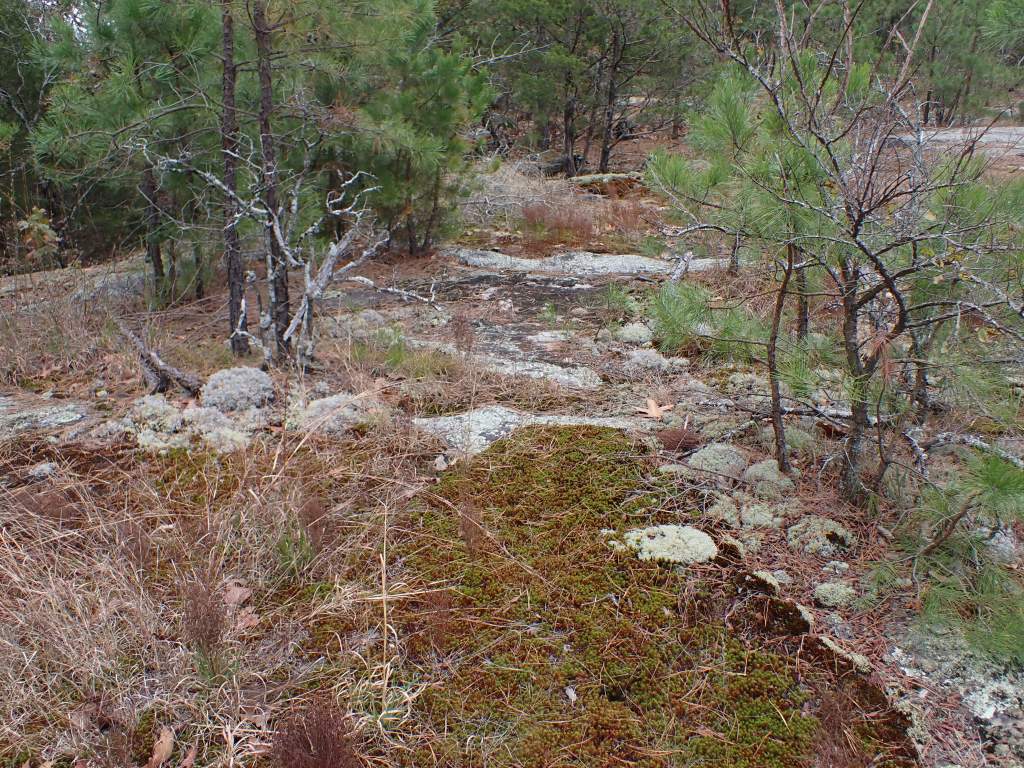
To get to the sandstone box canyons, one must first pass by sandstone glades. We couldn’t pass up the opportunity to see what species survive such harsh conditions within these miniature deserts. Polytrichum juniperinum and P. commune allowed us to explore the differences in leaf blade structures between the two species. Two Dicranums made an appearance; both D. condensatum and D. scoparium were found randomly throughout the glade.
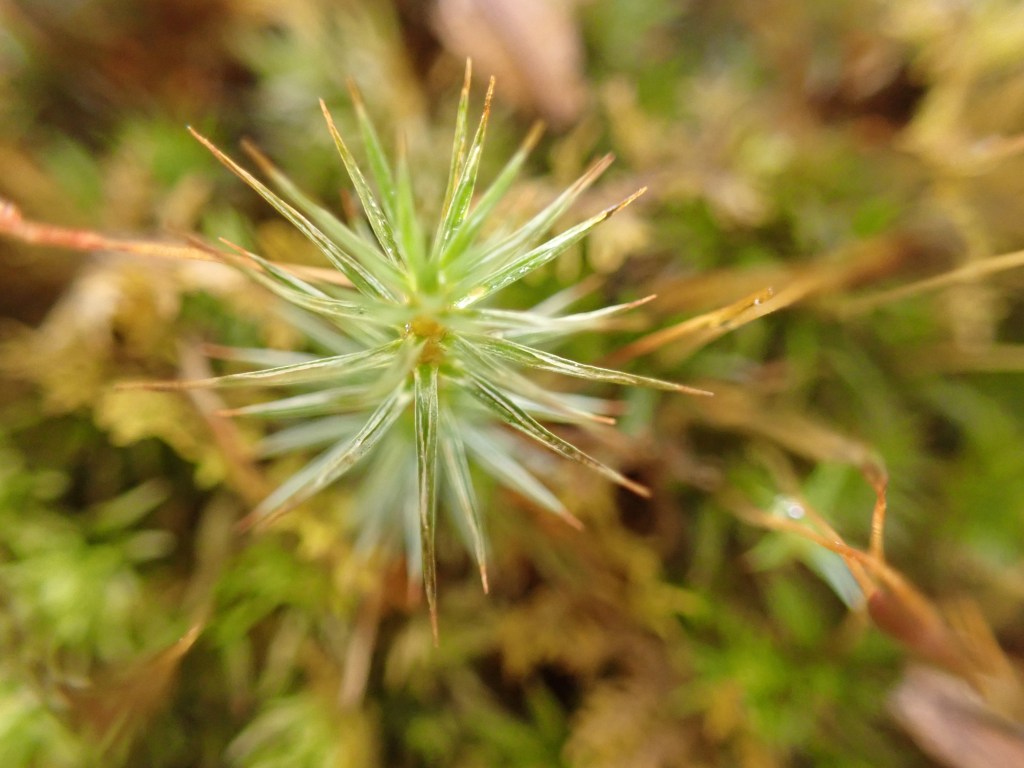
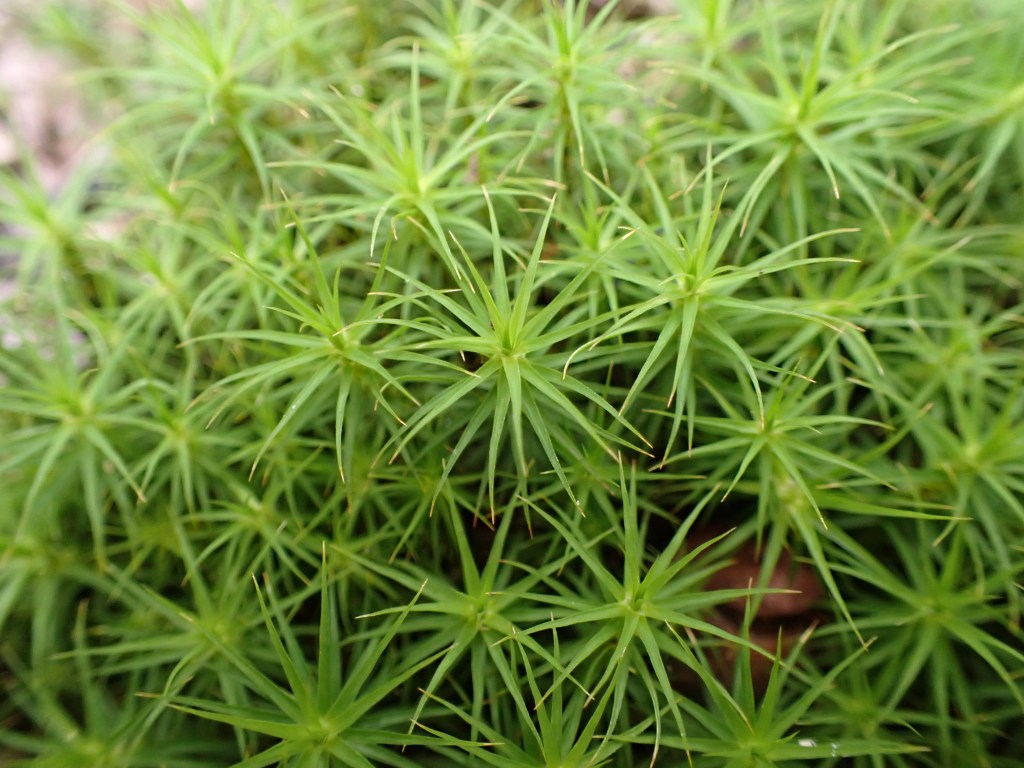
Above Left: Polytrichum juniperinum shows the “slit” down the center of the leaf blade due to the lamina wrapping around the blade. Above right: Polytrichum ohioense does not display a slit as the lamina does not wrap around the leaf blade.
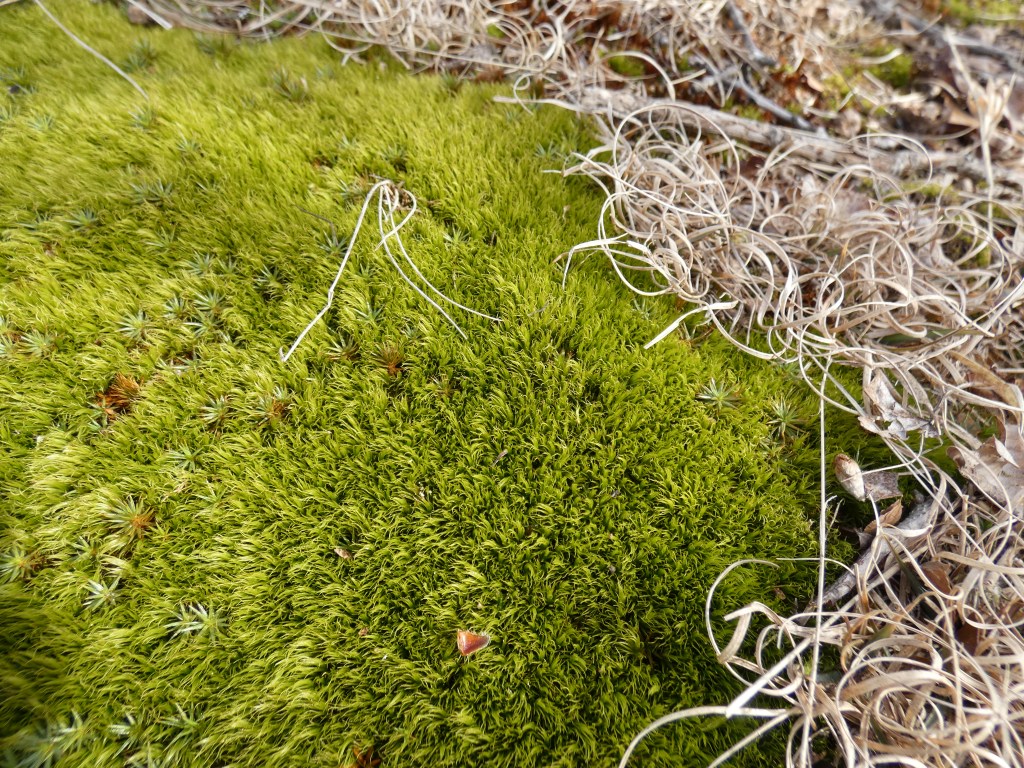
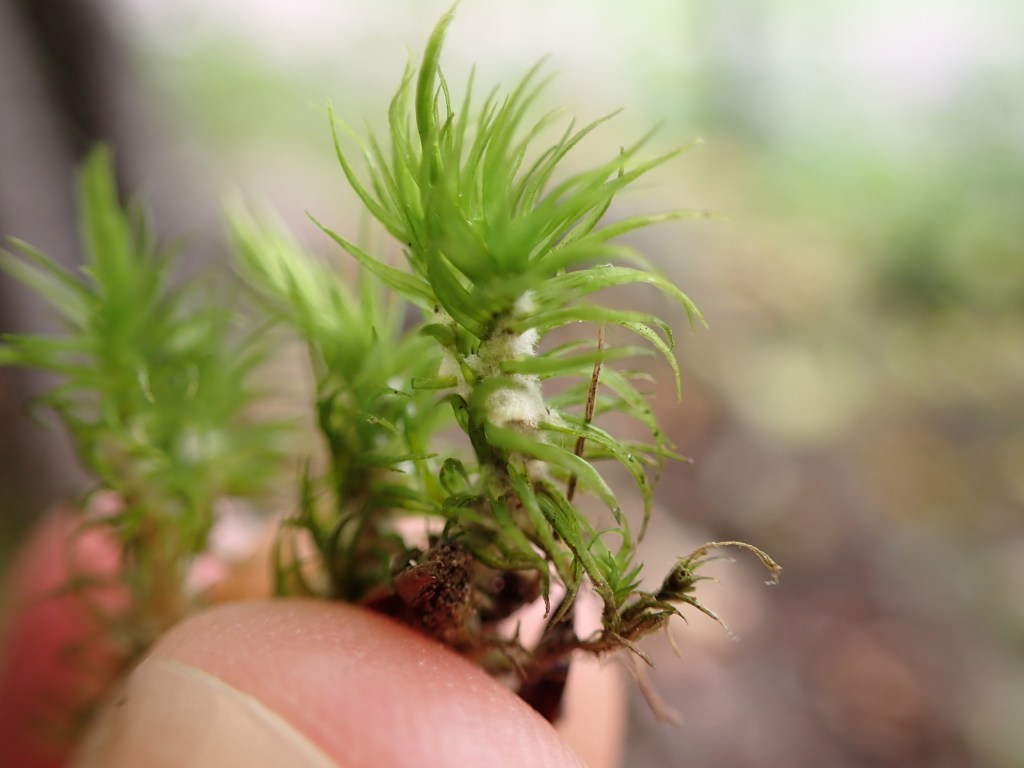
Above Left: Dicranum condensatum. Above right: Dicranum scoparium showing off its falcate/secund leaves along with the white tomentum found along the stem.
Grimmia laevigata provided a nice, silvery black covering over parts of the exposed sandstone bedrock. However, the most prevalent moss species on this sandstone glade was Campylopus tallulensis, a rather non-descript moss species when found in its glade form.
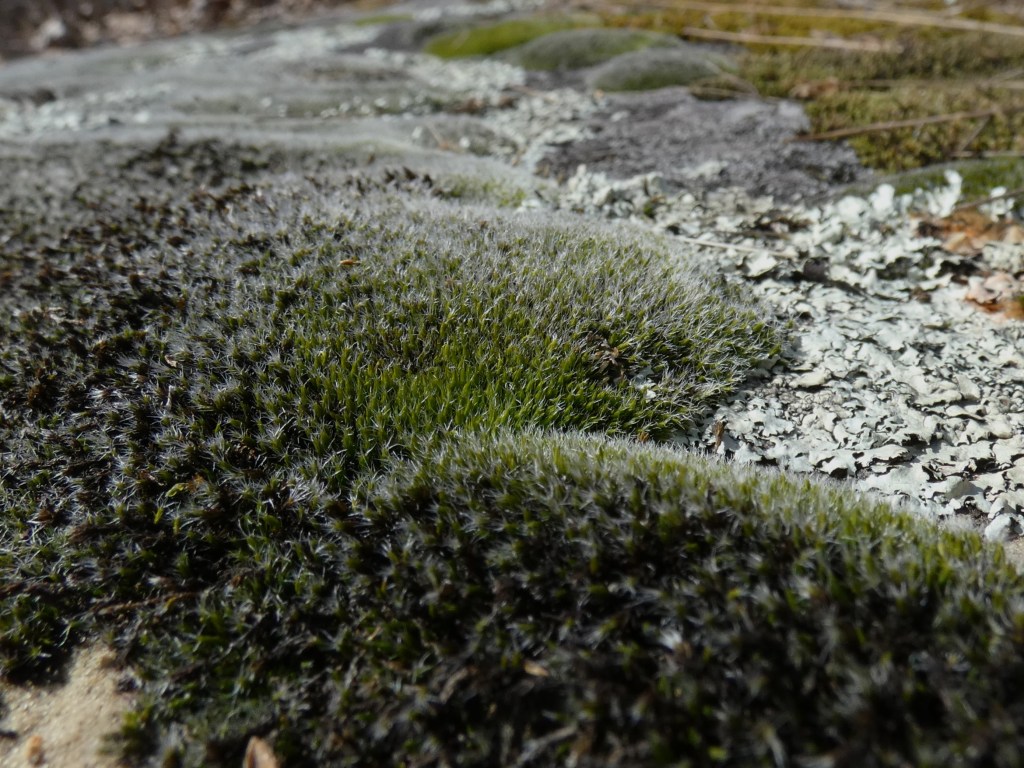
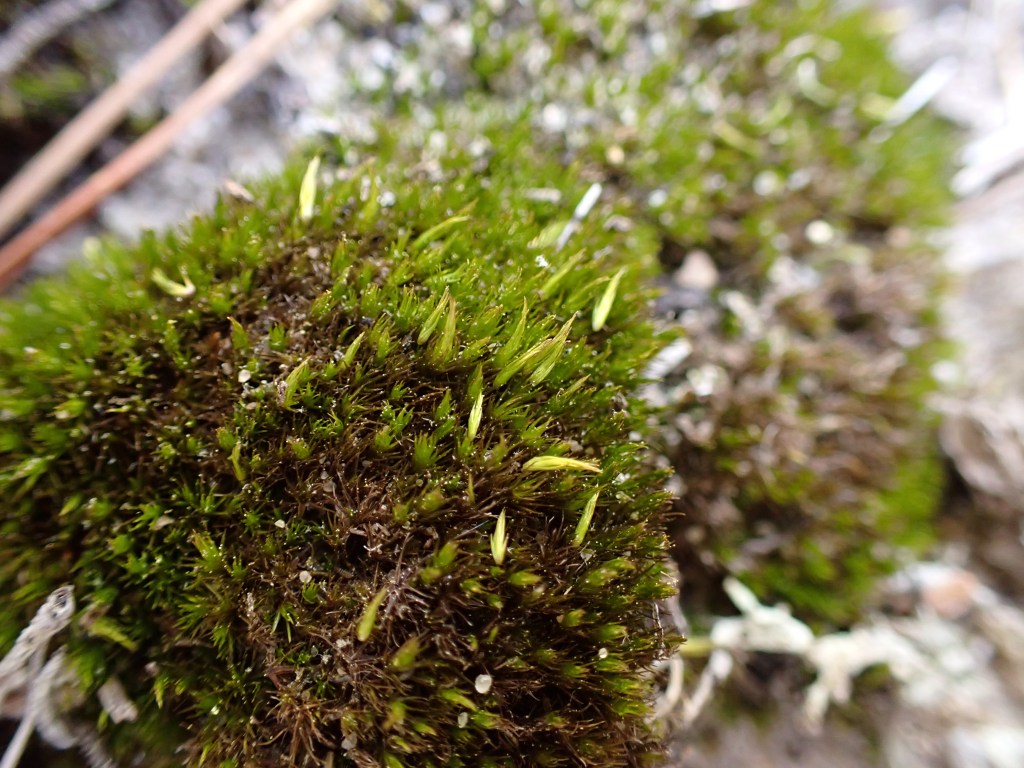
Above Left: Grimmia laevigata is a common sandstone glade species. Above right: Campylopus tallulensis in its glade form, is perhaps most recognizable by its shedding leaves.
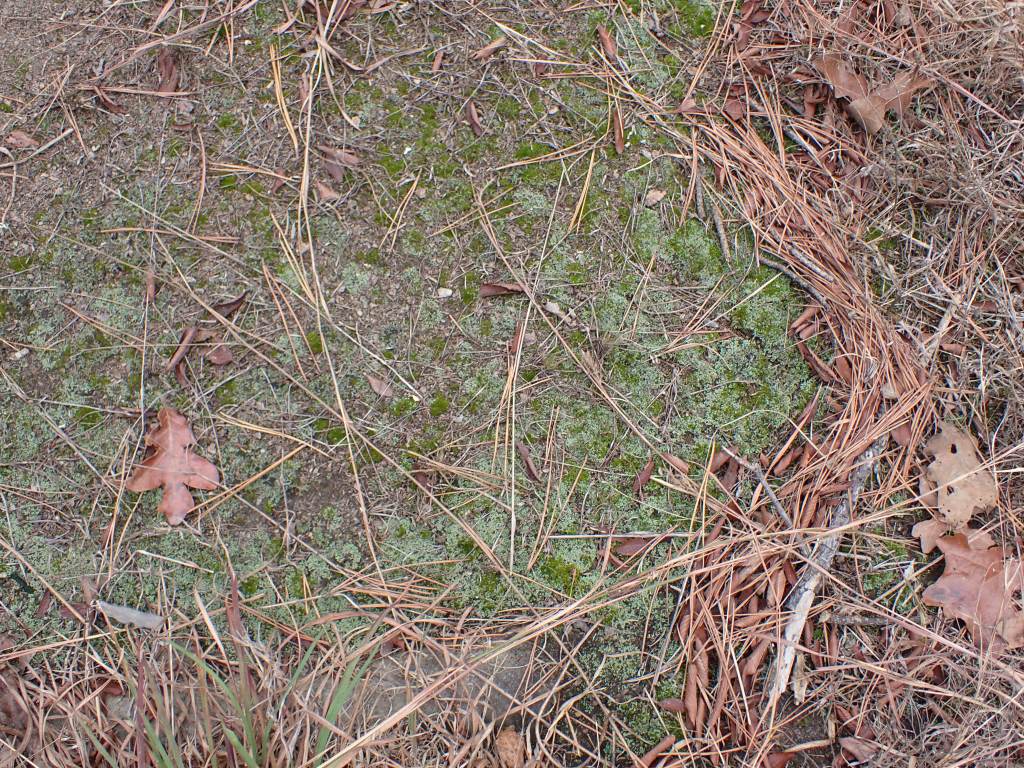
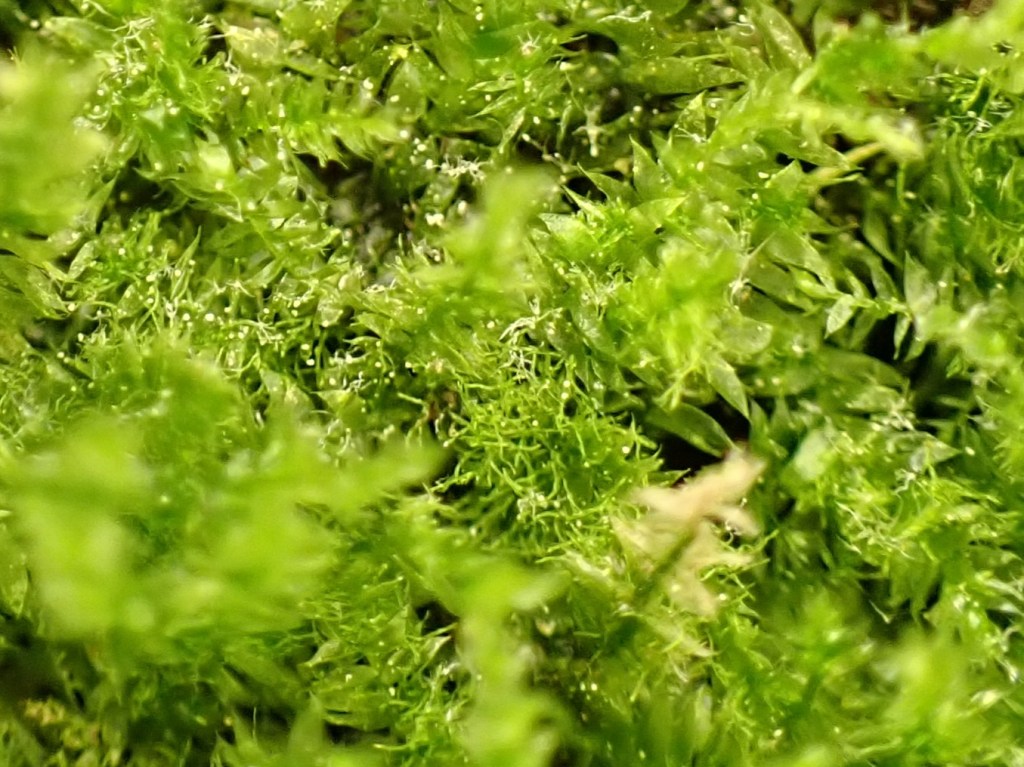
The bryophyte in the glade that brought us all to our knees, literally, was a tiny thalloid liverwort. The color, dichotomous branching in a rosette form, and lack of surface air pores, foretold that it was in the Riccia genus, but which species? Only the microscope would reveal the answers later at home.
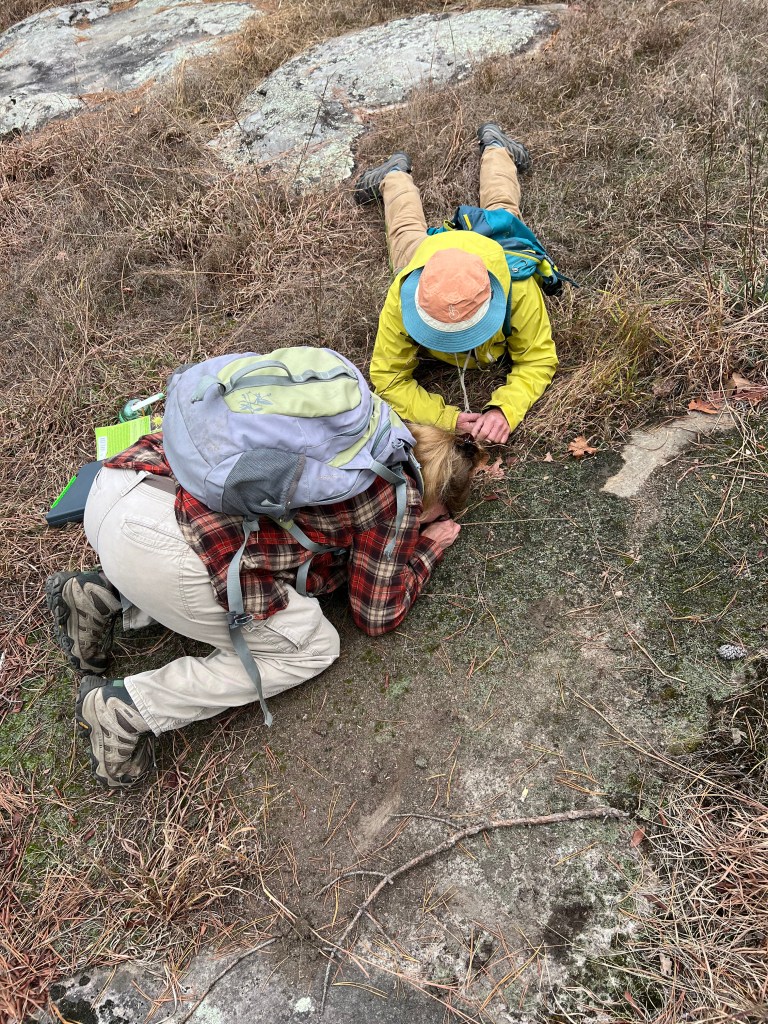
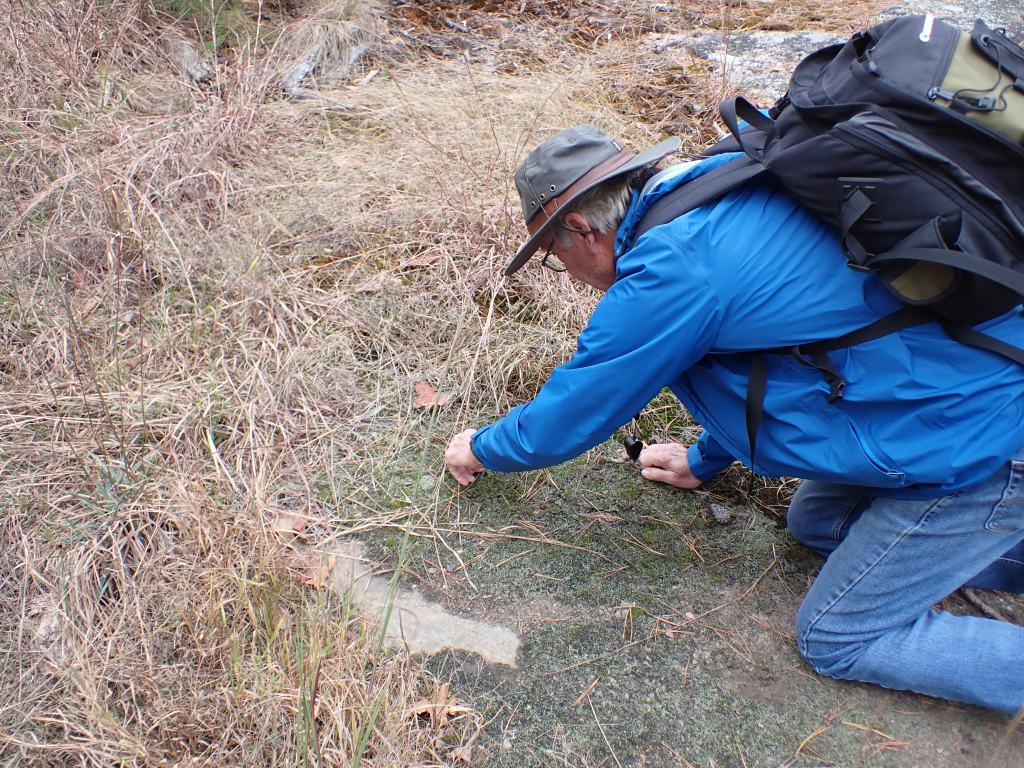
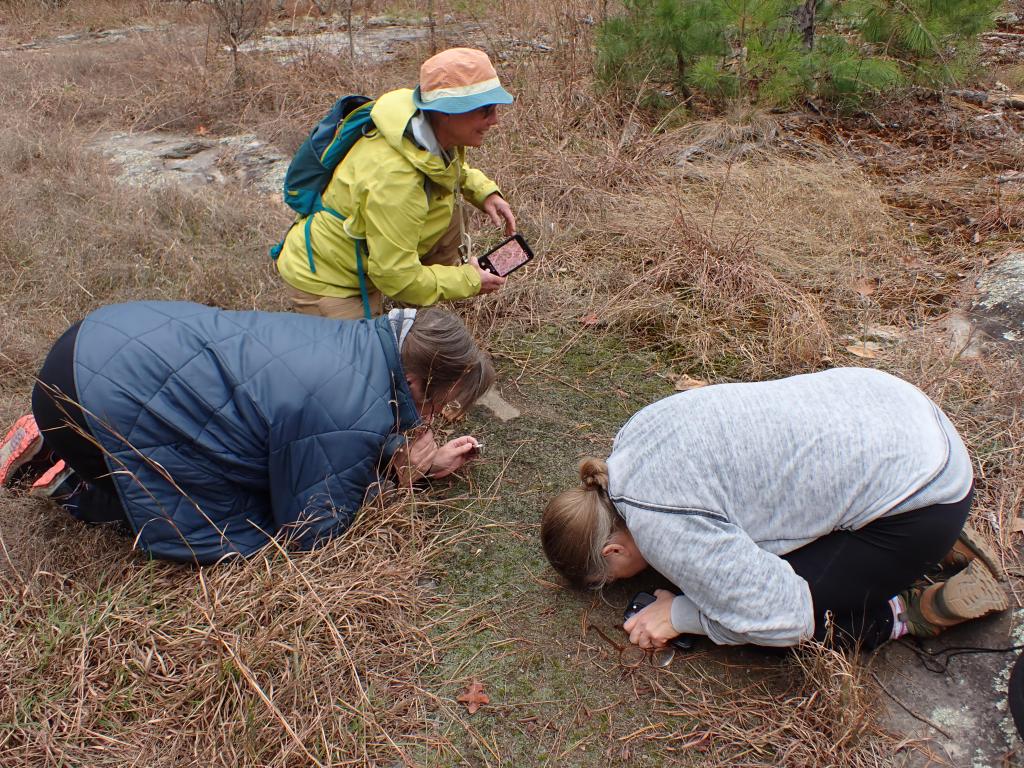
So what in the world are we looking at??!! (first photo courtesy of Brad)
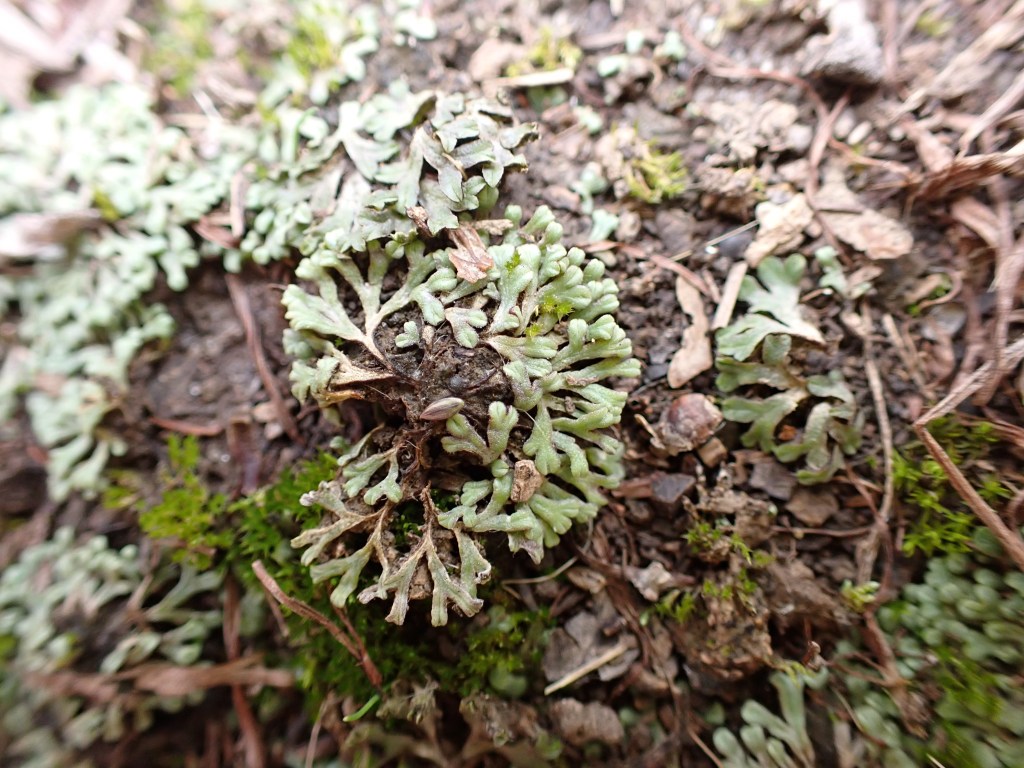
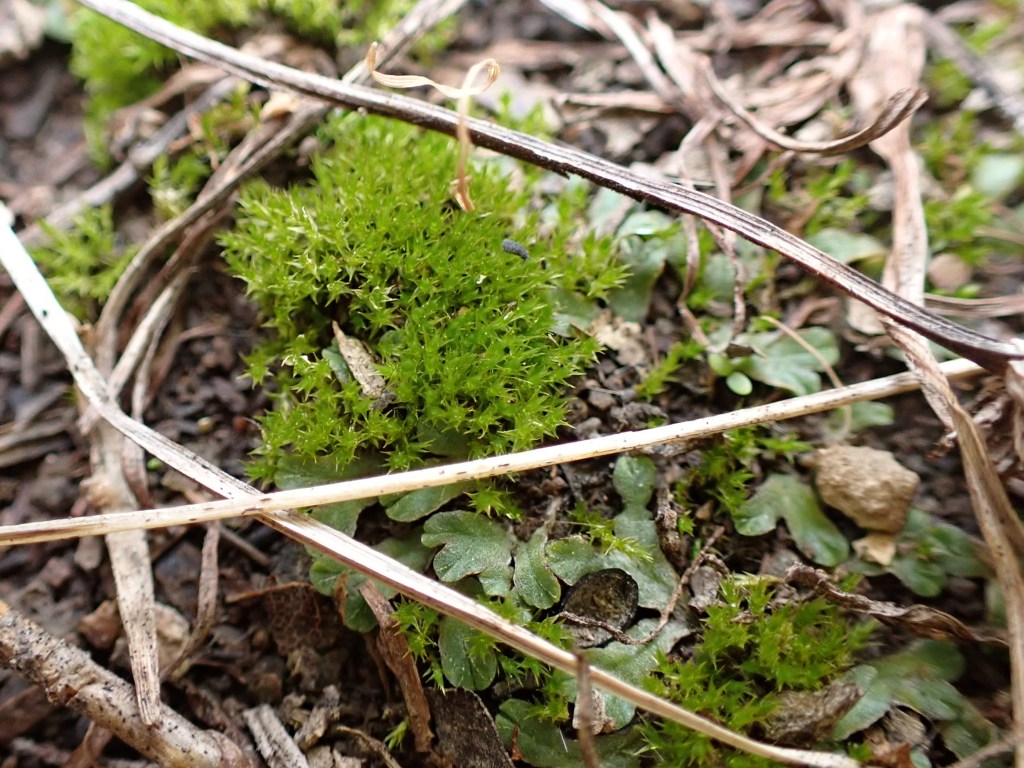
Before I get into the microscope pictures, the moss that was found mixed with this little liverwort was likely Ditrichum lineare. It has a habit that when viewed from a distance, it looks soft and inviting, but when seen up close…you can see the stout, awl-shaped leaves. I have found this moss species before, entangled with another thalloid liverwort, Mannia fragrans. I wonder if it has an affinity for these liverworts, or if they both just like the same locations and play well together.
There are 18 Riccia species reported for Missouri (Atwood, 2014). Using Schuster’s keys, I did the best I could to determine the species. The lack of cilia, the blackish-purple color of the scales, the smooth rhizoids and the mat forming habit, all point to Riccia dictyospora, which is a species of conservation concern.
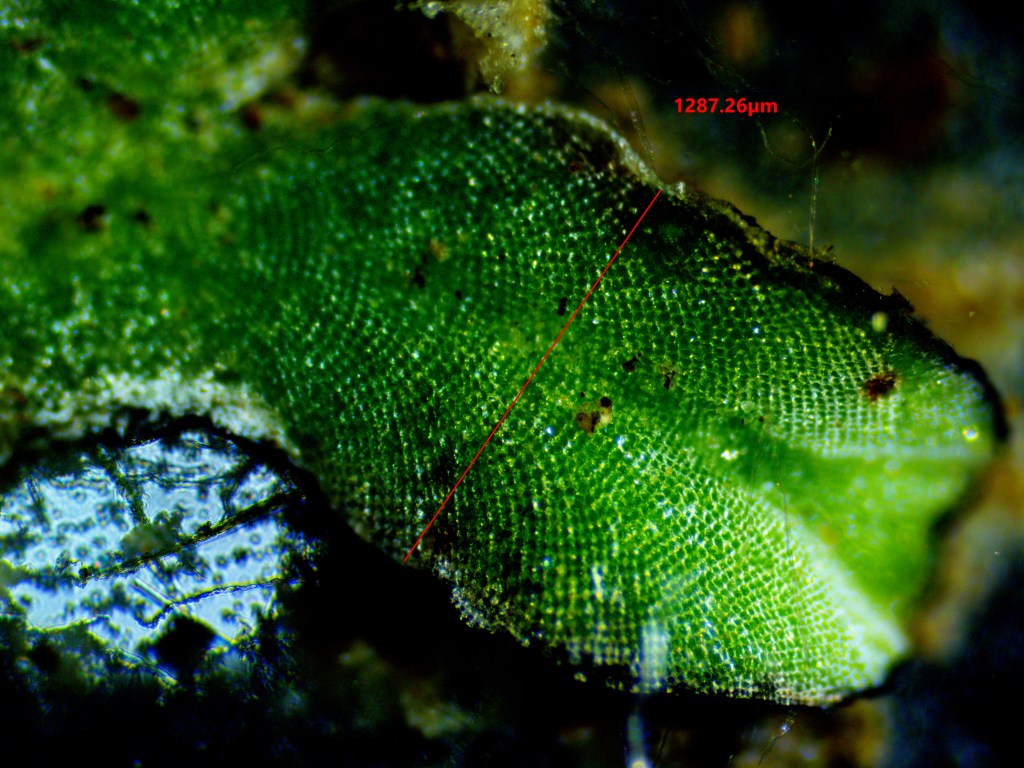
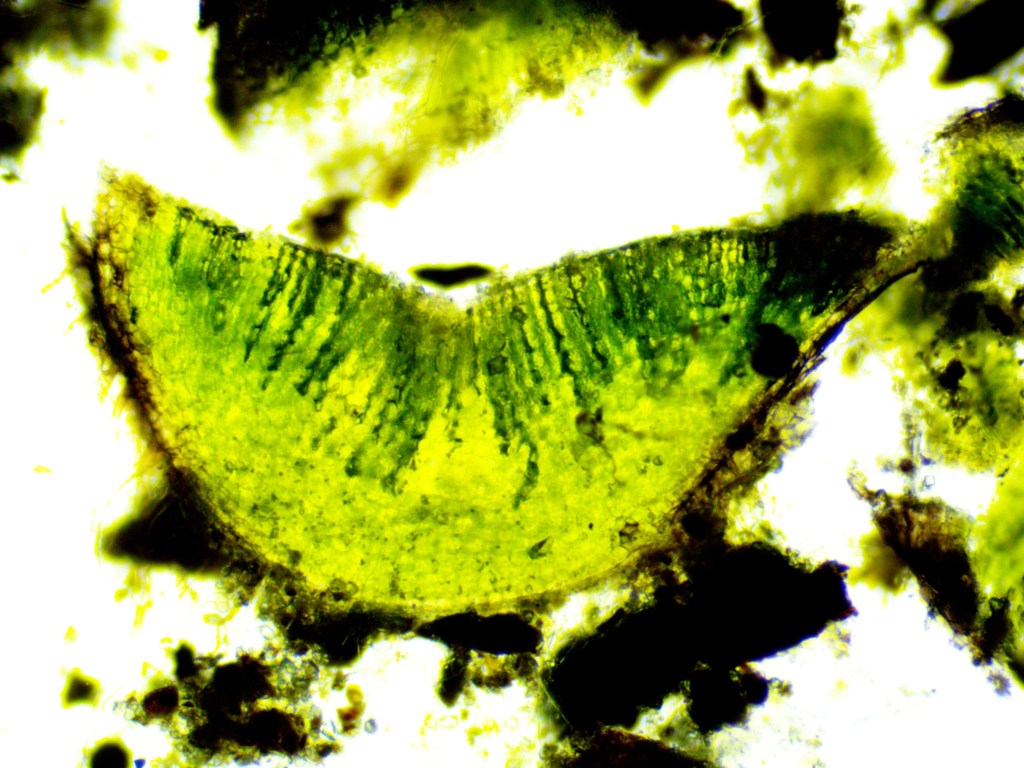
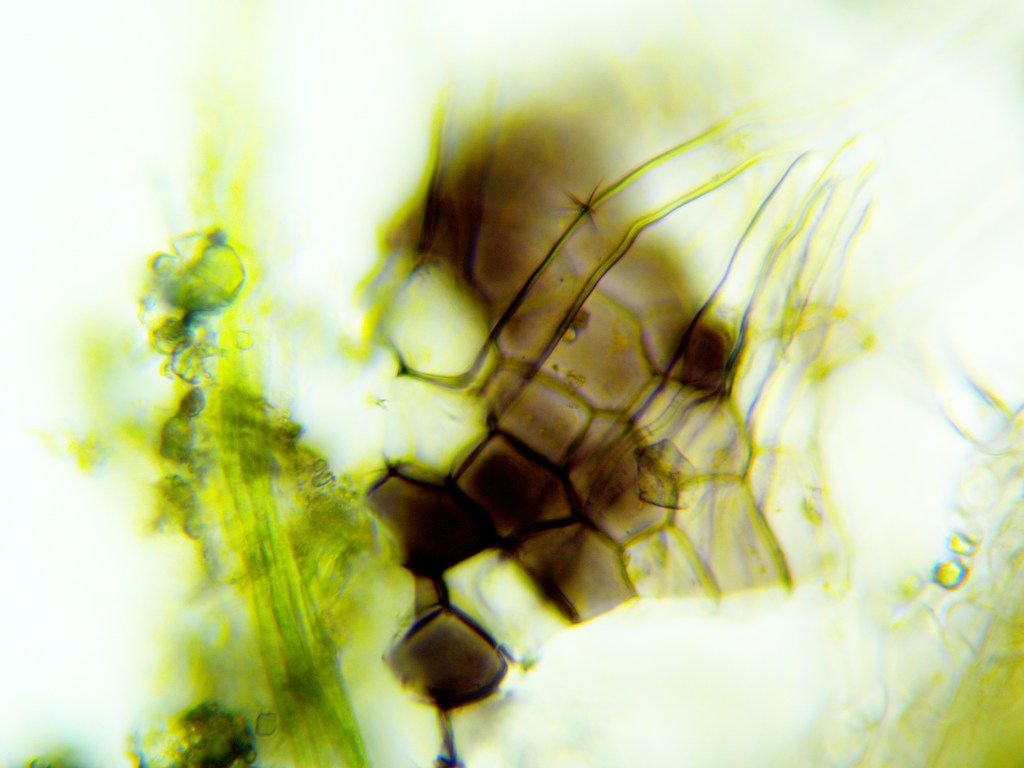
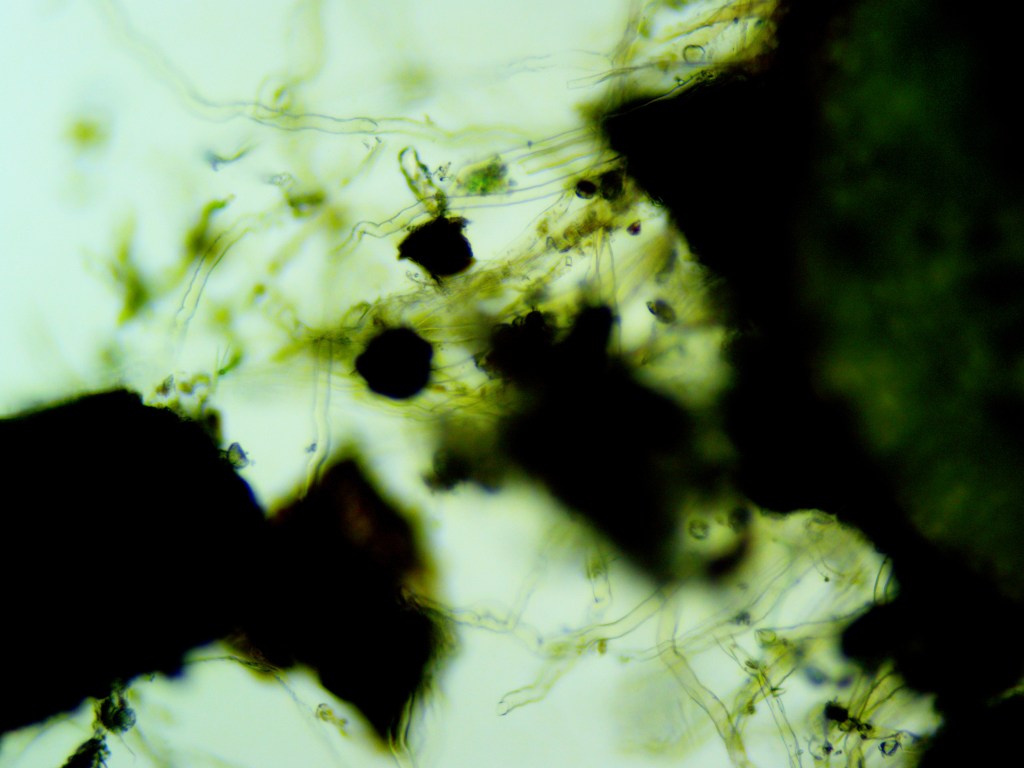
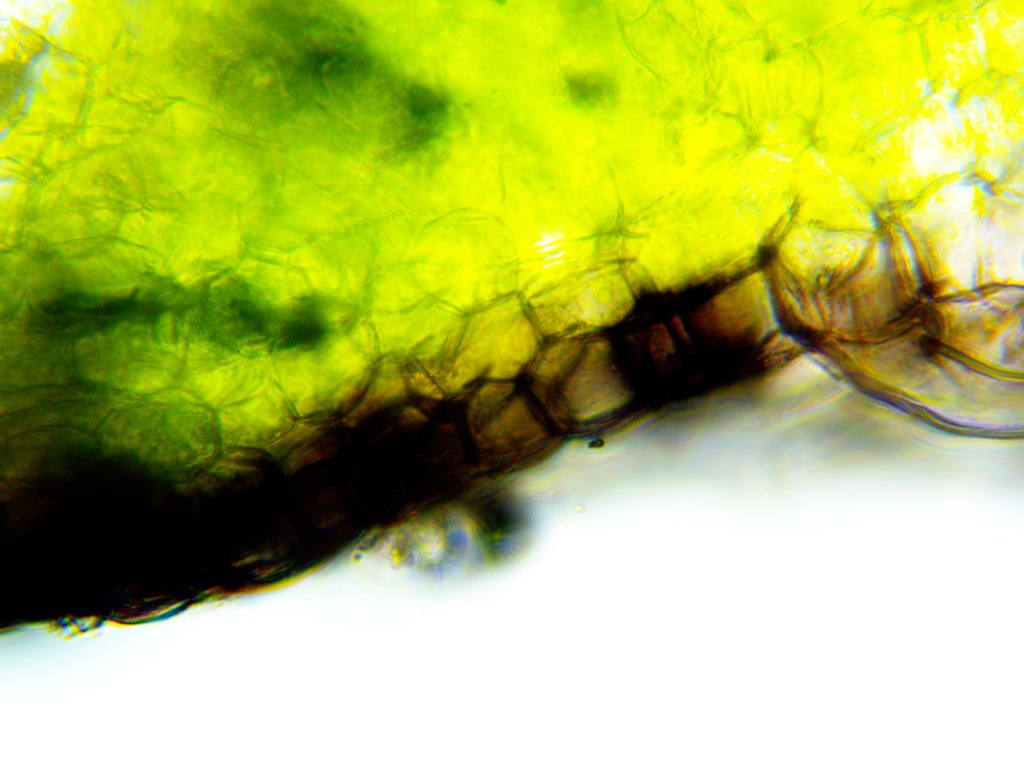
Top Left: Thallus up close showing no cilia, and no scales that extend past the thallus. Top middle: Cross section showing blackish-purple scales. Top right: Part of a scale. Bottom left: The rhizoids are all smooth. Bottom right: Close up of cross section of a scale.
We finally moved past the glade and made our way down to the sandstone box canyon. We had hoped to see Diphyscium foliosum, but alas, nothing was obvious to us. We did find Thamnobryum subserratum, what I often call the upside down Climacium americanum, and plenty of Atrichum crispum.
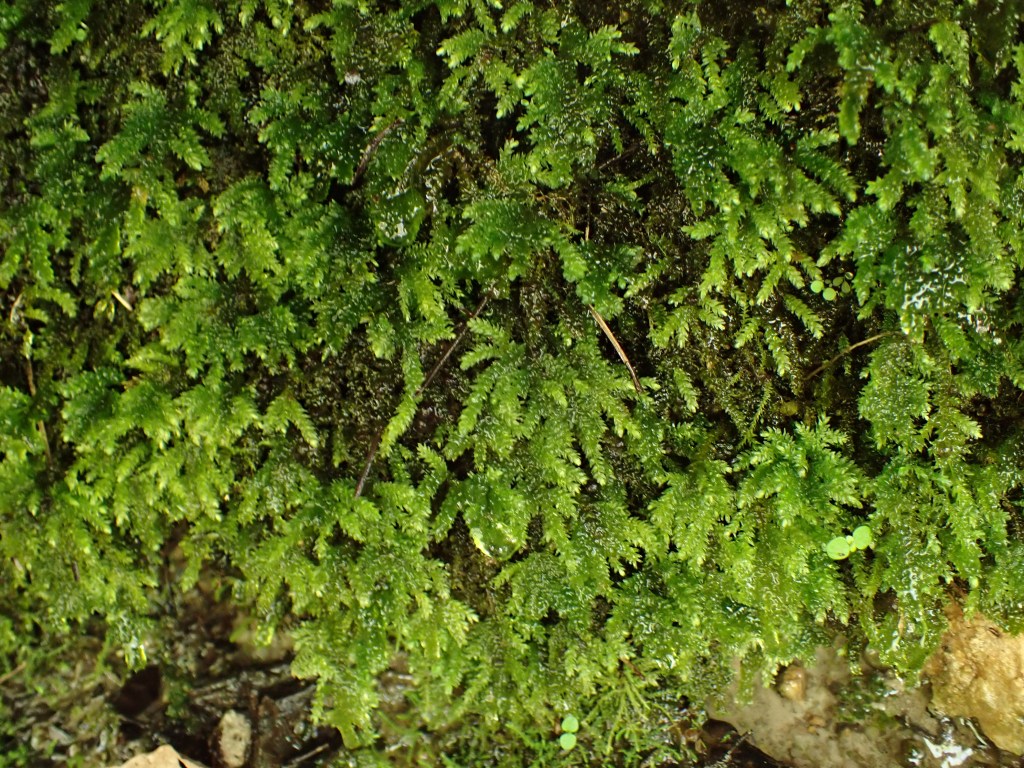
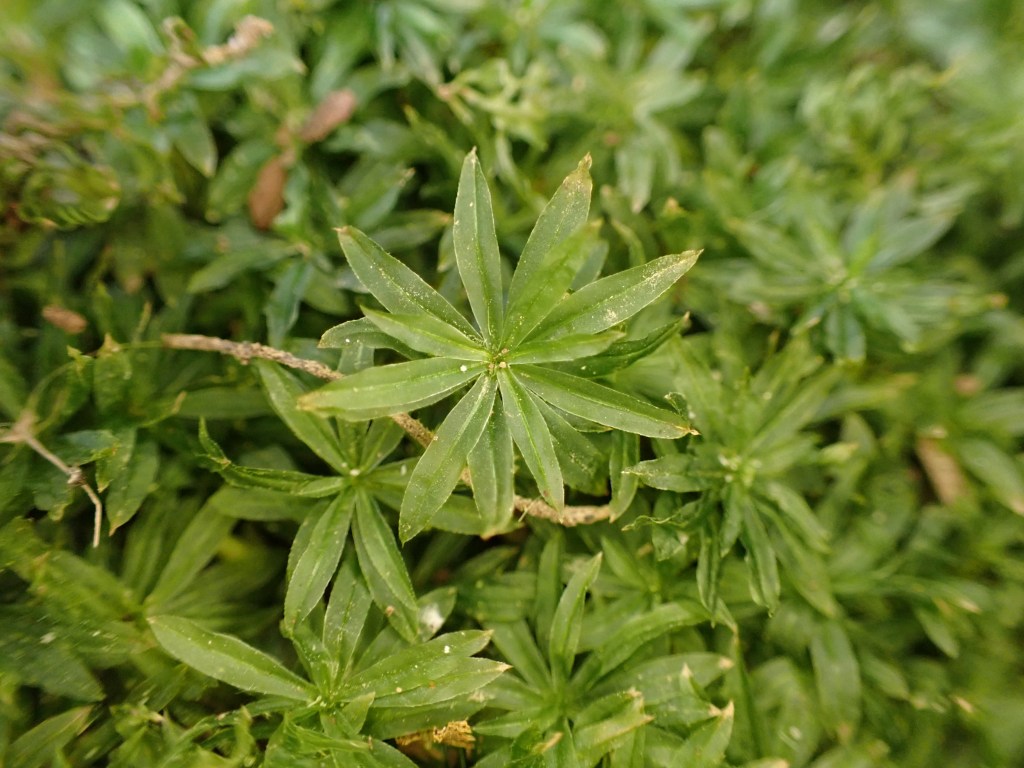
Above left: The tree-like moss, Thamnobryum subserratum, likes to gracefully fall from its substrate. Above right: Atrichum crispum is our easiest Atrichum species to identify in the field in Missouri with its distinct, ovate-lanceolate leaves.
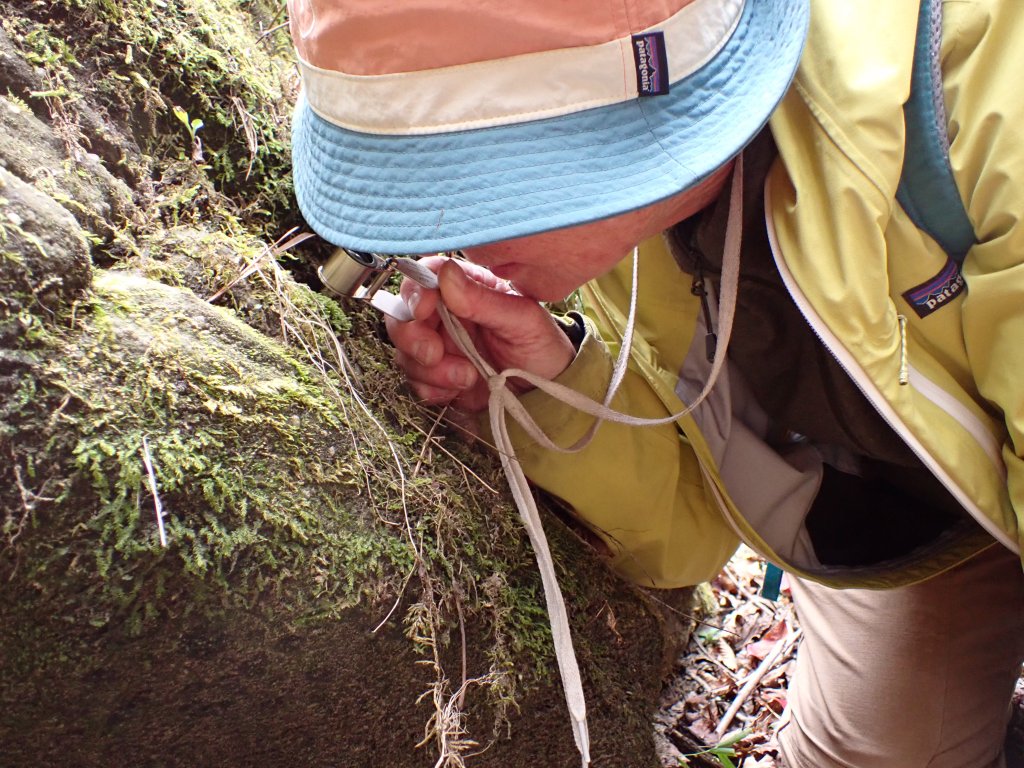
There were many liverworts to be found. Micki is checking out Plagiochila porelloides

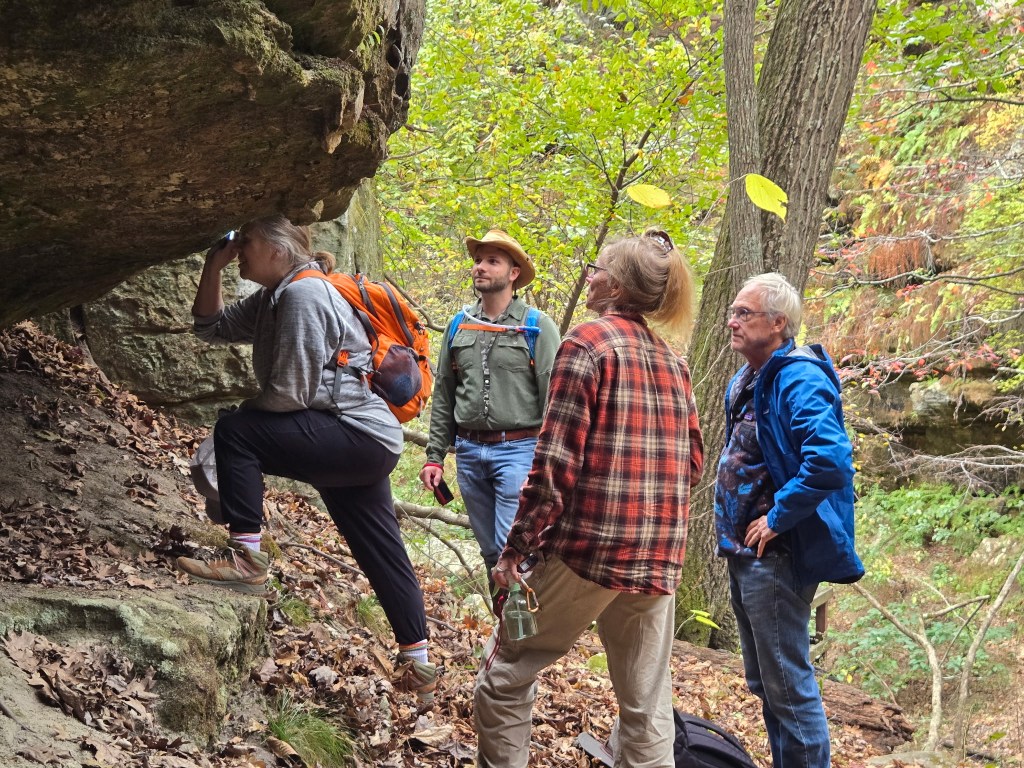
Hilary is checking out the moss Pseudotaxiphyllum elegans with all its gemmae. (People photo courtesy of Micki)
Some fun action shots all around!
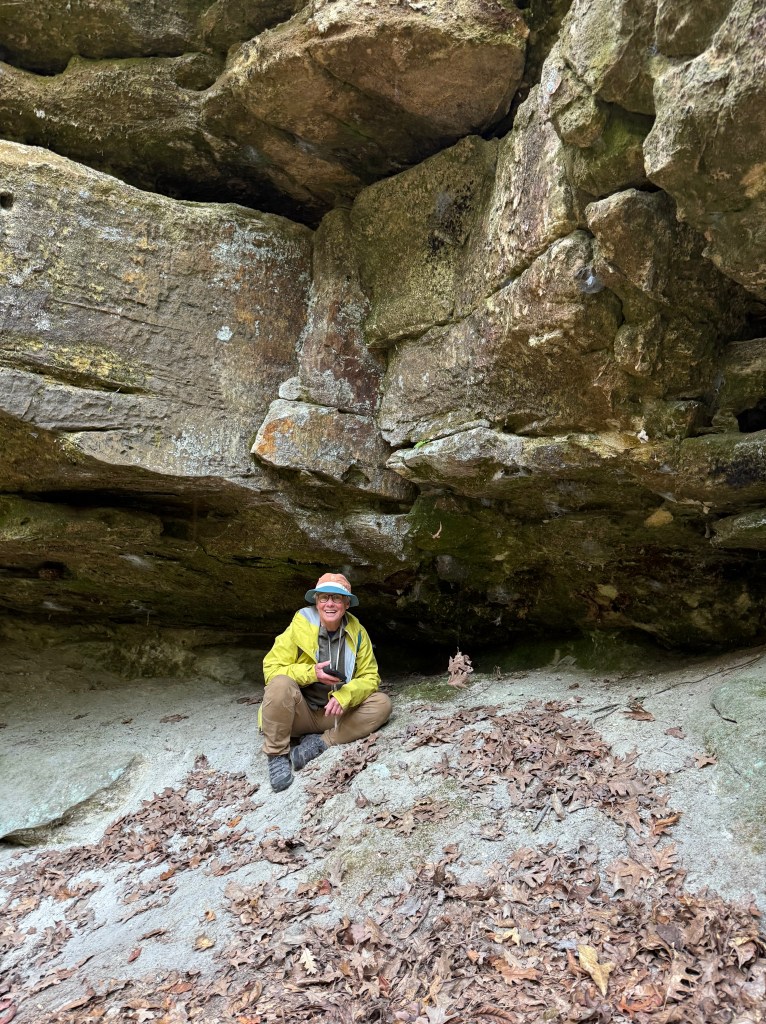
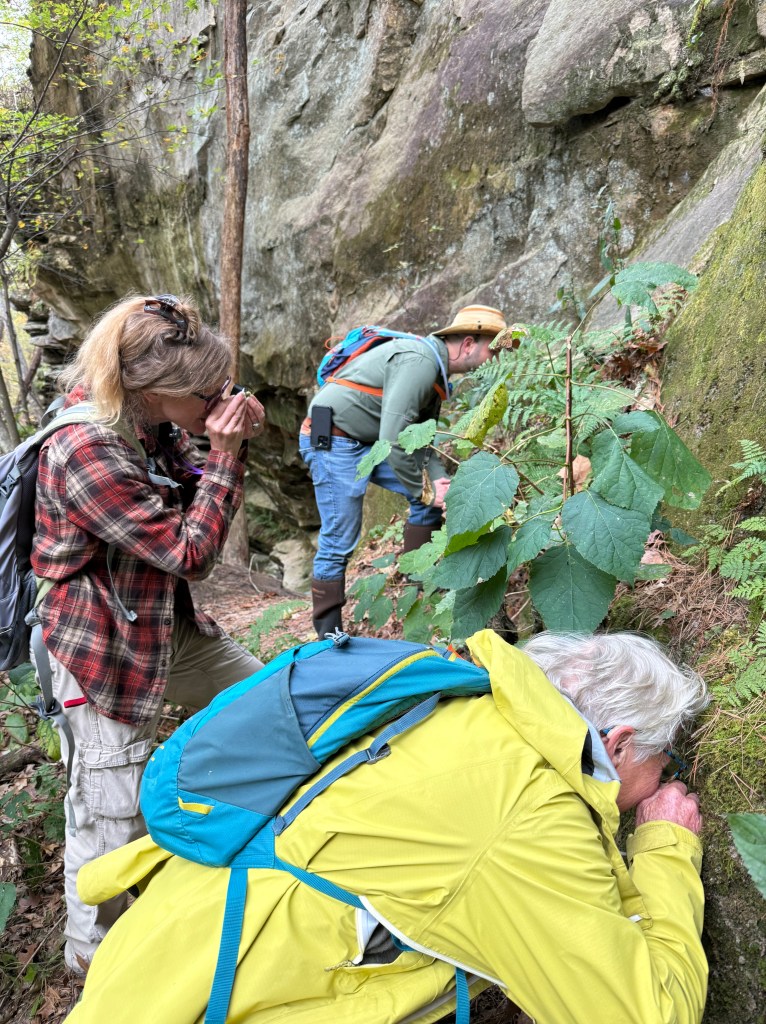
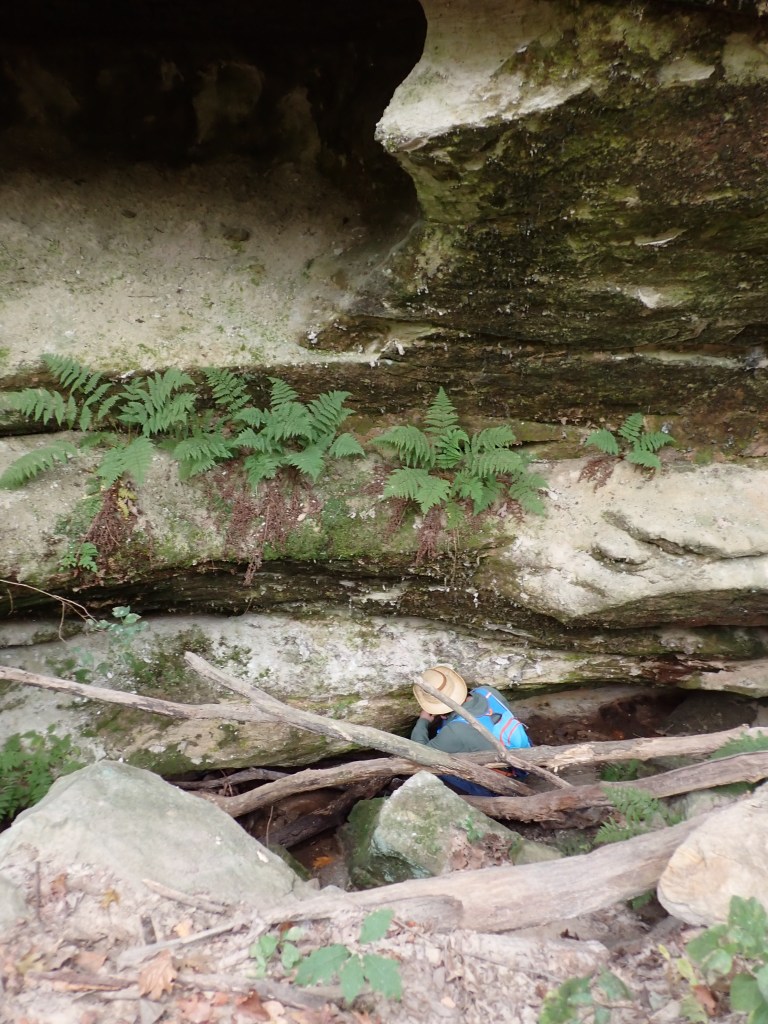
Above left: Micki taking a break (photo courtesy of Hilary). Above middle: I believe we were all looking at the moss Tetraphis pellucida (photo courtesy of Hilary). Above right: Blake fell in a hole. JK…he was checking out a bright green protonema looking substance on the sandstone wall.
This little thalloid, ribbon-like liverwort was dangling underneath a sandstone rock ledge. It reminded me of Riccia fluitans which is found in water. However, this terrestrial species is Metzgeria conjugata. Micki….here’s your Metzgeria🙂
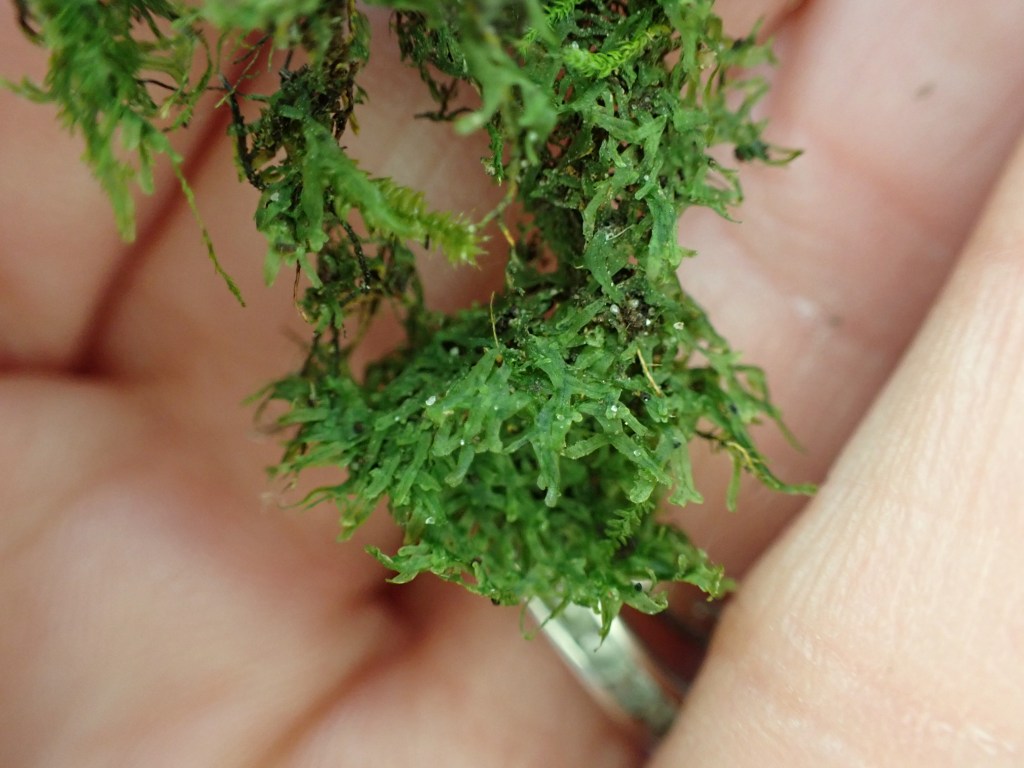
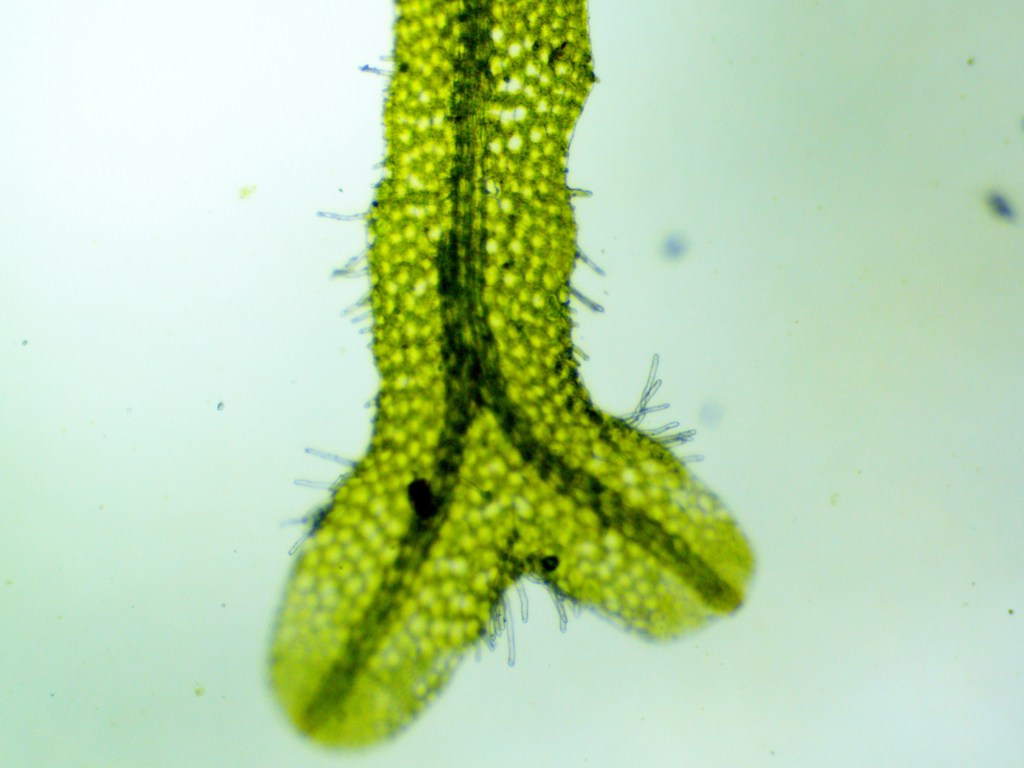
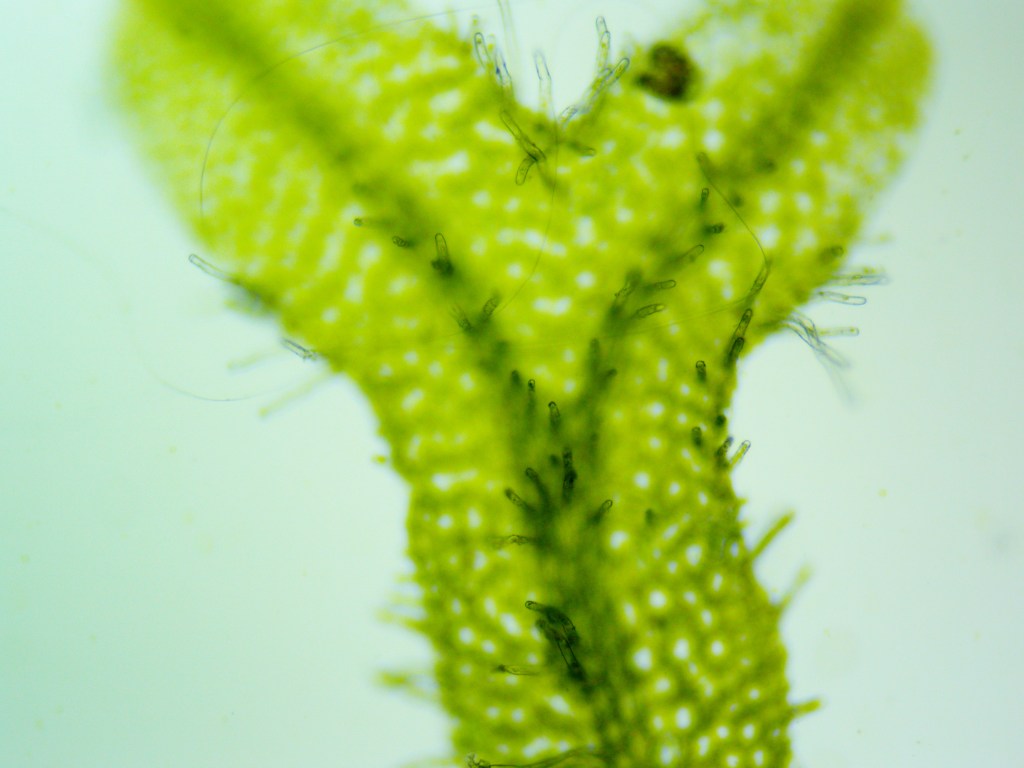
Above left: Dried specimen. Above middle: Dichotomous branching is seen here, and the thallus lacks gemmae. Above right: Cilia are restricted to the margins and back of the midrib. The focus is adjusted to let you see the cilia on the midrib better.
At the waterfall, we did find the moss Syrrhopodon texanus, the fuzzy wuzzy leafy liverwort Trichocolea tomentella, and the translucent-ish thalloid and ribbon like liverwort Pellavicinia lyellii.
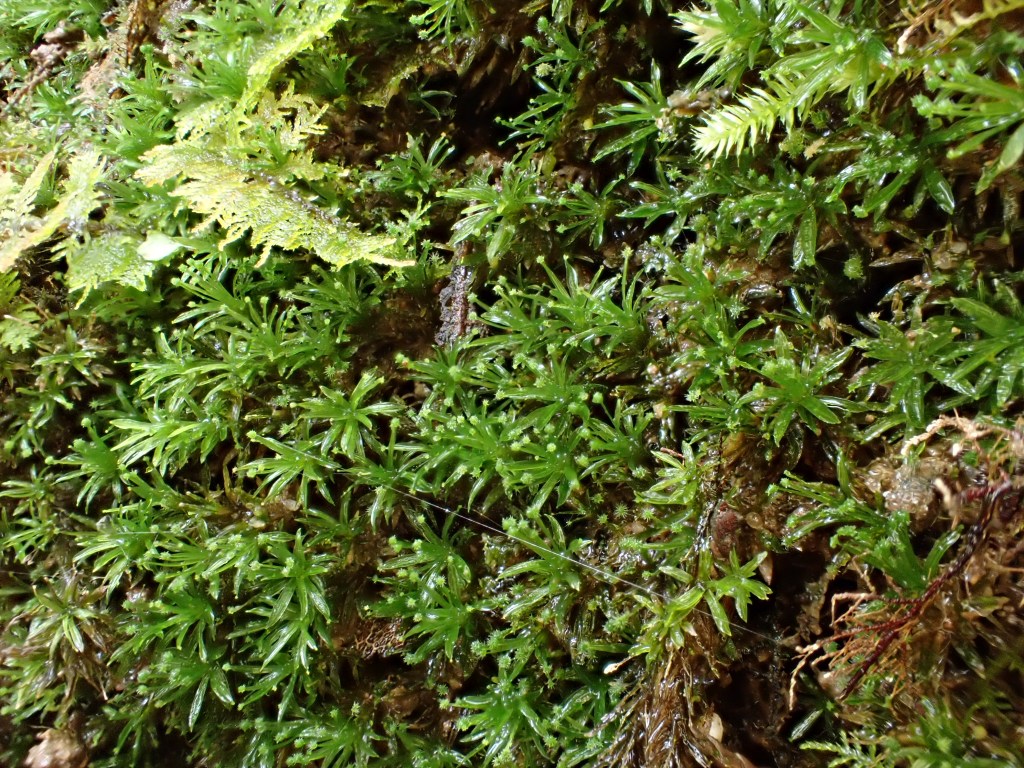
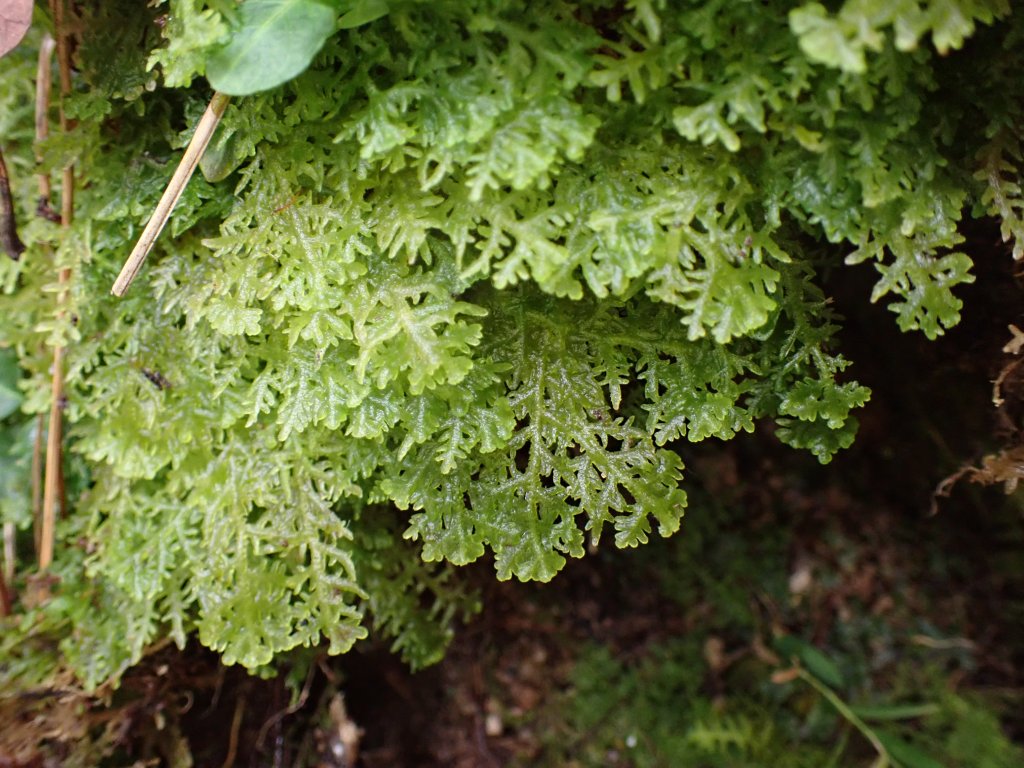
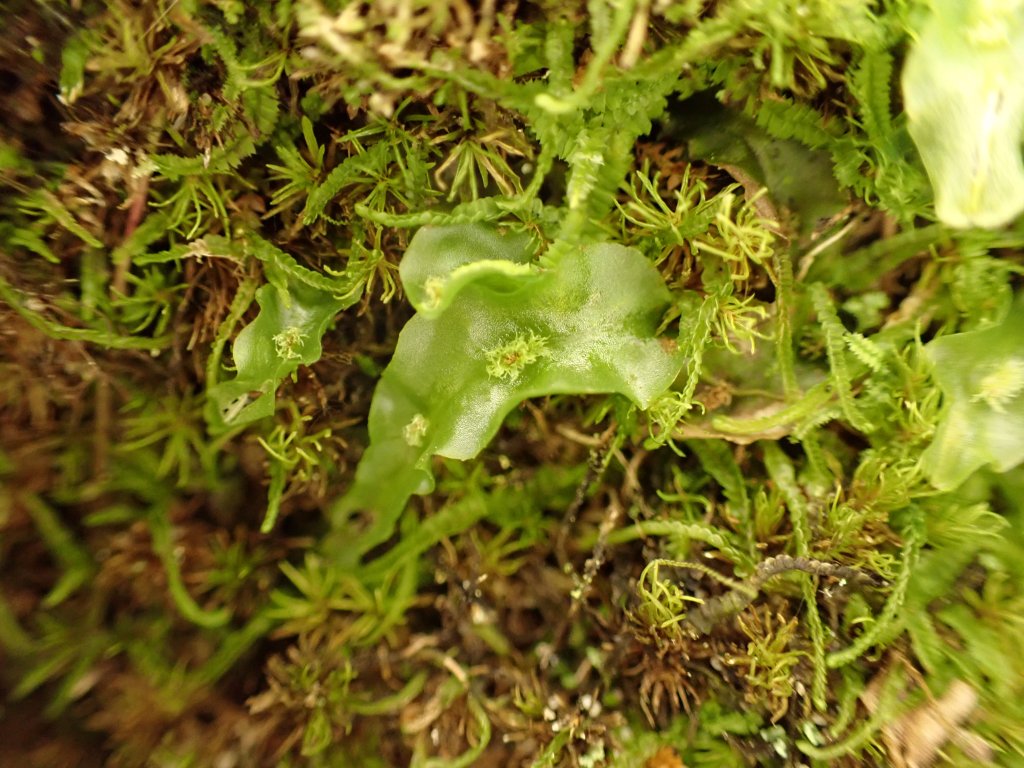
Above left: Syrrhopodon texanus sporting the gemmae at the tips of modified leaves; Above middle: A leafy liverwort with very ciliated leaves, Trichocolea tomentella. Above right: A female plant of the ribbon-like liverwort Pellavicinia lyellii with the circular fringe seen in the center of the thallus protecting the female reproductive organ buried in the thallus.
Pickle Springs Natural Area is a special and unique area hosting an array of rare plants. This area is well visited, and it can be said that it is being loved to death. Please always respect this area and follow the leave no trace principles. To be sure, I do have a collection permit from the Missouri Department of Conservation allowing me to respectfully explore the area and to collect samples.
While this is the last scheduled hike/crawl for the 2025 season, there is always a chance I might schedule a “pop up” crawl if the weather looks nice, so be sure to check my events page often. I will likely start the crawl schedule back up in 2026 by chancing a March crawl somewhere. It sounds like Blake might have a good idea for an outing that, quite literally, will be a crawl! Until then, stay safe and happy mossing!

 Mosses of Missouri and Beyond
Leave a comment