
O Kun de Kun falls is on the Baltimore River and is found in Ontonagon County, Upper Michigan. I first visited this fall in 2023 with family, and so I was unable to moss snorkel to the extent that I like. This year I was able to come back with my patient husband and take some time to explore the bryophyte diversity in this sandstone river system.
Everything was green and lush this year, and the water was really flowing as compared to two years ago when the area was almost drought like, and the poor bryophytes were in desiccation/survival mode. Due to the flow of water coming over the falls, I was unable to climb behind the falls this year, but there was plenty to see everywhere else. I think my most exciting find was a robust population of Saelania glaucescens tucked safely under a sandstone ledge to the west of the waterfall. Its gray/blue/green color is distinct and stands out amongst all the other variously green colored bryophytes.
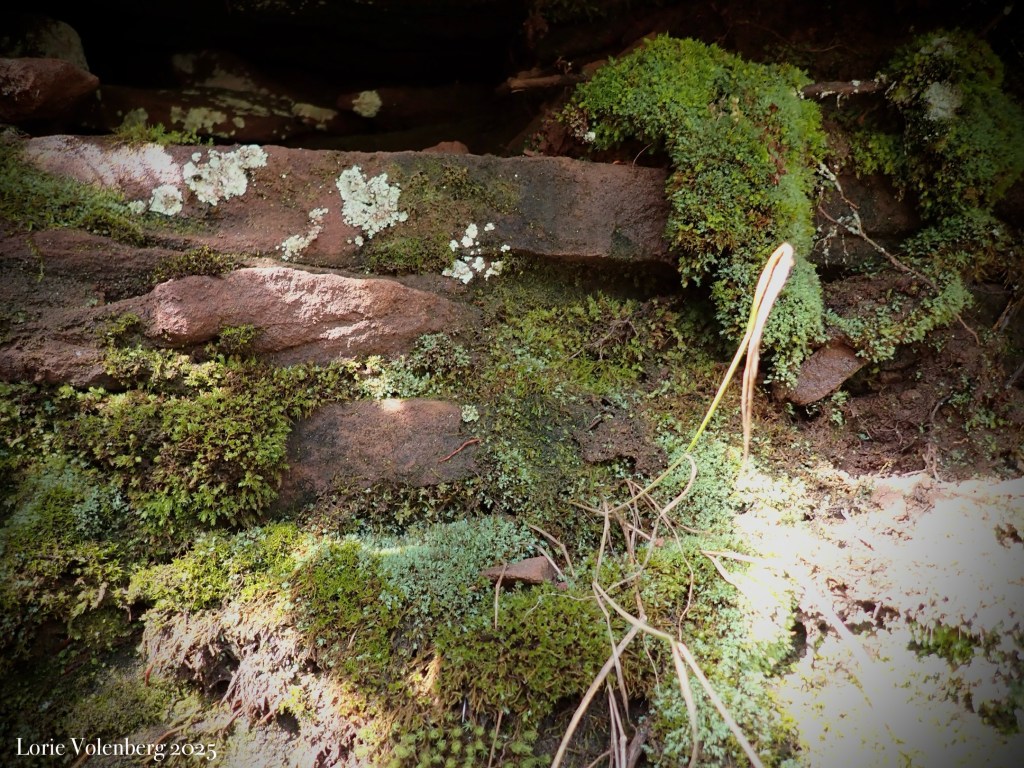
Missouri has two reports for this species, with one dating back to 1938 in Camden County. I attempted to find this population last year to no avail. The area is in bottomland by a river, so no doubt the topography has changed within the past 90+ years, making the odds of finding this population (assuming it still exists) limited. The second population was found in 2013, but I have not had a change to try and locate it. Needless to say, I was ecstatic to see this moss in person, and to find such a lovely population was even more exciting.
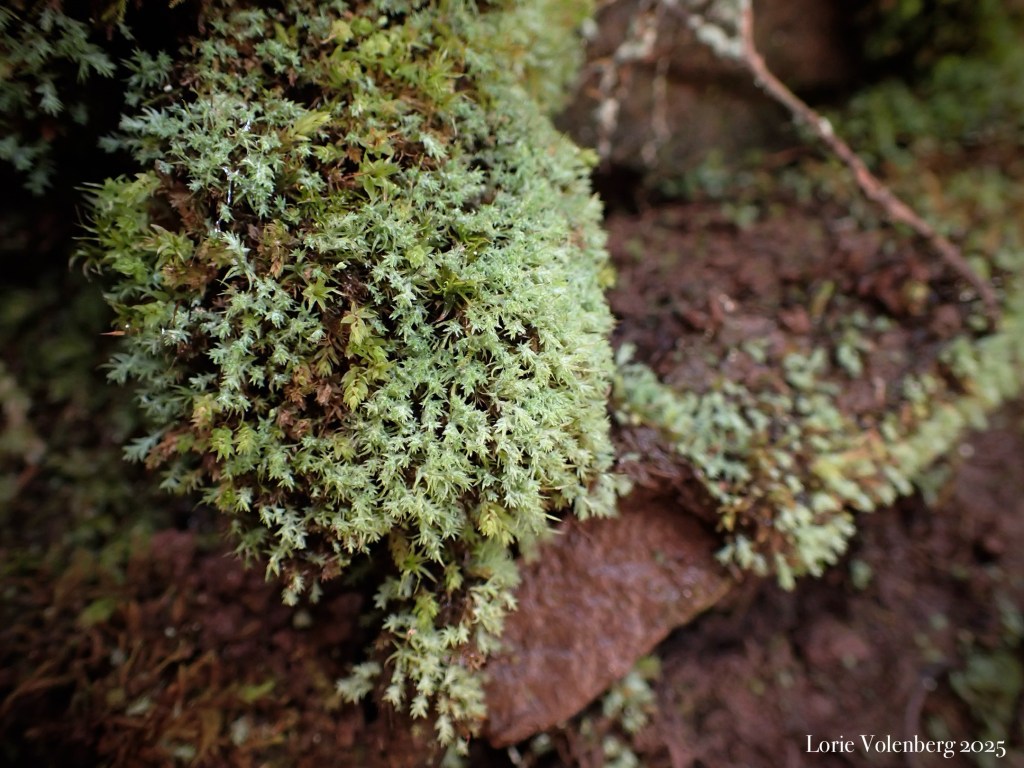
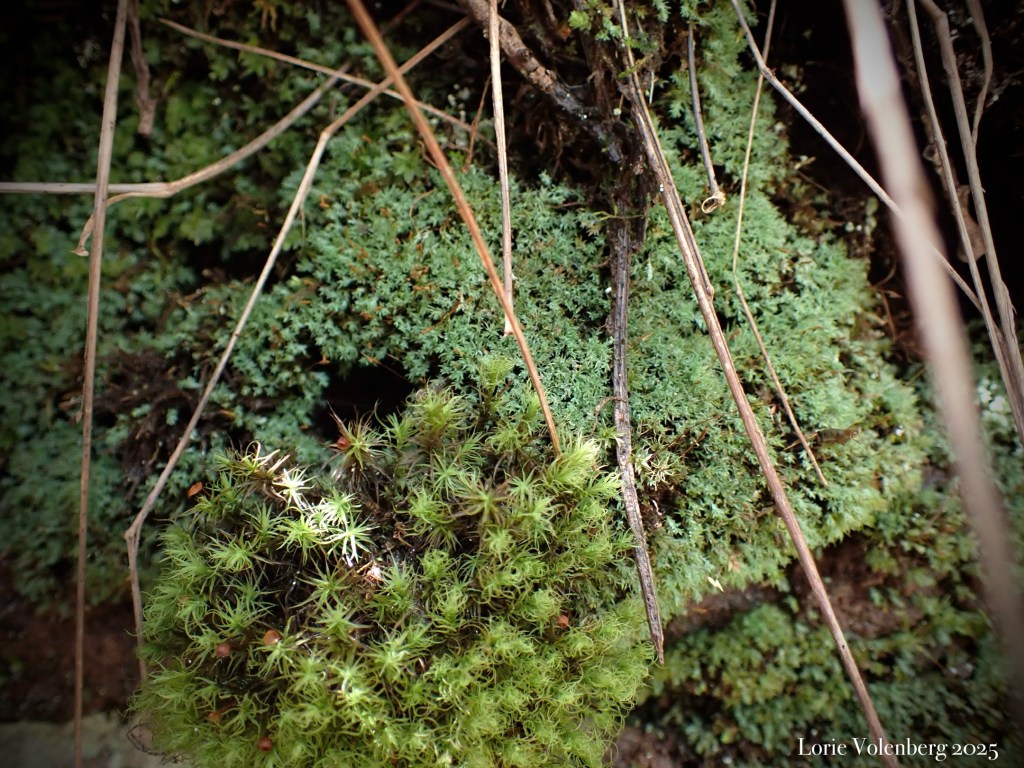
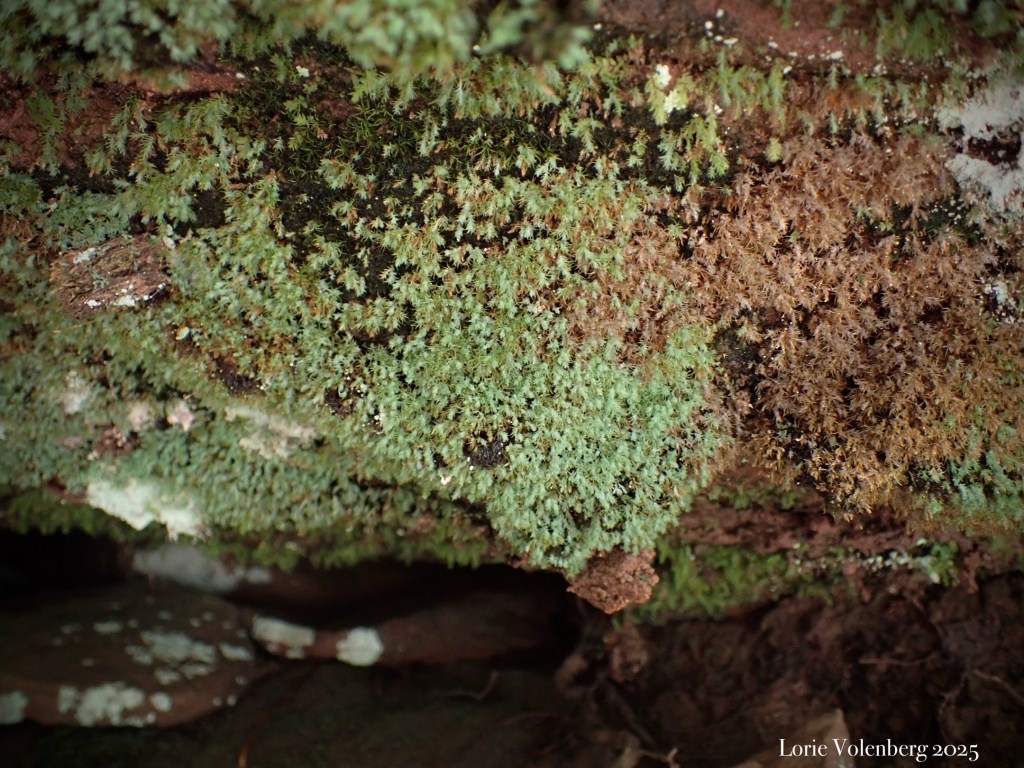
For a long time, the color of this moss was attributed to a cyanobacteria or fungal relationship. It wasn’t until 1971 that the cyanobacteria/fungal theory was put to rest, and it was discovered that this moss produces diterpene in whitish, waxy filaments instead, creating this moss’s fantastic color.
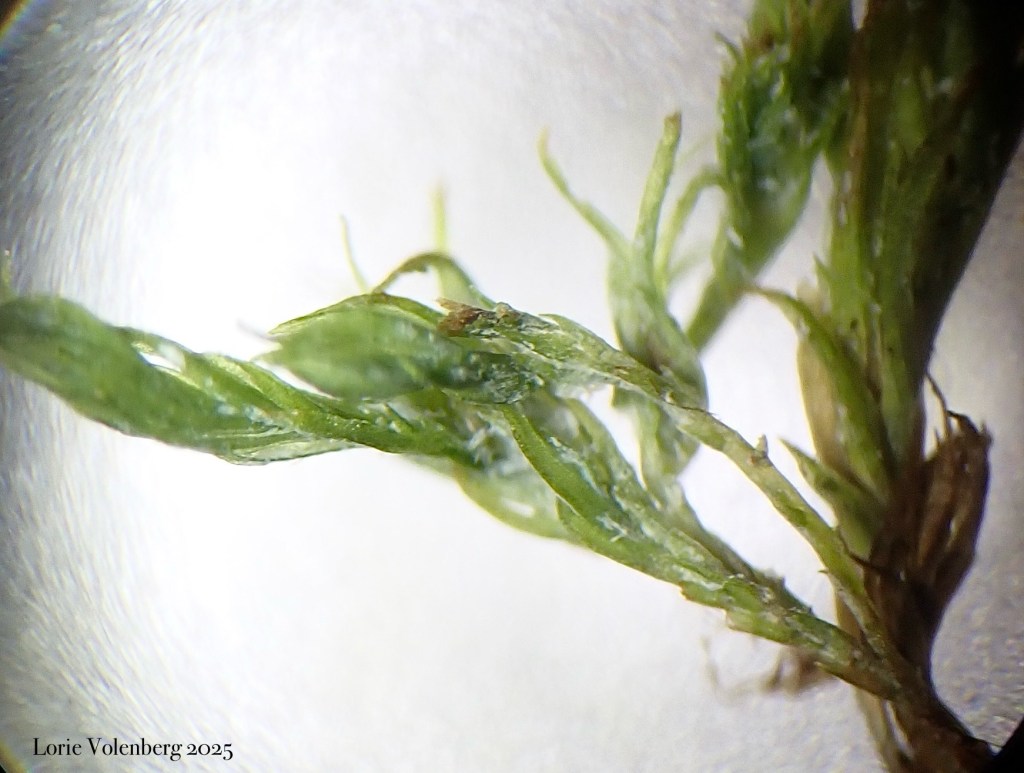
Several liverwort species were found on the rocks near the waterfall. Conocephalum salebrosum, Marchantia polymorpha, Plagiochile asplenoides, and fun tiny liverwort, Chiloscyphus minor.
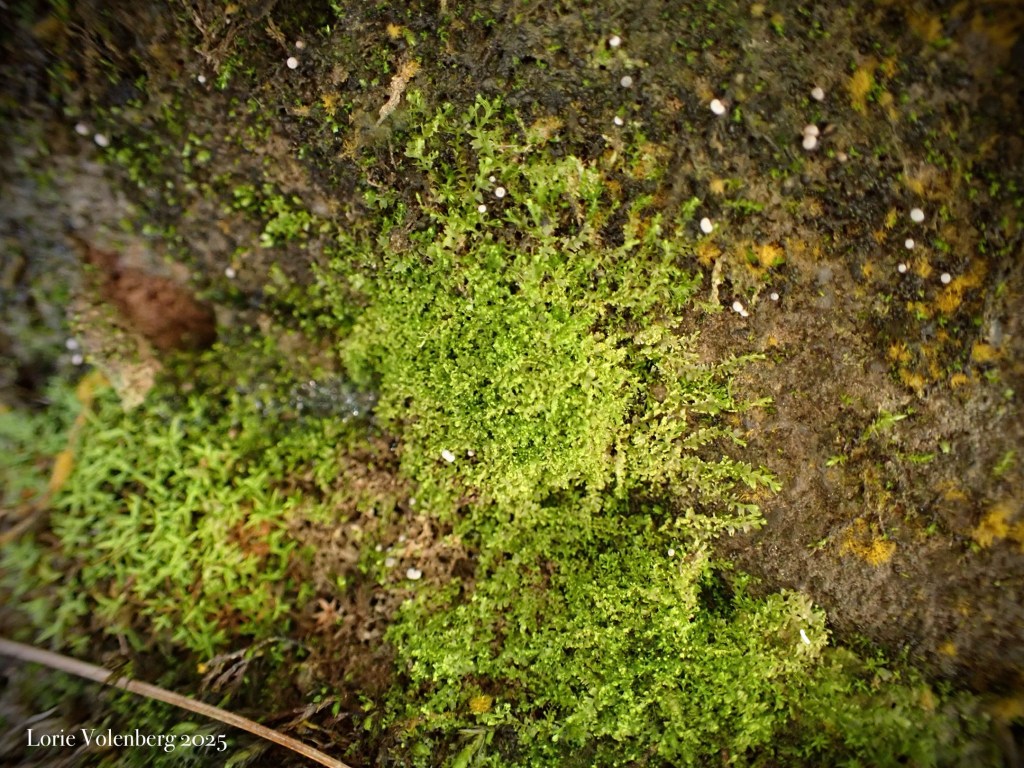
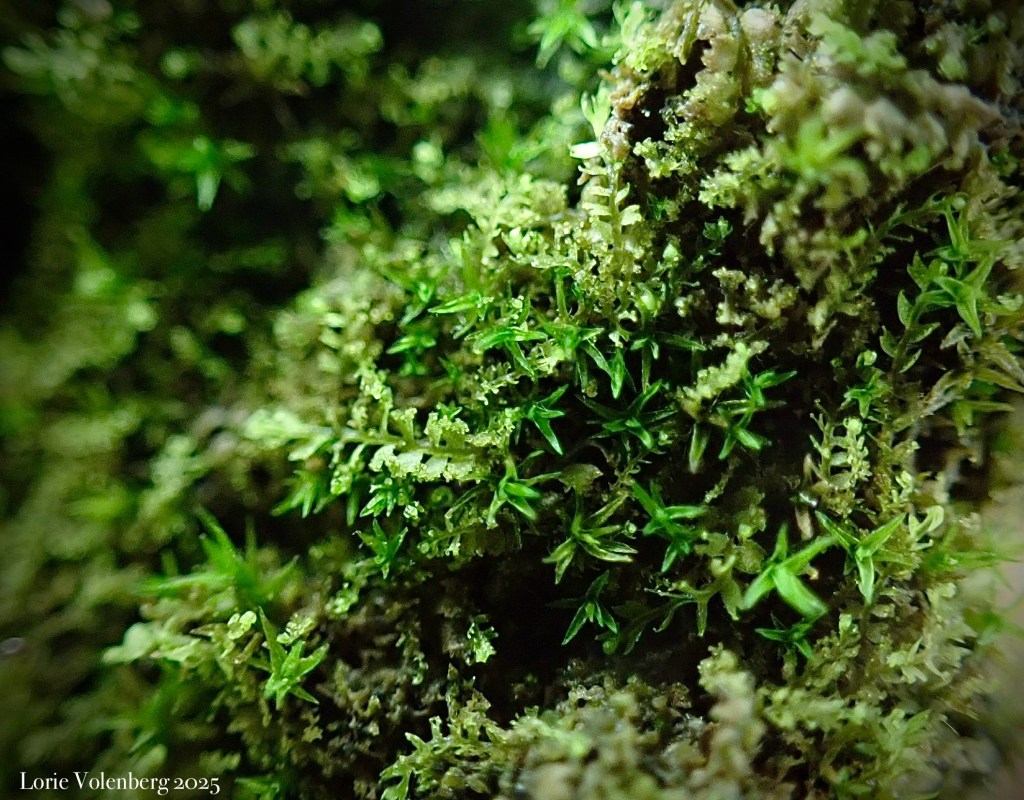
Chiloscyphus minor, a leafy liverwort, is notable when the leaves are producing gemmae bodies which look like granules built up around the edges of the leaves.
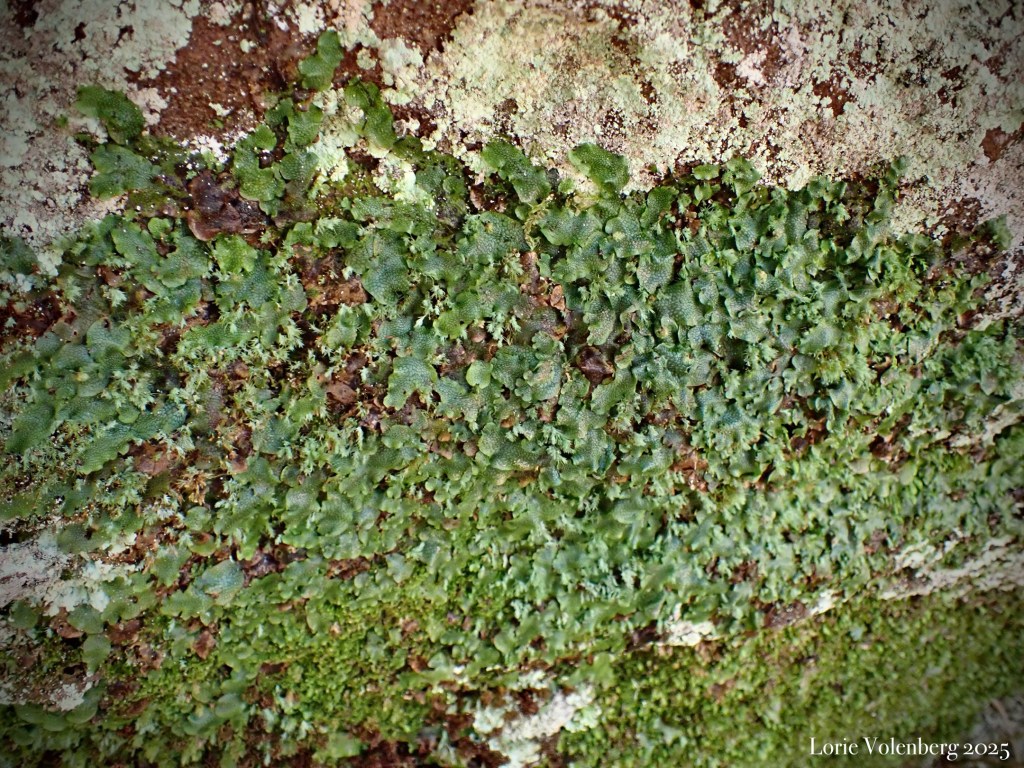
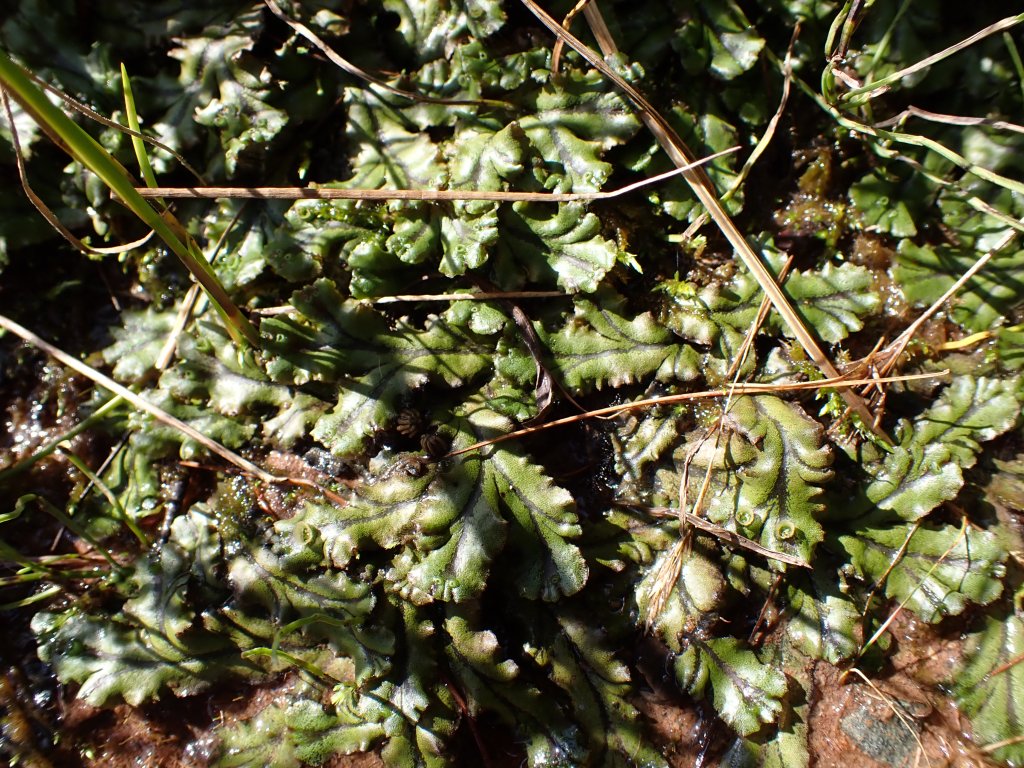
Top left: the thalloid liverwort Conocephalum salebrosum (A note on the name – I’m aware of the conversation and research into understanding the complexities of the populations found in the United States in regard to another species, C. conicum. Until these details are worked out, for simplicity, I’m choosing to call our populations C. salebrosum). Top middle: the thalloid liverwort Marchantia polymorpha. Top right: The leafy liverwort Plagiochile asplenoides.
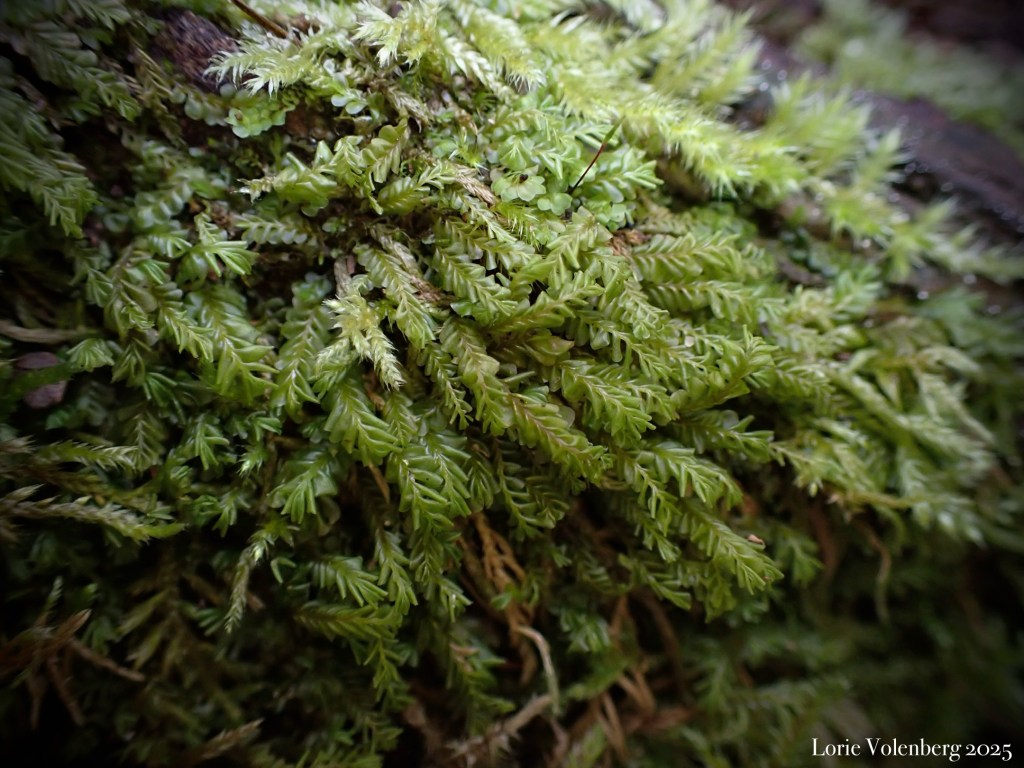
Other liverworts found elsewhere along the trail were Bazzania trilobata, and on a decaying log: Ptilidium ciliare, Nowellia curvifolia, and several unknown species.
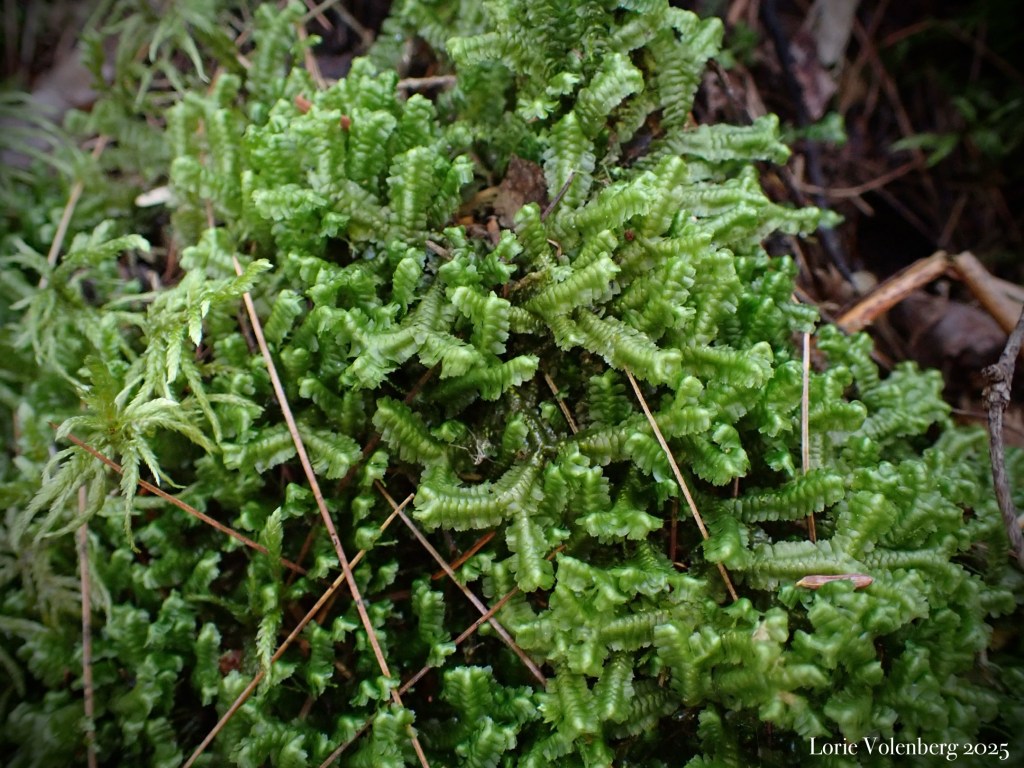
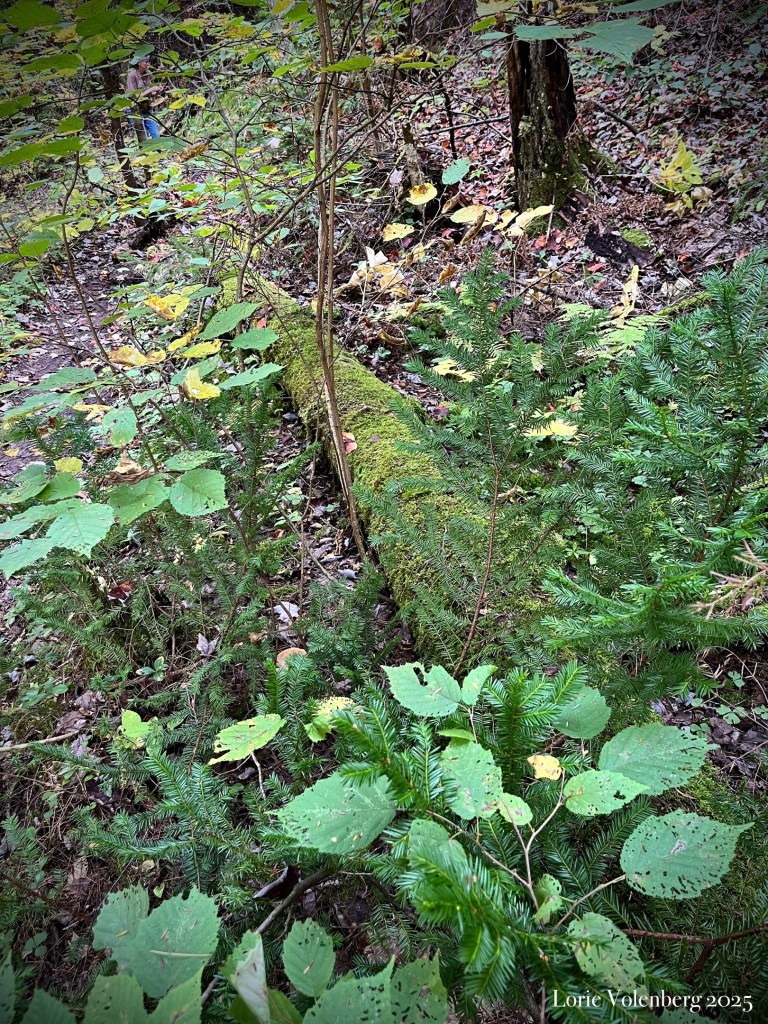
I fully expected to find Nowellia curvifolia on this decaying log. Though I never saw it while looking at the log on site, I did see it in the photos at home, buried within the other liverwort species.
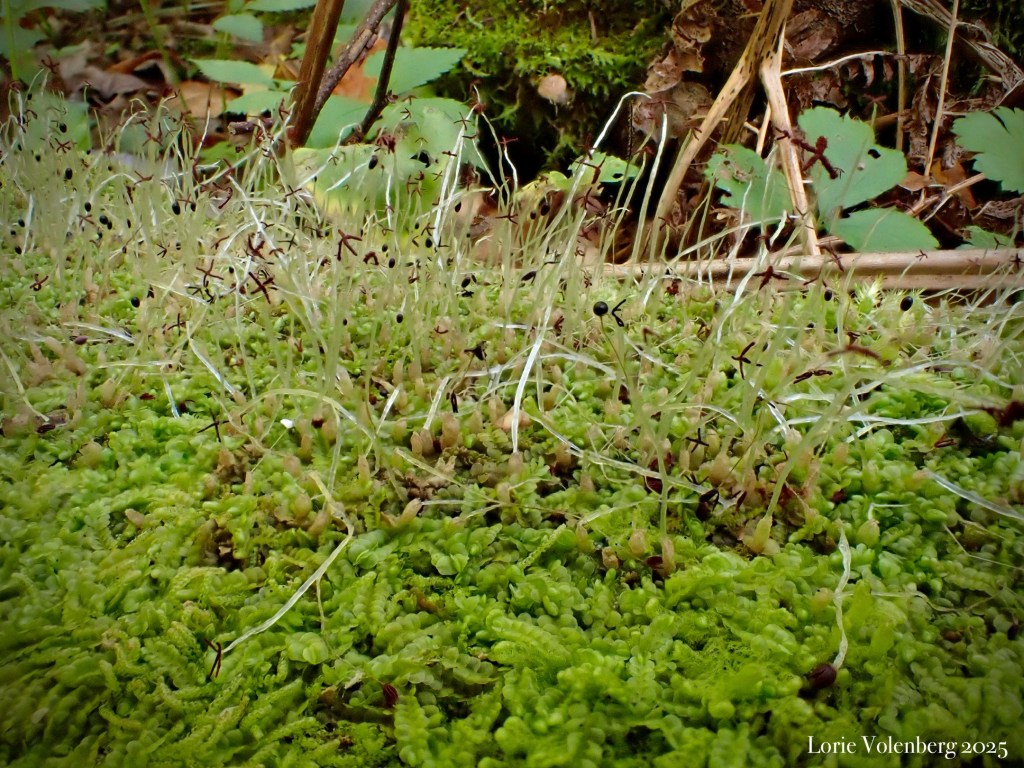

I never tire seeing the fuzzy leaves of the leafy liverwort, Ptilidium ciliare.
Moss species found near or within the spray zone of the waterfall were Brachythecium rivulare, Schistidium rivulare, and Hygroamblystegium varium subsp. noterophilum.

Brachythecium rivulare dangles off the sandstone ledge next to the waterfall.
Following the keys to the Schistidium genus in Flora of North America, takes me to S. rivulare. In Missouri, I follow Blom and Darigo’s 2009 paper for Schistidium species, but I’m not sure what the best answer is for other states.

Hygroamblystegium varium subsp. noterophilum is an interesting species to see. I will admit that I am leery in making this ID with it being found on a sandstone substrate, as this species is deemed to be a calciphile. Making me feel a little more confidant in my call is having found Chiloscyphus minor, a leafy liverwort mentioned above, also on sandstone, as it too is said to be a calciphile. I am not familiar enough with the sandstone and geography of the area to know if this is a higher calcium-based sandstone, nor do I know the general PH of the waters here.


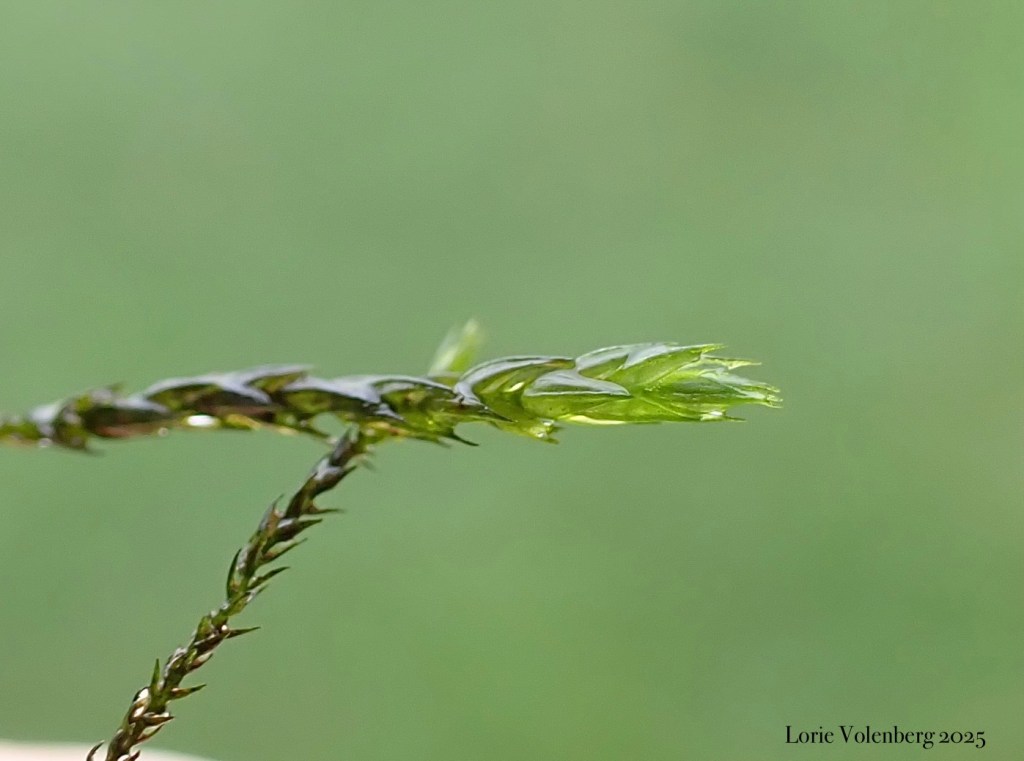
Top left: Hygroamblystegium varium subsp. noterophilum is a robust species and is quite lanky. Top right: The thick, long costae are distinct.
It is always fun to see the terrestrial, orange colored algae, a Trentepohlia sp.

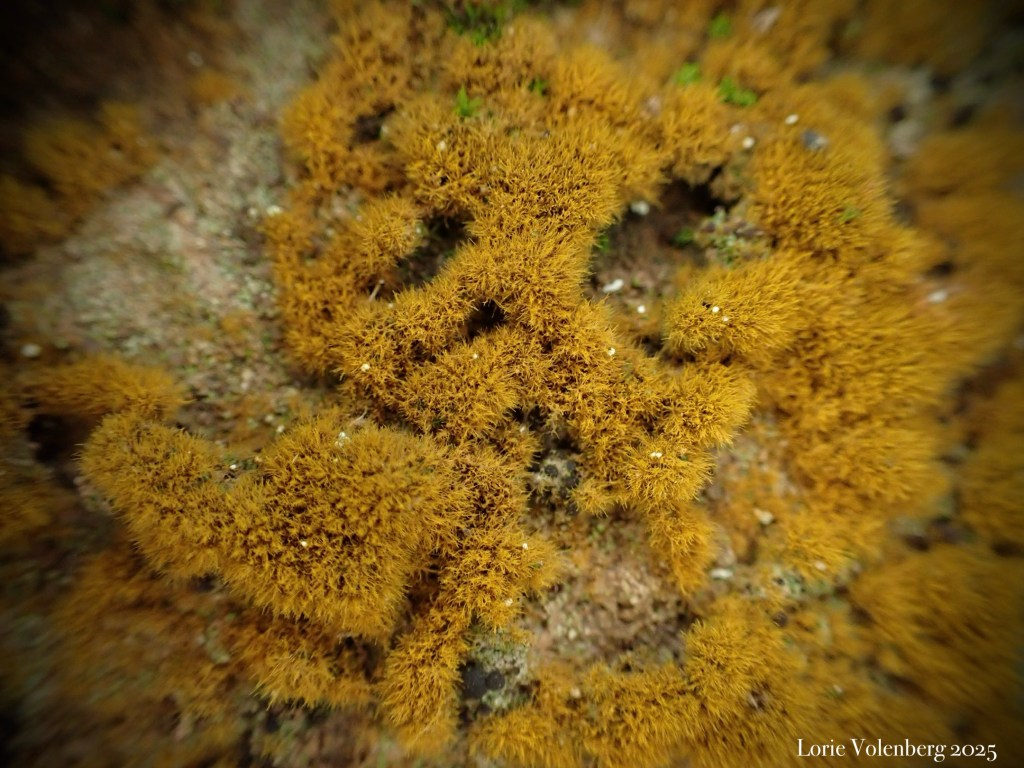
The rest of the images are a hodgepodge of mosses found along the trails and some scenery photos.
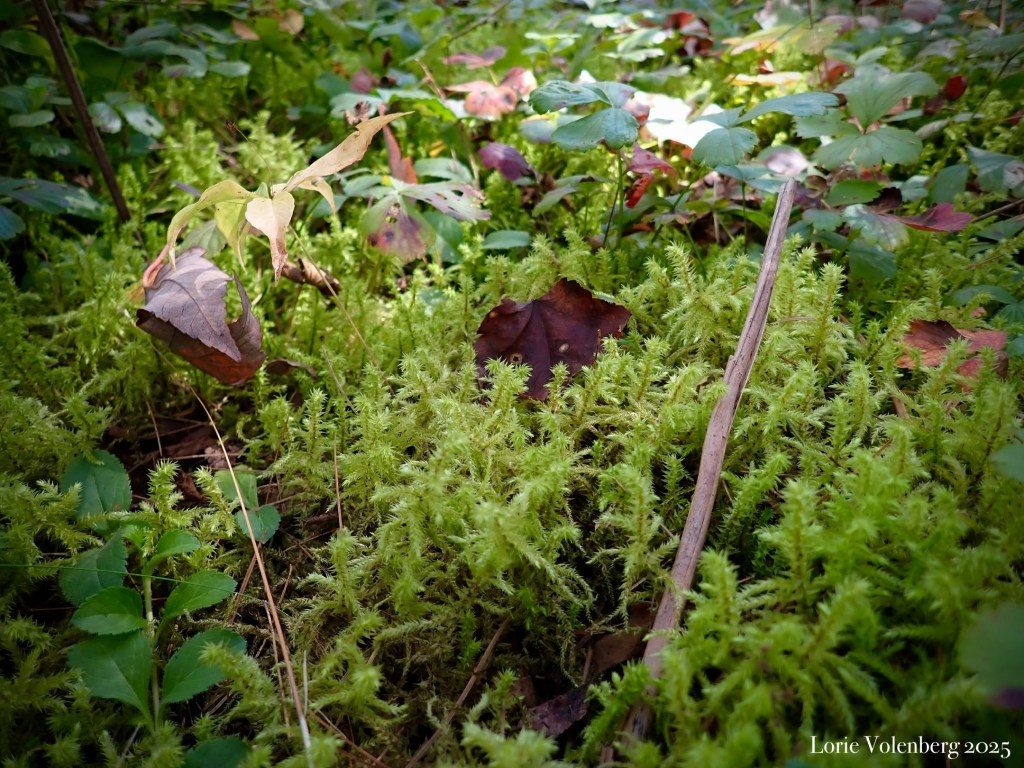
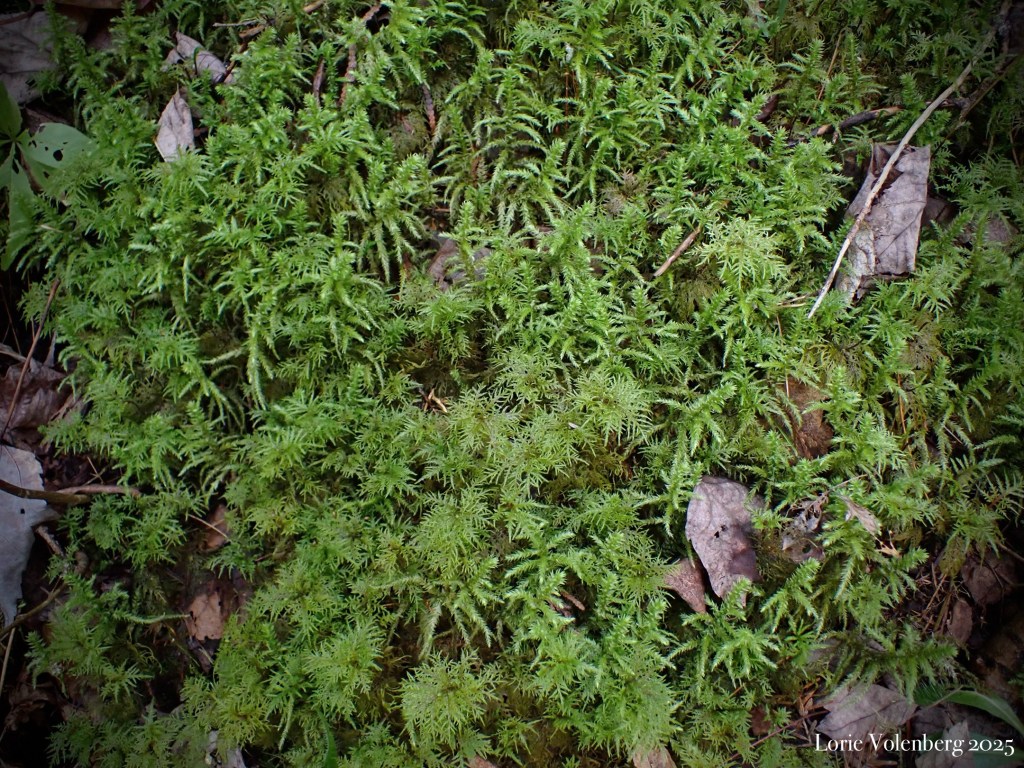
Top left: Rhytidiadelphus triquetrus. Top right: Rhytidiadelphus triquetrus mixed with Hylocomium splendens.
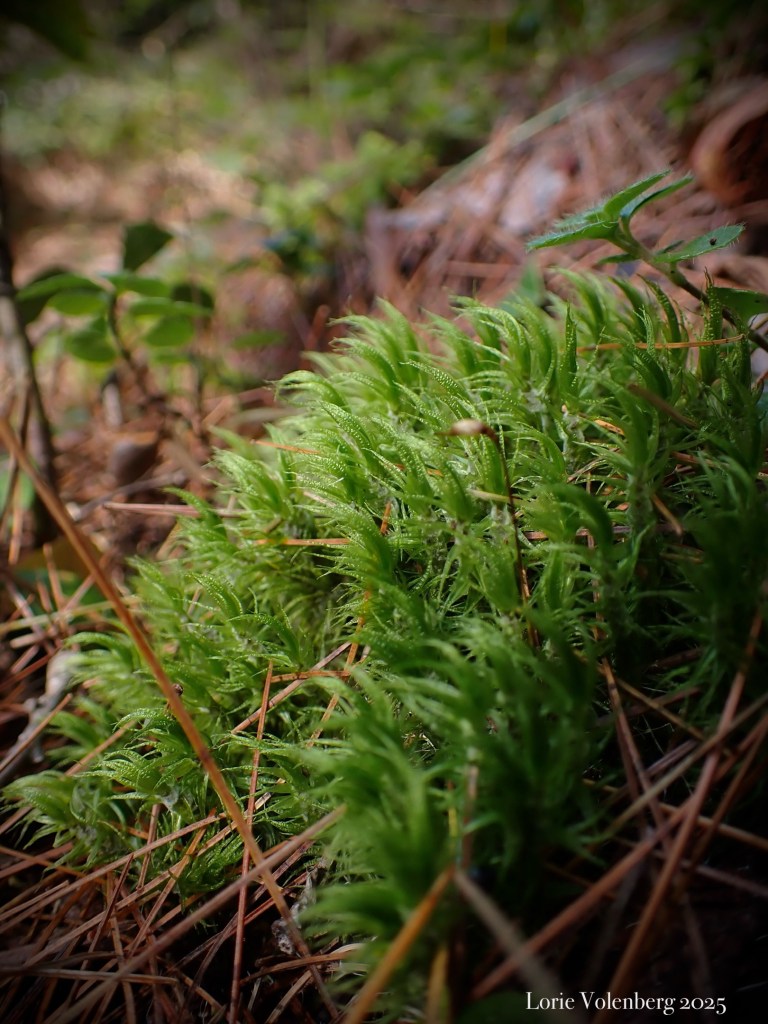
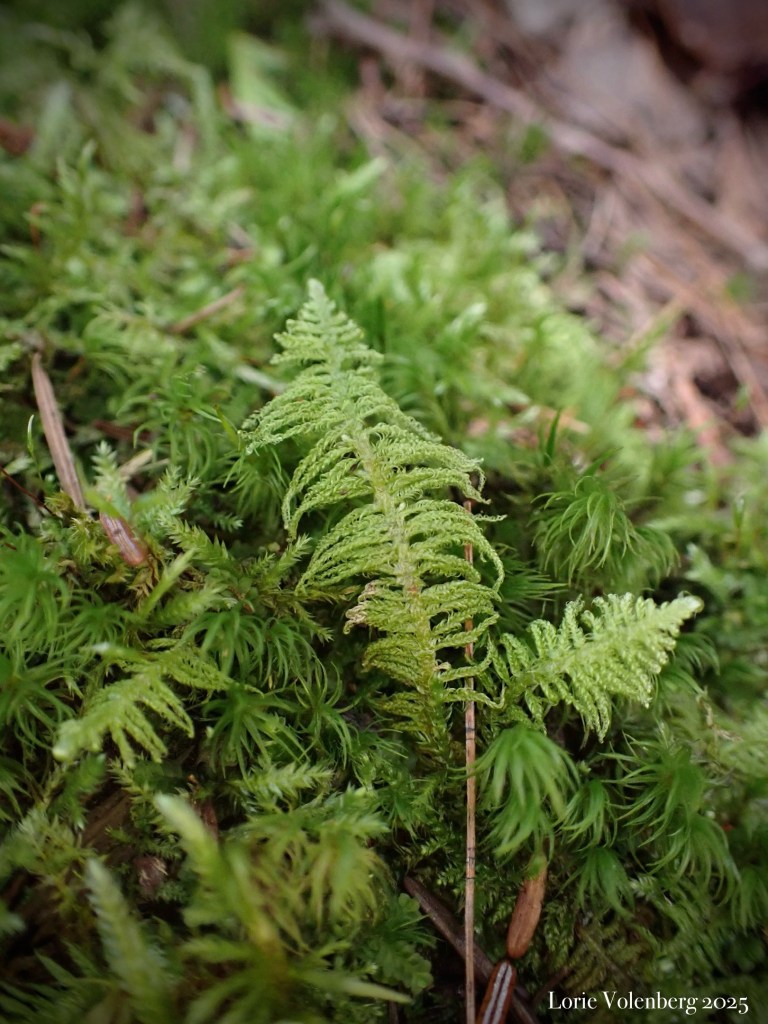
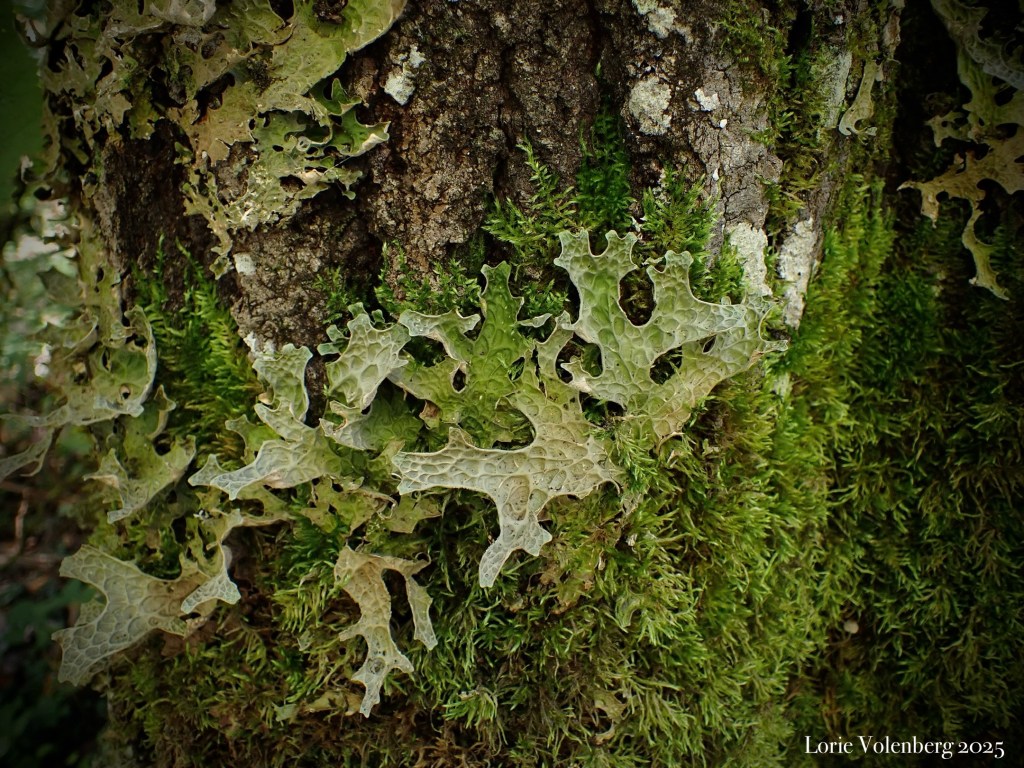
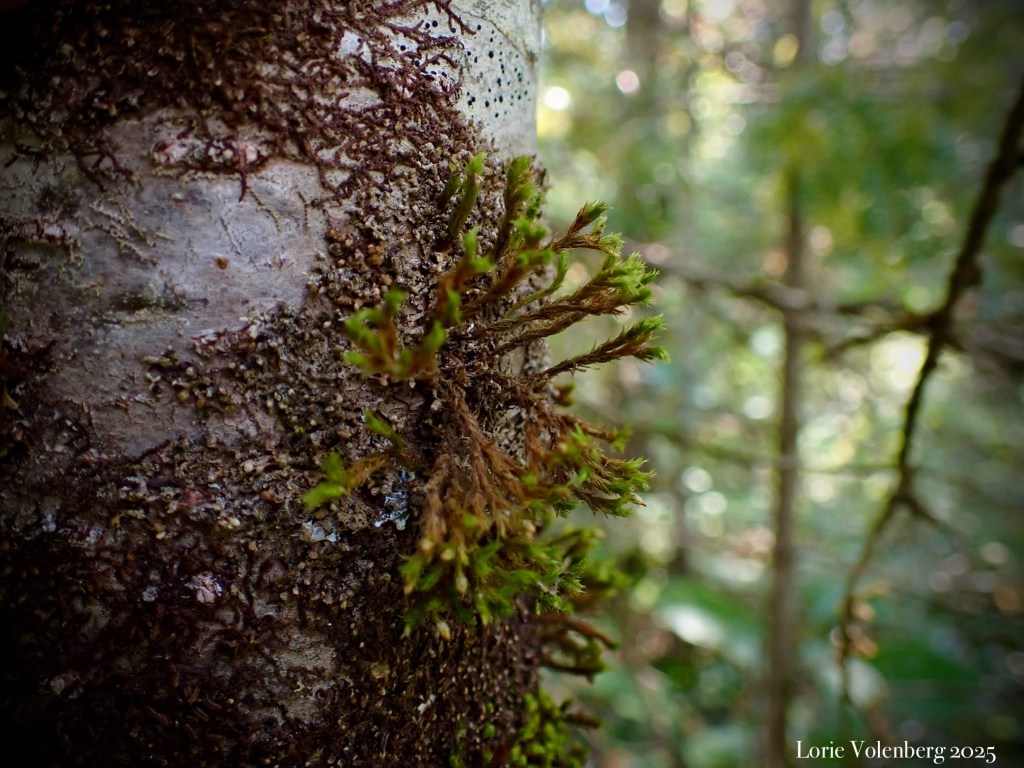
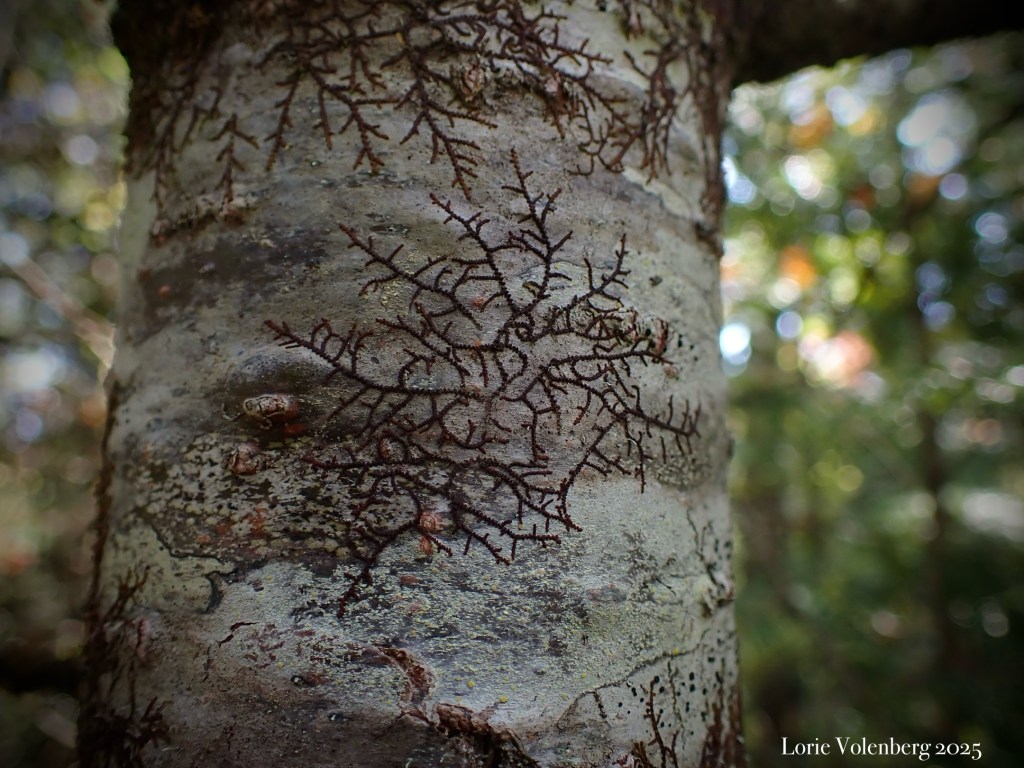
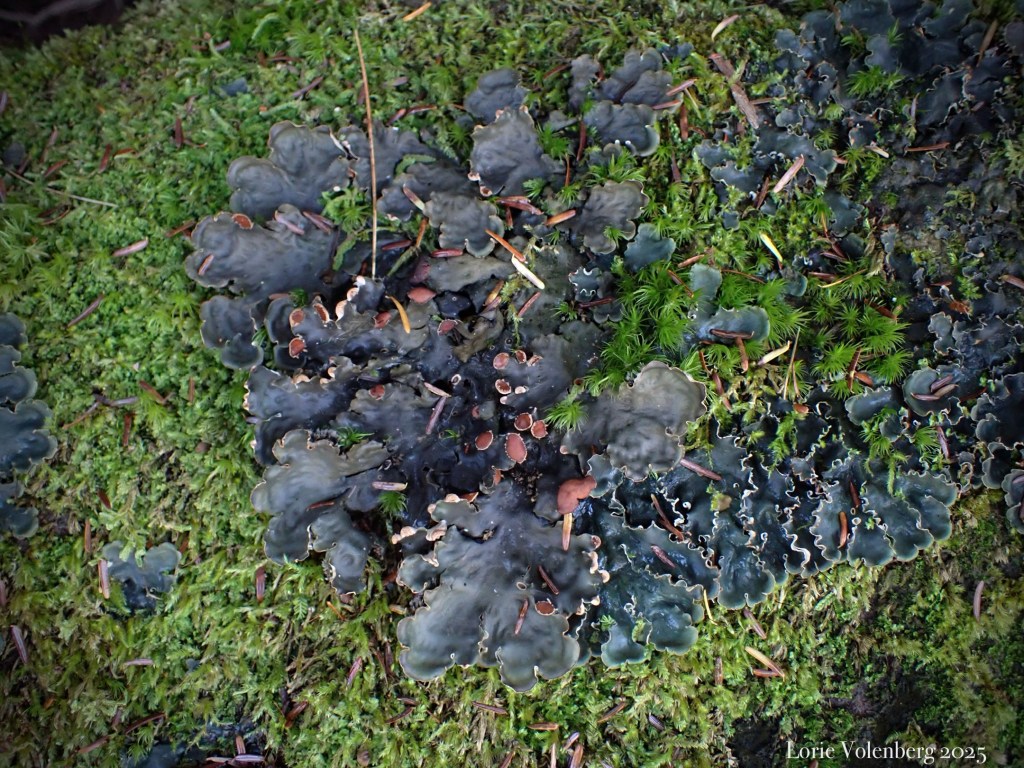
Top left: Ptilium crista-castrensis. Top Middle: The lovely lichen Lobaria pulmonaria. Top right: An Orthotrichum species.
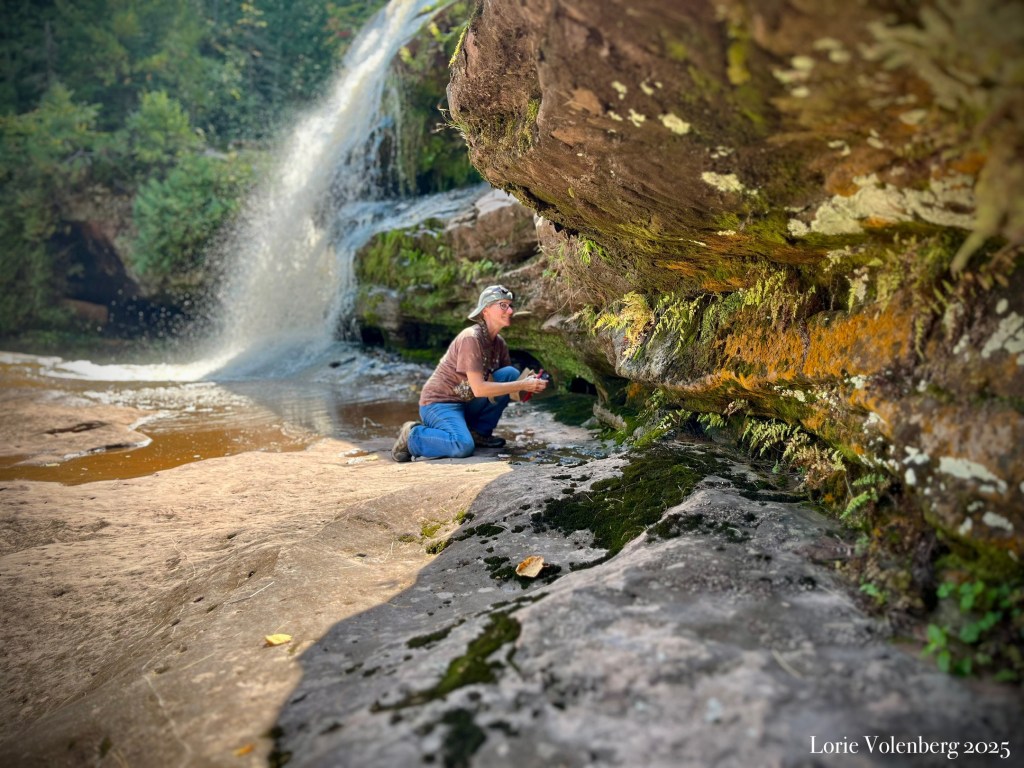
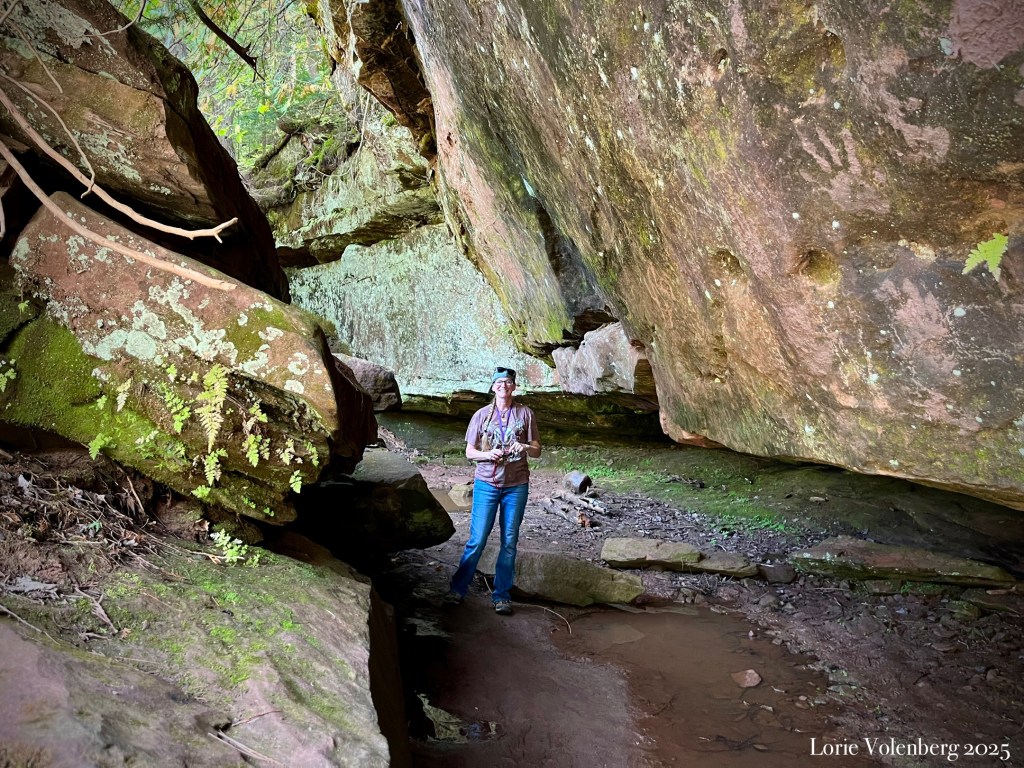
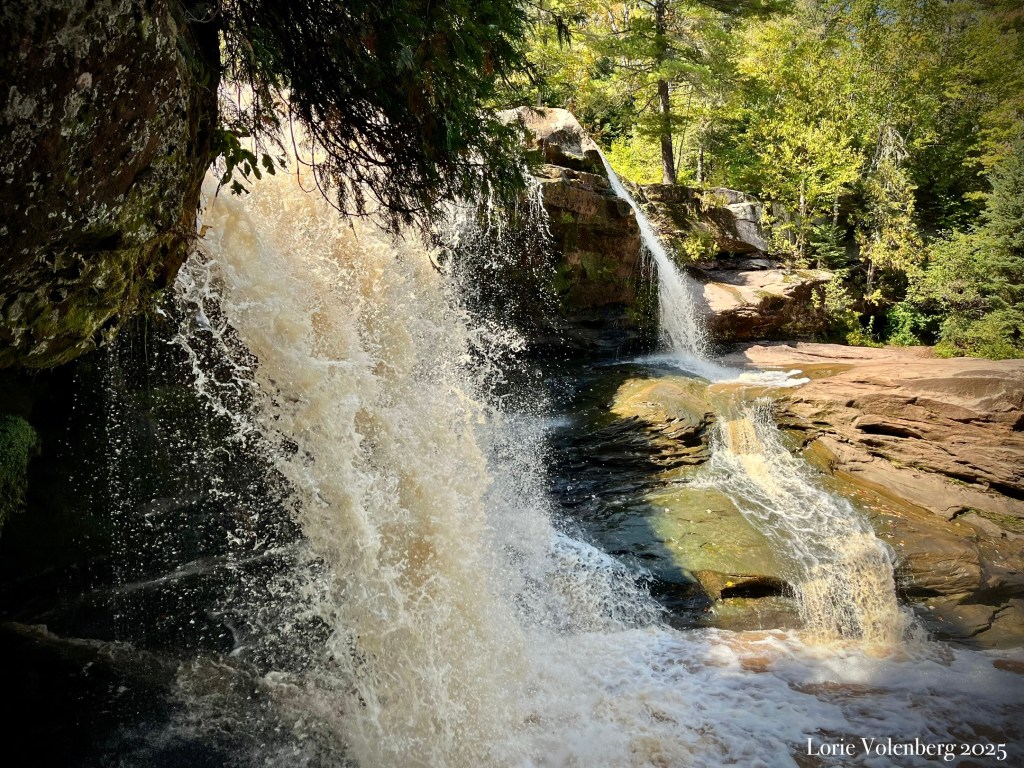
I was thankful to have a few hours to explore the falls area this year. The upper peninsula Michigan and Wisconsin are certainly full of their own wondrous beauty.
Happy mossing!

 Mosses of Missouri and Beyond
Leave a comment