
It was a beautiful day on Saturday September 6th 2025 for the bryophyte hike at Onondaga Cave State Park. It was sunny with temperatures in the 70’s. I had actually never been there before, so this was a great opportunity for me to visit another one of Missouri’s lovely state parks.
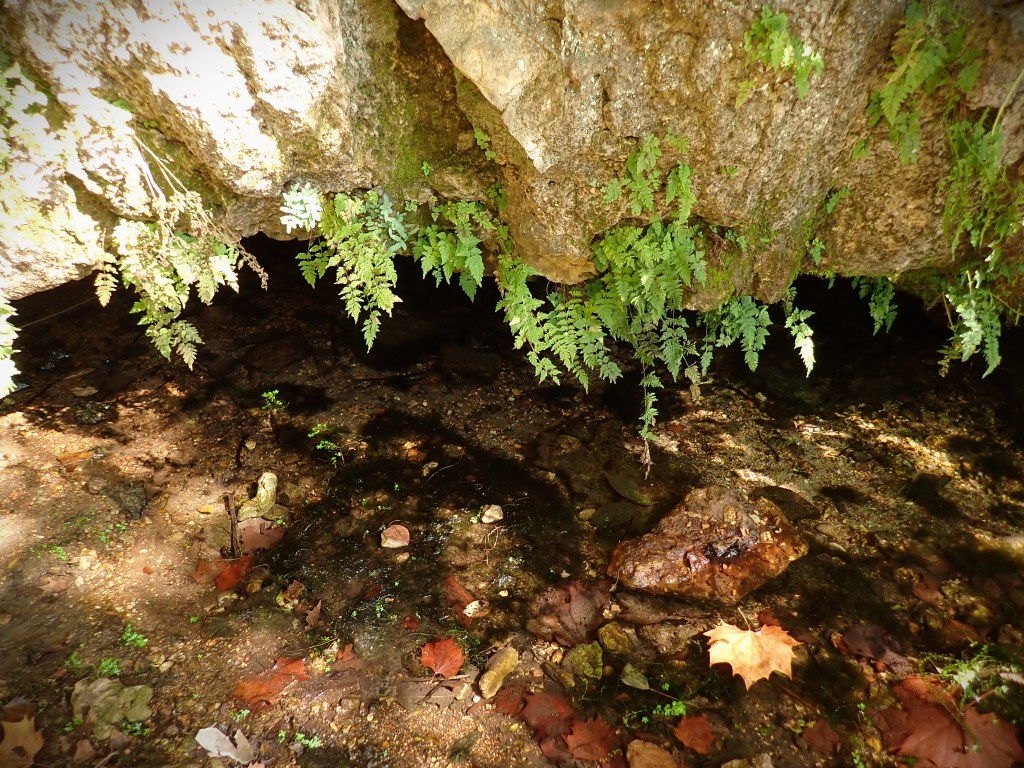
We hiked the Blue Heron trail which is a wide, paved path that meanders along Spring Lake, and eventually leads you up to the actual Onondaga Spring itself. While there was no easy access to the edge of Spring Lake to hunt for bryophytes, at Onondaga Spring there was a retention pond built in 1886 from when it was a millrace. This area afforded lovely views and bryophyte hunting. Surrounding Onondaga Spring were natural limestone walls, and at the opposite end by the path, a rock wall was built that was covered in bryophytes. We decided to start our exploration there.
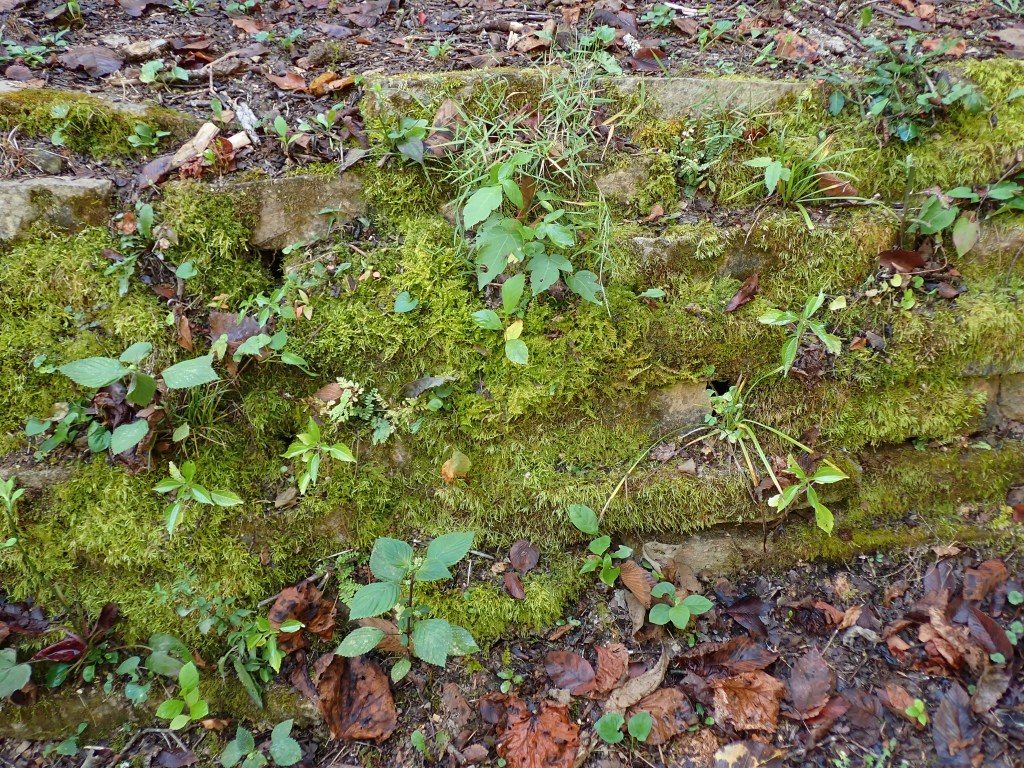
Hypnum curvifolium stood out with its falcate and secund leaves. Though this species was found mostly around the edge of the man-built pond, it did pop up here on the stone wall. I did verify its identity under the microscope at home as Hypnum species can be challenging to identify in the field.

I honestly did not look closely to decide if this was Thuidium delicatulum or T. recognitum. Because this is limestone based, T. recognitum is an option. Looking at the photos, I am cautiously leaning towards T. delicatulum which can be found on both basic and acidic substrates. The stem leaves do not appear plicate enough, nor with a wide enough base at the attachment to the leaf, or with recurved leaf tips, as is often seen with T. recognitum.
Plagiomnium cuspidatum was happily growing all over this wall. Since P. ellipticum has been recorded for this park, I checked this population for the presence or absence of decurrent leaves, and how the teeth were expressed. This population did have decurrent leaves, immediately ruling out P. ellipticum, and the teeth were relegated to the distal half of the leaves, leaving this to be P. cuspidatum.
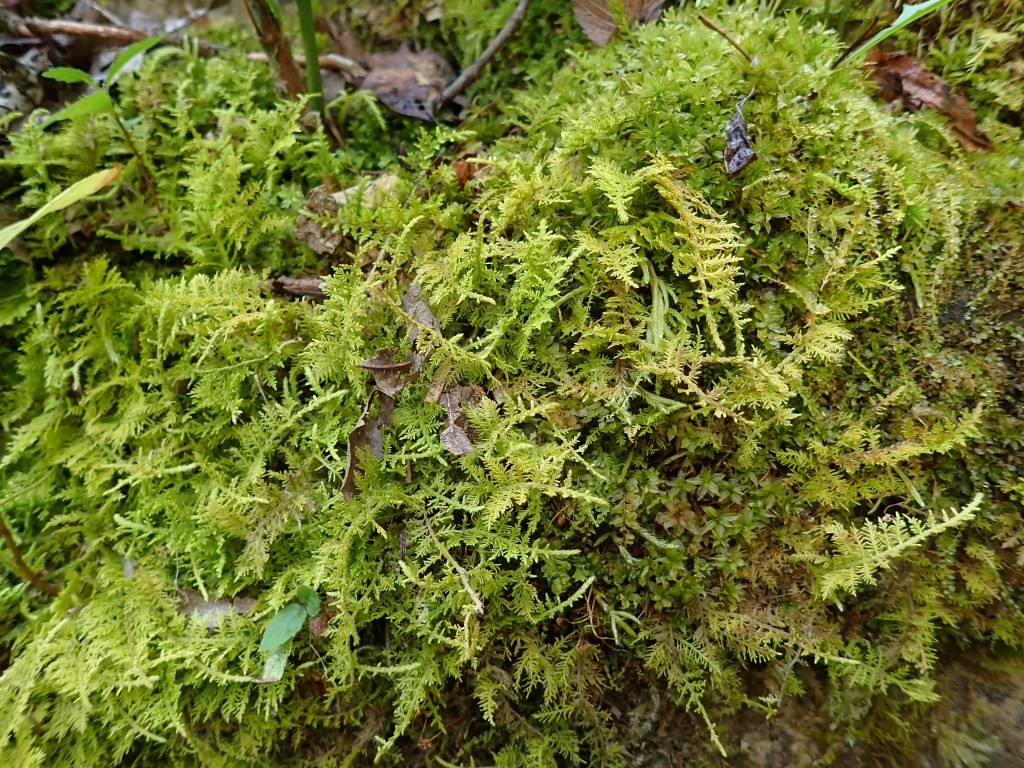
It was no surprise to find Brachythecium laetum growing here. In this photo, you are able to see it in its dry state and wet state. When dry, the leaves become more appressed to the stems, and when wet become erect and fuzzy looking. Note the visual differences in habit between this species, and the next one we found growing next to the pond, B. rivulare.
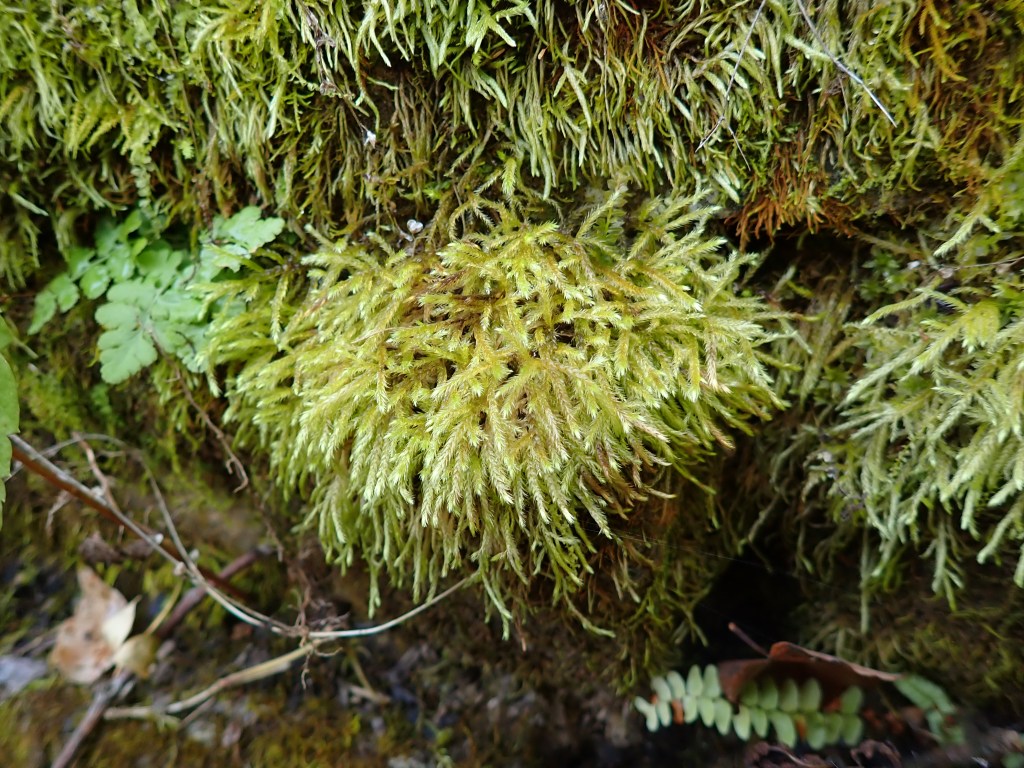
Brachythecium rivulare tends to be a more robust, and slightly stiffer looking species as compared to B. laetum, and is found near water of course. Additionally, the leaves are not plicate as they are in B. laetum, which makes for a smoother appearance. B. laetum will look as though there is an extra line or two going down the leaf.
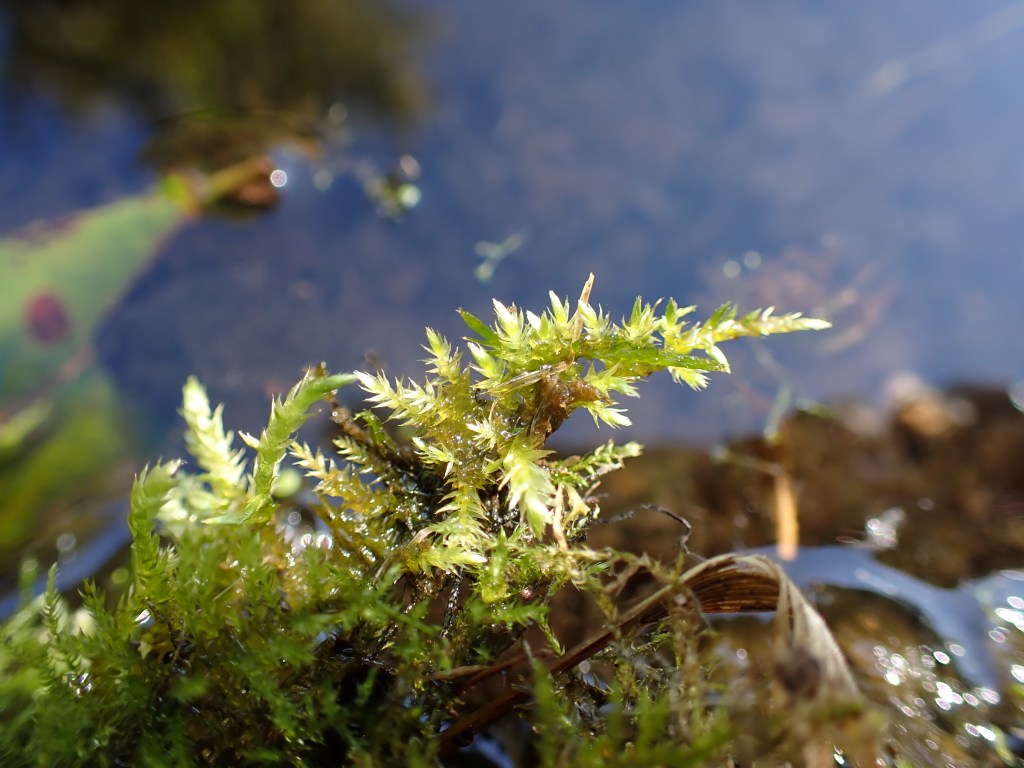
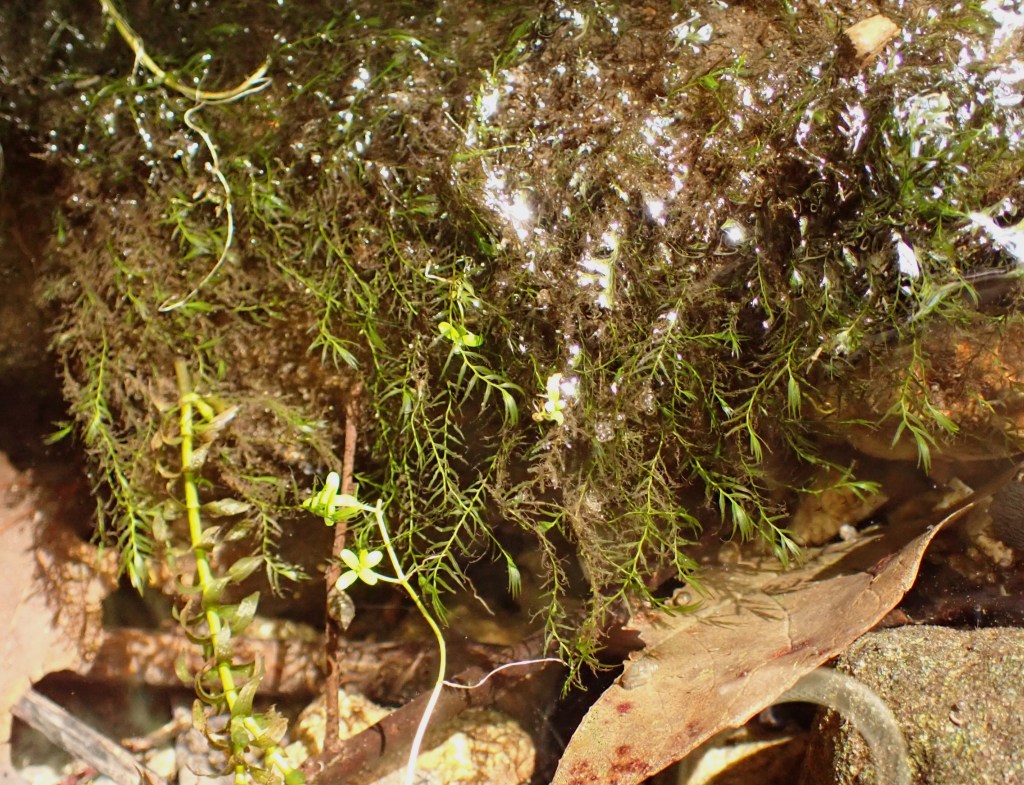
In the dark, cool waters of the spring entrance itself, were these large masses of the moss Fissidens fontanus. This water loving moss prefers slower moving water and indeed, the water flowing out of this spring was quietly meandering from the entrance. It is often a dark colored moss being coated in various particles found floating in the water, with only the growing tips being bright green.

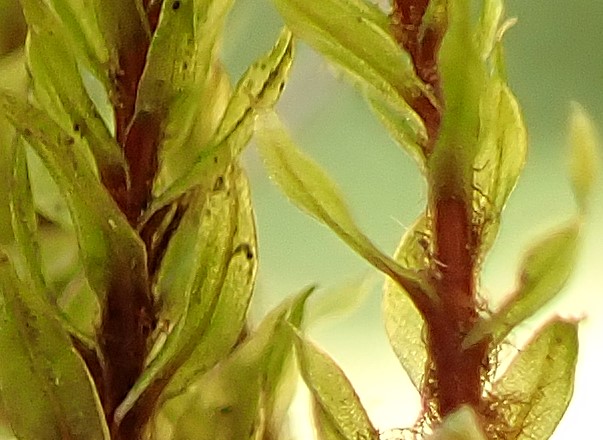
The always lovely moss species, Ptychostomum pseudotriquetrum, was perched on a few mounds around the edge of the pond. The red stems and red tomentum were outstanding.
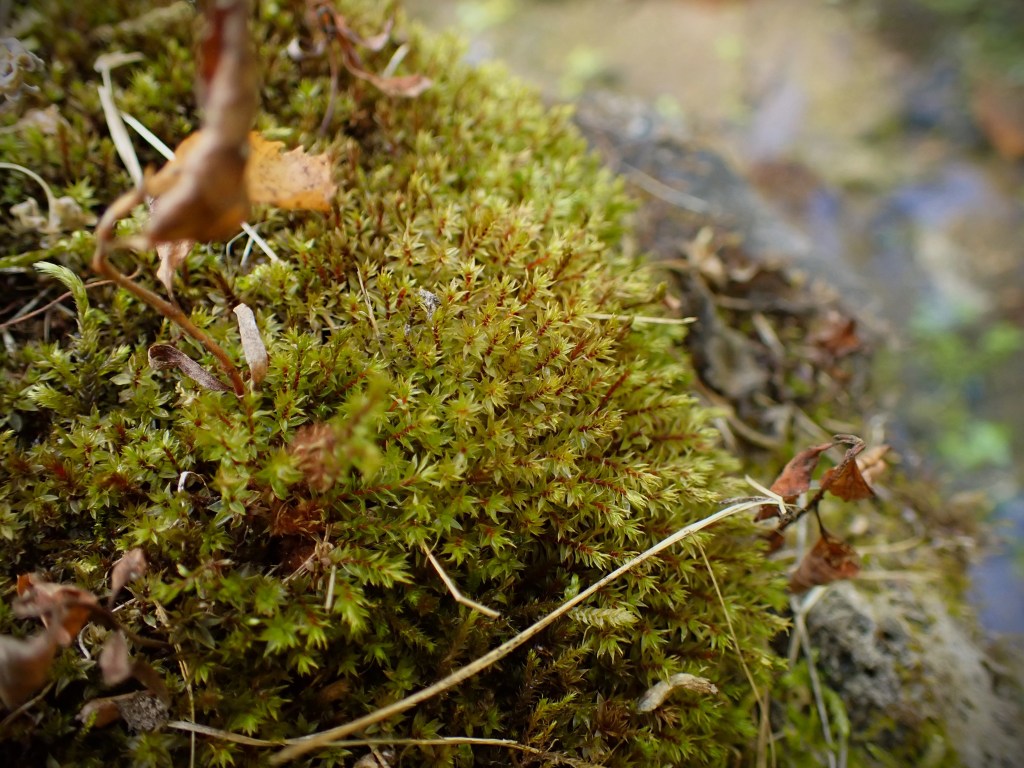
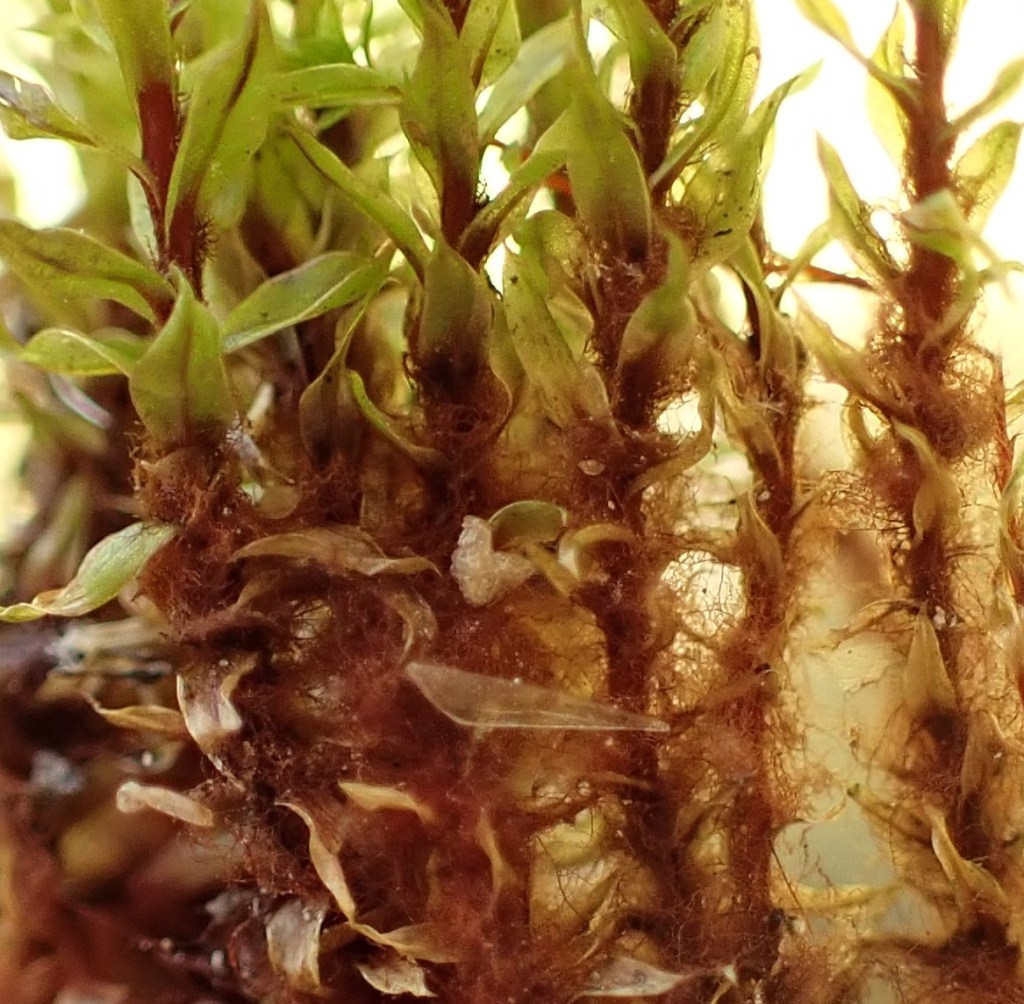
Red tomentum galore!
This species is noted for conspicuous decurrent leaves. This makes for a “U” shaped appearance at the base of the leaves where they are attached to the stem.
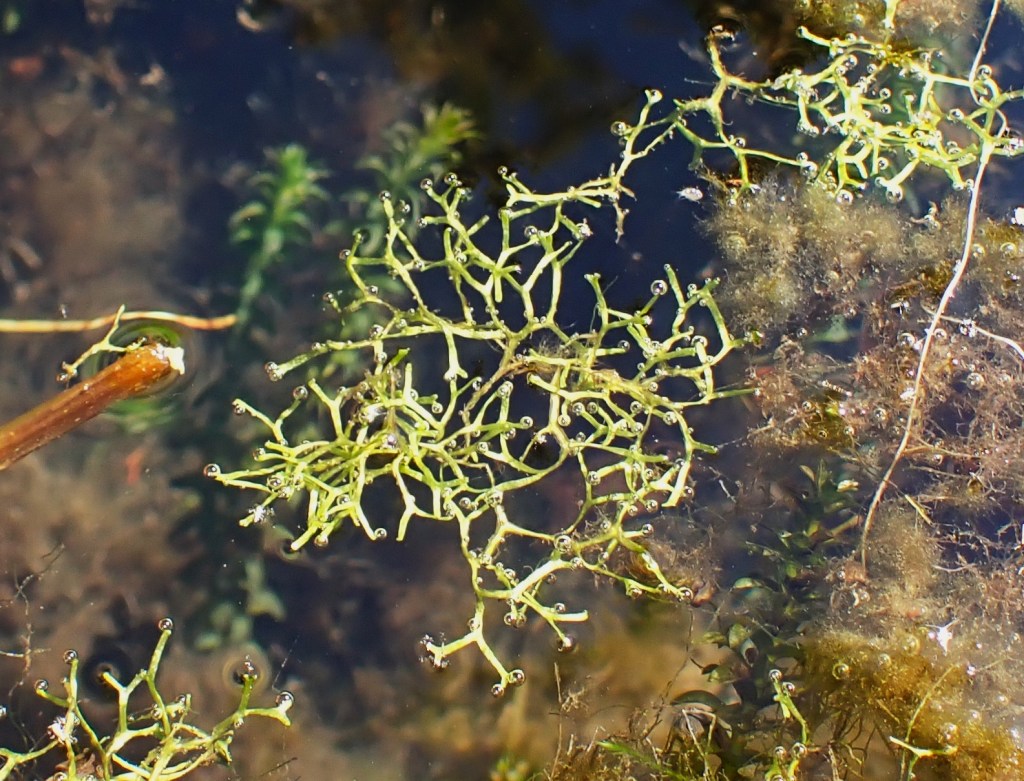
The real goal of this hike was to search for two liverwort species reported from here, Porella pinnata and Ricciocarpos natans. Sadly, neither were found, but we did find a new liverwort species to add to the park’s bryophyte list, Riccia fluitans. This unique liverwort is the only Riccia species that is found free floating in still water. All others are grounded to something. Its long, linear, and dichotomously branched thallus make it easy to identify in the field.

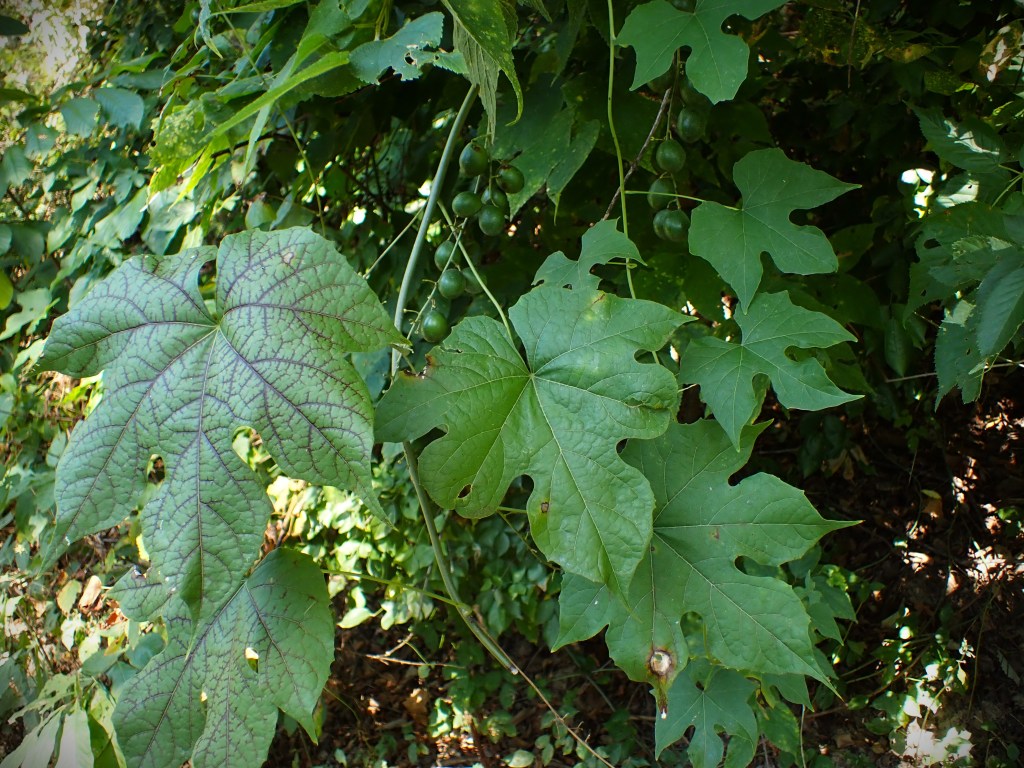
After our exploration of the little pond, we hiked around looking at wildflowers. There were three new to me species that I don’t encounter in my neck of the woods: Vernonia gigantea (Tall Ironweed), Verbesina virginica (White Crownbeard), and Calycocarpum lyonii (Cupseed).


For a complete list of the bryophyte species we casually observed at the park, click here. My next hike is scheduled for Sunday, October 5 at Wild Haven Nature Area near Columbia Missouri. I hope to see you there!

 Mosses of Missouri and Beyond
Leave a comment