Earlier this month I had the opportunity to explore the fen at St. Francois State Park in St. Francois County, Missouri, with the Webster Groves Nature Study Society. This is a wonderful group of nature loving enthusiasts whose botany group gets together every Monday at different locations in Missouri.
Entering the fen from the old school rock road, you encounter a part of the fen that looks like what one would perceive as a typical fen. You have to carefully look at every step you plan to take so as not to step into a hole with water.
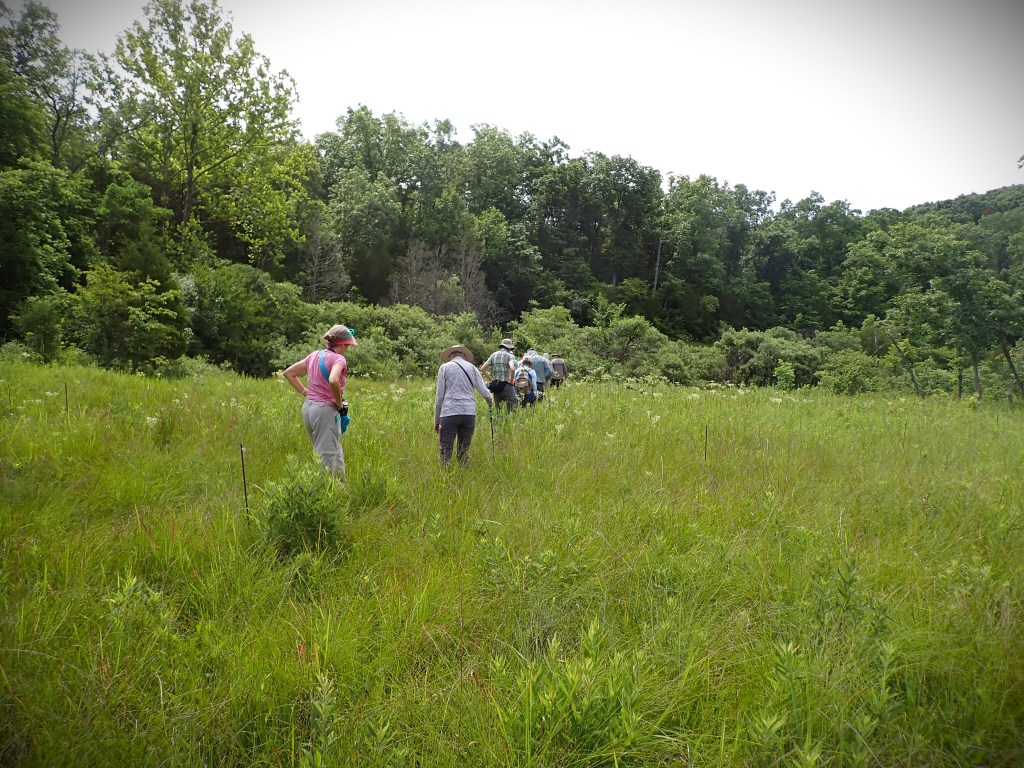
The “typical” looking part of the fen. Mosses here were Drepanocladus aduncus, Hypnum linbergii, and Ptychostomum pseudotriquetrum. We did not spend much time here, and moved on past this fen, crossed over the side creek, and entered into a different kind of fen.
While the rest of the group immidiately crossed the side creek to explore the atypical fen portion, I walked the side creek inspecting the edges for bryophytes. Growing in the waters of the side creek were a plethora of Leptodictyum riparium, while the edges of the side creek were adorned by Philonotis marchica, Ptychostomum pseudotriquetrum, Bryoandersonia illecebra, and Hypnum lindbergii.
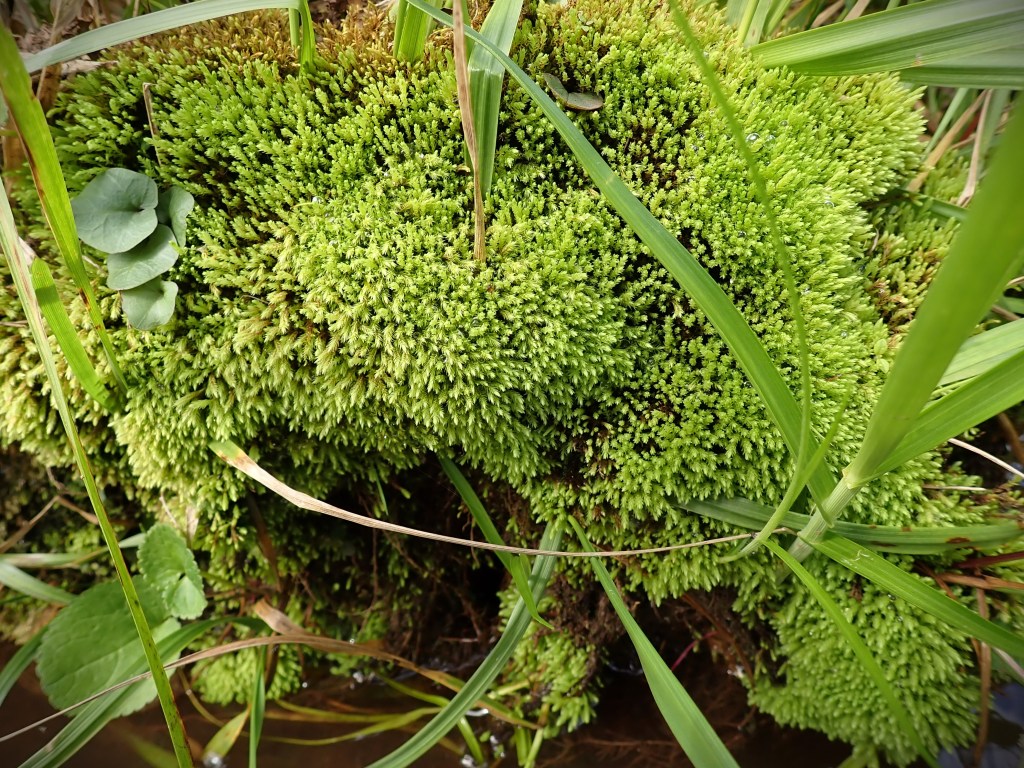
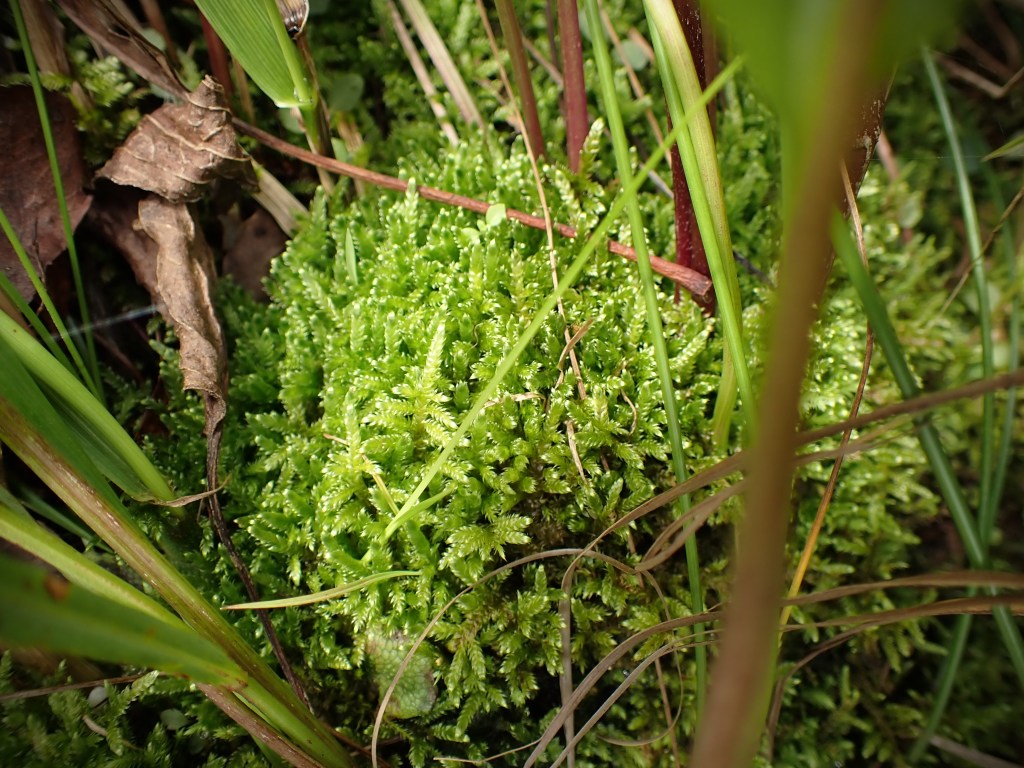
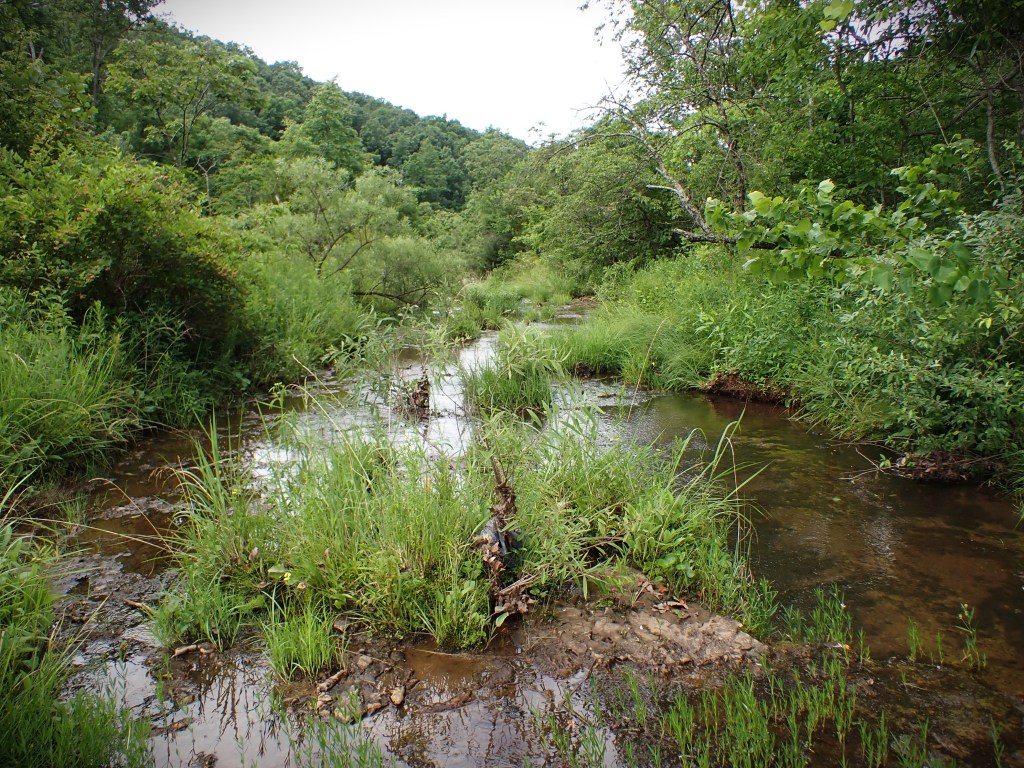
Top left: Philonotis marchica; Top middle: Hypnum lindbergii; Top right: Philonotis marchica on the left, and Ptychostomum pseudotriquetrum on the right; Bottom: The side creek.

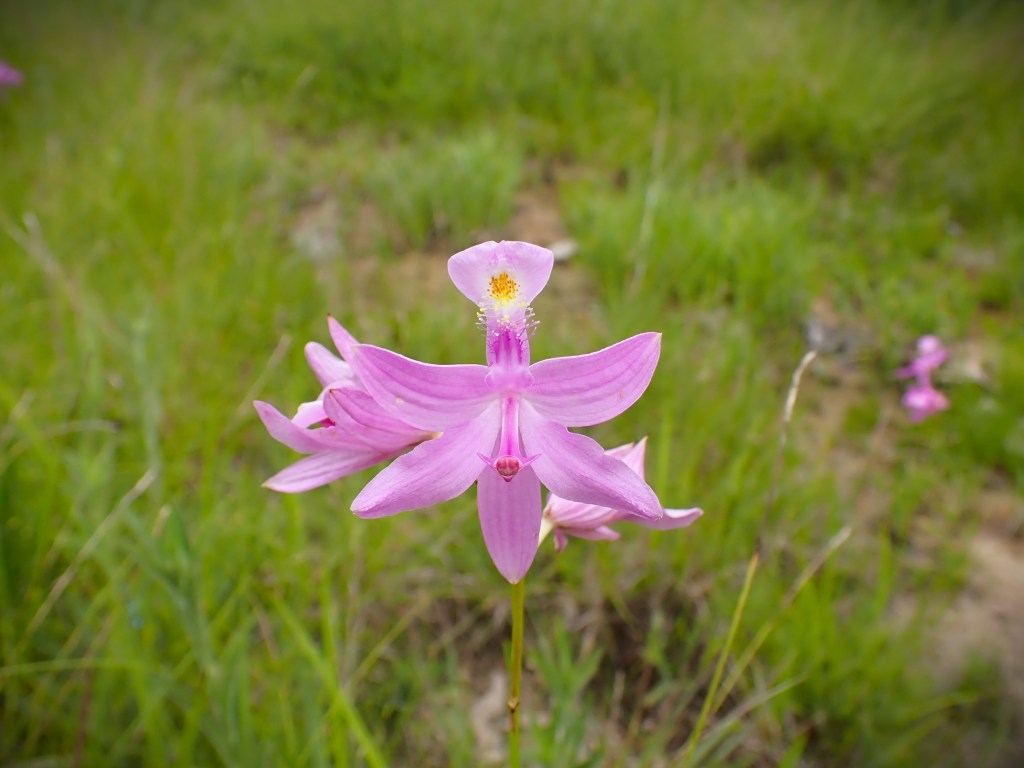
The other side contained a more open and rocky type fen. It seemed like a combination between a glade and a fen…perhaps we could call it a flade. The vascular plant that took the spotlight was the beautiful Orchid, grass pink – Calopogon tuberosus.
Of course, I had my nose buried in the bryopytes before I noticed the beautiful orchid. But, in my defense, a very robust moss caught my eye. My mind was encompassing several different possibilities as to what this species was, but nothing seemed concrete. Even at home, once under the microscope, it was being very pesky and didn’t want to fit in anywhere nicely. I eventually sent the sample to John Atwood at the Missouri Botanical Gardens, who once again came to my rescue.
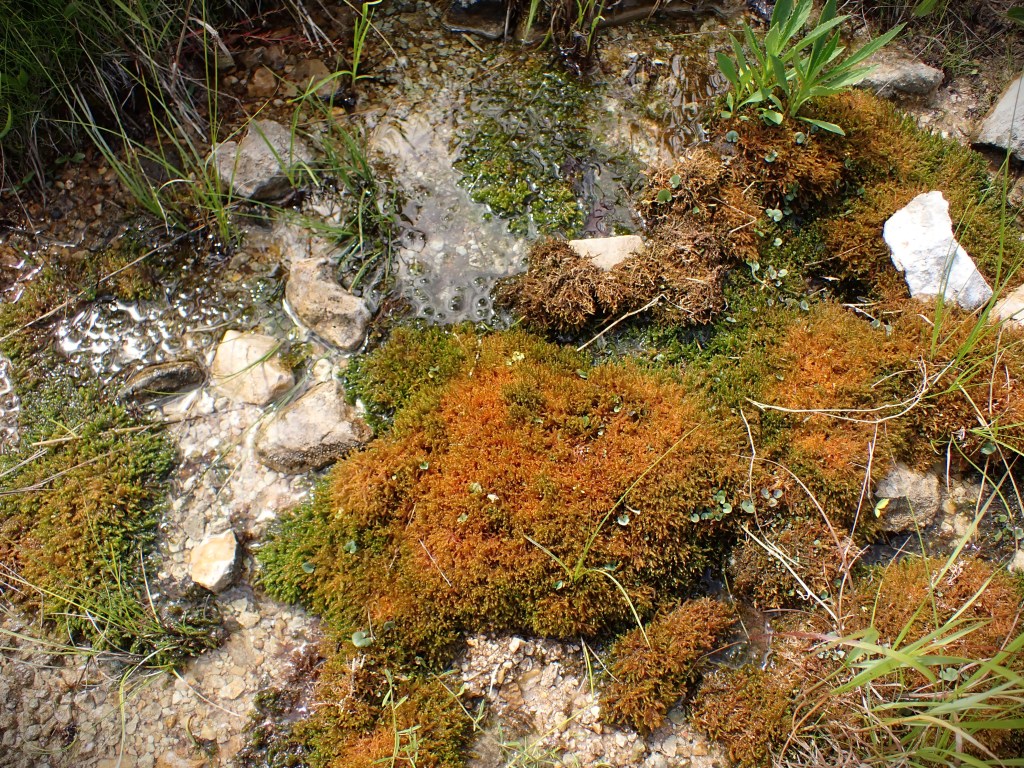
This gorgeous moss ending up being Drepanocladus aduncus, just a very different and robust form of it. The alar cells were hard to tease out, the central strand was hardly visible if at all, the costa was not its normal, strong self, and the hyalodermis seemed to be lacking. This species can be very plastic, and this is definitely one of its extreme forms! Without John’s help, I would have been lost on this one.
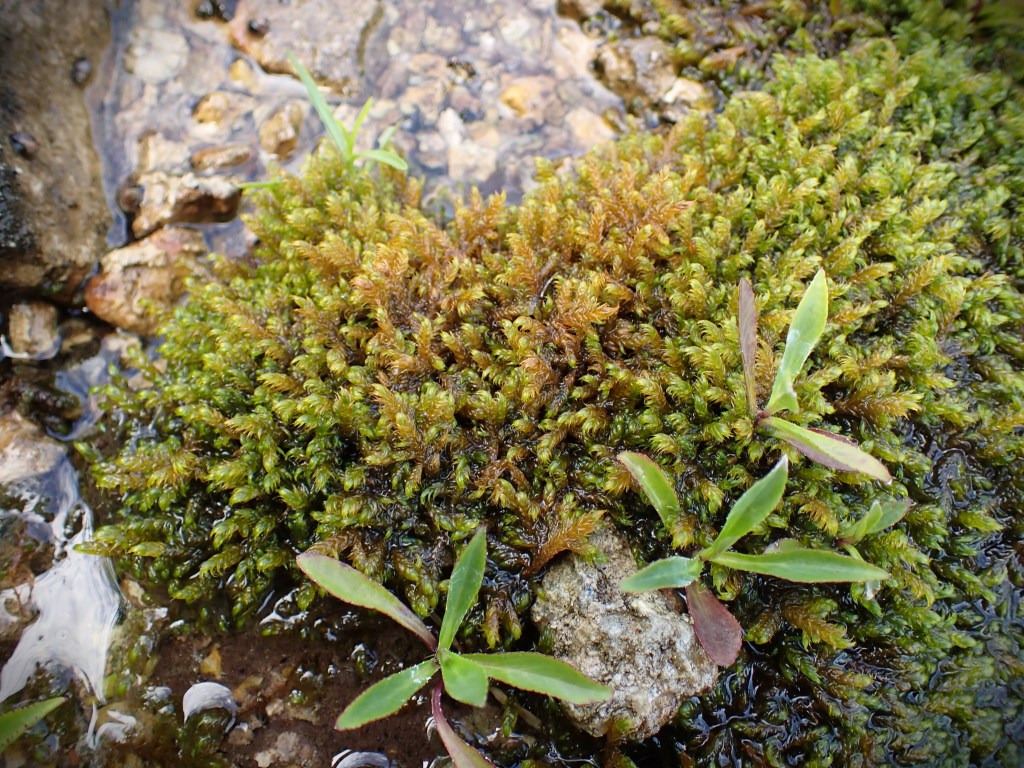
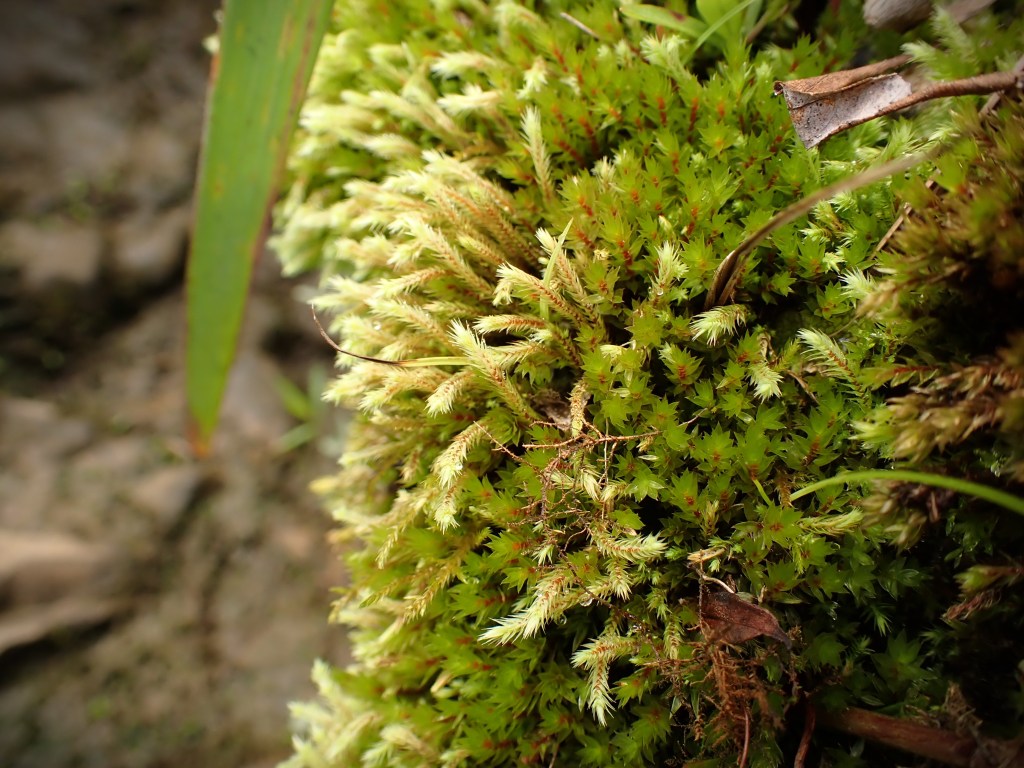
The other moss that was prominent in this location was Campylium stellatum. It was also displaying very vibrant reds and golds due to the exposed site.

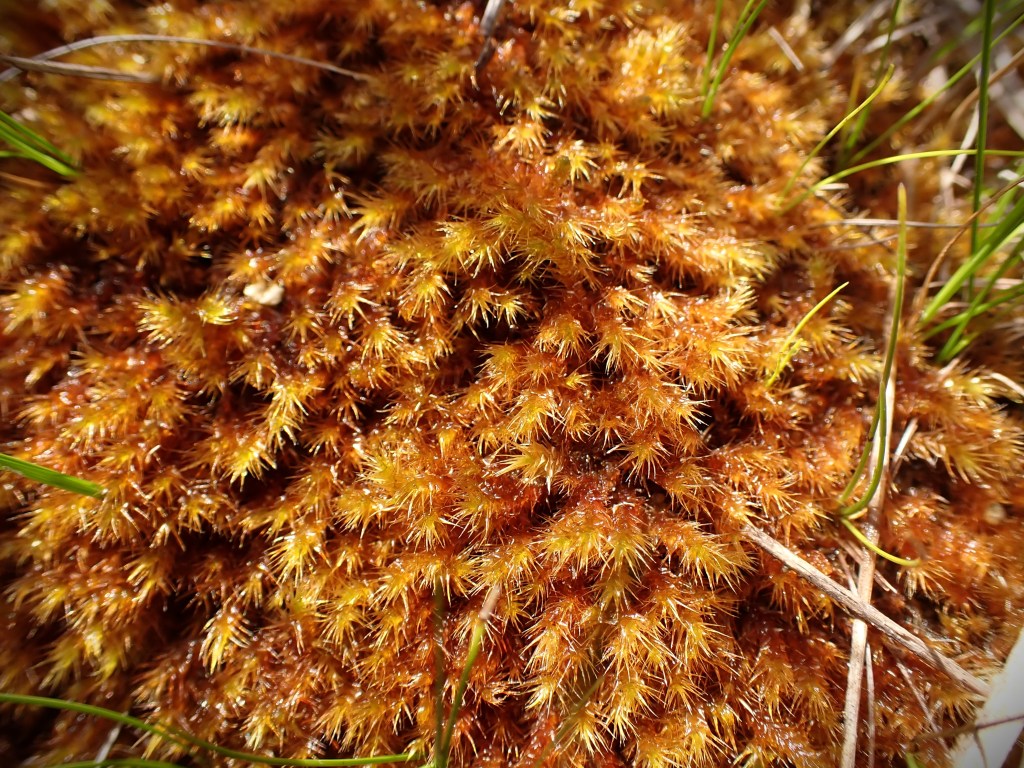
Above both photos: Campylium stellatum
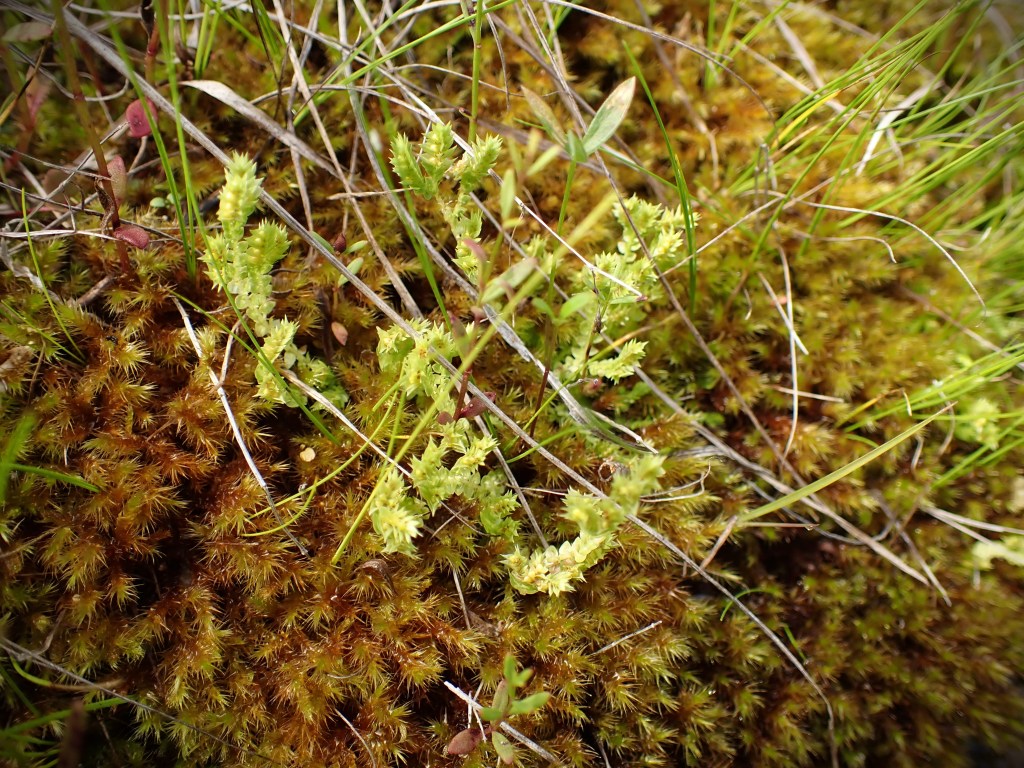
Near the edges of this part of the fen was a fun lycopod, Selaginella apoda. This can be found in moist prairies and fens.
Another fen/marshy loving vascular plant we came across was the northern marsh fern, Thelypteris palustris.
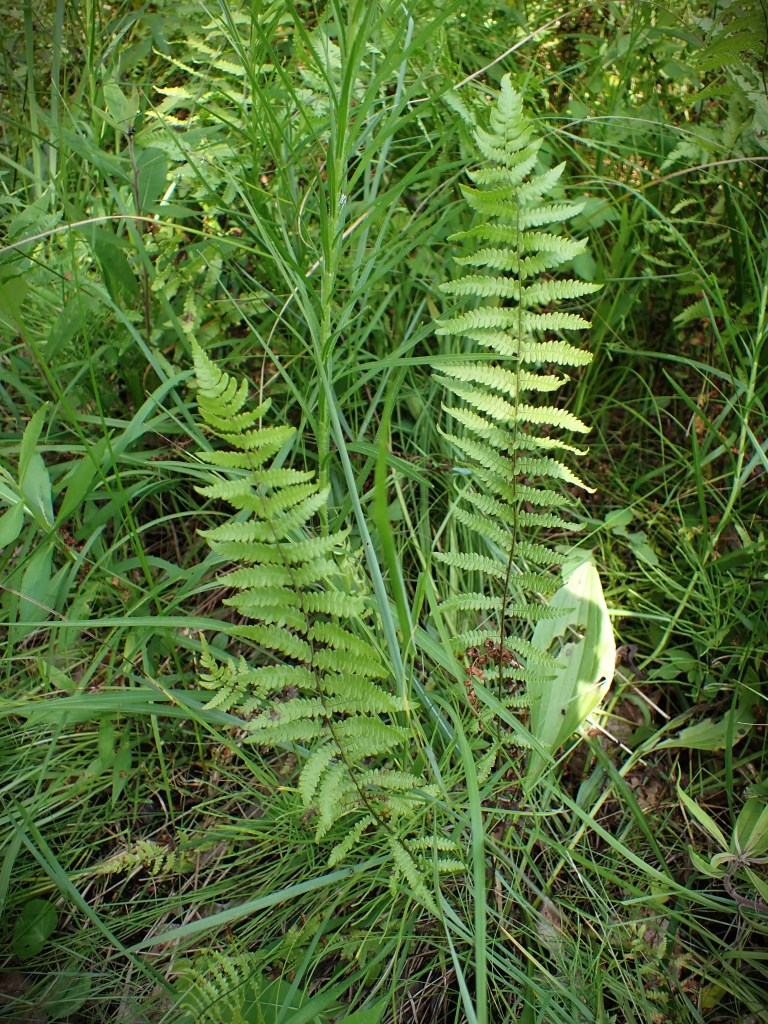
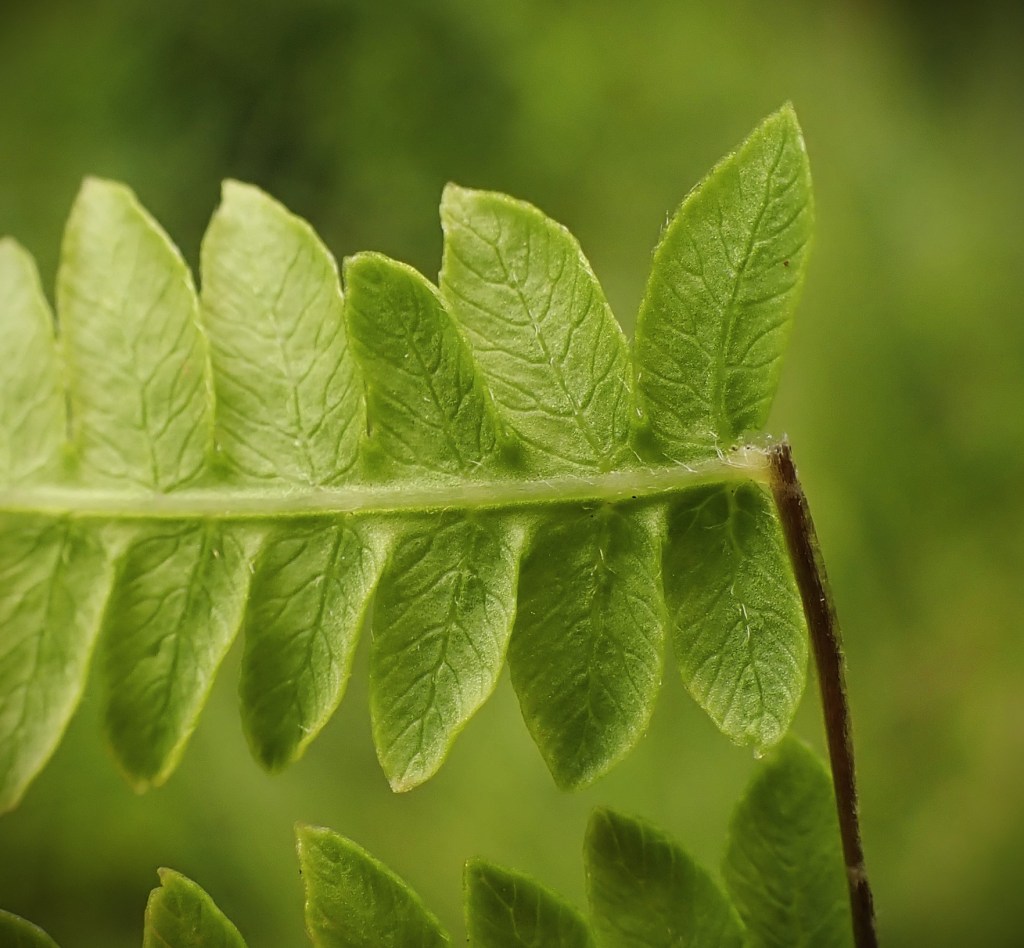
Eventually we made our way to Coonville Creek, and what a glorious creek it was!

The most predominant bryophyte species found in the creek itself was Fissidens grandifrons. It literally grew almost everywhere!
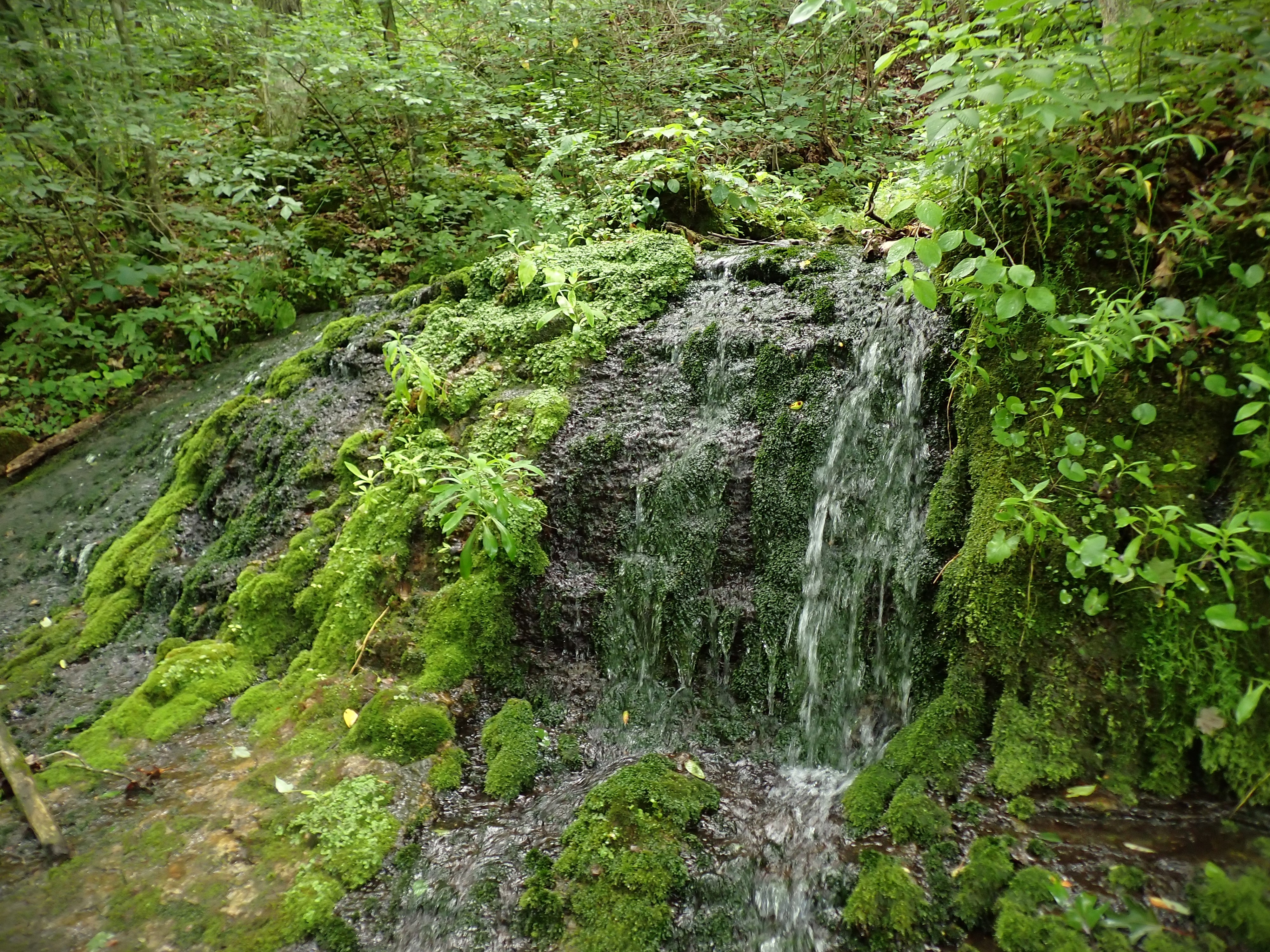
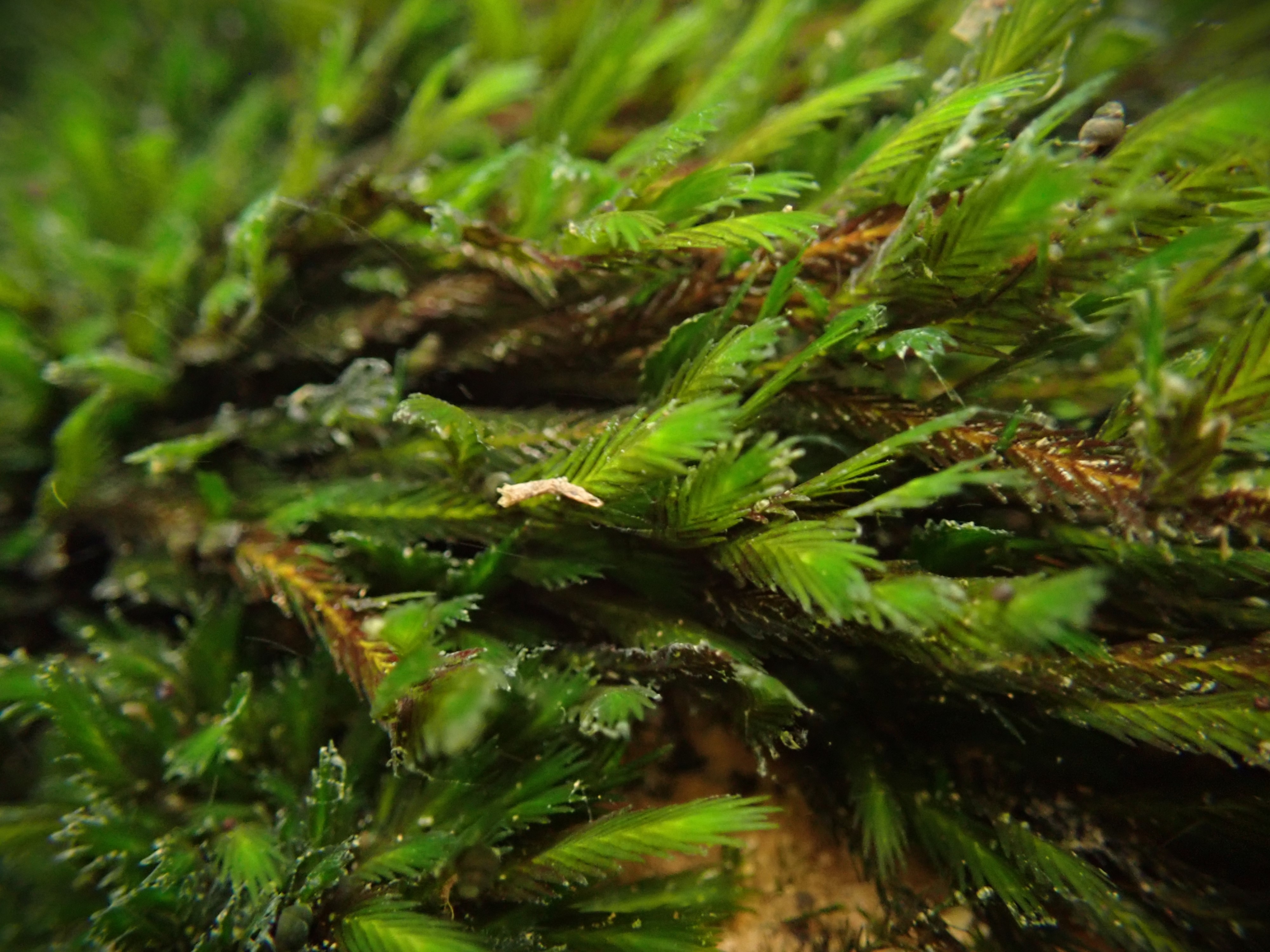
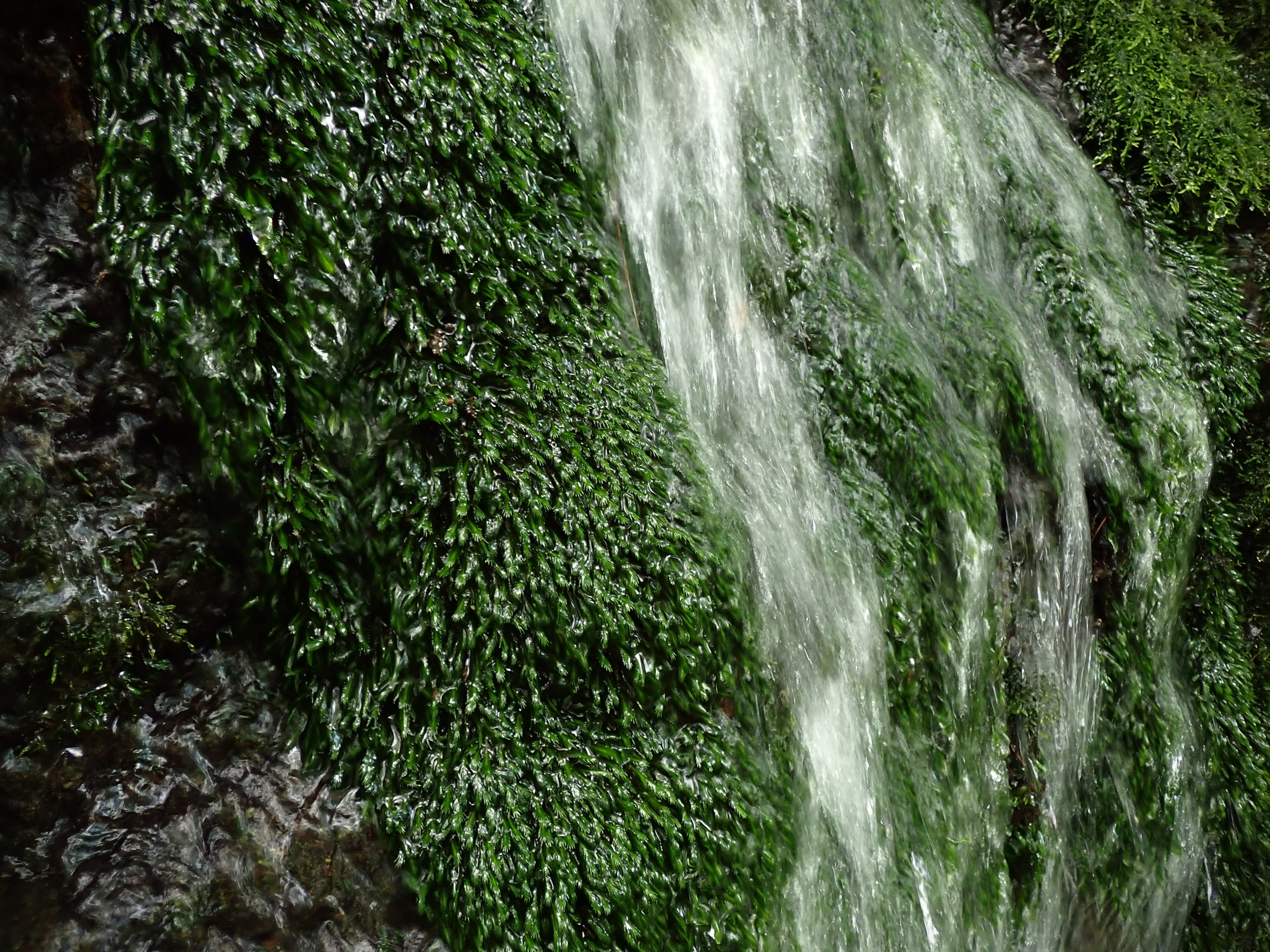
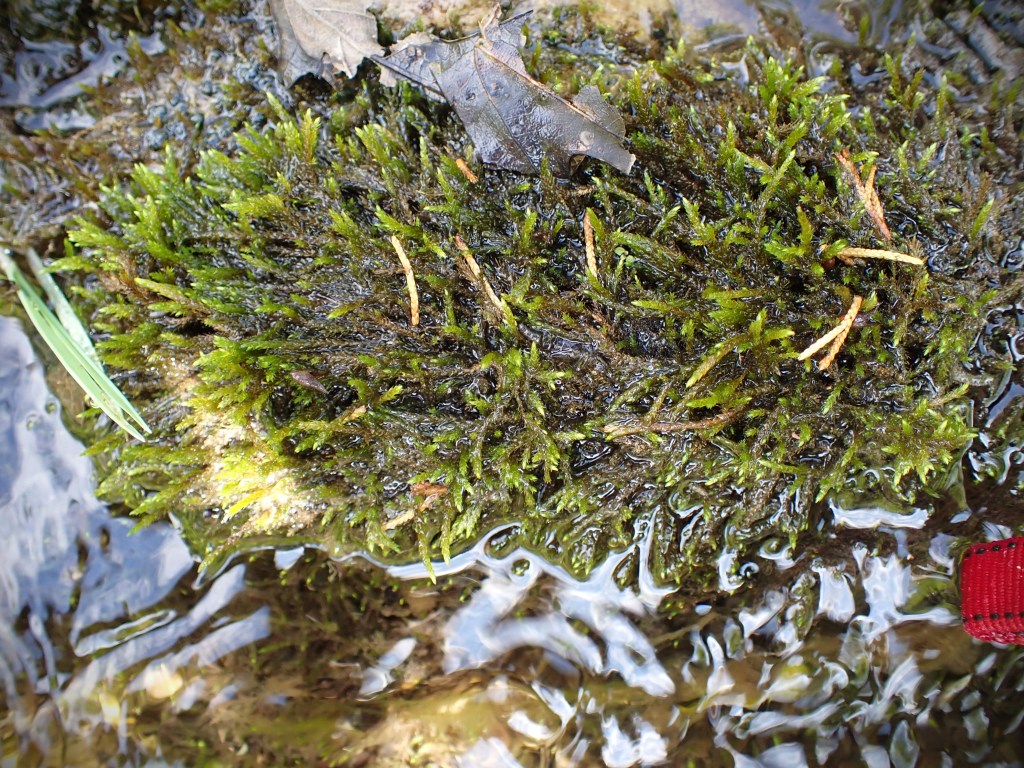
Another species growing in the creek near a small cascade was Hygroamblystegium varium subspecies noterophilum. This was my first time to see this species, which is a spring loving calciphile. Coonville Creek is spring fed not too far from the fen.
The edges along the creek on one side were bordered by limestone/dolomite rockfaces and short walls. Bryophyte species found there were the following:
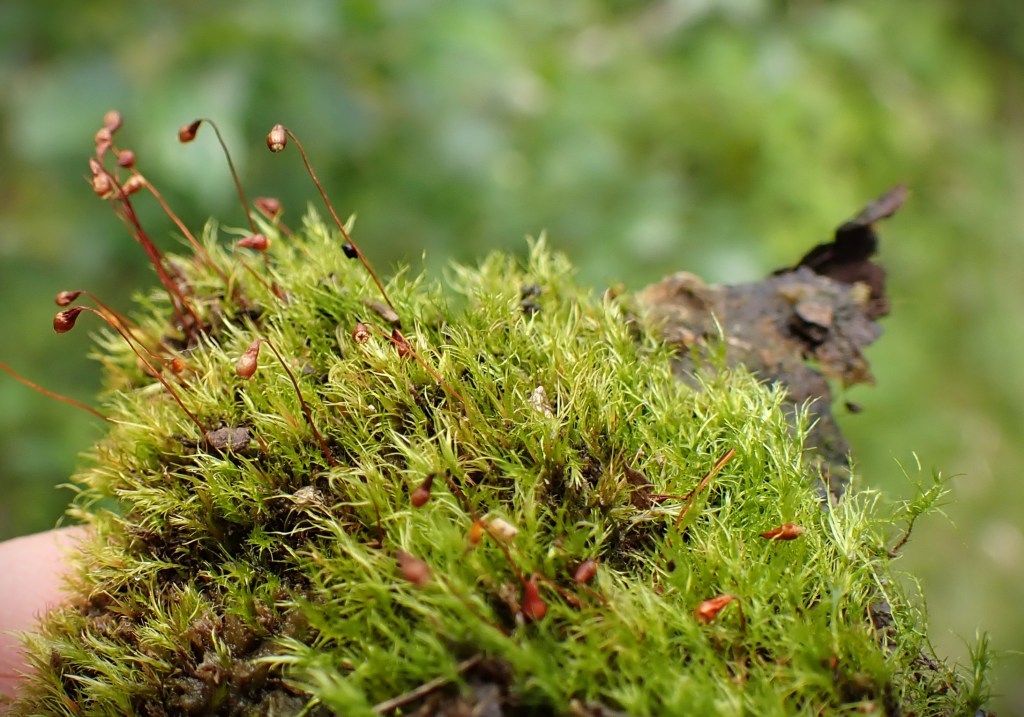
This is the first time I have come across the moss Leptobryum pyriform with sporophytes!
At first, I thought this moss was Brachythecium laetum with how light colored and wispy it was, but the microscope corrected me at home by telling me that it was in fact, Brachythecium rivulare.

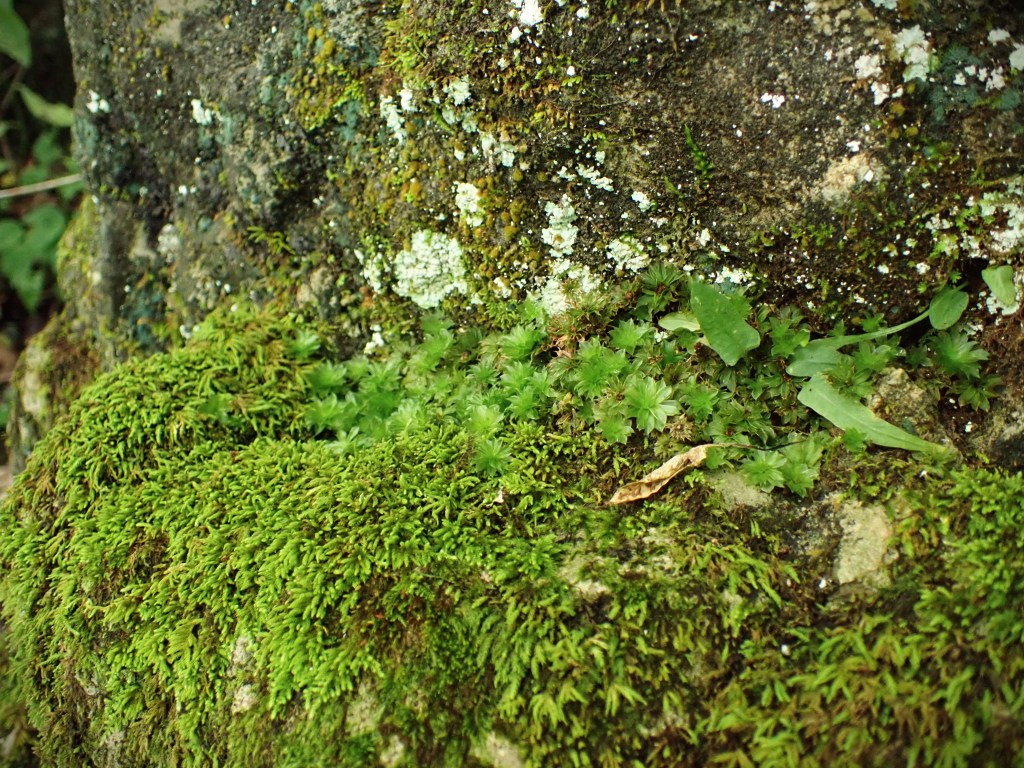
The lovely rose-shaped moss Rhodobryum ontariense is graced by another moss, Anomodon rostratus, and the walking fern: Asplenium rhizophyllum.
The moss Pohlia wahlenbergii hung out under some sheltered ledges.
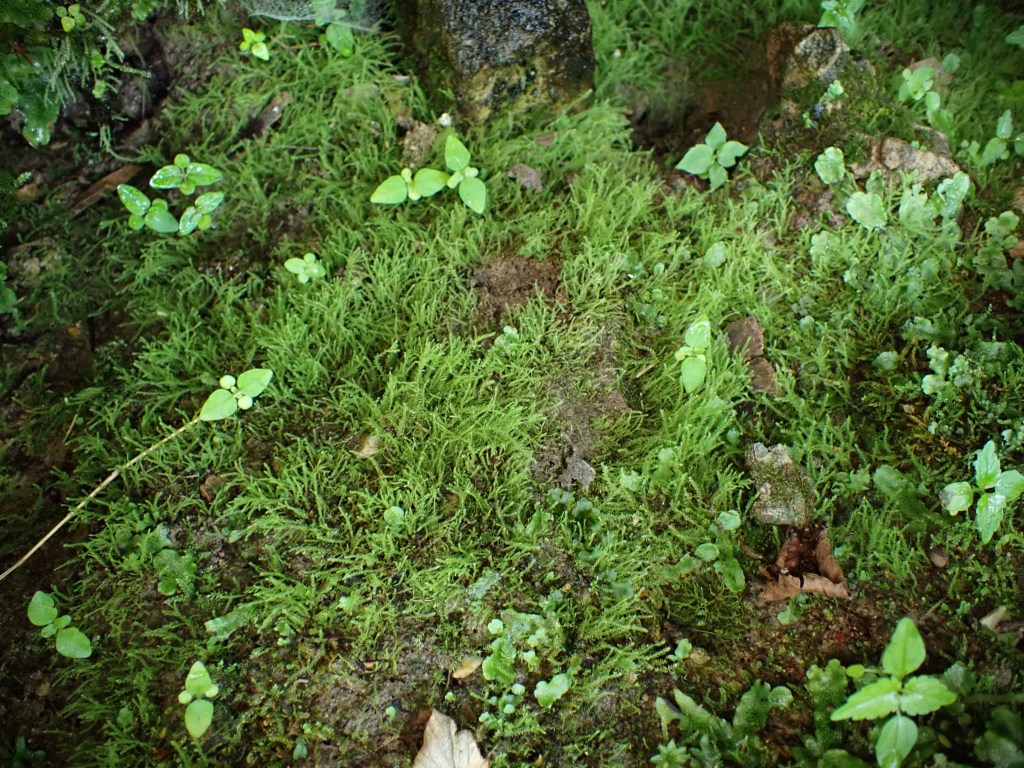
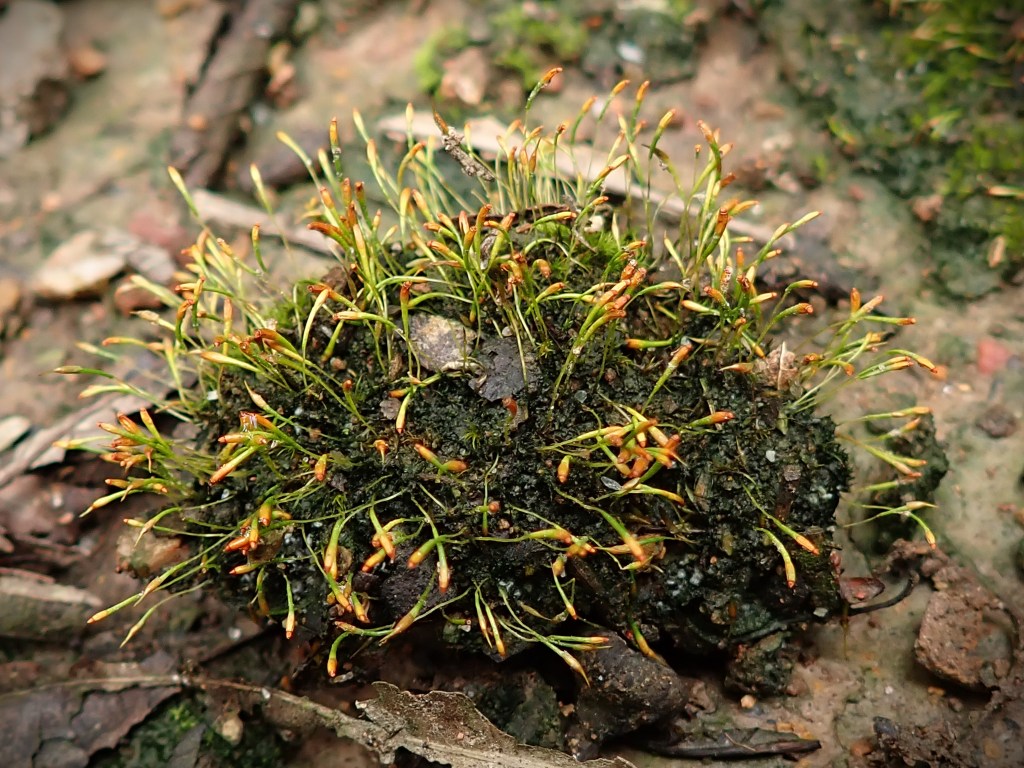
After we explored the creek for a bit, we walked through the woodlands for a little while enjoying a nice reprieve from the sun. I was ecstatic when I came across a happy little population of bottle rocket moss – Trematodon longicollis. This was my first time to see this explosive species in person. This is an S2 ranked species in Missouri, though that may be due more to its tiny and inconspicuous stature of the gametophytes. Only the showy sporophytes are likely to draw your attention to this moss, which fruits in spring/summer. It is an annual and it is likely somewhat transient.
Of course, there were several wildflowers that we saw besides the stunning orchid, along with a friendly scaly bee mimic fly – Lepidophora lepidocera.
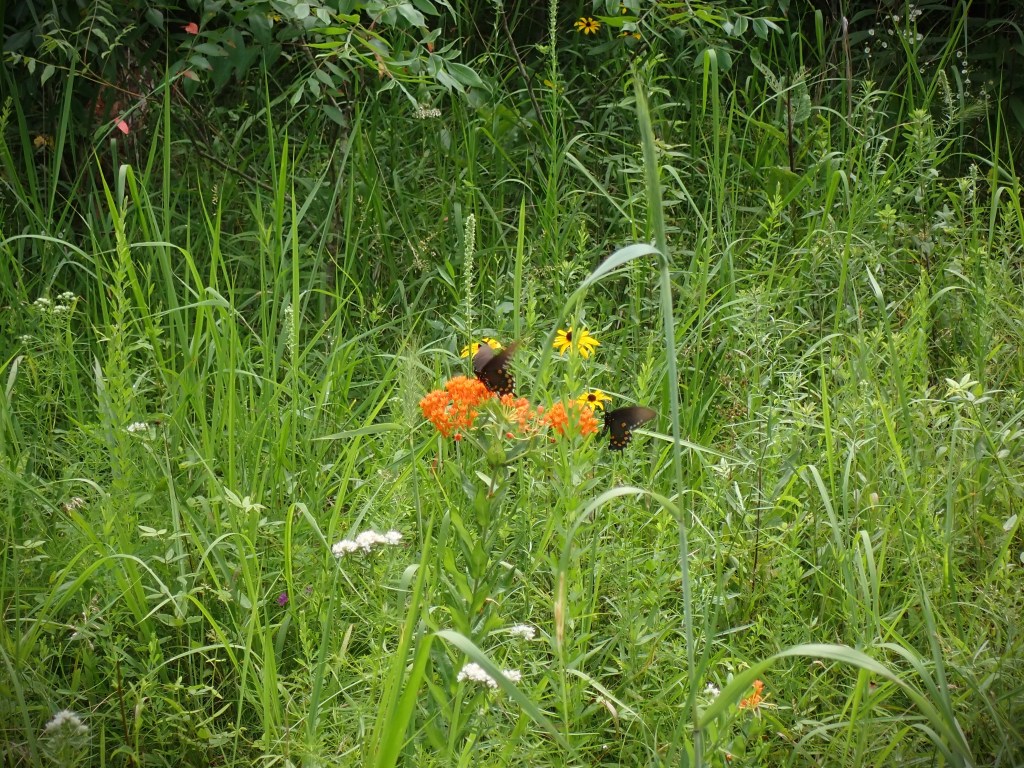
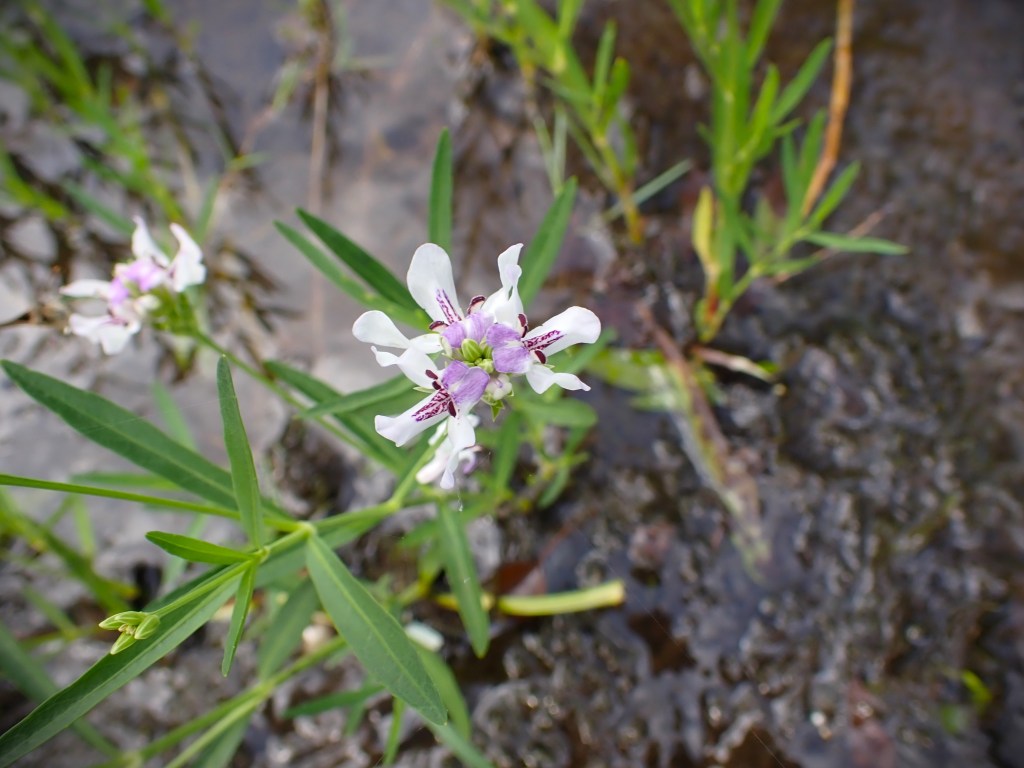
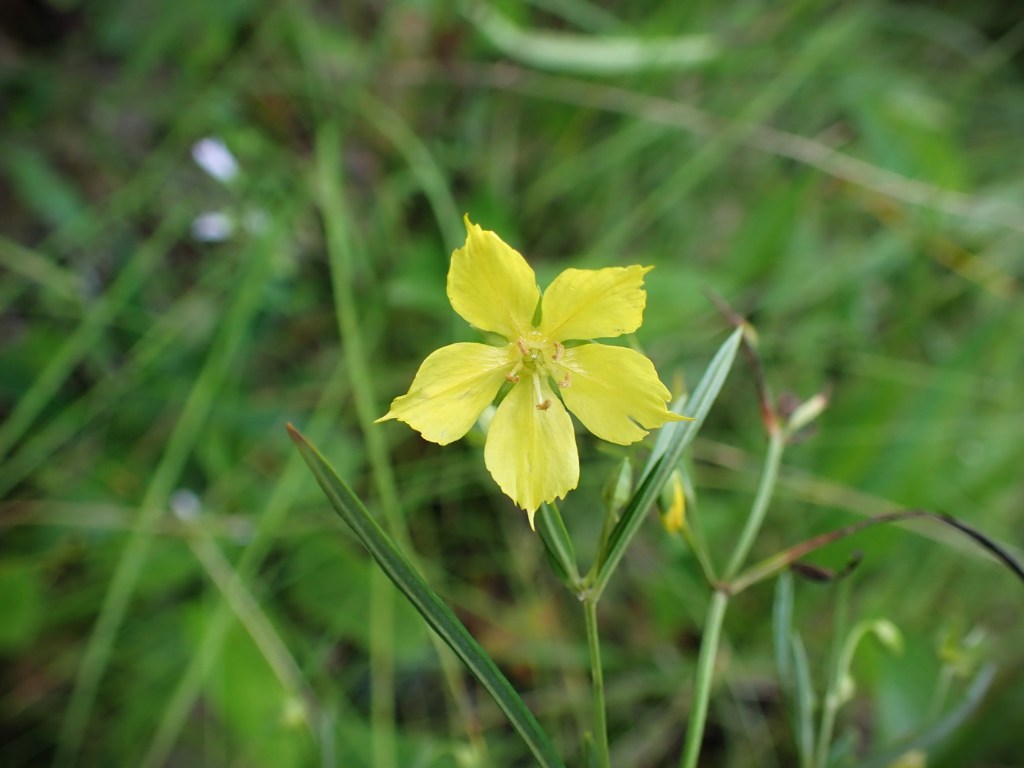
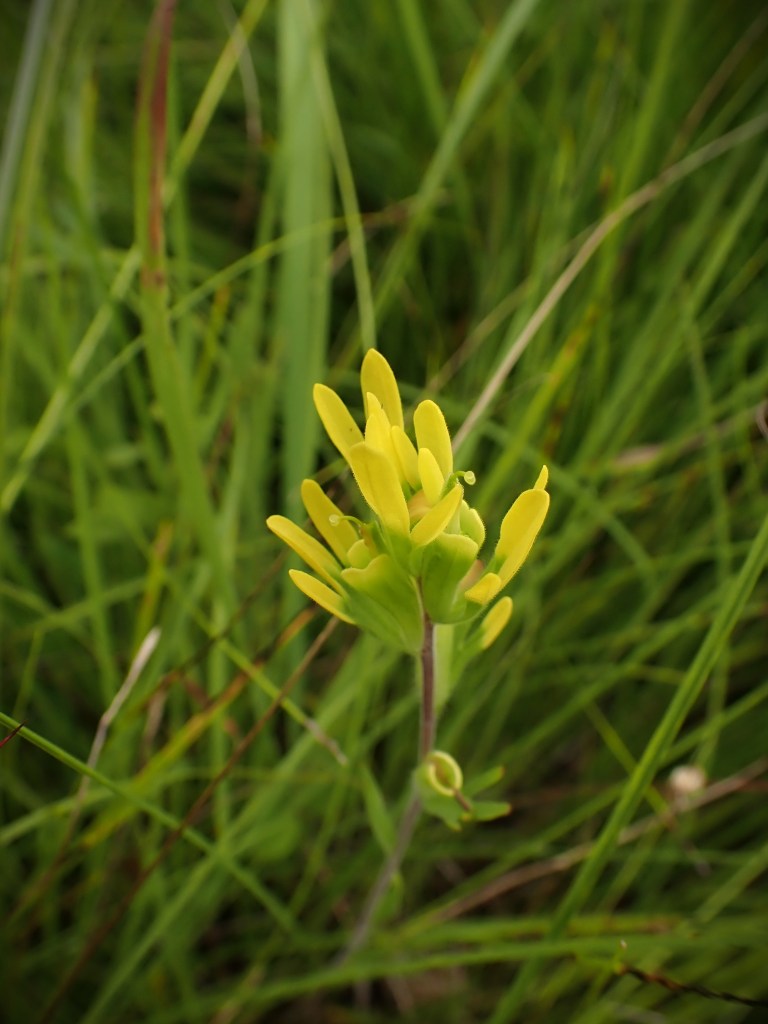
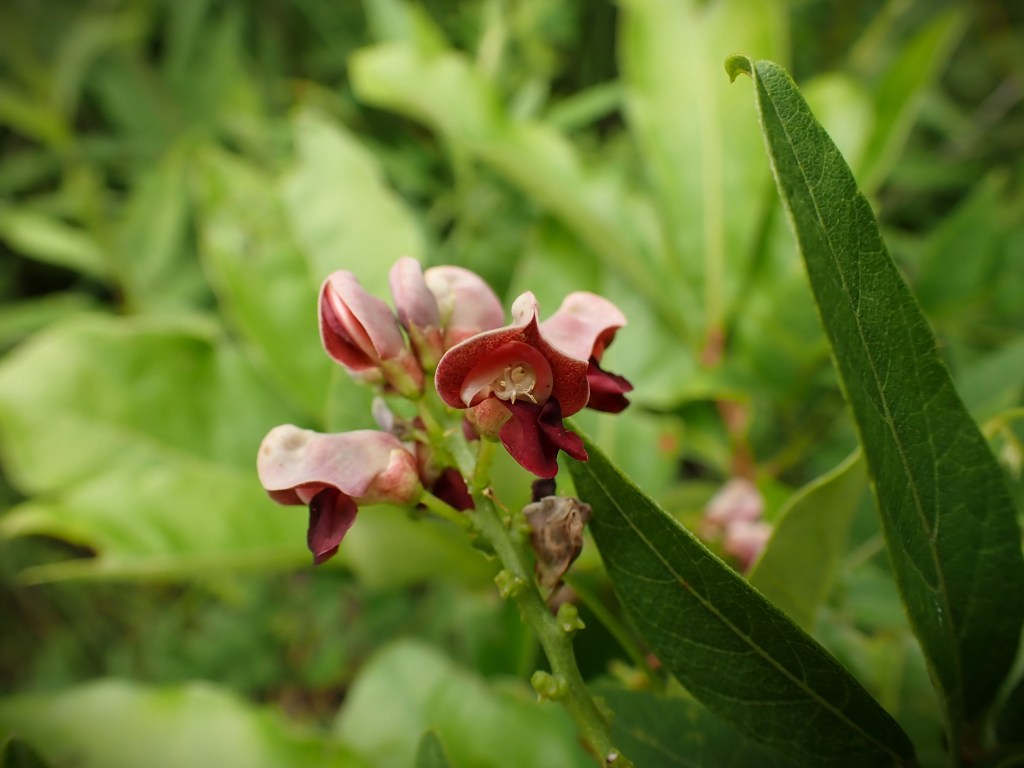
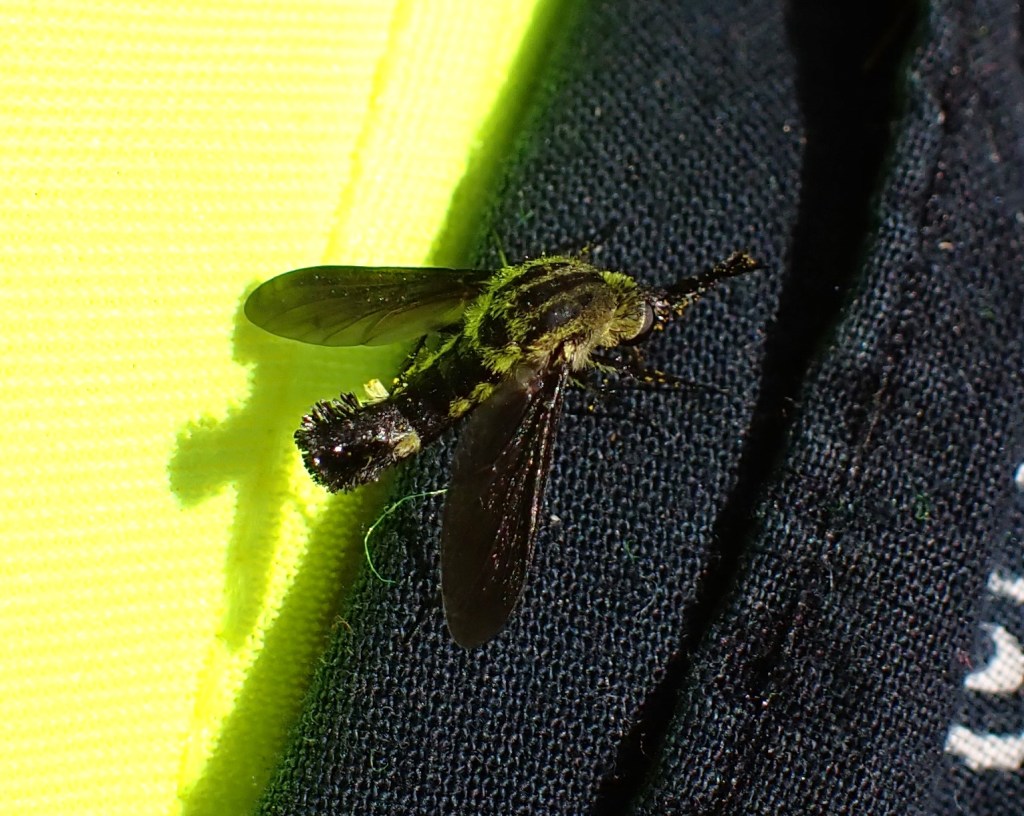
Top Left: Swallowtail butterflies feed on butterfly weed – Asclepias tuberosa; Top middle: water willow – Justica americana; Top right: narrow-leaved loosestrife – Lysimachia quadriflora; Bottom left: Indian paintbrush – Castilleja coccinea; Bottom middle: ground nut – Apios americana; Bottom right: scaley bee fly – Lepidophora lepidocera.
Happy mossing!

 Mosses of Missouri and Beyond
Leave a comment