National Prairie Day was held on Saturday, June 7th of 2025, and the Missouri Prairie Foundation had their annual Bioblitz the same weekend. This year’s Bioblitz was in honor of acquiring the 80-acre Snadon tract of land adjacent to Coyne and Pennsylvania prairies in Dade County, Missouri. For more history about these tracts of lands, please click here. Though rain had threatened to hamper the day, it held off and provided a beautiful, sun-filtered and breezy day.
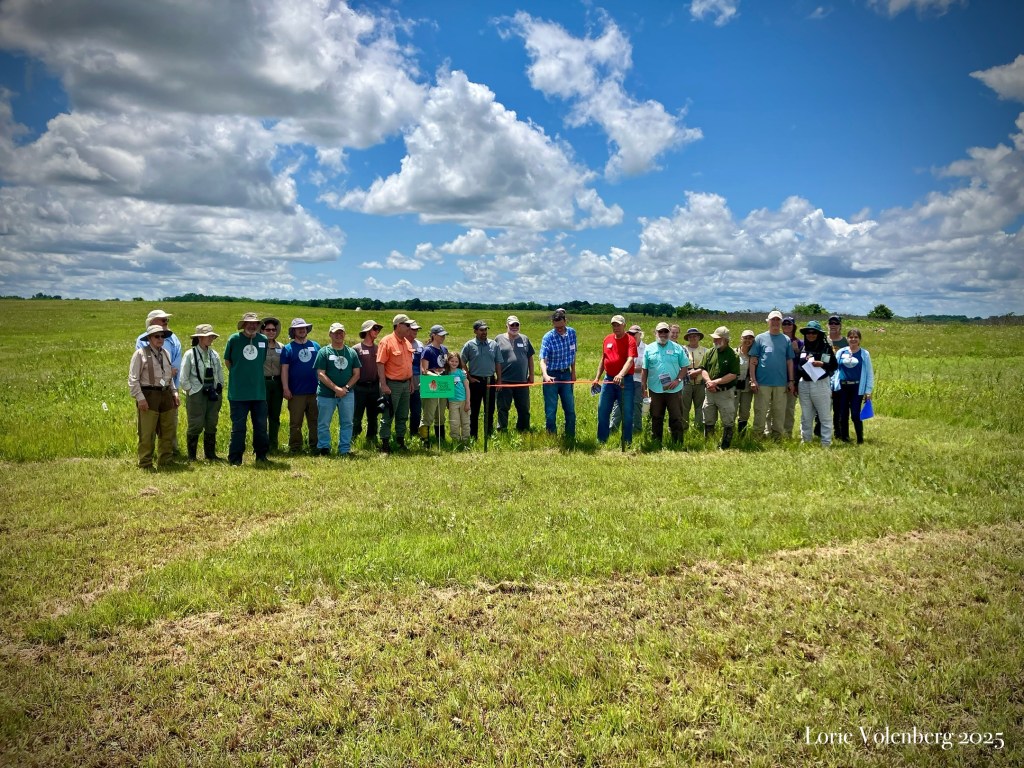
Activities started with the dedication and ribbon cutting for the Snadon tract acquisition, and it was wonderful that Patrick Snadon was there to cut the ribbon himself.
The Bioblitz portion followed with two afternoon sessions having multiple categories to choose from to participate in. The topics ranged from soil ecology to amphibians, and from insects to plants and mammals.
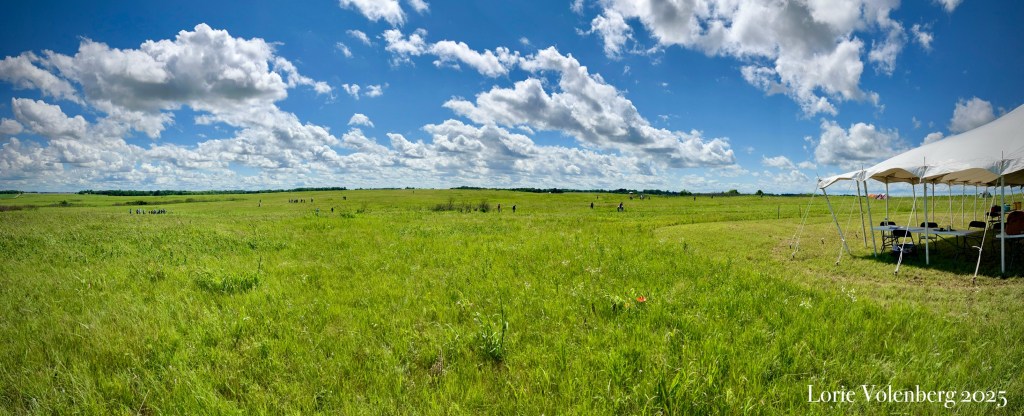
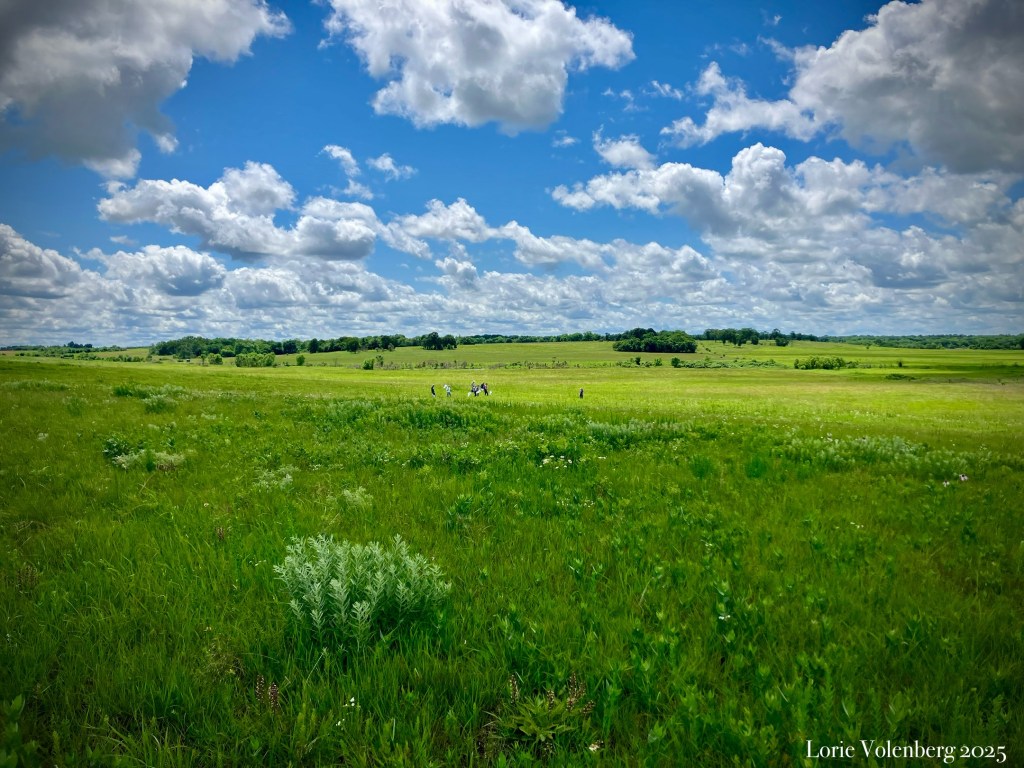
Eric and Wendy Eaton lead an “Insects and Arachnids” group. There was a nice breeze going that felt wonderful, but made it a bit difficult to see any wasps and bees.
I was asked if I would lead the Bryology section, which was in the second session of the afternoon. It gave me time to scout out the area and find some bryophyte hot spots. This prairie sits on sandstone bedrock that has chunks of sandstone rock exposed, making for miniature glades. Sadly, I didn’t think to bring flags with me to mark the interesting spots I found. Later, luck would prove to not be on my side as I was not able to find the one, uniquely interesting sandstone outcrop area to show the group. However, enough sandstone rocks were peeking out amongst the prairie grasses and forbs, that we were able to see some saxicolous species.
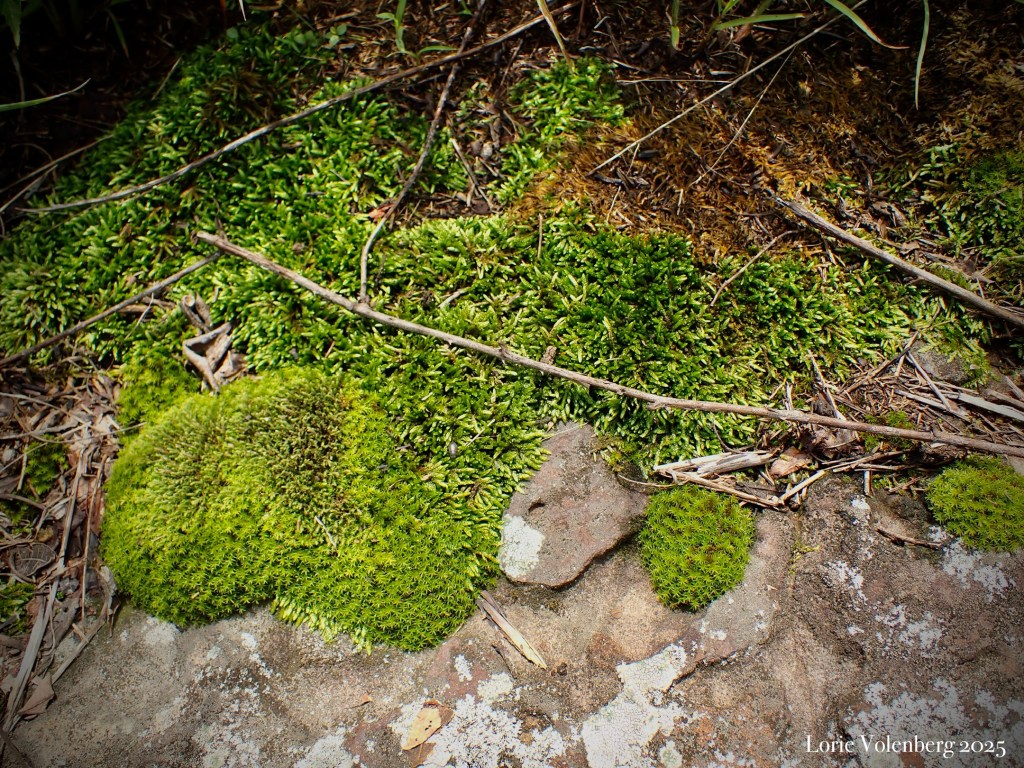
Hedwigia ciliata and Entodon seductrix happily grow on this sandstone rock outcrop. Hedwigia ciliata is usually found on rock, and is occasional on tree bark. Entodon seductrix is a common, generalist species that grows on most substrates and in many different habitats.
I found only one population of the sandstone loving, Grimmia laevigata. It is a common resident of sandstone glades.
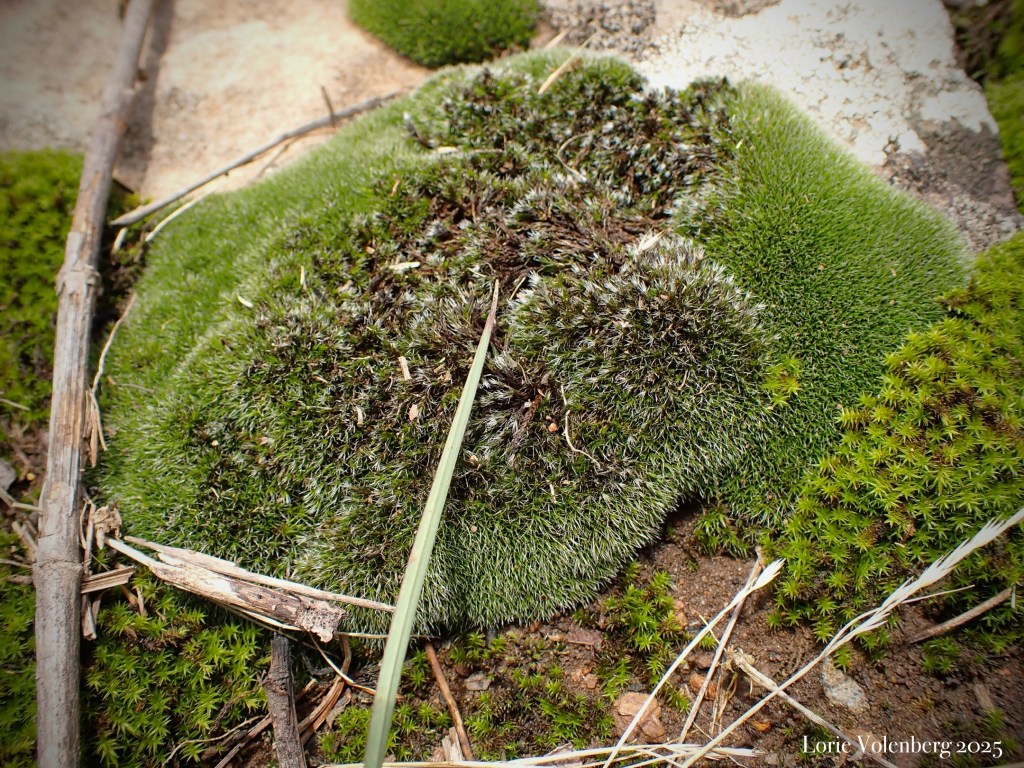
There were a number of soil loving moss species, and one complex thalloid liverwort that was prevalent on exposed, moist soil. The moss species found in more dry-mesic areas were Weissia controversa, Campylium chrysophyllum, Atrichum angustatum, and fun new one for me to see in person, Bruchia flexuosa. Sadly…it was pretty far along, so there are no good photos from in the field, but I did get some spore photos to confirm its identity.
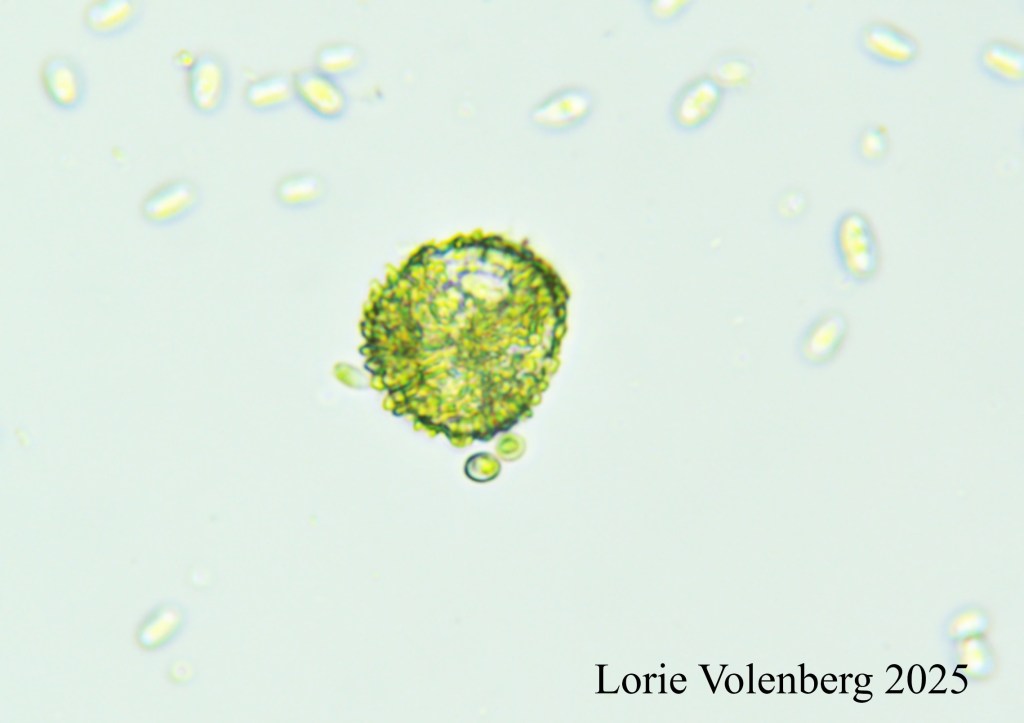
Bruchia flexuosa is our common species in Missouri, but B. texanus has been recorded as well. B. flexuosa will have spinose spores as seen here, where as B. texanus will have reticulate spores.
This complex thalloid liverwort is Riccia beyrichiana. Some distinguishing characteristics are its grayish to yellowish green color, its shallow and broad median sulcus, and a notch that is very much restricted to the apex of the thallus segment. This species will also have conspicuous cilia flanking the margin of the thallus, and not on the dorsal thallus itself. It likes sandy based soils that are wet. We have had a very wet spring, so it is having a fantastic year!
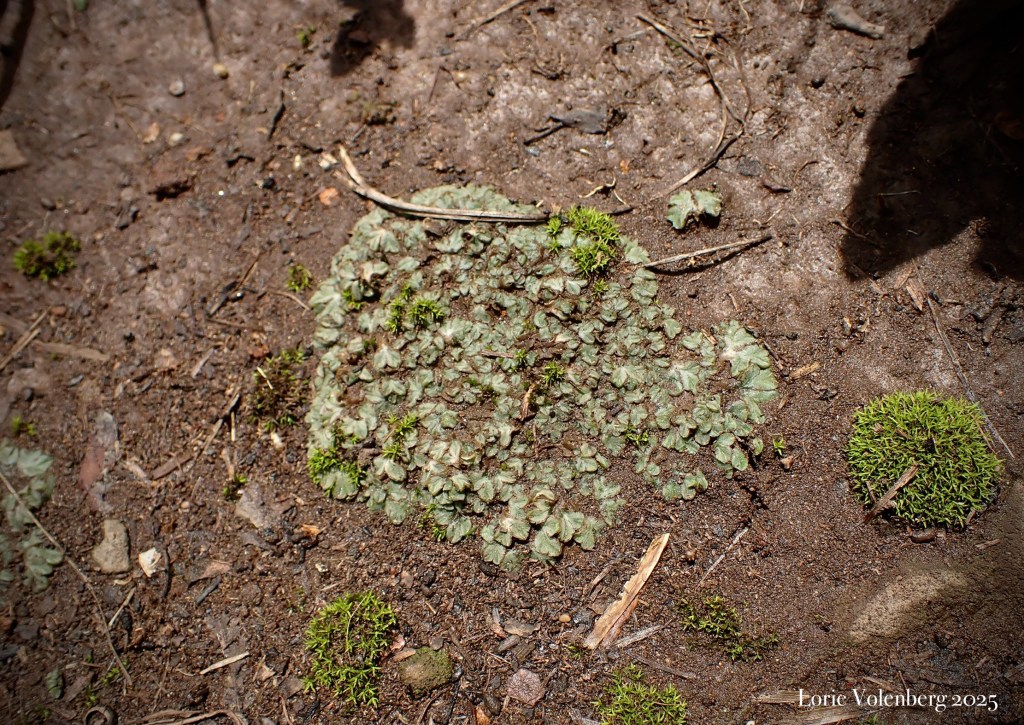

Left: A happy colony showing its rosette pattern with dichotomous branching of the thalli; Right: The blunt cilia are notable around the edge of the thallus.
Another unique feature of this prairie is that is has large swales. These broad areas hold water and can host its own unique set of bryophytes. Climacium americanum, Polytrichum commune, Aulacomnium palustre, and Elodium paludosum were the common species found.
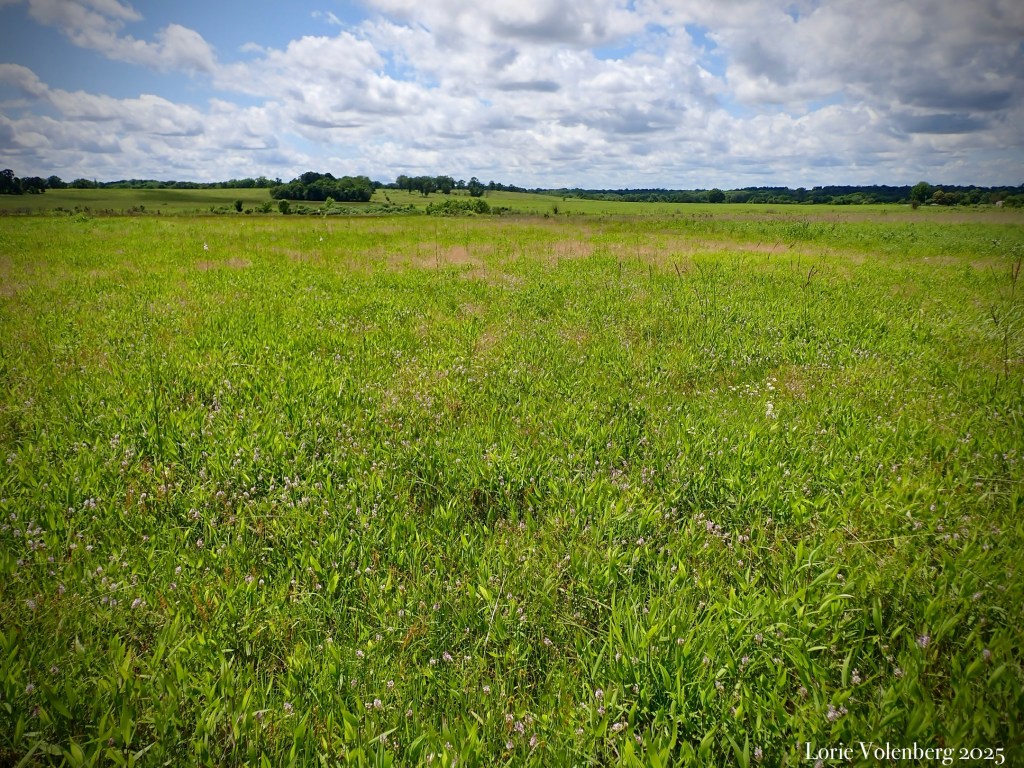

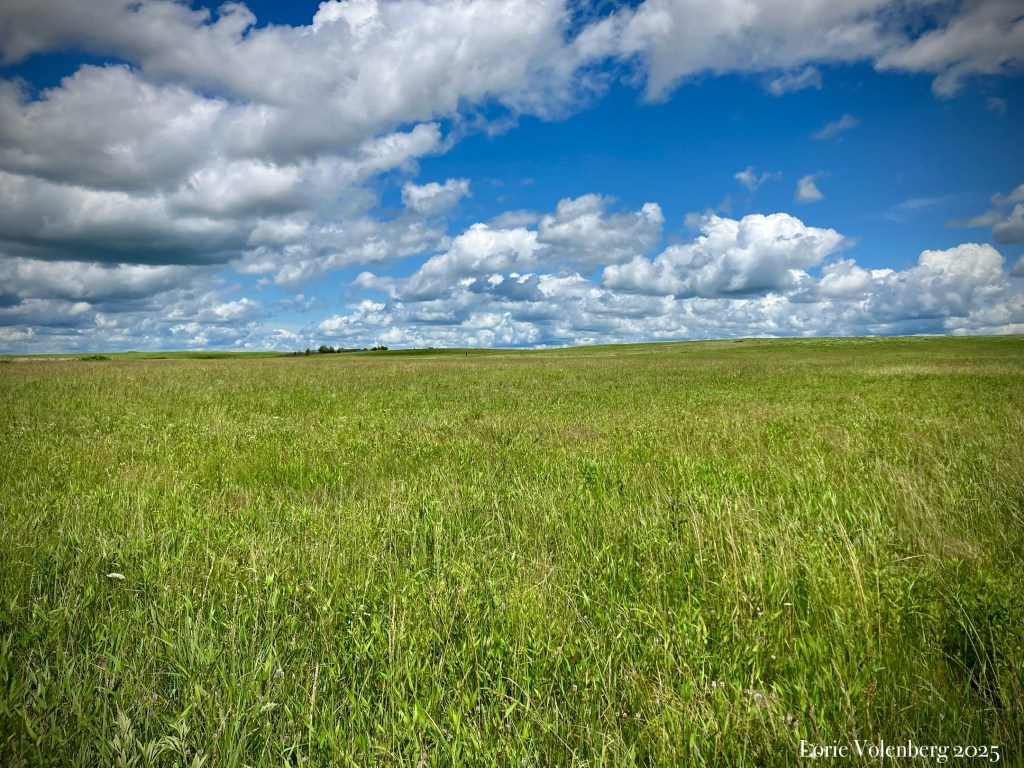
Left: In the swale, heading towards the waterway; Middle: You can see the collecting, almost standing, water; Right: Standing in the swale looking upland.
I must admit that I was surprised to see Climacium americanum here as I am most familiar with it in mesic woodlands. Of course, the description in Crum and Anderson is: “On wet soil or humus in shady swamp habitats, especially at the edge of pools or in the valleys of streams, but sometimes in better drained sites.” I guess I have always seen them in better drained sites, but in all fairness, I tend to spend most of my time in wooded areas, ravines, and glades. So, some prairie time was much needed.

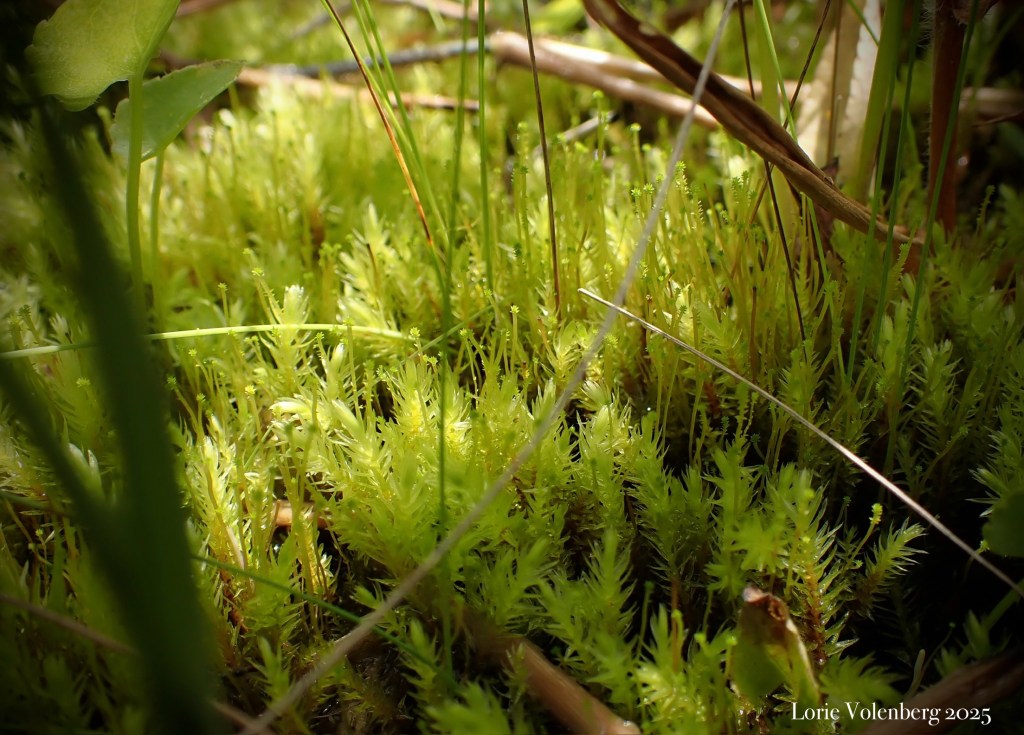
Aulacomnium palustre was sporting its vegetative stalks with the sickle-shaped gemmae most easily seen at the tips.
Polytrichum commune is one of our two Polytrichum species known in Missouri that do not have the marginal lamina wrapping around the lamellae. P. ohioense is the other species. Habitat can help determine species when sporophytes are not present, and finding one in the swale is a pretty much dead giveaway for P. commune as it likes boggy, moist areas (though it can be in drier locations). If one is not sure, cross sections will verify the identity. The apical cells on the lamellae strips will often be cup shaped, and when a strip is viewed from the side, the apical cells will form a crenulate outline.
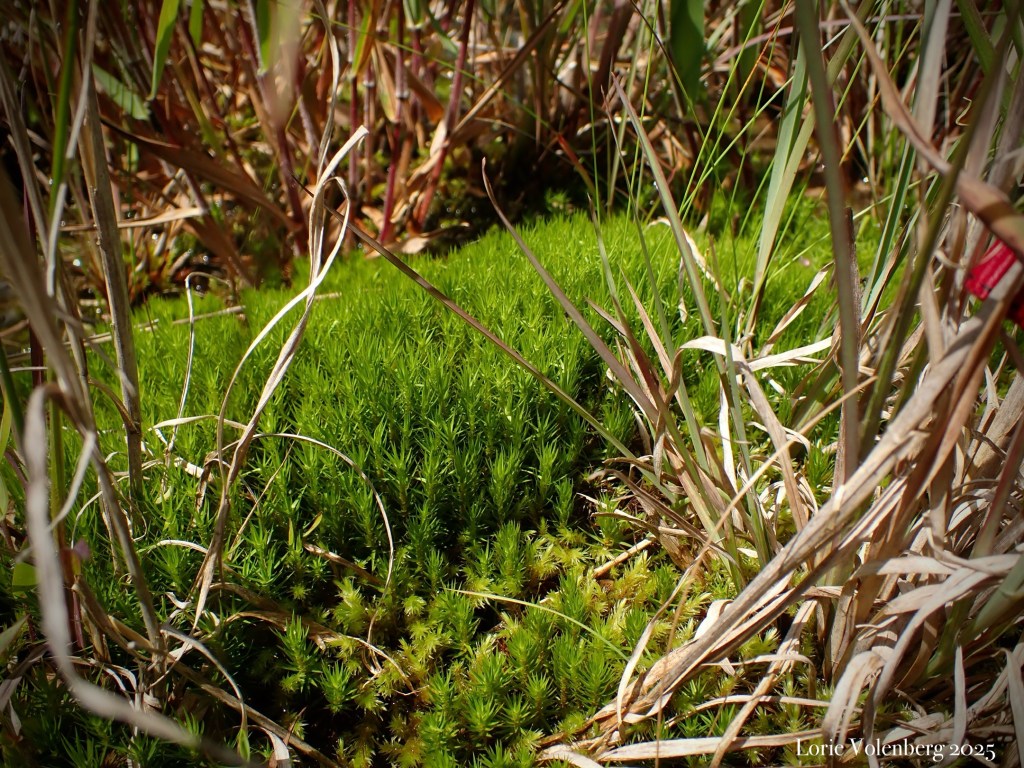
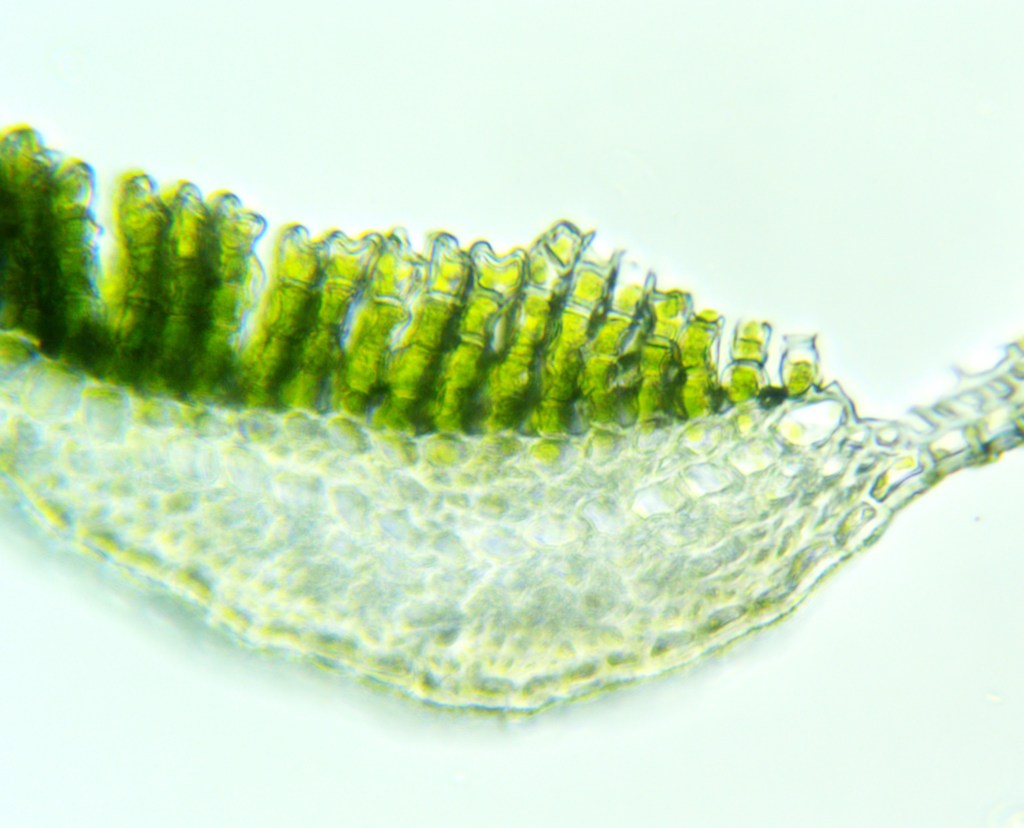
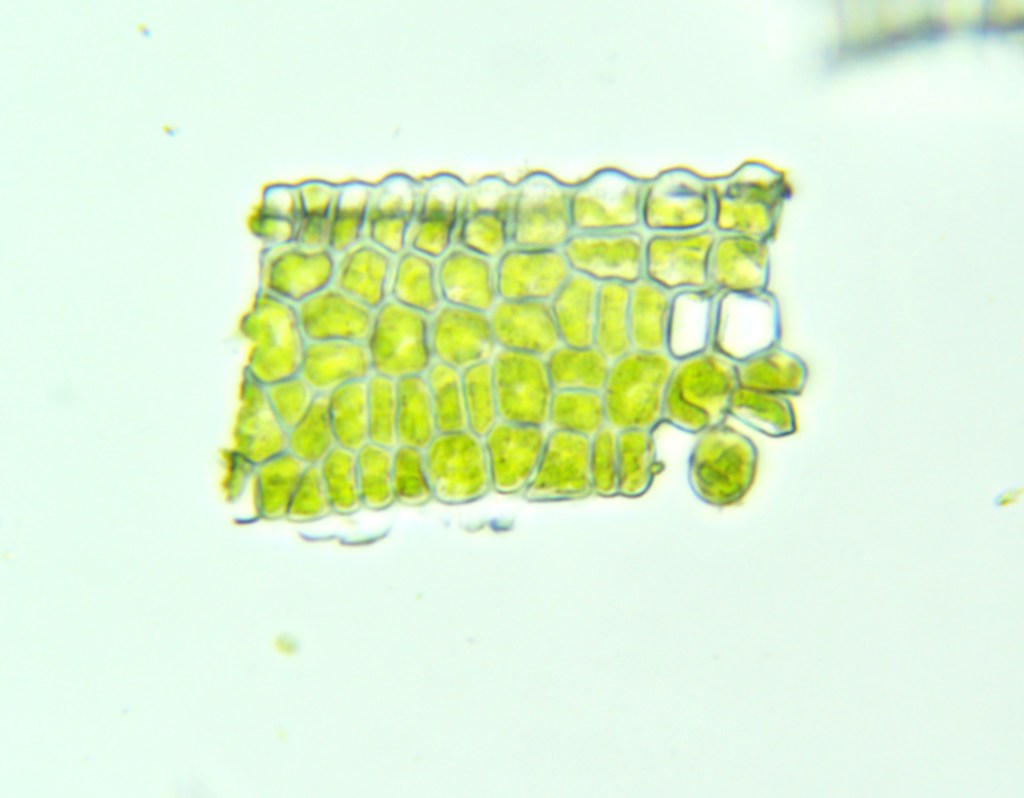
Left: Polytrichum commune in the swale; Middle: Many of the apical cells are cup shaped; Right: The apical cells form a crenulate outline from the side.
Aside from the bryophytes, the flowers were quite stunning and beautiful. Here are just a few.

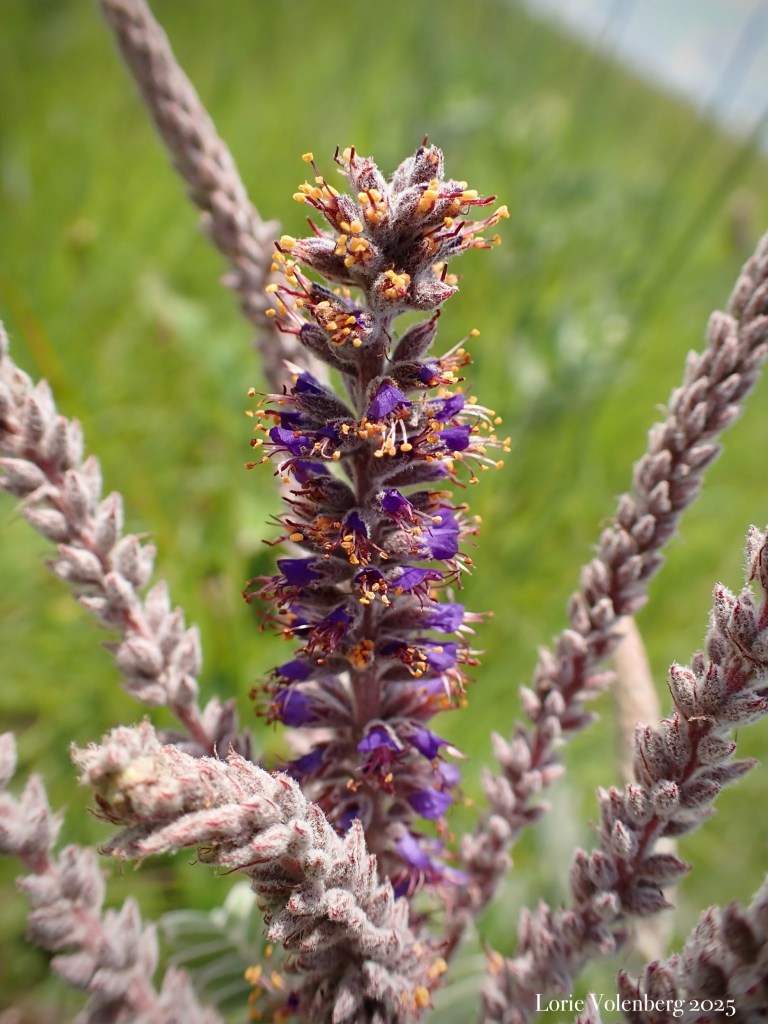

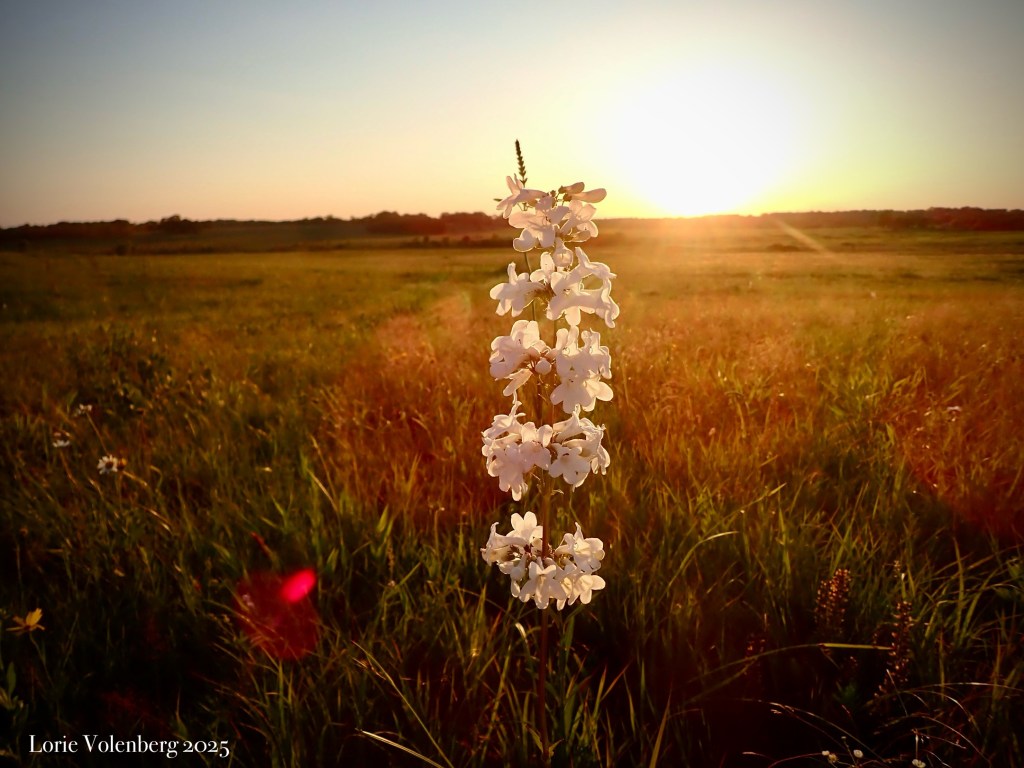
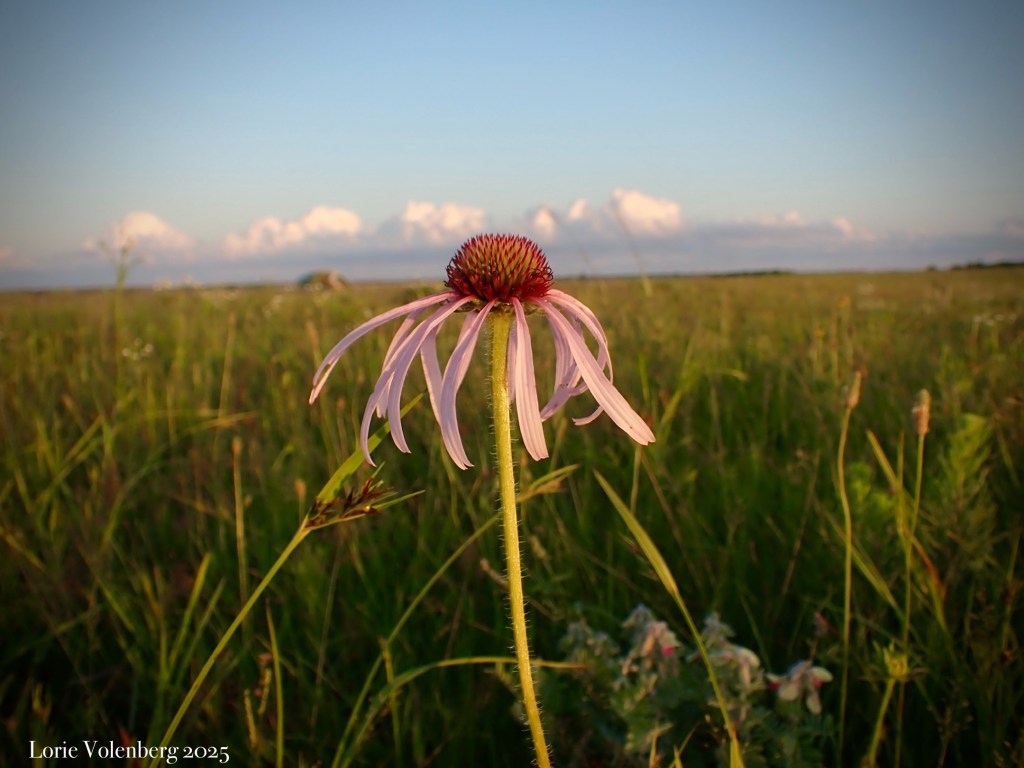
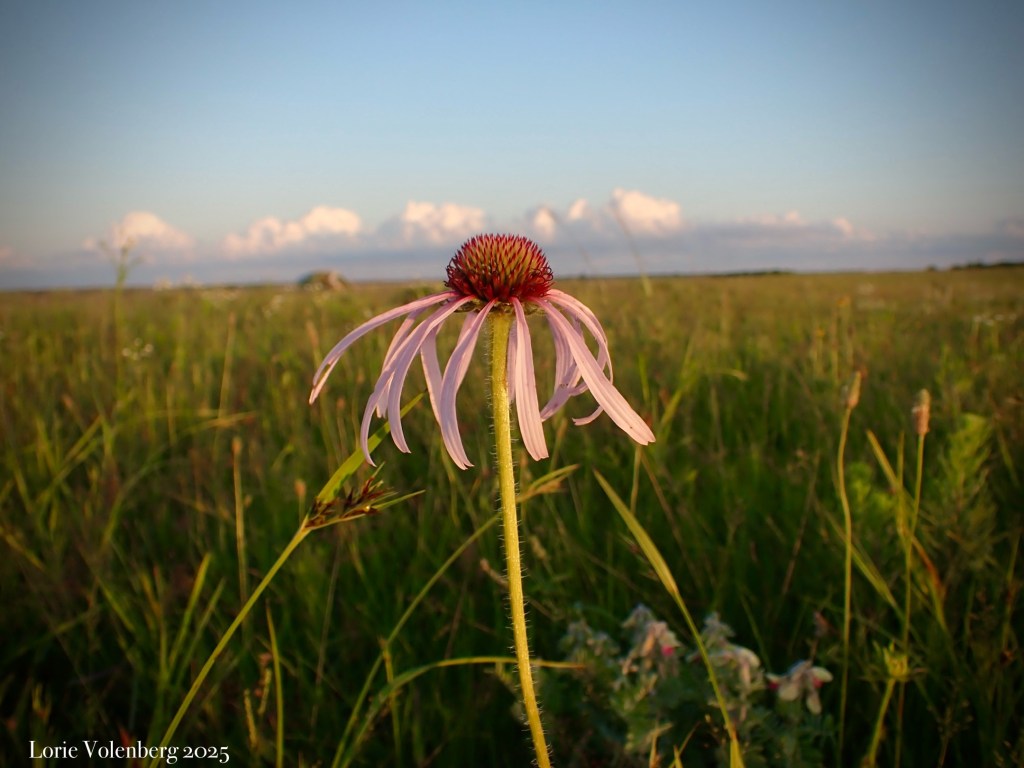
Top left: Ragged Orchid, Platanthera lacera; Top Middle: Lead Plant, Amorpha canescens; Top: Right: Mix with Coreopsis sp., Bottom Left: Smooth Beard-Tongue, Penstemon digitalis; Bottom right: Pale Purple Coneflower, Echinacea pallida.
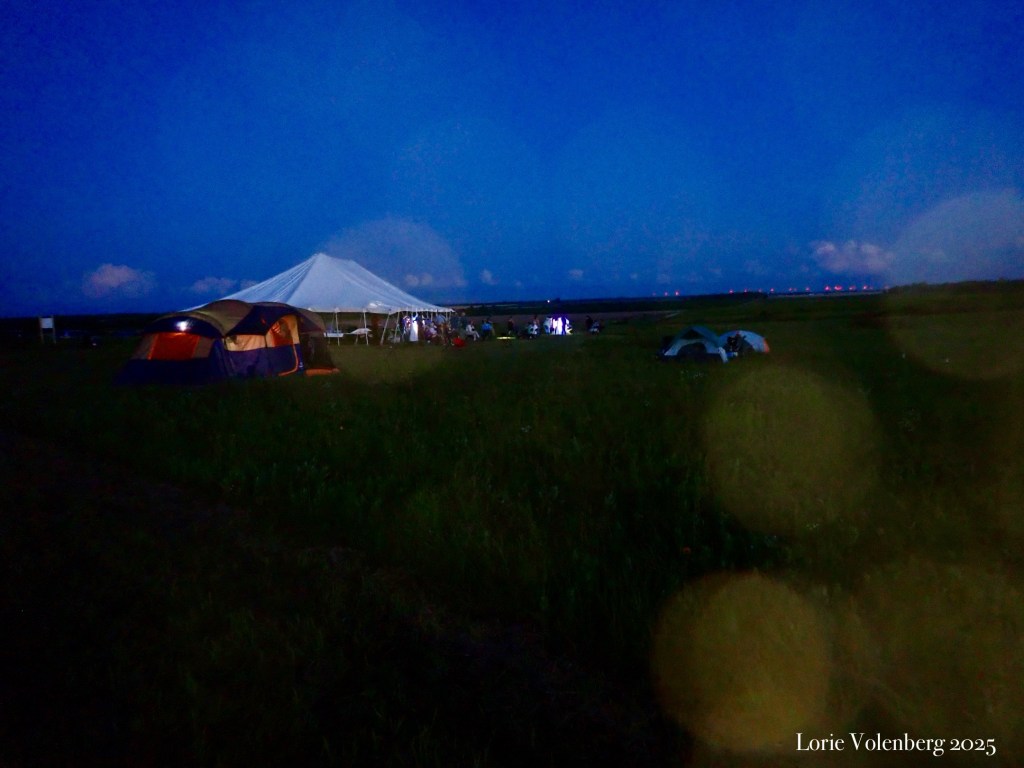
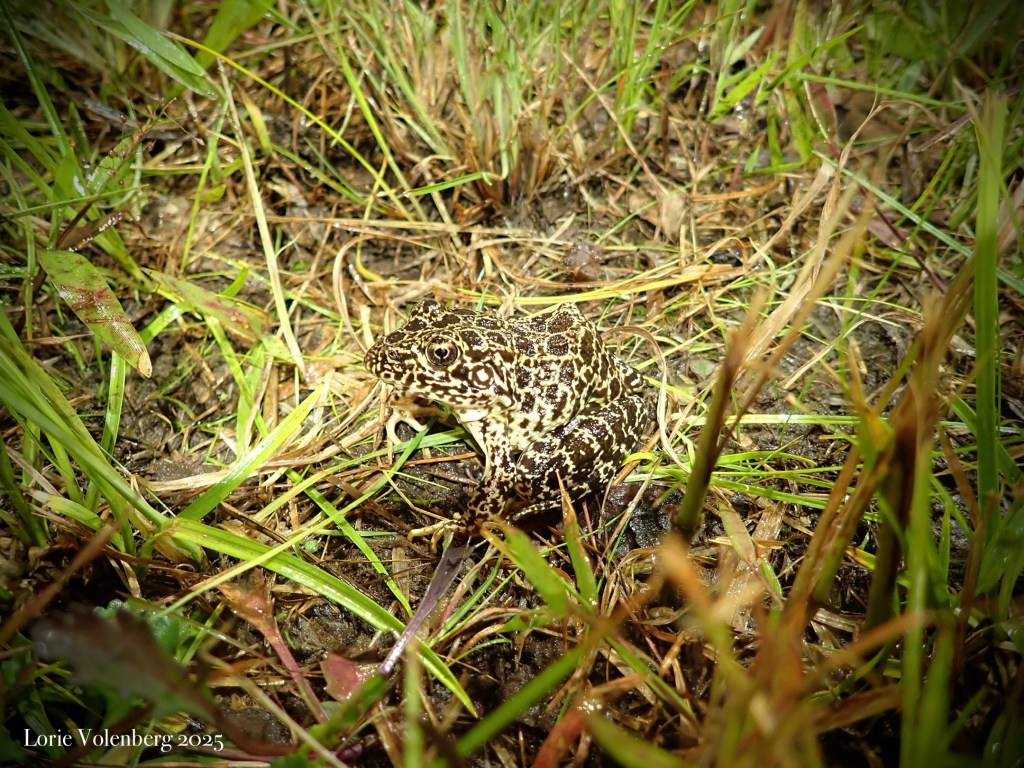
Afterwards, we all enjoyed a potluck dinner with hamburgers grilled on site from a locally resourced family farm. I don’t think it was possible to walk away from the dinner table hungry! Evening festivities included a talk about photography, and then black lights were set up by Eric and Wendy Eaton. Some fun things were found, but perhaps the most exciting creature we saw was the Northern Crawfish Frog, Lithobates areolatus circulosus.
Night lights set up.

The Virginia Creeper Sphinx moth, Darapsa myron, came to the white sheet.
The Northern Crawfish Frog, Lithobates areolatus circulosus.
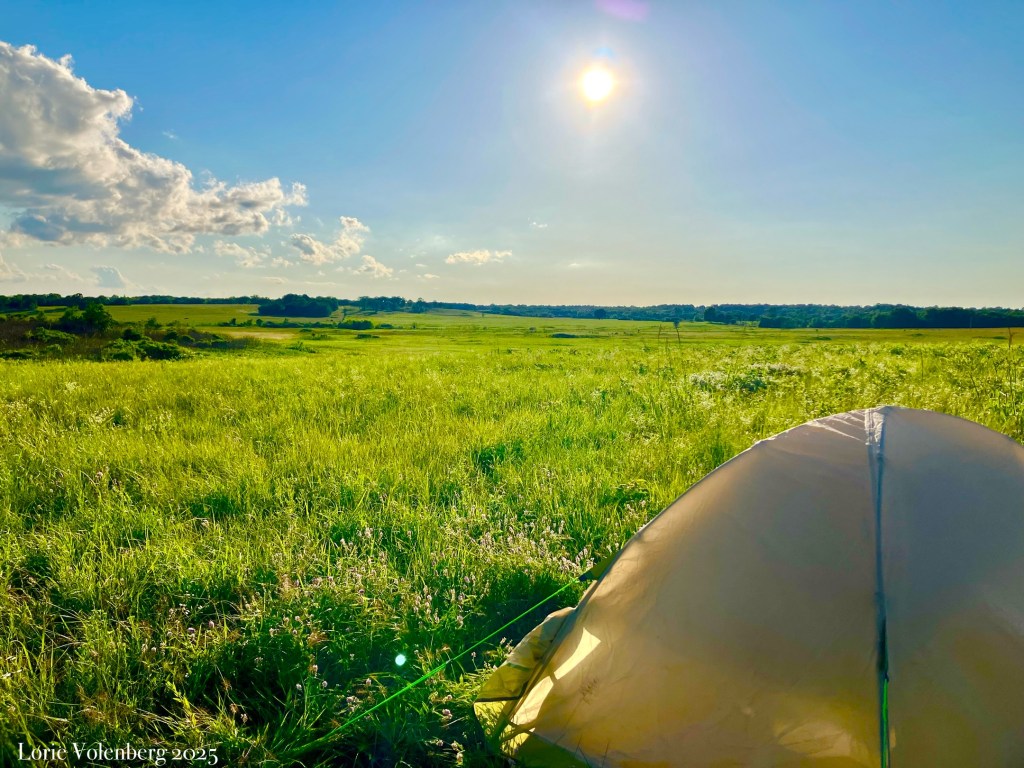
Camping spot with a beautiful view!
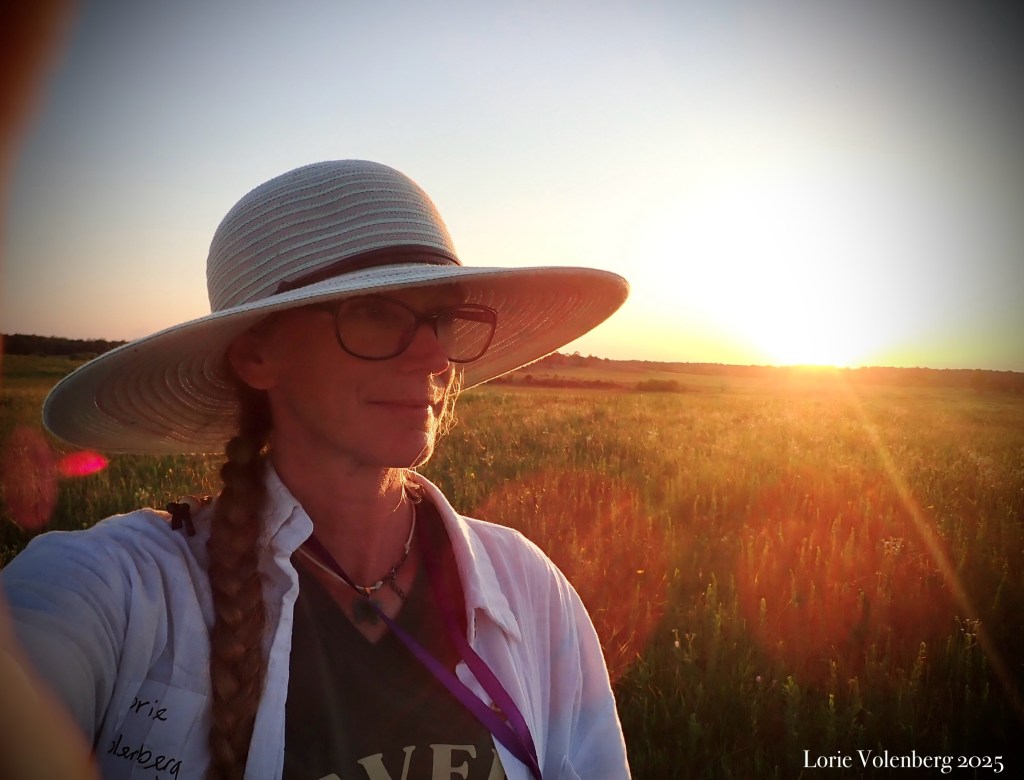
We were able to set up tents to spend the night in the prairie, and I counted about 40 tents set up before I hit the hay close to 10pm, exhausted and with a warm heart. It was a wonderful event, and I got to meet many lovely and inquisitiv, nature lovers, and share a beautiful day in the prairie with them. Until next time, happy mossing!

 Mosses of Missouri and Beyond
Leave a comment